URS
vsCheckpoint
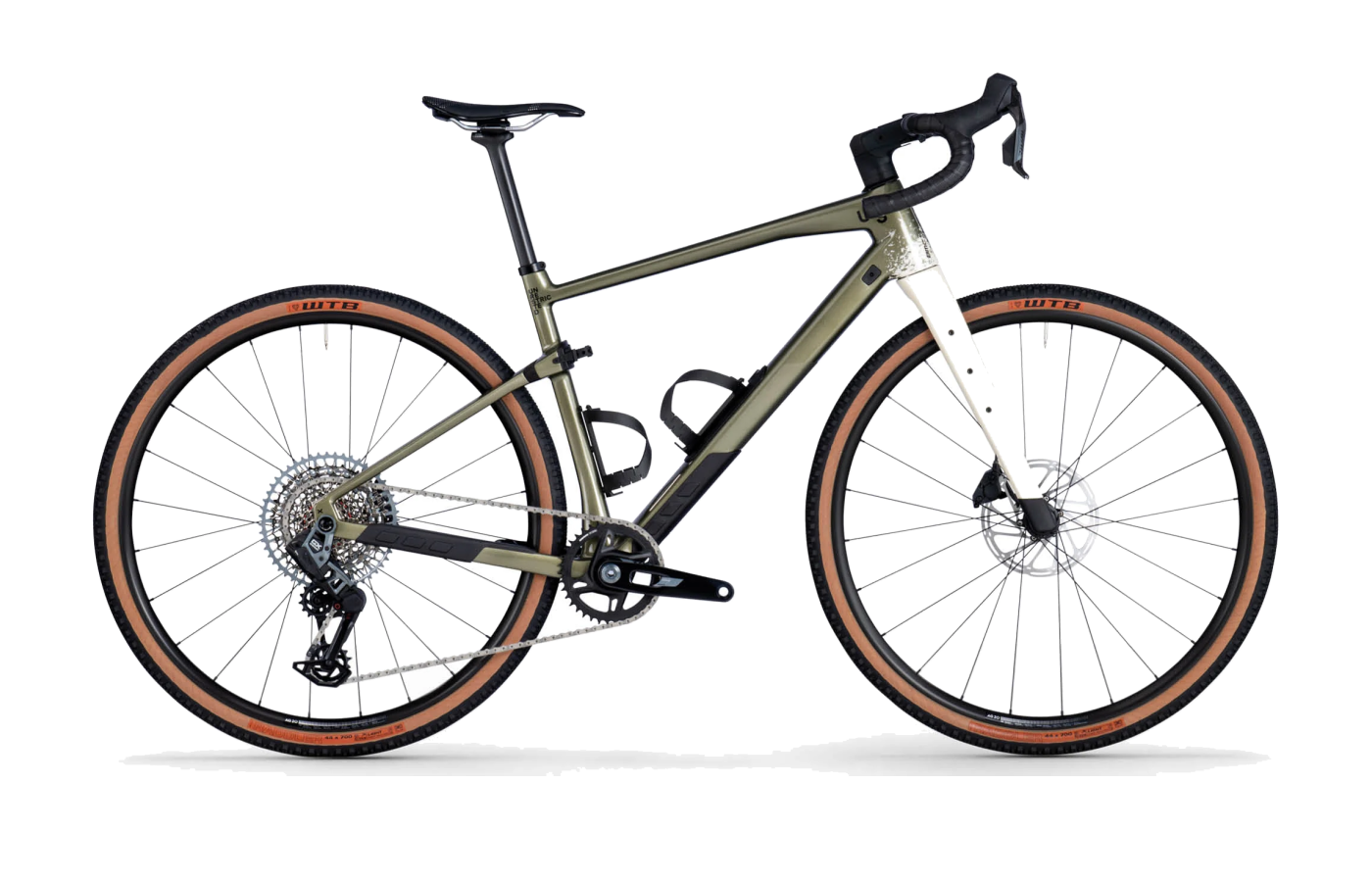
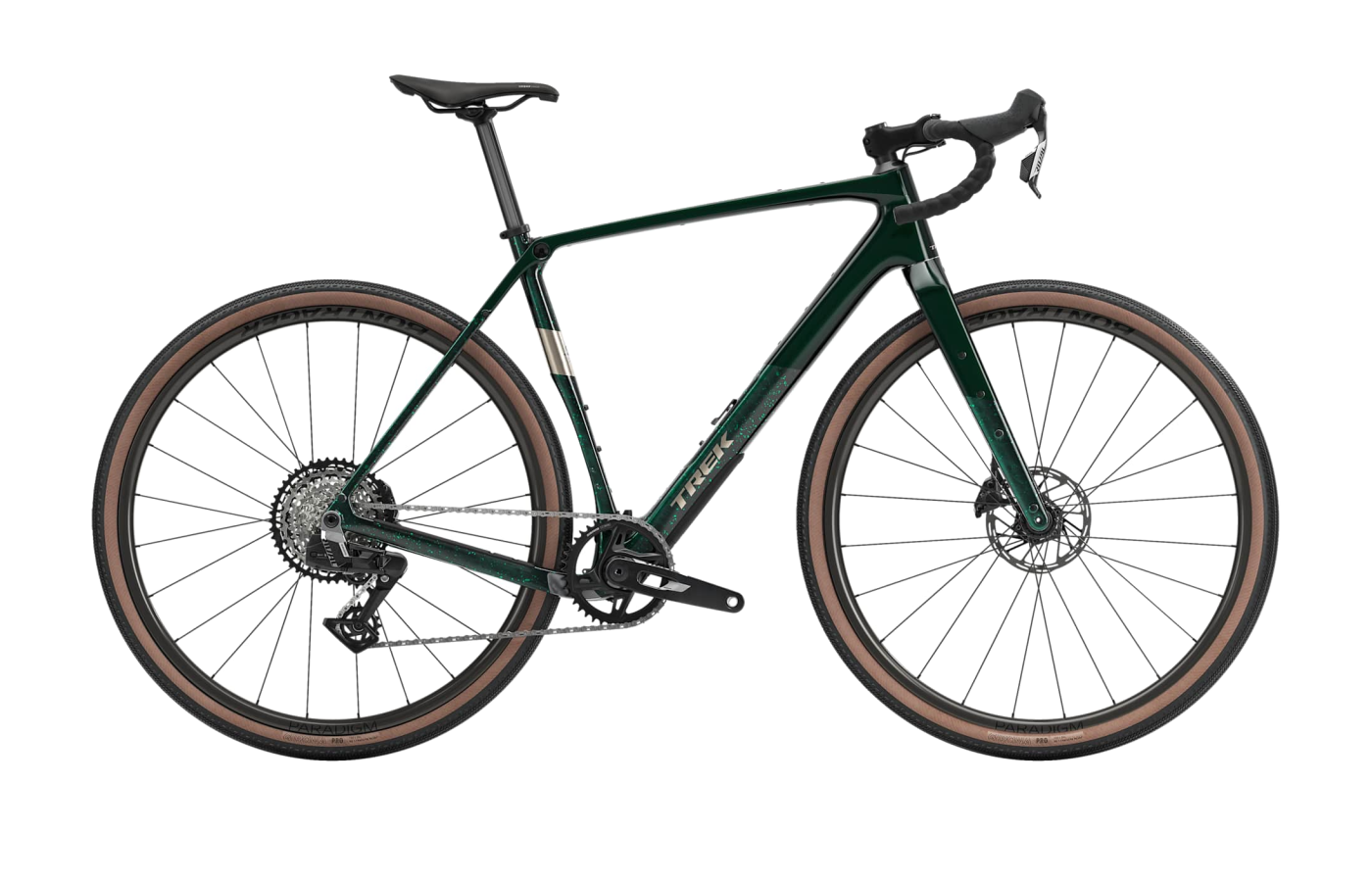
Drop-bar XC bike, meet long-haul gravel cruiser.
The BMC URS doubles down on suspension and slack angles. The Trek Checkpoint Gen 3 trades the racy edge for stability and 50 mm of tire room.
URS
- Real off-road suspension — 10 mm rear elastomer plus 20 mm front (stem or fork) is unique in the segment.
- Slack, planted geometry — 69° head angle and 84 mm trail at XS make steep, loose descents a non-event.
- Adventure-spec details — downtube storage, dynamo routing, three-position elastomer tuning, swappable suspension stem.
- No build under $2,799, and the suspension models start at $4,499.
- The pivoting MTT stem is polarizing — multiple reviewers found it felt 'loose' or 'zapped' under hard out-of-saddle efforts.
Checkpoint
- Six builds spanning $1,599 to $6,499 — including an alloy ALR widely called the value benchmark of the segment.
- 50 mm tire clearance — 3 mm more than the URS, with the same UDH and T47 threaded BB future-proofing.
- IsoSpeed compliance without the maintenance — takes the sting out of chatter with no elastomers, dampers, or service intervals.
- No suspension, period — the IsoSpeed is vibration damping, not wheel travel.
- Headset cable routing on mechanical builds reportedly drives shift-cable replacement labor up significantly.
Editor’s analysis
Two takes on what gravel even means in 2025 — one slants toward singletrack, the other toward multi-day endurance.
On paper both bikes wear the same label, but the design briefs barely overlap. BMC built the URS around a 69° to 69.5° head tube, a low 76 mm BB drop, and proprietary MicroTravel Technology — 10 mm of elastomer rear travel via the seatstays, and either a 20 mm Redshift-developed pivoting stem or a 20 mm Hi-Ride telescopic fork up top. Trek went the other direction with the Gen 3 Checkpoint: a steeper 71° to 72° front end, IsoSpeed decoupler at the seat tube only, and 50 mm of tire clearance.
The geometry gap is wide enough you can feel it standing still. At the fit-picked sizes for a 5'8" rider — XS BMC, S Trek — the URS gives you 84 mm of trail and a 1,052 mm wheelbase against the Checkpoint's 68 mm trail and 1,022 mm wheelbase. That's a slow, planted, mountain-bike cadence on the BMC versus a quick-steering, road-adjacent feel on the Trek. Reviewers from Velo and BikeRadar consistently call the URS "a drop-bar XC bike"; reviewers of the Checkpoint use the words "chameleon," "calm," and "endurance."
The Trek Checkpoint also wins on lineup breadth. It starts at $1,599 for the CUES-equipped ALR 3 and tops out at $6,499 for the SL 7 AXS — six builds, with the ALR 5 widely cited as one of the best sub-$2,500 gravel bikes you can buy. The BMC URS doesn't even start until $2,799, and only the rigid base frame comes in under $3,500. If you want the suspension that defines the URS, you're paying $4,499 and up.
Put simply: the BMC URS is the bike you buy when your gravel rides keep ending in singletrack you wish you had a hardtail for. The Trek Checkpoint is the bike you buy when you want one machine that can commute Monday, race a local gravel event Saturday, and carry bikepacking bags to the next state Sunday.
Where the builds differ.
Comparing our editor's-pick builds side-by-side. Winners highlighted row-by-row — lower price and weight, and the better-spec component, each mark a point.
Build variants & pricing
Trek spans nearly $5k of range with both alloy and carbon options. BMC starts $1,200 higher and stays carbon-only — the suspension models, which are most of the URS lineup's reason to exist, all sit above $4,000.
Prices are current US MSRP. The 01 Two pick reflects the Rival AXS tier on the BMC; the 01 LT One ($4,699) adds the Hi-Ride suspension fork in place of the Redshift stem if you'd rather have telescopic travel up front. Trek does not offer a suspension fork option from the factory.
How they fit, how they steer.
Fit-picked for a 5'8" rider: XS on the BMC, S on the Trek. The URS sits 4 mm taller in stack, 4 mm longer in reach, with a head angle 2.4° slacker and 16 mm more trail — the difference between a calm trail bike feel and a quick-steering endurance gravel bike.
Which size should I buy?
Both ranges cover XS to XL. BMC sizes by traditional letter; Trek's lineup adds an ML between M and L for finer fit granularity.
→These are starting points. Flexibility, riding style, and preferred position all shift the answer — if you’re between sizes, a professional fit beats a chart.
What the magazines said.
Published reviews from trusted cycling outlets. Click through for the full write-up.
Which one should you buy?
If your gravel keeps turning into singletrack, get the URS. If you want one bike to do everything from commutes to bikepacking, get the Checkpoint.
URS
If you intentionally seek out the rough stuff — chunky doubletrack, technical descents, the singletrack connector that makes every other gravel bike nervous — the URS is the only mainstream gravel bike with real suspension to match. It's a specialist, and the price reflects that.
Checkpoint
If you want one bike for weekday commutes, weekend gravel centuries, the occasional event, and a bikepacking trip a year, this is the strongest all-rounder in the segment. The ALR builds are a genuine value benchmark; the SL builds add IsoSpeed comfort and downtube storage.
Questions buyers actually ask.
Short answers to the things we get emailed about most often.
01Does the BMC URS really have suspension?
Yes — and unlike the Trek's IsoSpeed (which is a vibration-damping decoupler with no actual wheel travel), the URS has real suspension at both ends.
The rear is a 10 mm elastomer integrated into the seat stays, swappable between three durometers to tune for rider weight. The front is either a 20 mm pivoting suspension stem co-developed with Redshift (on the URS 01 models) or a 20 mm telescopic fork co-developed with Hi-Ride (on the URS 01 LT). The Trek Checkpoint has neither — its IsoSpeed system filters chatter through a decoupled seat tube but doesn't move on impacts.
Reviewers consistently note the URS LT's telescopic fork is the more confidence-inspiring option for technical terrain, while the pivoting stem is more polarizing.
02Which has more tire clearance?
The Trek Checkpoint at 50 mm (700c), versus 47 mm on the BMC URS (or 50 mm if you drop to 650b on the BMC).
In practice both clear what most people will run — 42 to 45 mm covers the bulk of mixed-surface use. The Trek's extra 3 mm of headroom matters most for riders chasing maximum float on chunky doubletrack or running 47 mm tires with a generous mud margin.
03Which is the better value?
The Checkpoint, by a wide margin at the entry and mid tiers. Trek's lineup starts at $1,599 (ALR 3, Shimano CUES) and the alloy ALR 5 at $2,299 has been called the best sub-$2,500 gravel bike on the market by multiple reviewers — same updated geometry, same UDH, same 50 mm clearance as the carbon SL.
The URS doesn't open until $2,799 for the rigid Two, and the suspension models — which are most of the URS's reason to exist — start at $4,499. If you want what makes the URS special, you're paying nearly double.
04Can I bikepack on either?
Both yes, but the Trek leans into it harder. The Checkpoint Gen 3 has integrated frame-bag mounts, hidden fender mounts, rack mounts, and full compatibility with Trek's purpose-built Adventure Bag line. The downtube storage door is larger and more secure than Gen 2.
The BMC has its own downtube storage hatch (on non-AMP models), fork cargo mounts, dynamo routing internal to the frame, and rack/fender bosses. It's well-sorted for self-supported trips, but the suspension elements don't add much for pure bikepacking and the price-per-mount ratio favors the Trek.
05How polarizing is the URS suspension stem?
Polarizing enough to be the single most-debated component in the URS reviews.
The Redshift-developed MTT stem pivots through 20 mm of vertical travel rather than telescoping. Reviewers from Velo, BikeRadar, and 99spokes consistently called the sensation "weird," "loose," or like the bars "want to rotate downward" under hard sprint torque. One MTB-background tester found it actively "zapped" their effort to manual the front wheel over obstacles.
If any of that sounds like a deal-breaker, the URS 01 LT swaps the stem for a Hi-Ride telescopic fork that reviewers near-universally preferred for technical riding. Same 20 mm of travel, more conventional feel.
06Does the Checkpoint's headset cable routing cause problems?
It's the durability concern that comes up most in the long-term Checkpoint reviews. Cables enter through the headset cap, which is fine on the wireless AXS builds where there's only a brake hose to route — but on mechanical builds (like the ALR 3 and ALR 4 with Shimano CUES), the tight bends required can degrade shift performance over time.
One tech editor cited a service shop estimate of $200 in labor for a shift-cable swap on an internally routed bike versus $25 on an externally routed one. If you plan to ride a mechanical Checkpoint hard for years, factor that in.
07Which climbs better on technical, loose terrain?
The URS, on chunky and steep stuff. The 10 mm rear elastomer keeps the rear tire planted on loose climbs — multiple reviewers explicitly credited it with improving traction on "steep gravelly inclines." The slack 69° head angle and longer wheelbase add stability when the front gets light.
The Checkpoint counters with a more upright, balanced position — Trek's Gravel Endurance geometry was deliberately tuned to reduce front-wheel flop on slow, steep climbs, and the steeper seat tube angle keeps weight centered for seated efforts. On smoother climbs the Trek is more efficient (no elastomer, lighter overall); on loose, technical climbs the BMC's traction advantage shows up.
08Are both 1x or 2x compatible?
Both frames technically support 1x and 2x setups, but every URS build BMC ships is 1x only — typically a road shifter paired with a wide-range mountain cassette (mullet). The Checkpoint also ships exclusively as 1x at the build level (Apex/Rival/Force XPLR or Shimano CUES), but the frame keeps 2x routing available if you want to convert later.
If 2x is a priority out of the box, neither is the right pick — look at a Specialized Diverge or Cervélo Aspero with 2x GRX or 2x Rival options.
Similar bikes
If your priorities don’t map cleanly onto either of these, one of these adjacent bikes probably fits better.
Grizl
Canyon's adventure gravel bike matches the Checkpoint's 50 mm clearance and offers an optional suspension fork like the URS LT — at direct-to-consumer pricing that undercuts both. The catch: no local dealer, no test ride.
Compare →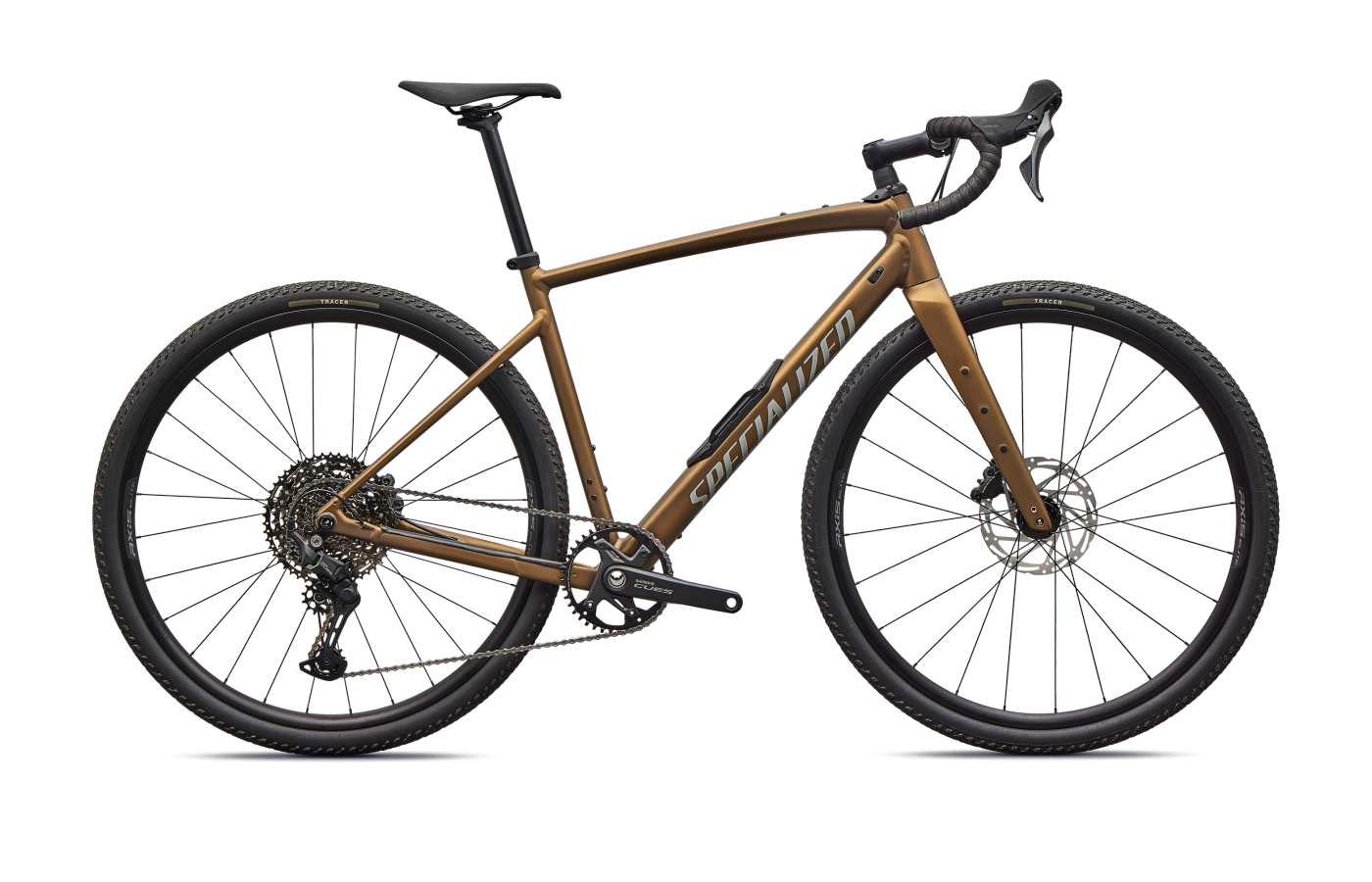
Diverge
Specialized's answer to the URS suspension question, but with Future Shock at the head tube and a less radical road-adjacent geometry. Better for riders who want compliance without committing to a drop-bar XC bike.
Compare →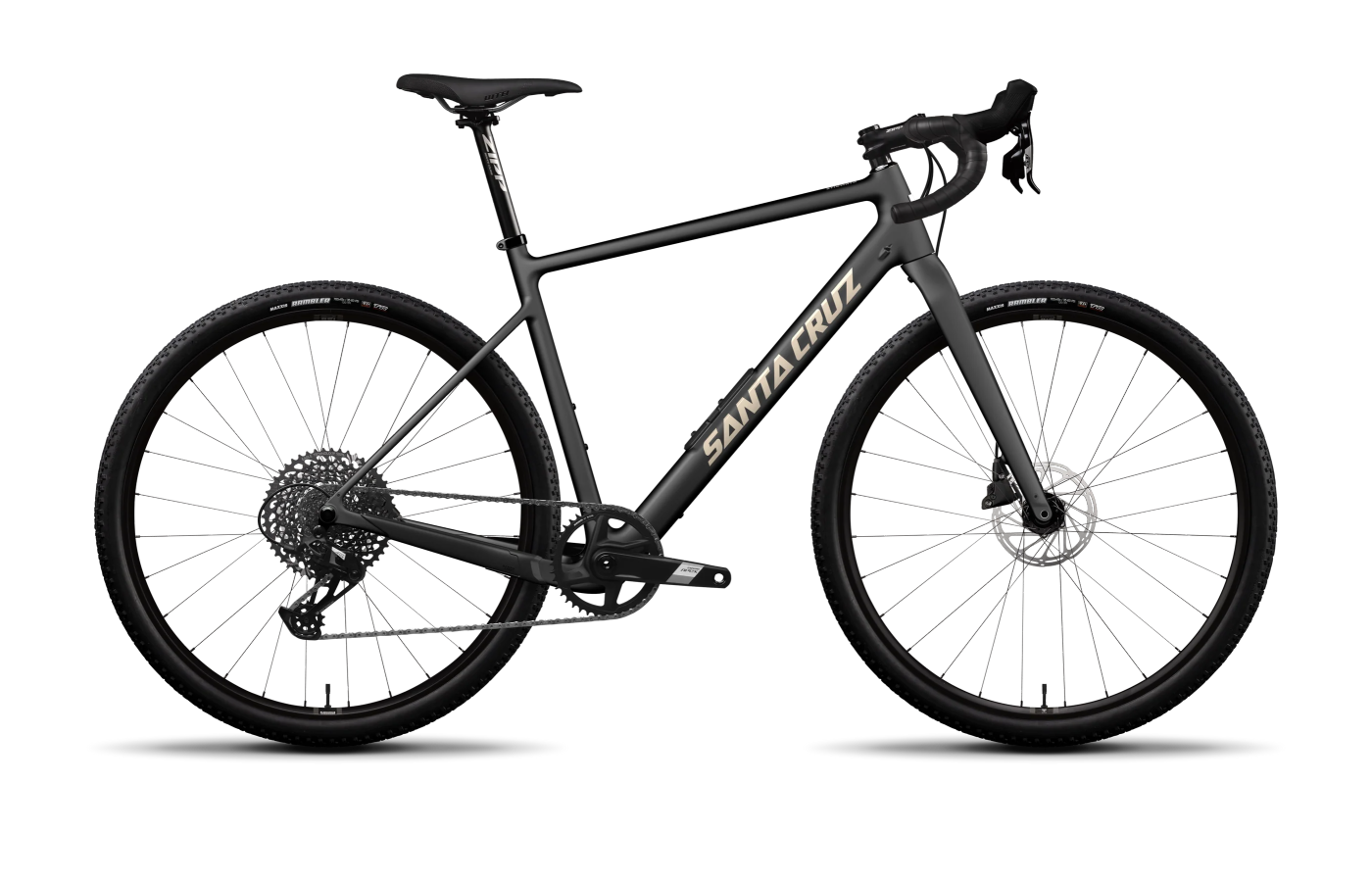
Stigmata
Another mountain-bike-influenced gravel platform with similar singletrack ambitions to the URS — minus the elastomers. If you like the slack front end but don't want proprietary suspension parts to maintain, this is the play.
Compare →