URS
vsAspero
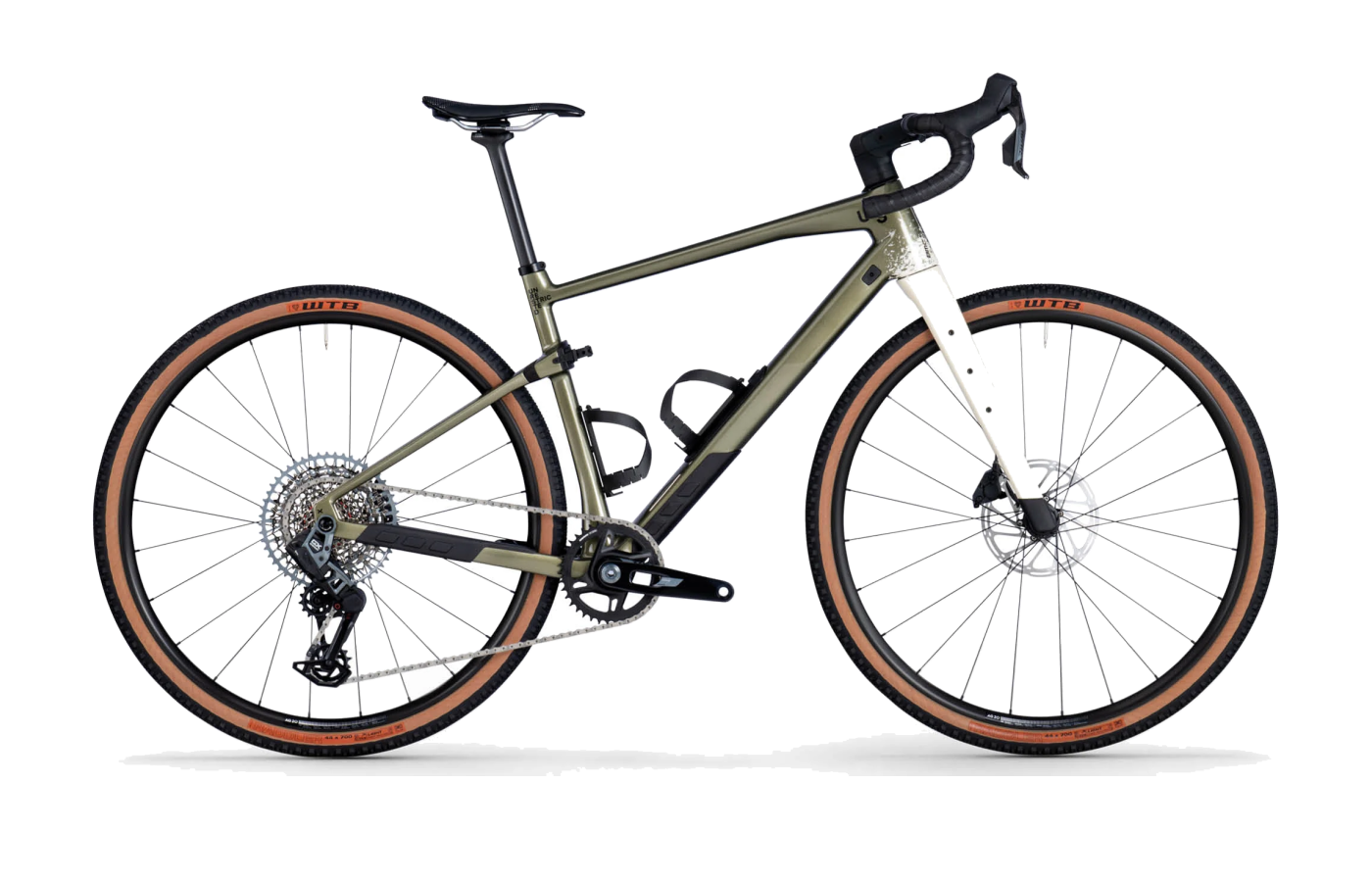
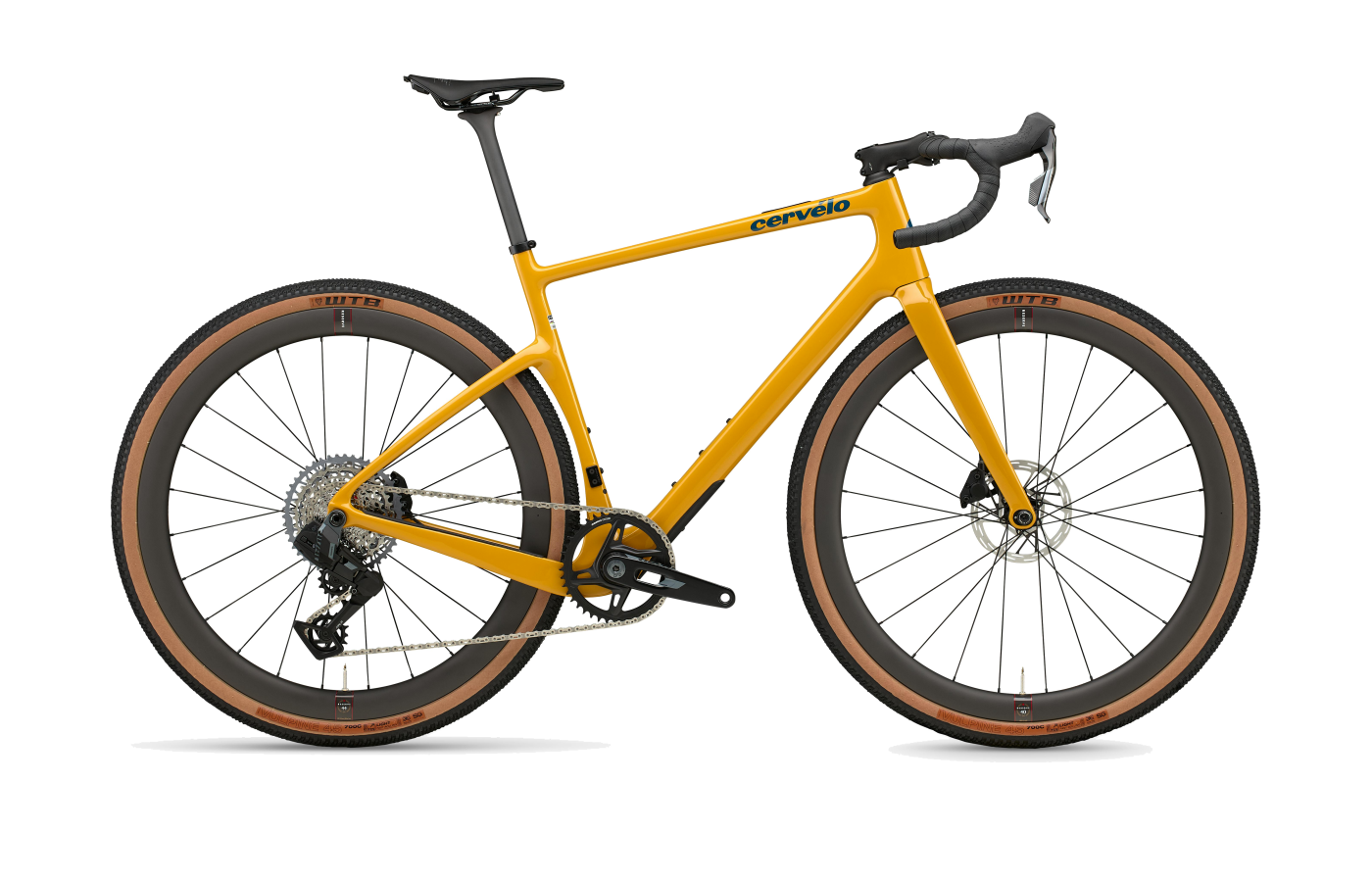
Two gravel bikes, two definitions of gravel.
The BMC URS is a drop-bar XC bike with elastomers and 47 mm tires. The Cervélo Aspero is a road racer that learned to handle dirt.
URS
- Real off-road suspension — 10 mm rear elastomer plus 20 mm at the bars (or fork on LT) takes the edge off washboard and chunky climbs.
- Slack, stable geometry — 69.5° HTA, 84 mm trail at XS, and a long front-center keep the front wheel planted on technical descents.
- 47 mm tire clearance with full frame protection, internal storage, and cargo mounts — actually built for adventure.
- Low 76 mm BB drop draws pedal strikes on rocky singletrack — pay attention to your pedal stroke.
- The pivoting MTT stem is polarizing — multiple reviewers found it "weird" or destabilizing under hard sprints.
Aspero
- Sharper, faster handling — 72° HTA, 62 mm trail, and short 425 mm chainstays make it nimble on hardpack and rolling terrain.
- Excellent componentry per dollar — Reserve 40|44 carbon wheels with Zipp ZR1 hubs and AB09 carbon bars on the Rival build that competitors only spec at higher tiers.
- Easier to live with — threaded T47 BB, UDH, semi-integrated cabling, and a standard 27.2 mm seatpost mean home-mechanic-friendly serviceability.
- Tire clearance caps at 45 mm — fine for race-day, limiting for chunky terrain or muddy days.
- No suspension and no real bikepacking provisions — this isn't an adventure platform.
Editor’s analysis
This isn't a tier-vs-tier fight. It's a question of what kind of gravel you actually ride — washboard singletrack, or fast hardpack at race pace.
The BMC URS and Cervélo Aspero both sit in the premium gravel bracket and both come dressed in SRAM Rival AXS at the editor's-pick tier. Underneath, they're built to opposite design briefs. BMC calls the URS "unrestricted" — slack 69.5° head angle, 47 mm tire clearance, 10 mm of rear MTT elastomer travel, and an integrated suspension stem with another 20 mm up front. Cervélo's pitch on the Aspero is older and unchanged: "haul ass, not luggage."
The Aspero plays it like a road bike that grew tire clearance. A 72° head tube, 62 mm of trail, 425 mm chainstays, and a 388 mm reach at size 54 put the rider square over the bottom bracket the way an endurance road bike would. Cervélo softened the second-gen frame's front end by ~10% versus the original and dropped the seat stays for compliance, but everything is still in service of speed: maintain pace on rolling terrain, sprint out of corners, win the time check.
The URS goes the other way and never apologizes. At size XS — the fit-picked size for a 5'8" rider — its 390 mm reach is just 2 mm longer than the Aspero 54, but the head angle is 3° slacker, trail is 22 mm longer, and chainstays are 5 mm longer. Pair that with the suspension stem and 47 mm Raddler tires and you get a bike that, in the words of three different reviewers, "blurs the line" with an XC hardtail. It's a sledgehammer where the Aspero is a scalpel.
The honest framing: the Aspero is the bike you buy if your gravel is mostly fire roads, rail trails, and the dirt connector that links two pavement loops. The URS is the bike you buy when the route description includes the word "singletrack" and you're not interested in walking the chunky bits. Pick the wrong one and the bike will fight you — the Aspero will rattle on chunder; the URS will feel slow on hardpack with a tailwind.
Where the builds differ.
Comparing our editor's-pick builds side-by-side. Winners highlighted row-by-row — lower price and weight, and the better-spec component, each mark a point.
Build variants & pricing
The URS spans $2,799 to $5,999 across five builds. The Aspero spans $3,550 to $7,050 across six builds and tops out higher.
Prices are current US MSRP. The URS 01 frame includes the MTT rear suspension and is a different chassis from the entry-level URS — 01 builds get full frame protection and integrated storage; the base URS does not.
How they fit, how they steer.
URS XS and Aspero 54 are the fit-picked sizes for a 5'8" rider on each bike. Reach is nearly identical (390 vs 388 mm), but the URS sits 5 mm taller, runs 22 mm more trail, and slacks the head angle by 3° — that's the geometry gap between a drop-bar XC bike and a gravel race bike.
Which size should I buy?
Both ranges cover XS-equivalent through XL. The URS uses S/M/L labels; the Aspero uses 48–61 cm numerics. Each fits roughly the same rider heights at equivalent sizes.
→These are starting points. Flexibility, riding style, and preferred position all shift the answer — if you’re between sizes, a professional fit beats a chart.
What the magazines said.
Published reviews from trusted cycling outlets. Click through for the full write-up.
Which one should you buy?
If the rough sections are the point, get the URS. If the rough sections are something to survive on the way to the finish line, get the Aspero.
URS
If your favorite routes include singletrack, washboard descents, and the kind of fire roads that rattle teeth — and you'd rather have suspension than not — the URS is purpose-built for you. The 01 Two pick gets you Rival AXS, mullet gearing for steep dirt, and the full MTT suspension package.
Aspero
If you came to gravel from the road and your local events are SBT-style hardpack at race pace, the Aspero will feel like home — and the Reserve carbon wheels at the Rival tier are genuinely hard to beat for the price.
Questions buyers actually ask.
Short answers to the things we get emailed about most often.
01Which is faster on hardpack and pavement?
The Cervélo Aspero, comfortably. It's lighter (~8.6 kg measured for the Rival AXS build vs the URS 01 Two at 9.7 kg), has road-bike steering geometry, and Cervélo claims a 4.2-watt aero saving over the previous Aspero from slimmer tube shapes and hidden cable routing.
The URS, by contrast, runs slacker steering, taller stack, and a suspension stem that adds friction on smooth surfaces. On a fast-rolling 50 km gravel loop, expect the Aspero to feel quicker by a noticeable margin.
02Which one handles technical singletrack better?
The BMC URS, by a wide margin — it's not really close. The 69.5° head angle, 84 mm of trail at the small sizes, long front-center, and the MTT suspension (10 mm rear elastomer + 20 mm front) are all built for it. Multiple reviewers compared the URS directly to an XC hardtail with drop bars.
The Aspero's 72° head angle and 62 mm trail are tuned for road-bike steering response. On rough singletrack it'll feel twitchy, the rigid frame transmits more chatter, and the 45 mm clearance limits how much tire you can throw at the problem.
03How much tire can each one fit?
URS: 47 mm in 700c, 50 mm in 650b — and the frame has actual mud clearance to back the number up.
Aspero: 45 mm in 700c, 47–48 mm in 650b. Cervélo claims 6 mm of mud clearance at 44 mm. Some reviewers (Road.cc, Feedthehabit) wanted more — they think 50 mm should be the modern standard. For most race-style gravel, 45 mm is plenty.
If you're regularly running tires above 45 mm or riding wet, gloopy conditions, the URS gives you headroom the Aspero doesn't.
04What's the deal with the URS suspension stem?
The ICS MTT stem on the 01 Two and 01 One is co-designed with Redshift and offers 20 mm of vertical compliance via an elastomer. It pivots — the bars rotate downward into a bump rather than moving linearly. That works very well for damping washboard and gravel chatter.
It's also the most polarizing component on the bike. Reviewers from Velo, Rawcyclingmag, and a YouTube reviewer with an MTB background all noted that under hard sprints or aggressive front-end input, the bars can feel "loose" or "disconnected." If you ride aggressively standing or do a lot of technical maneuvering, consider the URS 01 LT instead — it swaps the stem for a 20 mm telescopic suspension fork from Hi-Ride, which most reviewers preferred for technical riding.
05Are these bikes 1x only?
The URS is 1x across the entire range — every build pairs road shifters with a mountain-bike derailleur and a wide-range cassette (typically 10-52T). It's a deliberate choice tied to BMC's adventure framing.
The Aspero offers both. Most builds in the lineup are 1x XPLR, but Cervélo also sells a 2x Shimano GRX RX820 build at $4,250 with a 48/31T crankset. If you want road-style gear steps for a smooth cadence on rolling terrain, the GRX 2x is the only option between the two bikes.
06Can you fit a dropper post?
Yes on the URS. The seatpost is D-shaped but BMC includes an adapter for a 27.2 mm round post, which opens up most of the dropper market. That said, dedicated D-shape droppers are rare — at least one reviewer flagged this as a real limitation.
Yes, more easily, on the Aspero. It uses a standard 27.2 mm round seatpost out of the box, so any 27.2 mm dropper bolts straight in. For a race bike Cervélo doesn't pitch this hard, but the compatibility is there.
07Which has better long-term serviceability?
Both bikes use the SRAM Universal Derailleur Hanger (UDH), which is a meaningful win for both — replacement hangers are stocked everywhere and the latest SRAM Transmission drivetrains drop straight in.
The Aspero edges ahead on the rest of the package: threaded T47 bottom bracket (no press-fit creak), semi-integrated cable routing that lets you swap stems without re-bleeding hoses, and a standard 27.2 mm round seatpost. Cycling Magazine's reviewer specifically called it "home mechanic-friendly."
The URS is more proprietary in places — the ICS integrated cockpit, D-shape seatpost, and MTT components are BMC-specific parts. The MTT elastomers themselves are simple and tunable (soft/medium/hard), but if a future replacement is needed you're going through BMC.
08Does the URS make sense as a road bike too?
Not really. BMC explicitly positions the Roadmachine X for mixed road-and-gravel duty and the Kaius for gravel racing — the URS is the off-road end of their lineup and reviewers consistently note it's not the bike you want for long pavement rides.
If you want one bike that does road group rides Saturday and gravel events Sunday with a tire swap, the Aspero is the closer fit. The URS expects to be ridden somewhere it'll get muddy.
Similar bikes
If your priorities don’t map cleanly onto either of these, one of these adjacent bikes probably fits better.
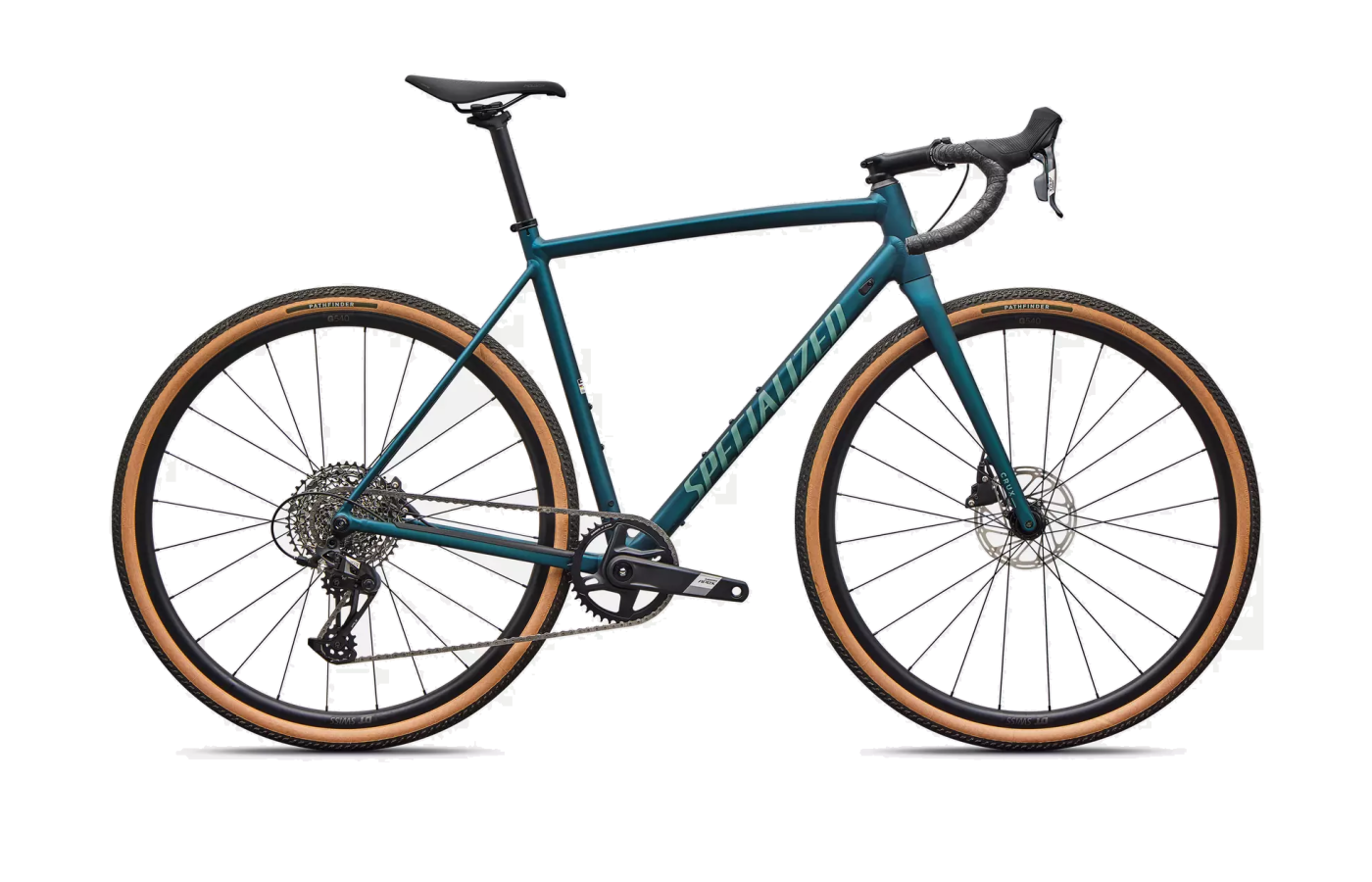
Crux
The Aspero taken to its logical extreme — Specialized Crux strips weight to ~7.25 kg, sharpens the geometry further, and pitches itself as the lightest race-gravel frame on the market. Best if you'd happily trade comfort for grams.
Compare →Grizl
Canyon Grizl is the URS's adventure-leaning rival without the elastomers — massive tire clearance, mounting points everywhere for bikepacking, direct-to-consumer pricing that undercuts BMC by a comfortable margin. The catch is no dealer network.
Compare →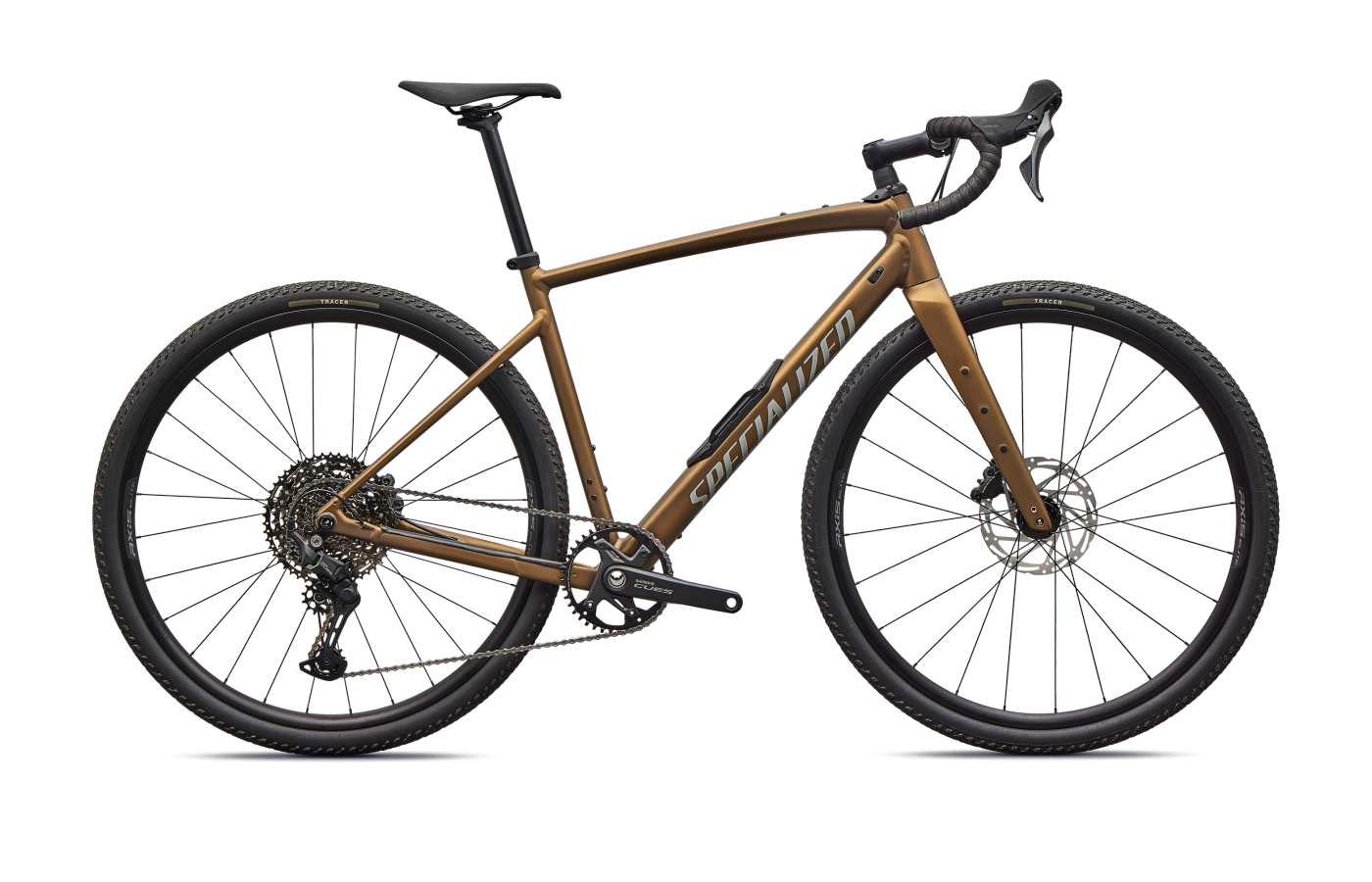
Diverge
Specialized Diverge takes a different swing at gravel comfort — Future Shock 3.0 in the head tube delivers 20 mm of front travel without a pivoting stem feel, paired with road-leaning geometry that lands between the URS and Aspero on the spectrum.
Compare →