Kaius
vsTeammachine
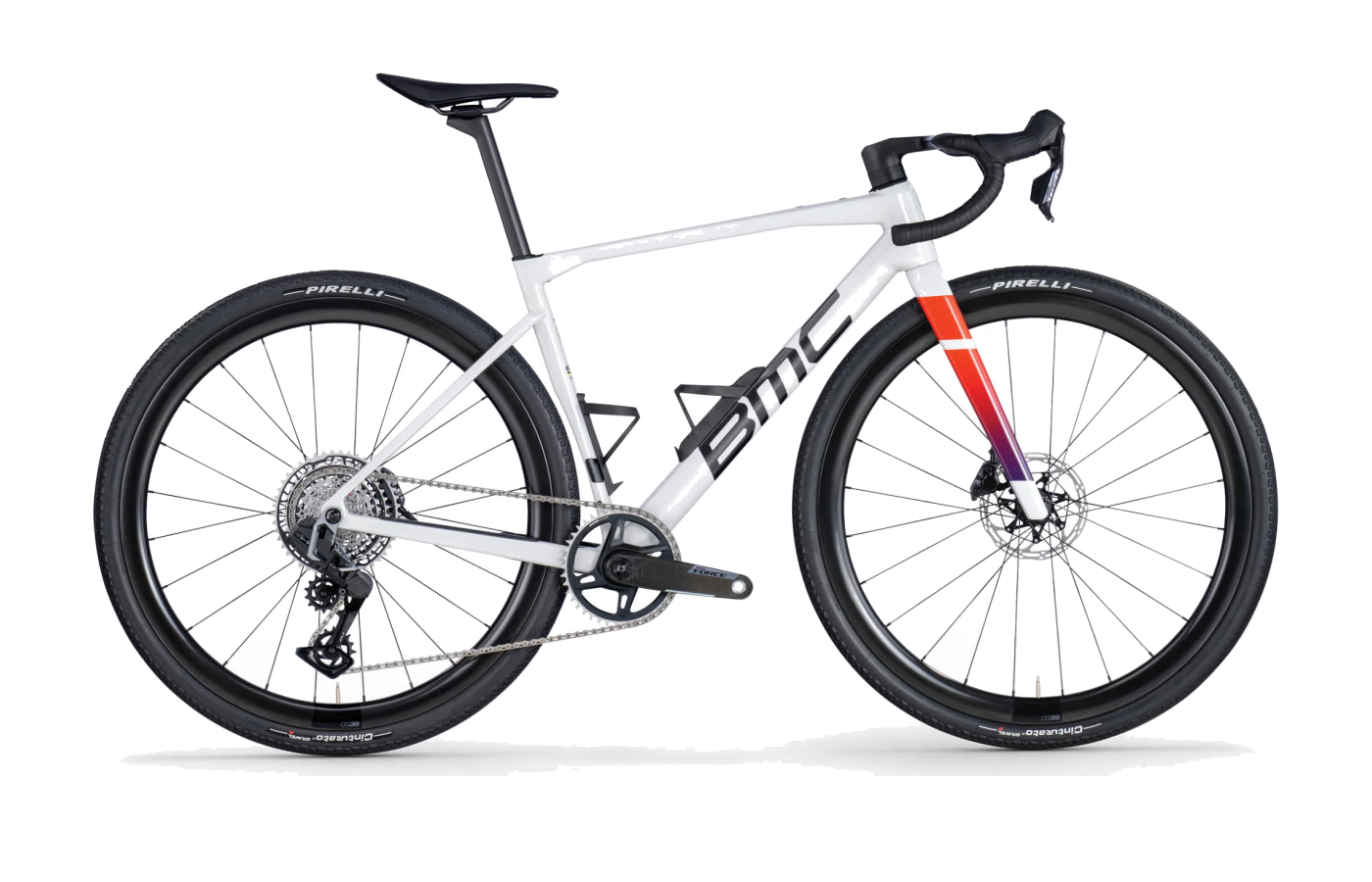
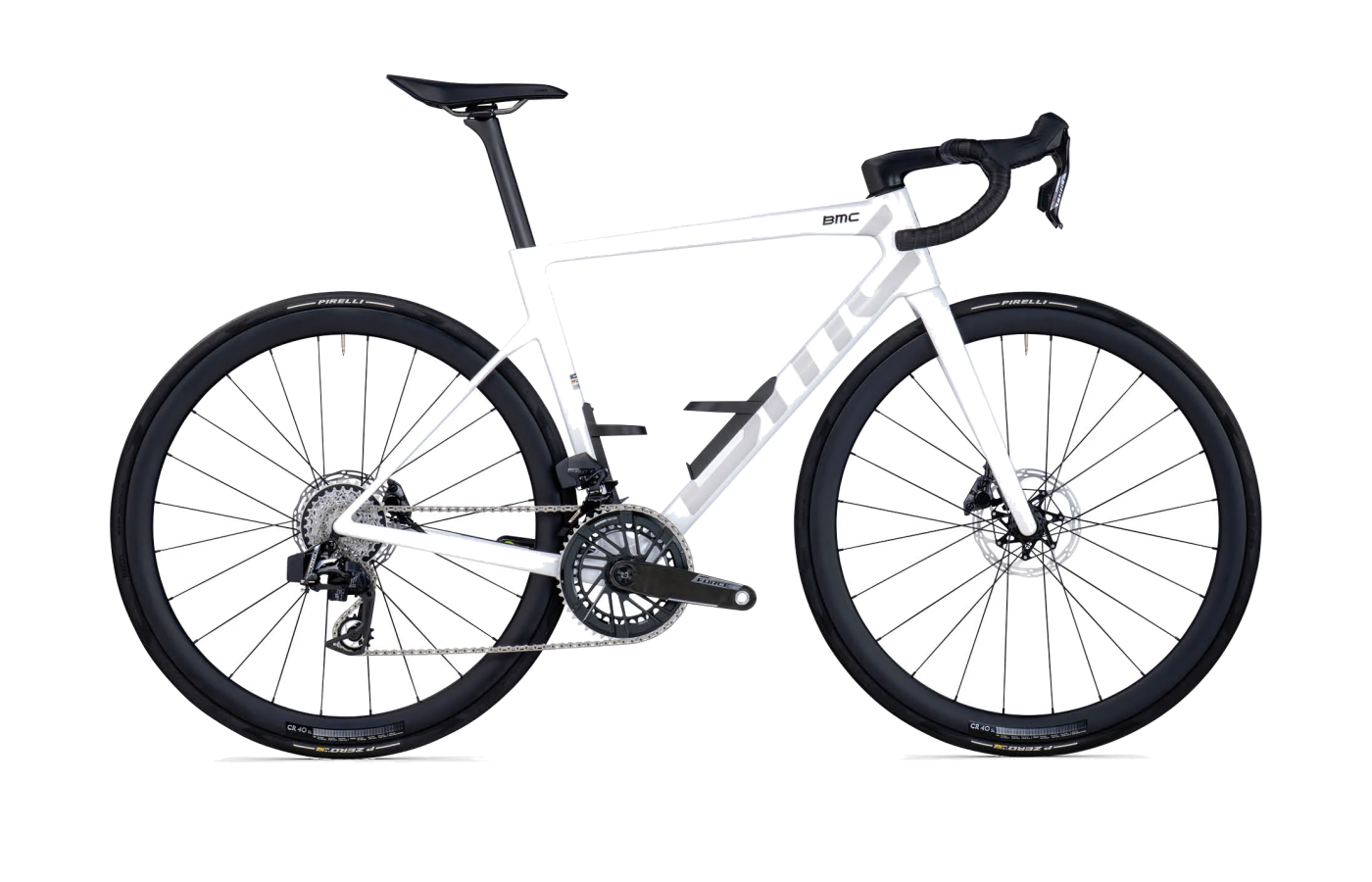
Same Swiss DNA, two different surfaces.
The Teammachine is BMC's lightweight Grand Tour climber. The Kaius is what happens when you stretch that platform to clear 44 mm tires and call it a gravel racer.
Kaius
- 44 mm tire clearance — the widest in BMC's drop-bar lineup, with room for true gravel-race rubber.
- Race geometry on dirt — long reach, short stem, 1015 mm wheelbase tracks loose corners without the wipeout penalty.
- Aero where it counts — Aerocore frame, integrated cockpit, and narrow bar work together to hold speed on open fire roads.
- Brutal on rough, technical terrain — multiple reviewers call it a bone rattler when surfaces turn rocky.
- The 360 mm bar at the hoods is polarizing; broad-shouldered riders often find it too narrow to control.
Teammachine
- Lightest road bike BMC builds — 6.6 kg in SLR 01 trim after a 222 g chassis diet versus the Gen 4.
- Pinpoint descending — the 63 mm trail figure across sizes makes high-speed alpine corners feel planted, not twitchy.
- Compliant for a race bike — BMC claims 14 mm of seatpost deflection under an 80 kg pothole hit; long days don't punish you.
- 30 mm tire clearance is tight by 2026 standards — geometry is optimized around 26 mm tires, narrower than most modern racers.
- PF86 press-fit bottom bracket is a known creak risk on long-term ownership across the industry.
Editor’s analysis
BMC built the Kaius by taking the Teammachine and asking — what would it take to keep this feel on dirt?
The shared lineage is no marketing fluff. BMC engineers explicitly cribbed the Teammachine's tube shapes, the angular sculpted head tube, and the broader race-bike philosophy when designing the Kaius. Both run BMC's Aerocore frame design, both use ICS Stealth Cable Routing, and at the top of each lineup you'll find the same one-piece ICS Carbon Aero cockpit. The bikes don't just share a brand — they share an engineering vocabulary.
But where they diverge, they diverge sharply. The BMC Teammachine is a 6.6 kg climbing weapon optimized around 26 mm road tires, with a 30 mm clearance ceiling and a 63 mm trail figure tuned for pinpoint alpine descents. The BMC Kaius is a 7.5 kg gravel race bike with 44 mm tire clearance, a slacker 71° head tube angle in smaller sizes, and a longer wheelbase (1015 mm vs 989 mm at size 54) for tracking straight through loose flint at speed.
Geometry tells the story of intent. At its fit-picked size 47, the Kaius sits with a longer 390 mm reach and a lower 510 mm stack — a stretched-out racing tuck that BMC pairs with a short stem and a deliberately narrow 360 mm bar at the hoods. At size 54, the Teammachine runs a more conservative 386 mm reach on a 550 mm stack, with steeper 72.3° steering and 410 mm chainstays that snap underneath you when you stand to sprint. One bike asks you to commit to the position; the other rewards a more familiar road-race fit.
The honest read: these aren't substitutes. If you only ride paved roads and want a featherweight climber that descends like it's on rails, the Teammachine is the answer. If your calendar revolves around Unbound, BWR, or your local Life Time Grand Prix qualifier, the Kaius is built for that — and almost nothing else.
Where the builds differ.
Comparing our editor's-pick builds side-by-side. Winners highlighted row-by-row — lower price and weight, and the better-spec component, each mark a point.
Build variants & pricing
The Teammachine spans a much wider range — from $4,799 alloy-bar SLR Two builds to $13,649 SLR 01 flagships. The Kaius lives entirely in the upper-mid bracket, $5,199 to $9,199.
Prices are current US MSRP. The Teammachine is split between the SLR (climbing) and R (aero) frames at the same price points — pick by terrain, not by budget. The Kaius has only one frame across the lineup, with build tier setting the price.
How they fit, how they steer.
Sizes look mismatched because they are: a 5'8" rider fit-picks the 47 on the Kaius (where size labels run small) and the 54 on the Teammachine. The Kaius runs 4 mm longer in reach with a 40 mm shorter stack — that's the gravel-race tuck.
Which size should I buy?
Both ranges cover roughly the same rider heights, but BMC's gravel and road sizing conventions don't share labels. Trust the recommended size, not the number on the seat tube.
→These are starting points. Flexibility, riding style, and preferred position all shift the answer — if you’re between sizes, a professional fit beats a chart.
What the magazines said.
Published reviews from trusted cycling outlets. Click through for the full write-up.
Which one should you buy?
If you race gravel and want a road-bike feel on dirt, get the Kaius. If you live for alpine climbs and fast group rides on tarmac, get the Teammachine.
Kaius
If you've outgrown adventure-oriented gravel rigs and want a bike that feels like a Teammachine on dirt — sharp, light, ruthlessly fast on hardpack and fire roads — this is the tool. Just know what you're signing up for: it's brutal on chunky terrain and the bars demand commitment.
Teammachine
If your weekends are measured in vertical meters and you want a bike that climbs like it's on a string and descends like it's on rails — the Teammachine SLR 01 is one of the best lightweight race bikes in production. Stable, compliant for its category, and now lighter than ever.
Questions buyers actually ask.
Short answers to the things we get emailed about most often.
01How much do these two bikes actually share?
More than the categories would suggest. BMC engineers based the Kaius frame architecture on the Teammachine SLR's tube shapes — the sculpted head tube, oversized down tube, and tapering top tube all carry over. Both use BMC's Aerocore frame design, ICS Stealth Cable Routing, and at the top of each lineup, the same one-piece ICS Carbon Aero cockpit (135 mm drop, 77 mm reach, 12.5° flare).
Where they diverge: tire clearance (44 mm vs 30 mm), wheelbase (longer on the Kaius), trail (68 mm vs 63 mm), and intended surface.
02Which one is faster on a paved climb?
The Teammachine SLR 01, comfortably. The top SLR 01 builds weigh 6.6 kg with pedals off versus 7.5 kg for the flagship Kaius — nearly a kilogram of difference, most of it in tires, wheels, and frame. On a 30-minute climb, that's worth roughly 30–45 seconds for a 70 kg rider.
The Teammachine also runs 26 mm road tires versus the Kaius's 40 mm gravel rubber, which is the bigger contributor on smooth tarmac. Even a tire swap on the Kaius wouldn't close the gap entirely.
03What's the maximum tire clearance on each?
BMC Kaius: 44 mm officially — the widest in BMC's drop-bar lineup. Stock builds ship with 40 mm Pirelli Cinturato Gravel H tires, and reviewers confirm the additional 4 mm of clearance is real, not theoretical.
BMC Teammachine SLR 01: 30 mm officially, though Gen 5 reviewers note the frame and fork now physically clear 32 mm. BMC explicitly states the geometry is optimized around 26 mm tires — go wider and you may sense a small handling shift.
04Why are the size labels so different?
BMC uses different sizing conventions across the gravel and road lines, so a fit-picked 47 on the Kaius corresponds to a 54 on the Teammachine for the same rider. The numbers track different things — seat tube length on the Kaius runs short relative to top tube and reach.
What matters is the actual fit: stack and reach. At the compared sizes here, the Kaius gives a longer, lower position (390 mm reach, 510 mm stack) versus the Teammachine's more upright tuck (386 mm reach, 550 mm stack).
05Is the narrow Kaius handlebar really a problem?
It depends on the rider. The flagship Kaius 01 ONE ships with a 360 mm width at the hoods, flaring to 420 mm at the drops — narrower than almost any production bar in the segment. Reviewers split on it: BikeRadar and Granfondo found it a handful in slow technical sections; Velo's tester adapted within a ride.
The lower-tier Kaius 01 Three and Four builds ship with a more conventional two-piece BMC RSM 01 cockpit at standard widths — pick one of those if the integrated bar is a deal-breaker.
06Can I use the Teammachine for light gravel rides?
On hardpack and well-graded fire roads, sure — fit a 30 mm tire and it will handle the occasional unpaved section without complaint. But it's the wrong tool for actual gravel racing. The 30 mm clearance ceiling cuts you off from real gravel rubber, the geometry is tuned around 26 mm tires, and the wheelbase is short by gravel standards.
If you want one BMC drop-bar bike that does both well, the Roadmachine is the better compromise — more clearance and a more relaxed fit than the Teammachine, with less of the Kaius's race-only specialization.
07Do both come with power meters?
Most builds, yes. Teammachine SLR 01 trims include either a SRAM Red AXS spider-based meter, a Quarq dual-side, or a 4iiii Precision Gen3+ on Shimano builds. The mid-tier Force AXS and Ultegra Di2 builds get single-side meters as stock.
Kaius is more uneven — the GRX Di2 01 Three includes a 4iiii Precision Gen3+, and the SRAM Red 01 ONE includes a SRAM Red Power Meter. The Force AXS 01 Two and Rival AXS 01 Four ship without one.
08Which bike has better long-term value?
Different calculations. The Teammachine lineup spans nearly $9k of price range — you can buy in at $4,799 for the SLR Two with Ultegra Di2, or stretch to $13,649 for an SLR 01 Dura-Ace build. That breadth means there's a Teammachine for most budgets.
The Kaius has a higher floor ($5,199) and lower ceiling ($9,199), but the same Kaius 01 Premium Carbon frame underpins every build — even the entry-level Rival AXS gets the same chassis as the flagship. If you want the frame and plan to upgrade components later, the Kaius 01 Four is the value play.
Similar bikes
If your priorities don’t map cleanly onto either of these, one of these adjacent bikes probably fits better.
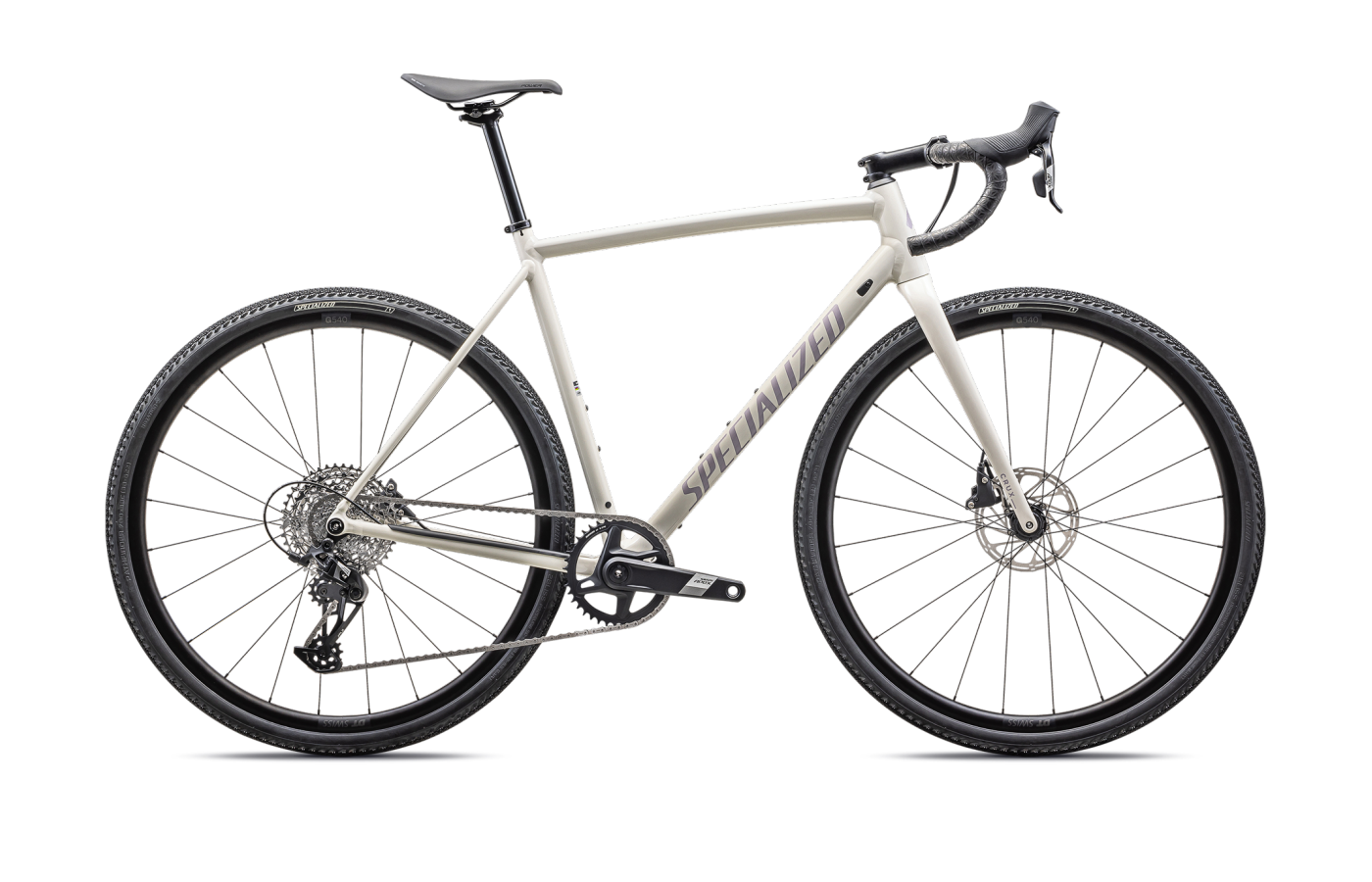
Crux
An even lighter, more minimalist take on the road-bike-for-gravel theme — the Specialized Crux drops the integrated aero focus of the Kaius for outright frame weight. If you'd rather climb than slice wind.
Compare →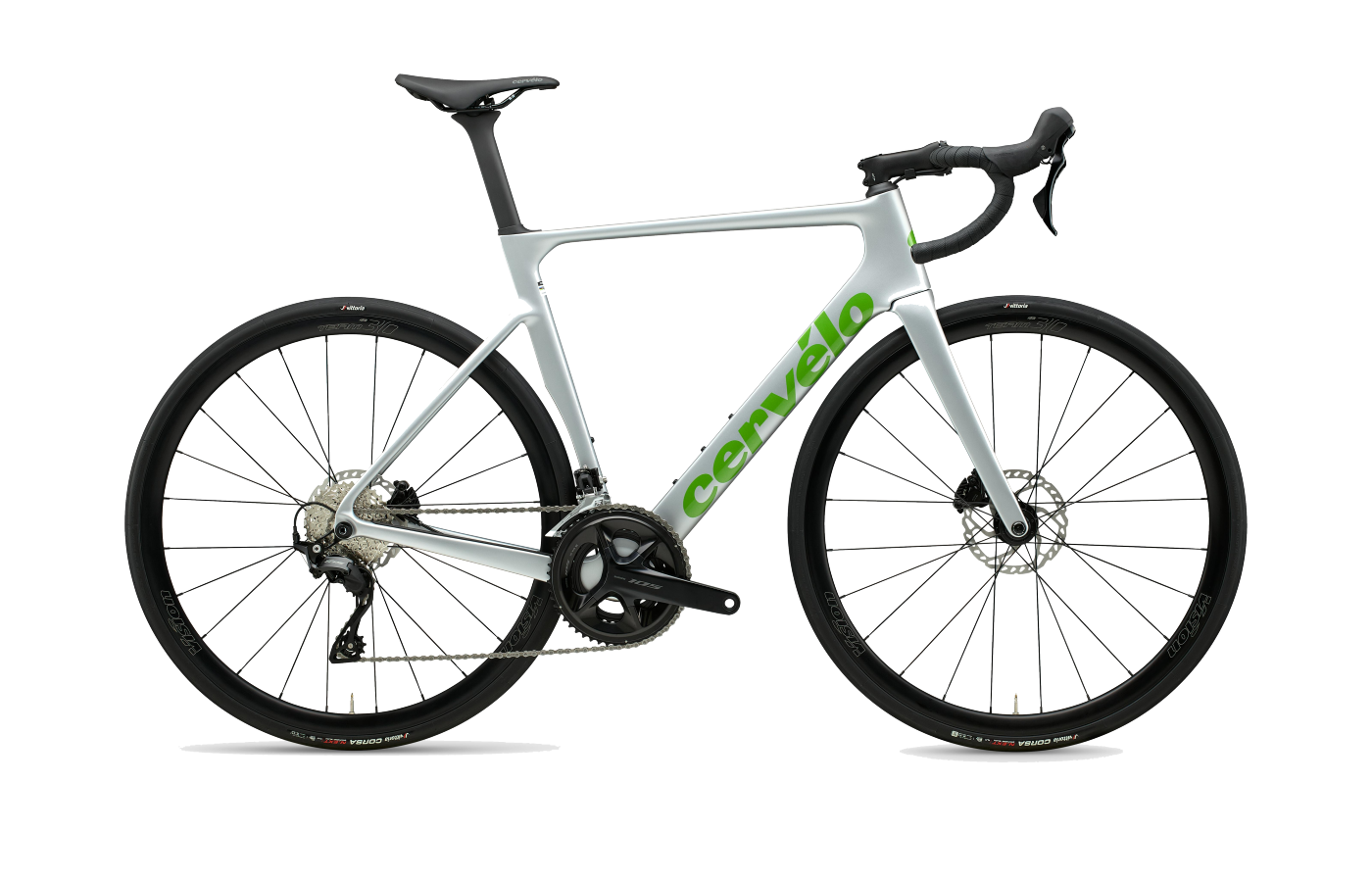
Soloist
Cervélo's answer for road riders who want Teammachine-style performance without the integrated cockpit. The Soloist trades the last few grams of weight for a more standard front end that doesn't punish you at maintenance time.
Compare →
Roadmachine
If the Teammachine's 30 mm tire ceiling feels too tight for your local roads, BMC's own Roadmachine is the in-house answer — more clearance, a more relaxed fit, and the same Swiss build quality without the climbing-bike compromises.
Compare →