Specialissima
vsSprint
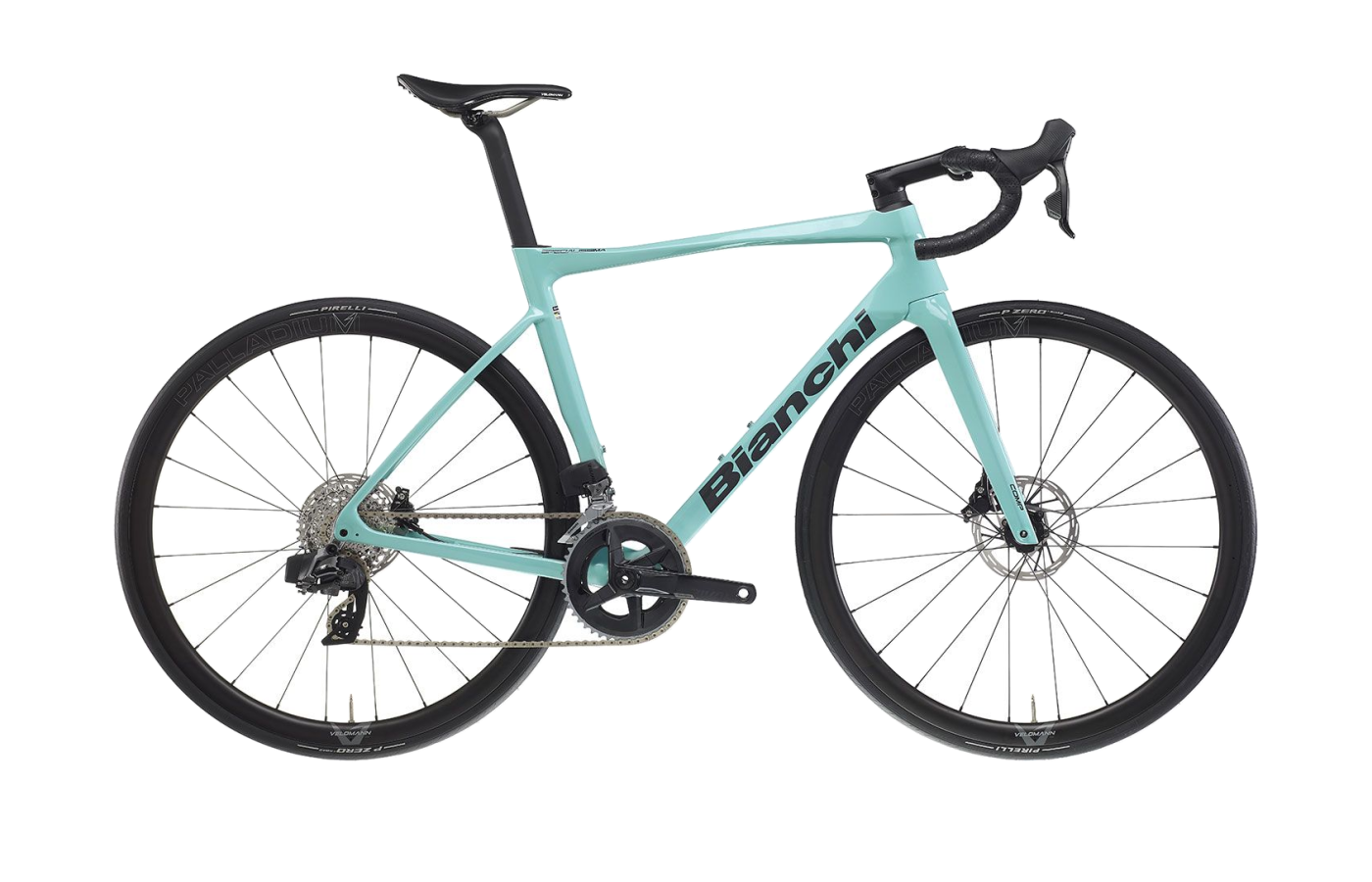
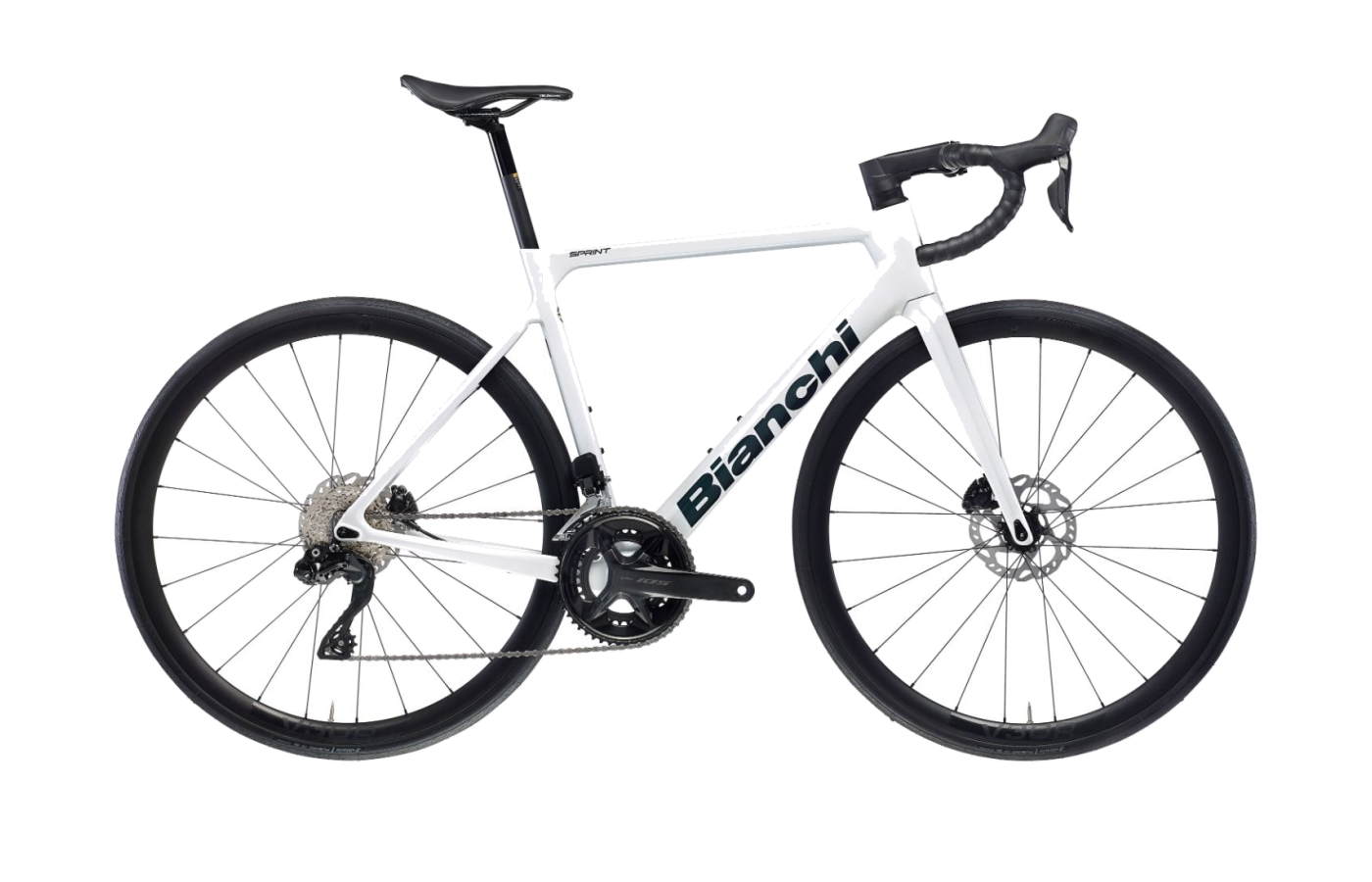
Two Bianchis, two zip codes.
The Specialissima is the avant-garde superbike for dedicated climbers. The Sprint is the honest carbon racer that gets you into Celeste for less than half the price.
Specialissima
- Superbike climbing weight — 6.56 kg measured on the flagship RC, among the lightest road bikes sold.
- Real aero work with tube shapes borrowed from the Oltre; Bianchi claims 31 seconds saved per 10 km at 200 W vs. the prior generation.
- Countervail damping (Pro frame only) kills road buzz without softening the chassis — stiff bike, zero ring.
- Stock 26 mm Pirelli TT tires are a universal complaint — budget in a 28 or 30 mm swap day one.
- Electronic-only frame, press-fit BB, and reports of small fit-and-finish issues (seatpost binder, steerer bolt cover).
Sprint
- Full 105 groupset — shifters, derailleurs, crank, and brakes all 105, not the partial kits you usually see at this price.
- Stiff front end from the 'power box' head tube design — reviewers noted zero flex even wrenching on the bars out of the saddle.
- A real Bianchi for under $4k — Celeste, internal cable routing, carbon monocoque, all at the price of an alloy bike from many rivals.
- Velomann alloy cockpit and 2 kg alloy wheels are the obvious weight-and-upgrade targets.
- No electronic groupset above 105 Di2 — no Ultegra, no Force, no flagship path on this chassis.
Editor’s analysis
This isn't Specialissima vs. Sprint so much as how much Celeste do you really need — the high-modulus, integrated, Countervail-damped halo bike, or the workhorse 105 chassis that does 80% of the job for a third of the money.
Both bikes wear the same paint and share the same long-and-low silhouette, but the frames live in different universes. The Bianchi Specialissima is built from high-modulus carbon across three tiers (RC, Pro, Comp), includes Countervail vibration damping on the Pro, and ships only with electronic groupsets through a fully integrated Reparto Corse cockpit. The Bianchi Sprint is a single carbon monocoque with a Velomann alloy bar-and-stem, offered only with Shimano 105 mechanical or Di2. The price range tells the story — Specialissima $6,500 to $25,647; Sprint $3,000 to $3,650.
Against the stopwatch, the Specialissima is the sharper tool in almost every dimension. BikeRadar weighed a size-55 RC at 6.56 kg; the Sprint is nowhere near that. Bianchi claims the current Specialissima saves 31 seconds over 10 km at 200 W compared to the prior generation thanks to borrowed Oltre aero work. Reviewers across Velo, Cycling News, Granfondo, and BikeRadar converge on the same summary: bonkers light, crazy fast, exceptionally stable at speed — provided you bin the stock 26 mm Pirelli TT tires, which every tester flagged as a weak point.
The Bianchi Sprint isn't trying to match any of that. It's a race-inspired club bike — stiff front end thanks to the 'power box' head tube, full 105 groupset (including brakes, not just derailleurs), newly internally routed cables for 2024, 32 mm clearance. Reviewers called it 'fast to get up to speed' and 'stiff, responsive,' with the frame stability to shrug off rough tarmac. The alloy cockpit and 2 kg alloy wheels hold the numbers down, but the chassis rewards a wheel upgrade later.
Put another way: the Bianchi Specialissima is the bike you buy when you race up mountains and want Italian lineage on the start line. The Bianchi Sprint is the bike you buy when you want a real carbon Bianchi, ride mostly club loops and sportives, and would rather spend the other $4,000 on wheels, trips, or rent.
Where the builds differ.
Comparing our editor's-pick builds side-by-side. Winners highlighted row-by-row — lower price and weight, and the better-spec component, each mark a point.
Build variants & pricing
The Specialissima spans $6.5k to $25.6k across three frame tiers. The Sprint is a single frame with two 105 builds from $3k to $3.65k.
The platforms don't share a drivetrain tier — the Specialissima starts at Ultegra Di2 on the Comp frame, while the Sprint tops out at 105 Di2 on its only frame. We've picked the closest in-spirit pair: both Shimano electronic, both entry builds of their respective platforms, but a ~$2,850 price gap remains. If your budget is closer to Sprint money, that bike is the only option here; if it's closer to Specialissima money, step up the Specialissima range instead of down the Sprint.
How they fit, how they steer.
Both bikes in size 550. The Specialissima sits 9 mm lower at the front (536 mm stack vs. 545 mm) with 3 mm more reach (391 vs. 388 mm) — meaningfully more aggressive. Chainstays are 3 mm shorter (410 vs. 413 mm); the head tube angle is half a degree slacker (72.5° vs. 73°).
Which size should I buy?
Size recommendations based on stack, reach, and effective top tube. The two bikes share identical sizing steps from 470 through 590; the Sprint also offers a 610.
→These are starting points. Flexibility, riding style, and preferred position all shift the answer — if you’re between sizes, a professional fit beats a chart.
What the magazines said.
Published reviews from trusted cycling outlets. Click through for the full write-up.
Which one should you buy?
If you race, climb, and want a superbike, get the Specialissima. If you want a real Bianchi that will do club rides and sportives without draining your savings, get the Sprint.
Specialissima
If your weekend rides point uphill, you have the legs to push a 52/36, and you'll happily swap the stock 26 mm tires on day one — this is the lightest, most integrated Bianchi road bike made. Expensive, uncompromising, and worth it if climbing is why you ride.
Sprint
If you want your first proper carbon Bianchi, ride mostly club loops and long sportives, and plan to upgrade wheels before anything else — the Sprint is one of the best full-105 carbon bikes at the price. Stiff, honest, and easy to live with.
Questions buyers actually ask.
Short answers to the things we get emailed about most often.
01How much lighter is the Specialissima than the Sprint?
Meaningfully. BikeRadar and Cycling News both weighed a size-55 Bianchi Specialissima RC at around 6.56 kg with Dura-Ace Di2. Bianchi doesn't publish an official weight for the Bianchi Sprint, but at its price point with an alloy cockpit, alloy ~2 kg wheels, and a mid-modulus carbon frame, it's realistically in the 8.5–9 kg range built — not far off two kilos heavier. On a 30-minute climb at 70 kg system weight, that's on the order of 30–45 seconds.
02Is the Specialissima actually faster on flat roads too?
Yes, though not by as much as the weight gap suggests. Bianchi claims the current Specialissima saves 31 seconds over 10 km at 200 W on a flat road versus the prior generation, thanks to aero tube shapes borrowed from the Oltre.
The Bianchi Sprint has internal cable routing as of 2024 and a stiff front end, but it's not aero-optimized in the same way, and the deep-profile Specialissima wheelsets (up to 65 mm on top builds) carry more flat-land speed than the Sprint's 30 mm alloys. Both benefit hugely from a wheel upgrade, but the Specialissima starts from a faster baseline.
03What's the maximum tire clearance on each?
Specialissima: 32 mm official. Every reviewer recommends moving off the stock 26 mm Pirelli P-Zero TT tires to at least 28 mm tubeless for real-world riding.
Sprint: 32 mm official. Ships with 25 mm Vittoria Rubino IV; 28 mm tubeless is the obvious first upgrade.
Neither is a gravel bike — for anything rougher than chip-seal look at the Bianchi Impulso.
04Can I get the Sprint with Ultegra or Force?
No. The Bianchi Sprint is only offered with Shimano 105 (mechanical) and 105 Di2. If you want Ultegra Di2 or SRAM Force AXS on a Bianchi road bike, the cheapest path is the Bianchi Specialissima Pro or Comp, which jumps the price floor to around $6,500.
05Does the Specialissima Comp have Countervail?
No. Countervail is exclusive to the Pro frame. The RC frame is the lightest (specific high-modulus layup, minimal paint) but doesn't have CV; the Comp uses a standard high-modulus carbon layup and also skips CV.
If vibration damping matters to you, Velo explicitly recommends the Pro as 'the one you should buy' — the ~40 g weight penalty vs. the RC is outweighed by the CV technology and the more vivid Celeste fade paint.
06Which is easier to live with day-to-day?
The Bianchi Sprint, clearly. Its Velomann alloy cockpit accepts standard stem-length swaps without re-routing hoses, the press-fit BB is the only fussy bit, and 105 parts are cheap and everywhere.
The Bianchi Specialissima uses a fully integrated Reparto Corse one-piece cockpit — changing stem length means buying a new unit. Velo flagged small irritations (a steerer-bolt cover that flaps, an angled seatpost binder that's hard to torque) and noted Bianchi's U.S. service network can be slow for proprietary parts. Set-and-forget once dialed, but less forgiving if something goes wrong.
07Is there a mechanical option on either?
Only on the Bianchi Sprint, which still offers a full 105 mechanical build at $3,000 — the cheapest way into the comparison. The Bianchi Specialissima frame is electronic-only across all three tiers (RC, Pro, Comp); there's no cable-stop path.
If you want mechanical shifting with Celeste paint, the Sprint is the only answer.
08Which makes more sense as a long-term upgrade platform?
Both upgrade well, but in different directions. On the Bianchi Sprint, the highest-value swaps are lighter carbon wheels and a carbon seatpost — reviewers said moving off the stock 2 kg alloy wheels makes the bike 'literally take off.'
On the Bianchi Specialissima, the frame is already near the ceiling; the improvements are wider tubeless tires (move off the 26 mm Pirelli TTs immediately) and, for top-build owners, deeper wheels if you ride mostly flats.
The Sprint has more headroom left in it. The Specialissima is closer to finished out of the box.
Similar bikes
If your priorities don’t map cleanly onto either of these, one of these adjacent bikes probably fits better.
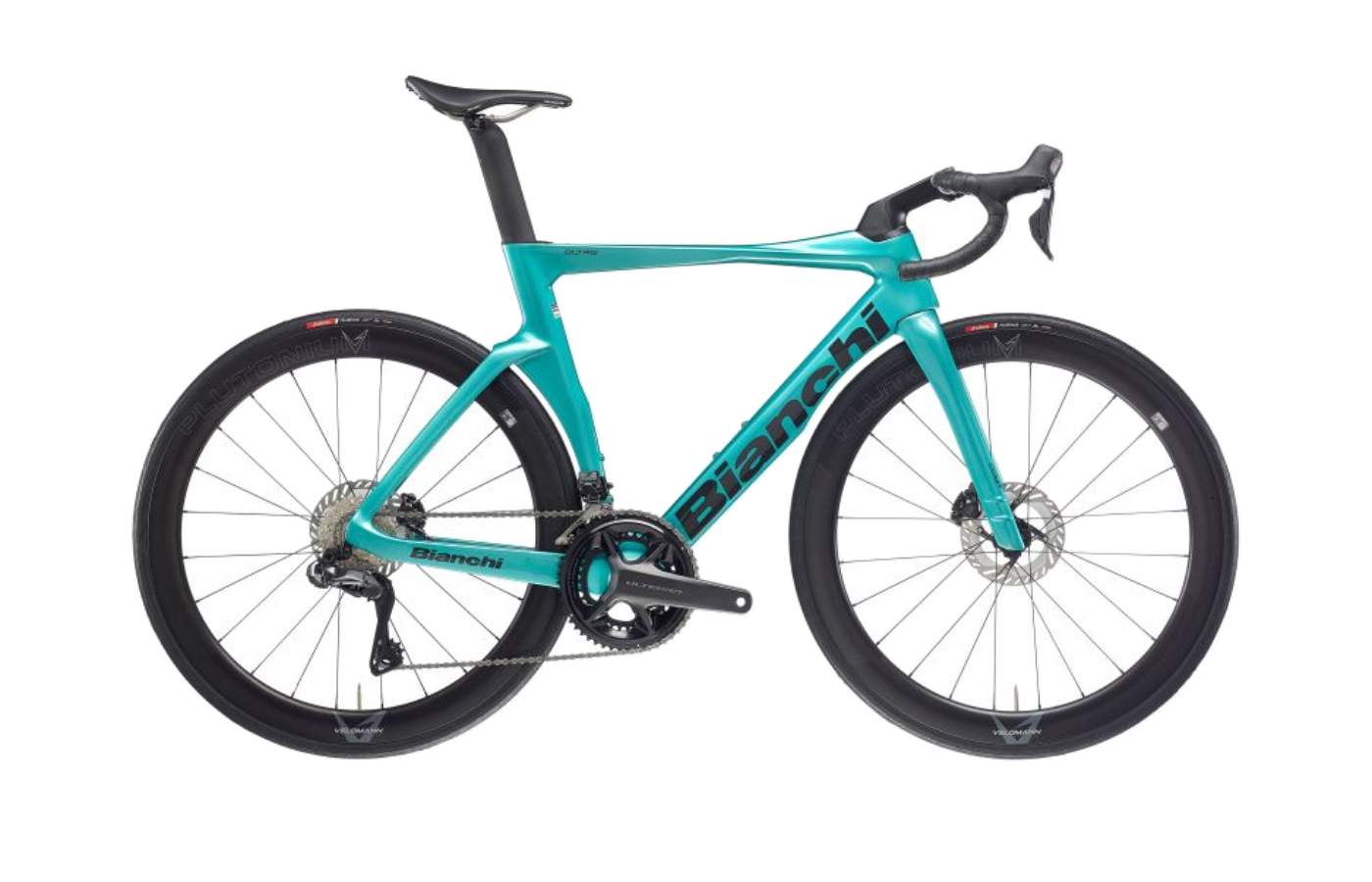
Oltre
Bianchi's own aero specialist. If the Specialissima is the climber with aero manners, the Oltre is the pure aero weapon — radical tube shapes, wind scoops on the head tube, and flat-out faster above 35 km/h. Picks mountain days as the one thing it won't win.
Compare →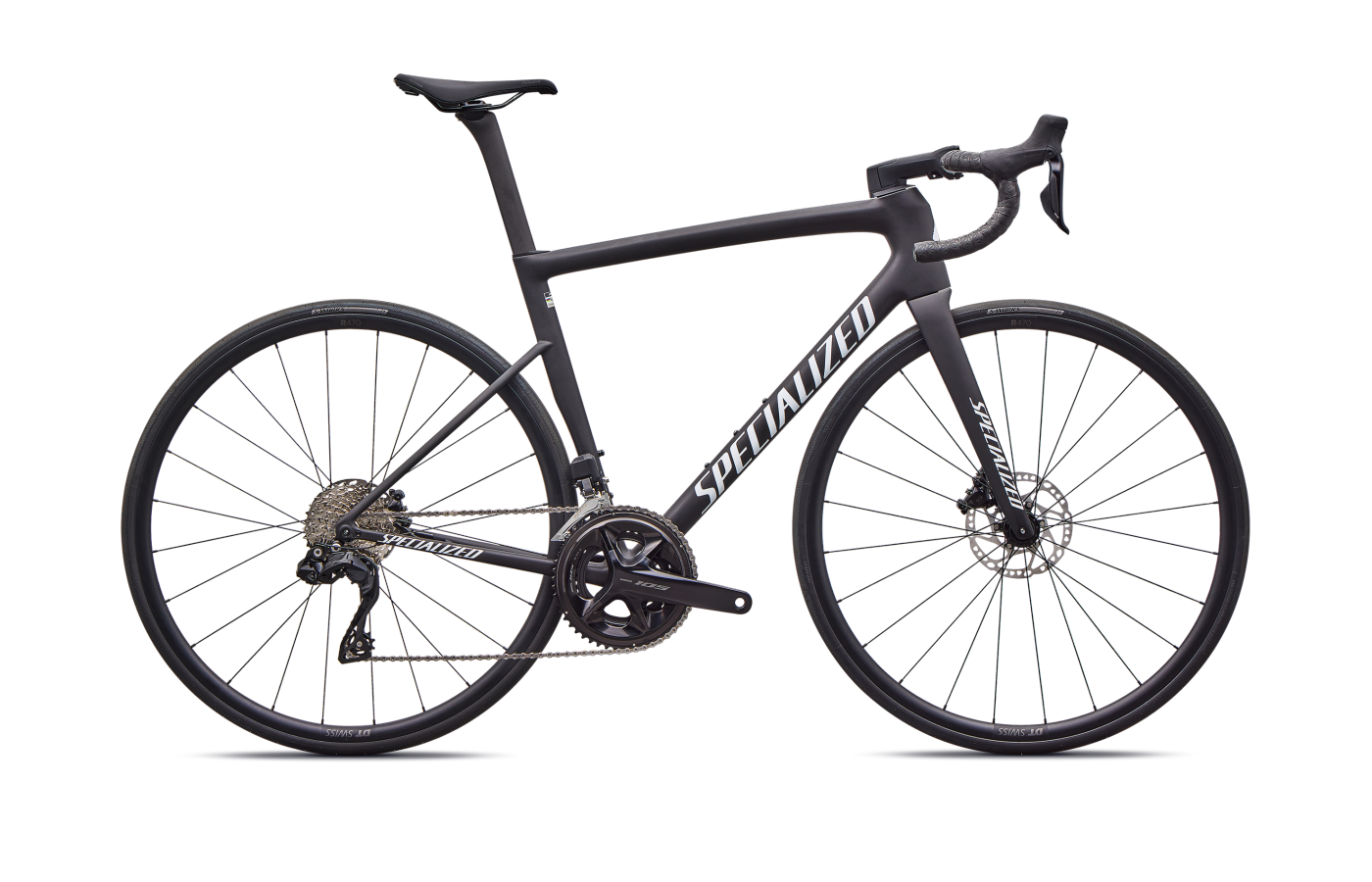
Tarmac
The direct Specialissima rival from Specialized — tighter wheelbase, 32 mm clearance, and the most complete 'one bike on everything' pitch in the segment. Less Italian heritage, more disciplined all-round race bike.
Compare →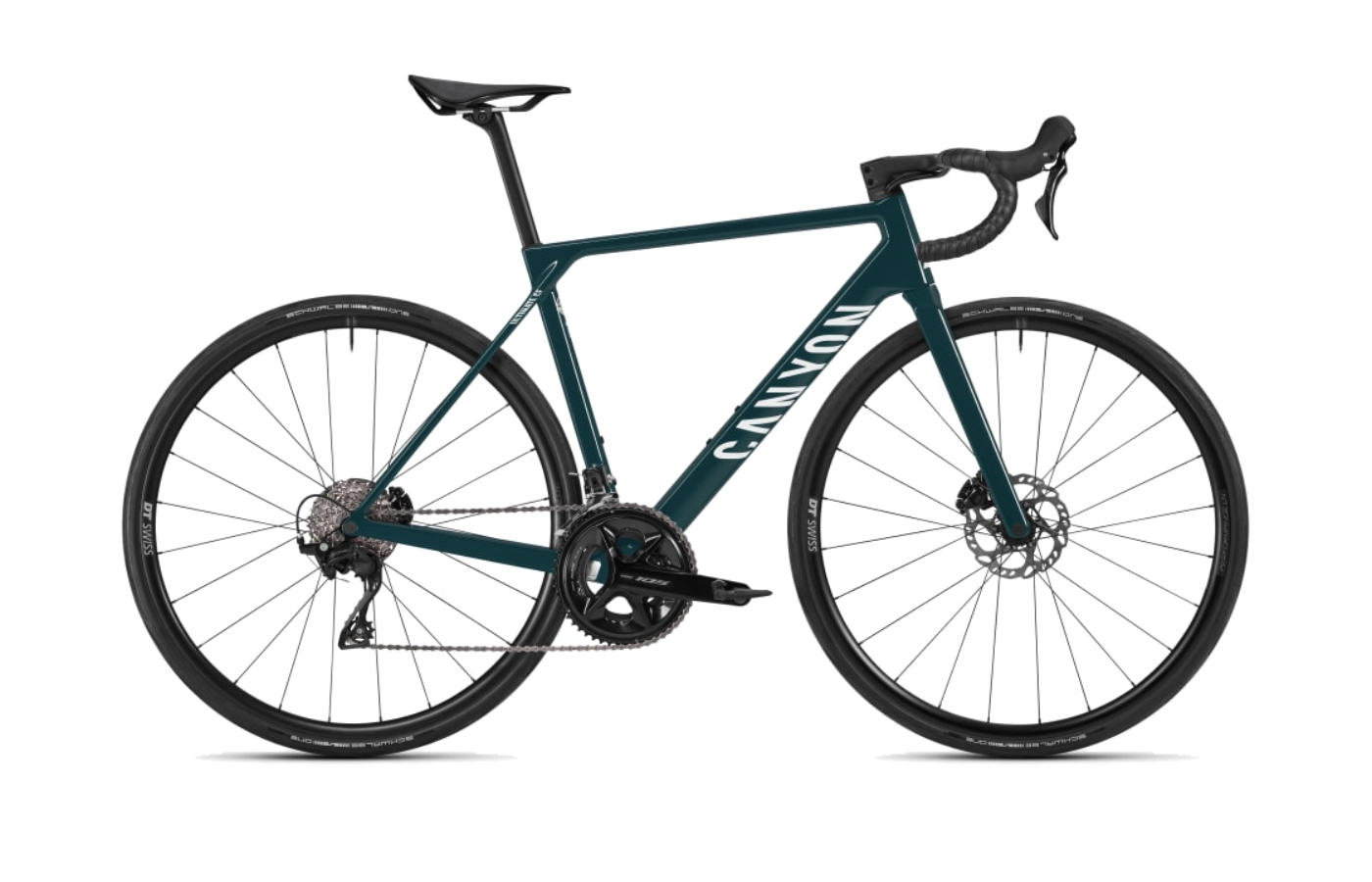
Ultimate
Canyon's climbing-leaning all-rounder delivers a similar long-and-low feel to the Specialissima at noticeably better component value, with the catch that it's direct-to-consumer — no dealer, no demo ride. Best if you already know your fit.
Compare →