SB135
vsSB140
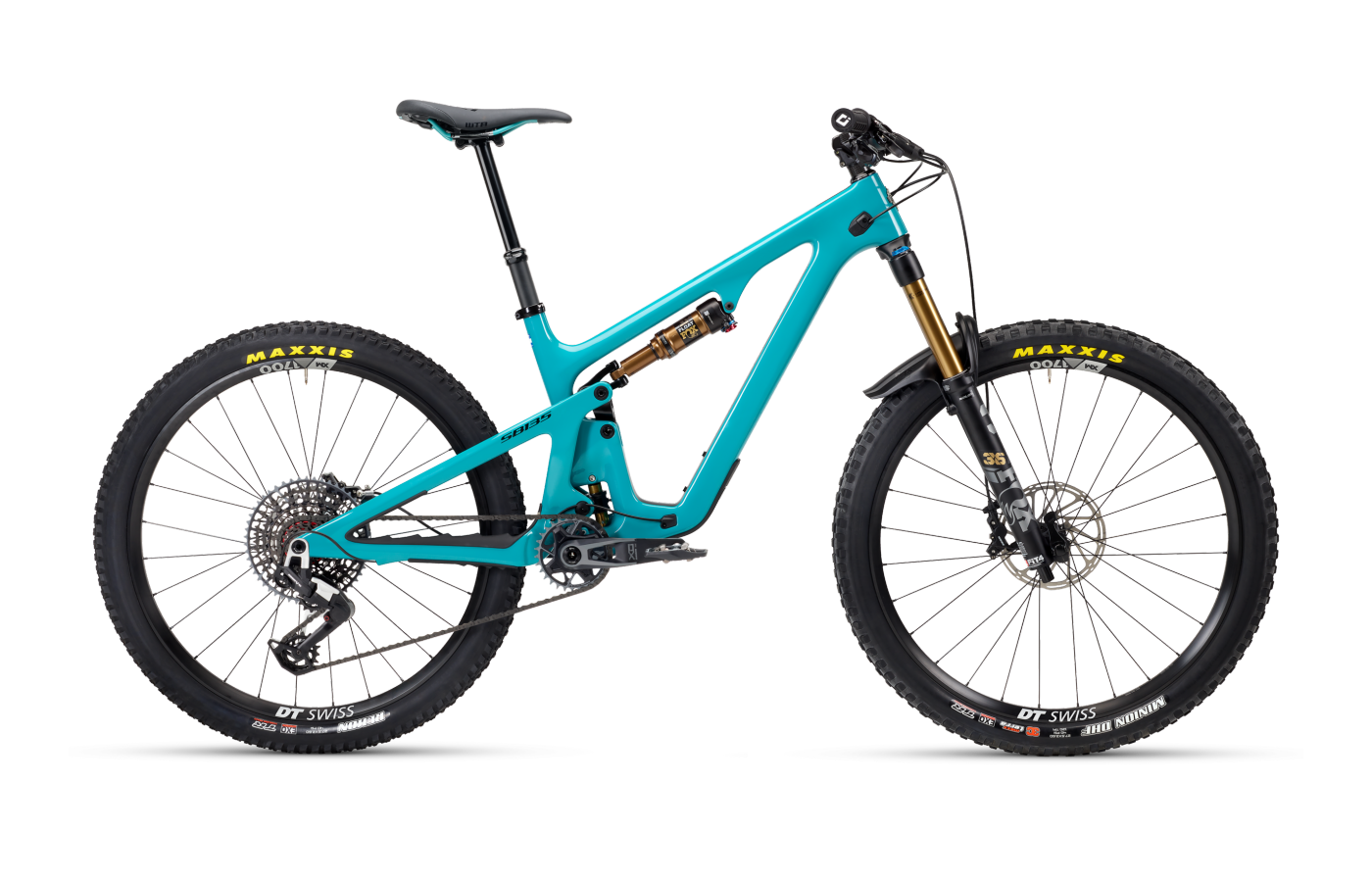
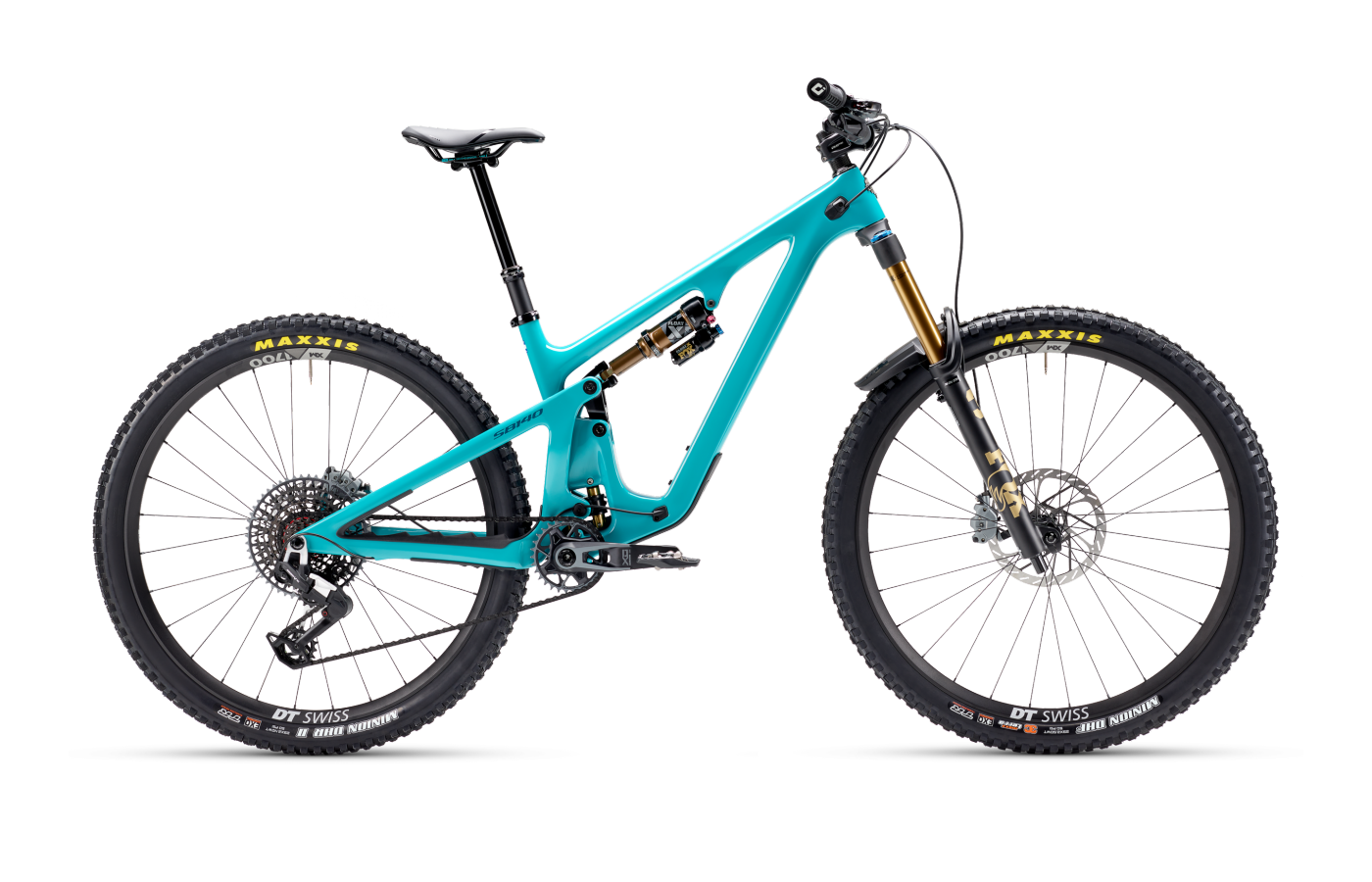
Same suspension, different wheels, different bikes.
The SB135 is the agile 27.5" jib machine. The SB140 is the speed-carrying 29er trail bike. Travel numbers are nearly identical — the wheels do the work.
SB135
- Rocketship acceleration — 27.5" wheels have less rotational mass; the SB135 spins up out of corners in a way the SB140 can't.
- Tightest cornering in the segment — 431.8 mm chainstays at size M plus smaller wheels equal a turning circle a 29er can't match.
- Designed-down for smaller riders — XS and S frames use unique linkages and rear triangles, not just shrunk geometry.
- 27.5" wheels hang up in deep holes and root nests where a 29er rolls through.
- Low 596.9 mm stack at size M leaves taller riders feeling strained — expect to add a high-rise bar.
SB140
- Bottomless 140 mm rear — reviewers consistently say it feels like a 150–160 mm bike on big hits thanks to a supportive 14% progression rate.
- Best speed maintenance in the lineup — 29" wheels carry momentum across chopped-up ground that the SB135 has to muscle through.
- Six builds spanning $4,800 of range — from a $6,200 C2 entry to an $11,000 XX AXS flagship, with Shimano XT Di2 and SRAM XX/X0/GX options in between.
- About 2 lb heavier than the equivalent SB135 build (31.5 lb vs. 29.5 lb at the T2 spec).
- Less playful and less flickable on mellow trails — it rewards speed, not jib lines.
Editor’s analysis
This isn't 27.5 vs. 29 in the abstract. It's two Yetis built around the same Switch Infinity link, asking what kind of trail rider you are.
On paper the SB135 and SB140 look like siblings: 135 mm vs. 140 mm of rear travel, the same Switch Infinity V2 link, the same TURQ carbon front triangle, the same Maxxis-EXO rubber. Yeti even spec's the upper builds with the same DT Swiss XM1700 wheels. The whole comparison turns on one decision — wheel size — and the geometry, fork, and ride character that follow from it.
The SB135 is the niche play. Dual 27.5" wheels, a 150 mm Fox 36, a 65.4° head angle, and 431.8 mm chainstays at size M. Reviewers across the board describe it as a "dopamine machine" and a "jib machine" — less rotational mass, faster acceleration out of corners, more willing to pop off every root. The trade-off is rollover: the smaller wheels hang up in deep root nests and square-edged holes that a 29er would simply roll through.
The SB140 is the modern trail default. 29" wheels, a 160 mm Fox 36 GRIP X2 on the T2 build we picked, a 65° head angle, and 436.9 mm chainstays. Reviewers call it a "scalpel rather than a sledgehammer" — surgical, composed at speed, and notably quick on rolling terrain. Multiple sources said the 140 mm rear punches well above its travel number, feeling like a 150–160 mm bike on big hits.
Geometry tells the same story. At size M both bikes share an identical 459.7 mm reach, but the SB140 stacks 22.9 mm taller (619.8 vs. 596.9) and rolls a 22.8 mm longer wheelbase. The SB135 is shorter, lower, and tighter — it's the bike for the rider who wants every trail to feel like a pump track. The SB140 is the bike for the rider who wants to keep up with friends on a 29er and still pop the occasional jump.
Where the builds differ.
Comparing our editor's-pick builds side-by-side. Winners highlighted row-by-row — lower price and weight, and the better-spec component, each mark a point.
Build variants & pricing
The SB135 ranges from $4,200 to $6,300 across three builds. The SB140 spans $6,200 to $11,000 across six — wider, deeper, and more expensive at the top.
Prices are current US MSRP. Both T2 builds run the same SRAM X0 controller paired with Eagle 90 derailleur and crank — Yeti's mid-tier Transmission spec — so the spec table compares apples to apples. The SB140 T2 ships with a 160 mm Fox 36 GRIP X2 (effectively a Lunch Ride spec), where the SB135 T2 runs a 150 mm Fox 36 FIT4.
How they fit, how they steer.
Both at size M — the fit-picked size for a 5'8" rider on each bike. Reach is identical at 459.7 mm. The SB140 stacks 22.9 mm taller, runs a 22.8 mm longer wheelbase, and slackens the head tube by 0.4°. The SB135 is the shorter, lower, tighter bike.
Which size should I buy?
Size recommendations based on stack, reach, and effective top tube. The SB140 runs to XXL; the SB135 tops out at XL. Both go down to XS.
→These are starting points. Flexibility, riding style, and preferred position all shift the answer — if you’re between sizes, a professional fit beats a chart.
What the magazines said.
Published reviews from trusted cycling outlets. Click through for the full write-up.
Which one should you buy?
If you want a bike that turns every trail into a pump track, get the SB135. If you want one bike that climbs efficiently and descends fast on anything, get the SB140.
SB135
If you ride mostly moderate-grade trails, value pops and manuals over Strava PRs, or you're a smaller rider who's always felt over-wheeled by a 29er, the SB135 is the rare modern bike still built around your priorities. The 27.5" wheels reward active riding and creative line choice.
SB140
If you want one bike for everything from 3,000-foot alpine days to fast technical descents, the SB140 is the more versatile tool. The 29" wheels carry speed across chunky terrain, the 140 mm rear punches above its travel number, and the broader build range gives you more entry points.
Questions buyers actually ask.
Short answers to the things we get emailed about most often.
01Which one accelerates faster?
The SB135, clearly. 27.5" wheels have less rotational mass and lower inertia, so the bike snaps to attention the moment you put pressure on the pedals. Reviewers from GearJunkie and The Loam Wolf described it as "rocketship-fast" out of corners.
The SB140 is no slouch — the Switch Infinity link gives both bikes a firm pedaling platform — but the bigger 29" wheels need more energy to spin up. You feel it most when you're slowed by a tight turn or a square-edged obstacle and have to put down power again.
02Which one is faster overall?
Depends on the trail. On open, rolling, or rocky terrain, the SB140 wins on speed maintenance — the 29" wheels roll over chatter and hold momentum across chopped-up ground that the SB135 has to muscle through.
On tight, technical, lower-speed trails with lots of corners and pumps, the SB135's acceleration and agility make up the difference and then some. The rule of thumb from the meta-reviews: 29ers win when the trail is fast, 27.5ers win when the trail is twisty.
03How much travel do they actually have?
SB135: 135 mm rear, 150 mm fork (the T2 ships with a Fox 36 FIT4 150 mm).
SB140: 140 mm rear, 160 mm fork on the T2 we picked (Fox 36 GRIP X2 160 mm — effectively a Lunch Ride spec).
Reviewers consistently note the SB140's 140 mm rear punches well above its number and feels closer to 150–160 mm on big hits, thanks to the 14% progression rate. The SB135 is similarly described as "bottomless" for 135 mm — Singletracks did dissent and report bottoming it out on larger jump lines.
04Are these climbers or descenders?
Both are excellent climbers. The Switch Infinity link gives them a famously firm pedaling platform — Singletracks said the SB135 in its firmest setting is "almost indistinguishable from a hardtail." The 77° effective seat tube angle on both keeps you centered for technical climbing.
On descents, the SB140 is the more confidence-inspiring bike at speed thanks to its 22.8 mm longer wheelbase and 0.4° slacker head angle at size M. The SB135 demands more precision in steep, janky terrain — reviewers say it can get "pinged" off line if you're not on point.
05Why is the front end so low on both?
Yeti's design intent. Both bikes run notoriously low stack heights — 596.9 mm on the SB135 at size M and 619.8 mm on the SB140 at size M. The reasoning is that a low front favors a forward-weighted, attacking riding stance and benefits smaller riders.
In practice, multiple reviewers across both bikes (PinkBike, MBR, Vital MTB) recommend swapping in a higher-rise handlebar — 35 to 50 mm of rise — to avoid feeling "strained" or "pitched over the front" on long climbs and steep descents. Plan on it.
06How much maintenance does the Switch Infinity system need?
More than a standard linkage. Yeti recommends a 20-hour service interval on the Switch Infinity unit in wet or "slimy" conditions, stretching to 75–100 hours in dry climates.
The V2 system on the TURQ frames (which both T2 builds get) has improved seals, bearings, and a grease injection port, but reviewers still flag it as a "complex system" that demands attention. Owners in wet climates like the Pacific Northwest have reported needing full Switch Unit replacements after a single neglected season. If you're a fastidious home mechanic, fine. If you're not, it's a real ownership cost.
07What's the warranty?
Both bikes carry a lifetime warranty on the frame and the Switch Infinity link to the original purchaser. Yeti has historically offered crash-replacement pricing on top of that, though terms vary by year and dealer.
08Which one should a smaller rider buy?
The SB135, in most cases. Yeti specifically engineered the XS and Small SB135 frames as a separate project — unique front shock mounts, linkages, and rear swingarms — to ensure smaller riders get the same kinematics, standover clearance, and water bottle compatibility as larger frames.
The SB140 also offers an XS, but a 29" front wheel on a small frame inherently brings tradeoffs in toe overlap and standover that the SB135's 27.5" platform sidesteps. GearJunkie and Enduro MTB both highlighted Yeti's small-rider engineering on the SB135 as a real value-add.
Similar bikes
If your priorities don’t map cleanly onto either of these, one of these adjacent bikes probably fits better.
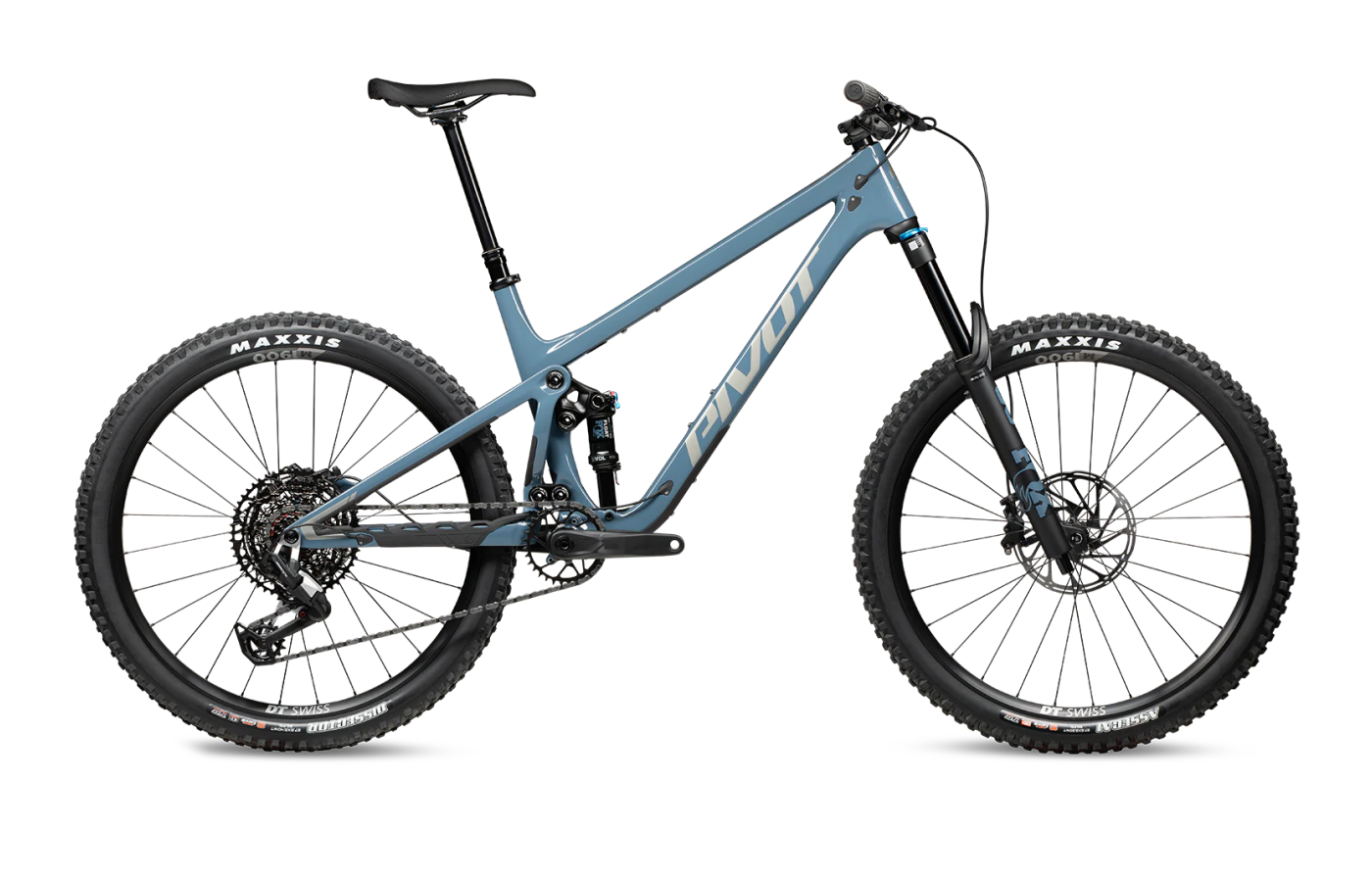
Shadowcat
The other 27.5" boutique trail bike still standing — lighter than the SB135 with a similar agility-first character. If the dual 27.5" thing appeals but you want to save grams, the Shadowcat is the obvious cross-shop.
Compare →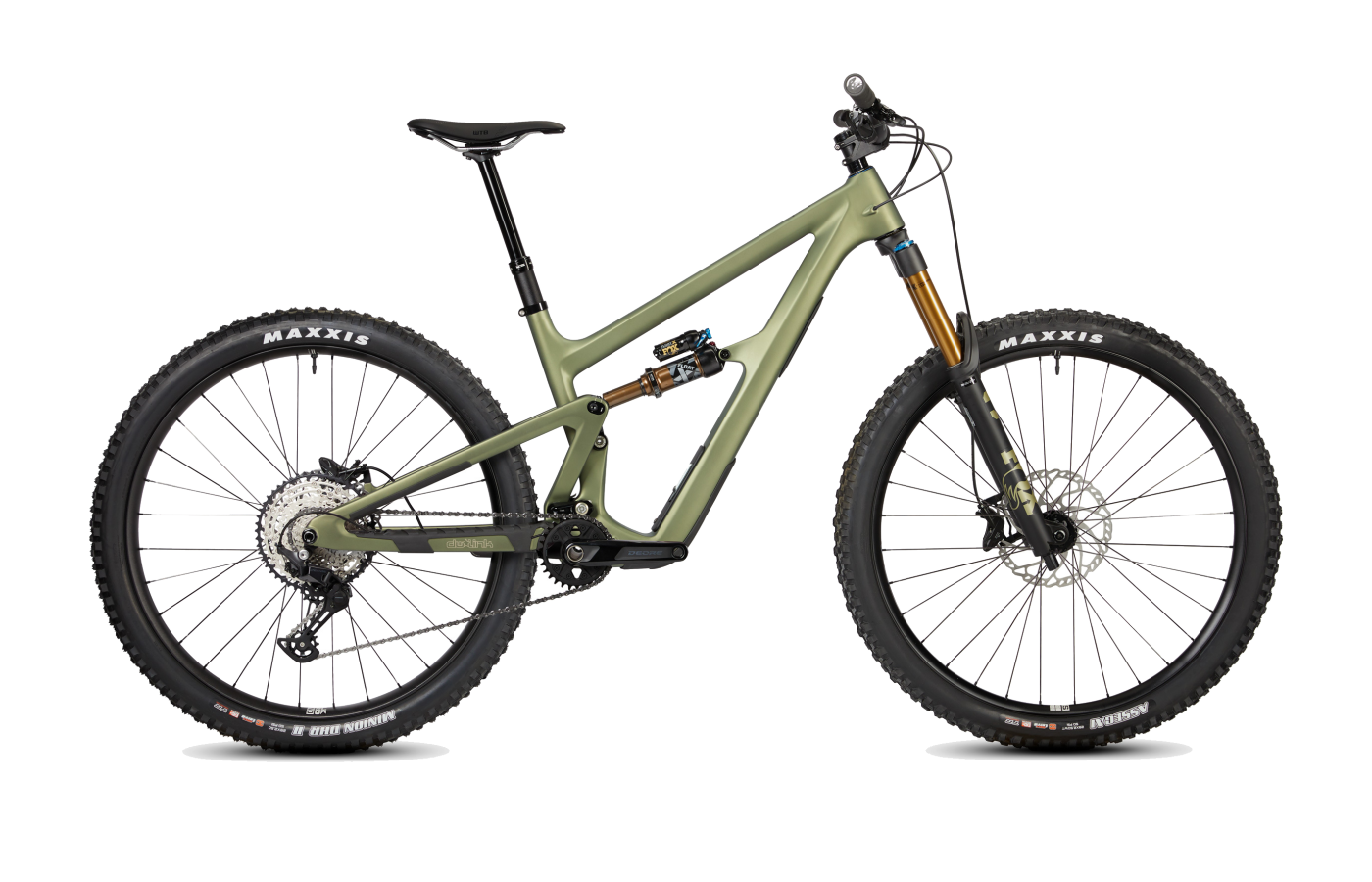
Ripmo
More travel and a more plow-friendly character than the SB140 at noticeably less money. The Ripmo is the value play for riders who want SB140 versatility but balk at the Yeti tax.
Compare →
Hightower
A direct 29er trail rival to the SB140 — similar travel and intent, but with internal frame storage, easier-to-service pivots, and a less demanding maintenance schedule than the Switch Infinity link.
Compare →