Supercaliber
vsTop Fuel
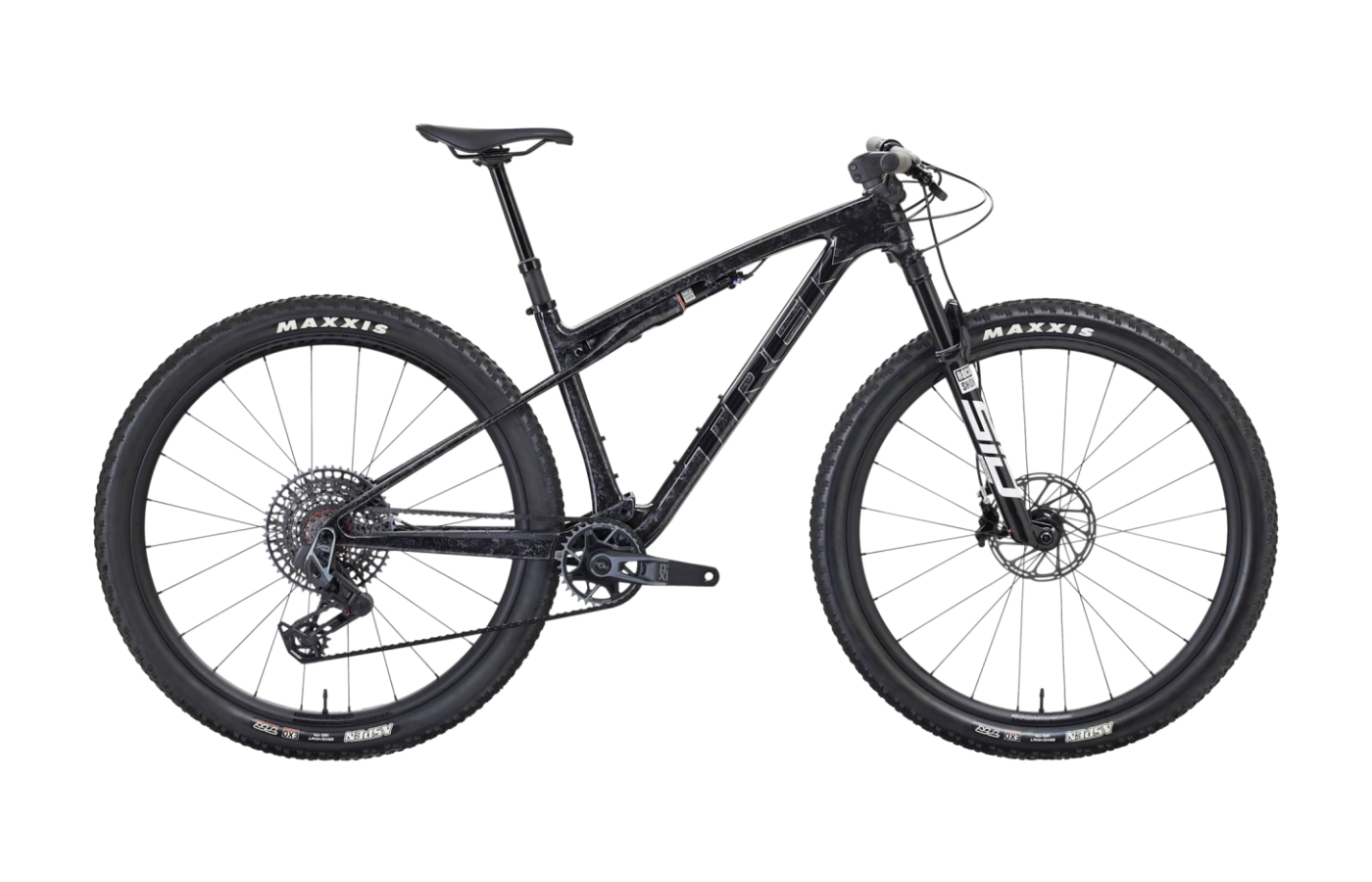
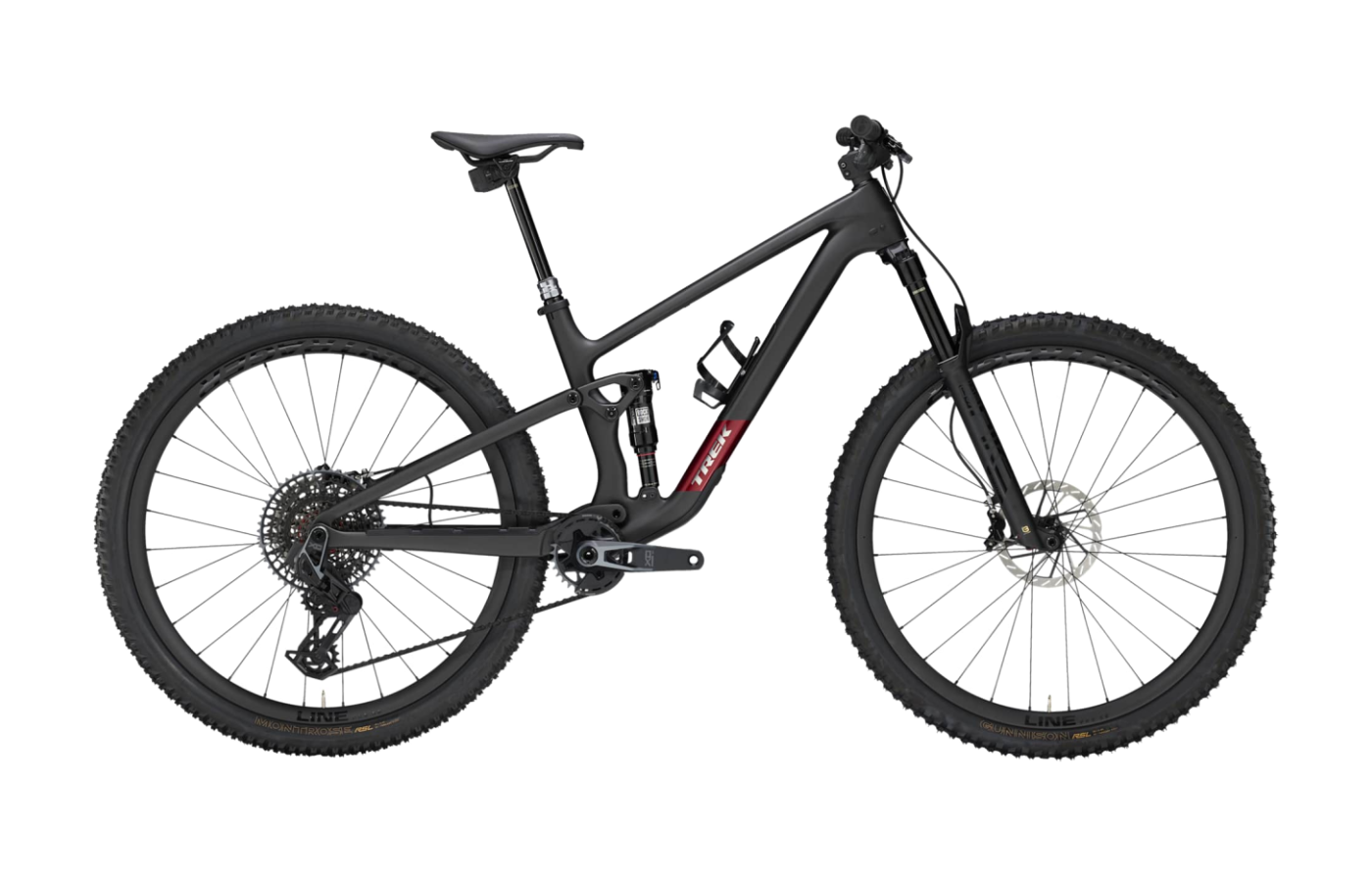
Two XC Treks, two different finish lines.
The Supercaliber is a World Cup tool with just enough suspension to survive the course. The Top Fuel is a short-travel trail bike that happens to climb like an XC racer.
Supercaliber
- Class-leading pedaling efficiency — the IsoStrut and high anti-squat deliver "instant forward motion" reviewers compare to a lightweight eMTB.
- Sharp, telepathic handling — the structurally rigid IsoStrut rear end translates steering input with "minimal lag."
- Dropper post standard across the range — even the SL 9.6 ships with one, where Gen 1 owners had to upgrade.
- 80 mm of rear travel runs out hard on chunky terrain — reviewers report a "metallic" bottom-out on big hits.
- IsoStrut needs roughly 10 hours of bedding-in before it stops feeling stubborn out of the box.
Top Fuel
- 120 mm of genuinely capable travel — the ABP four-bar stays active under braking and tracks composed through square-edge hits the Supercaliber would skip across.
- Four-position Mino Link — riders can swap between a 14% progression XC tune and a 19% trail tune, and add 10 mm of travel at each end without a new frame.
- Steep 77.8-degree seat tube angle — keeps weight over the bottom bracket on long technical climbs.
- Roughly 1.0–1.5 kg heavier build-for-build than the Supercaliber.
- Stock SRAM Level brakes are widely panned as underpowered for what the chassis can do.
Editor’s analysis
Both wear the Trek badge and live in the cross-country shop. Spend ten minutes on each and you realize they're chasing entirely different riders.
The Supercaliber is a race-day specialist. 80 mm of rear travel through the IsoStrut, 110 mm up front, a 67.5-degree head tube angle, and a frame and shock that together weigh around 1,950 grams. Reviewers from Escape Collective and BikeRadar use words like "ruthless," "telepathic," and "rocket-like." It's the bike Jolanda Neff took to gold in Tokyo, and the second-generation update kept all of that DNA while adding just enough geometry to keep up with modern courses.
The Top Fuel went the other direction. It runs 120 mm in the rear, 130 mm up front, a 65.5-degree head angle in the low Mino Link setting, and a four-bar ABP linkage that stays active under braking. Pinkbike calls it "a short-travel trail bike," not downcountry. The four-position Mino Link lets you boost rear travel to 130 mm and bolt on a 140 mm fork — at which point Flow Mountain Bike says it becomes "a go-fast hooligan." Same brand, same XC heritage, completely different intent.
The geometry tells the same story. The Top Fuel's wheelbase is 32 mm longer at size M (1,184 vs 1,138 mm), the head angle nearly two degrees slacker, and the seat tube angle a massive 6.8 degrees steeper (77.8 vs 71). That last number is the biggest single divide between these two — the Supercaliber puts you in a classical race posture, the Top Fuel puts you stacked over the bottom bracket so you can grind out long technical climbs without the front wheel drifting.
Picking between them isn't a value question; both are premium bikes with proper warranty and dealer support. It's a question of where you actually ride. If your weekends include start lines and pace lines, the Supercaliber is the sharper instrument. If they include a couple thousand feet of climbing followed by a chunky descent you'd actually like to enjoy, the Top Fuel is the bike.
Where the builds differ.
Comparing our editor's-pick builds side-by-side. Winners highlighted row-by-row — lower price and weight, and the better-spec component, each mark a point.
Build variants & pricing
The Supercaliber spans $4,799 to $14,999; the Top Fuel runs $4,199 to $10,499 with an alloy entry option the Supercaliber doesn't offer.
Editor's-pick builds tier-matched at SRAM X0 Eagle AXS T-Type and the top carbon grade on each platform. The Supercaliber's pick costs $1,500 more — that gap reflects the IsoStrut and SLR layup, not a spec mismatch. Prices are current US MSRP.
How they fit, how they steer.
The Top Fuel sits 6 mm taller in stack and 22 mm longer in reach at the fit-picked size, with a head angle 1.6 degrees slacker and — most strikingly — a seat tube angle 6.8 degrees steeper. The Supercaliber is the lower, sharper, more classically XC posture.
Which size should I buy?
Size recommendations from stack, reach, and effective top tube. Ranges overlap closely; Trek's size labels (S/M/ML/L/XL) are the same on both, but seat tube and reach numbers differ by frame.
→These are starting points. Flexibility, riding style, and preferred position all shift the answer — if you’re between sizes, a professional fit beats a chart.
What the magazines said.
Published reviews from trusted cycling outlets. Click through for the full write-up.
Which one should you buy?
If you race XC and ride to win, get the Supercaliber. If you ride trails and want to climb them without giving up the descent, get the Top Fuel.
Supercaliber
If your calendar has start lines on it and your training rides are 60–120 minutes at threshold, the Supercaliber rewards every watt with the "ego-boosting" pedaling response reviewers can't stop describing. Just budget for swapping the stock 2.2-inch tires on the flagship build to 2.4s.
Top Fuel
If your single mountain bike has to handle a marathon XC race, a chunky local enduro lap, and everything between, the Top Fuel's adjustable platform — and 40 mm more rear travel than the Supercaliber — is the more honest tool. Plan to upgrade the stock SRAM Level brakes when the trail gets steep.
Questions buyers actually ask.
Short answers to the things we get emailed about most often.
01How much rear travel does each bike have?
The Supercaliber Gen 2 has 80 mm of rear travel through the IsoStrut (up from 60 mm on Gen 1), paired with a 110 mm fork.
The Top Fuel Gen 4 has 120 mm of rear travel through a four-bar ABP linkage, paired with a 130 mm fork stock. Pull a spacer in the Trek-approved shock and the rear bumps to 130 mm; the frame is also rated for forks up to 140 mm, which several reviewers prefer.
That 40 mm of stock rear-travel difference is the biggest single line between these two platforms.
02Which one climbs faster?
The Supercaliber, on smooth fire-road climbs and short hard efforts. Multiple reviewers describe "instant forward motion" and compare the pedaling feel to a lightweight eMTB. The IsoStrut is structurally rigid and the anti-squat is high enough that most testers leave the lockout alone.
The Top Fuel climbs better on technical terrain. The 77.8-degree seat tube angle (vs the Supercaliber's 71 degrees) keeps your weight over the bottom bracket so the front wheel stays planted on steep, scrabbly inclines. Blister called it the "best climbing bike" of the year, but specifically meant technical climbing — not pure power-to-weight.
03Which one descends better?
The Top Fuel, by a clear margin. The 65.5-degree head angle, 1,184 mm wheelbase at size M, and 120 mm of active ABP travel let it stay composed where the Supercaliber starts skittering. Pinkbike and Loam Wolf both flag that it "punches higher than its weight" on steep, rough descents.
The Supercaliber is much improved over Gen 1 — the slackened 67.5-degree head tube and longer wheelbase make it more confident than its predecessor — but it's still an 80 mm race bike. Reviewers consistently note a "metallic" or "harsh" bottom-out on bigger hits.
04What's the weight difference?
Spec-matched, the Supercaliber runs roughly 1.0–1.5 kg lighter. The flagship SLR 9.9 XX Flight Attendant comes in around 10.28 kg at size M; the Top Fuel 9.9 XTR Di2 is 13.10 kg, and the lighter RSL build at the same $10,499 price point is 11.98 kg.
The gap narrows when you compare alloy or mid-tier carbon builds, but the Supercaliber will always win on the scale — that's its whole job.
05Which is better for marathon XC racing?
Both are credible. Pinkbike rode the Top Fuel on a 62-mile loop with 10,000 feet of climbing and called it "quick and efficient without any harshness" — the kind of feedback that makes it a serious marathon contender, especially in the lighter "XC mode" build with a 120 mm fork.
For pure World Cup-style XC where every gram and every watt counts, the Supercaliber is still the sharper instrument. Its frame-and-shock weight is around 1,950 g and the pedaling efficiency is in a different league. For longer, rougher events where comfort and descending capability matter, the Top Fuel's extra travel pays off.
06Can I run either as a daily trail bike?
The Top Fuel is genuinely happy as a trail bike — that's how Trek pitches it now. Run it in the Low Mino Link setting with a 140 mm fork and 130 mm rear travel and it's a legitimate short-travel trail bike that can tackle most non-enduro terrain.
The Supercaliber can be ridden on trails — the geometry update made that more viable than Gen 1 — but reviewers from MBA, Flow, and others were consistent that it "reminds you it's an XC racer" the moment terrain gets chunky. The IsoStrut bushings and 32 mm fork stanchions on flagship builds will also wear faster under daily trail use.
07How serviceable are the proprietary parts?
The Supercaliber's IsoStrut is now made by RockShox (replacing the prior Fox unit), uses standard 4 mm hex access for shock-head service, and shares stanchion bushings with the Zeb fork. RockShox spec'd a 100-hour air-can service interval — double a standard SIDLuxe. Flow Mountain Bike did flag that test units arrived under-lubricated from the factory, so check it on day one.
The Top Fuel uses a conventional ABP four-bar linkage with internal cable guide tubes (cited by Pinkbike and Flow as making rear-brake hose swaps trivially easy), torque ratings etched on the pivot bolts, and an expanding-collet main pivot that doesn't require crank removal. It's the more shop-friendly platform of the two.
08What warranty do they come with?
Both bikes come with Trek's lifetime frame warranty to the original owner. Trek also offers crash replacement on both. The IsoStrut on the Supercaliber falls under standard suspension warranty terms via RockShox.
Similar bikes
If your priorities don’t map cleanly onto either of these, one of these adjacent bikes probably fits better.
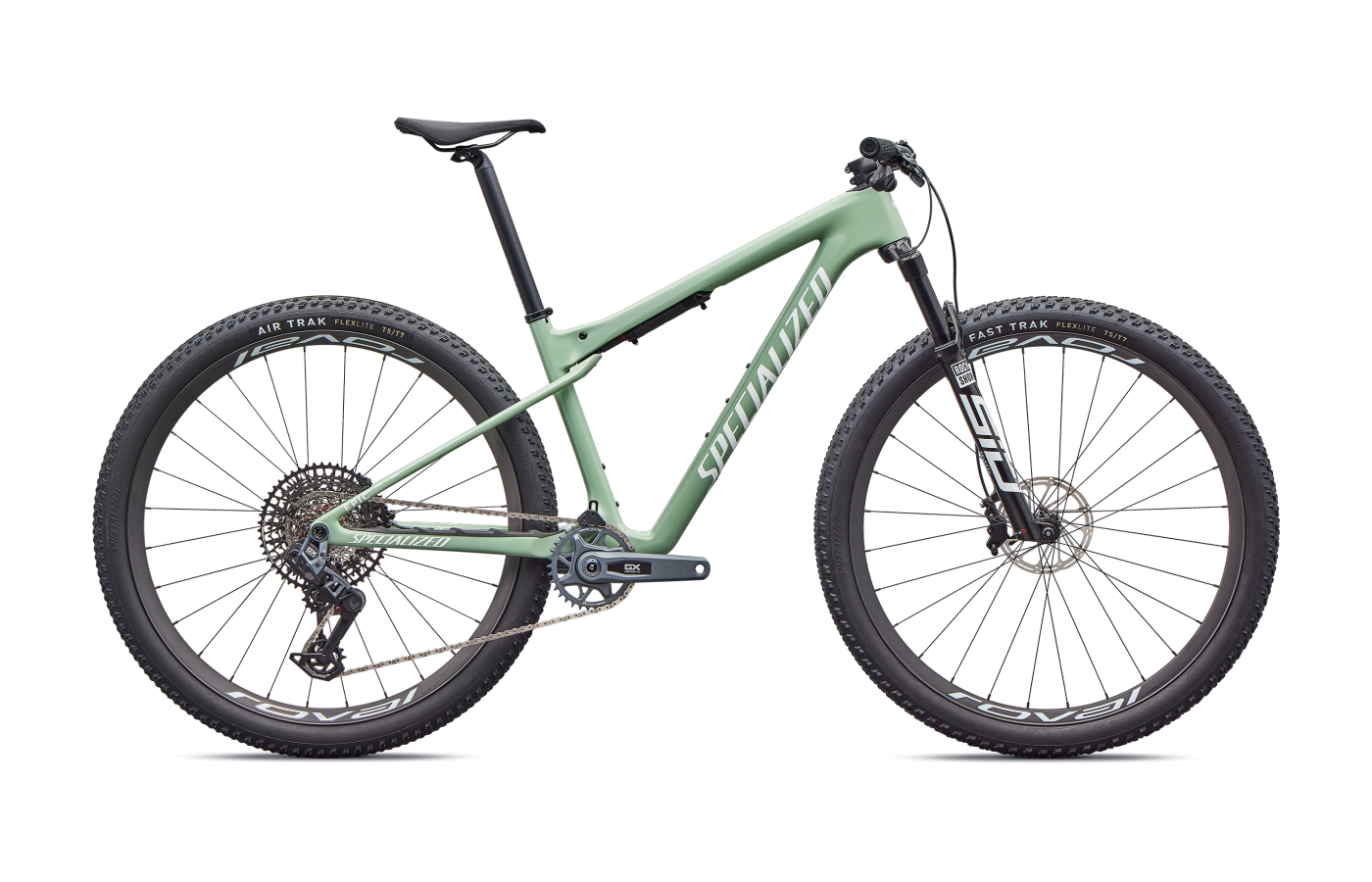
Epic World Cup
The most direct rival to the Supercaliber — Specialized's integrated-shock racer with an even firmer, more hardtail-like character. If you want the Supercaliber's intent with a Brain damper instead of an IsoStrut, this is the cross-shop.
Compare →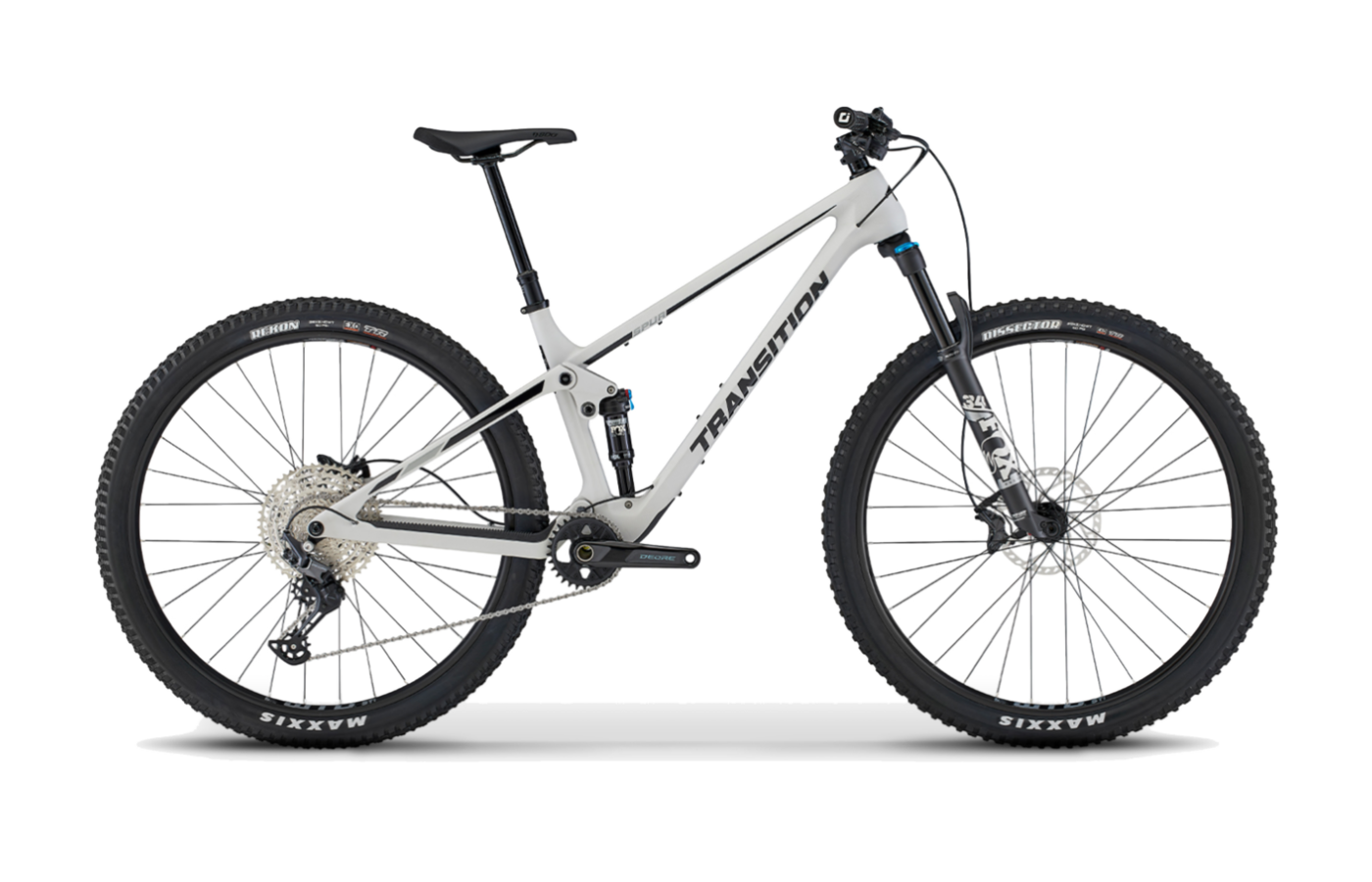
Spur
A short-travel trail benchmark that competes head-on with the Top Fuel — flex-stay simplicity, a lighter overall package, and a similar "down-country" intent. Lacks the Top Fuel's adjustability but rides lighter.
Compare →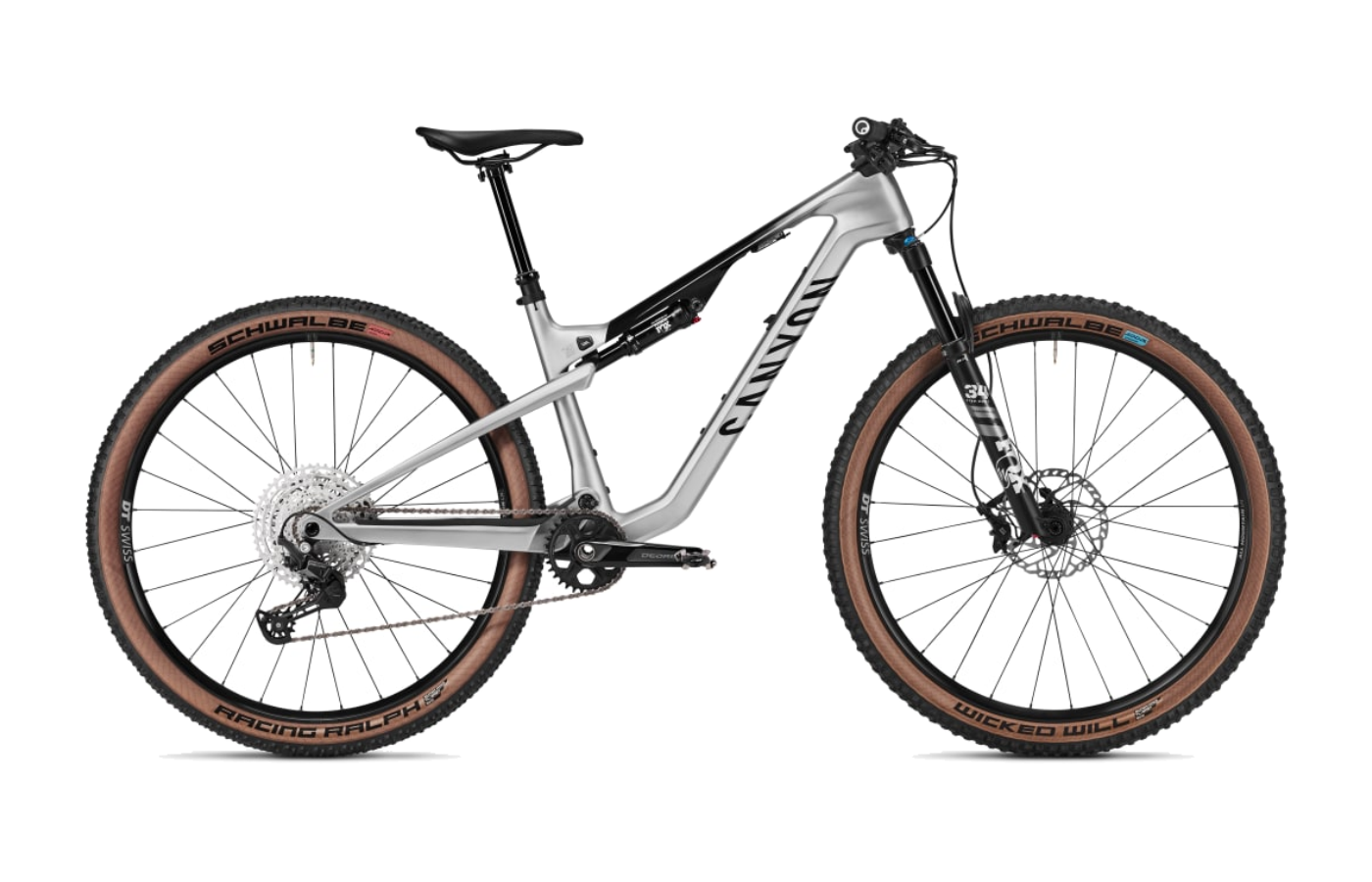
Lux Trail
Aggressive 120 mm setup that splits the difference between these two Treks. Direct-to-consumer pricing means you get more spec for the dollar, with the standard Canyon caveat — no local dealer.
Compare →