Diverge
vsDomane
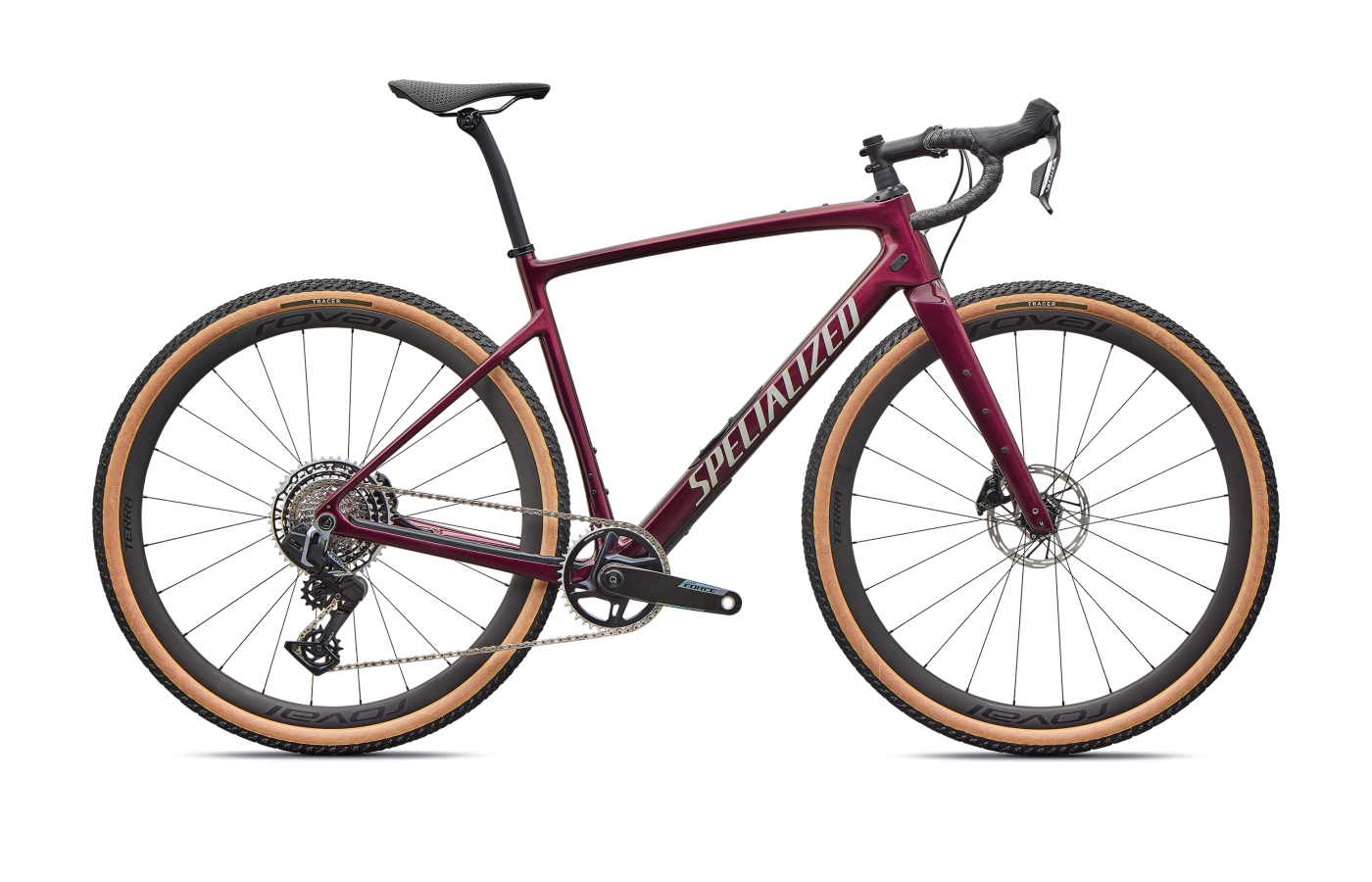
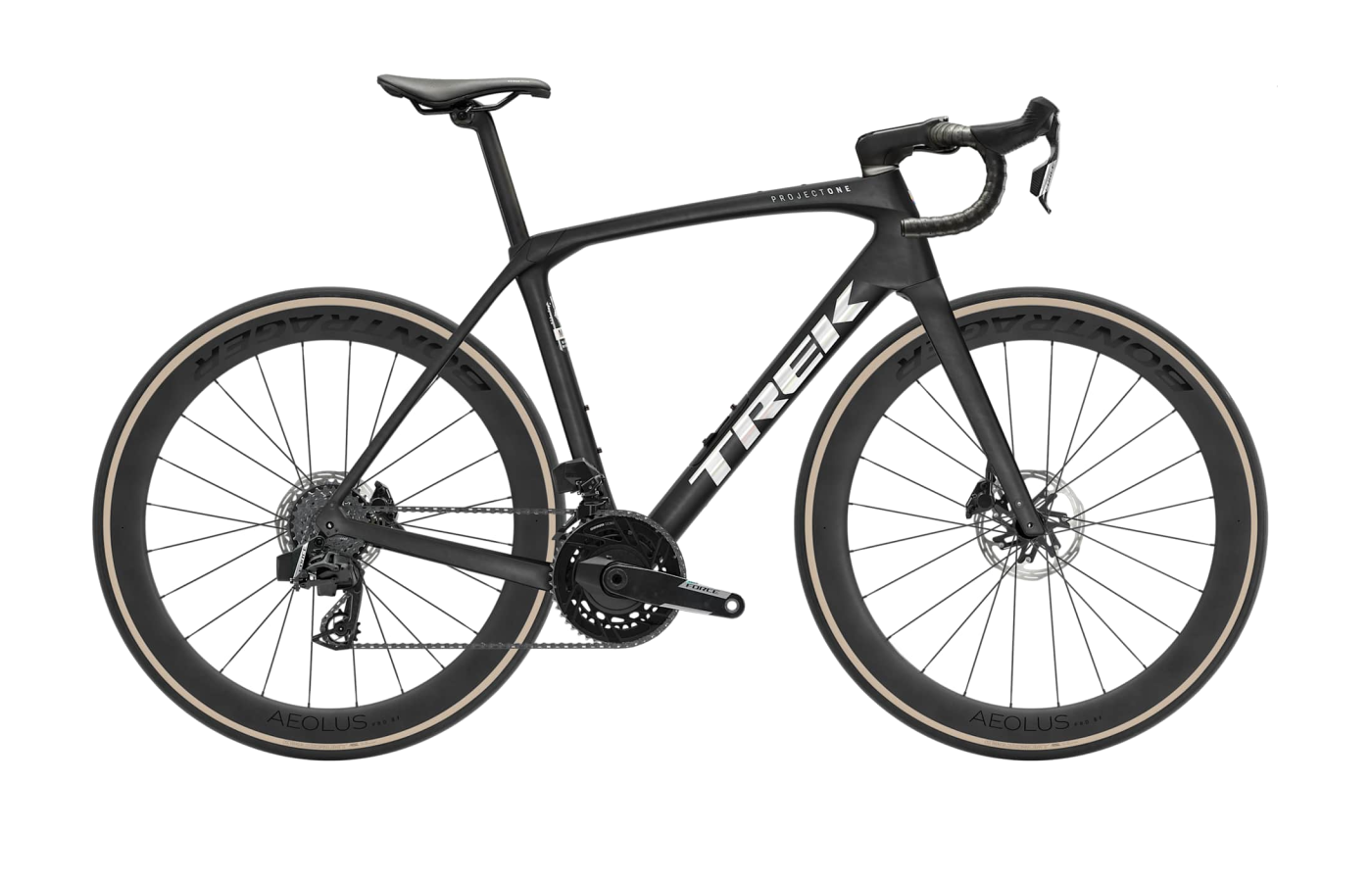
A gravel bike and an endurance road bike, sharing one cul-de-sac.
The Diverge 4 doubles down on dirt with 50 mm clearance and a Future Shock fork. The Domane Gen 4 trims its IsoSpeed system and stays a road bike that happens to fit 38 mm tires.
Diverge
- Massive tire clearance — 50 mm officially, or a 2.2-inch MTB tire with the bare ISO-minimum 4 mm gap.
- Future Shock 3.0 front end — 20 mm of travel that genuinely keeps hands and shoulders fresher on long, rough days.
- Long, low, stable geometry — 1,041 mm wheelbase and 85 mm BB drop give a planted, mountain-bike-adjacent feel at speed.
- Stock 45 mm tires undersell the frame and lead to repeated pedal strikes — a near-mandatory upgrade.
- Long wheelbase and 71-degree head angle feel unwieldy in tight, low-speed technical sections.
Domane
- Best-in-class rear compliance — the simplified IsoSpeed decoupler smooths out broken pavement without bobbing under power.
- Real road-bike geometry — 71.3-degree HTA, 996 mm wheelbase at size 50, and a road-feeling weight distribution.
- Wide build range — a $1,199 Claris alloy AL 2 sits in the same lineup as a $12,499 Red AXS SLR 9.
- Tire clearance caps at 38 mm — light gravel only, not a true gravel bike.
- Stock Bontrager Paradigm wheels and R3 tires are heavy and dull the frame; budget for an upgrade.
Editor’s analysis
These two used to overlap in the middle. They don't anymore — the Diverge moved to the dirt and the Domane moved back to the tarmac.
On paper they're both compliant drop-bar bikes with internal storage, threaded bottom brackets, and a clever idea about taking the edge off rough surfaces. Spend a minute on the geometry and the spec sheets, though, and the family resemblance falls apart fast. The Specialized Diverge clears 50 mm tires (or a 2.2-inch MTB knobby), drops its bottom bracket to a mountain-bike-low 85 mm, and ships with a Future Shock 3.0 stem unit good for 20 mm of travel. The Trek Domane caps tire clearance at 38 mm, runs a road-shaped 71.3-degree head tube, and confines its damping to a single non-adjustable IsoSpeed decoupler at the seat tube.
The Diverge is the freight train. Reviewers — Cycling Weekly, BikeRadar, Bike Rumor — keep landing on the same word: composed. The 1,041 mm wheelbase (size 54), long reach paired with a short stem, slacker head angle, and 430 mm chainstays add up to a bike that ploughs through washboard at speed and rewards riders who'd rather pick aggressive lines than tiptoe around them. The trade-off is real: pedal strikes are common with the stock 45 mm tires, and the long, low chassis feels unwieldy in tight, slow technical sections. Skip the alloy builds if you can — only the carbon Diverge gets the hydraulically-damped Future Shock 3.2 or the on-the-fly-adjustable 3.3.
The Domane is, frankly, easier to live with on pavement. The IsoSpeed rear decoupler genuinely smooths out chip-seal and frost heaves; reviewers describe it as "astonishingly comfortable" without bouncing under power. Trek pulled roughly 300 g out of the frame this generation by killing the front IsoSpeed and locking the rear to its old softest setting, and the result handles like a slightly sleepier race bike rather than a full-on endurance barge. The catch: stock Bontrager R3 / Paradigm wheels are heavy and dull, and there's a documented IsoSpeed seatpost-creak issue that Trek has now revised twice. Buyers should make sure their dealer fits the Revision 4 wedge before delivery.
Put another way: the Diverge is the bike you buy when most of your riding is on dirt or you want one drop-bar bike that's biased toward the rough stuff. The Domane is the bike you buy when most of your riding is on pavement and the unpaved bits are short, smooth, and occasional. They're not really competing for the same garage spot.
Where the builds differ.
Comparing our editor's-pick builds side-by-side. Winners highlighted row-by-row — lower price and weight, and the better-spec component, each mark a point.
Build variants & pricing
Both lineups span roughly $8k–$10k of range. The Diverge starts at $2,099 in alloy and tops out at $10,499; the Domane starts lower at $1,199 and tops out higher at $12,499.
Prices are current US MSRP. Editor's picks are the Diverge 4 Pro ($7,999, Force AXS XPLR 1x13) and the Domane SLR 7 AXS ($8,999, Force AXS 2x12) — the closest tier-matched, electronic-shifting carbon builds in each lineup. Note the Diverge 4 Pro ships with the higher-tier Future Shock 3.3; the Expert below it gets the non-adjustable 3.2.
How they fit, how they steer.
Fit-picked sizes for a 5'8" rider: a Diverge 54 against a Domane 50. The Diverge sits 46 mm taller in stack and 19 mm longer in reach (most of the stack lives in the Future Shock assembly), with 10 mm longer chainstays, 5 mm more trail, and a 45 mm longer wheelbase — the gravel bike's road-going penalty in agility, paid back as stability off-road.
Which size should I buy?
Size recommendations based on stack, reach, and effective top tube. The two brands use different size labels (Specialized in cm, Trek in cm but offset) — pick by fit, not by number.
→These are starting points. Flexibility, riding style, and preferred position all shift the answer — if you’re between sizes, a professional fit beats a chart.
What the magazines said.
Published reviews from trusted cycling outlets. Click through for the full write-up.
Which one should you buy?
If most of your riding is on dirt, get the Diverge. If most of your riding is on pavement with the occasional gravel detour, get the Domane.
Diverge
If your weekends look like 50+ miles of unmaintained gravel, doubletrack, or B-roads, the Diverge is the right tool. The Future Shock genuinely earns its keep on long rough days, and the 50 mm tire clearance future-proofs you as gravel keeps trending toward MTB volumes. Plan to swap the stock 45 mm tires immediately.
Domane
If your week is the Tuesday group ride, the Saturday century, and an occasional fire-road shortcut, the Domane is the right tool. It feels like a road bike on the road, the IsoSpeed makes broken pavement disappear, and the 38 mm clearance is enough for hardpacked dirt without compromising on-road feel.
Questions buyers actually ask.
Short answers to the things we get emailed about most often.
01Which is faster on pavement?
The Trek Domane, comfortably. It's a road-geometry bike with a road-tire spec — 32 mm Bontrager Kwaremonts on the SLR builds, road-aero Kammtail tube shapes, and a tighter 996 mm wheelbase at the fit-picked size 50. Reviewers describe it as carrying speed effortlessly between 18–21 mph once it's wound up.
The Diverge can be ridden on the road, but the 45 mm Tracer tires hum, the Future Shock subtly bobs under standing efforts, and the long 1,041 mm wheelbase feels lazy in a paceline. Reviewers explicitly call it a "gravel-first machine" rather than a quiver-killer.
02Which is more comfortable off-road?
The Specialized Diverge, by a wide margin — that's the entire design brief. The 20 mm-travel Future Shock 3.0 actively damps front-end chatter, the 50 mm tire clearance lets you run high-volume rubber, and the long wheelbase + 85 mm BB drop keep the bike planted at speed.
The Domane's IsoSpeed is a rear-only system; on light gravel and chip-seal it's excellent, but on washboard or chunky doubletrack the front end (capped at 38 mm tires, no front damping) gets overwhelmed quickly. Reviewers note the Domane stretches to 38 mm tires for a reason — it's road-first.
03What's the maximum tire clearance?
Diverge: 50 mm officially with 7–8 mm clearance, or a 2.2-inch (≈56 mm) MTB tire with the ISO-minimum 4 mm gap. Reviewers ran 2.2-inch knobbies successfully.
Domane: 38 mm officially. Some reviewers have squeezed 40 mm or even 41 mm tires in, but you're outside the official spec at that point.
If any of your riding involves chunky gravel or singletrack, the Domane runs out of tire long before the Diverge does.
04Why is the Diverge 4 Pro the editor's pick instead of the Pro LTD?
The Pro LTD ($10,499) is a beautiful bike — SRAM RED XPLR 13-speed, ceramic-bearing Roval Terra CLX II wheels, Future Shock 3.3 with on-the-fly adjustability — but it's a flagship, and the Domane SLR 7 AXS we're comparing to is a tier-down Force AXS build. Pairing flagship-vs-flagship would have been Pro LTD vs SLR 9 AXS at $10,499 vs $12,499; we picked the Pro vs SLR 7 AXS pairing because both are Force AXS, both have the same tier of carbon, and the prices are within $1,000 — the most apples-to-apples view of the two platforms.
If budget isn't a constraint, the Pro LTD's adjustable Future Shock 3.3 is genuinely worth the upcharge over the 3.2 found on the Expert builds.
05Is the Future Shock noticeable on the Diverge?
Yes, but the experience depends on which version you get. The 3.1 (alloy builds only) is spring-only with no damping — reviewers call it "noticeably less composed." The 3.2 (Expert builds) adds hydraulic damping and is what most reviewers tested; Bike Rumor called it "nothing short of brilliant" on roots and broken pavement, with one caveat — it can feel slightly bouncy when you stand and stomp on punchy climbs.
The 3.3 (Pro and Pro LTD) adds an on-the-fly lockout that closes that gap — you can stiffen it for climbs and open it for descents. Specialized claims up to 11 watts saved by absorbing rider-input vibration; reviewers can't independently verify that number but consistently describe reduced fatigue on long days. Upgrading 3.2 to 3.3 aftermarket costs roughly $450.
06What about the IsoSpeed seatpost creak issue on the Domane?
It's real, and it's been the most-cited durability complaint on Gen 4 since launch in 2022. The IsoSpeed wedge that holds the seatpost in place can creak loudly and, in some cases, allow the post to slip downward mid-ride — multiple long-term reviewers reported drops of nearly 2 cm.
Trek has issued two revised wedge designs (Revision 2 and Revision 4). The Revision 4 wedge plus a generous coat of carbon assembly paste resolves the issue for most owners. If you're buying a Domane Gen 4, ask the dealer to confirm the Revision 4 wedge is installed before you take delivery — and if you're buying used, factor in a possible warranty visit.
07Can either bike serve as a one-bike quiver?
The Domane comes closer for most US riders, because it handles 80%+ pavement use cases well and its 38 mm clearance covers light gravel. It's the more conservative choice.
The Diverge can ride pavement — it's not punishingly slow on the road — but reviewers explicitly say it's not a "quiver killer" the way the Specialized Crux or the previous-gen Diverge were. If you do mostly road but occasionally venture onto chunky stuff, the Domane is the better fit. If you do mostly dirt and don't mind a slower ride home on tarmac, the Diverge is the better fit.
08How do the two compare on serviceability?
Both use threaded bottom brackets (Specialized BSA, Trek T47), which is a clear win over press-fit on both sides. Both have internal frame storage that reviewers consistently praise — the Diverge's SWAT 4.0 door is large and rattle-free; Trek's is described as "genuinely excellent."
The Domane's downside is the fully internal cable routing through the headset bearings — there are no secondary lip seals, the upper bearing is exposed to sweat and road spray, and replacing it requires disconnecting hydraulic lines. Multiple technical editors flagged this as a long-term ownership concern.
The Diverge keeps cables internal but accessible, and the Future Shock 3.2/3.3 hydraulic units are now serviceable with a four-year recommended interval — a meaningful improvement over earlier generations.
Similar bikes
If your priorities don’t map cleanly onto either of these, one of these adjacent bikes probably fits better.
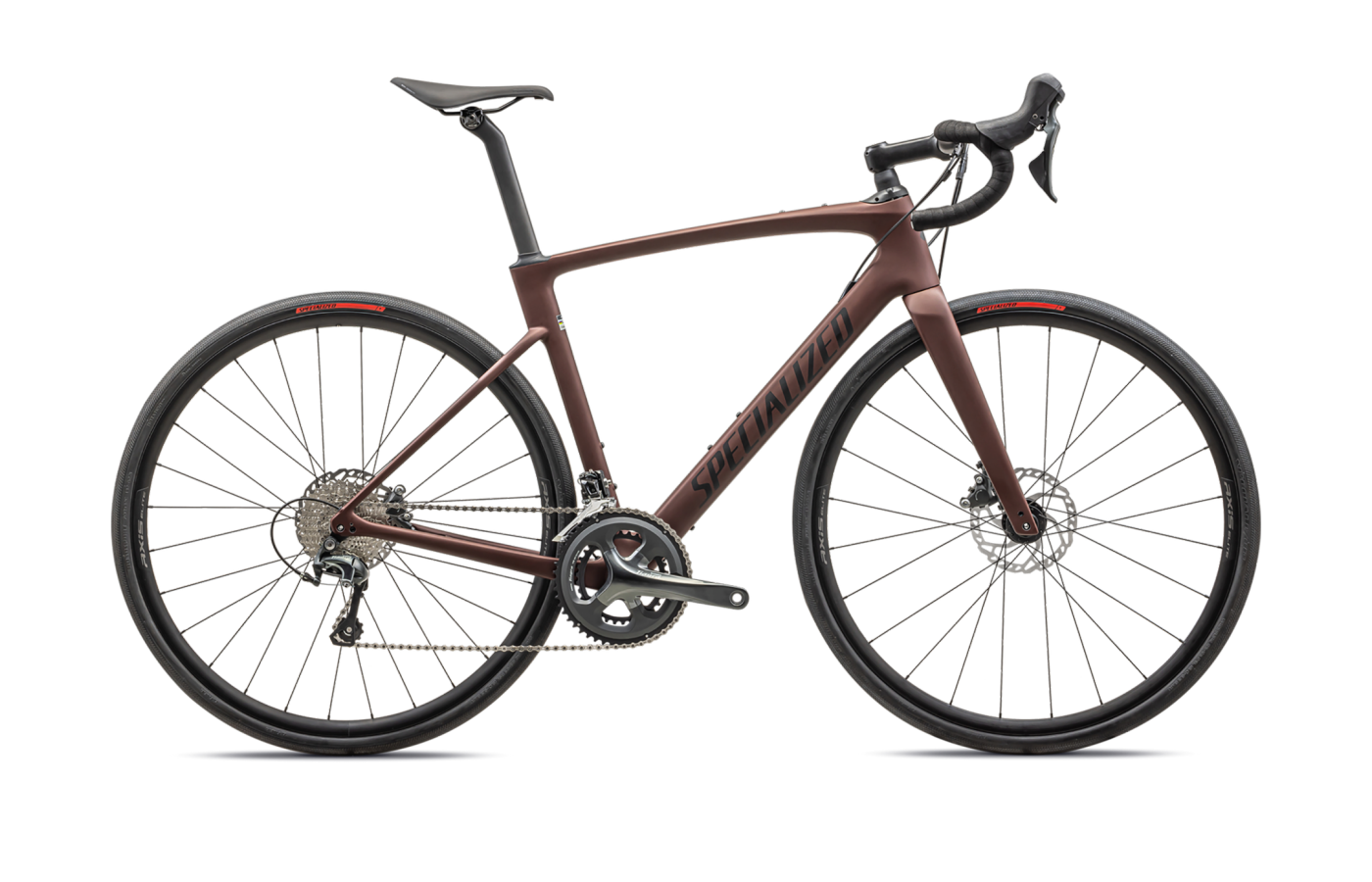
Roubaix
Specialized's direct Domane rival — same Future Shock front-end as the Diverge, but built on a road-bike geometry with 40 mm tire clearance. The right pick if you want Diverge-style damping at the bars without the gravel-bike wheelbase.
Compare →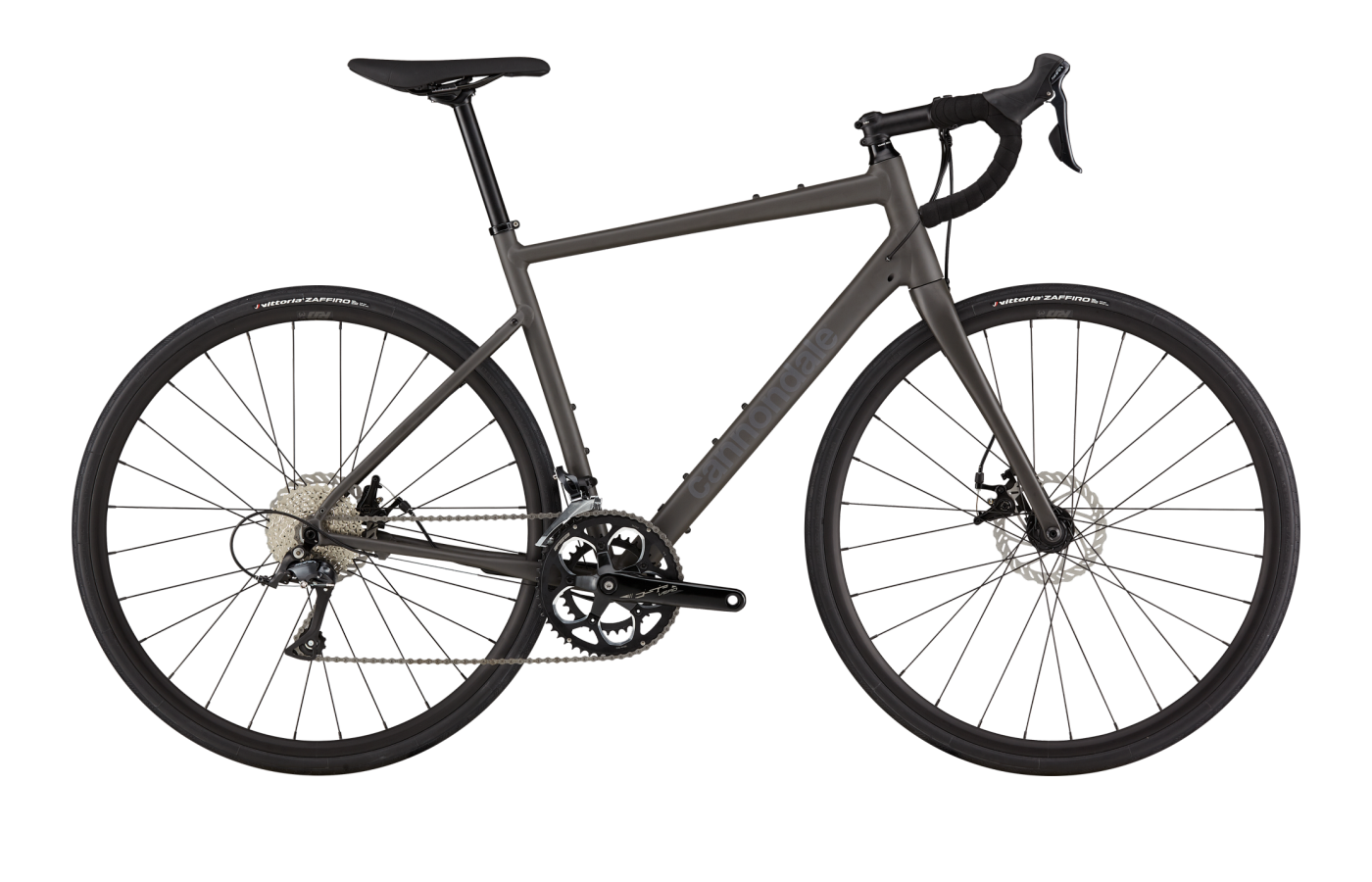
Synapse
Cannondale's endurance entry — no mechanical compliance system, just a thinned seat tube and high-volume tires. Lighter and simpler than the Domane, with similar tire clearance and a similar pavement-first brief.
Compare →
Grail
Canyon's race-leaning gravel bike — sharper geometry than the Diverge, often higher-tier components for the money thanks to direct-to-consumer pricing. The catch is no local dealer for fit, demos, or warranty work.
Compare →