Crux
vsCheckpoint
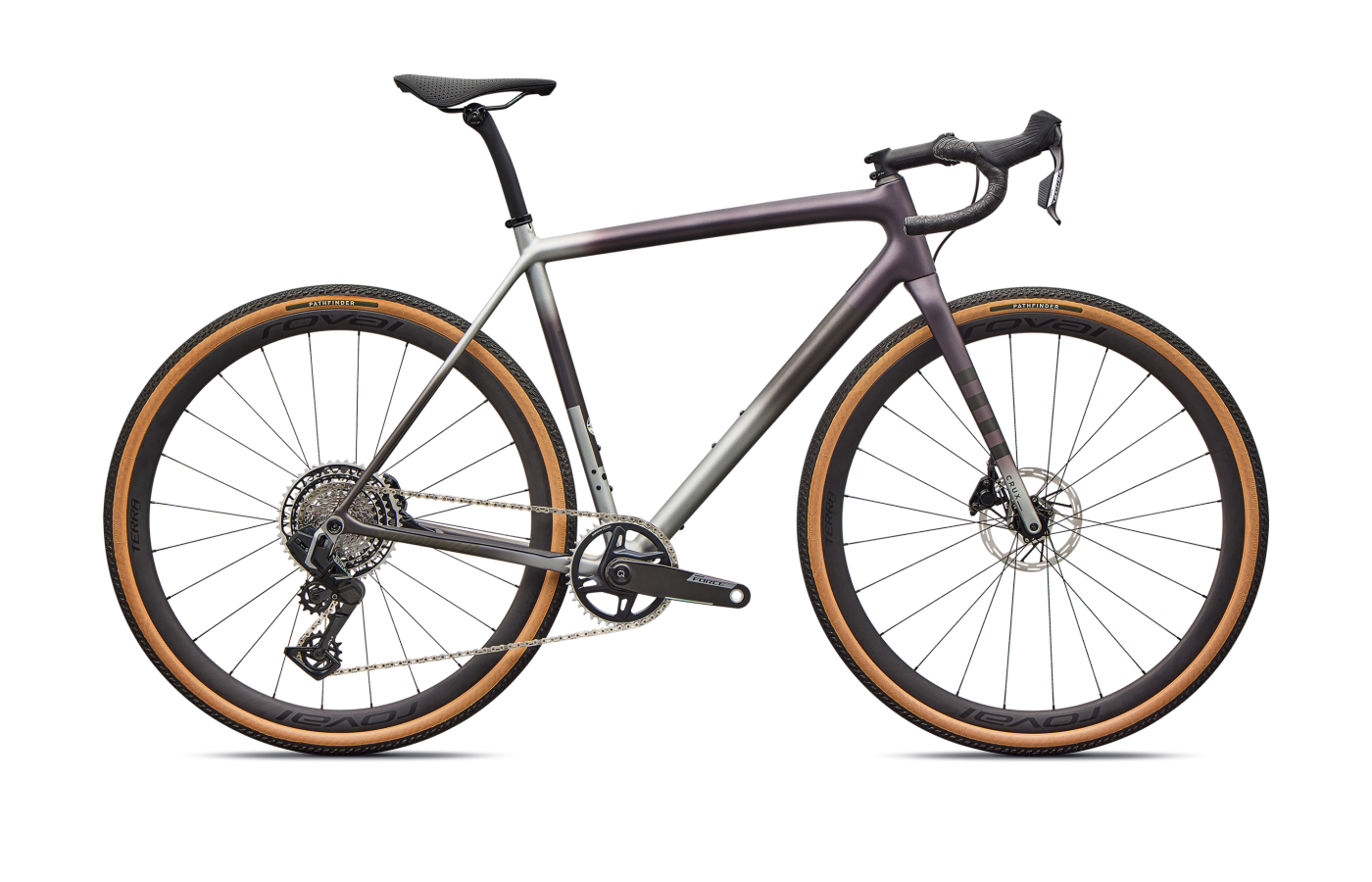
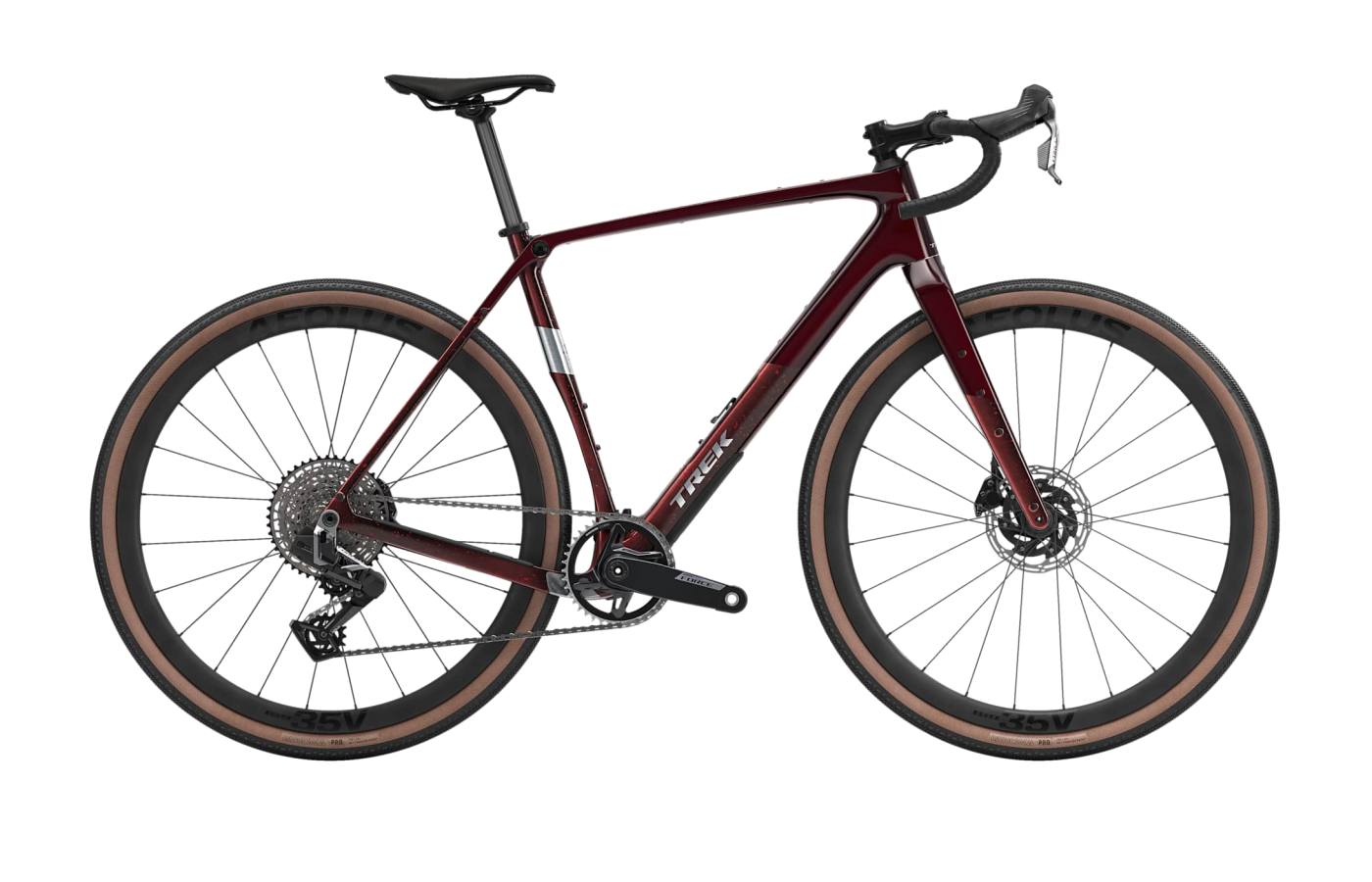
Two gravel bikes, two different jobs.
The Crux is a featherweight race weapon dressed as a gravel bike. The Checkpoint is a do-everything adventure platform with IsoSpeed and onboard storage.
Crux
- Astonishingly light — 7.64 kg on the Pro build, 6.94 kg on S-Works. Reviewers call it the lightest gravel platform on the market.
- Race-bike acceleration — Aethos-derived layup and 425 mm chainstays make it 'an absolute rocket' on smooth gravel and pavement.
- Easy to live with — threaded BSA bottom bracket, round 27.2 mm seatpost, two-piece cockpit. No proprietary cockpit headaches.
- 47 mm tire clearance is generous, but 3 mm shy of the Checkpoint's 50 mm.
- Almost no mounts — no rack mounts, no fender mounts, minimal bikepacking integration. It's a race bike.
Checkpoint
- IsoSpeed decoupler — rear seat-tube pivot that 'takes the sting out' of washboard without bobbing or sapping power, per reviewers.
- 50 mm tire clearance — widest in the segment, with hidden fender mounts and integrated frame-bag mounts to back it up.
- Internal downtube storage — a real cargo door for a tube and tools, plus a vast dealer network and lifetime frame warranty.
- Heavy by gravel-race standards — the SL 7 AXS at 9.33 kg gives up 1.7 kg to the Crux Pro.
- Through-headset cable routing makes mechanical brake/shift cable swaps a service-intensive job (one shop quoted ~$200 in labor).
Editor’s analysis
This isn't really a gravel-bike vs gravel-bike fight. It's racer vs explorer — a 7.6 kg Aethos in disguise against a 9.3 kg chameleon built to swallow centuries.
Specialized and Trek both call these gravel bikes, but the Crux and the Checkpoint have almost nothing in common past the drop bars. The Crux Pro weighs 7.64 kg with Force AXS. The Checkpoint SL 7 AXS, with the same drivetrain, weighs 9.33 kg. That's a 1.7 kg gap on equivalent builds — about the weight of a fully loaded saddle bag — and it's the single most important number on this page.
Specialized borrowed the Aethos design language for the Crux: round tube cross-sections, no aero pretense, a 725 g S-Works frame, and a deliberate decision to leave off rack mounts, fender mounts, and bikepacking integration. The result is a bike that climbs and accelerates like a road bike with knobbies, which is exactly what a racer or roadie-turned-gravel-curious wants. Reviewers from Cycling News to BikeRadar use the word 'snappy' until it loses meaning.
Trek went the other direction. The Checkpoint Gen 3 was rebuilt as 'Gravel Endurance' — taller stack, shorter reach (the M/L lost 10 mm of reach and gained 11 mm of stack vs Gen 2), 50 mm tire clearance, T47 BB, internal downtube storage, hidden fender and rack mounts, and Trek's IsoSpeed decoupler in the seat tube to take the edge off washboard. Trek built a separate bike — the Checkmate — for racing, which freed the Checkpoint to lean into all-day comfort.
Put simply: the Crux is the bike you buy if you want one drop-bar machine that can race cyclocross, fly up gravel climbs, and double as a fast road bike with a tire swap. The Checkpoint is the bike you buy if you want one drop-bar machine that can carry a frame bag through three days of dirt and still feel composed at hour seven.
Where the builds differ.
Comparing our editor's-pick builds side-by-side. Winners highlighted row-by-row — lower price and weight, and the better-spec component, each mark a point.
Build variants & pricing
The Crux ranges $2,799–$11,999 across alloy and two carbon grades; the Checkpoint runs $1,599–$6,499 across alloy and one carbon grade.
Prices are current US MSRP. We compare the Crux Pro Force AXS ($7,999) against the Checkpoint SL 7 AXS Gen 3 ($6,499) — both carbon, both Force AXS, the closest tier-matched pairing. The Crux Pro carries a $1,500 premium that mostly buys frame weight (FACT 10r at ~825 g vs Trek's 500-series OCLV at a heavier complete-bike weight).
How they fit, how they steer.
At the fit-picked sizes (Crux 54, Checkpoint S), the two bikes are surprisingly close on paper — within 4 mm of stack and 2 mm of reach. The Crux's 425 mm chainstays are 5 mm shorter than the Checkpoint's 430 mm, which is where most of its 'snappier' feel comes from.
Which size should I buy?
The Crux's six-size run (49–61) is finer-grained than the Checkpoint's six T-shirt sizes (XS–XL). At the smaller end the bikes overlap closely; the Crux's mid-size 56 sits noticeably lower than the Checkpoint M/L.
→These are starting points. Flexibility, riding style, and preferred position all shift the answer — if you’re between sizes, a professional fit beats a chart.
What the magazines said.
Published reviews from trusted cycling outlets. Click through for the full write-up.
Which one should you buy?
If you race or treat gravel as fast off-road riding, get the Crux. If you ride long, mixed-surface days with bags strapped to the frame, get the Checkpoint.
Crux
If you want the lightest possible drop-bar bike that can handle mixed surfaces, race a CX season, and fly up gravel climbs, the Crux is unrivaled. The flip side is real: no rack mounts, no fender mounts, and a frame that demands you ride it actively. This is a race tool, not a tourer.
Checkpoint
If your gravel rides involve loaded centuries, mixed-surface routes, or the occasional bikepacking overnighter, the Checkpoint is built for it. IsoSpeed, 50 mm clearance, internal storage, and full mount coverage make it a chameleon. The penalty is weight — and you'll feel it on steep climbs.
Questions buyers actually ask.
Short answers to the things we get emailed about most often.
01Which is lighter?
The Crux, by a wide margin. Specialized claims a 725 g frame for the S-Works and ~825 g for the FACT 10r used on the Pro and Expert builds. On equivalent Force AXS builds, the Crux Pro weighs 7.64 kg vs the Checkpoint SL 7 AXS Gen 3 at 9.33 kg — a 1.7 kg difference, which is roughly the weight of a fully packed top-tube bag.
For a 70 kg rider, that's 2.4% of system weight — small in absolute terms, large enough to feel on a 30-minute climb.
02What's the maximum tire clearance?
Crux: 700x47 mm (or 650b x 2.1"). Reviewers consistently praise this as one of the most generous clearances in the gravel-race segment, even though the bike ships with 38–40 mm Pathfinder tires.
Checkpoint Gen 3: 700x50 mm — 3 mm wider, and Trek built the geometry around that ceiling. For mud, sand, or chunky singletrack, the Checkpoint has more room to grow.
03Can I bikepack on either?
Checkpoint: absolutely. Trek designed it with hidden fender mounts, rack mounts, integrated frame-bag mounts, and a dedicated line of Adventure Bags that bolt directly to the frame. Internal downtube storage gives you a tube and CO2 out of sight.
Crux: not really. There's a third bottle cage mount on the underside of the down tube and that's about it. No rack mounts, no fender mounts. You can strap on aftermarket bikepacking bags, but the bike isn't built for it. If overnighters are part of your plan, the Checkpoint is the right tool.
04How does IsoSpeed compare to no suspension at all?
Trek's IsoSpeed decouples the seat tube from the top tube via a pivot, letting the rear of the saddle flex vertically over high-frequency bumps. Reviewers describe it as 'subtle' and 'intentional' — not a bouncy active-suspension feel. It 'takes the sting out' of washboard and chip-seal without bobbing under power.
The Crux has nothing comparable. Its compliance comes from the FACT carbon layup and the exposed 27.2 mm Roval Alpinist seatpost, which BikeRadar called 'flexes an impressive amount while seated.' Both work; the Checkpoint's system is more obviously felt over rough pavement.
05Are both compatible with mechanical 2x drivetrains?
No on both, with a twist. The Crux explicitly cannot run a mechanical 2x — the frame lacks the cable routing for a front derailleur. Electronic 2x is fine, mechanical 1x is fine, but mechanical 2x is out.
The Checkpoint can technically be built 2x (the frame supports a front derailleur), but every stock build is 1x. If a 2x mechanical drivetrain matters to you, the Checkpoint is the more flexible canvas.
06How serviceable are the cable routing systems?
Crux uses a non-integrated, two-piece cockpit with a conventional tapered steerer and partially external routing. Cable swaps and stem changes are straightforward — reviewers repeatedly call out the 'refreshing lack of proprietary bits.'
Checkpoint Gen 3 runs cables under the stem (not through it — a meaningful improvement), but they still enter the frame through the headset cap. For electronic builds (Force AXS), this is a minor aesthetic issue. For mechanical builds (the ALR 4 and ALR 3 with Shimano CUES), the tight headset routing makes shift-cable replacement a service-heavy job — one technical editor cited a $200 labor quote vs ~$25 on an externally routed bike.
07Which has better warranty and dealer support?
Both carry a lifetime frame warranty to the original owner against manufacturing defects. Trek's dealer network in the US is broader and denser than Specialized's, and Trek frequently ranks at the top of customer-service surveys.
Specialized also offers crash-replacement pricing on damaged frames. Functionally, you're well-covered with either; the deciding factor is usually which brand has a strong dealer near you.
08Which one should I buy if I only own one drop-bar bike?
Honest answer: it depends on where you ride.
If most of your riding is fast pavement, smoother gravel, and the occasional cyclocross or gravel race — and you'd rather carry a tube in a jersey pocket than strap a saddlebag on — the Crux is the more versatile tool. It works as a fast road bike with a 30 mm road tire swap, which the Checkpoint never quite does.
If your idea of a good ride involves loaded mixed-surface days, multi-day routes, or carrying gear, the Checkpoint is the bike. It's a chameleon: commuter, bikepacker, occasional racer. For most riders looking for one bike to do everything, the Checkpoint's breadth wins. For the rider who'd rather have a fast bike than a versatile one, the Crux wins.
Similar bikes
If your priorities don’t map cleanly onto either of these, one of these adjacent bikes probably fits better.
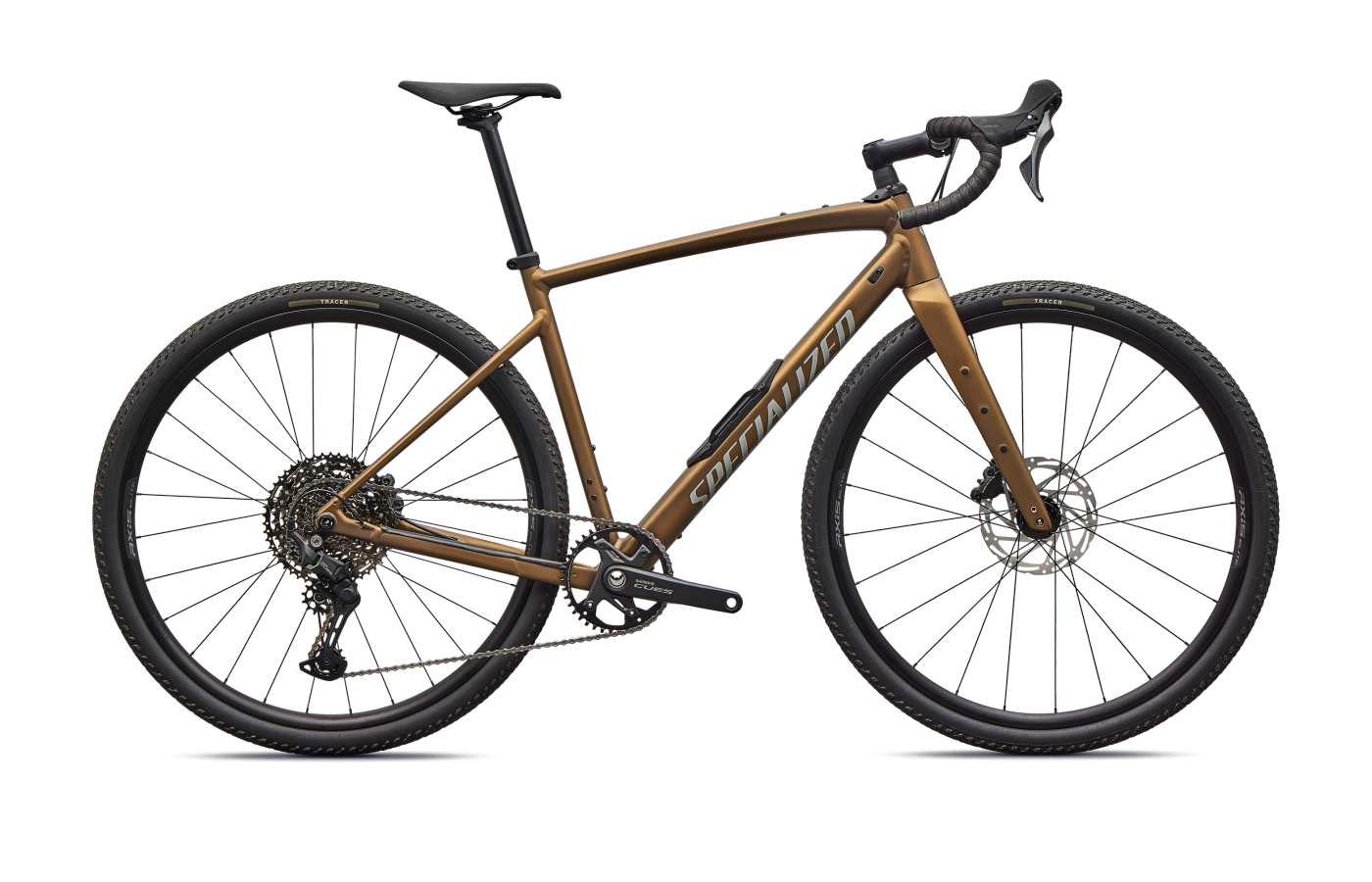
Diverge
Specialized's other gravel bike — and the more direct Checkpoint rival in the Specialized lineup. Future Shock front suspension, internal downtube storage, and longer-haul geometry. If the Crux feels too racy and you like Specialized, this is the bike.
Compare →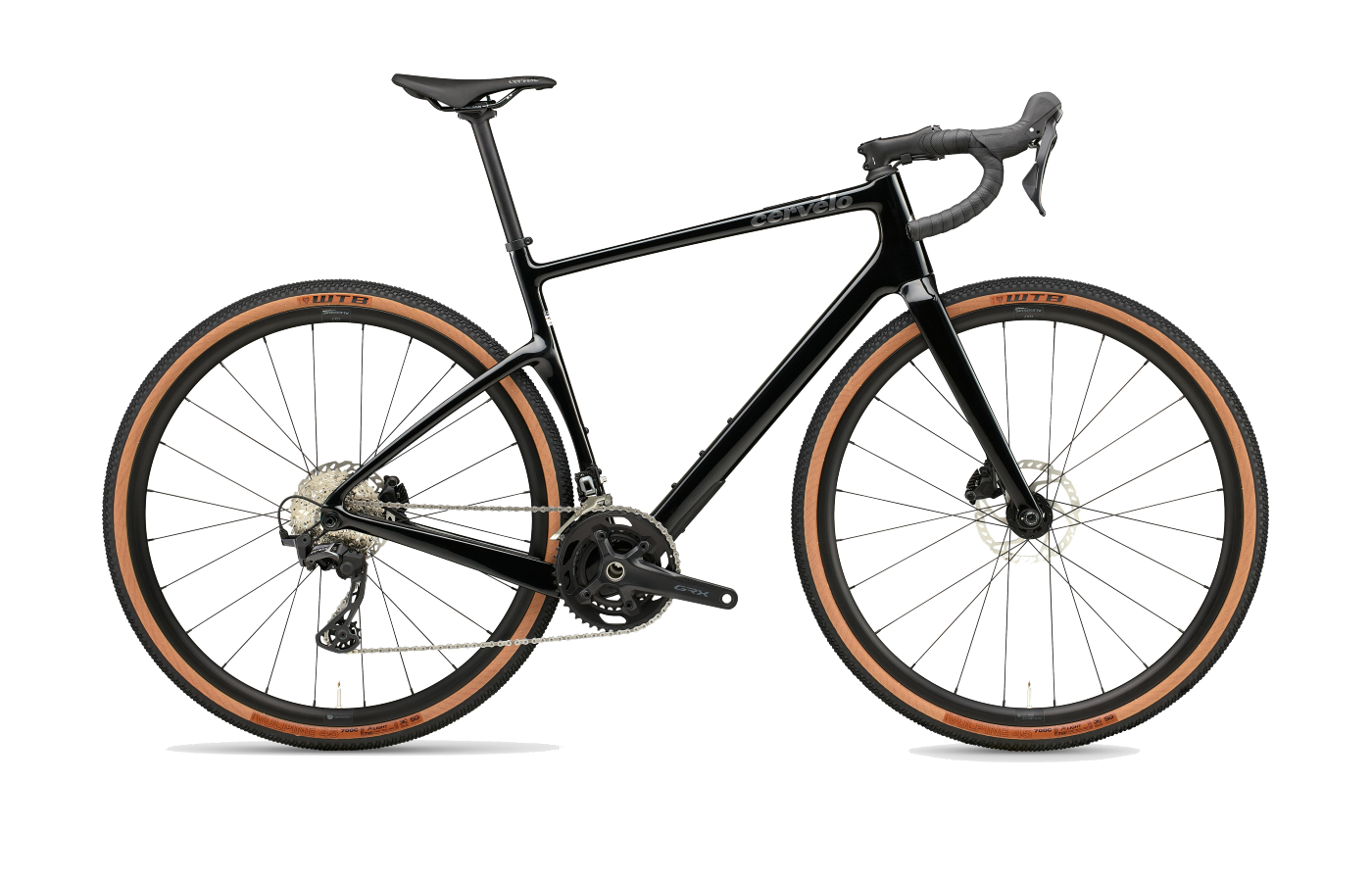
Aspero
Cervélo's race-first gravel bike, with a more integrated, aero-leaning aesthetic than the Crux. Lighter than the Checkpoint, sharper than most adventure bikes — for the racer who wants a more modern look than the Crux's traditional tube shapes.
Compare →Grizl
Canyon's adventure-gravel bike with the same 50 mm clearance and full luggage-mount coverage as the Checkpoint, usually a few hundred dollars cheaper. The catch: direct-to-consumer means no demos and no local dealer.
Compare →