Tallboy
vsSpur
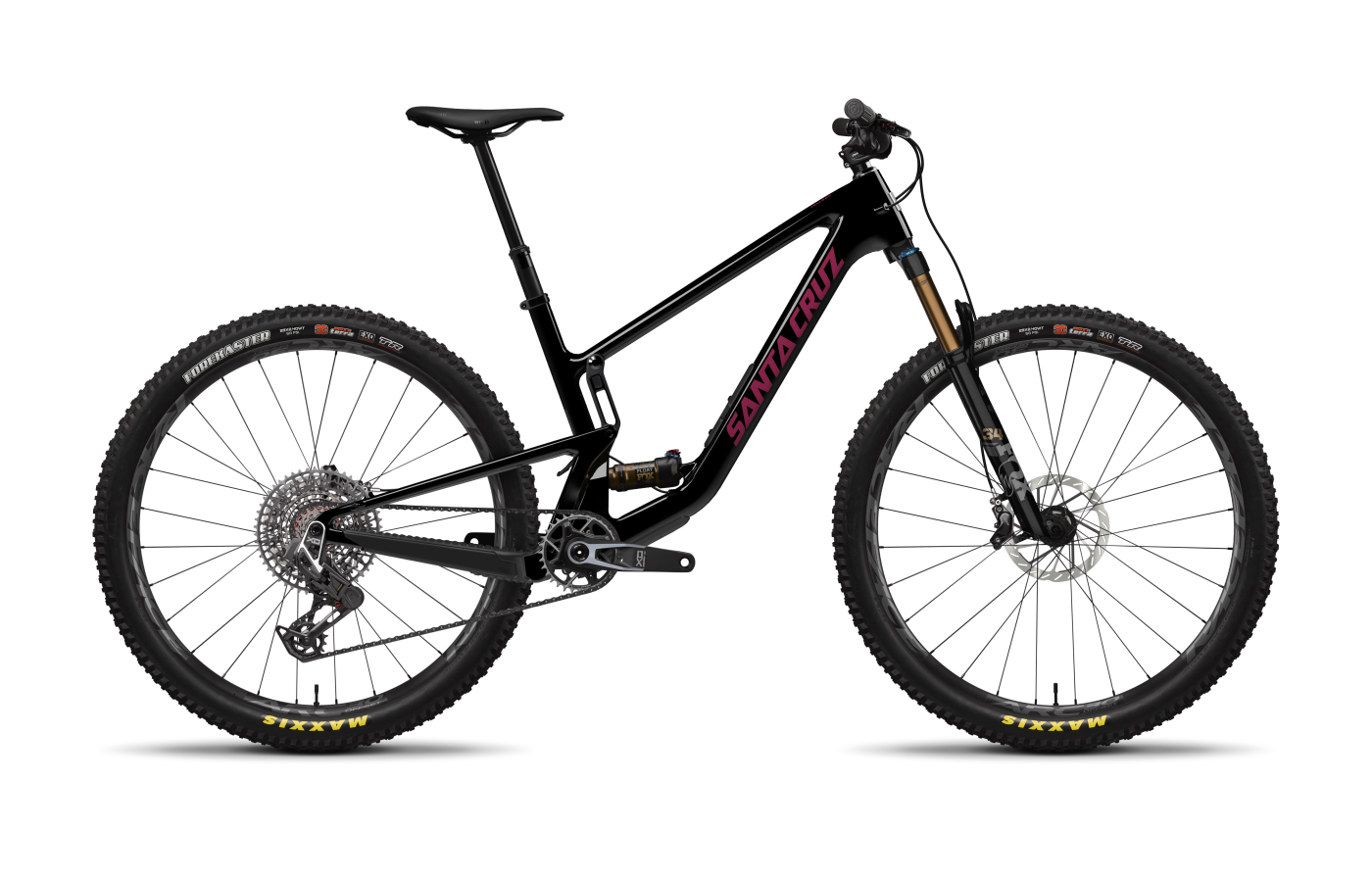
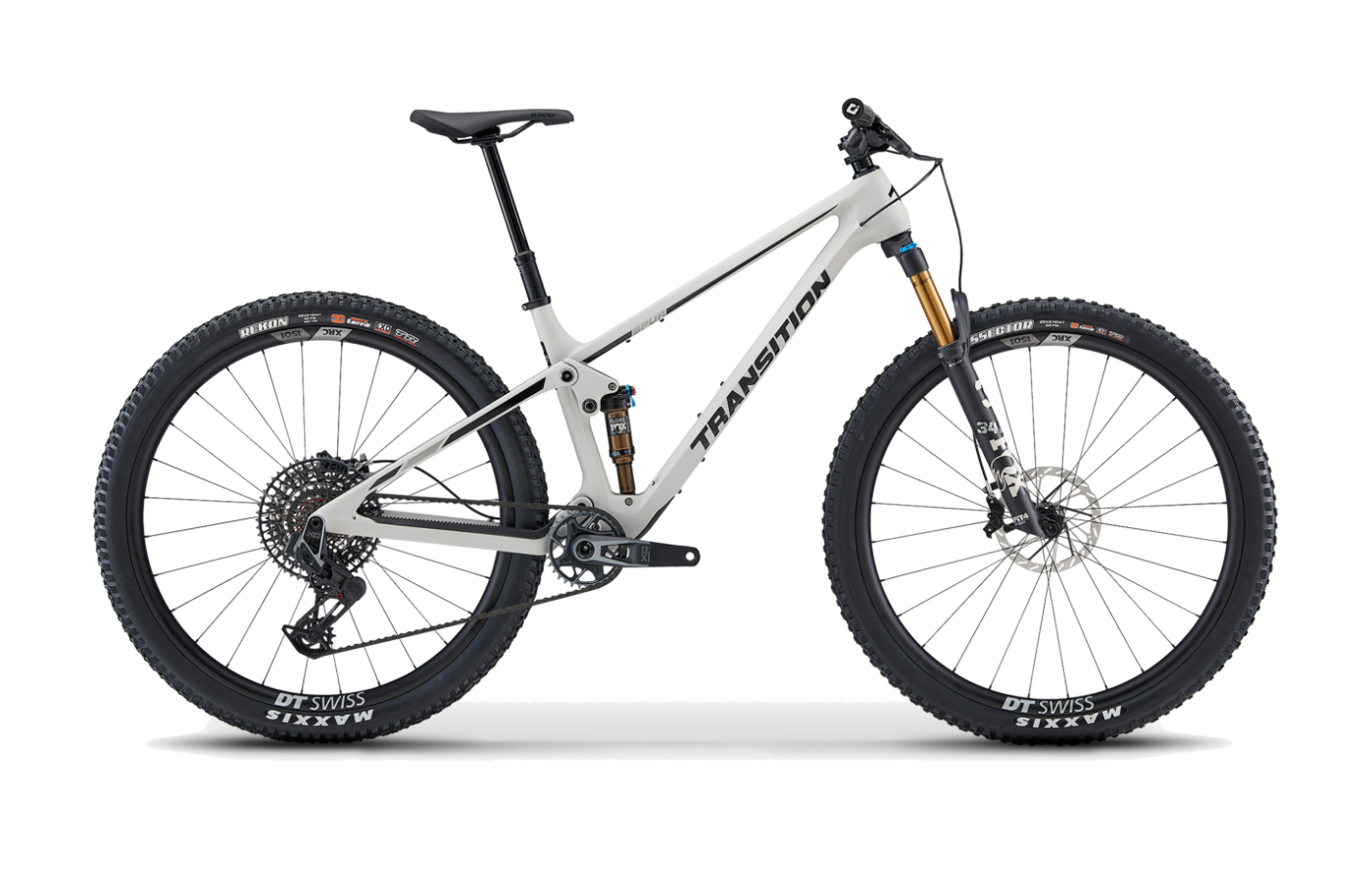
Two takes on 120 mm: tank versus terrier.
Same travel, opposite philosophies. The Tallboy plows; the Spur skips. One is built like a short-travel enduro bike, the other like an XC racer that grew teeth.
Tallboy
- Stout, composed chassis — size-specific carbon layup and a 130 mm fork let it be charged like a trail bike with 30 mm more travel.
- Glovebox internal storage — ditch the hip pack; tools, tube and CO2 fit inside the downtube.
- Lifetime frame and bearing replacement — Santa Cruz's after-sale support is the industry benchmark and softens the premium price.
- Roughly 2.7 lb (1.24 kg) heavier than a comparably specced Spur — felt on long fire-road climbs.
- Lower builds spec underpowered SRAM Level brakes; reviewers near-universally recommend an upgrade.
Spur
- Sub-28 lb at the X0 AXS build — 27.1 lb claimed, accelerates and climbs more like an XC bike than a trail bike.
- Long-and-slack geometry — 480 mm reach on a Large with a 66-degree head angle, more stable at speed than most 120 mm bikes.
- Pivot-less flex-stay design — fewer bearings to service and a 'poppy', supportive rear end that rewards an active rider.
- G2 RSC brakes ship even on the $8,199 build — multiple reviewers cooked the rear rotor on long descents.
- No internal frame storage; flex-stay rear can feel springy under heavier or more aggressive riders in high-G compressions.
Editor’s analysis
Both bikes carry 120 mm out back and 29-inch wheels — and almost nothing else in common. This is a fight between mass with composure and weightlessness with pop.
On paper, the Santa Cruz Tallboy and Transition Spur sit in the same downcountry slot: 120 mm rear, mid-60s head angle, ~$8k for a SRAM X0 AXS Transmission build with a Fox 34 Factory fork. Both target the rider who wants to climb under their own power and still send descents that 120 mm bikes have no business attempting. But the moment you look past the travel number, the philosophies snap apart.
The Tallboy is the heavier, sturdier tool. At the X0 AXS build the Santa Cruz tips the scales at 29.84 lb (13.53 kg) — roughly 2.7 lb more than the Spur Carbon X0 AXS at 27.1 lb. That mass buys you a 'steroidally hench' chassis, size-specific chainstays (430 mm on small, 443 mm on XXL), a 130 mm fork, a slacker 65.7-degree head angle, and the Glovebox internal storage. Reviewers consistently call it a 'short-travel Hightower' — composed, planted, willing to be charged into chunder a 120 mm bike has no right to survive.
The Spur strips weight and adds reach. The flex-stay rear triangle eliminates the rear axle pivot, saving ~200 g and a long-term bearing service. Geometry is longer and lower-leverage: 480 mm of reach on a Large versus the Tallboy Large's 475, a static 435 mm chainstay across all sizes, a steeper 66-degree head angle, and a 120 mm fork. The result is a bike that BikeRadar called 'the definitive downcountry rig' — feather-light, springy, a 'speed-generating machine' that pumps out of rollers and clears jump faces the Tallboy would compress into.
Put another way: the Santa Cruz Tallboy is the bike you buy when 120 mm is your only bike and you ride double-blacks anyway. The Transition Spur is the bike you buy when you already have a long-travel rig and want a feather-light second one for everything that isn't bike park. Both work. They reward different riders.
Where the builds differ.
Comparing our editor's-pick builds side-by-side. Winners highlighted row-by-row — lower price and weight, and the better-spec component, each mark a point.
Build variants & pricing
The Tallboy lineup runs from $4,799 to $11,399 across six builds; the Spur lineup is leaner — three builds from $4,799 to $8,199, all on the same carbon frame.
Prices are current US MSRP. The Spur tops out at the X0 AXS build — there is no 'XX SL' or RSV-tier Spur — so the editor's-pick comparison pits the Spur's flagship against a one-down Tallboy at the same $8,199. The carbon wheelset on the Spur and the alloy Reserve 30|SL on the Tallboy at this price tier explains a chunk of the 2.7 lb weight delta.
How they fit, how they steer.
Reach is identical at 455 mm. The Spur runs 9 mm lower stack, sits 0.3 degrees steeper at the head tube, and has a 0.5-degree slacker seat tube — the Tallboy carries a 9 mm longer wheelbase (1199 vs 1190) thanks to its slacker front end and size-specific chainstays.
Which size should I buy?
Tallboy size labels run xs–xxl with size-specific chainstays (430–443 mm); the Spur runs SM–XL with a static 435 mm rear end across all sizes.
→These are starting points. Flexibility, riding style, and preferred position all shift the answer — if you’re between sizes, a professional fit beats a chart.
What the magazines said.
Published reviews from trusted cycling outlets. Click through for the full write-up.
Which one should you buy?
If you want one short-travel bike that handles double-black descents, get the Tallboy. If you log big mileage and live for the climbs and rolling singletrack, get the Spur.
Tallboy
If 120 mm is your only bike and you still want to point it at chunky, double-black trails, the Tallboy is the more composed weapon. The slacker head angle, 130 mm fork, and beefier chassis let it take a beating, and the Glovebox plus lifetime support make it a long-term investment rather than a seasonal toy.
Spur
If most of your rides involve long climbs, fire roads to the trailhead, and singletrack you want to pump rather than plow through, the Spur's 2.7-lb weight advantage and supportive flex-stay rear feel transformative. Pair it with bigger brakes and you have a do-everything bike for everything except bike park.
Questions buyers actually ask.
Short answers to the things we get emailed about most often.
01Which is faster on the climbs?
The Transition Spur, by a clear margin. At the X0 AXS builds, the Spur is 27.1 lb versus 29.84 lb for the Tallboy — about a 2.7 lb (1.24 kg) delta. On a 30-minute sustained climb, that translates to roughly 30–60 seconds for a 75 kg rider, on top of the Spur's stiffer flex-stay rear that prevents bob under power.
On technical, ledgy climbs the Tallboy claws back some ground — the VPP linkage hooks up better on square-edged hits than the Spur's flex-stays, which can 'get hung up' according to multiple reviewers. Seated geometry is close at this fit-picked size: 76.7 STA on the Tallboy m versus 76.2 on the Spur MD.
02Which is faster on the descents?
It depends on the trail. On flowing, rolling, jumpable terrain, the Spur generates speed by pumping and popping — multiple reviewers describe it as a 'speed-generating machine' that clears jump faces the Tallboy would compress into.
On raw, chunky, square-edged double-black trails, the Tallboy has the edge. The 130 mm fork (vs 120 on the Spur), slacker 65.7-degree head angle (vs 66), beefier chassis, and four-piston SRAM Code Silver brakes let you charge harder and brake later. Both are limited by 120 mm of rear travel — neither replaces an enduro bike.
03What's the deal with the brakes?
Spec is uneven across the lineups, and it matters. The Tallboy X0 AXS at $8,199 ships with SRAM Code Silver Stealth four-piston brakes — more than enough for the bike's downhill ambitions. Lower-tier Tallboys ship with the much-criticized SRAM Level brakes that nearly every reviewer flags as underpowered.
The Spur Carbon X0 AXS at the same $8,199 ships with SRAM G2 RSC — a two-piston trail brake that MBR and Loam Wolf both reported cooking the rear rotor on long descents. If you buy the Spur and ride steep terrain, budget for a brake upgrade or at least bigger rotors.
04How much tire can I fit?
Tallboy: 63.5 mm (roughly 29x2.5") official clearance. Stock tires are 29x2.4 Maxxis Forekasters; you can fit a 2.5" Dissector or Assegai for more downhill bite.
Spur: 61 mm (roughly 29x2.4") clearance. Stock is a Maxxis Dissector / Rekon combo at 2.4". The Spur is happiest with 2.4" rubber — anything wider gets tight at the chainstays.
05Does the Spur really not have internal frame storage?
Correct. The Spur's flex-stay design and the priority on a low frame weight meant Transition skipped a downtube hatch on this generation. There's a single bottle mount inside the front triangle and that's it.
The Tallboy added the Glovebox in V5, with a latch next to the bottle cage and two included tool pouches. Long-term reviewers report occasional latch-rattle and water ingress on the tool wallet, so dry it out after washes — but for ditching a hip pack, it works.
06Are the suspension designs really that different?
Yes. The Tallboy uses Santa Cruz's VPP (Virtual Pivot Point) — a dual short-link layout with grease ports on the lower link for easy contamination flushing. V5 dropped the leverage ratio and reduced anti-squat for a more sensitive, 'bottomless' feel, at the cost of slightly more bob under power.
The Spur uses GiddyUp — a single-pivot flex-stay design where the seat stays bend instead of pivoting. It's lighter (~200 g savings), simpler (fewer bearings), and produces a 'poppy', supportive rear feel — but it can feel springy under heavier riders in big G-outs and doesn't track as well over square-edged hits.
07Which is better long-term?
The Tallboy wins on warranty. Santa Cruz offers a lifetime frame warranty, lifetime bearing replacement, and lifetime warranty on Reserve wheels — the most generous package in the category. The grease-port linkage and threaded BSA bottom bracket are bonus mechanic-friendliness.
The Spur counters with mechanical simplicity. Fewer bearings, external rear-brake routing (which Bikers Edge called 'a hill to die on' for ease of service), threaded BB, and 2024+ models added UDH for SRAM Transmission compatibility. RockShox SID forks on lower-tier Spurs have a known bushing-wear issue; the Fox 34 on the X0 AXS build sidesteps that.
08Which should a 5'8" rider size?
Both bikes have a clean fit at this height. On the Tallboy, size m — 455 mm reach, 619 mm stack. On the Spur, size MD — also 455 mm reach but 9 mm lower stack at 610 mm.
Reach is identical, so the choice comes down to stack preference and seat tube angle. The Tallboy m sits the rider slightly more upright; the Spur MD is a touch more stretched-out and lower in the front.
Similar bikes
If your priorities don’t map cleanly onto either of these, one of these adjacent bikes probably fits better.
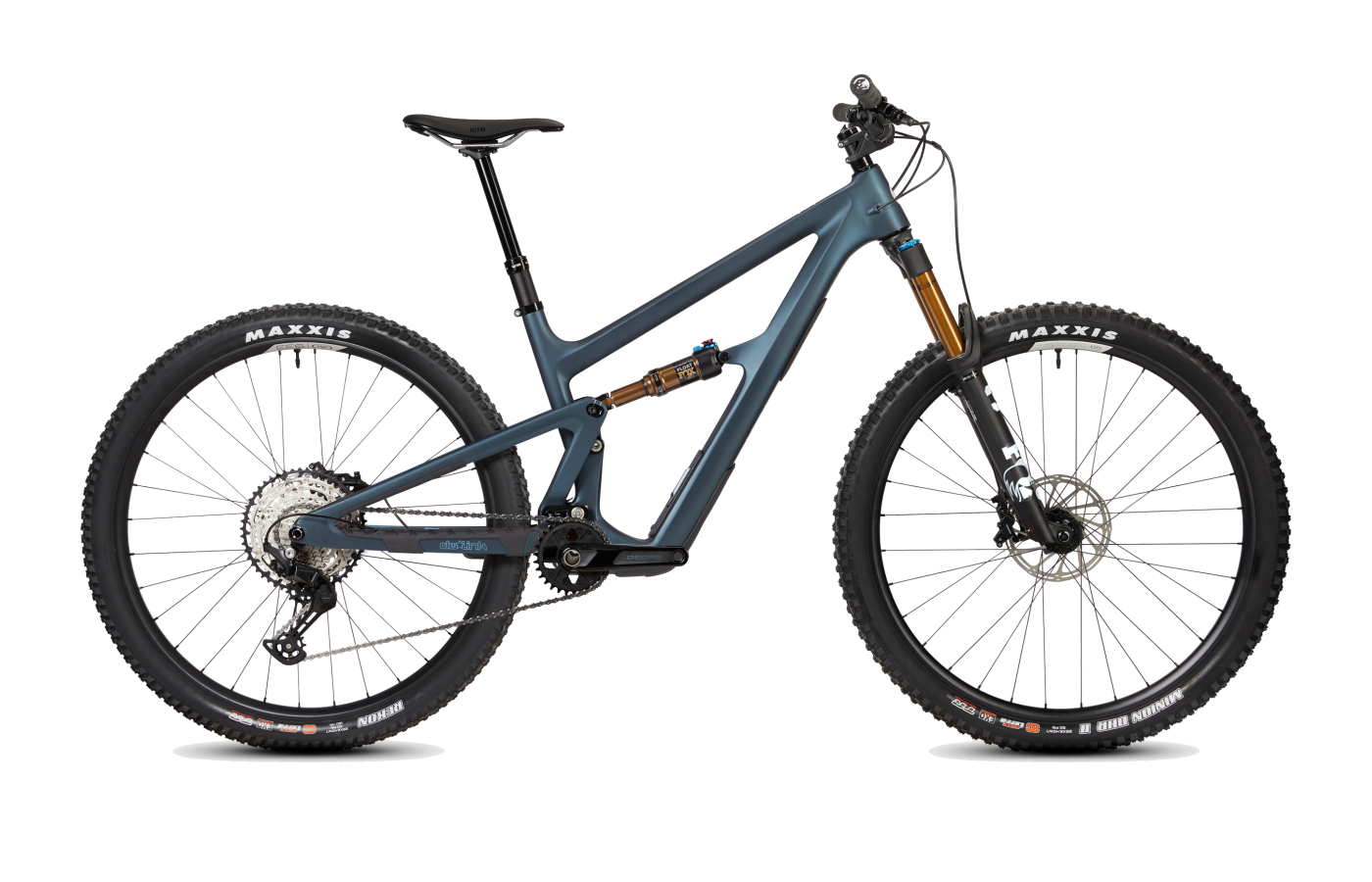
Ripley
The mountain-goat alternative — Ibis's DW-Link is the gold standard for technical climbing traction, hooking up over square-edged ledges where the Spur's flex-stays bounce off. If you climb more than you descend, the Ripley deserves a test ride.
Compare →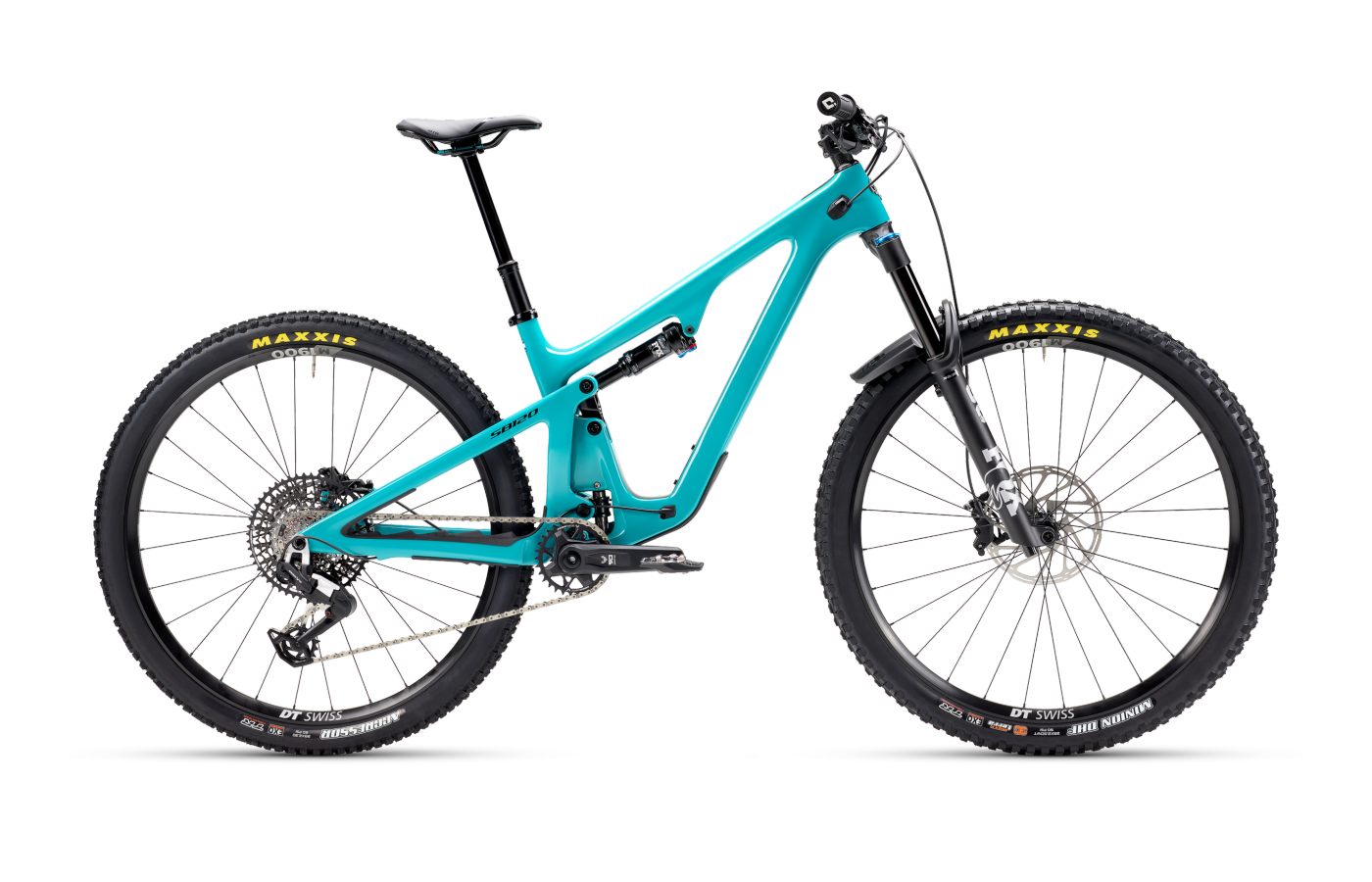
SB120
Yeti's premium downcountry play — Switch Infinity rear end, ~120 mm of plush, refined travel, and the same boutique support story as Santa Cruz. Heavier than a Spur, smoother than a Tallboy, with a price tag to match the brand.
Compare →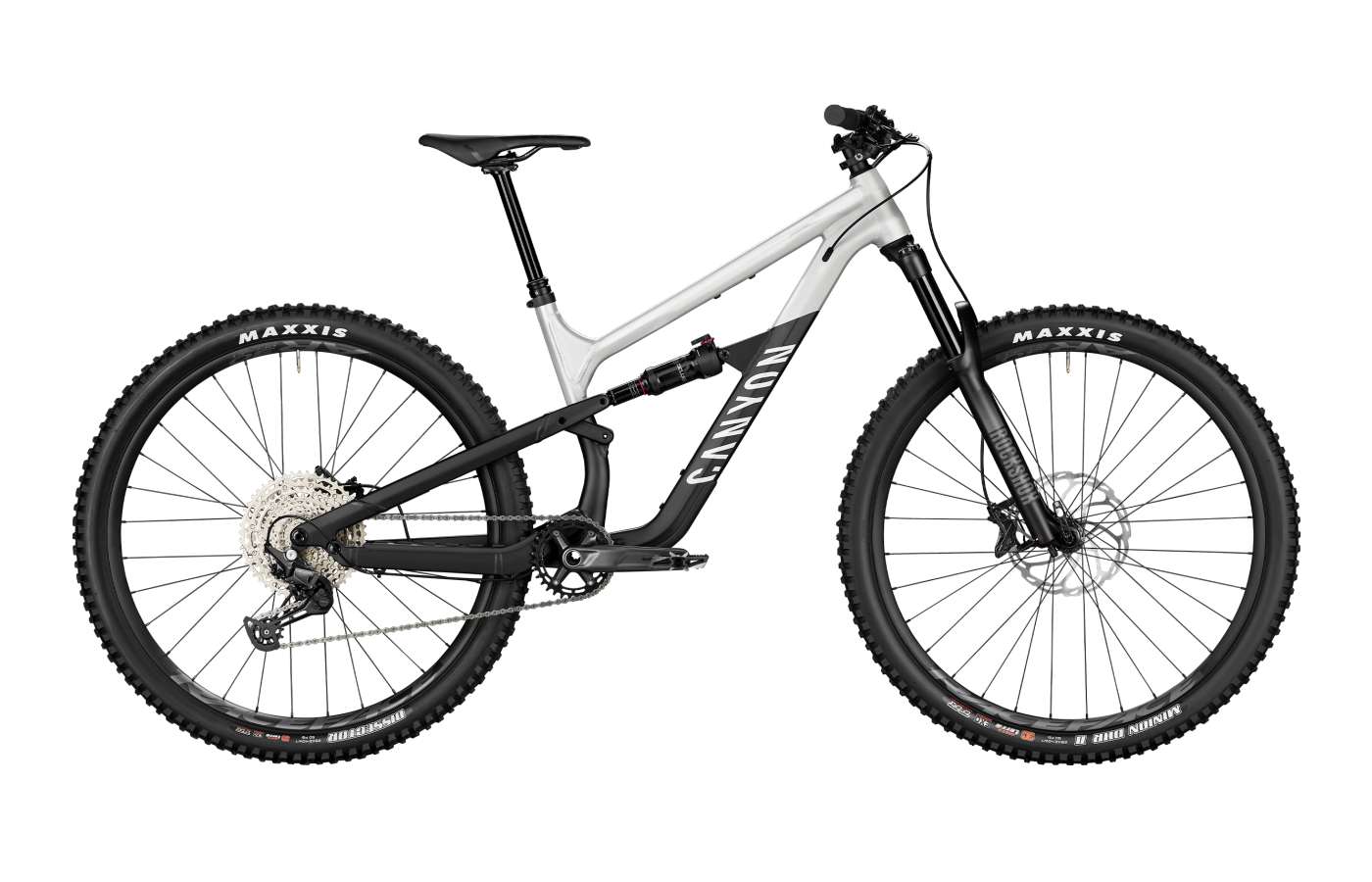
Spectral 125
The budget-friendly send-it option — Canyon's direct-to-consumer pricing puts a 125 mm trail bike with similarly aggressive geometry to the Tallboy at thousands less. The catch: no local dealer, no demos, and you'll need to know your fit.
Compare →