Nomad
vsPatrol
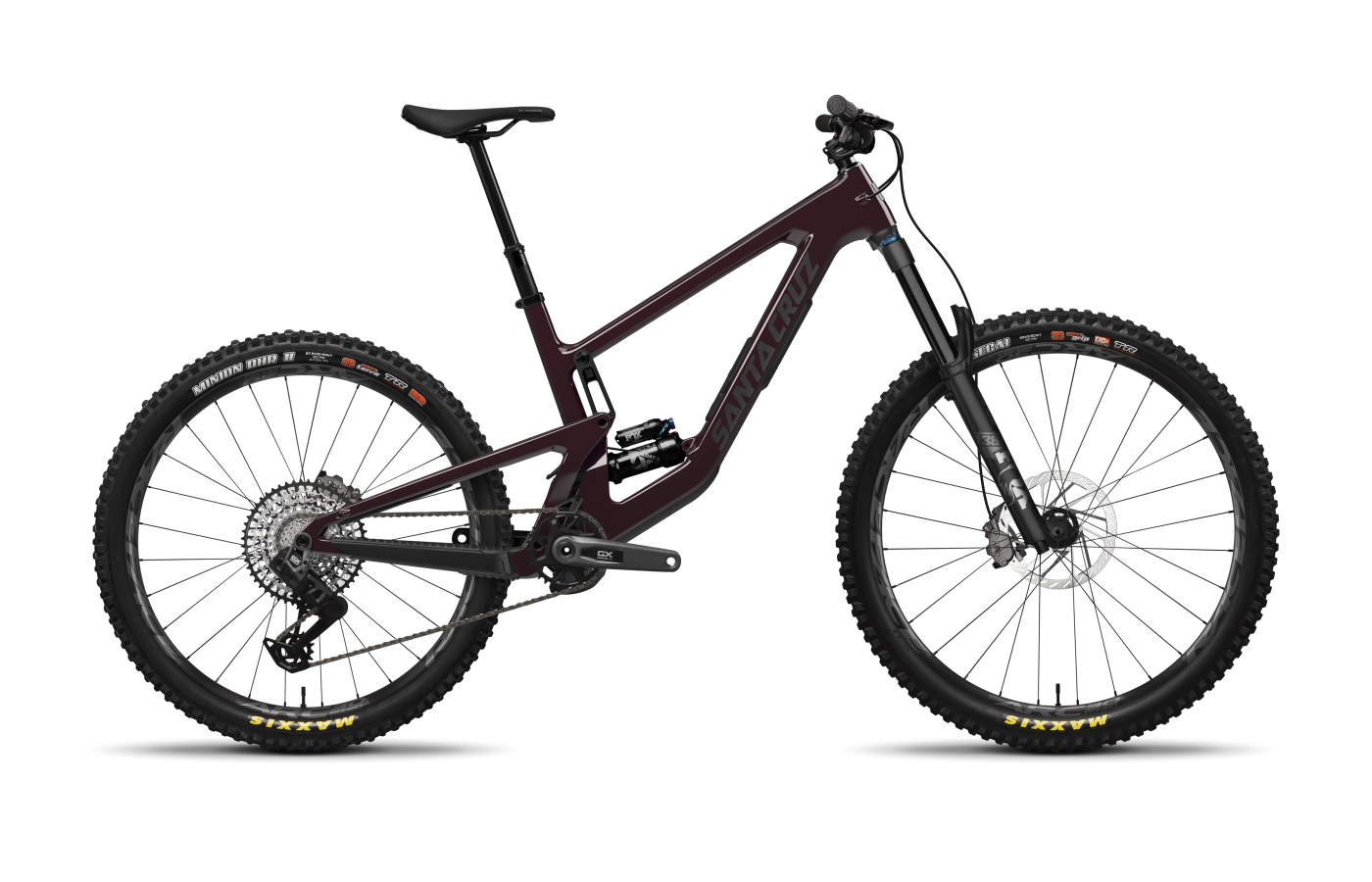
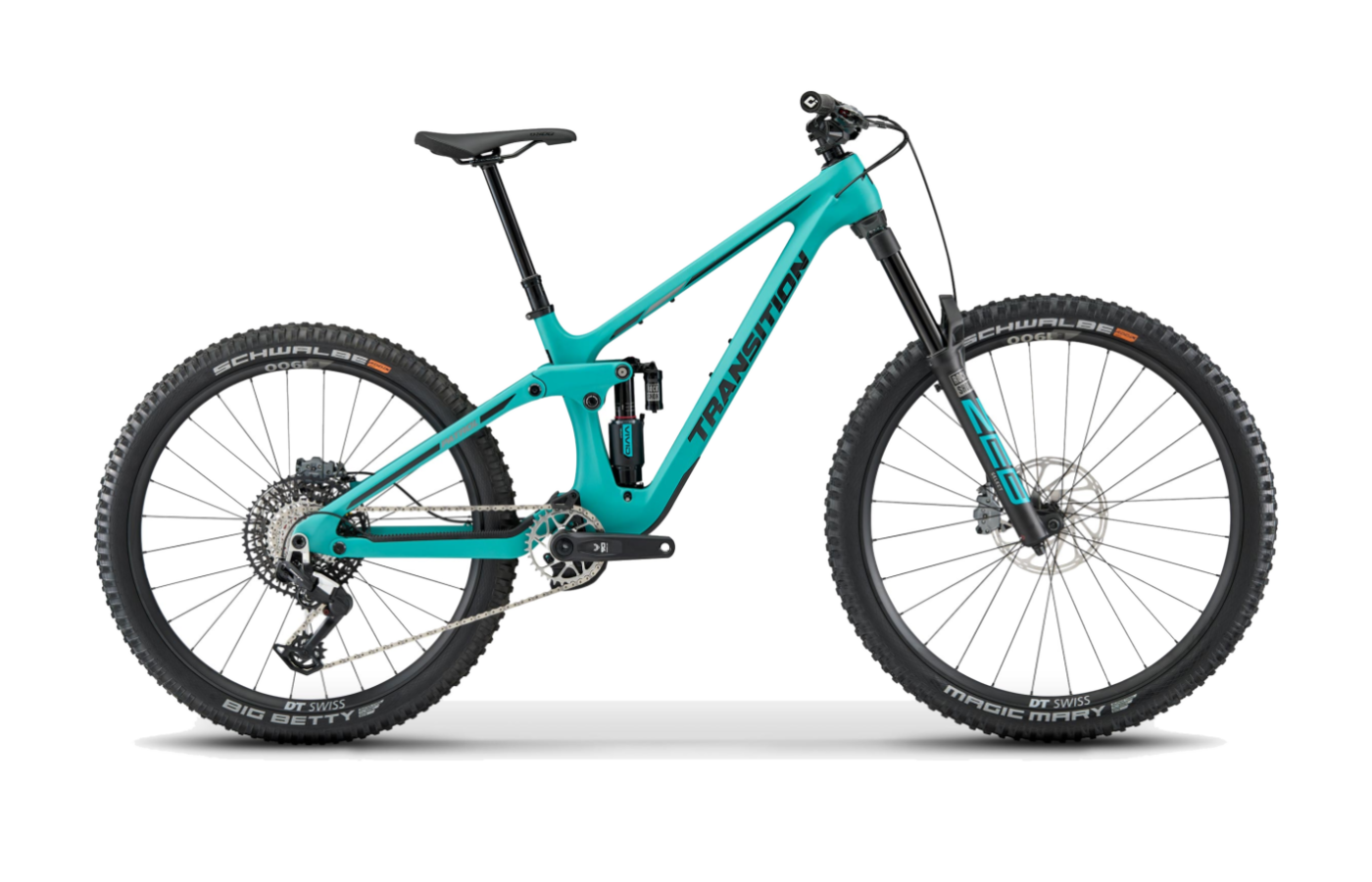
Two mullet enduro bikes, two completely different vibes.
The Nomad V6 is the refined 170 mm bruiser with a boutique price tag. The Patrol is the rowdy, raw-feeling 'Party Machine' that costs less and pops harder.
Nomad
- More travel — a true 170/170 mm setup vs. the Patrol's 160/160 mm, with end-stroke ramp that survives bike-park lines.
- Refined VPP suspension — reviewers describe the platform as 'undisturbed' and 'composed' even when bombing straight-line chunder.
- Lifetime bearings + warranty — Santa Cruz's free lifetime pivot-bearing replacement is unmatched in enduro.
- Boutique pricing — entry build is $5,149 and the flagship clears $9,700 with no alloy option.
- Stock EXO+ tires on air-shock builds are widely flagged as undergunned for a 170 mm bruiser.
Patrol
- Playful, poppy character — GiddyUp suspension and short 434 mm chainstays make it 'freakishly boosty' off lips and lifts.
- Better value across the range — alloy builds from $3,999 and a carbon GX AXS at $6,999 undercut the Nomad at every tier.
- Mechanic-friendly frame — external rear-brake routing, threaded BB, UDH, and dual-crown compatibility for park duty.
- Less travel (160 mm) and less composure than the Nomad on long, high-speed straightaways — reviewers noted the geometry can 'outrun' the suspension.
- Paint durability is widely criticized — chips show up almost immediately, even with Transition selling touch-up paint to compensate.
Editor’s analysis
Both run a 29-front/27.5-rear mullet and live in the steep-and-deep enduro pocket — but one chases composure, the other chases airtime.
On paper, the Santa Cruz Nomad and Transition Patrol look like the same bike: carbon enduro frames, 29/27.5 mullet, slack head tubes near 63.5 degrees, low bottom brackets, big-hit forks. Both target steep, technical descents. Both can be optioned with a SRAM GX AXS Transmission build for around $7,000. The shared category ends roughly there.
The Santa Cruz Nomad is the more travel-rich, more refined, more expensive platform — 170 mm front and rear, size-specific chainstays out to 451 mm on the XXL, and a VPP suspension layout reviewers consistently call 'undisturbed' and 'shifter-kart-like' through chunder. Pinkbike said the faster you push it, the more alive it feels. It's also a $5,149-to-$9,749 lineup with a 'boutique tax' (Vital MTB's words) — what you're paying for is the lifetime bearing program, the well-executed Glovebox storage, and a carbon frame finish that survives Whistler crashes with a chip but no cracks.
The Transition Patrol is 160 mm front and rear, a touch slacker at 63.5 degrees in 'High' (and 63 in 'Low'), and built around what Transition calls Speed Balanced Geometry. Multiple reviewers nicknamed it 'The Party Machine' — it gives you more trail feedback, it's 'freakishly boosty' off lips, and it's intentionally not trying to feel like a Cadillac. The carbon GX AXS build is $6,999 and the alloy lineup starts at $3,999, so the Patrol opens the door at roughly $1,150 less than the cheapest Nomad and finishes nearly $2,750 below the priciest one.
Put another way: the Nomad is the bike for the rider who wants 170 mm of travel that disappears underneath them on long descents. The Patrol is the bike for the rider who wants every root and lip to launch them — and would rather spend the saved money on a season pass.
Where the builds differ.
Comparing our editor's-pick builds side-by-side. Winners highlighted row-by-row — lower price and weight, and the better-spec component, each mark a point.
Build variants & pricing
Both lineups share a SRAM GX AXS carbon build right around $7,000 — but the Patrol then drops to alloy builds the Nomad simply doesn't offer.
Prices are current US MSRP. The Nomad is carbon-only ($5,149–$9,749) with a higher floor; the Patrol spans $3,999 (Alloy Eagle 70) to $6,999 (GX AXS Carbon). If your budget is sub-$5k, the Patrol is the only one in the conversation.
How they fit, how they steer.
Both at the medium frame — fit-picked for a 5'8" rider on each bike. Reach is identical at 455 mm. The Nomad sits 2 mm taller at the head tube (625 vs 623 mm stack) with a hair-slacker 63.8 vs 63.5-degree head angle and a 6 mm longer chainstay (440 vs 434 mm), which shows up on trail as the more planted, longer-wheelbase bike.
Which size should I buy?
Both ranges overlap closely at MD/m and LG/l; the Nomad extends a size further in both directions (XS-equivalent S and an XXL Patrol doesn't offer).
→These are starting points. Flexibility, riding style, and preferred position all shift the answer — if you’re between sizes, a professional fit beats a chart.
What the magazines said.
Published reviews from trusted cycling outlets. Click through for the full write-up.
Which one should you buy?
If you want 170 mm of refined, composed travel for big-mountain descents, get the Nomad. If you want a poppy, playful, value-priced park bike that turns every trail into a pump track, get the Patrol.
Nomad
If you ride alpine enduro, self-shuttle 3,000-foot descents, or want one bike that handles Whistler laps and backcountry epics with equal poise, the Nomad is the more refined tool. The VPP platform hides its 170 mm well on the climb and disappears underneath you when the trail goes vertical.
Patrol
If most of your riding is jump trails, bike-park laps, and steep loamers where the goal is airtime, not stopwatch time, the Patrol is the more engaging bike for less money. It rewards an active rider who likes to pump, manual, and pop off everything in sight.
Questions buyers actually ask.
Short answers to the things we get emailed about most often.
01Which one is more capable on the descents?
The Santa Cruz Nomad, narrowly. With 170 mm of travel front and rear (vs. 160/160 on the Patrol) and a more refined VPP platform, reviewers consistently described the Nomad as the bike with 'less of a speed limit' — Pinkbike's words — that feels more alive the harder you push. The Patrol is no slouch and is roughly as slack, but multiple reviewers noted the geometry can 'outrun' its 160 mm of travel in long, high-speed straightaways.
For steep, slow, technical terrain — the kind the Patrol's nickname 'Party Machine' was built for — the Patrol's shorter 434 mm chainstays and poppier suspension are arguably more fun, even if they're not faster on the clock.
02Which climbs better?
The Patrol, modestly. Both bikes are 'pedalable' for the category — the Patrol's 78.8-degree effective seat tube angle (size MD) puts the rider in a notably upright, centered position that keeps the front wheel planted, and the carbon GX AXS build is around 33.1 lbs. The Nomad's GX AXS build comes in heavier at roughly 34.5 lbs and uses a slightly slacker 77.4-degree seat angle in the medium.
Neither is a trail-bike-grade climber. Both have low bottom brackets (around 340–343 mm) that lead to frequent pedal strikes, prompting many owners to switch to 160–165 mm cranks.
03What about suspension travel and shock specs?
Nomad: 170 mm front (Fox 38 or RockShox ZEB) / 170 mm rear (Fox Float X or X2, 230x65 mm shock).
Patrol: 160 mm front (RockShox ZEB) / 160 mm rear (RockShox Vivid or Super Deluxe, 205x60 mm shock).
The Patrol's frame is famously dual-crown compatible and can be 'stroked out' to 170 mm rear with a 65 mm shock — multiple reviewers did exactly that for park use. The Nomad is already at 170 mm out of the box, so there's no equivalent travel-bumping trick.
04Are these mullet bikes or full 29ers?
Both are dedicated mullets (29-inch front, 27.5-inch rear) across the entire range. Neither offers a full 29er option — if you want that, look at the Megatower (Santa Cruz) or the Spire (Transition). The mullet setup is widely credited for both bikes' cornering snap, though the Nomad's longer 440–451 mm chainstays counter the typical 'twitchy' mullet feel that critics often flag.
05Which is the better value?
The Patrol, by a clear margin. The Nomad starts at $5,149 and goes to $9,749, with no aluminum option and what Vital MTB called a 'boutique tax.' The Patrol starts at $3,999 (Alloy Eagle 70) and tops out at $6,999 (GX AXS Carbon) — meaning Transition's flagship costs less than Santa Cruz's third-priciest build.
That said, the Nomad's lifetime free pivot-bearing replacement and lifetime frame warranty are genuine long-term value that doesn't show up on the spec sheet.
06How serious is the 'pedal strike' problem?
Real, but manageable. Both bikes run low bottom brackets — roughly 343 mm on the Nomad in 'Low' and similarly low on the Patrol — and reviewers from Vital, NSMB, MBR, and others all noted frequent crank strikes in chunky, technical terrain. The Patrol ships with 165 mm cranks stock to mitigate this; some Nomad owners swap down to 160 mm cranks for the same reason.
If your home trails are flat, fast, and smooth, you'll never notice. If they're rocky and undulating, plan on either crank length changes or running the geometry flip-chip in the higher position.
07Which one will the local mechanic prefer?
The Patrol. External rear-brake routing on the top of the down tube means brake swaps without bleeding or fishing hose through the frame. It also has a threaded BB and a SRAM Universal Derailleur Hanger.
The Nomad has internal routing throughout and the Glovebox in-frame storage adds a few more steps to certain jobs — though the lower-link grease port and threaded BB mitigate the worst of it. Both frames use UDH derailleur hangers.
08Are there any known reliability concerns?
Two patterns showed up across reviews. First, Fox Float X2 shocks were flagged on both bikes — Pinkbike reported aeration issues on a Nomad's X2; another tester 'blew up' the Patrol's stock X2 multiple times in a year. Coil-shock variants tend to be more reliable.
Second, the Patrol's paint chips easily — multiple owners reported scratches almost immediately. Transition mitigates by selling model-specific touch-up paint directly. The Nomad's matte finish was praised by NSMB as surprisingly durable after 43 rides.
Similar bikes
If your priorities don’t map cleanly onto either of these, one of these adjacent bikes probably fits better.
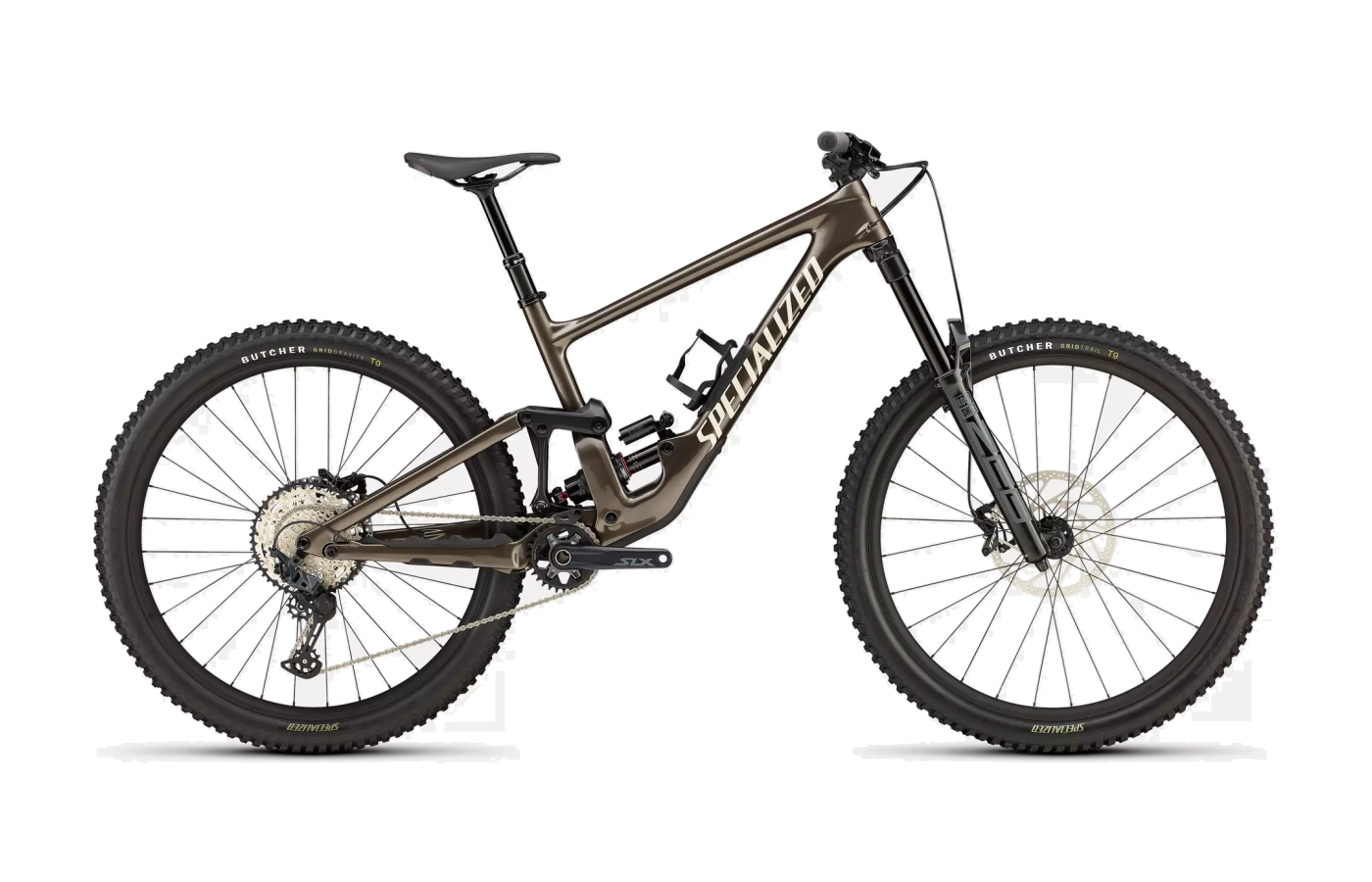
Enduro
The full-29er alternative to the Nomad — a 'Cadillac-smooth' 170 mm bike with the rollover advantage that mullet setups give up. Pick this if you ride faster, straighter terrain and want absolute composure over playfulness.
Compare →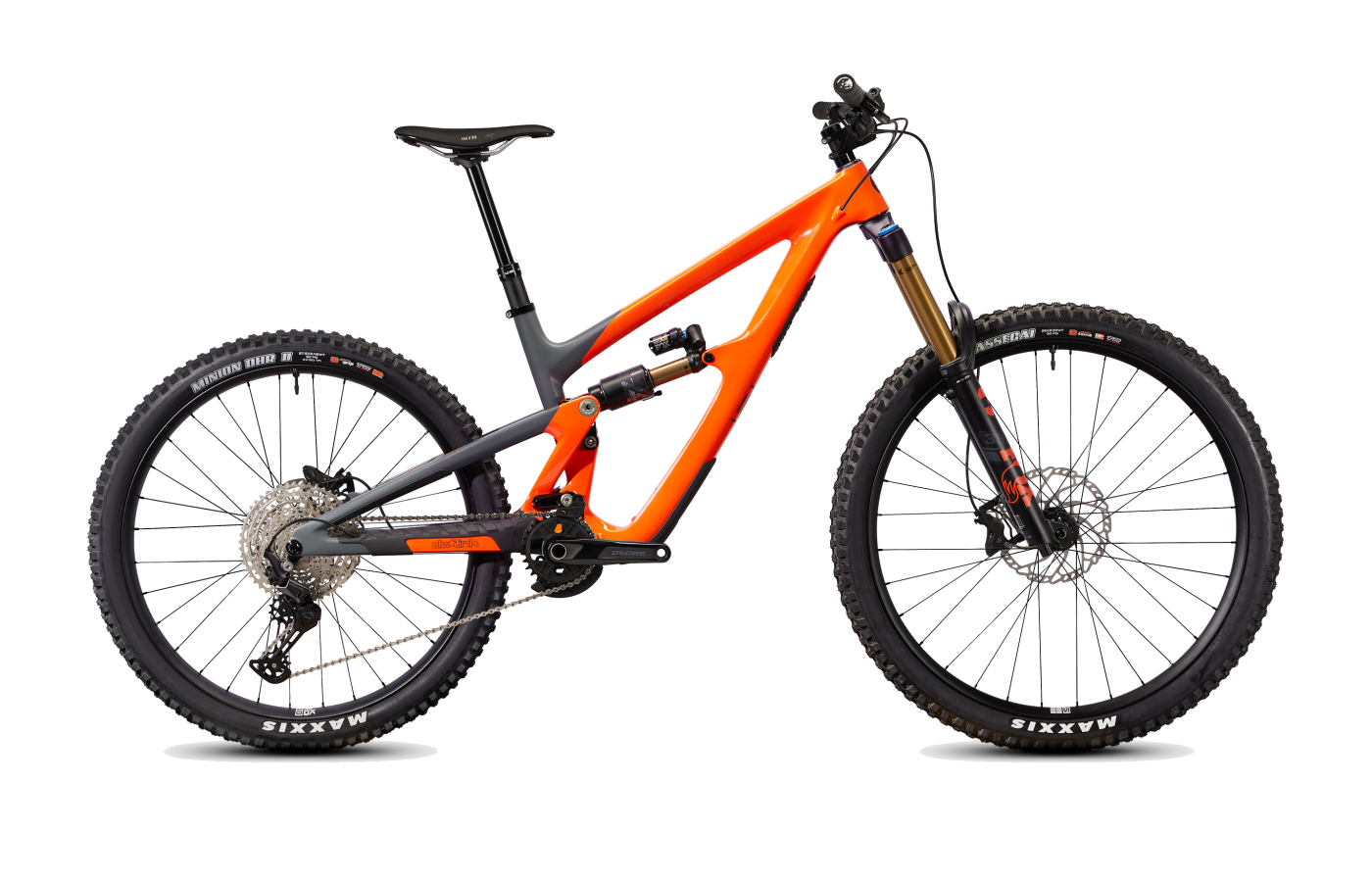
HD6
Ibis's premium mullet — same 29/27.5 wheel philosophy as the Nomad and Patrol but tuned to climb noticeably better, with the DW-link platform that's earned a long-running reputation for pedaling efficiency. Best if your shuttle days are outnumbered by big-pedal days.
Compare →Spire
Transition's full-29er enduro race bike — same Speed Balanced Geometry DNA as the Patrol, more travel and more rollover. Pick this if you love the Transition vibe but care more about lap times than airtime.
Compare →