Nomad
vsEnduro
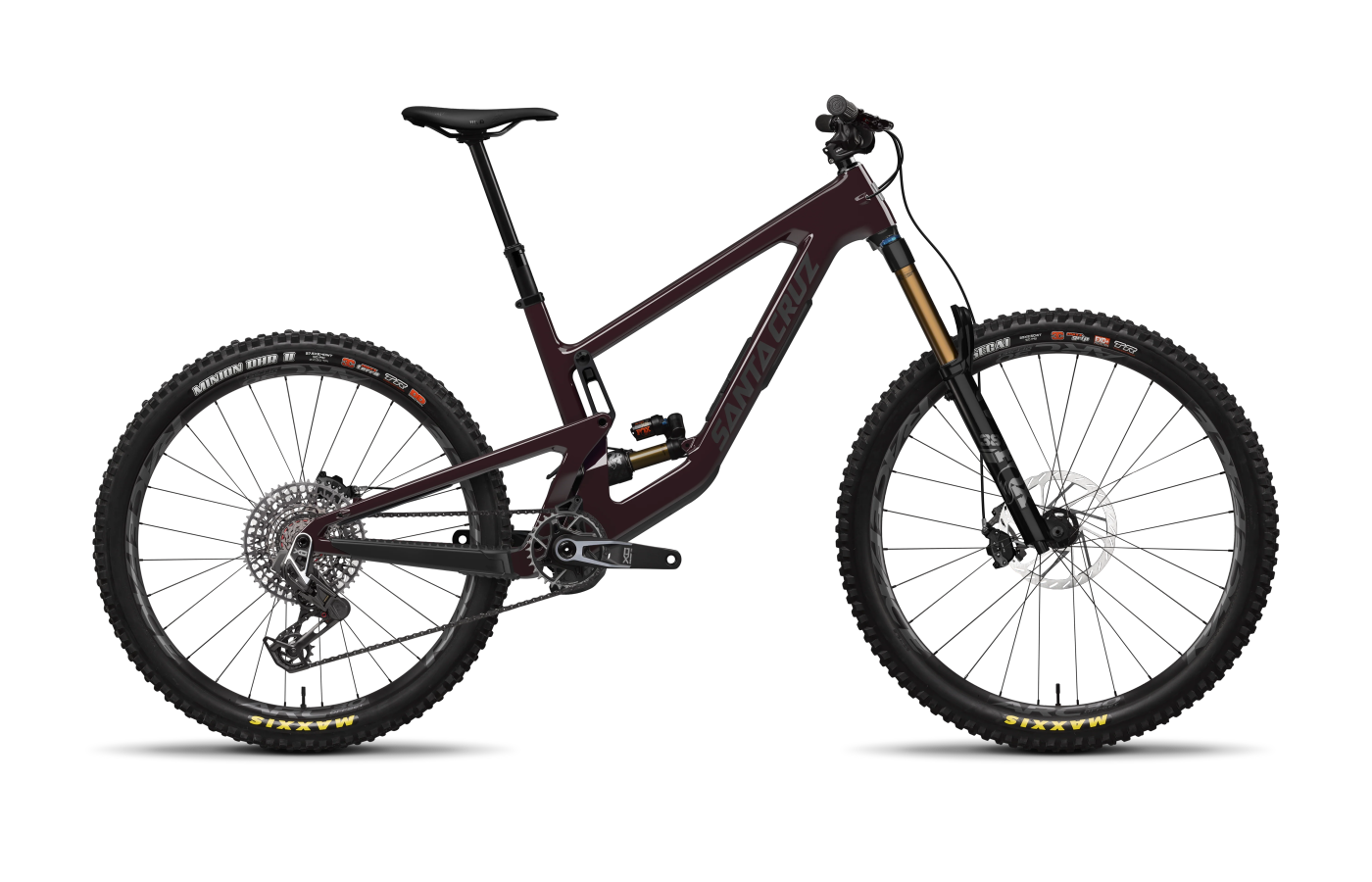
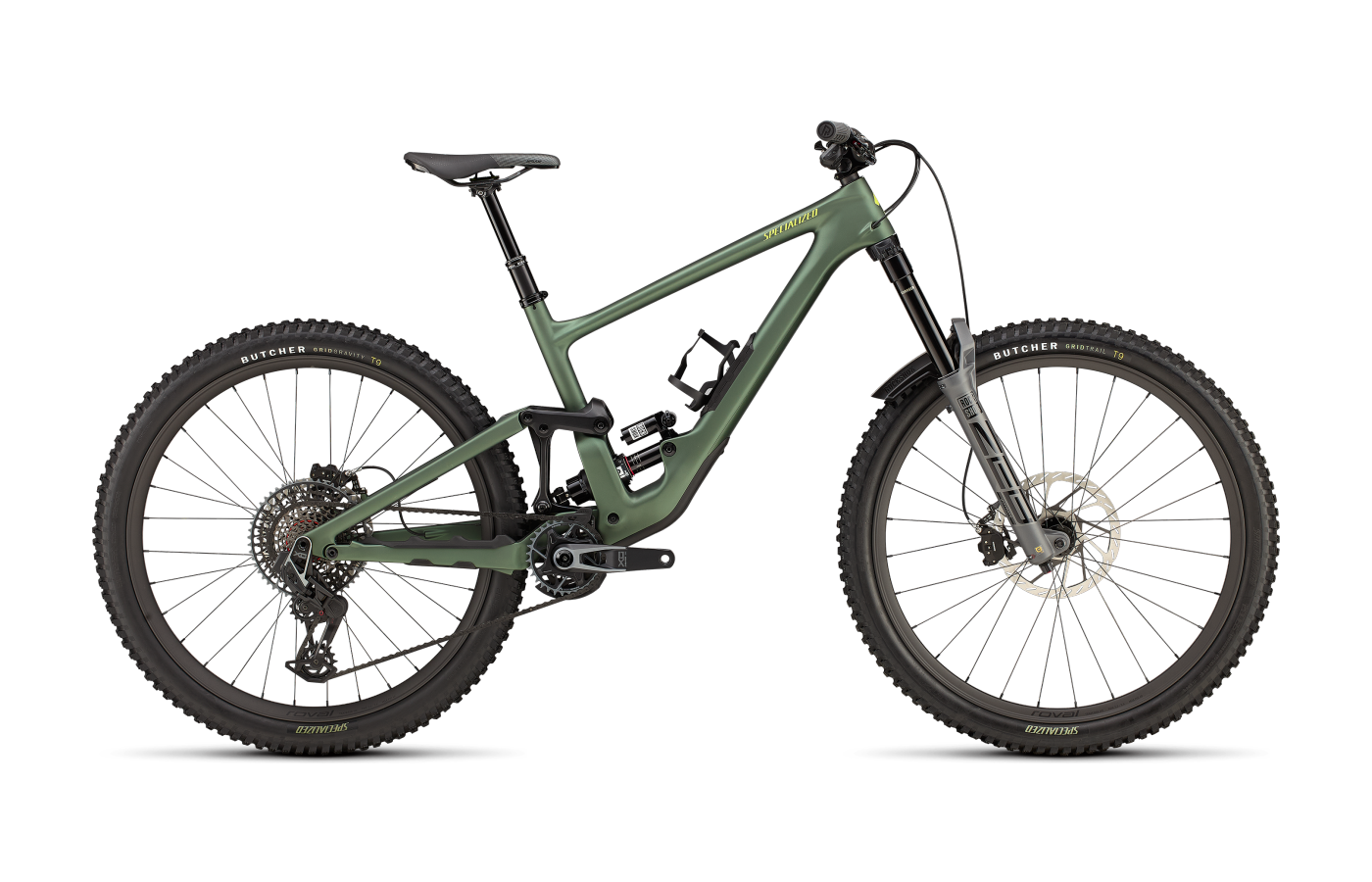
Two 170 mm bruisers, two completely different missions.
The Nomad is a mullet park rat that loves to corner. The Enduro is a 29er race sled that loves to plow.
Nomad
- Mullet agility — the 27.5 in rear wheel and size-specific chainstays make it the sharper-cornering bike, especially in tight, technical terrain.
- Playful suspension tune — lower anti-squat than the V5 plus VPP kinematics deliver supple small-bump compliance and a poppy mid-stroke.
- Lifetime everything — frame warranty plus free pivot-bearing replacements for as long as you own it, justifying part of the boutique tax.
- Premium price floor — the cheapest Nomad starts at $5,149 and you pay for the badge.
- Stock EXO+ tires on most builds are widely flagged as undergunned for a 170 mm bike.
Enduro
- Steamroller stability — the rearward axle path and 442 mm chainstays carry insane speed through chunder; reviewers call it a "mini-DH bike".
- Better entry price — the Comp build undercuts the cheapest Nomad by $150 and uses the same FACT 11m frame as the Pro.
- SWAT storage and integration — in-frame downtube storage plus the SWAT multi-tool in the steerer is still the segment benchmark for practicality.
- Only two builds in the lineup — there's no mid-tier GX or coil-shock option from the factory.
- Ground-hugging character can feel muted on flatter, mellower trails where the Nomad would feel alive.
Editor’s analysis
Same travel number on the spec sheet. Almost nothing else in common — one wants to slash, the other wants to steamroll.
On paper these look like twins. Both pack 170 mm front and rear, both run carbon-only frames, both target the steepest, ugliest descents you can find. But Santa Cruz and Specialized went after that brief from opposite directions, and the bikes ride like it.
The Santa Cruz Nomad is a mixed-wheel bike — 29 in front, 27.5 in back — built around Santa Cruz's VPP linkage with size-specific chainstays (440 mm on the size M editor's pick). Reviewers across PinkBike, Vital, and Blister keep using the same word: agile. Vital called the handling "shifter-kart-like." The smaller rear wheel snaps out of corners, the long stays keep it planted in a straight line, and the lower anti-squat tune means the rear suspension stays sensitive over chatter. It's a bike that rewards a centered, playful rider.
The Specialized Enduro picks one job — descend faster than the bike under it has any right to — and optimizes everything around that. It's pure 29er with a 442 mm chainstay across all sizes, a Horst link borrowed straight from the Demo downhill bike, and a more rearward axle path that lets the rear wheel skip over square-edge hits without hanging up. Reviewers describe it as a "magic carpet," a "mini-DH bike," something that makes "big and scary shit less so." The trade-off: it can feel boring on mellow trails, where the ground-hugging suspension and long wheelbase muffle the playfulness the Nomad serves on a plate.
Put another way: the Nomad is the bike you want when the trail has corners. The Enduro is the bike you want when the trail has a stopwatch.
Where the builds differ.
Comparing our editor's-pick builds side-by-side. Winners highlighted row-by-row — lower price and weight, and the better-spec component, each mark a point.
Build variants & pricing
The Nomad spans five builds from $5.1k to $9.7k. The Enduro lineup is much shallower — just Comp and Pro, with a $3.5k gap between them.
Prices are current US MSRP. Specialized has historically sold an S-Works Enduro at the top of the range; if the lineup expands again, the picks here may shift. The Enduro currently has no coil-shock or mid-tier electronic build — if you want SRAM GX AXS at this price, the Nomad GX AXS is the closer match.
How they fit, how they steer.
Compared at size M (Nomad) and S2 (Enduro). The Nomad sits a touch slacker at 63.8 degrees vs the Enduro's 64.3, with a 22 mm shorter wheelbase and a 2 mm shorter reach — the mullet rear wheel does the rest of the agility work.
Which size should I buy?
Santa Cruz uses traditional S–XXL labels; Specialized uses S2–S5. Both sizes overlap closely through the middle of the range.
→These are starting points. Flexibility, riding style, and preferred position all shift the answer — if you’re between sizes, a professional fit beats a chart.
What the magazines said.
Published reviews from trusted cycling outlets. Click through for the full write-up.
Which one should you buy?
If your trails have corners and your favorite ride is in a bike park, get the Nomad. If your trails have rock gardens and your favorite ride is a stopwatch, get the Enduro.
Nomad
If you spend your weekends slashing berms, side-hitting everything in sight, and chasing your friends through tight, technical singletrack — the Nomad's mullet platform and snappy VPP rear end will feel like an extension of your body. Long alpine days are still on the menu; race-pace plowing isn't really the point.
Enduro
If your idea of a perfect ride is a 3,000-foot shuttle full of square-edge hits at terminal velocity, the Enduro's Demo-derived suspension is essentially a cheat code. It still pedals well enough to earn the descent — but the descent is unmistakably the point.
Questions buyers actually ask.
Short answers to the things we get emailed about most often.
01What's the difference between the mullet (Nomad) and full 29er (Enduro) setups?
The Nomad runs a 29 in front wheel and a 27.5 in rear wheel — a configuration Santa Cruz commits to across the entire size range. The smaller rear wheel snaps out of corners faster, gives taller riders more clearance behind the saddle on steep drops, and reduces the "hung up" feeling in tight bucket turns.
The Enduro is pure 29er. The bigger rear wheel rolls over square-edge hits more efficiently and carries momentum better in straight-line chunder, but feels slightly less agile in tight, technical corners. Specialized's Horst-link suspension with a rearward axle path largely offsets the rollover gap a smaller wheel would normally have.
02Which one climbs better?
Reviewers give a slight edge to the Enduro on long, sustained climbs. Specialized increased anti-squat by 40% over the prior generation, and PinkBike noted it was "the first Specialized FSR ever made that can genuinely be ridden uphill without requiring a lockout."
The Nomad climbs surprisingly well for a 170 mm mullet bike — the 77.4 to 77.9 degree effective seat tube angle keeps the rider centered — but reviewers note the suspension bobs a little when standing, and the low 343 mm bottom bracket means frequent pedal strikes on technical, rocky climbs. Both are firmly in "sit and spin" territory; neither is a trail bike.
03Are the editor's-pick builds priced similarly?
Roughly, yes. The Nomad X0 AXS lands at $8,699 and the Enduro Pro at $8,499 — a $200 gap. Both run SRAM X0 Eagle Transmission with AXS shifting and top-tier carbon frames (Santa Cruz CC, Specialized FACT 11m).
The big lineup difference is what sits below those builds. The Nomad has three more options stepping down to $5,149, including a GX AXS build at $7,249 and two non-AXS builds. The Enduro skips straight from the Pro to the $4,999 Comp (Shimano SLX, mechanical) — there's no mid-tier electronic option.
04What about tire clearance and wheel size flexibility?
The Nomad is mullet-only — 29 in front, 27.5 in rear, with no swap kit advertised by Santa Cruz. Tire clearance is roughly 61 mm at the rear.
The Enduro is 29er-only — both wheels — with about 58 mm of clearance. Stock 2.3 in Butcher tires sit comfortably; reviewers consistently flag the Grid Trail casing as too light for a 170 mm bike and recommend an immediate upgrade to Grid Gravity or DH casings.
05How serviceable are the suspension linkages?
The Nomad has Santa Cruz's typical lower-link-driven VPP layout, with a grease port on the lower link and a threaded BB. Reviewers note the "creased shock tunnel" design makes setting sag and reaching the rebound dial awkward — but bearing replacement is free for life through Santa Cruz's program.
The Enduro uses a Horst-link with a low-mounted shock and 14 pivot bearings total. Threaded BB, internal storage, and tidy frame protection — but reviewers warn the bearing replacement bill adds up over the bike's lifetime, and the linkage is described as a "chore to clean."
06Are there known reliability issues to watch for?
Nomad V6: A few reviewers flagged play in the upper shock hardware (Santa Cruz replaced under warranty) and noted that the Fox Float X2 air shock can develop inconsistent rebound damping. The bike is also known to get noisy quickly without regular linkage greasing.
Enduro (2020 generation): The well-known issue is the headset cracking problem on early frames — Specialized claims it's resolved on 2022+ frames, and warranty turnaround was reportedly under a week. Stock Butcher Grid Trail tires are commonly noted as undergunned for the bike's capability.
07Which holds the better long-term ownership story?
Both come with lifetime frame warranties to the original owner. Santa Cruz adds free pivot-bearing replacements for life, which reviewers consistently call out as a meaningful offset to the boutique price.
Specialized doesn't match the bearings program but has a strong dealer network and crash-replacement pricing. Frame durability gets praise on both — reviewers reported substantial crashes on the Nomad with paint loss but no structural damage, and the Enduro frame survived bike-park abuse cleanly aside from the headset issue noted above.
08Which one should I buy if I race enduro?
Probably the Enduro. Reviewers describe it as a "race bike" and "unrivalled king" in high-speed rough terrain, with the rearward axle path letting riders carry speed through sections that would slow other bikes.
The Nomad is faster in tight, technical corners and more fun on bike-park laps, but Vital and PinkBike both position it as a "versatile bruiser" or "seasonaire's bike" rather than a pure race tool — Santa Cruz's Megatower is the dedicated 29er race sled in their lineup. If your race calendar has more turns than straightaways, the gap closes.
Similar bikes
If your priorities don’t map cleanly onto either of these, one of these adjacent bikes probably fits better.
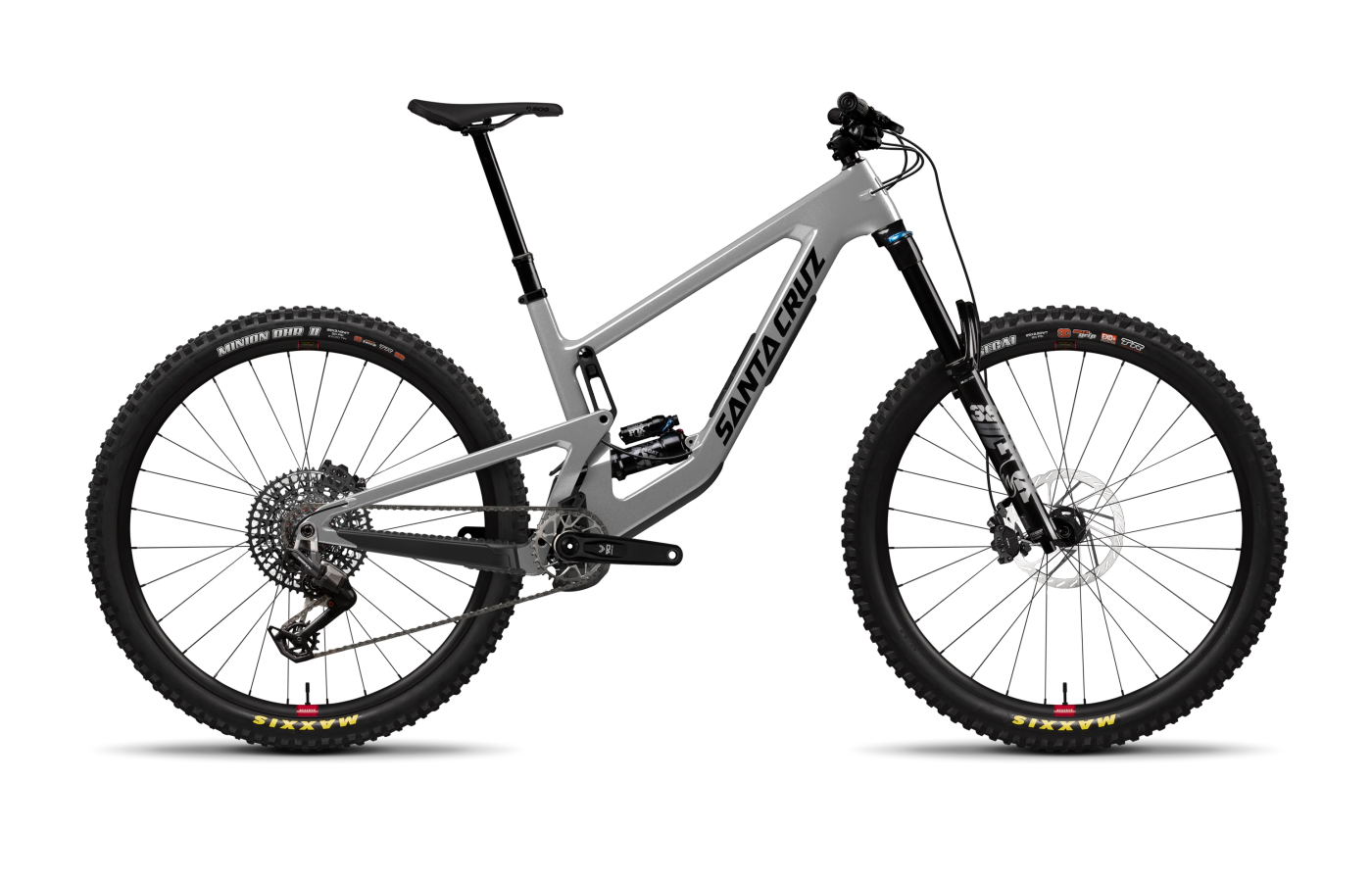
Megatower
Santa Cruz's full-29er enduro sled — same frame quality and lifetime support as the Nomad, but trades mullet agility for outright race-pace stability. The pick if you love the Santa Cruz fit and finish but ride open, fast tracks.
Compare →
Status 170
Specialized's aluminum-framed mullet bruiser at a fraction of either bike's price. Trades carbon refinement and fancy linkages for an honest, rowdy park-bike identity — the budget alternative if the Nomad's mullet character appeals but the price tag doesn't.
Compare →Spire
Another 170 mm 29er that competes head-on with the Enduro, but with a more conventional Horst-link tune and a less polarizing low-speed feel. Worth considering if the Demo-derived Enduro's ground-hugging character feels too muted on mellow terrain.
Compare →