Highball
vsStigmata
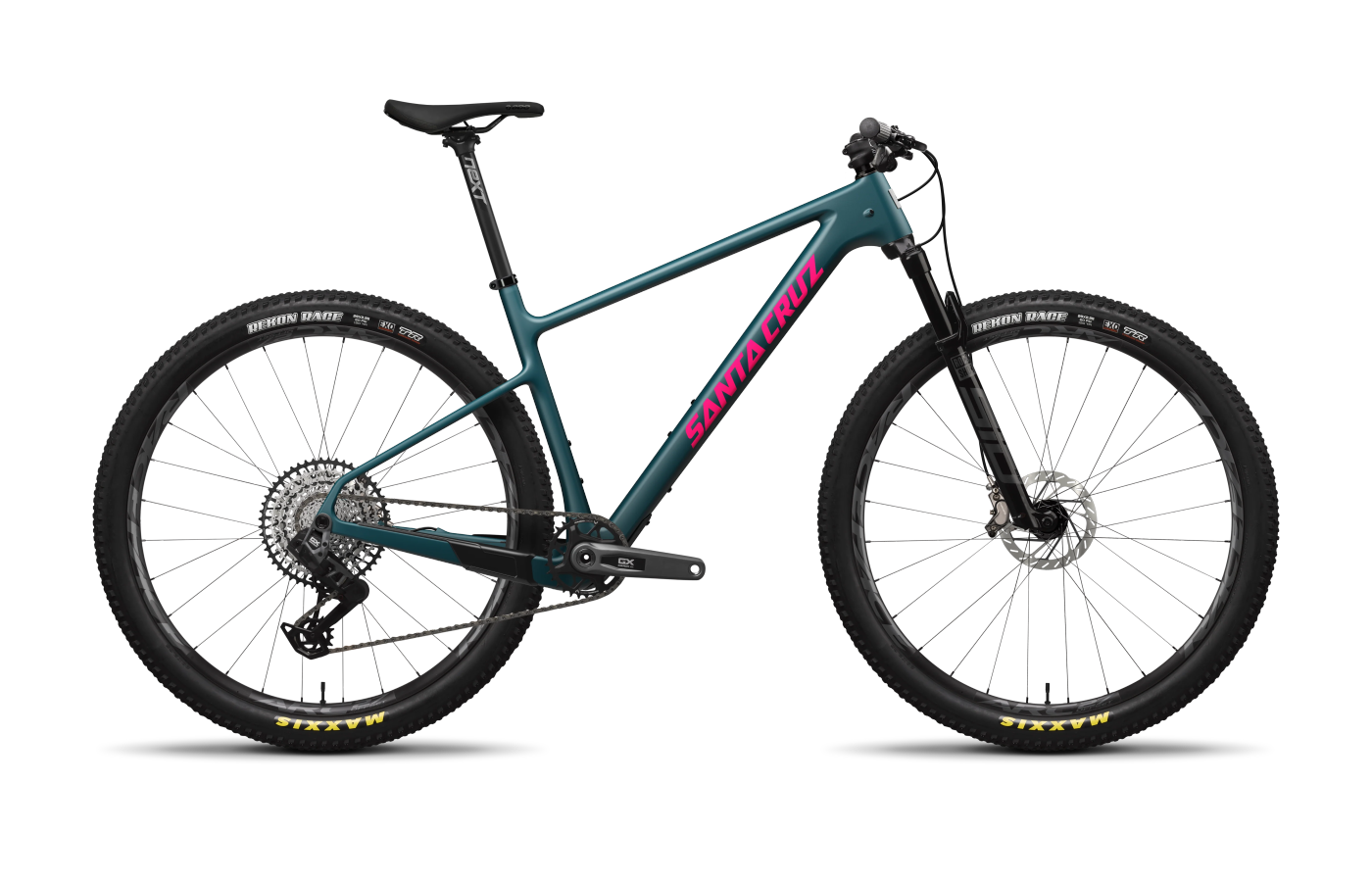
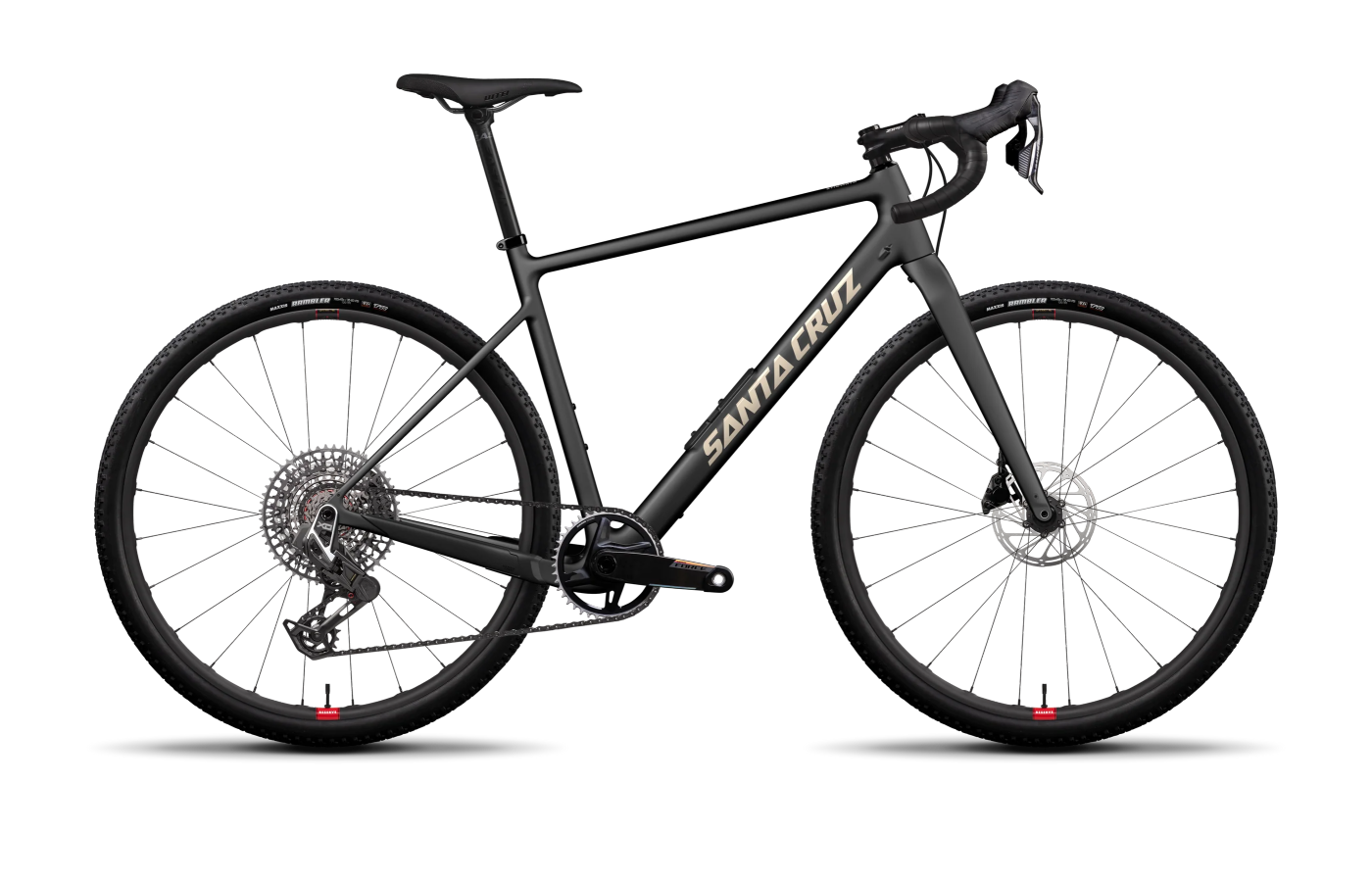
Two Santa Cruzes, two definitions of fast.
The Highball is a 100 mm-fork XC hardtail built to make climbs feel flat. The Stigmata is a long, slack gravel bike that thinks it's a mountain bike.
Highball
- Genuine vertical compliance from the dropped seat-stay junction — reviewers consistently call it a "soft hardtail."
- Stable for an XC bike — a 1145 mm wheelbase and long 440 mm reach in size M keep things composed when speeds rise.
- Climbs like a missile — ~10.5 kg in the GX AXS build with a 100 mm SID SL and a wide-range Eagle drivetrain.
- The long reach can feel stretched-out for shorter-torso riders — fit before you buy.
- Hardtail rear means it still gets out of its depth on truly chunky technical trail.
Stigmata
- Effortlessly stable in the rough — the 69.5-degree HTA and ~1063 mm size-M wheelbase make chunky descents almost boring.
- Suspension-corrected frame — add a 40 mm RockShox Rudy fork later without ruining the geometry.
- Mechanic-friendly standards — threaded BSA bottom bracket, 27.2 mm round seatpost, UDH hanger, no integrated headset cabling.
- Heavy for a carbon gravel race bike at a claimed 1,380 g frame — Santa Cruz Crux owners will outclimb you on tarmac.
- Slack front end and stock 45 mm Maxxis Ramblers feel slow on pure pavement.
Editor’s analysis
Same brand, same Carbon CC layup, same Glovebox storage hatch — and almost nothing else in common.
On paper these are both Santa Cruz drop-the-hammer race bikes, both topping out around $7,500-$7,900, both built around the brand's premium CC carbon. In practice they sit on opposite ends of the off-road map. The Highball is a 100 mm-fork hardtail with flat bars, a 67-degree head angle, and an obsession with shaving seconds on a fire-road climb. The Stigmata is a drop-bar gravel bike with 50 mm tire clearance, a 69.5-degree head angle, and the option of a 40 mm RockShox Rudy fork up front.
The Highball's pitch is efficiency with restraint. Reviewers keep returning to the dropped seat-stay junction — joined roughly two inches below the top tube — which engineers a touch of vertical compliance into an otherwise stiff XC frame. It rides like what reviewers call a "soft hardtail": still poppy and direct out of the saddle, but less harsh on washboard than the spec sheet suggests. The 1145 mm wheelbase in size M and the long-for-XC 440 mm reach keep it stable when you point it downhill — though smaller riders should test-ride before buying.
The Stigmata went the other direction in 2024 — Santa Cruz dropped lateral and BB stiffness ~10-12% versus the prior generation, slackened the head tube 2.5 degrees to 69.5, and stretched the wheelbase by 60 mm in some sizes. The result is a gravel bike Velo's Alvin Holbrook describes as making the rider feel "more capable than they actually are." The cost: a claimed 1,380 g frame is heavier than a Specialized Crux, and Escape Collective's Dave Rome called it "as aero as a Jeep." Nobody's buying the Stigmata to win a sprint on tarmac.
Put simply: pick the Highball if your trails are rocky enough that a hardtail still earns its place, and pick the Stigmata if you ride mostly fire roads, doubletrack, and the occasional ribbon of singletrack you'd otherwise skip. They aren't really competitors — they're two different tools from the same toolbox.
Where the builds differ.
Comparing our editor's-pick builds side-by-side. Winners highlighted row-by-row — lower price and weight, and the better-spec component, each mark a point.
Build variants & pricing
The Highball runs $3,299-$7,899 across five carbon builds; the Stigmata runs $4,149-$7,549 across five. Both top out on Reserve carbon wheels and the brand's lifetime warranty.
Editor's picks are tier-matched at one-down: GX AXS Transmission on the Highball ($5,049) versus Force 1x AXS RSV on the Stigmata ($6,849). The $1,800 gap is real — the Stigmata's pick adds Reserve 25|GR carbon wheels, which the Highball GX build doesn't include at this price.
How they fit, how they steer.
Highball size M (619 mm top tube, 605 mm stack, 440 mm reach) lined up against Stigmata size SM (552 mm top tube, 564 mm stack, 390 mm reach). Different sizing conventions, different drop-bar vs flat-bar reach math — these are the sizes the fit algorithm picks for the same rider on each bike.
Which size should I buy?
Sizes vary by sizing system — the Highball uses s/m/l/xl, the Stigmata uses XS through XXL. Use stack and effective top tube length, not the letter on the label.
→These are starting points. Flexibility, riding style, and preferred position all shift the answer — if you’re between sizes, a professional fit beats a chart.
What the magazines said.
Published reviews from trusted cycling outlets. Click through for the full write-up.
Which one should you buy?
If your local trails turn rocky, get the Highball. If your local rides string fire roads to singletrack, get the Stigmata.
Highball
If you race or pretend-race XC, ride a lot of climby singletrack, and want a hardtail that doesn't punish you on the long approach, the Highball is the obvious pick. The dropped seat-stay compliance and 100 mm SID SL up front earn it real credit on rough days; the long reach and wheelbase make it feel grown-up on descents.
Stigmata
If "gravel" for you means doubletrack with rooty singletrack connectors and the occasional drop, the Stigmata is built around exactly that ride. The progressive geometry and 50 mm tire clearance let it shrug off terrain that would punish a race-leaning gravel bike — and the suspension-corrected frame leaves the door open for a 40 mm fork down the road.
Questions buyers actually ask.
Short answers to the things we get emailed about most often.
01Are these even comparable? One has flat bars and the other has drops.
Fair question. They're cross-category — the Highball is an XC hardtail mountain bike, the Stigmata is a gravel bike. We compare them because Santa Cruz buyers shopping the brand's "goes fast on dirt" lineup almost always cross-shop these two.
The shortest decision rule: if you ride more singletrack than fire road, the Highball wins. If you ride more fire road than singletrack, the Stigmata wins. Both will do the other thing — neither does it as well as a dedicated bike.
02Which is faster on climbs?
Depends on the surface. On smooth fire roads the Stigmata's drop bars and skinnier 45 mm tires give it the aero edge despite weighing more. On rough or punchy singletrack climbs, the Highball's flat bars, 100 mm of front travel, and 2.35-inch tires make it the easier bike to keep on the ground and on the power.
Weight comparison: the Highball GX AXS comes in around 10.5 kg, the Stigmata Force AXS RSV at a claimed 8.7 kg. The Stigmata wins the scale fight; the Highball wins the traction fight.
03What's the maximum tire clearance on each?
Highball: 61 mm (roughly 2.4 inches) — enough for any standard XC race tire and most lightweight trail tires.
Stigmata: 50 mm (about 2 inches) in the 1x configuration, slightly less with a 2x setup. That's wide enough for plus-sized gravel tires and even some dedicated XC mountain bike tires in 700c.
For reference, the Stigmata ships with 45 mm Maxxis Ramblers — wide for a gravel bike, narrow for the frame.
04Can I put a suspension fork on the Stigmata?
Yes — that's the headline feature of the Stigmata 4. The frame is suspension-corrected for a 40 mm travel gravel fork, with an axle-to-crown height matched to the RockShox Rudy XPLR or Fox 32 Taper-Cast.
Santa Cruz sells a top-tier "Force 1x AXS RSV Rudy" build at $7,549 with the Rudy fork already installed. Reviewers who tested it say the 40 mm of travel transforms the bike on washboard and chunder, at the cost of weight (~23 lbs in that trim) and some bob under hard out-of-saddle efforts.
05Do I need a dropper post on either of these?
On the Highball: no, but it's a real upgrade for technical descents. None of the stock builds ship with one. The frame uses a 30.9 mm seatpost, so most aftermarket dropper posts will fit.
On the Stigmata: Santa Cruz doesn't spec one stock either, but the 27.2 mm round seatpost accepts the wireless RockShox Reverb AXS XPLR. Reviewers note the Reverb has had reliability issues — wiper seal failures and bushing slop both reported — so factor that in.
06Both have the Glovebox internal storage hatch — is it actually useful?
Yes. Both frames have a hatch in the down tube that opens to an internal compartment large enough for a tube, CO2, multi-tool, and a small snack. Santa Cruz includes tailored neoprene bags (Tool Wallet, Tube Purse) that minimize rattling.
The consensus from long-term reviewers is that the latch is secure and rattle-free in normal riding. Dave Rome at Escape Collective noted minor water ingress under high-pressure washing or deep stream crossings — annoying but not catastrophic.
07Which holds value better as a used bike?
Both Santa Cruz models hold resale value notably well versus the broader bike market — partly the boutique brand premium, partly the lifetime warranty on frame and Reserve wheels (transferable to the original owner only). Carbon CC frames in particular tend to depreciate slowly because Santa Cruz only makes one carbon tier on these models, so there's no "upgrade to CC" pressure on the used market.
Expect both to lose 25-35% in the first three years, less than mass-market carbon competitors over the same window.
08What's the warranty?
Both frames come with a lifetime frame warranty to the original owner. Reserve carbon wheels (stock on the RSV builds) carry their own lifetime warranty, including against impact damage from normal riding — Santa Cruz will replace a cracked rim no questions asked.
Bearings on the Highball pivot-free hardtail are minimal; the Stigmata is also pivot-free. Both are low-maintenance frames by the standards of modern carbon bikes.
Similar bikes
If your priorities don’t map cleanly onto either of these, one of these adjacent bikes probably fits better.
DV9
A more budget-friendly carbon XC hardtail with similarly progressive geometry and the same fun-first attitude as the Highball — usually $1,000-$1,500 less for comparable spec.
Compare →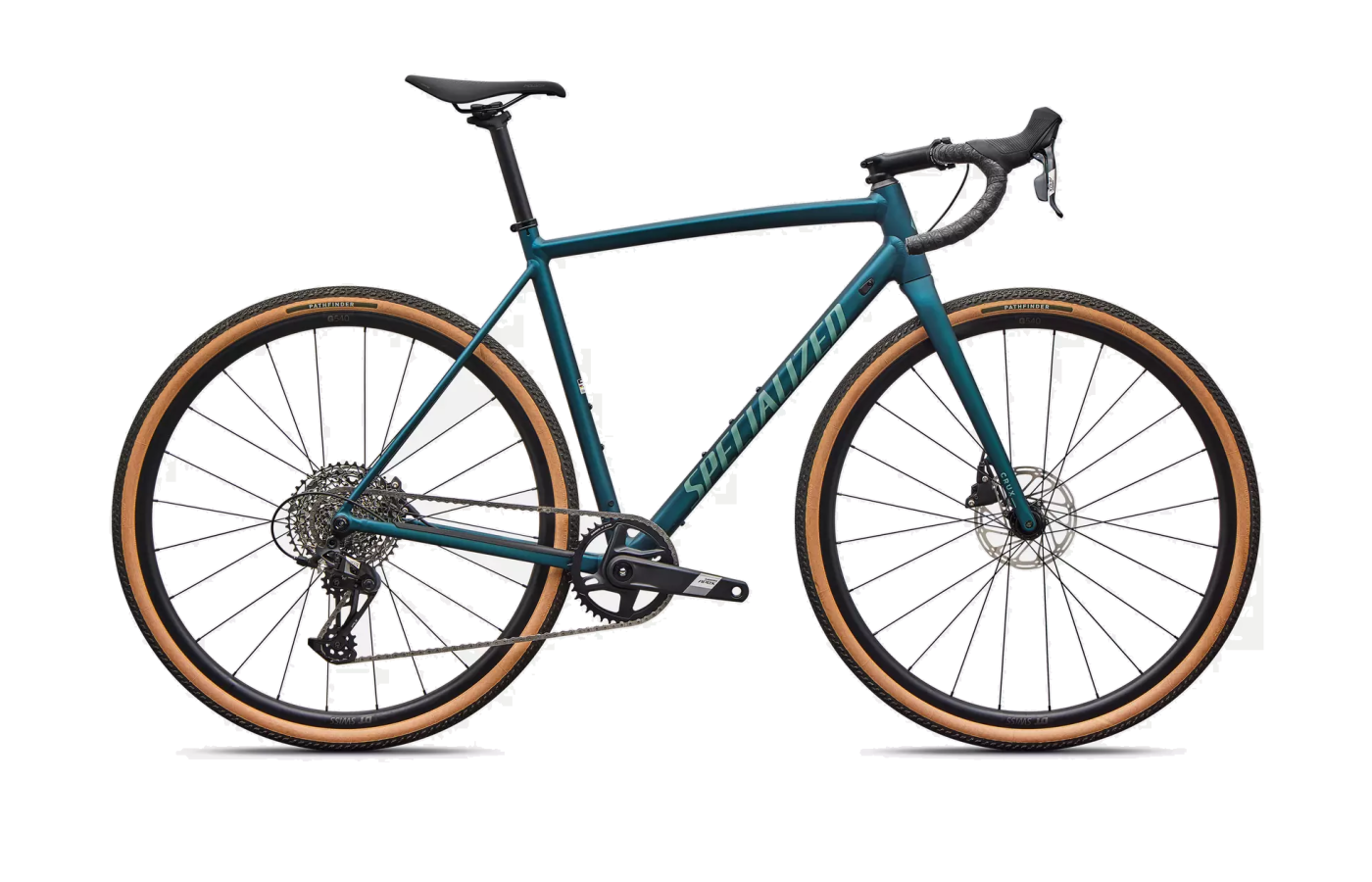
Crux
The anti-Stigmata gravel bike — the lightest carbon race frame in the category, with skinny chainstays and pure pavement-leaning DNA. If you want to win a gravel race on a course that's mostly hardpack, get the Crux.
Compare →Grizl
Direct competitor to the Stigmata — same suspension-fork-friendly attitude and rough-road focus, with notably more bike-per-dollar via the direct-to-consumer model. The catch: no demos, no local shop.
Compare →