Chameleon
vsHighball
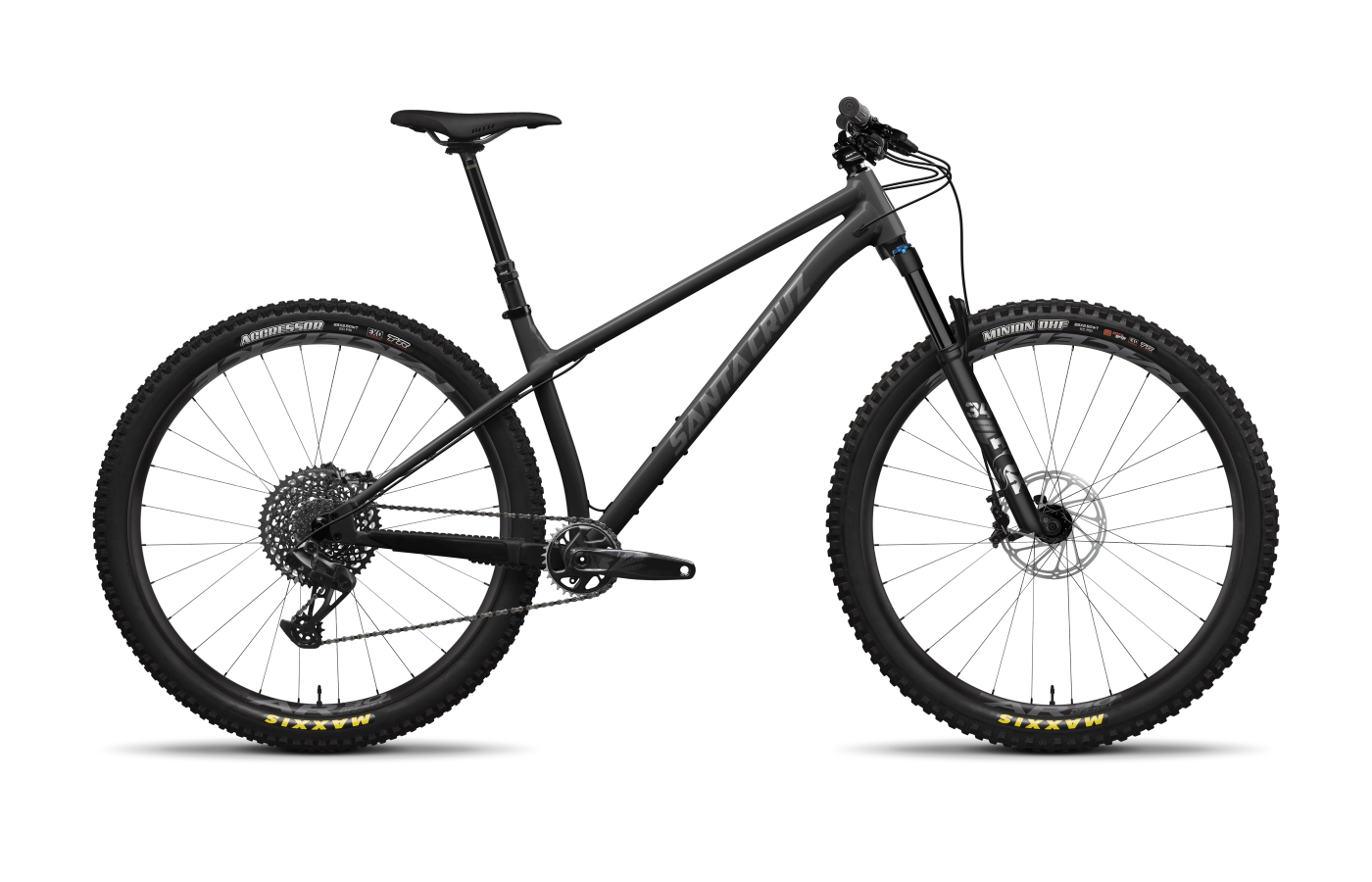
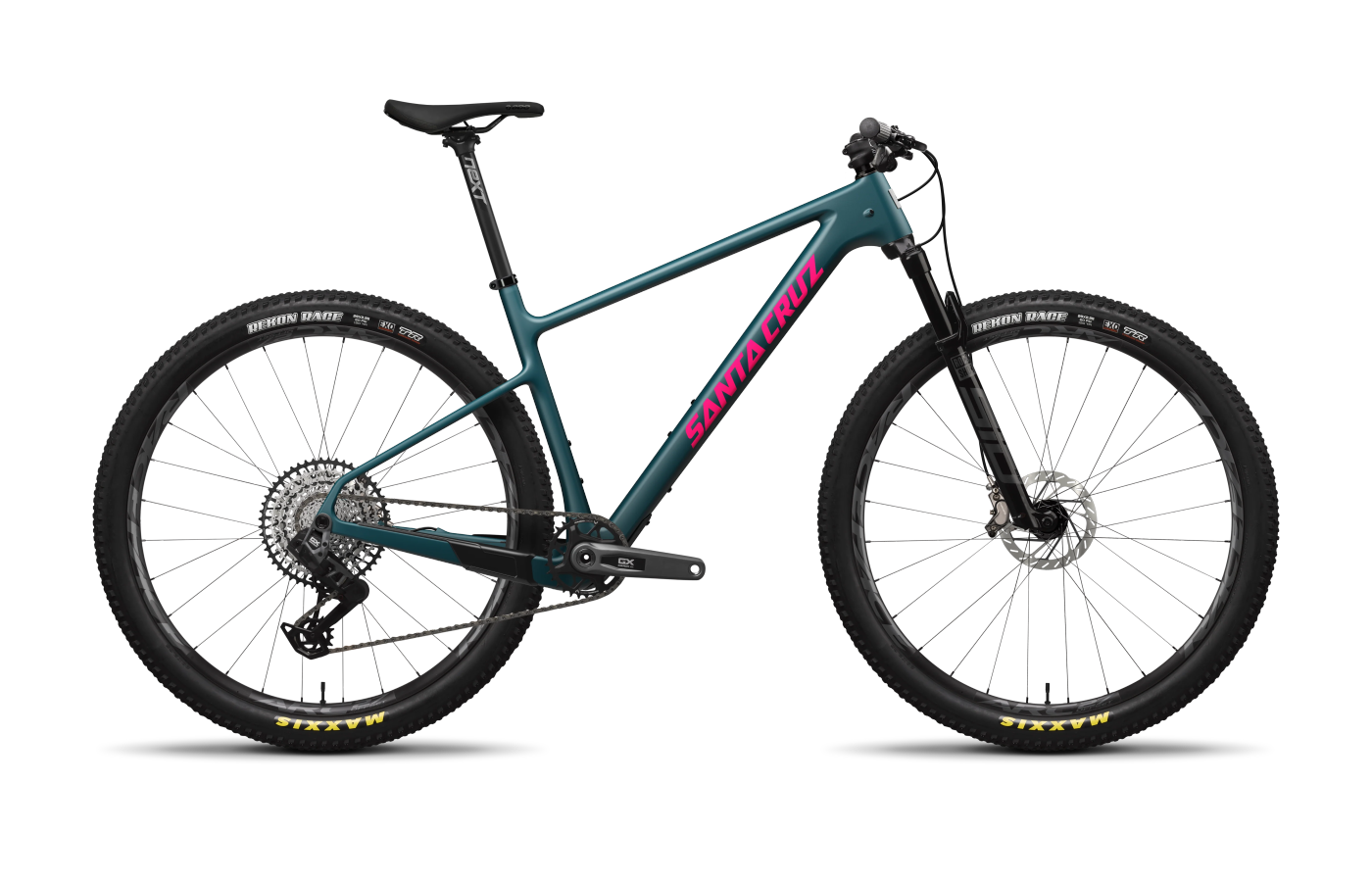
Same brand, opposite assignments.
The Chameleon is an aluminum trail hooligan with sliding dropouts. The Highball is a carbon XC scalpel built to make climbs feel flat.
Chameleon
- Sliding dropouts — 425–437 mm of chainstay adjustment plus 29er, mullet, or single-speed conversion from the same frame.
- 65-degree head angle and 130 mm Fox 34 fork — genuinely capable on double-black descents, not just trail-rated marketing.
- Aluminum toughness — overbuilt frame, threaded BB, UDH hanger, and Santa Cruz's Bike-for-Life warranty on a chassis you can actually crash.
- Heavy across the lineup — every build sits between 28 and 31 pounds, which reviewers flag as an "anchor" on long climbs.
- Component spec is thin for the price — stock SRAM MTH hubs with 17° engagement get called a "struggle-fest" in technical terrain.
Highball
- Genuine carbon compliance — the dropped seat stays mute high-frequency chatter and keep the rear wheel tracking better than a typical XC hardtail.
- Climbing-machine weight — 22.4 lb at the top build, 25 lb at the entry build; a real lightweight platform, not a token diet.
- Long, stable XC geometry — 460 mm reach (L) and a longer wheelbase than competitors like the Pivot LES SL, descends well above its category.
- 100 mm of front travel and 2.35" tires put a hard ceiling on technical descending — not the bike for chunk.
- Price floor of $3,299 with no aluminum option; the entry build is still over $1,200 more than the cheapest Chameleon.
Editor’s analysis
One bike is built to survive the trail. The other is built to outrun it.
Same factory, same lifetime warranty, totally different brief. The Santa Cruz Chameleon is a 130 mm aluminum hardtail with a 65-degree head angle, sliding dropouts that swing the chainstays from 425 to 437 mm, clearance for a 2.8-inch tire, and three builds that all weigh north of 28 pounds. The Santa Cruz Highball is a carbon XC race hardtail with a 100 mm SID fork, a 67-degree head angle, fixed 426 mm stays, 2.35-inch tires, and a top build that comes in at 22.4 pounds. They share a paint shop and almost nothing else.
The Chameleon is the rowdy one. Reviewers describe it as a "juggernaut descending" with hooligan DNA and a tall stack that encourages sending things you probably shouldn't. The aluminum frame is honest about what it is — NSMB and MTB Party both note it can feel harsh in the rough, and the consensus is that 2.6-inch tires (or CushCore inserts) are doing real suspension work in the back. In return, you get a frame Santa Cruz designed to be jumped, bikepacked, dirt-jumped, and converted to single-speed via the same dropouts that adjust the chainstays.
The Highball is the racer. The carbon C frame drops the seat-stay junction roughly two inches below the top tube to engineer in vertical compliance, which reviewers say genuinely takes the edge off a hardtail without giving up sprint stiffness. The 100 mm SID, narrow Aspen Race tires, and a long 460 mm reach (size L) give it the geometry of a modern XC bike — long enough to feel stable at speed, light enough to feel like a flat-bar gravel bike on fire roads. Everyone calls it a "climbing machine" because that's what it's tuned to be.
Put another way: the Chameleon is the bike for the rider who wants one mountain bike and rides it like they hate it. The Highball is the bike for the rider who already owns an enduro rig and wants something to win the local XC series and disappear up gravel climbs.
Where the builds differ.
Comparing our editor's-pick builds side-by-side. Winners highlighted row-by-row — lower price and weight, and the better-spec component, each mark a point.
Build variants & pricing
The Chameleon lineup runs $2,099–$2,999, all aluminum. The Highball runs $3,299–$7,899, all carbon. There is no overlap.
Editor's picks tier-matched at GX: Chameleon S ($2,999, mechanical GX Eagle, aluminum) vs. Highball GX AXS ($5,049, wireless GX AXS Transmission, Carbon C). The Highball has no aluminum build and the Chameleon has no carbon build — the ~$2,000 price gap is the platform difference, not a spec mismatch.
How they fit, how they steer.
Both at size M — the fit-picked size for a 5'8" rider on each bike. The Chameleon sits 24 mm taller in the stack, runs 5 mm more reach, and slacks the head angle out by 2 degrees; the Highball is the lower, shorter, steeper XC posture.
Which size should I buy?
Sizes recommended on stack, reach, and effective top tube. The two ranges line up closely at S/M/L/XL — pick by your usual hardtail size.
→These are starting points. Flexibility, riding style, and preferred position all shift the answer — if you’re between sizes, a professional fit beats a chart.
What the magazines said.
Published reviews from trusted cycling outlets. Click through for the full write-up.
Which one should you buy?
If you want one bike that will survive everything and only own one mountain bike, get the Chameleon. If you want to climb fast and race XC, get the Highball.
Chameleon
If you want a single hardtail that handles the local jump line, double-black descents, and a loaded bikepacking weekend without flinching, the Chameleon is the obvious pick. Plan to spend on a higher-engagement rear hub at some point — it's the difference between fighting the bike and trusting it.
Highball
If most of your riding is long climbs, fire roads, and smooth-to-moderate singletrack, the Highball turns watts into speed better than almost anything in its class. Stay on the milder side of the trail map — at 100 mm and 22 pounds, this isn't the tool for chunk.
Questions buyers actually ask.
Short answers to the things we get emailed about most often.
01Which is faster on climbs?
The Highball, by a wide margin. The top Chameleon build is around 28.6 lb; the entry Highball is about 24.8 lb and the GX AXS sits at 23.2 lb — a 4–6 lb gap that's hard to overstate on a 30-minute climb. Add the Highball's 100 mm fork (vs. the Chameleon's 130 mm), narrower fast-rolling Aspen Race tires, and 67° head angle that keeps the front wheel tracking on steep pitches, and the gap widens further.
The Chameleon's slacker 65° head angle and tall stack also make the front end "want to wheelie and wander" on steep technical climbs, per Bebikes and MTB Party. It's a competent climber for a trail hardtail — just not in the same conversation as a dedicated XC bike.
02Which descends better?
The Chameleon, easily. A 65° head angle, 130 mm Fox 34 fork, 1184 mm wheelbase (size M), and clearance for a 2.8" tire put it in genuine modern-trail-bike territory. Reviewers call it a "juggernaut descending" and confirm it handles double-black diamond terrain.
The Highball is honest about its limits: 100 mm of travel, 67° head angle, 2.35" tires. It descends well for an XC hardtail — but you'll be hunting smooth lines and using your legs as suspension on anything technical.
03How much do they actually weigh?
Chameleon (aluminum): S build 28.64 lb / 12.99 kg, R build 29.28 lb / 13.28 kg, D build 31 lb / 14.06 kg.
Highball (carbon): R build 24.82 lb / 11.26 kg, S build 23.48 lb / 10.65 kg, GX AXS 23.19 lb / 10.52 kg, X0 AXS RSV 22.37 lb / 10.15 kg.
Even the cheapest Highball is lighter than the priciest Chameleon by nearly 4 pounds. That's the carbon-vs-aluminum tax made real.
04What tire sizes do they take?
Chameleon: clearance for roughly 2.8" tires (71 mm). The frame is engineered around high-volume rubber — multiple reviewers strongly recommend running 2.6" Maxxis tires as the bike's de-facto rear suspension.
Highball: clearance for roughly 2.4" tires (61 mm). Stock spec is the 2.35" Maxxis Rekon Race / Aspen, which is a fast-rolling XC standard.
If you want plus-size grip and compliance, only the Chameleon will accept it.
05Can I run a mullet (mixed-wheel) setup?
Only the Chameleon. Its sliding dropouts are explicitly designed to swap between full 29er and MX (29" front / 27.5" rear) configurations, and reviewers at Bike Perfect and MTB Party single out the MX setup as the more playful, corner-hooking variant.
The Highball is 29-only by design — the rear triangle and geometry are tuned around a single wheel size.
06Which one needs the upgrade budget?
The Chameleon, with near-unanimous reviewer agreement. The stock SRAM MTH rear hub's 17° engagement gets called a "struggle-fest" in technical terrain, and a high-engagement rear hub is the most-recommended first upgrade across NSMB, MTB Party, and Singletrackworld. Budget $300–500 for that swap if you ride technical trails.
The Highball's stock spec is more cohesive at the price — the SID fork, GX AXS Transmission, and Reserve-or-RaceFace wheelsets are race-ready out of the box, with little urgent to change.
07What's the warranty story?
Both come with Santa Cruz's lifetime frame warranty and lifetime bearing-replacement program — same factory, same support, same dealer network. Reviewers consistently cite the warranty as part of how Santa Cruz justifies its pricing relative to similarly specced Ragley, Nukeproof, or Stanton hardtails. If long-term ownership matters more than spec sheet, both are bought as "forever frames."
08Could either work as a bikepacking rig?
The Chameleon is the more obvious choice — Santa Cruz designed it with a triple-bolt cargo cage mount on the underside of the downtube, and Bikepacking.com specifically noted the aluminum frame's harshness "subdues" once loaded with gear. The aggressive geometry also handles loaded singletrack better than an XC bike.
The Highball can do shorter, faster gravel-oriented overnighters thanks to its weight and efficiency, but the smaller frame triangle leaves less room for a frame bag and the 100 mm fork wasn't designed for sustained loaded use.
Similar bikes
If your priorities don’t map cleanly onto either of these, one of these adjacent bikes probably fits better.
DV9
A carbon hardtail that splits the difference — more aggressive trail geometry than the Highball without the aluminum weight penalty of the Chameleon. The bike to look at if neither extreme fits.
Compare →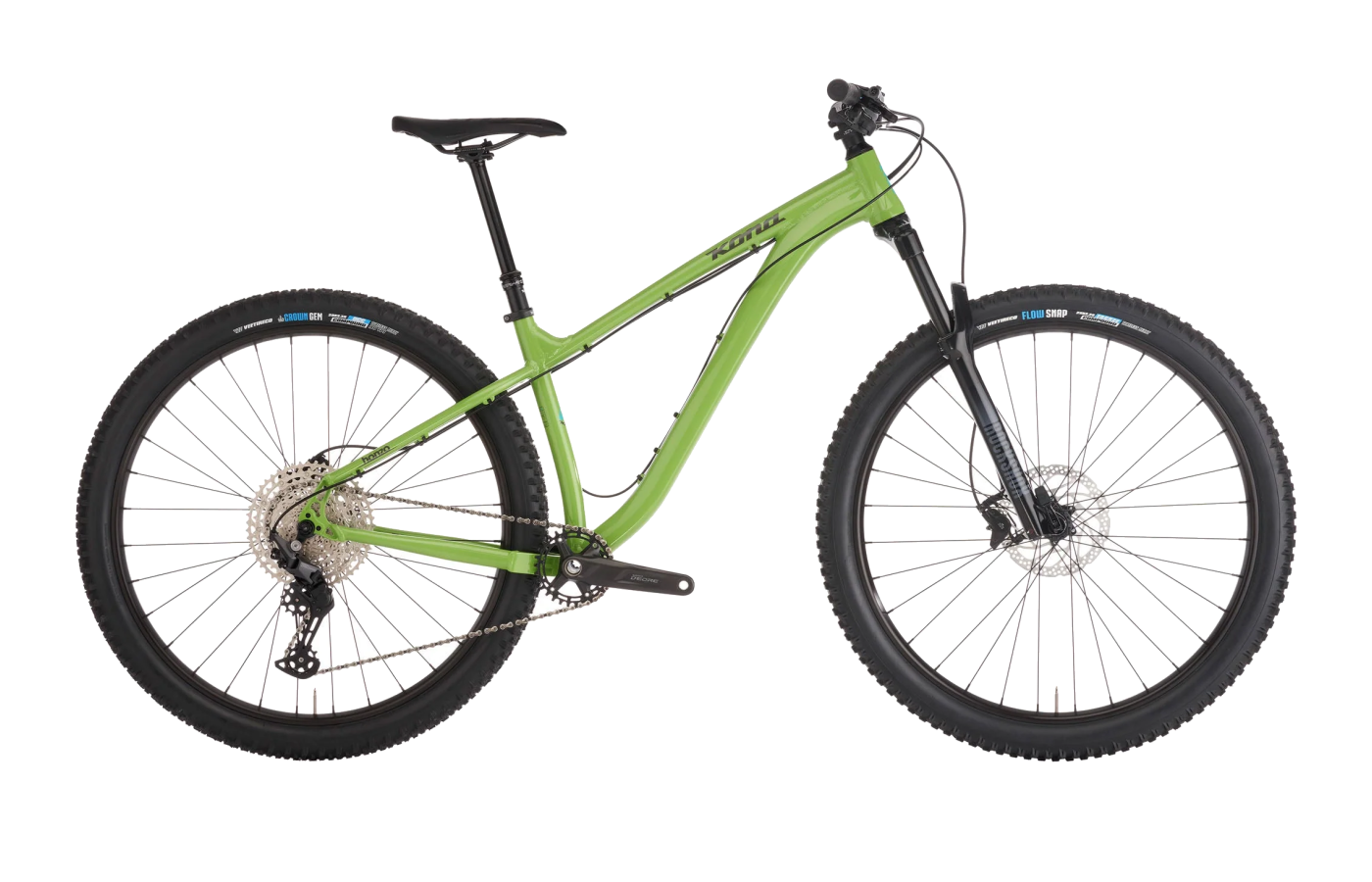
Honzo
The most direct cross-shop for the Chameleon — same sliding-dropout idea, same aggressive aluminum-trail brief, typically a few hundred dollars cheaper. Buy if you want the Chameleon's character without the Santa Cruz tax.
Compare →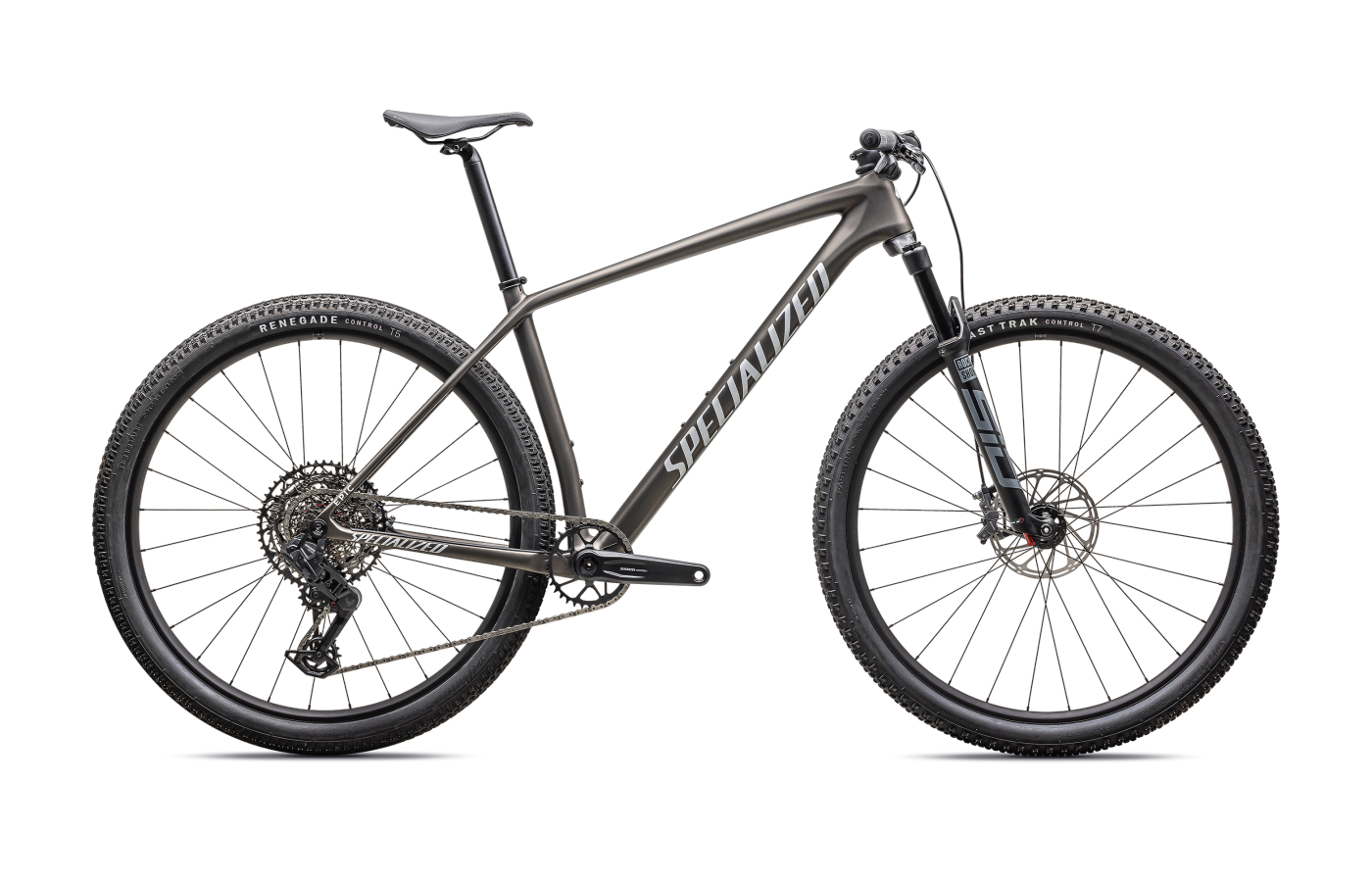
Epic Hardtail
A purer XC hardtail than the Highball — even lighter, sharper race geometry, but without the dropped-stay vertical compliance Santa Cruz engineered in. The rival if you only care about race-day grams.
Compare →