Bronson
vsStumpjumper
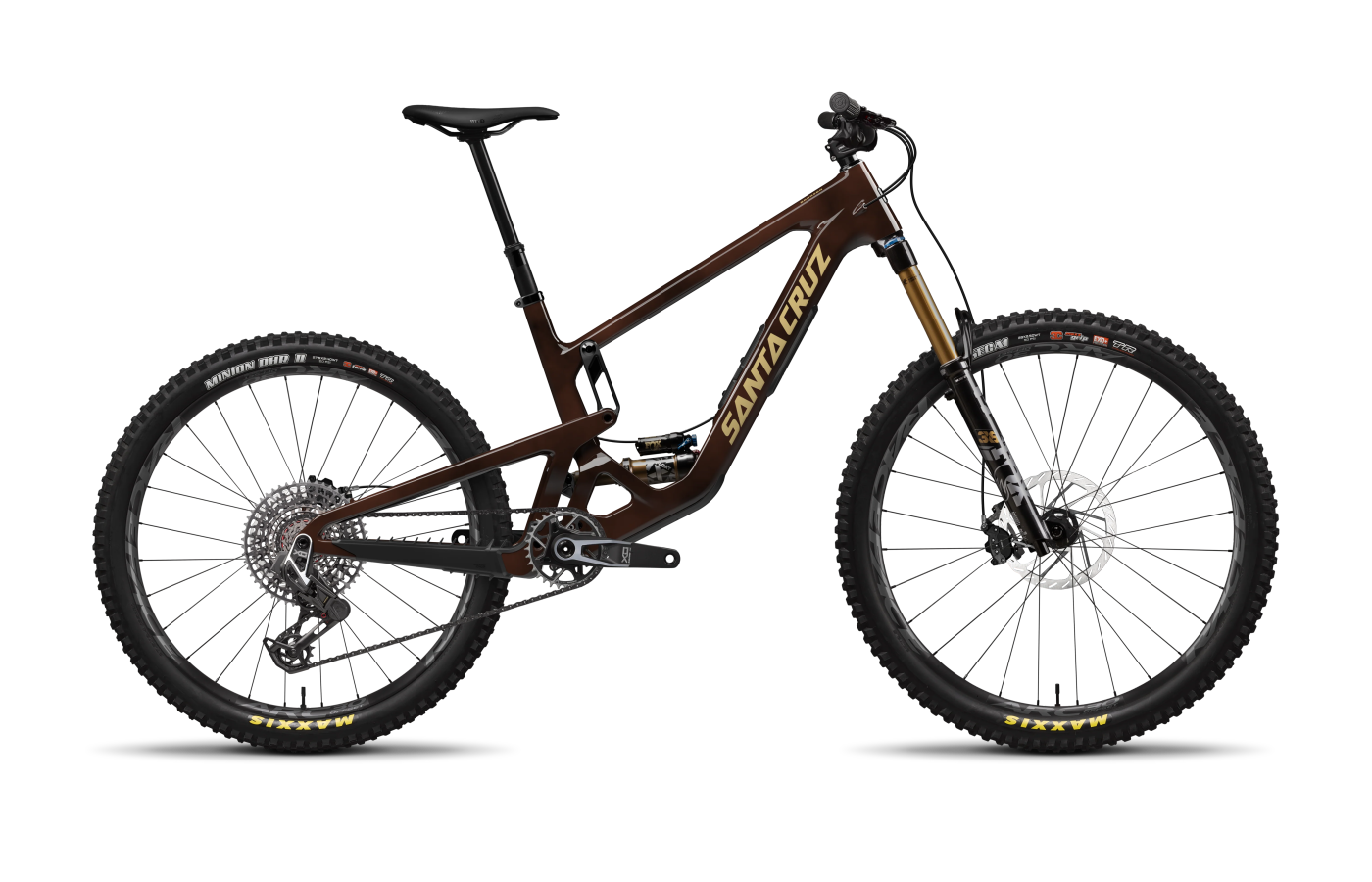
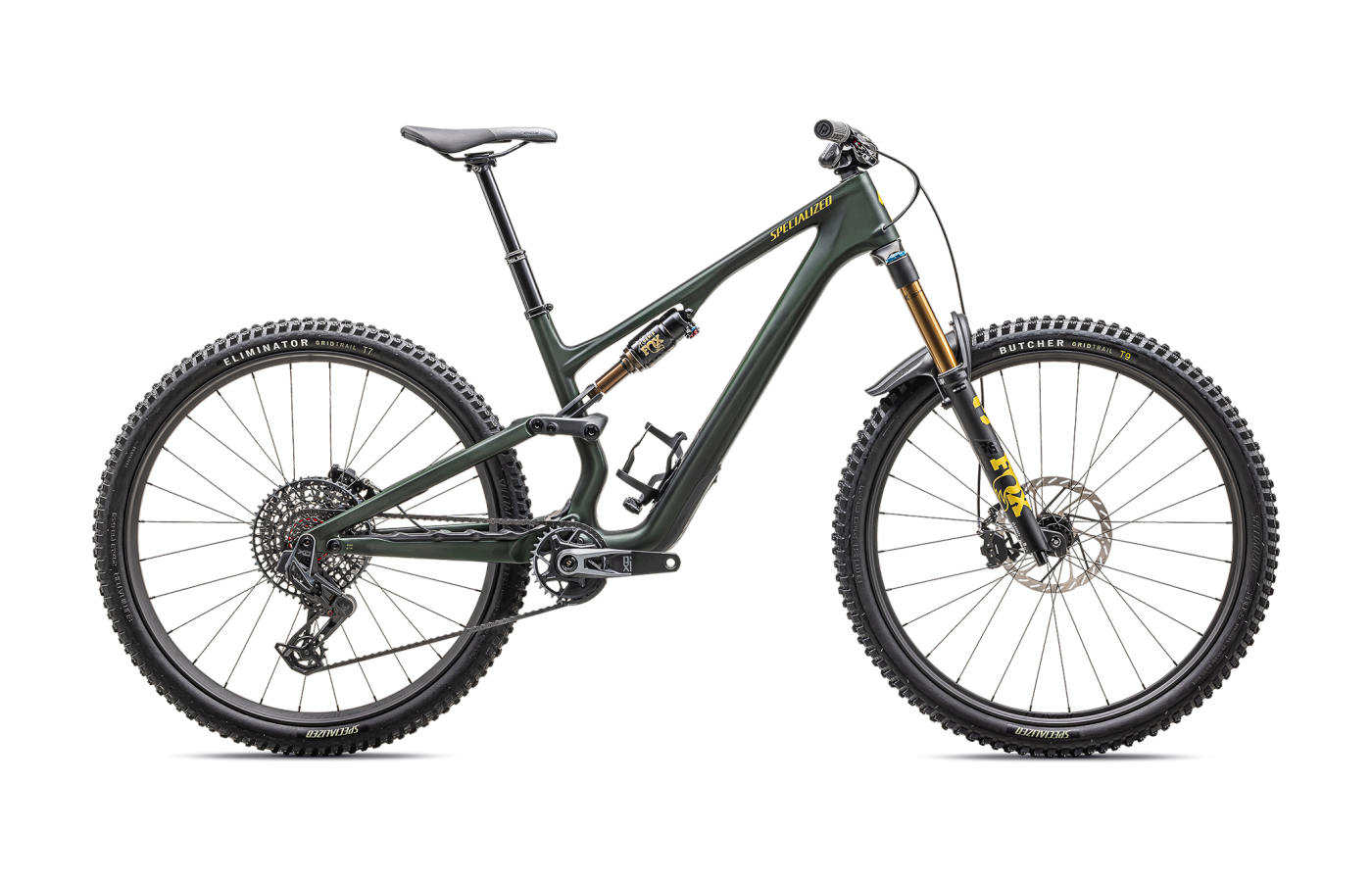
Two trail bikes, two tempers.
The Bronson is a mullet-wheeled hooligan with VPP snap. The Stumpjumper 15 is a chameleon — plush coil-feel one minute, sporty the next.
Bronson
- Mullet snap — the 27.5 rear is easier to manual, flick, and pivot through tight singletrack than any 29er.
- Lifetime bearing replacement on top of the lifetime frame warranty — Santa Cruz's long-tail support is genuinely best-in-class.
- VPP suspension stays calm under power — reviewers consistently say the climb switch is decorative.
- 27.5 rear wheel hangs up on square-edge hits the 29 front rolls over.
- No alloy frame option — entry price is $4,999 and the spec at that tier (NX Eagle, RockShox Lyrik Base) is thin for the money.
Stumpjumper
- GENIE shock — coil-like small-bump compliance with a hard ramp at the end of stroke; reviewers report being unable to bottom out on bike-park drops.
- Massively adjustable — three headset-cup angles, flip chip, and tunable shock bands let one chassis cover trail-to-mini-enduro.
- Climbs technical terrain better — Specialized claims 57% more rear-wheel traction; reviewers confirm it 'glues' to roots and rocks on steep climbs.
- Carbon frames are wireless-only — no mechanical-shifting routing on the carbon chassis.
- Stock GRID TRAIL tires are widely flagged as under-built for the bike's potential — plan to upgrade casings.
Editor’s analysis
Same travel bracket, same price ceiling, completely different ideas about what a trail bike should feel like.
On paper these two land in the same square: ~150 mm rear travel, 160 mm fork (Bronson) or 150 mm fork (Stumpjumper 15), $5–$11k carbon platforms, both willing to be raced and both happy to be jibbed. The philosophies underneath are almost opposites.
The Santa Cruz Bronson commits to the mullet — 29 front, 27.5 rear, 64.2-degree head angle, 150 mm of VPP travel — and uses that geometry to feel snappy. Reviewers across Vital, BikeRadar, and The Loam Wolf describe it as 'hooligan,' 'poppy,' a bike that rewards line choice over straight-line speed. The trade-off is well documented: that 27.5 rear wheel sometimes 'cannot cash the cheques the 29 front wheel writes' over square-edge hits, and the 632 mm stack on a Medium creates a tall front end that takes some setup work to weight properly.
The Specialized Stumpjumper 15 picks tunability. Its headline trick is the GENIE shock — a dual-chamber air spring, developed with Fox, that's coil-supple for the first 70% of stroke and then ramps hard via removable air-volume bands. Pair that with adjustable headset cups (63°/64.5°/65.5°) and a flip chip and you get a single chassis that, per The Loam Wolf, goes from 'mild-mannered mile muncher to bikepark-friendly ripper.' Climbing traction is the standout — Specialized claims 57% more grip and reviewers back it up on rooty, technical climbs.
Put another way: the Bronson is the bike you buy because you already know the feel you want and that feel is playful. The Stumpjumper 15 is the bike you buy because you don't want to commit yet — and because the carbon model starts at $4,999 versus the Bronson's $4,999 R build with NX Eagle, the Stumpjumper gives you more bike for the same dollars at the entry tier.
Where the builds differ.
Comparing our editor's-pick builds side-by-side. Winners highlighted row-by-row — lower price and weight, and the better-spec component, each mark a point.
Build variants & pricing
The Stumpjumper 15 has a wider lineup — alloy from $2,999 up to a $11,999 S-Works LTD. The Bronson is carbon-only and starts at $4,999.
Prices are current US MSRP. Santa Cruz dropped the alloy frame for V4, so the Bronson's entry build runs NX Eagle on a Carbon C frame at $4,999 — the Stumpjumper 15 Alloy at $2,999 is the only sub-$3k option here.
How they fit, how they steer.
Bronson Medium vs Stumpjumper S3 — fit-picked for a 5'8" rider on each. Reach is within 10 mm (460 vs 450), but the Bronson sits 5 mm taller at the head tube and runs a steeper 77.9° seat angle versus 77° on the Stumpy.
Which size should I buy?
Both ranges overlap closely in the middle. The Stumpjumper extends an extra size at each end with finer 25 mm reach increments; the Bronson tops out at XXL with a 525 mm reach.
→These are starting points. Flexibility, riding style, and preferred position all shift the answer — if you’re between sizes, a professional fit beats a chart.
What the magazines said.
Published reviews from trusted cycling outlets. Click through for the full write-up.
Which one should you buy?
If you want playful and poppy with a brand-warranty story to match, get the Bronson. If you want one chassis that can be tuned across half the trail-bike spectrum, get the Stumpjumper 15.
Bronson
If your local trails reward line choice over raw speed — tight, twisty, full of side hits and small jumps — the mullet Bronson is the more engaging bike. The lifetime bearing program also makes it the easier multi-year ownership story.
Stumpjumper
If you want one bike that can be tuned from plush-trail to mini-enduro without buying a second one, the Stumpjumper 15's GENIE shock plus adjustable headset is unmatched. It's also the better technical climber and the cheaper way into the segment.
Questions buyers actually ask.
Short answers to the things we get emailed about most often.
01Which is the better technical climber?
The Stumpjumper 15, by most reviewer accounts. The GENIE shock's supple first 70% of travel keeps the rear tire planted on roots and loose rock — Specialized claims 57% more rear-wheel traction and reviewers consistently report 'gluing' to surfaces where other bikes break loose.
The Bronson climbs efficiently — Vital MTB famously called the climb switch 'decorative' — but the tall front end (632 mm stack on a Medium) tends to wander on the steepest pitches, and the firmer VPP platform is less forgiving when you spin the rear wheel up.
02Does the mullet setup actually matter?
Yes, in a specific way. The 27.5" rear wheel is mechanically easier to manual and pivot, and reviewers from BikeRadar, Vital, and The Loam Wolf agree it makes the Bronson noticeably snappier in tight, twisty trails than a dual 29er.
The trade is rollover. The smaller rear wheel hangs up on square-edge hits the 29" front wheel rides over cleanly — Singletrack World's line was that the rear wheel 'cannot cash the cheques that the 29in front wheel writes.' On smooth, flowy terrain you won't notice. On chunky enduro descents you will.
The Stumpjumper 15 ships as a full 29er on sizes S3-S6 and runs a 27.5 rear on S1-S2 only, so most riders get the rollover advantage out of the box.
03How much travel does each bike have?
Bronson: 150 mm rear, 160 mm fork.
Stumpjumper 15: 145 mm rear, 150 mm fork (S2-S6) — but the Coil and S-Works LTD builds bump the fork to 160 mm. Specialized has effectively absorbed the old Stumpy EVO into this single platform via the adjustable head angle and shock tuning, so the same chassis covers what used to be two bikes.
04Is the GENIE shock proprietary?
Mostly standard Fox internals with one extra seal — Specialized says any Fox-trained suspension shop can service it. The mount is also standard 210x55 mm, so you can swap in a non-GENIE shock if you want.
That said, the GENIE's signature feature is the adjustable outer air sleeve with removable 'GENIE bands' (up to four), which lets you tune mid-stroke support without changing shocks. Reviewers found that adding bands transforms the feel from 'ultra-plush' to 'sporty and supportive' — a meaningful range of adjustment from a single component.
05What about long-term support and warranty?
Both come with a lifetime frame warranty to the original owner. Santa Cruz adds lifetime bearing replacement, which is the gold standard in the industry — multiple reviewers (Vital, MTB-Mag) singled it out as the single biggest reason to swallow the Bronson's price.
Specialized matches with lifetime pivot bearing replacement plus a lifetime warranty on Roval wheels. Both brands offer crash-replacement pricing for damaged frames.
06Which has the better entry-level build?
Stumpjumper 15, by a margin. Specialized starts at $2,999 for the alloy build (Shimano Deore, RockShox Psylo Silver) and offers a $3,999 carbon Comp Alloy and a $4,999 Comp with the FACT 11m carbon frame.
The Bronson R at $4,999 is the cheapest way in — Carbon C frame, SRAM NX Eagle (mechanical, not Transmission), RockShox Lyrik Base. BikeRadar specifically called the spec at this tier 'not great for the money.' If your budget is under $5k, the Stumpjumper is the only real option here.
07Do they have downtube storage?
Stumpjumper 15: yes — the SWAT 4.0 door is one of the best-executed in the industry, with weather sealing and rattle-free design that reviewers universally praise.
Bronson: no integrated frame storage. Santa Cruz includes a tube/tool strap mount but no door-into-the-downtube system.
08Which weighs less?
Comparable carbon builds are close. The Bronson X0 AXS (CC carbon, alloy wheels) is 14.73 kg / 32.5 lb as listed. The Stumpjumper 15 Pro (FACT 11m carbon, Roval Traverse SL II carbon wheels) is 13.99 kg / 30.9 lb — about 700 g lighter, with the carbon wheel upgrade doing most of the work.
At the top end, the S-Works Stumpjumper hits 13.56 kg, while the Bronson X0 AXS RSV (CC + Reserve 30|HD carbon) is 14.7 kg. Spec-for-spec, the Stumpy is the lighter chassis.
Similar bikes
If your priorities don’t map cleanly onto either of these, one of these adjacent bikes probably fits better.
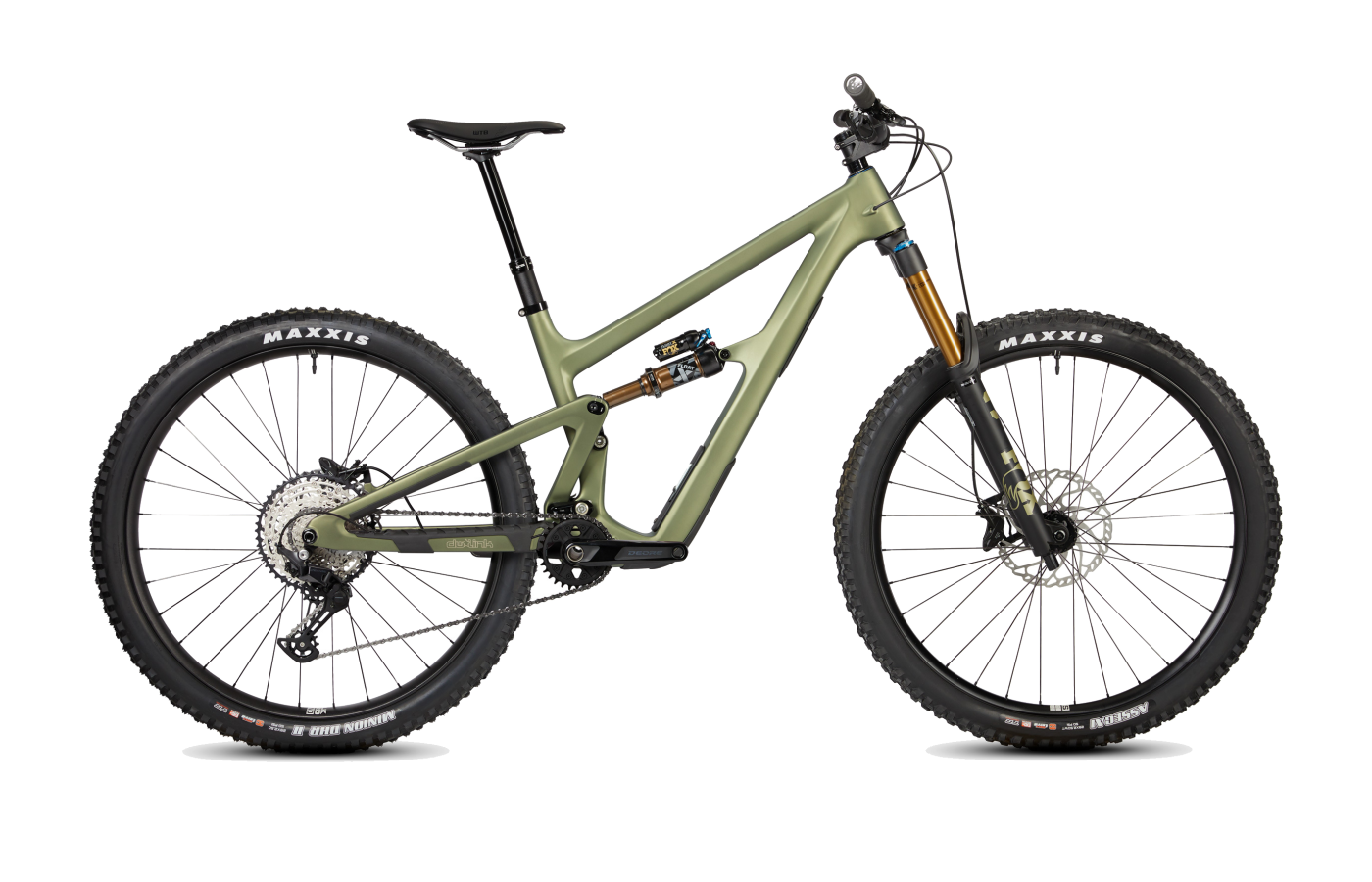
Ripmo
Long the benchmark trail-29er for both these bikes — the Ibis Ripmo gives you DW-link efficiency and a full 29 setup without proprietary shock tech or a mullet commitment. The middle path.
Compare →Patrol
If the Bronson's mullet appeals but you want more bike behind it, the Transition Patrol leans further into the gravity end — slacker, longer travel, mullet by default. The hooligan choice.
Compare →
Fuel EX
Trek's adjustable trail platform — the Fuel EX matches the Stumpjumper 15 for tunability with multiple head-angle and shock-progression positions, but stays on a more traditional 29-inch chassis.
Compare →