Timberjack
vsChisel
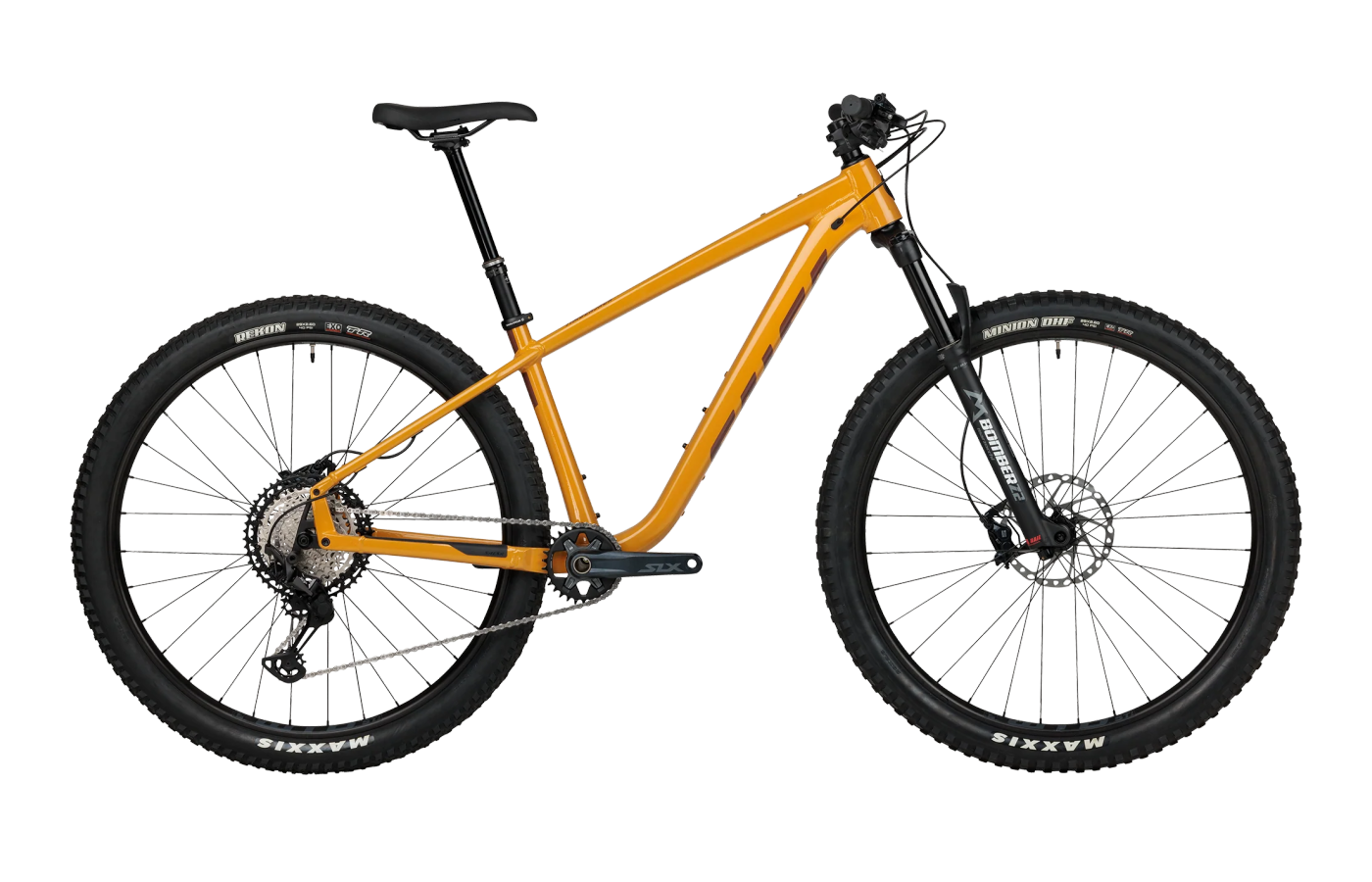
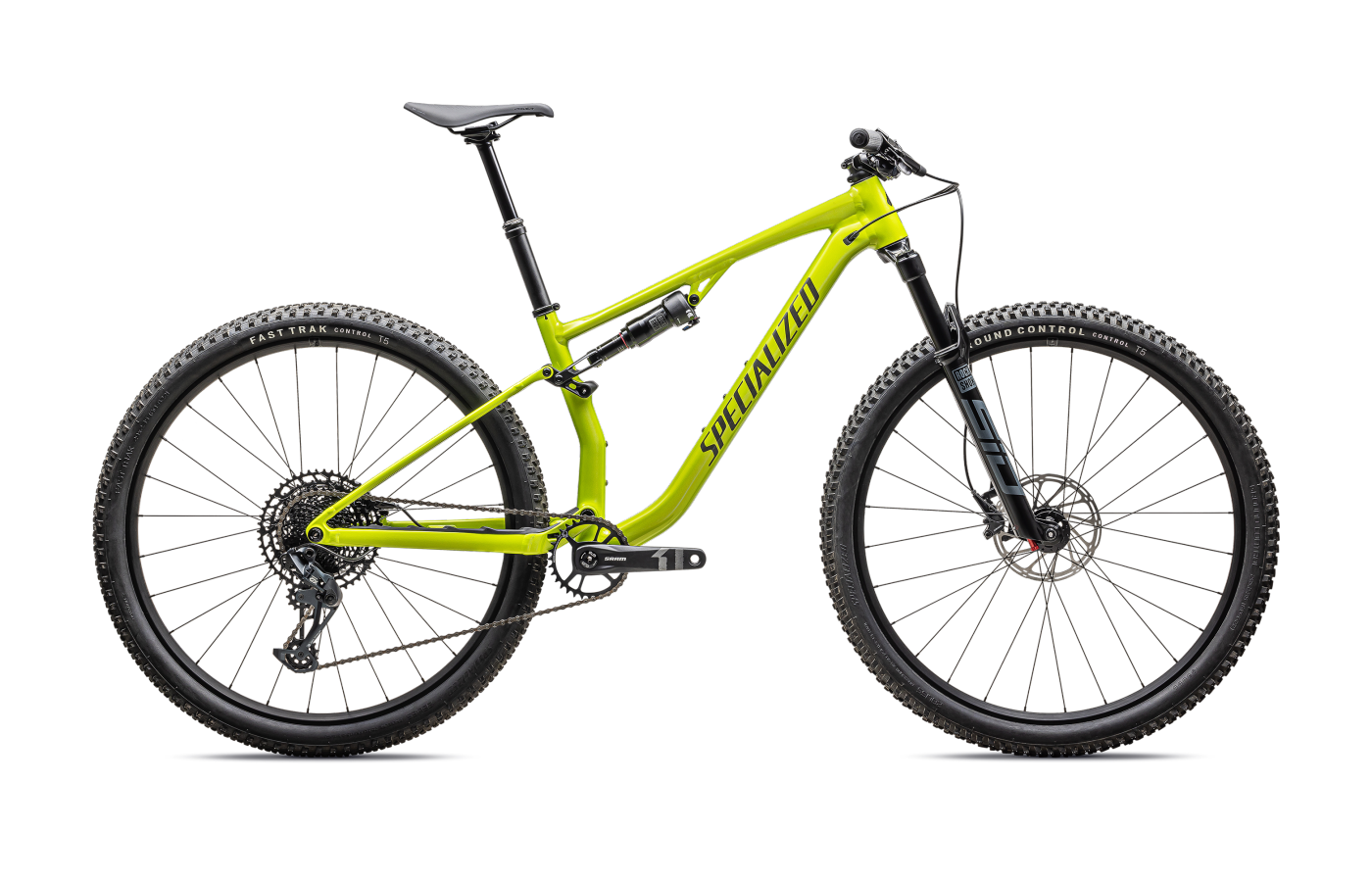
A do-it-all hardtail meets an alloy XC race bike.
The Timberjack is a stiff, versatile trail hardtail built for everything from bikepacking to local singletrack. The Chisel is a 110 mm full-suspension XC machine that thinks it's a carbon Epic.
Timberjack
- Bikepacking-ready frame — mounts on every tube, room for 29x2.6 or 27.5+ tires, threaded BSA bottom bracket.
- Adjustable chainstays — Alternator 2.0 dropouts swap between 420 mm (playful) and 437 mm (stable) without tools to spare.
- Cheapest way in — SLX 27.5+ build starts at $1,364, well under the Chisel's entry price.
- Stiff alloy frame can feel harsh on long, chunky descents.
- Stock RockShox 35 Gold/Silver fork is the first thing aggressive riders will want to upgrade.
Chisel
- Full-suspension XC efficiency — 110 mm flex-stay tuned firm enough that most testers leave the shock open even on fire roads.
- Smartweld frame engineering — 2,720 g claimed (M with shock); reviewers say it accelerates almost like carbon.
- Mechanic-friendly — traditional cable routing (no headset nonsense), threaded BB, standard 30.9 mm dropper.
- Stock wheels are heavy and use a Shimano HG freehub, limiting cassette upgrades.
- 110 mm rear travel hits its limit fast on technical descents — needs an active rider.
Editor’s analysis
Both are alloy. Both sit around the $2–3.5k mark. Beyond that, they barely belong on the same shopping list — one is a Swiss Army knife, the other is a scalpel.
On paper this is alloy versus alloy at a sub-$3.5k price point. In practice, the Salsa Timberjack and the Specialized Chisel are pulling in opposite directions. The Timberjack is a 130 mm trail hardtail with adjustable Alternator dropouts, mounts everywhere, and a 66.4° head angle that wants to bomb descents and carry framebags in equal measure. The Chisel is a 110 mm full-suspension XC bike running Specialized's D'Aluisio Smartweld frame — a 67° head angle, 75.5° seat angle, kinematics lifted from the carbon Epic 8.
The Timberjack's pitch is range. It rolls 29x2.6 or 27.5+ tires, takes a 150 mm fork without voiding warranty, and has bottle/cargo mounts on every tube. Reviewers from Bikepacking.com to Pinkbike land on the same word: versatile. Builds start at $1,364 (SLX 27.5+) and top out at $2,199 (XT 29) — you can spend less on the entry Timberjack than you can on a Chisel frameset. The trade is comfort: the alloy frame is consistently described as stiff, the stock 35 Gold/Silver forks get overwhelmed on rough terrain, and a 32-pound build weight is normal.
The Specialized Chisel is the opposite trade. It pays a weight and price premium for rear suspension and Smartweld engineering, then spends every gram on going forward fast. The flex-stay rear is tuned firm — testers note a narrow sweet spot where 5 PSI either way changes everything. With 110 mm rear / 120 mm front and 437 mm chainstays, it's a momentum machine on flowy XC and a handful in genuine rock gardens. The Comp build at $3,499 is the consensus sweet spot, jumping the base Chisel's RockShox Recon for a SID with 35 mm stanchions.
Put another way: the Salsa Timberjack is the bike you buy when you want one mountain bike for trail rides, bikepacking, and the occasional gnarly day. The Specialized Chisel is the bike you buy when you have race numbers on the calendar and want full-suspension efficiency without paying carbon-Epic money.
Where the builds differ.
Comparing our editor's-pick builds side-by-side. Winners highlighted row-by-row — lower price and weight, and the better-spec component, each mark a point.
Build variants & pricing
Timberjack runs $1,364–$2,199 across six Shimano-equipped hardtail builds. Chisel runs $1,899–$3,599, mixing alloy hardtails and full-suspension SRAM Eagle builds.
Prices are current US MSRP. The platforms barely overlap on price — the cheapest Chisel full-suspension build runs $2,599, which is more than every Timberjack in the lineup. If your budget is firm under $2k, only the Timberjack and the Chisel Hardtail compete.
How they fit, how they steer.
Both at size Medium. The Chisel runs a 67° head tube vs the Timberjack's 66.4° (both unsagged, on the firmer side of trail-XC), with longer 437 mm chainstays vs the Timberjack's adjustable 420/437 mm. Reach is within 9 mm; the Chisel sits about 1 mm lower in stack.
Which size should I buy?
Size recommendations based on stack, reach, and effective top tube. Both Mediums fit similarly; the Timberjack runs a slightly longer 615 mm top tube vs the Chisel's 602 mm.
→These are starting points. Flexibility, riding style, and preferred position all shift the answer — if you’re between sizes, a professional fit beats a chart.
What the magazines said.
Published reviews from trusted cycling outlets. Click through for the full write-up.
Which one should you buy?
If you want one mountain bike for trail days, bikepacking trips, and the occasional rowdy descent, get the Timberjack. If you race XC or chase Strava times on flowing singletrack, get the Chisel.
Timberjack
If you want one bike that can carry framebags on a Friday-to-Sunday route and still feel right at the local trailhead on Tuesday evening, the Timberjack is the benchmark. Add the Marzocchi Z2 fork (the XT Z2 build) and you've got a hardtail that punches well above $2k.
Chisel
If your weekends involve XC race numbers or you just want full-suspension efficiency without paying carbon-Epic money, the Chisel is the only game in town right now. Most competitors abandoned alloy XC; Specialized is using Smartweld to win that empty quadrant.
Questions buyers actually ask.
Short answers to the things we get emailed about most often.
01Which one is faster on actual XC race courses?
The Specialized Chisel, no contest. With 110 mm of rear suspension, a 67° head angle, and a flex-stay tuned for pedaling efficiency, it's purpose-built for the format. Reviewers describe it as a momentum machine that holds speed across rolling terrain better than nearly any hardtail.
The Timberjack is competent on smoother XC trails, but a 31–33 lb hardtail with a 66.4° head angle and a 130 mm fork isn't fighting for the same job.
02Which is better for bikepacking?
The Salsa Timberjack, by design. It has bottle and cargo mounts on every frame tube (top tube, downtube three-pack, under-downtube), Rack-Lock-compatible rear rack mounts, and a frame stiff enough to carry loads without flex. Adjustable Alternator 2.0 dropouts let you run it singlespeed for simpler tours.
The Chisel has space for two large bottles and is durable, but the rear suspension and XC geometry aren't the typical bikepacking fit.
03Is the Chisel's full suspension actually worth the extra weight and money?
It depends on terrain and rider. On smooth, flowing XC with occasional chunk, reviewers consistently say the 110 mm rear end pays for itself in traction and reduced rider fatigue without costing meaningful efficiency — Specialized's flex-stay design is firm enough that most testers leave the shock fully open.
On rougher terrain or for casual trail rides, a hardtail can do more with less. The Timberjack's lower price and easier maintenance pencil out fast.
04How big a tire fits each one?
Salsa Timberjack: ships with either Maxxis Minion DHF/Rekon in 29x2.6" or 27.5x2.8" plus configurations. The frame and Alternator dropouts handle both wheel sizes natively.
Specialized Chisel: runs 29" only, typically with a 2.35" Ground Control / Fast Trak combo. The Comp Evo bumps to a 2.4" Purgatory front. Tire clearance is tighter than the Timberjack — this is an XC chassis.
05Can I overfork the Timberjack to make it more aggressive?
Yes. Salsa explicitly states a 150 mm fork won't void the warranty (stock is 130 mm). Reviewers consistently recommend it for riders who want to push the bike harder than the entry-level RockShox 35 Gold/Silver allows. The Marzocchi Z2 on the XT Z2 build is the easiest factory option — significantly more progressive and better at small-bump compliance.
06What's the deal with the Chisel's freehub limitation?
The stock Chisel wheels use a Shimano HG (non-XD) freehub body. That means upgrading to a high-end SRAM cassette later requires either swapping the freehub body (if compatible) or replacing the rear wheel. Reviewers from Bikepacking.com and others have flagged it as a long-term value hurdle. If you're planning eventual upgrades, factor in the wheelset replacement.
07Which has the better stock fork?
The Chisel Comp's RockShox SID with 35 mm stanchions outclasses the Timberjack's stock RockShox 35 Gold/Silver on equivalent-tier builds. The SID is a true XC race fork; the 35 Gold is a budget trail fork that gets overwhelmed on bigger hits.
If you can stretch to the Timberjack XT Z2 build, the Marzocchi Bomber Z2 closes the gap considerably — reviewers call it the single biggest upgrade in the lineup.
08What's the warranty?
Both Salsa and Specialized offer lifetime frame warranties to the original owner against manufacturing defects, plus crash-replacement pricing. Salsa specifically calls out that running a longer-travel fork on the Timberjack (up to 150 mm) won't void the frame warranty — useful flexibility if you plan to push the bike harder than stock.
Similar bikes
If your priorities don’t map cleanly onto either of these, one of these adjacent bikes probably fits better.
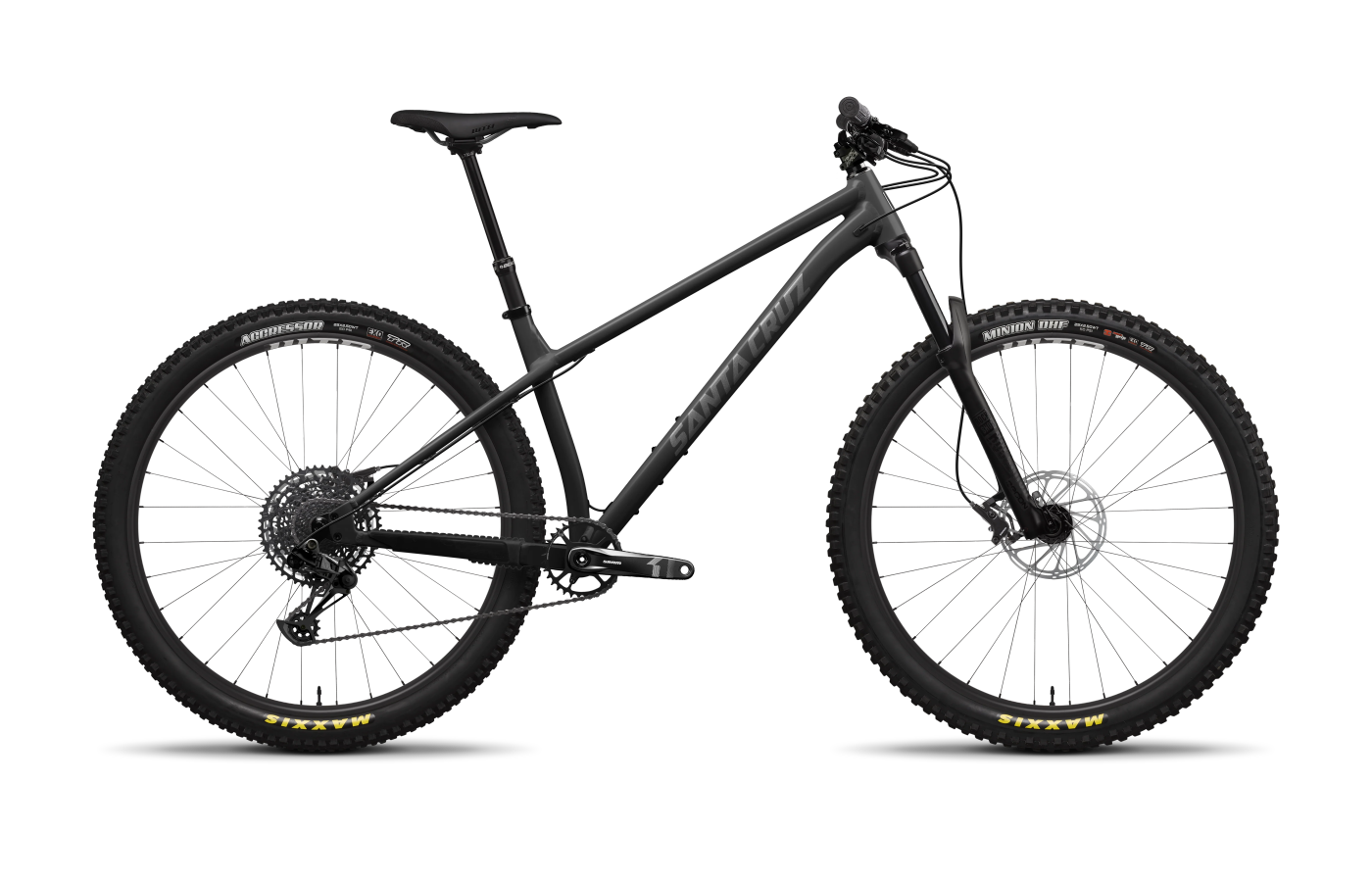
Chameleon
The other versatile aluminum trail hardtail in this conversation. Reviewers consistently rate the Chameleon a touch more compliant than the Timberjack on rough terrain, with similar wheel-size flexibility and bikepacking mounts.
Compare →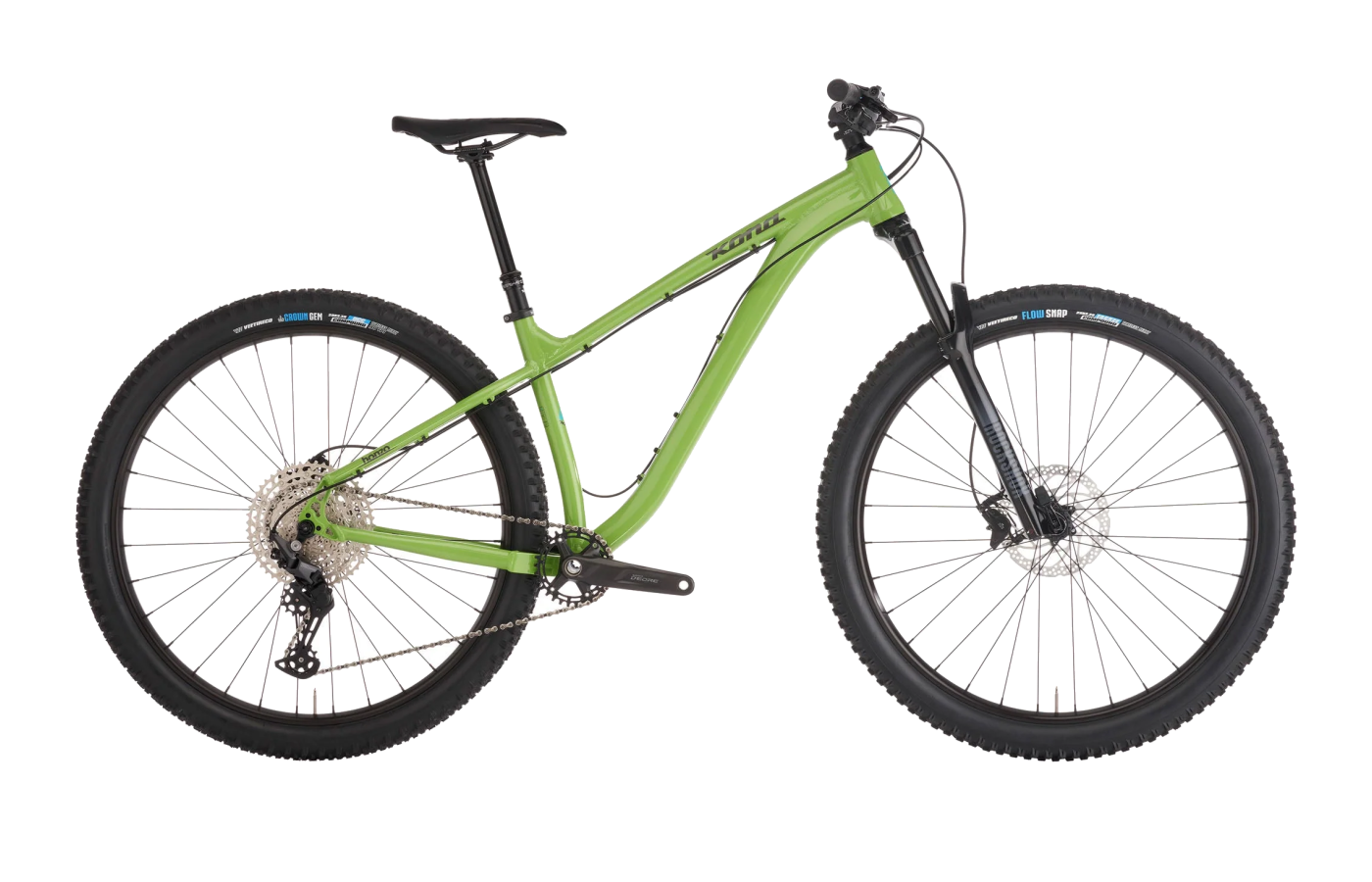
Honzo
If you like the Timberjack's hardtail premise but want something rowdier, the Honzo's geometry leans further into hard-charging trail. A more aggressive HTA and longer reach trade some bikepacking neutrality for descent confidence.
Compare →DV9
If the Chisel's XC focus appeals but you'd rather skip the rear suspension entirely, Ibis's DV9 is a fast, light carbon hardtail that builds up either as an XC race weapon or a snappy trail bike depending on tire and fork choice.
Compare →