Spearfish
vsBlur
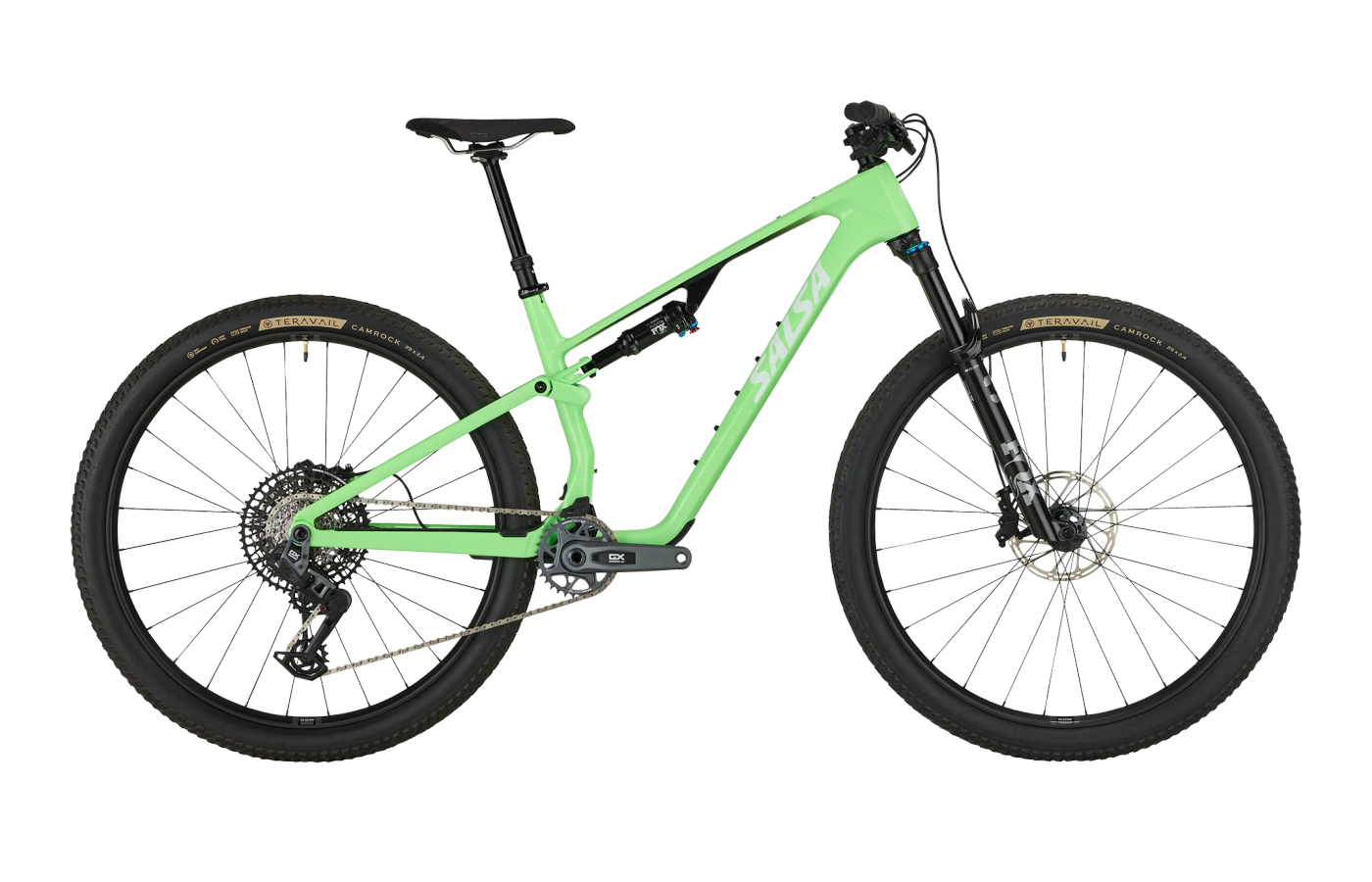
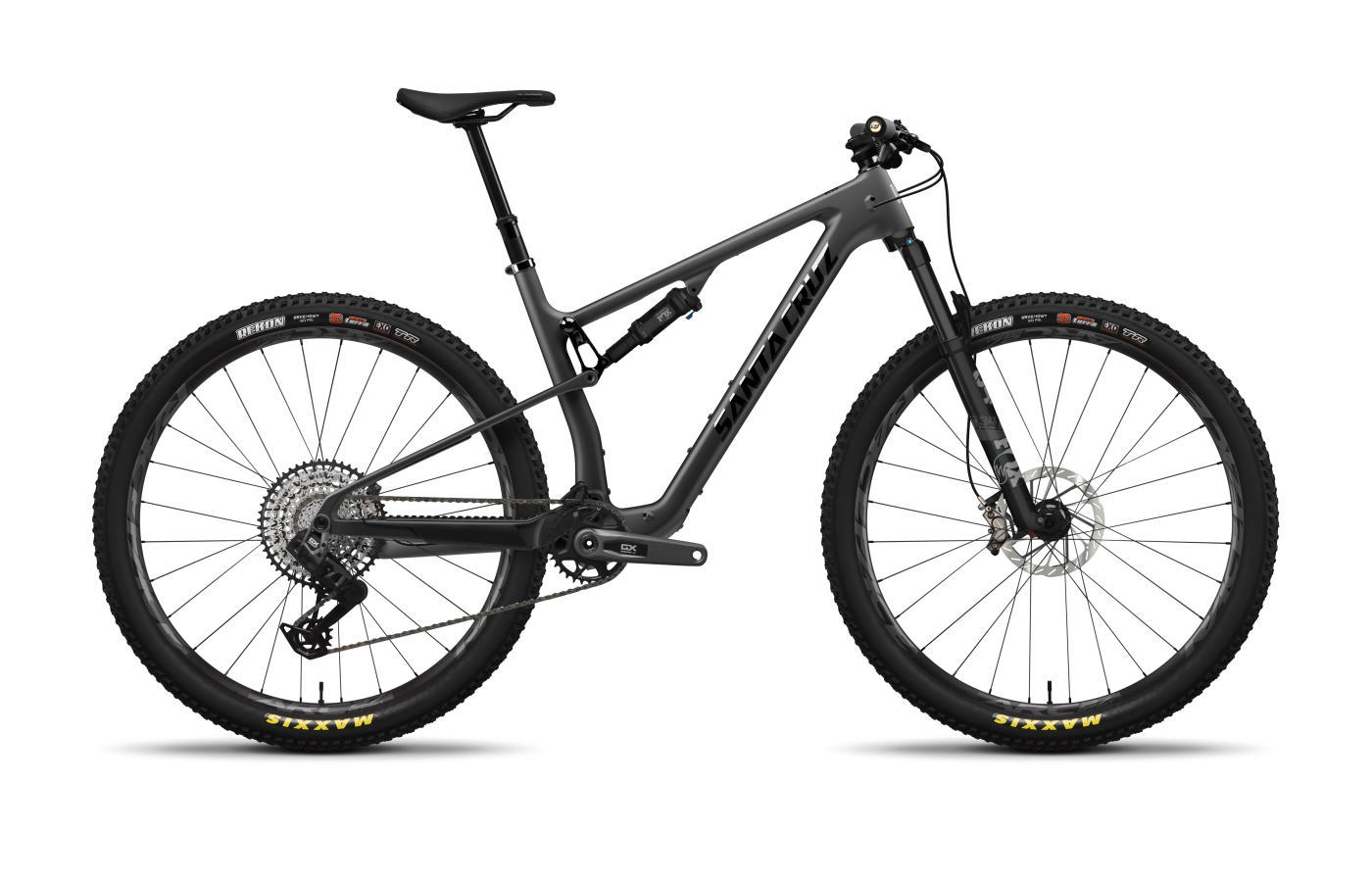
Two short-travel 29ers, two different jobs.
The Spearfish is a modern downcountry all-rounder with bikepacking DNA. The Blur is a marathon-race scalpel that trades sprint snap for traction.
Spearfish
- More progressive geometry — 66.3 degree head angle and 1,200 mm wheelbase (M) let it descend above its travel.
- Built for long days — up to three bottle mounts plus top-tube cargo bosses.
- No-lockout efficiency — Split Pivot has enough anti-squat to climb well with the shock fully open.
- Steep 77.3 degree seat tube loads the hands on mellower terrain — a real complaint from multiple reviewers.
- Lineup is carbon-only at current MSRPs outside alloy entry trims; middle-tier carbon builds start around $4k.
Blur
- Class-leading traction on technical climbs — the low-anti-squat Superlight rear end 'sucks itself to the ground'.
- Lighter race platform — top builds hit 25.1 lb (XX AXS FA RSV), over a pound under equivalent Spearfish trims.
- Best-in-class warranty — lifetime frame, lifetime pivot bearings, lifetime Reserve wheels.
- Active suspension bobs on smooth climbs; you will reach for the remote lockout more than you would like.
- Premium pricing — the cheapest Blur ($4,649) costs more than the two cheapest Spearfish builds combined.
Editor’s analysis
Both sit in the 115-120 mm bracket, both wear carbon everywhere — but the why behind each bike points at very different riders.
On the surface, the Salsa Spearfish and Santa Cruz Blur look like cousins. Full-carbon frames, 29" wheels, roughly 115-120 mm of rear travel paired with a 120 mm fork, identical 61 mm tire clearance, and price tags that climb past $10k in their flagship builds. Most XC-adjacent shoppers will consider both. Spend time on the numbers and the gap opens fast.
The Salsa Spearfish is the more aggressive geometry bet. A 66.3 degree head angle, a 77.3 degree seat tube, and a 1,200 mm wheelbase on size Medium push it well into modern downcountry territory — reviewers consistently call it 'surprisingly capable' on descents, and Bike Rumor's Jeremy Benson still clocked a PR up his local climb on one. Salsa backs that geometry with bikepacking-first details: up to three bottle mounts, top-tube cargo mounts, a 120 mm Fox 34 SL fork, and Dave Weagle's Split Pivot suspension, which reviewers praise for its high anti-squat and self-sufficient pedaling platform (no remote lockout needed).
The Santa Cruz Blur points the other direction. A 67.1 degree head angle and a 74.9-75.1 degree seat tube keep the rider more upright and the front end less committed — textbook marathon-XC posture. The new 'Superlight' flex-stay single-pivot drops 289 g off the previous VPP frame and, per Santa Cruz, deliberately runs lower anti-squat than rivals. The payoff is extraordinary climbing traction: Pinkbike's Henry Quinney called it the fastest singletrack climber in their field test. The penalty is pedal bob on smooth ground — you'll reach for the remote lockout on fire-road grinds.
The short version: the Spearfish is a sharp-descending adventure XC bike that encourages scope creep, and the Blur is a comfort-first race bike that grips like it's bolted to the trail. Pick based on which failure mode you're willing to accept — 'a little too much bike for the XC race' on the Spearfish, or 'a little too floppy on the smooth sprints' on the Blur.
Where the builds differ.
Comparing our editor's-pick builds side-by-side. Winners highlighted row-by-row — lower price and weight, and the better-spec component, each mark a point.
Build variants & pricing
Both ranges top out above $10k, but the Spearfish drops to $1,649 in alloy; the Blur's floor is $4,649.
Prices are current US MSRP and may reflect recent tariff-driven increases on the Spearfish side. Both brands share a tier-matched GX AXS Transmission build around $6,900-7,000, which is the apples-to-apples pairing in the spec tables below.
How they fit, how they steer.
Fit-picked for a 5'8" rider: Salsa Spearfish Small vs Santa Cruz Blur M. The Spearfish sits slightly taller in stack (598.4 vs 597 mm), has 12 mm more reach (450 vs 438), and a noticeably slacker 66.3 degree head angle vs the Blur's 67.1 degrees — the Spearfish is the longer, slacker, more descent-biased bike at matched fit.
Which size should I buy?
Size labels differ across conventions; both pages reference the rider's stack, reach, and effective top tube. The Spearfish runs five sizes (X-Small to X-Large); the Blur runs four (S to XL).
→These are starting points. Flexibility, riding style, and preferred position all shift the answer — if you’re between sizes, a professional fit beats a chart.
What the magazines said.
Published reviews from trusted cycling outlets. Click through for the full write-up.
Which one should you buy?
If you want one bike for long adventure rides with real descents, get the Salsa Spearfish. If you line up at marathon starts and live on rooty climbs, get the Santa Cruz Blur.
Spearfish
The Spearfish is the right call if your XC rides routinely include multi-hour efforts, backcountry overnights, or descents you wish had more bike underneath you. The geometry is modern enough to push, and the frame is built around carrying water and gear on every size.
Blur
The Blur is the right call for technical XC and marathon racing — especially on courses with rooty, rocky, loose-over-hard climbs where traction beats raw stiffness. You will give up some descending composure and pay a premium, but you get one of the lightest, grippiest short-travel race bikes on the market.
Questions buyers actually ask.
Short answers to the things we get emailed about most often.
01Which descends better?
The Salsa Spearfish, and it isn't especially close for a short-travel bike. The Spearfish runs a 66.3 degree head angle versus the Blur's 67.1 degree — nearly a full degree slacker — and posts a 1,200 mm wheelbase on Medium against the Blur's 1,157 mm on Medium. Reviewers across Pinkbike, Bikepacking.com, and Bike Rumor all describe it as feeling like more bike on descents than its 120 mm travel suggests.
The Blur isn't bad going down — testers consistently call it confidence-inspiring for an XC bike — but it is explicitly tuned as a marathon-XC platform, not a mini-trail bike. If descent capability is a priority, the Spearfish wins.
02Which climbs faster?
It depends on the climb. On smooth fire roads and tarmac, the Blur's lighter top builds (as low as 25.1 lb in XX AXS FA RSV trim vs 26 lb 1 oz for the flagship Spearfish) give it an edge — provided you use the remote lockout, because Santa Cruz intentionally tuned in low anti-squat and the Blur bobs without it.
On technical, rooty, loose climbs, the Blur's low-anti-squat rear end was repeatedly called the fastest singletrack climber in field tests — it maintains grip where firmer platforms spin out.
On steep, sustained singletrack climbs where seated pedaling position matters most, the Spearfish's 77.3 degree seat tube angle puts the rider directly over the bottom bracket; Bike Rumor's tester set a climb PR on one. Pick the bike whose climbs match yours.
03How much travel do these have?
Salsa Spearfish: 120 mm rear, 120 mm front across the range.
Santa Cruz Blur: the lineup splits. The XC builds run 100-107 mm rear with a 120 mm fork; the Trail (TR) builds run 115 mm rear with a 120 mm fork on the same frame. The editor's-pick GX AXS Trail is 115/120. Switching between XC and TR tuning requires a shock-stroke swap.
04What's the tire clearance?
Both frames clear 61 mm (roughly 2.4") tires officially, and both ship with 29 x 2.4" rubber — Teravail Camrock on the Spearfish, Maxxis Rekon or Rekon Race on the Blur. Reviewers on both bikes flagged the stock tread as under-gripping in wet or loose conditions; swapping to grippier rubber (Maxxis Forekaster, Schwalbe Wicked Will, etc.) is a common first upgrade.
05Which has the better warranty?
The Santa Cruz Blur, clearly. Santa Cruz covers the frame for life to the original owner, plus lifetime bearing replacement and a lifetime warranty on Reserve carbon wheels where fitted. Reviewers routinely cite this package as a core reason the Blur's premium price makes sense over a multi-year ownership horizon.
Salsa warranties the Spearfish frame for life to the original owner against manufacturing defects, but doesn't include bearings or wheels under the same terms.
06Is there a budget-friendly way into either bike?
The Salsa Spearfish, without question. Salsa offers alloy builds starting at $1,649 (Deore) and $2,999 (SLX), plus a Deore 12 carbon build at $3,999. The Blur is carbon-only and starts at $4,649 for the 70 Trail build — nearly three times the Spearfish's entry point. If budget is a constraint, the Spearfish is the only real answer here.
07How should I think about the carbon layups?
Both brands offer two carbon grades on the same frame shape.
Salsa: Carbon Deluxe (1,940 g, size M) versus standard Carbon (2,195 g, size M) — a 255 g difference. Deluxe appears on the C DLX GX Transmission and up.
Santa Cruz: Carbon C versus Carbon CC — Santa Cruz claims the CC is 250-350 g lighter. CC appears on the XX and X0 RSV builds; C appears on the GX and lower tiers.
For non-racers, both brands' cheaper layups retain the same geometry and suspension kinematics — the weight penalty is real but the ride character isn't meaningfully different.
08Which would a reviewer pick for all-day trail riding?
The Salsa Spearfish, almost unanimously. Feedthehabit called it a rider's XC bike with agility, speed, and capability in a lightweight package. Bikepacking.com's Neil Beltchenko — who has raced the Spearfish family for over a decade — praised this generation's balance of traction, control, and long-distance capability.
The Santa Cruz Blur wins the marathon-race and technical-climbing conversation, but the Spearfish wins the one-bike-for-big-adventure-days conversation by a wider margin than the spec sheets suggest.
Similar bikes
If your priorities don’t map cleanly onto either of these, one of these adjacent bikes probably fits better.
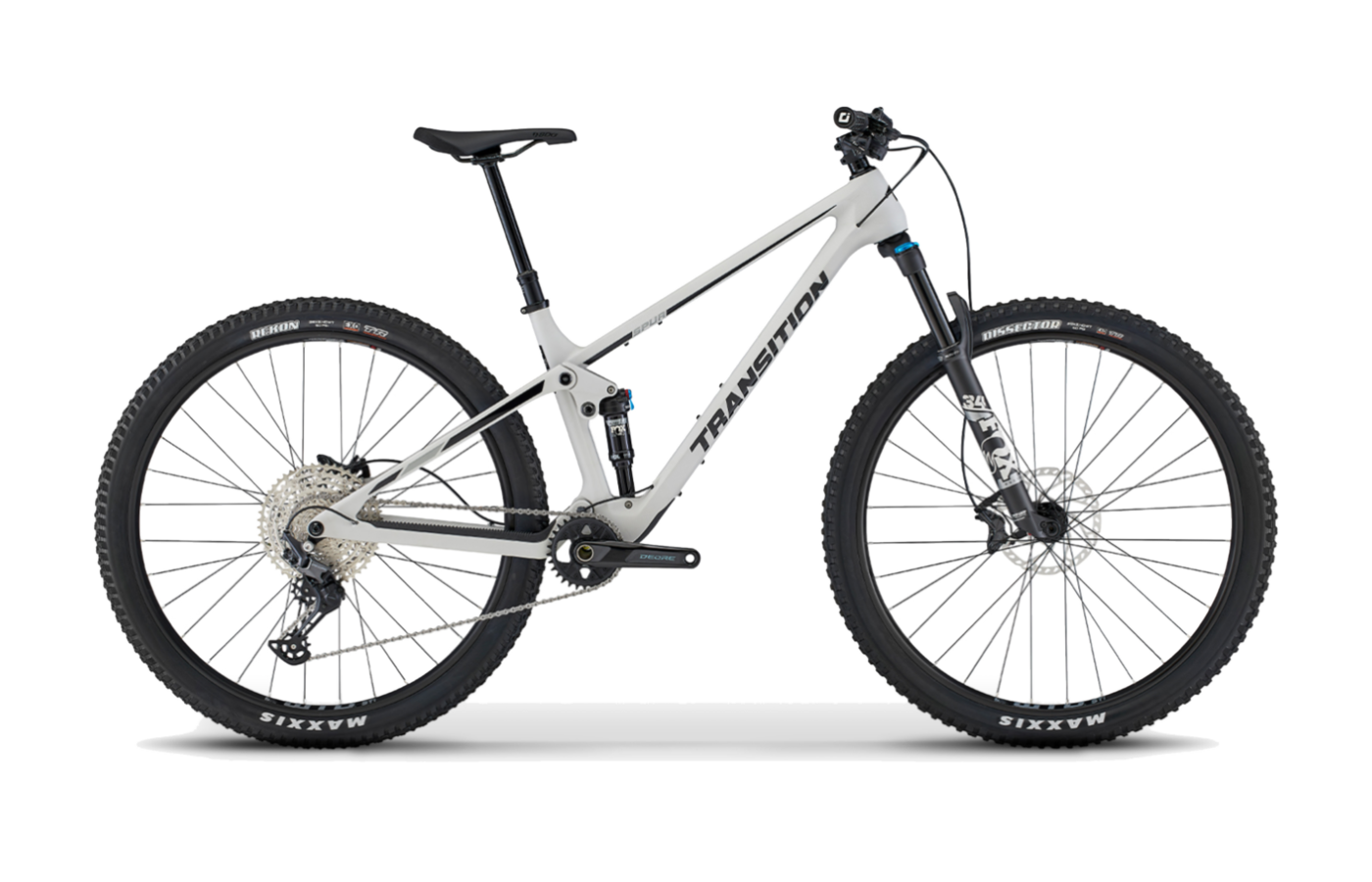
Spur
The Transition Spur is the benchmark downcountry bike both of these get compared to — slack, playful, and more overtly trail-biased than the Blur, with sharper geometry than the Spearfish. Worth a look if you want the Spearfish's descent bias pushed even further.
Compare →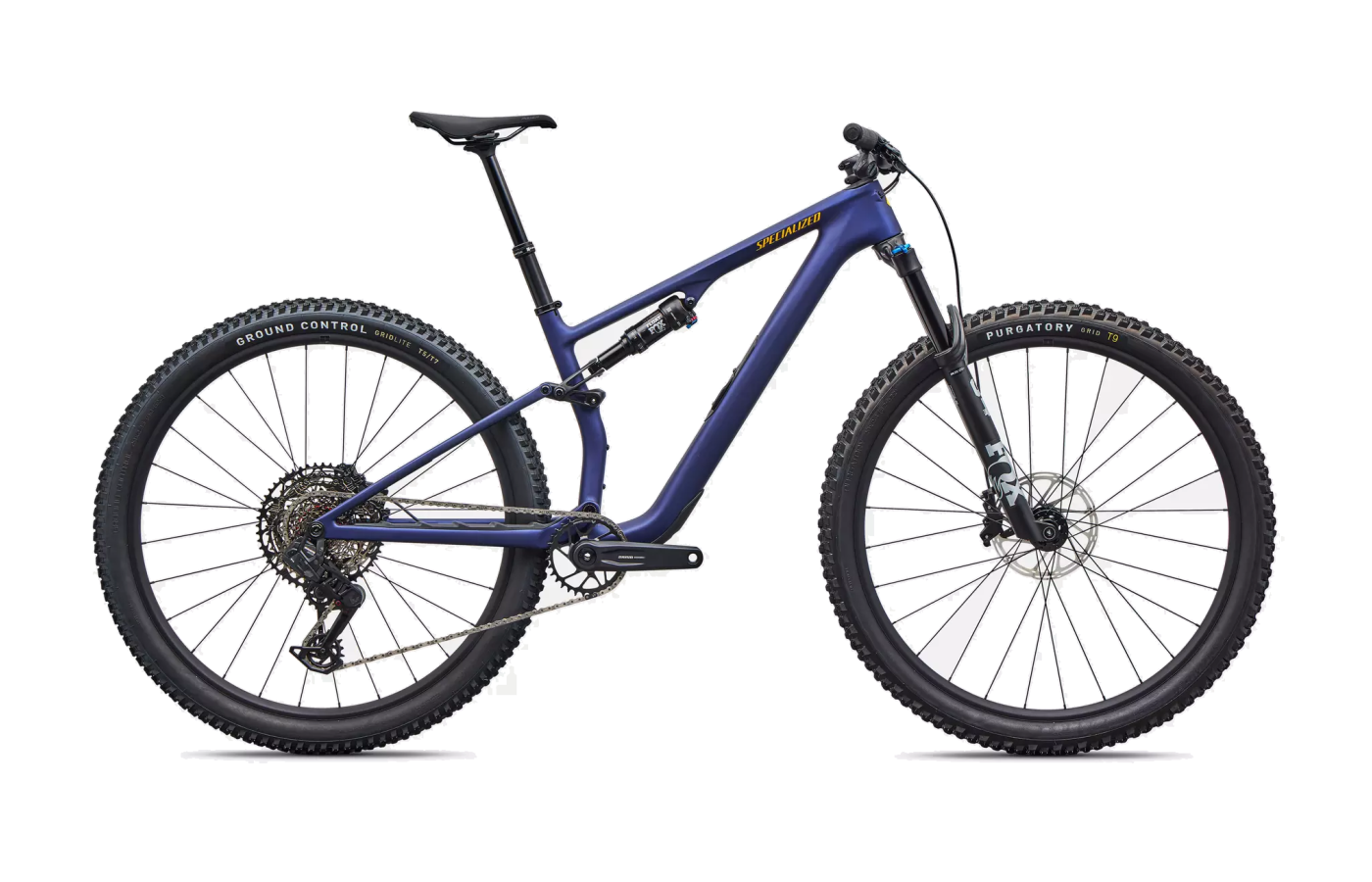
Epic Evo
The Specialized Epic Evo sits right between these two — 120 mm front and rear like the Spearfish, with a sharper race pedigree closer to the Blur. Often quoted as the best-value all-rounder of the three.
Compare →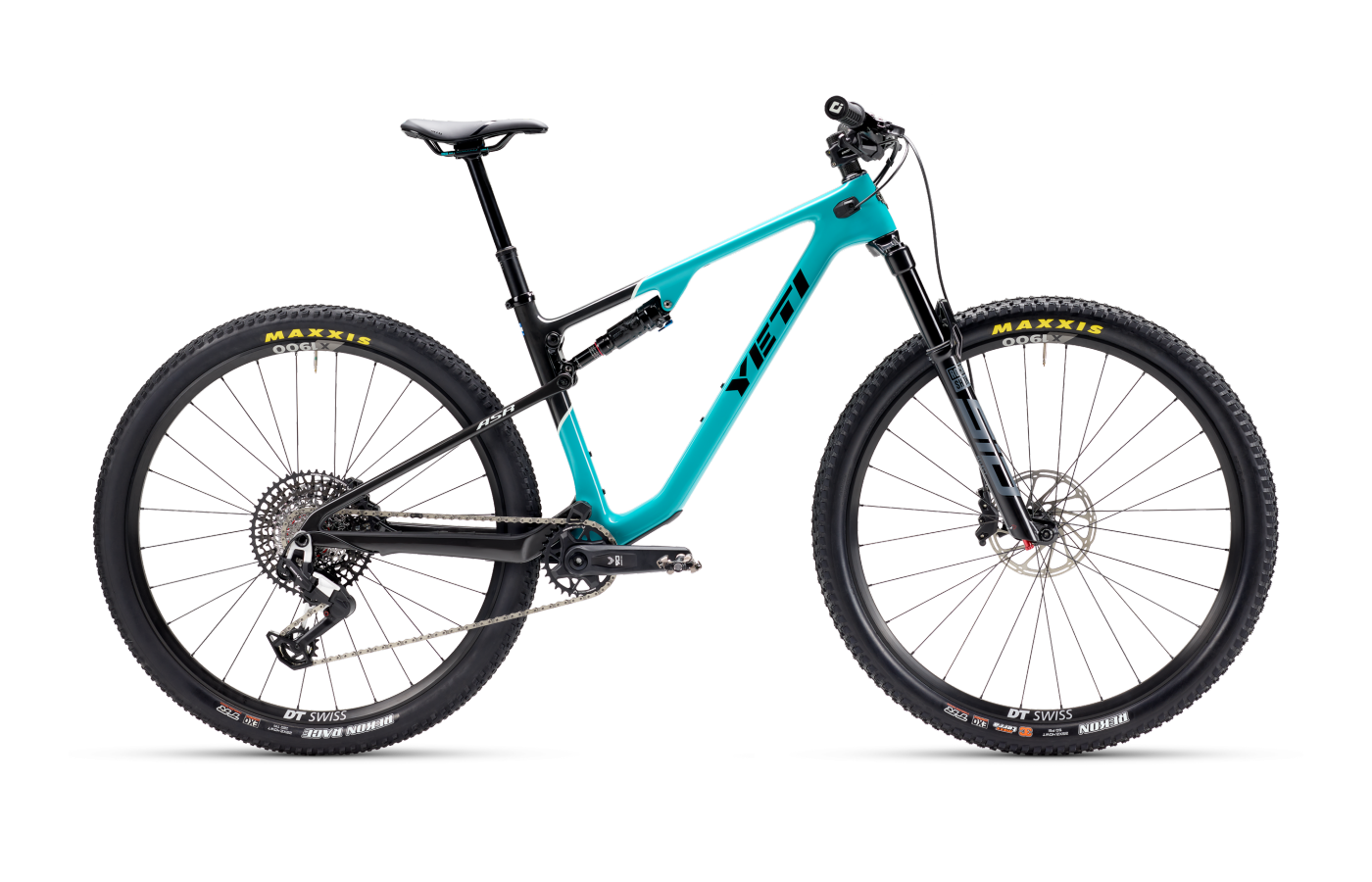
ASR
The Yeti ASR is the modern pure-XC answer to both — lighter than either flagship and more race-focused than the Spearfish, but with Yeti's Switch Infinity suspension adding a surprising amount of downhill composure.
Compare →