Journeyer
vsWarbird
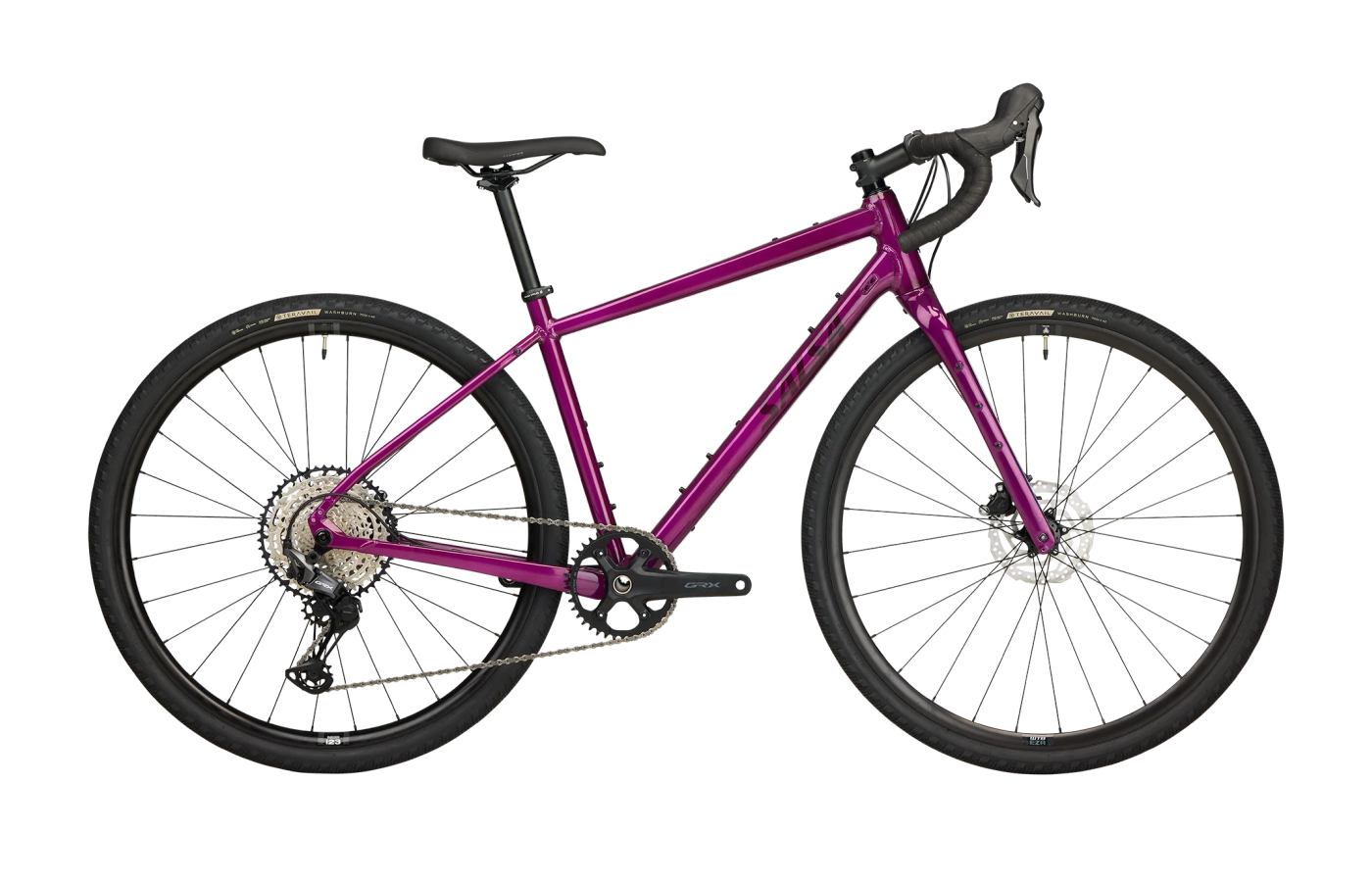
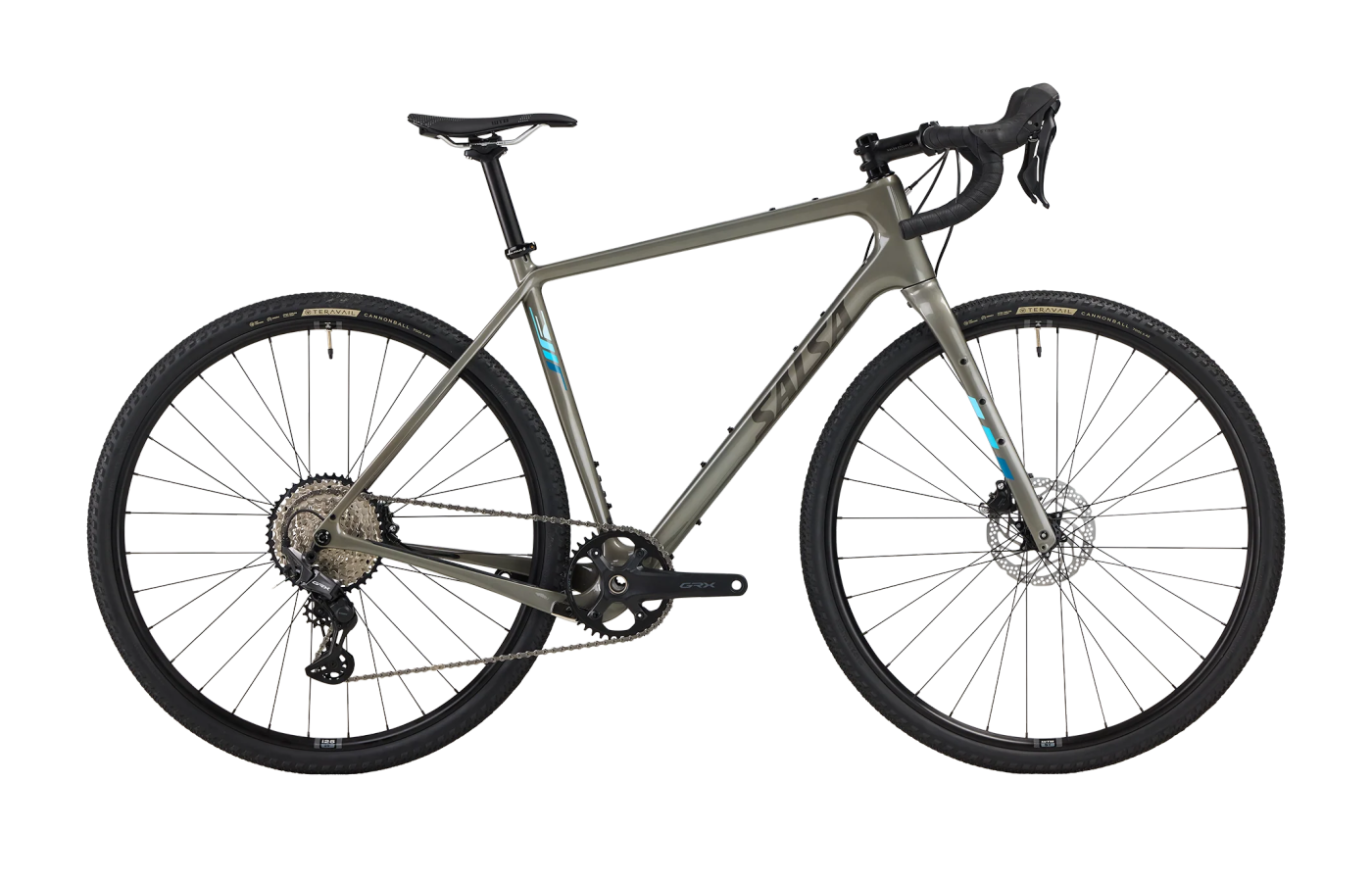
Same family, different missions.
The Journeyer is Salsa's aluminum do-everything platform. The Warbird is the carbon race bike that started the gravel category.
Journeyer
- Wider tire clearance at 50 mm — five more millimeters than the Warbird, useful when the road gets chunkier than expected.
- Cheapest way into Salsa gravel — builds start at $629 and the top GRX 610 lands at $2,499.
- Mounts everywhere — triple bosses on the fork, top tube, downtube; dropper-post routing; QR or thru-axle frame variants.
- Aluminum frame is a couple pounds heavier than the carbon Warbird and less compliant.
- Slack 69.5° head angle requires more rider input through tight, low-speed corners — Velo flagged understeer in fast sweepers.
Warbird
- Carbon frame with VRS compliance — the bowed seat stays measurably reduce vibration without softening pedal response.
- Faster, more direct handling — a 70.75° head angle and 10 mm shorter chainstays bring the front end to life under power.
- Race-ready spec ceiling — top builds run SRAM Force AXS and carbon WTB CZR wheels, hitting 19 lb 1 oz.
- Price floor is $2,799 — there's no entry-level Warbird and no aluminum option.
- Tire clearance caps at 45 mm, so the deepest off-piste detours stay off the table.
Editor’s analysis
Both bikes wear the Salsa badge and run the same handlebar — but past that, the engineering choices diverge almost immediately.
The Journeyer is Salsa's most affordable gravel bike and it shows in the right ways. It's a 6061-T6 aluminum frame with a Waxwing carbon fork on the higher builds, dressed up with a slack 69.5-degree head angle, 440 mm chainstays, and a 1051 mm wheelbase at size 55. It clears a 50 mm tire. Velo nicknamed it "The Happy Bike" — a relaxed, planted, mounts-everywhere workhorse that takes anything from commute to bikepacking trip without complaint.
The Warbird is the opposite study. High-modulus carbon front and rear, Salsa's Class 5 VRS — bowed seat stays and flattened chainstays designed to flex vertically and absorb chatter — and a steeper 70.75-degree head angle with 10 mm shorter chainstays. The geometry is what Salsa calls Gravel Race Geometry: faster-steering, more responsive under power, but still long enough in the wheelbase to stay calm at speed. Cycling Weekly called it "the original gravel race bike."
The price gap is real and structural. The Salsa Journeyer tops out at $2,499 (GRX 610). The Salsa Warbird starts at $2,799 and runs to $6,999. There is no overlap in mid-tier — they exist in different parts of the market. If your budget caps at $2.5k, the Journeyer is your only option here. If you're spending $4k-plus, the Warbird is the bike Salsa designed for that money.
Put another way: the Journeyer is the gravel bike you buy when you don't yet know what kind of gravel rider you are. The Warbird is the one you buy when you've decided you want to race.
Where the builds differ.
Comparing our editor's-pick builds side-by-side. Winners highlighted row-by-row — lower price and weight, and the better-spec component, each mark a point.
Build variants & pricing
The two lineups barely overlap in price — the Journeyer ends where the Warbird begins.
Editor's picks are both Shimano GRX RX610 builds — the closest apples-to-apples drivetrain match across the two platforms. Note the structural price gap: the Journeyer tops out at $2,499 while the Warbird starts at $2,799, so a true tier-for-tier comparison has the Warbird ~$700 more for the same drivetrain — that delta is the carbon-vs-aluminum frame and VRS, not a spec advantage.
How they fit, how they steer.
These are the fit-picked sizes for each bike. The Warbird sits 15 mm taller in stack with 5 mm more reach, 1.25° steeper at the head tube, 10 mm shorter chainstays, and a 13 mm shorter wheelbase — every number points to a sharper, more race-oriented front end.
Which size should I buy?
Stack and reach overlap closely in the middle of each range; pick by your usual saddle-to-bar drop and torso length.
→These are starting points. Flexibility, riding style, and preferred position all shift the answer — if you’re between sizes, a professional fit beats a chart.
What the magazines said.
Published reviews from trusted cycling outlets. Click through for the full write-up.
Which one should you buy?
If your budget's under $2,500 or you want one bike for everything, get the Journeyer. If you're racing or chasing fast group rides on gravel, get the Warbird.
Journeyer
If you want one approachable bike for commuting, weekend gravel loops, and your first bikepacking trip, the Journeyer delivers. The aluminum frame, mounts-everywhere build, and 50 mm tire clearance let you adapt as your riding does — without spending Warbird money to find out what you actually want.
Warbird
If you line up at gravel events and care about minutes, the Warbird's carbon frame, VRS compliance, and steeper geometry pay back over long days. Cycling Weekly called it "the original gravel race bike" — and four generations in, that's still the brief.
Questions buyers actually ask.
Short answers to the things we get emailed about most often.
01Which one is faster?
The Salsa Warbird, by a comfortable margin. The carbon frame is lighter — the GRX 610 1x build comes in at 21 lb 13 oz versus roughly 22-23 lb for equivalent Journeyer drop-bar builds — and the steeper 70.75° head angle plus shorter 430 mm chainstays make it more responsive under power.
Reviewers consistently described the Warbird as "lively and quick" (Cycling Weekly, Bicycling) and "accelerative under hard pedaling." The Journeyer is no slouch on flats, but its geometry favors stability over speed — Bikexchange noted the trade-off for comfort "is always a little speed and agility."
02What's the tire clearance on each?
Journeyer: 50 mm in 700c (or 55 mm in 650b — the bike accepts both wheel sizes).
Warbird: 45 mm in 700c, with 650b compatibility up to roughly 2.0".
It's an unusual reversal — the adventure bike clears more rubber than the race bike. If you regularly run 45 mm-plus knobby tires, that's a real point in the Journeyer's favor.
03Why is the Warbird so much more expensive?
Two reasons. First, it's carbon — high-modulus carbon frame and Waxwing Deluxe carbon fork — versus the Journeyer's 6061-T6 aluminum frame. Second, the lineup is positioned higher: there's no entry-level Warbird build. The cheapest Warbird is the GRX 600 1x at $2,799, while the cheapest Journeyer is the Flat Bar Altus 650b at $629.
At the matched GRX 610 tier the gap is $700 ($2,499 Journeyer vs $3,199 Warbird) — that's roughly the cost of the carbon frameset upgrade.
04Can I race gravel events on the Journeyer?
You can, and people do. But the Journeyer is built around stability, not speed — the slack 69.5° head angle and 1051 mm wheelbase make it confidence-inspiring on loose terrain rather than agile through tight corners. Velo noted it "requires more input from the rider to get it to turn."
For a casual community gravel event or a fondo where finishing is the goal, the Journeyer is plenty. For a competitive race where seconds matter, the Warbird's lighter carbon frame and racier geometry are what you actually want.
05What is Salsa's Class 5 VRS?
Class 5 Vibration Reduction System — Salsa's passive compliance design on the Warbird carbon frame. Tall, thin, outwardly bowed seat stays paired with flattened chainstays flex vertically to absorb road chatter without softening pedal response.
Reviewers describe the effect as "supple" and credit it with reducing hand and back fatigue on long days. Bikepacking.com specifically called out "incredible rear end compliance." The Journeyer doesn't have an equivalent system — its compliance comes from the carbon fork (on most builds) and the long exposed seatpost from its short seat tubes.
06Are the Journeyer's mechanical disc brakes worth the savings?
Below the $1,300 mark, most Journeyer builds (Apex 1, Sora, Claris, Altus) ship with mechanical disc brakes. Velo called the Tektro MD-C550 mechanicals "only so-so" and most reviewers said they'd pay up for hydraulic if budget allowed.
The GRX 600 ($1,344), GRX 610 ($2,499), and the CUES builds get hydraulic Shimano brakes and noticeably better modulation — a meaningful upgrade. Every Warbird build, by contrast, comes with hydraulics standard.
07Can I run a dropper post?
Both bikes support dropper posts via internal routing. On the Warbird the round 27.2 mm seatpost makes a dropper a straightforward swap, and Cycling Weekly's reviewer flagged not having one as a real limitation when descending technical sections.
The Journeyer has the same internal-routing provision, and Salsa explicitly designed for dropper compatibility — which makes sense given the bike's adventure brief.
08Which one for bikepacking?
Honest answer — either works, and reviewers have used both for multi-day trips.
The Journeyer is the more obvious pick for loaded touring: cheaper to start with, wider tires, and the aluminum frame doesn't lose sleep over rack mounting and pannier weight. Cycling Weekly tested it loaded and found it "always felt stable and in control."
The Warbird is the choice if you want fast, light bikepacking — credit-card touring, dirt-road brevets, ultra-distance racing. Logan Watts at Bikepacking.com used a Warbird 650b v4 for exactly this and praised its all-day comfort. The frame has triple bottle mounts on larger sizes, top tube and fork mounts, and rear rack compatibility.
Similar bikes
If your priorities don’t map cleanly onto either of these, one of these adjacent bikes probably fits better.
Grizl
Canyon's adventure-leaning gravel platform with mounts to spare and direct-to-consumer pricing — meaningful spec for the money if you're willing to skip the local dealer.
Compare →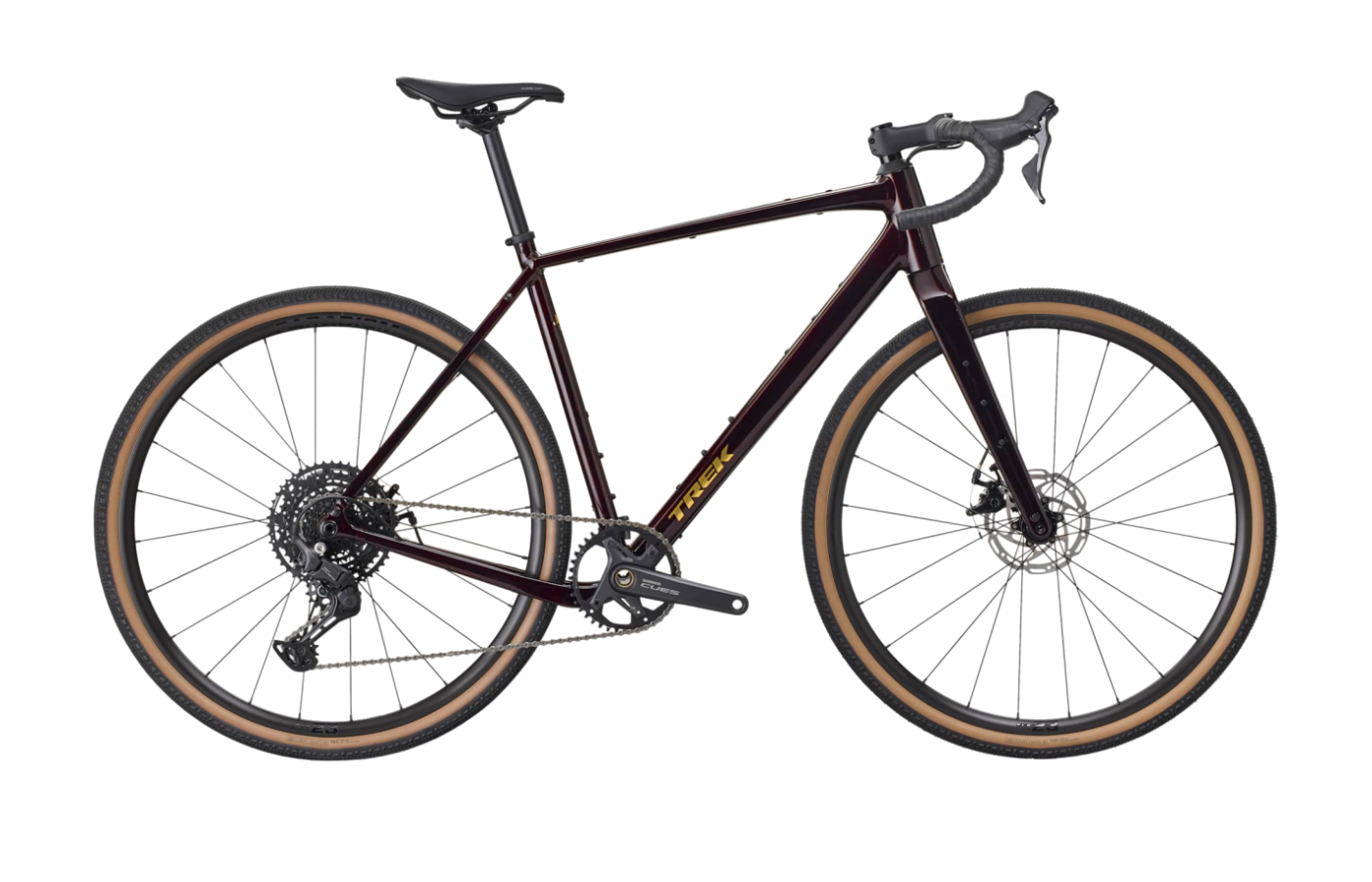
Checkpoint
Trek's gravel platform splits the difference between race and adventure with adjustable IsoSpeed-influenced compliance and good tire clearance — closer to the Warbird in feel, closer to the Journeyer in versatility.
Compare →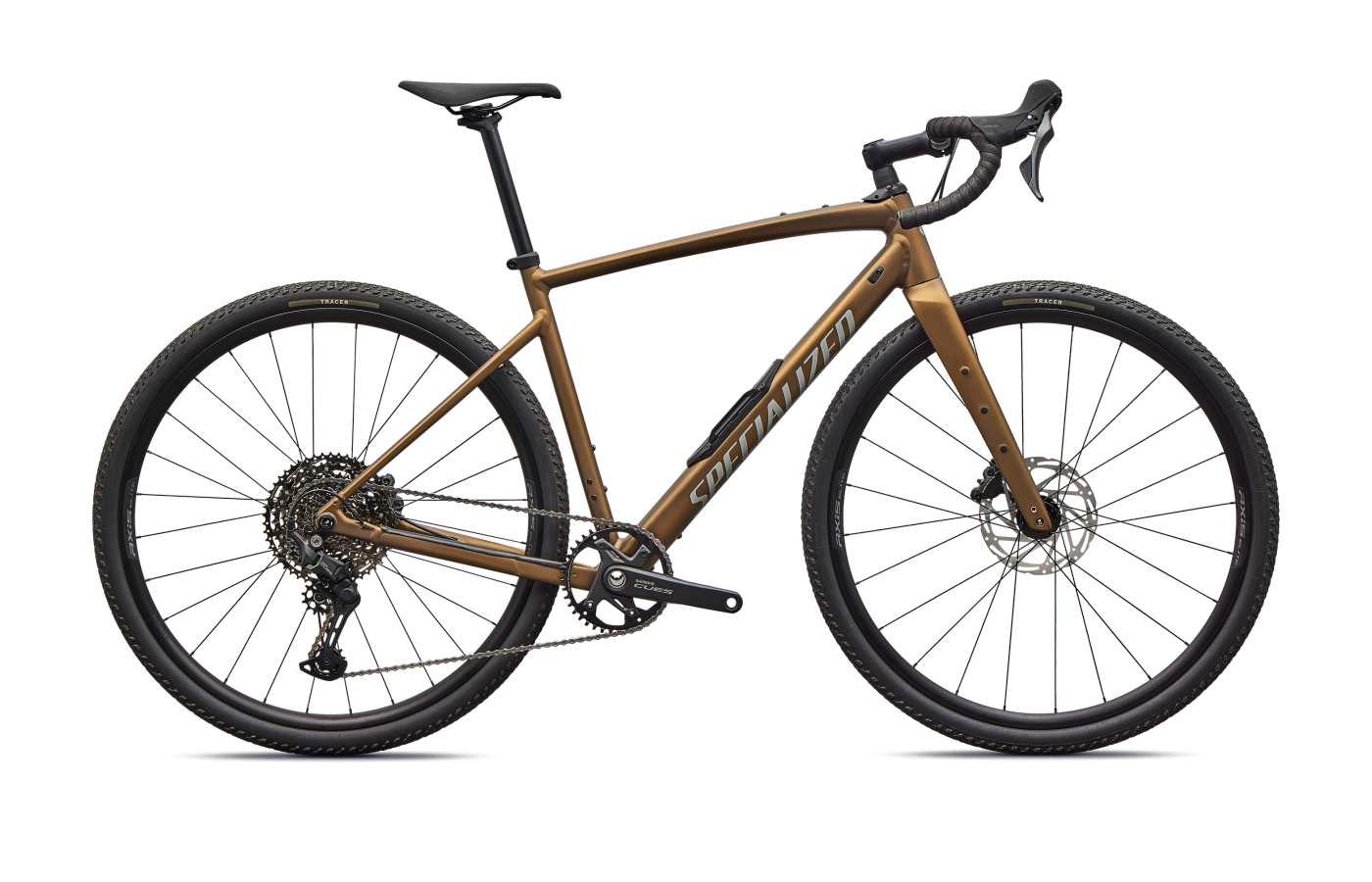
Diverge
Specialized's all-around gravel benchmark, with the Future Shock front-end taking the edge off washboard. The most comfortable bike in the comparison, full stop.
Compare →