Cutthroat
vsTimberjack
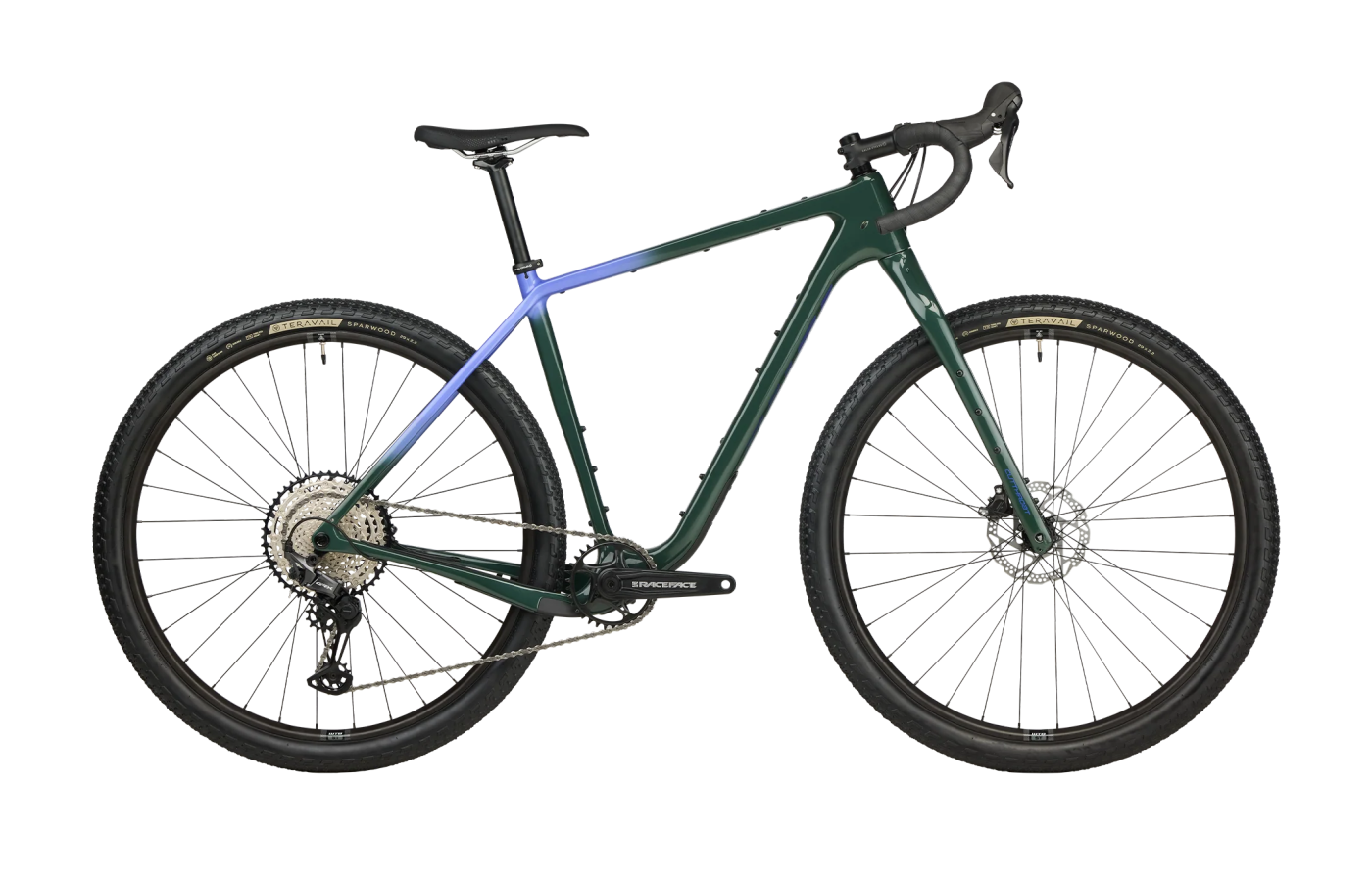
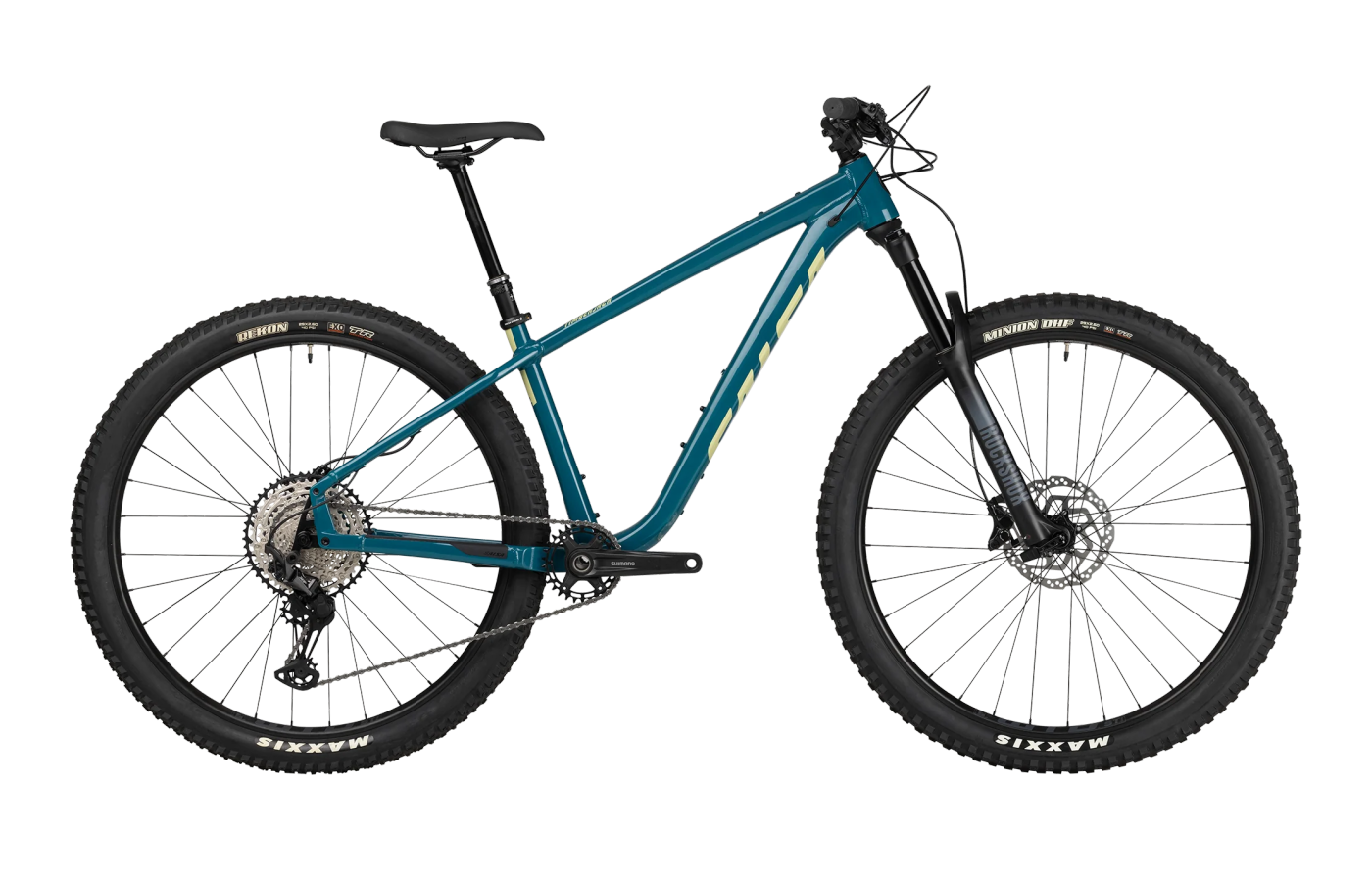
Two Salsas, two ways into the backcountry.
The Cutthroat is a drop-bar carbon 29er built to race the Tour Divide. The Timberjack is an alloy hardtail with 130 mm of fork built to rip your local singletrack.
Cutthroat
- Class 5 VRS frame + V2 carbon fork — measurably absorbs chatter, especially on long days.
- Suspension-corrected geometry accepts a 100 mm 29er fork later without altering handling.
- 20+ mount points and direct-mount frame bag — purpose-built for serious bikepacking loads.
- Entry price starts at $3,499 — no truly budget option in the lineup.
- BB92 press-fit bottom bracket — long-term creak risk that some reviewers flag.
Timberjack
- Modern trail geometry — 66.4 deg HTA at sag, 75.1 deg STA, 453 mm reach (Medium) charges descents and climbs efficiently.
- Adjustable Alternator 2.0 dropouts let you swap between 420 and 437 mm chainstays for flickable or stable feel.
- Threaded BB and clean cable routing — the kind of long-term-ownership details that earn reviewer praise.
- Stock RockShox 35 fork is the obvious upgrade target on every build.
- Aluminum frame rides stiffer than carbon — long, rough days can wear on the hands.
Editor’s analysis
One badge, two completely different jobs — one rolls, one rips.
On paper these two share a parking lot: both are Salsa, both run 29-inch wheels, both have enough mounting points to disappear into the woods for a week. But the philosophies behind them are about as far apart as Salsa's lineup gets. The Salsa Cutthroat is a high-modulus carbon, drop-bar, suspension-corrected race bike for the Tour Divide. The Salsa Timberjack is a 6066-T6 aluminum hardtail with a 130 mm fork and a Maxxis Minion up front. One is built to cover 200 miles of gravel without breaking your wrists. The other is built to drop into Tuesday-night singletrack.
The Cutthroat's whole design brief is comfort at speed over rough surfaces with a load. The Class 5 VRS rear triangle and the V2 carbon fork (Salsa claims 32% more compliance than V1) are why reviewers keep saying things like 'you'll barely feel a thing no matter how aggressive the gravel gets.' The 69-degree head tube and 1090 mm wheelbase at size 56 keep it planted at speed. The 483 mm axle-to-crown fork is suspension-corrected, meaning you can drop a 100 mm 29er fork in later without scrambling the geometry. It's a drop-bar bike that thinks it's a hardtail.
The Timberjack just is a hardtail. 66.4-degree head tube at sag (closer to 65 unsagged), 75.1-degree seat tube, 453 mm reach on a Medium, adjustable 420/437 mm chainstays. It runs 29 x 2.6" or 27.5 x 2.8" tires, and the frame is rated for forks up to 150 mm if you want to send it harder. Stock RockShox 35 forks get the job done but bottom out fast on big hits — most reviewers flag the fork as the obvious upgrade. What you get for the money is a bike that genuinely charges descents and changes direction with intent.
Put it this way: the Cutthroat is what you buy when your weekends are 12-hour rides across mixed terrain with bags. The Timberjack is what you buy when your weekends are 90 minutes of singletrack and you want a bike that survives wet conditions cheaply. They overlap in the bikepacking middle — and Salsa knows this — but they aim at almost opposite ends of the off-road spectrum.
Where the builds differ.
Comparing our editor's-pick builds side-by-side. Winners highlighted row-by-row — lower price and weight, and the better-spec component, each mark a point.
Build variants & pricing
The Cutthroat is a $3,499–$7,999 carbon range; the Timberjack is a $1,364–$2,199 alloy range. There's almost no overlap.
The price gap here is real and informative — you're not comparing two builds of the same bike, you're comparing two completely different platforms. Even the cheapest Cutthroat costs roughly 60% more than the priciest Timberjack.
How they fit, how they steer.
Cutthroat 56cm vs Timberjack Medium — the fit-picked sizes for a 5'8" rider on each. The Timberjack sits 12 mm lower at the bars and ~68 mm longer in reach; its head angle is 2.6 degrees slacker. Different cockpits for genuinely different jobs.
Which size should I buy?
Drop-bar and flat-bar fit don't translate one-to-one — the Cutthroat is sized like a road bike (52–60 cm), the Timberjack like a mountain bike (XS–XL). Both ranges cover most riders 5'2"–6'4".
→These are starting points. Flexibility, riding style, and preferred position all shift the answer — if you’re between sizes, a professional fit beats a chart.
What the magazines said.
Published reviews from trusted cycling outlets. Click through for the full write-up.
Which one should you buy?
If you live for long days on mixed gravel with bags, get the Cutthroat. If you live for singletrack and want a tough, value-priced hardtail, get the Timberjack.
Cutthroat
If your goal is the Tour Divide, a self-supported route across a state, or just a bike that can carry four bottles and a sleeping bag and stay comfortable for 14 hours, this is the benchmark. The carbon frame, the V2 fork, and the cargo system are all built for that exact use.
Timberjack
If you want one mountain bike that climbs efficiently, descends with confidence, runs in the wet without crying, and costs less than a fork on the Cutthroat — this is it. Modern geometry, real trail capability, room to grow with a fork upgrade.
Questions buyers actually ask.
Short answers to the things we get emailed about most often.
01Can the Cutthroat actually replace a hardtail mountain bike?
Partly. With its slack-for-a-drop-bar 69-degree head tube, 1090 mm wheelbase (size 56), and clearance for 29 x 2.4" tires, the Cutthroat can handle smooth-to-moderate singletrack and chunky gravel with confidence — multiple reviewers have ridden it on legitimate XC trails. But it's still rigid up front, and the drop bar limits leverage on technical descents.
If you want to push the bike further, Salsa designed it to be suspension-corrected for a 100 mm 29er fork — drop in a Fox 32 SC or RockShox SID and you're closer to a true drop-bar XC bike. For aggressive singletrack with jumps, drops, and rock gardens, get the Timberjack.
02How much travel does the Timberjack have?
130 mm front, none rear. It's a hardtail. The frame is rated for forks from 130 to 150 mm, and Salsa explicitly says running a 150 mm fork won't void the warranty — so you have a real upgrade path if you want to slacken the geometry further.
Stock builds ship with either a RockShox 35 Gold/Silver or a Marzocchi Bomber Z2 (on the XT Z2 builds), all at 130 mm. The Marzocchi is the noticeably better fork for aggressive use.
03What tires can each one fit?
Cutthroat: officially 29 x 2.4", with some reviewers reporting up to 2.8" actually fits in the V2 fork. It ships stock with Teravail Sparwood 29 x 2.2" — fast on dry gravel, less confident in wet/mud.
Timberjack: 29 x 2.6" or 27.5 x 2.8", with the wheel size determined by which build you buy. Stock tires are Maxxis Minion DHF front / Rekon rear — a proper trail-tire combo with real grip.
04Which one is better for bikepacking?
Depends on the route. For fast, mostly-gravel routes with big mileage (Tour Divide, BWR, multi-day gravel races), the Cutthroat wins — drop bars give you more hand positions for long days, the carbon frame is more compliant, and the integrated direct-mount frame bag is genuinely best-in-class.
For technical, trail-heavy routes (Colorado Trail, Arizona Trail), the Timberjack is the better tool — flat bars and a suspension fork dramatically expand what terrain you can ride loaded. Both have abundant mount points.
05How do the geometries actually compare?
At the fit-picked sizes (Cutthroat 56cm, Timberjack Medium), the Timberjack is ~68 mm longer in reach (453.6 vs 385.3) and ~12 mm lower at the bars (607.4 stack vs 619.5). Head tube angles differ by 2.6 degrees — the Cutthroat at 69 degrees, the Timberjack at 66.4 degrees at sag.
Chainstays: Cutthroat 445 mm fixed, Timberjack adjustable between 420 and 437 mm. Bottom line — the Cutthroat is longer rear / shorter front, the Timberjack is shorter rear / longer front. Two completely different fit philosophies.
06Is the BB92 press-fit on the Cutthroat actually a problem?
Mixed evidence. Reviewers from GearJunkie, Bicycling, and Road.cc all flagged it as a theoretical concern because press-fit bottom brackets have a reputation for creaking. But Bikepacking.com reported zero issues over thousands of miles on both V1 and V2, and Salsa defends the choice for tire clearance and chainstay length.
The Timberjack uses a threaded 73 mm BB, which is unambiguously the easier-to-service standard. If long-term mechanical simplicity matters most, that's a tick in the Timberjack's column.
07Why is the Cutthroat so much more expensive?
Three reasons: carbon frame and fork (vs aluminum), drop-bar electronic groupsets at the top end (XX/X0 AXS Transmission vs Shimano XT mechanical), and a smaller production volume built around a niche use case. The cheapest Cutthroat starts at $3,499 (GRX 810 2x), the priciest Timberjack tops out at $2,199 (XT 29).
If the Cutthroat appeals but the price doesn't, the GRX 810 2x entry build keeps the carbon frame and adds Shimano hydraulic disc brakes — it's the value play in the lineup.
08Can I run a dropper post on either?
Yes on both. Several Cutthroat builds ship with a TranzX dropper from the factory, and the frame is internally routed for one. The Timberjack ships with a dropper across the range as well — it's a baseline expectation for a modern trail hardtail.
If you're buying a Cutthroat build that doesn't include a dropper and plan to ride singletrack, budget another $200–$400 for an aftermarket post.
Similar bikes
If your priorities don’t map cleanly onto either of these, one of these adjacent bikes probably fits better.

Fargo
Salsa's steel drop-bar adventure bike — the Cutthroat's older, more upright sibling. Less race-y, more all-day touring; better if you want classic steel feel and a more upright cockpit over carbon compliance.
Compare →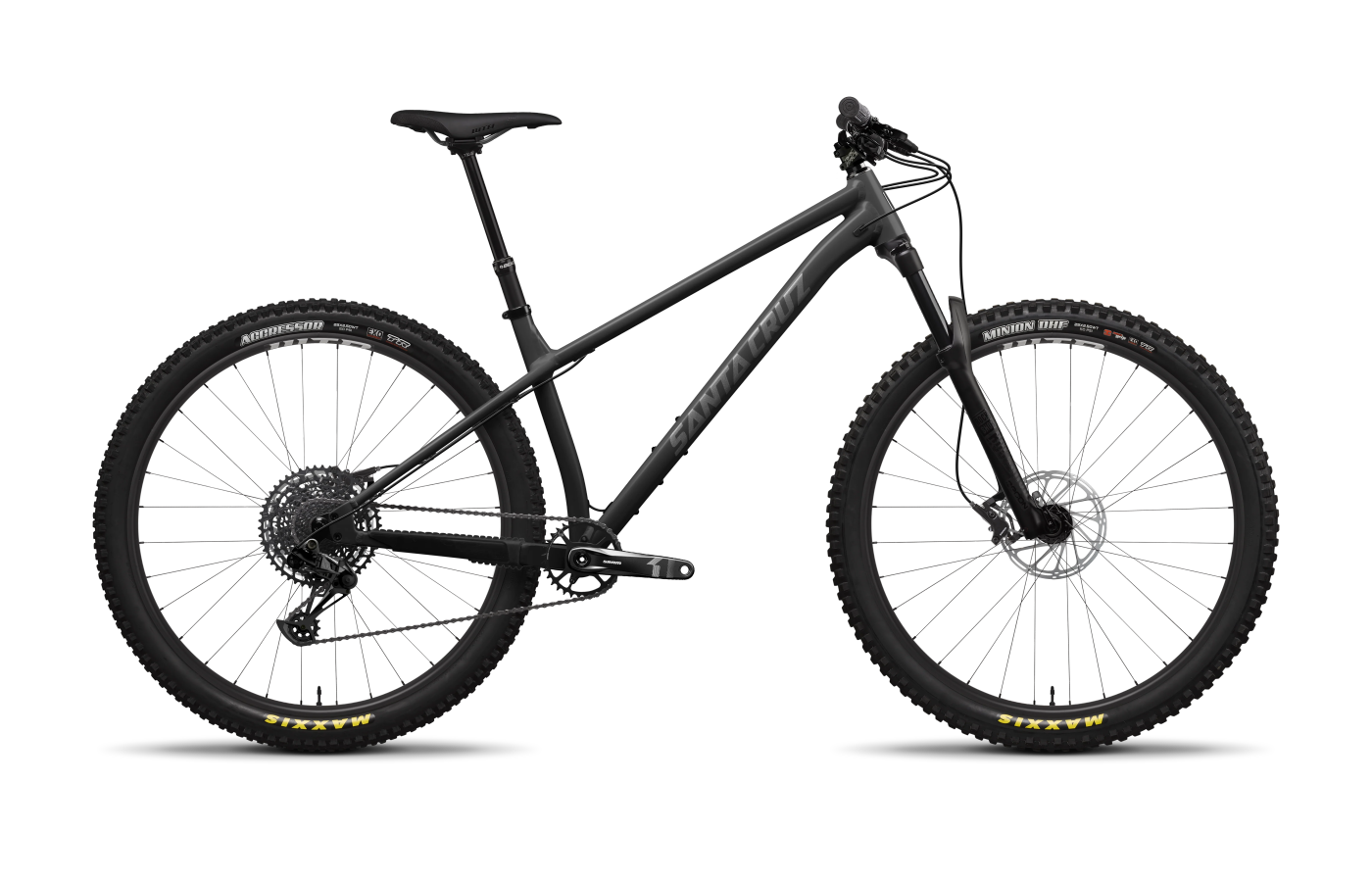
Chameleon
Santa Cruz's aluminum hardtail with similar trail-and-bikepacking ambitions to the Timberjack. Slightly more compliant ride feel by reviewer consensus, with a livelier brand cachet — at a meaningfully higher price.
Compare →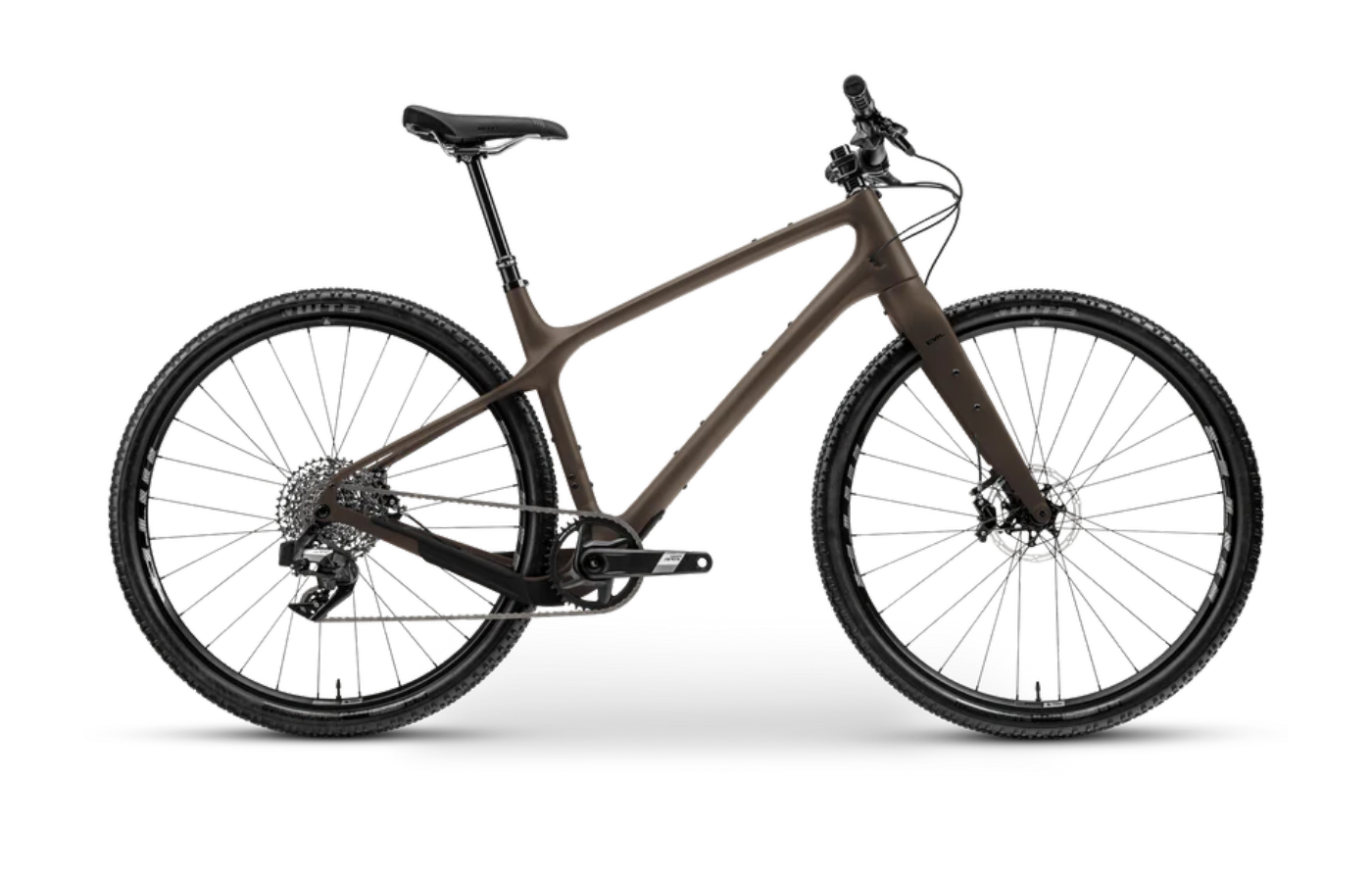
Chamois Hagar
If the Cutthroat's drop-bar/MTB hybrid concept appeals but you want it taken to the extreme, the Chamois Hagar pushes the head angle to genuinely slack territory. A carbon drop-bar bike for technical terrain the Cutthroat would shy from.
Compare →