Chamois Hagar
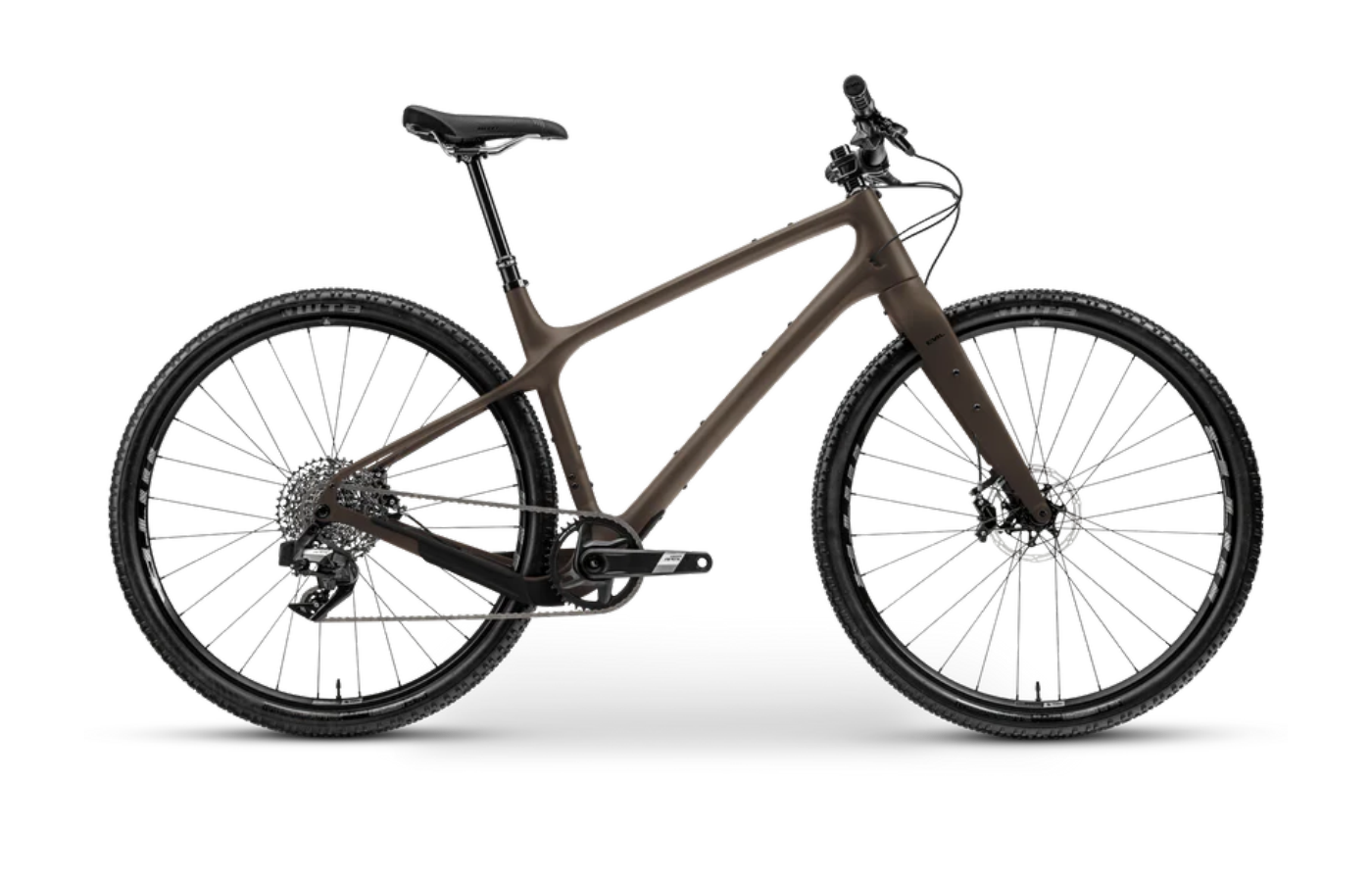
The Evil Chamois Hagar V2 remains one of the more unconventional bikes in the gravel category because it approaches drop-bar design from a mountain-bike perspective rather than a road-derived one. Its defining traits are a notably slack 66.6° head angle, long reach figures intended to be paired with a short stem, and clearance for up to 700x50c tires. That combination places it firmly in the aggressive gravel / adventure segment: a rigid carbon bike aimed less at fast paceline gravel racing and more at rough descents, technical terrain, and riders who want drop bars without giving up a planted, confidence-first front end.
What distinguishes V2 from the earlier Hagar is not a wholesale change in concept, but a clear update in standards and front-end specification. Evil has moved to SRAM UDH compatibility, explicitly framing the bike as ready for newer drivetrain ecosystems including T-Type, and the company also identifies separate rear-axle and frame-protection kits for this version, indicating meaningful frame and hardware changes rather than a simple carryover. The current bike also uses a custom fork with 56 mm offset and 423 mm axle-to-crown, reinforcing that the handling package has been deliberately tuned. In the market, the Hagar V2 stands apart from more conventional gravel bikes by prioritizing stability and control on terrain that starts to blur the line between gravel riding and rigid drop-bar trail riding.
Geometry & fit.
4 sizes published.
The geometry is unusually progressive for a gravel bike and explains much of the Hagar's personality. Across the size range, the head angle stays at 66.6°, paired with 93 mm of trail, which is far slacker and more stability-oriented than typical gravel norms. Reach numbers are also long for the category—400 mm in Small, 420 mm in Medium, 440 mm in Large, and 460 mm in XL—showing that the bike is meant to be set up with a shorter stem and ridden with a more centered, mountain-bike-influenced posture. Combined with a 430 mm chainstay and wheelbases from 1098 mm to 1182 mm, the result should be a bike that feels calm and planted at speed, especially on loose or technical descents, rather than especially quick-steering on smoother roads.
Fit-wise, the stack figures are fairly generous at 575 mm to 631 mm, which should make it easier to achieve a controlled off-road position without an extreme bar drop. The seat tube angle steepens slightly by size, from 73° in Small to 74.5° in XL, helping keep rider weight centered as the front center grows. An 80 mm BB drop is also notable: it lowers the rider's center of gravity for added cornering stability, though it may require a bit more care with pedal clearance in rough terrain. Overall, the numbers point to a gravel bike built for composure and confidence on demanding surfaces, with handling that will feel more natural to riders coming from modern trail bikes than from traditional cyclocross or all-road bikes.
Where the handlebar sits relative to the bottom bracket — the single most important fit pair.
01Fit geometry6 values
03Handling geometry9 values
Which size should I buy?
Slide your height to see the recommended size. GearWise's fit algorithm works from the published stack, reach, and ETT — the brand's own recommendation may differ.
→Calculated from GearWise's own stack / reach / ETT algorithm — the brand's size chart may recommend a different size, and a proper bike fit beats any calculator.
The lineup.
3 builds, ranging $4,499 – $9,999.
The current Chamois Hagar V2 range is offered in three SRAM AXS-based builds: Apex AXS XPLR, Force AXS XPLR, and Red AXS XPLR. Even without full component and pricing detail here, the lineup clearly spans from a more accessible electronic 1x gravel build through to premium and flagship configurations. The consistent use of SRAM's XPLR platform underscores the bike's intended role as a modern 1x gravel machine rather than a mixed-road or front-derailleur-oriented design.
From a buyer's perspective, the main differentiation is likely to be weight, finish level, and drivetrain tier rather than a change in the bike's underlying character. The Apex AXS XPLR build should be the practical entry point for riders who want the Hagar concept without paying for top-end parts, while Force and especially Red serve riders looking for a lighter, higher-spec execution of the same aggressive gravel platform. Because the frame itself is such a strong statement piece, the build choice is less about changing the bike's purpose and more about how much a rider wants to spend for refinement.


