Range
vsEnduro
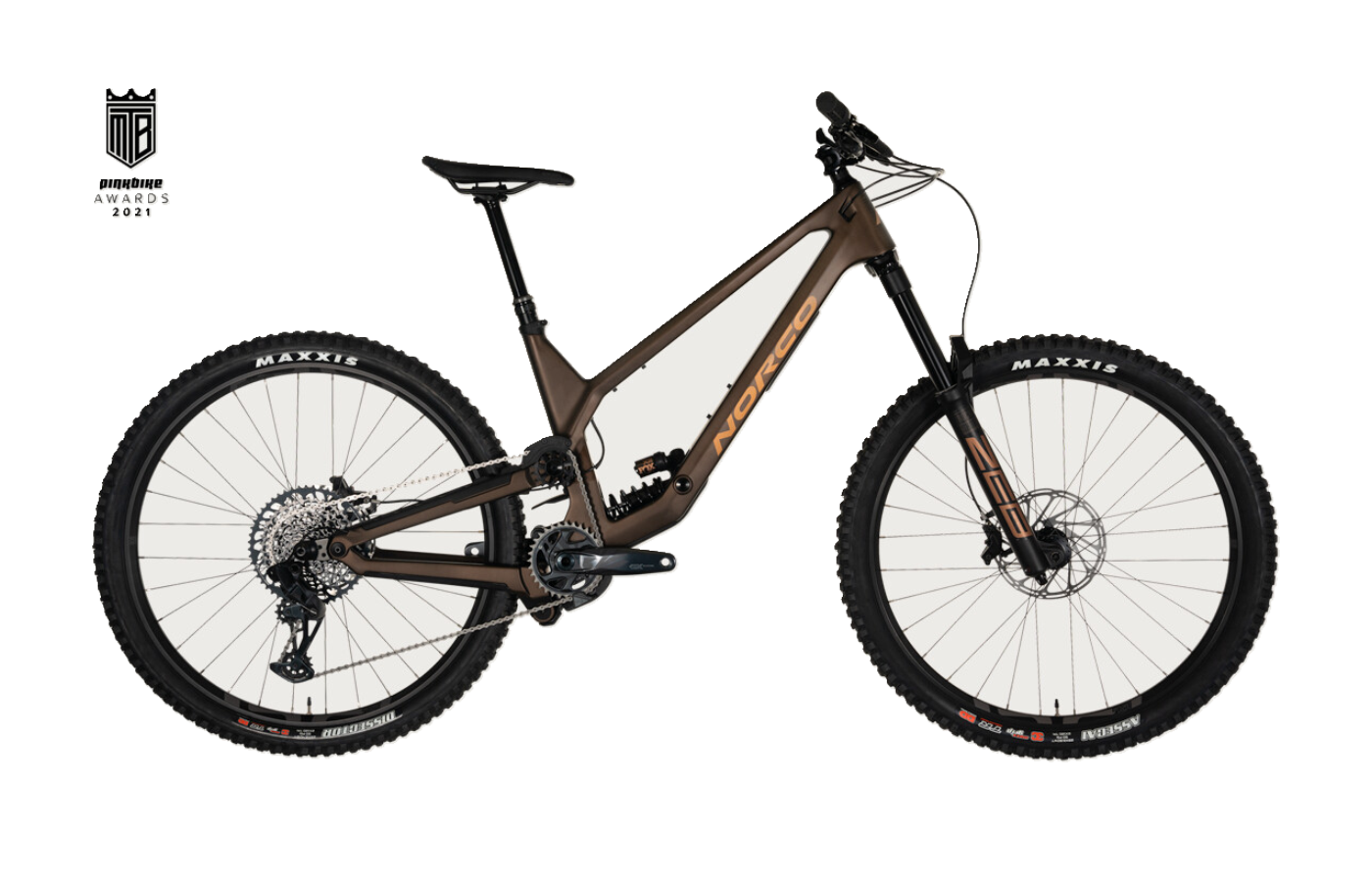
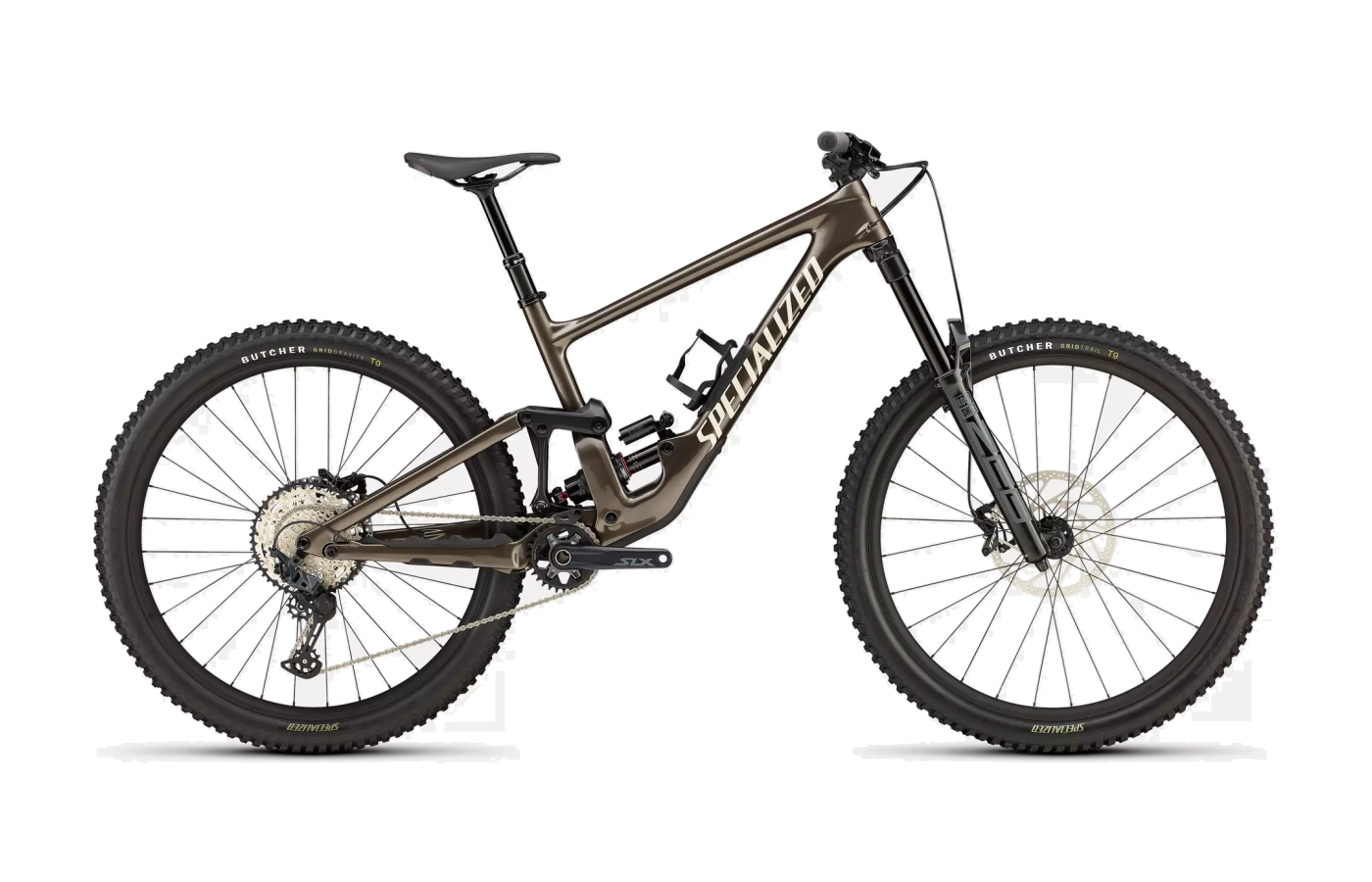
Two 170 mm bruisers, two very different uphills.
The Range is a high-pivot downhill weapon with a dropper post. The Enduro is a Demo-derived race bike that somehow still pedals.
Range
- High-pivot plushness — rearward axle path 'erases bumps' and stays active under heavy braking.
- DH-grade spec on every build — Fox DHX2 coil and DoubleDown Maxxis come stock, no upsell required.
- Ride Aligned sizing — head angle and chainstays change per size to keep every rider centered.
- Heavy and slow on the climbs; reviewers call it 'a slog' without the climb switch.
- Exposed lower shock linkage hangs below the BB and snags obstacles in slow tech.
Enduro
- Pedals shockingly well for 170 mm — ~40% more anti-squat than the prior gen, no lockout required on most climbs.
- SWAT storage — downtube compartment plus a hidden multi-tool in the steerer, rare at this travel.
- Wide build range — from a $4,999 Comp through an $8,499 Pro, both on the same FACT 11m frame.
- Horst-link feels less 'isolated' than the Range's high pivot on sustained rock gardens.
- 2020–2021 frames had a documented headset cracking issue; Specialized claims 2022+ frames are fixed.
Editor’s analysis
Both bikes run 170 mm at each end, both roll only on 29s, both are carbon-only — but getting to the top is where they diverge.
On paper these look like near-twins: 170 mm travel front and rear, full carbon, 29-inch-only, SRAM Universal Derailleur Hanger, threaded BB, and reviews across the board that use the phrase 'mini-downhill bike.' Both were built to win enduro races and eat bike-park laps. Pick either one and you are buying a machine that refuses to be rattled on steep, chunky, high-speed terrain.
The Norco Range is the more radical piece of engineering. A virtual high-pivot with an idler pulley routes the chain over the main pivot, giving the rear wheel a rearward axle path that 'demolishes bumps of all sizes' (NSMB) and stays planted under braking. Every single Range build, from the entry price on up, ships with a Fox DHX2 coil shock and DoubleDown-casing Maxxis rubber — a spec statement that says the engineers picked one ride character and refuse to dilute it. The cost is weight (the C2 build reviewers tested came in around 17.4 kg with a CushCore) and a climb that multiple reviewers describe as 'a slog' unless you flip the climb switch.
The Specialized Enduro takes a different route to the same downhill ceiling. Its Horst-link rear end borrows kinematics from the Demo DH bike — rearward axle path early in the travel, but no idler, so it weighs less (the Pro claims 16.04 kg) and climbs notably better. Specialized bumped anti-squat roughly 40% over the previous generation, and review after review leads with surprise at how well this bike pedals for a 170 mm rig. SWAT downtube storage and a hidden multi-tool in the steerer are genuinely useful for all-day rides. The trade is a less isolated feel on the roughest chunder — still exceptional, just not quite 'trophy truck.'
Put simply: the Range is what you buy if the descent is the entire point and you will shuttle or suffer the climb. The Enduro is what you buy if you want that same downhill capability but actually plan to pedal up to the top under your own power — and still want a bike park bike when you get home.
Where the builds differ.
Comparing our editor's-pick builds side-by-side. Winners highlighted row-by-row — lower price and weight, and the better-spec component, each mark a point.
Build variants & pricing
The Range sells as a single C2 spec at $4,749. The Enduro spans a Comp at $4,999 and a Pro at $8,499 — both on the same FACT 11m frame.
Editor's pick on the Specialized side is the Comp: it's the closest apples-to-apples match to the Range C2 — mechanical drivetrain, same carbon chassis as the flagship, $250 off the Norco. Step up to the Enduro Pro if you want X0 Transmission AXS and a Vivid Ultimate shock.
How they fit, how they steer.
Norco M vs Specialized S2 are the fit-picked sizes for each bike at the same rider height. The S2 reach (437 mm) is 13 mm shorter than the Range M (450 mm), but S-sizing decouples reach from seat tube, so you can step up to S3 for 464 mm without changing seat-tube length.
Which size should I buy?
The Range runs S/M/L/XL on traditional sizing; the Enduro uses S2–S5 where each size is a reach step on the same seat-tube. Most riders cross-shop M-Range against S2 or S3-Enduro.
→These are starting points. Flexibility, riding style, and preferred position all shift the answer — if you’re between sizes, a professional fit beats a chart.
What the magazines said.
Published reviews from trusted cycling outlets. Click through for the full write-up.
Which one should you buy?
If the descent is the whole point and you shuttle or suffer the climb, get the Range. If you want DH-grade capability but still plan to pedal up under your own power, get the Enduro.
Range
If your riding is bike-park laps, shuttled descents, and winching up fire roads purely to drop into the rowdiest chutes you can find, this is the tool. The high-pivot plushness, DH-grade stock spec, and unflappable high-speed composure are genuinely in a different category. You will pay for it on the climbs.
Enduro
If you need 170 mm of travel but also pedal to every trailhead, the Enduro is the smarter buy. It descends nearly as hard as the Range, climbs meaningfully better, and the SWAT storage makes long backcountry days noticeably easier. The Comp build at $4,999 is the sweet spot — same frame as the Pro, mechanical SLX.
Questions buyers actually ask.
Short answers to the things we get emailed about most often.
01Which climbs better?
The Specialized Enduro, clearly. Specialized increased anti-squat roughly 40% over the previous generation, and reviewers across Bike Magazine, Enduro MTB, and Pinkbike were 'blown away' by how well the bike pedals with the shock fully open. No lockout required on most climbs.
The Norco Range is the opposite story — reviewers call it 'a slog' and recommend using the climb switch 'any time the bike is going up the hill.' Between the bike's weight (the C2 reviewers tested weighed in around 17.4 kg) and the very active high-pivot suspension, climbing is genuinely a chore. The idler pulley helps isolate pedaling forces, but it can't hide the mass.
02What's the rear suspension design on each bike?
The Range uses a virtual high-pivot with an idler pulley. The main pivot sits well above the BB, and the chain wraps over an idler to decouple drive torque from the suspension. The rear wheel moves up and back as it compresses — a rearward axle path that lets it absorb square-edged hits cleanly rather than deflecting off them.
The Enduro runs a four-bar Horst link — the same family as every FSR Specialized for three decades, but with kinematics borrowed directly from the Demo DH bike. The axle path is more rearward than a traditional Horst early in the travel, and the leverage curve is progressive enough that the frame is explicitly coil-compatible. No idler, so less drivetrain drag and less maintenance.
03How do I choose a size — M Range or S2 Enduro?
The fit algorithm picks the Range M (450 mm reach, 630 mm stack) against the Enduro S2 (437 mm reach, 616 mm stack) for a rider of average height. That's not an exact reach match — the Enduro's S-sizing intentionally offers closer reach steps than traditional sizing, so if 437 mm feels short you can jump to S3 (464 mm reach) without changing seat-tube length.
On the Range, Norco's Ride Aligned system changes the head-tube angle by size (63.5° on M, 63.25° on L) so the bike feels similar regardless of frame. Both platforms size down to roughly the same shortest reach; the Enduro extends further at the top end (S5 is 511 mm).
04What tire clearance do they have?
Both are set up for modern enduro rubber. The Range officially clears up to roughly 2.5" tires — the stock C2 runs a Maxxis Assegai 2.5" front and Minion DHR II 2.4" rear, both in DoubleDown casing with 3C MaxxGrip compound.
The Enduro ships with Specialized's Butcher 2.3" on both ends, in GRID TRAIL (front) and GRID GRAVITY (rear) casings. Reviewers consistently flagged the front GRID TRAIL as under-spec for a bike this capable — several reported 'double snake-bite' punctures and recommended an immediate swap to a heavier casing before riding the bike hard.
05Is the Range really coil-only across the lineup?
Yes. Every Range build — including the C2 shown here at $4,749 — comes with a Fox DHX2 Factory coil rear shock. Spring rates are tuned per size (400 lb/in S, 450 lb/in M, 500 lb/in L, 550 lb/in XL). This is a deliberate engineering call from Norco — the high-pivot kinematics are tuned around coil behavior and they ship every build that way.
The Enduro sticks with air. The Comp runs a RockShox Vivid Select Plus; the Pro gets a Vivid Ultimate. The frame is progressive enough to accept a coil as an aftermarket swap — reviewers note that works well, but Specialized itself doesn't spec one.
06Which drivetrains do these editor's-pick builds run?
The Range C2 runs a full SRAM GX Eagle mechanical 12-speed drivetrain — shifter, derailleur, crankset, cassette. Cable-actuated, proven, easy to service.
The Enduro Comp runs Shimano SLX mechanical 12-speed, also cable-actuated. Both are mid-tier mechanical groupsets at roughly the same price point, which is why we pair them side-by-side — the comparison is apples-to-apples. If you want an electronic wireless drivetrain, step up to the Enduro Pro for SRAM X0 Eagle Transmission AXS; the Range doesn't currently offer an AXS build.
07Are either of these known for frame durability issues?
Range: the carbon frame itself is praised as 'stout' and well-protected, but the lower shock linkage hangs below the bottom bracket and multiple reviewers reported it clipping rocks and logs during slow-speed technical sections. The integrated bash guard does its job in almost every case, but it's a feature of the design worth knowing about.
Enduro: 2020–2021 frames had a documented headset cracking issue that Specialized addressed under warranty with fast turnaround. Specialized claims 2022+ frames are redesigned and fixed. If you're shopping used, ask about the production year.
08What about warranty?
Norco offers a 5-year frame warranty on the Range. Specialized offers a lifetime frame warranty to the original owner against manufacturing defects on the Enduro, plus crash-replacement pricing on damaged frames. Both brands have a dealer network in most US and Canadian metros — no direct-to-consumer hoops on either.
Similar bikes
If your priorities don’t map cleanly onto either of these, one of these adjacent bikes probably fits better.
Spire
Another long, slack 170 mm 29er, but with a traditional Horst-link rear end and even more aggressive geometry than the Enduro. The choice if you like the Specialized platform but want it dialed further toward the downhill end.
Compare →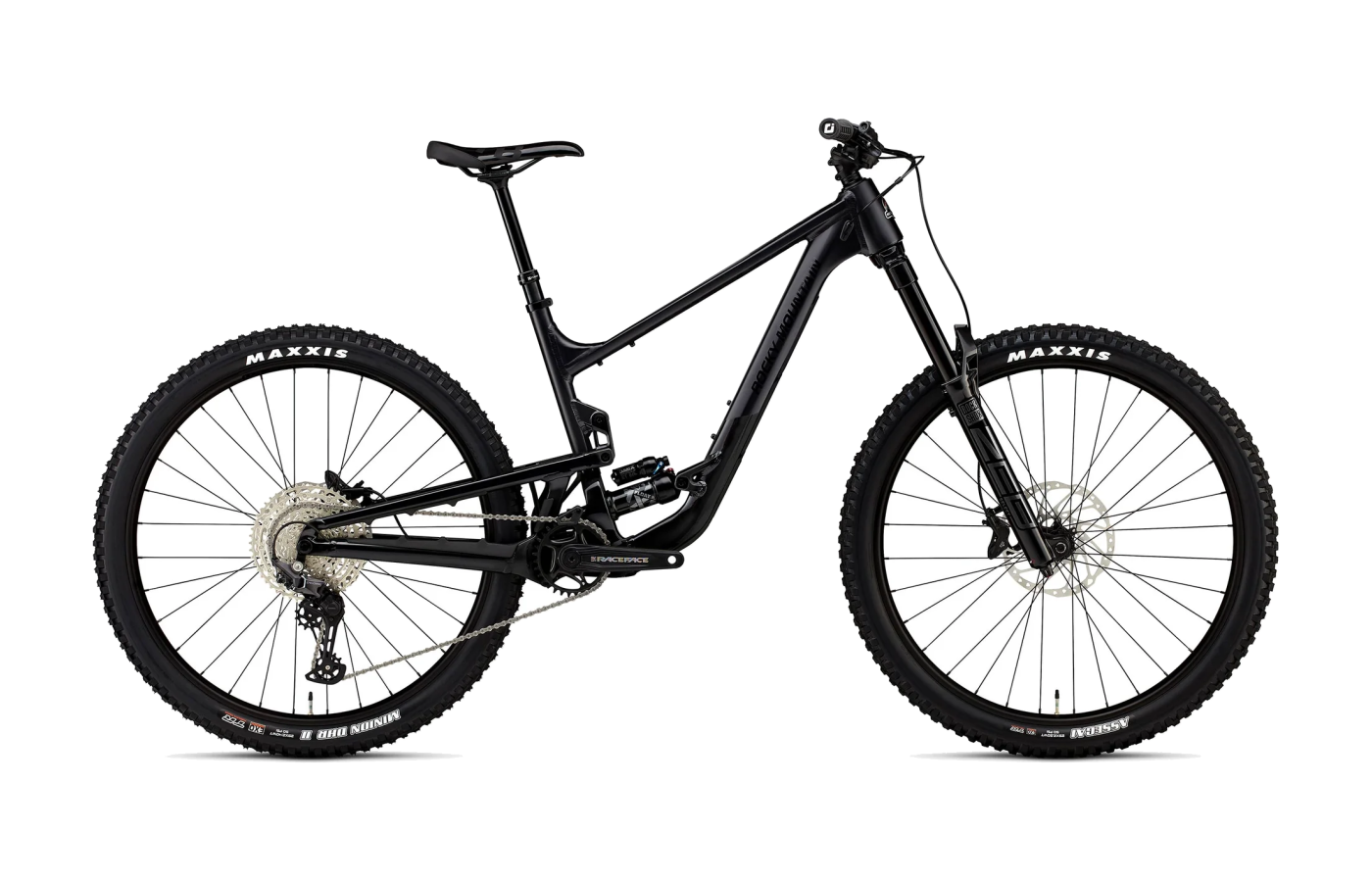
Altitude
A top-tier enduro race alternative with the Ride-9 flip-chip system — a multi-position chip that lets you swap between geometry settings. Sits between the Range's all-out plow character and the Enduro's efficiency.
Compare →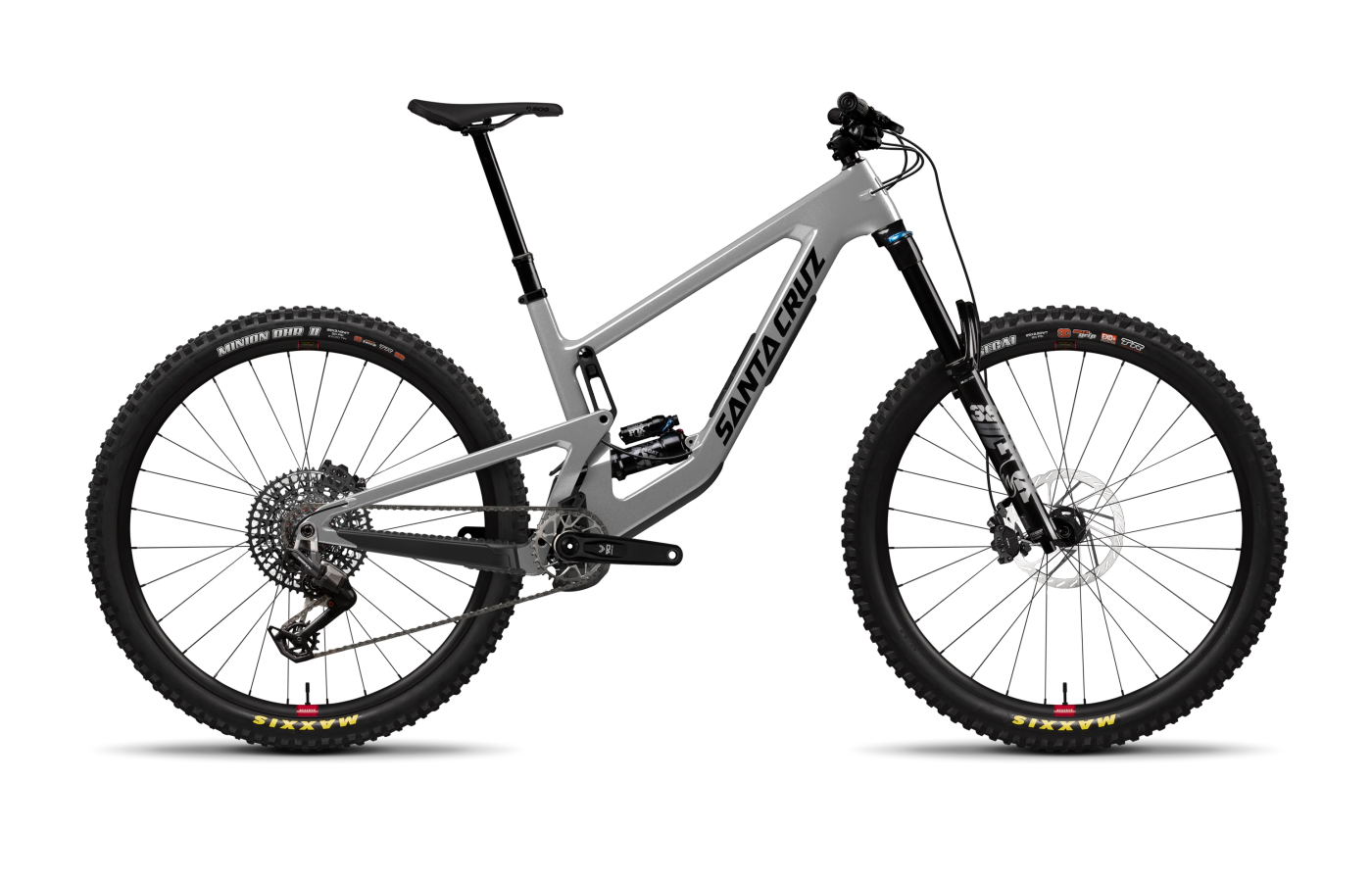
Megatower
The VPP-derived ride is in the same family as the Enduro — planted, rearward-axle-path, confidence-inspiring — but with Santa Cruz's lifetime frame and bearing warranty. Pricier, but that warranty is a real line item.
Compare →