Range
vsSight
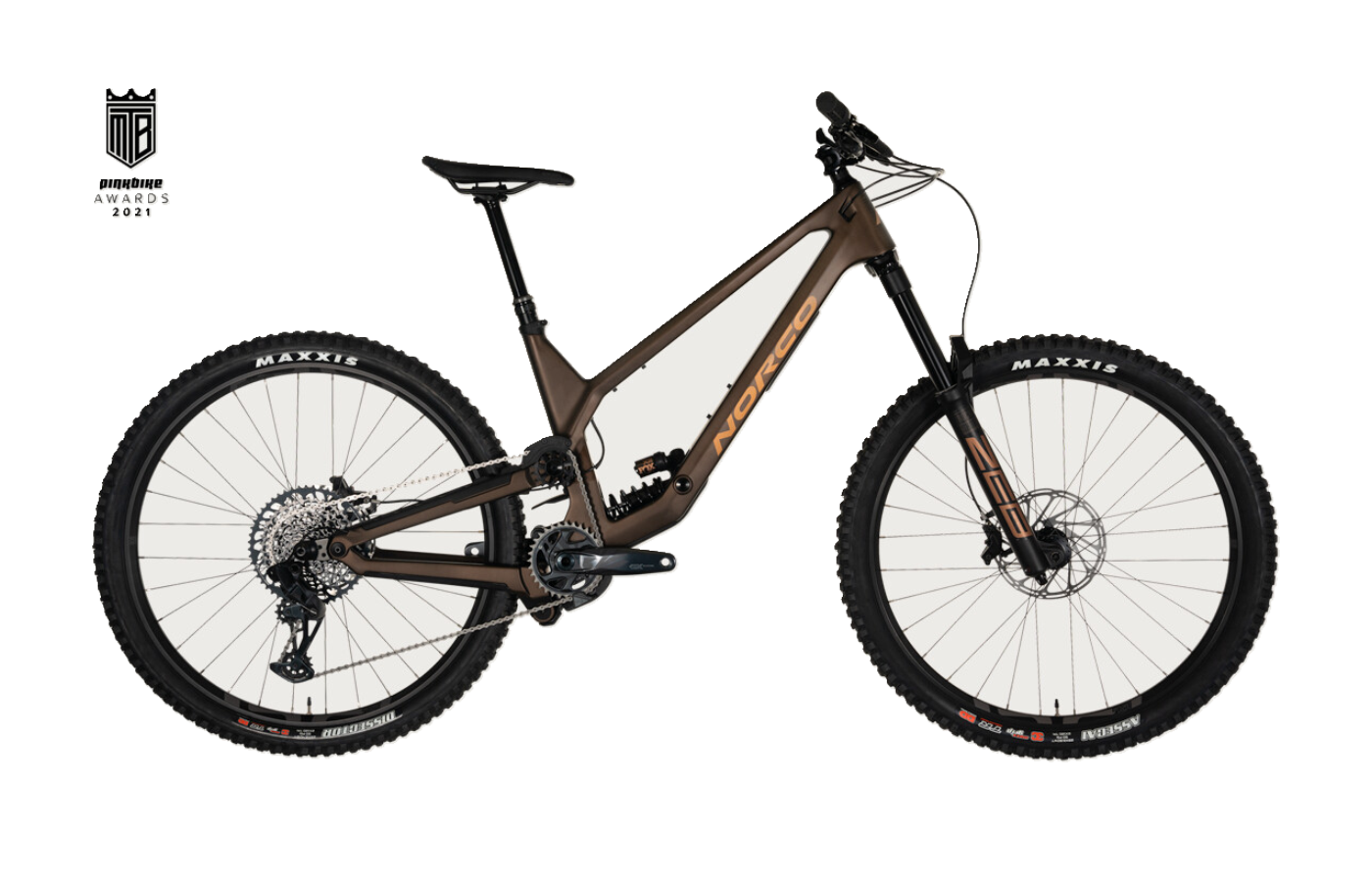
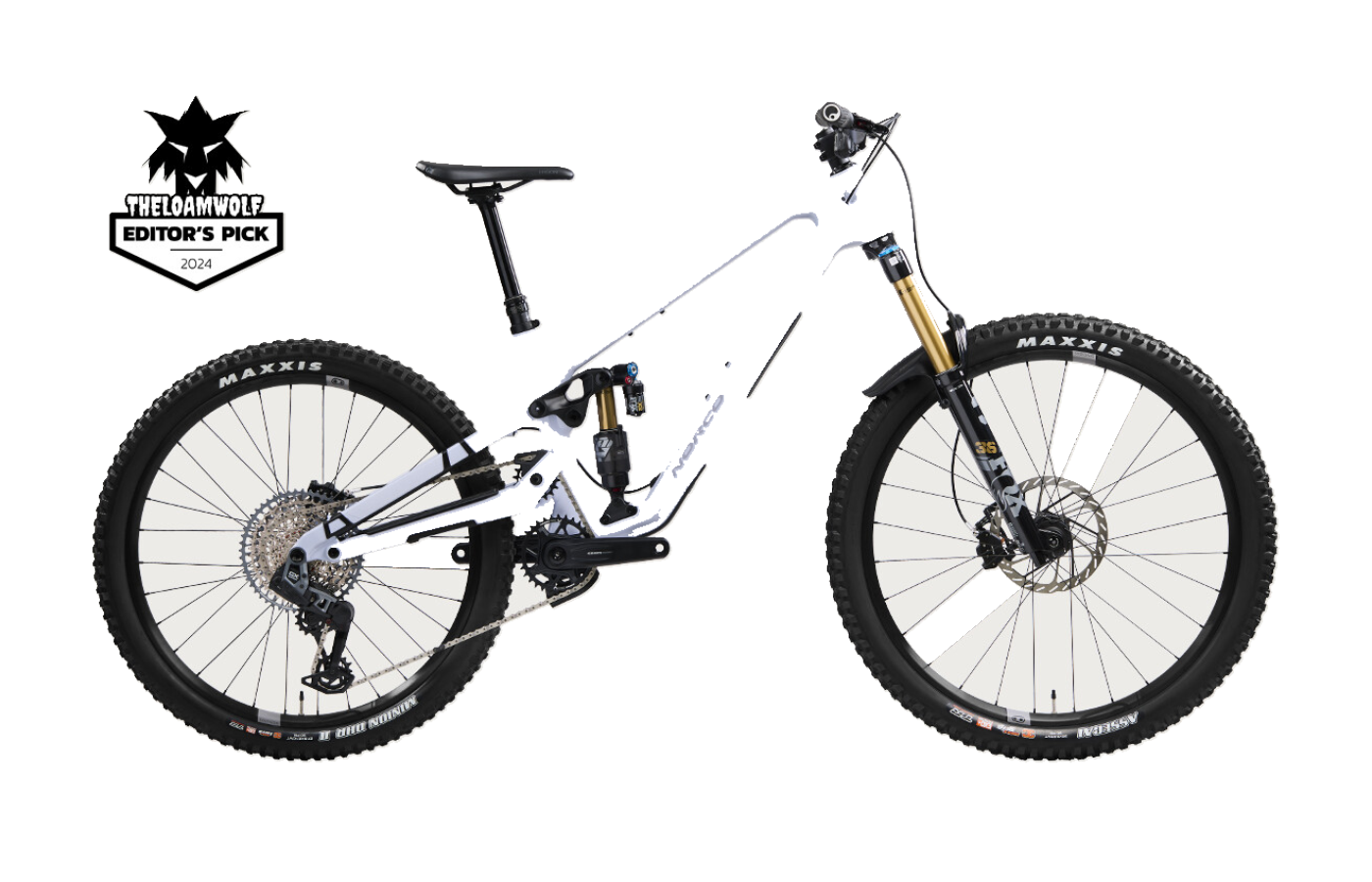
Two high-pivots, two missions.
The Range is a 170 mm enduro race weapon with a coil-only frame. The Sight is a 150 mm all-mountain bike that still pedals.
Range
- Unflappable at speed — 170 mm of coil-sprung VHP travel that reviewers compare to a downhill bike on the descents.
- Race-ready spec across the line — every Range build ships with a Fox DHX2 coil and DoubleDown-cased Maxxis tires.
- Dual-crown compatible — frame takes up to a 180 mm fork for bike-park duty.
- Climbs are a slog — heavy bike, very active suspension, climb switch basically required.
- Awkward at slow speeds — long, slack geometry feels gangly on tight switchbacks.
Sight
- Surprisingly efficient climber — gear-dependent anti-squat means real pedal support in the low gears for a high-pivot.
- Mullet versatility — 29" front / 27.5" rear stock, with full-29er conversion preserving geometry.
- Air or coil — the 28% progression frame takes either shock without volume-spacer gymnastics.
- Long wheelbase (~1,250 mm at S3) makes tight technical climbs a handful.
- Aluminum and entry-carbon builds are still ~37 lb — not a light all-mountain bike.
Editor’s analysis
Same brand, same suspension idea, very different invitations to the trailhead.
Norco built both bikes around the same virtual high-pivot layout — idler pulley, rearward axle path, growing rear-center under compression. From there the philosophies fork hard. The Range gets 170 mm of coil-sprung travel, a 63.25-degree head angle (size L), and a frame that's coil-only on purpose. The Sight gets 150 mm rear / 160 mm front, a 64-degree head angle across all sizes, and runs air or coil with a 28% progression curve that takes either.
On a stopwatch and on a steep, the Range is the faster bike. Reviewers describe a 'trophy truck' feel, the wheels working frantically while the chassis stays planted. The 170 mm ZEB up front and the DHX2 coil out back blur the line between enduro and DH — it lets you take direct lines through chunder and absorbs the consequences. The cost is weight (mid-to-high 30s of pounds, depending on build) and a climb that's universally described as a 'slog.'
The Sight gives back some of that downhill ceiling and earns back climb-ability and trail manners. Same high-pivot smoothness, but with anti-squat tuned to load up in lower gears for less pedal bob, a steeper 77+ degree seat tube, and a mullet stock setup that lets the back end snap through tight corners the Range plows through. Reviewers were surprised by how playful it is — pop the front wheel, manual between rocks, hop side hits — without losing the ground-hugging composure.
Put another way: the Range is the bike you buy when shuttling and lift access dominate your calendar and you've already accepted you'll never set a climbing PR on it. The Sight is the bike you buy when you still pedal to the top of most of your rides and want a high-pivot's bump-eating without giving up the rest of the day.
Where the builds differ.
Comparing our editor's-pick builds side-by-side. Winners highlighted row-by-row — lower price and weight, and the better-spec component, each mark a point.
Build variants & pricing
The Range is sold as one carbon spec ($4,749). The Sight spans a five-build ladder from $2,799 alloy to $6,299 carbon, in both Shimano and SRAM trims.
Editor's picks pair the Range C2 (the only build) with the Sight C1 — both carbon, both running GX-tier SRAM (mechanical on the Range, AXS T-Type on the Sight). The Sight C1 sits ~$1,400 above the Range C2 to land that carbon-and-tier match; if budget is the gating constraint, the alloy Sight A1 is a closer price match at $4,699.
How they fit, how they steer.
Range size M sits at 450 mm reach, 630 mm stack, 63.5° HTA. The Sight at the equivalent S3 frame stretches to 472.5 mm reach, 636 mm stack, with a half-degree steeper 64° HTA — longer and more upright, less raked-out.
Which size should I buy?
Range uses traditional S/M/L/XL labels; the Sight uses size-specific S1–S5 with reach-based sizing. Both share the 173 cm-rider midsize.
→These are starting points. Flexibility, riding style, and preferred position all shift the answer — if you’re between sizes, a professional fit beats a chart.
What the magazines said.
Published reviews from trusted cycling outlets. Click through for the full write-up.
Which one should you buy?
If your local trails are steep, raw, and shuttle-able, get the Range. If you still pedal to most of your descents, get the Sight.
Range
If your trails are genuinely steep and rough, you race enduro, or you spend most weekends on the chairlift, the Range is built to survive — and reward — exactly that. Heavy uphill, transcendent down.
Sight
If you want high-pivot bump absorption without losing the ability to pedal up your local hill, the Sight nails the trade. It's still a 37-pound bike pointed downhill — but it's a bike you'll actually take on the long loop.
Questions buyers actually ask.
Short answers to the things we get emailed about most often.
01Which one descends faster?
The Norco Range, by a clear margin. With 170 mm of coil-sprung travel, a 63.25-degree head angle (size L), and a 442.5 mm chainstay that grows under compression, it's effectively a downhill bike that happens to pedal. Reviewers consistently describe a 'trophy truck' feel — composed at speeds where the Sight starts to feel busy.
The Sight is no slouch on descents (150 mm rear / 160 mm front, 64-degree HTA), but it's tuned to be a bike you ride up and down. The Range's edge shows up on steep, rough, repeat-lap terrain.
02Which climbs better?
The Sight, and it's not close. Norco tuned the idler placement so anti-squat ramps up in easier gears, giving real pedal support for a high-pivot. Reviewers called it 'surprisingly efficient' and noticed less bob in the low cogs.
The Range, by contrast, is universally described as a 'slog' on the climbs. Its 170 mm of very active coil suspension and high overall weight mean most reviewers ride with the climb switch on essentially the entire ascent. It's a 'means to an end' bike.
03Is the Range really coil-only?
Yes. The Range's frame is engineered around a coil shock — every C1, C2, and C3 build ships with a Fox DHX2 Factory coil, and the kinematics and progression curve are tuned for that platform. There's no air-shock option from the factory.
The Sight is the opposite story. Its 28% progression rate is enough to support either shock type, and Norco specs both: the C1 ships with a Fox Float X2 air, while other trims run a RockShox Vivid 2 air. Riders have swapped to coil for park days without issues.
04What's the wheel-size situation?
Range: full 29" front and rear, no mullet option from the factory.
Sight (Gen 5): stock as a mullet (29" front / 27.5" rear) on the 'MX' builds, with the geometry and kinematics designed to also accept a full 29" rear without changing handling characteristics. Most reviewers preferred the mullet for tight cornering.
05How much do they weigh?
Norco doesn't publish a claimed weight on the Range, but Blister measured the C2 at 38.4 lb / 17.4 kg (size Large, with a CushCore insert that isn't stock). Pinkbike weighed the C1 at 36.25 lb / 16.4 kg.
The Sight is lighter across the board: the C1 is 35.1 lb / 15.9 kg claimed (size S3), the C3 is 35.5 lb / 16.1 kg, and the alloy A1/A3 land at 38.6 lb / 17.5 kg and 39.4 lb / 17.8 kg respectively. Reasonable midweight all-mountain numbers — not light, but not Range-heavy.
06What about the lower shock linkage hitting things?
This is a real and well-documented Range issue — the lower link hangs below the bottom bracket and reviewers have noted strikes during slow techy climbs and rock rolls. Norco mitigates it with a burly bash guard, and the consensus is it does its job: cosmetic dings, no frame damage. But it's a known characteristic of the high-pivot layout.
The Sight has the same general design family but reviewers haven't called this out as a recurring complaint, likely because the linkage geometry and bike posture are different.
07Are the idler-driven drivetrains noisy or high-maintenance?
Both bikes use an idler pulley to manage chain growth. On the Range, reviewers noted the drivetrain 'gets gritty and noisy faster' than non-idler bikes — more frequent cleaning is part of ownership.
The Sight's Gen-5 idler is an 18-tooth design Norco engineered specifically for quiet operation; multiple reviewers called it 'amazingly silent' and several said they didn't notice it on the trail. Both will need more drivetrain attention than a conventional layout, but the Sight runs noticeably quieter out of the box.
08Which is the better long-term investment?
If your riding is genuinely gravity-dominant — enduro racing, regular bike-park days, steep technical descents — the Range is purpose-built and you won't outgrow it. The trade-off is you'll always be fighting it on climbs, and that gets old if your terrain isn't actually that steep.
The Sight is the safer one-bike answer for most riders. It handles all-day pedals, can lap a bike park, and won't punish you for picking it on a flatter day. Both come with Norco's lifetime frame warranty.
Similar bikes
If your priorities don’t map cleanly onto either of these, one of these adjacent bikes probably fits better.
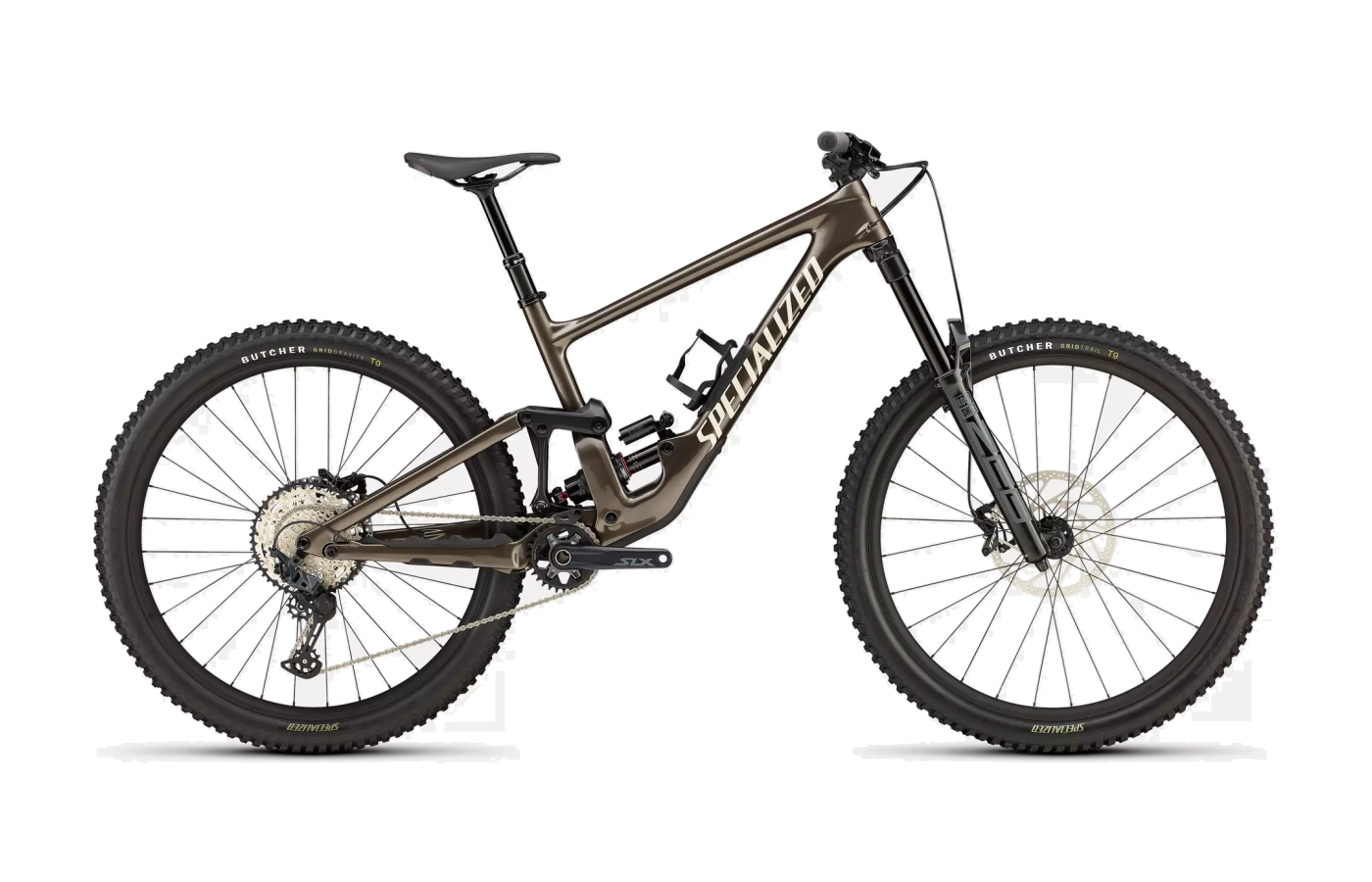
Enduro
The most direct Range cross-shop — same uncompromising enduro-race brief, same coil-shock-friendly geometry, but from Specialized's deeper dealer network and broader build ladder.
Compare →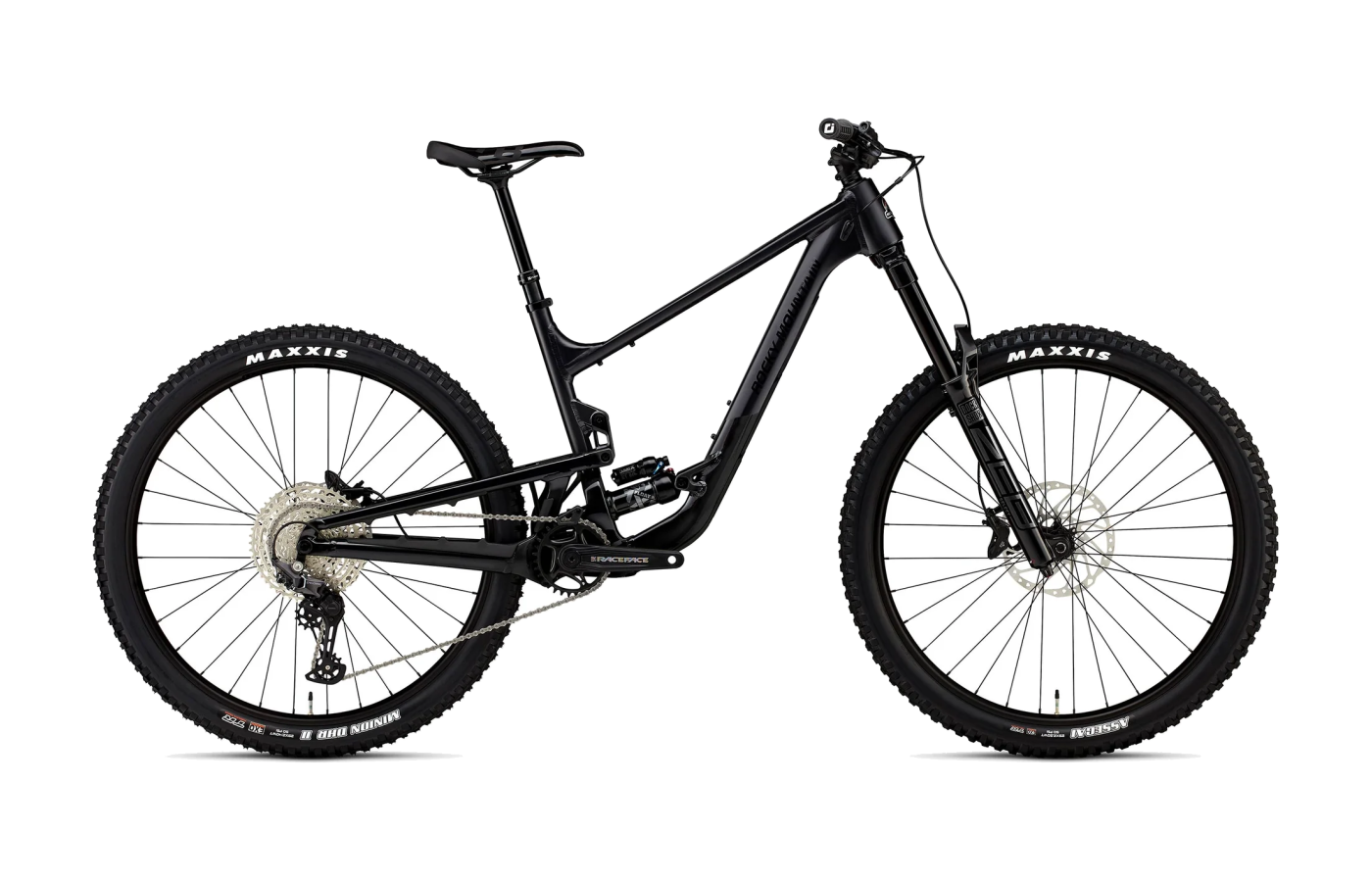
Altitude
Another Canadian high-pivot enduro bike, with Rocky Mountain's Ride-9 chip for tunable geometry. Goes head-to-head with the Range for descending capability and aggressive intent.
Compare →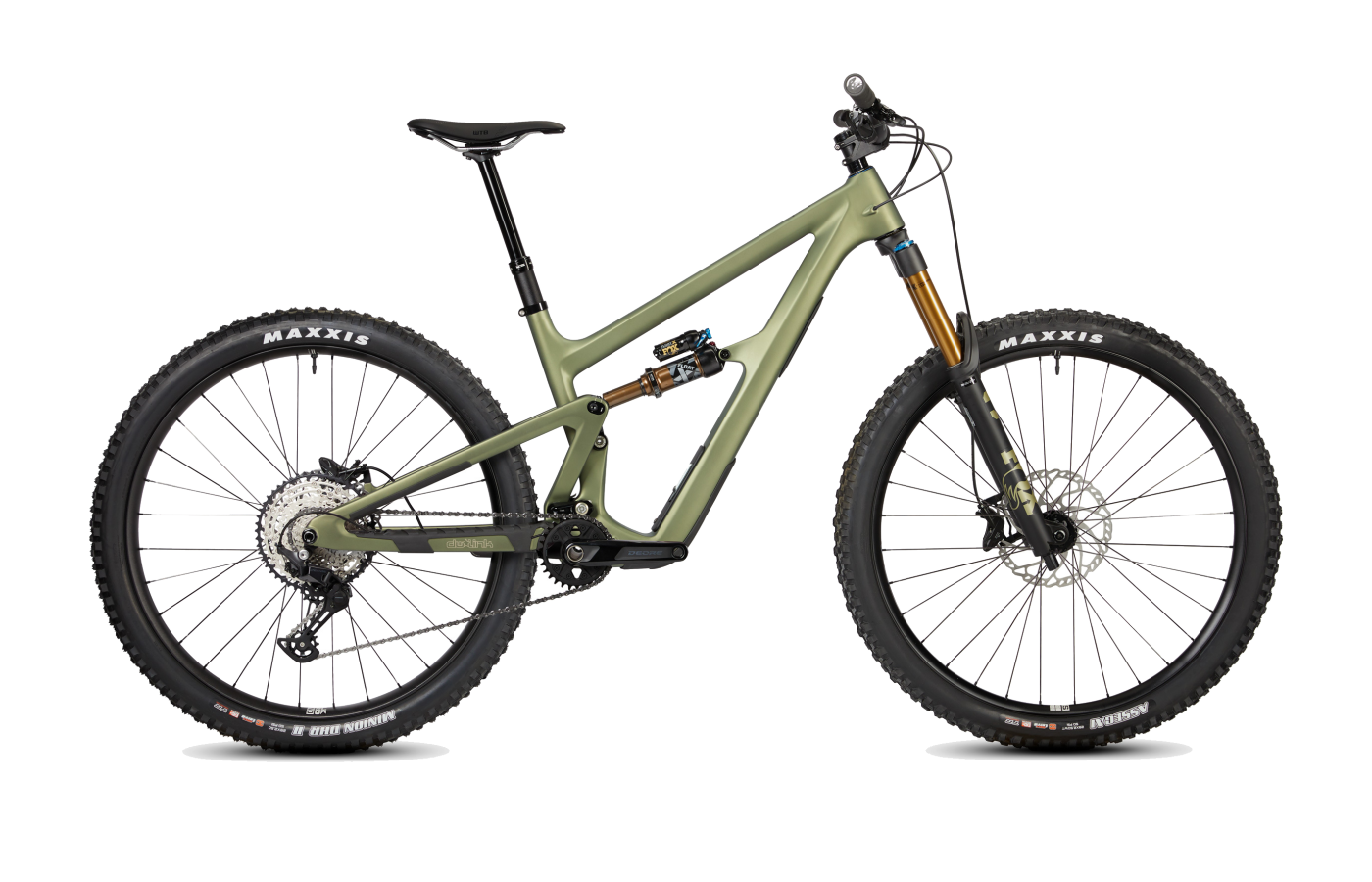
Ripmo
If the Sight's all-mountain pitch lands but you want a more conventional (non-idler) suspension layout, the Ripmo is the long-running reference — DW-link efficiency, 147 mm rear, and a lower maintenance ceiling.
Compare →