Optic
vsStumpjumper
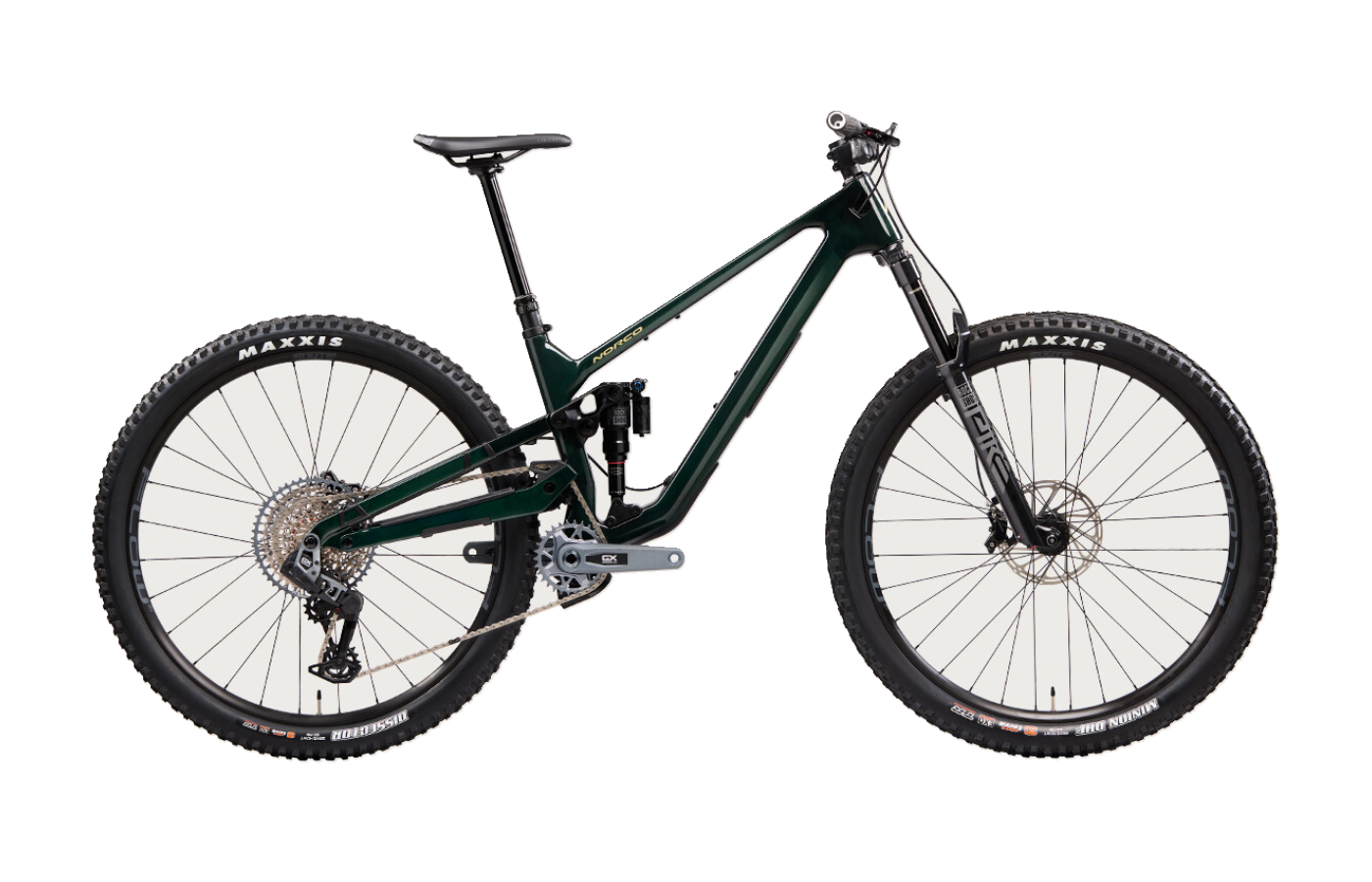
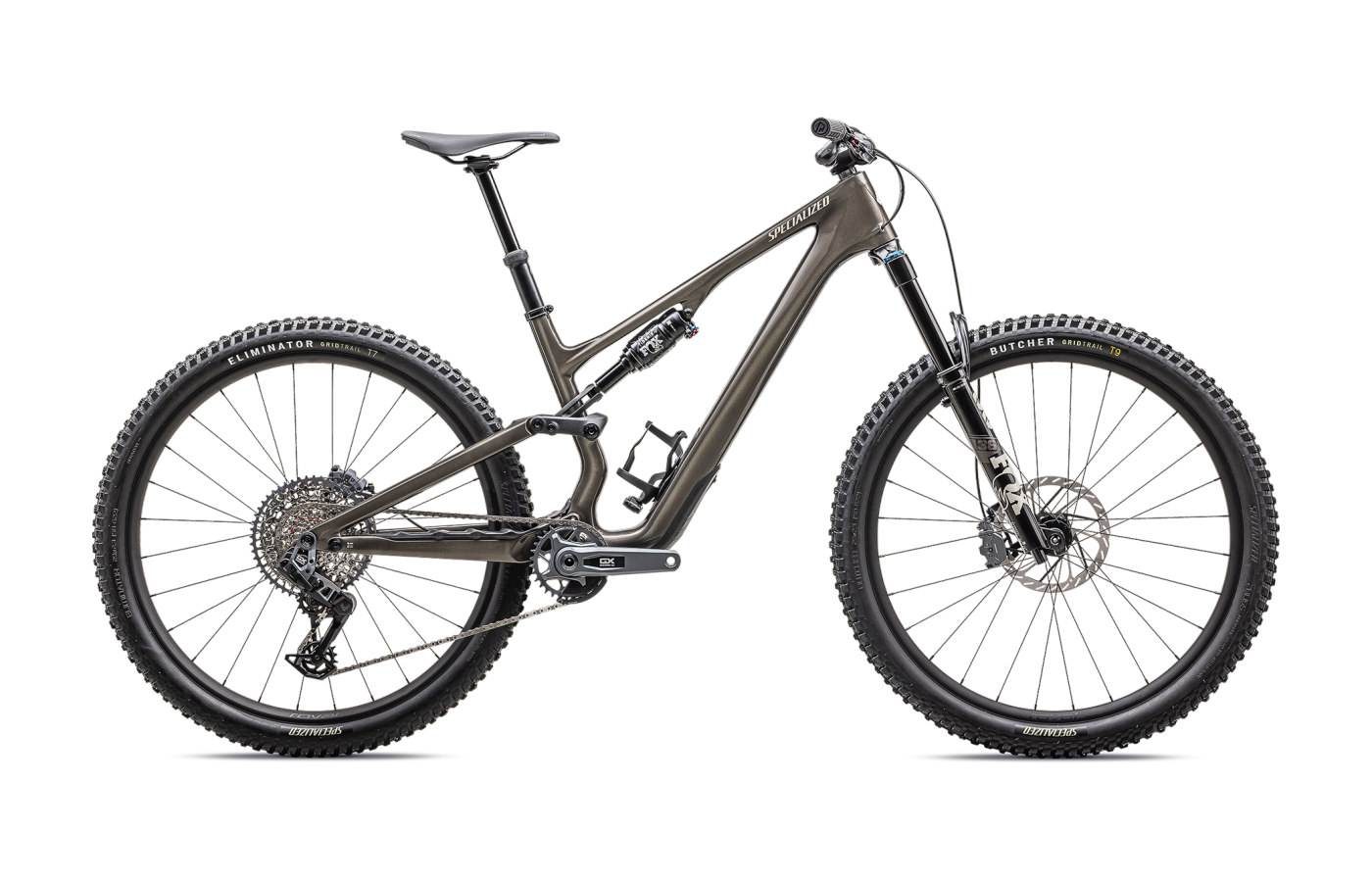
Two trail bikes that share a name and almost nothing else.
The Optic is a short-travel, high-pivot smasher built around descending. The Stumpjumper 15 is the new do-everything benchmark — quieter, longer-travel, infinitely tunable.
Optic
- High-pivot bump absorption — rides like a bike with 30 mm more rear travel than it has.
- Poppy and playful — shorter chainstays than most high-pivots; eager to manual and hop.
- Proportional Ride Aligned geometry — size-specific chainstays and seat angles keep handling consistent across S1-S5.
- Idler pulley adds drag and noise — and was the source of repeat chain-drops in Outdoor Gear Lab's testing.
- Heavier than its travel suggests (14.7-17.2 kg) and slower to accelerate than a non-idler 125 mm bike.
Stumpjumper
- GENIE shock — coil-supple in the first 70% of travel, hard ramp at the end; reviewers couldn't bottom it out.
- Adjustable everything — flip-chip plus three headset cups give 63°/64.5°/65.5° HTA for terrain-specific tuning.
- SWAT downtube storage and lifetime pivot bearings — the practical, long-ownership stuff Norco doesn't match.
- Carbon builds are wireless-only — no mechanical Shimano on the FACT 11m frame.
- Stock Butcher/Eliminator GRID TRAIL tires are widely flagged as under-protected for aggressive riding — a casing upgrade is almost mandatory.
Editor’s analysis
Both are called trail bikes. Only one of them rides like one — the other is an enduro sled hiding behind a 125 mm sticker.
On paper the Norco Optic and Specialized Stumpjumper sit in the same trail-bike aisle. In practice they're chasing opposite ends of it. The Optic runs 125 mm rear / 140 mm front out of a high-pivot VPSHP layout with an idler pulley — the same rearward-axle-path trick you usually see on World Cup downhill bikes. The Stumpjumper 15 runs 145 mm rear / 150 mm front out of a refined four-bar with the proprietary Fox GENIE shock and a flip-chip plus three headset cups for 63°-65.5° HTA.
The Optic's pitch is bump absorption that shouldn't be possible. Reviewers across Theradavist, MBA and Bike Perfect describe a bike that feels like it has 30 mm more rear travel than it actually does — the rearward axle path slices square-edge hits down to a fraction of their size at speed. It's also genuinely playful for a high-pivot, with shorter chainstays than a Forbidden Druid and a poppy disposition. But the bike weighs 14.7-17.2 kg depending on build, the idler adds drag and noise that needs constant lubrication, and Outdoor Gear Lab had repeated chain-drop issues from the idler pulley.
The Stumpjumper 15 is the broader tool. The GENIE shock is the headline — a dual-chamber air spring that's coil-supple for the first 70% of travel, then ramps hard to prevent harsh bottom-outs. Pair that with a 64.5° HTA, 77° effective seat angle (S3), 435 mm chainstays, and headset-cup-adjustable geometry and you get a bike that morphs from XC-adjacent climber to bike-park weapon. Carbon builds come in 13.5-15.3 kg. SWAT downtube storage is here, lifetime frame and pivot warranty too.
Put another way: buy the Specialized Stumpjumper if you want one bike that's quietly excellent at everything and can be tuned to whatever your local trails demand. Buy the Norco Optic if your idea of a good time is taking a 125 mm bike somewhere it shouldn't go and being the loudest, fastest person on the descent — and you don't mind babying an idler to do it.
Where the builds differ.
Comparing our editor's-pick builds side-by-side. Winners highlighted row-by-row — lower price and weight, and the better-spec component, each mark a point.
Build variants & pricing
Both lineups span roughly $3k to $12k. Specialized starts cheaper and goes higher; Norco's range is tighter at the top and bottom.
Prices are current US MSRP. Tier-matched at GX AXS Transmission carbon for the spec table — the Optic C2 ($5,199) lines up against the Stumpjumper 15 Expert ($5,999), both with carbon frames and one-down SRAM Transmission drivetrains.
How they fit, how they steer.
Norco hasn't labeled the Optic's size rows in our DB; the third row up (reach 472.5 mm, stack 626 mm) is the equivalent of the Stumpjumper S3. The Stumpy S3 sits 1 mm taller in stack with 22.5 mm shorter reach, a slacker 64.5° HTA (vs. 65°), and 6 mm longer chainstays — a more sat-in, settled stance.
Which size should I buy?
Both bikes use modern proportional sizing; pick by reach and stack rather than the size sticker.
→These are starting points. Flexibility, riding style, and preferred position all shift the answer — if you’re between sizes, a professional fit beats a chart.
What the magazines said.
Published reviews from trusted cycling outlets. Click through for the full write-up.
Which one should you buy?
If you want a do-everything trail bike that can be tuned for anything, get the Stumpjumper. If you want a 125 mm bike that descends like a 160 mm one, get the Optic.
Optic
If your trails are technical, fast, and steep — and you'd rather have downhill composure in a short-travel package than maximum climbing efficiency — the Optic delivers a ride no normal trail bike can match. Just be ready to keep the drivetrain meticulously clean.
Stumpjumper
If you want a single trail bike that handles long climbs, technical descents, and bike-park laps without compromise — and you value adjustability, frame storage, and a long warranty — the Stumpjumper 15 is the current benchmark. Tune it to your terrain and forget about it.
Questions buyers actually ask.
Short answers to the things we get emailed about most often.
01How much suspension travel does each bike have?
Norco Optic: 125 mm rear, 140 mm front, with a high-pivot VPSHP rear suspension and an idler pulley.
Specialized Stumpjumper 15: 145 mm rear, 150 mm front (160 mm on Coil builds), with a four-bar layout and the proprietary Fox GENIE shock.
That 20 mm rear-travel gap matters less than the kinematics — the Optic's rearward axle path makes it descend bigger than its number suggests, and the GENIE's late-stroke ramp gives the Stumpjumper huge bottom-out reserves.
02Which one climbs better?
The Stumpjumper 15, on most climbs. It's lighter in carbon trim (13.5-15.3 kg vs. 14.7 kg for the Optic C1), the GENIE shock has a 2-position climb switch, and the 77° effective seat angle (S3) puts you in a good pedaling position.
The Optic's high-pivot is genuinely good on technical climbs — the rearward axle path keeps the rear wheel from hanging up on roots and ledges — but on smooth or sustained climbs the idler drag, the weight, and a less firm pedaling platform start to add up. Bike Perfect rated its pedaling efficiency notably below average for the category.
03Which one descends better?
It depends what you mean by 'better.'
The Optic is the calmer bike on rough, square-edge terrain at speed — multiple reviewers (Theradavist, MBA, Bike Perfect) describe it as feeling like it has 30 mm more travel than its 125 mm spec.
The Stumpjumper 15 is more versatile and harder to overwhelm on big hits — the GENIE's progressive end-stroke means even huck-to-flats stay composed. With the headset slammed to 63° and a 160 mm coil fork, the Stumpjumper's 'EVO' personality rivals dedicated enduro bikes.
In short: Optic for repeated chunk at speed, Stumpjumper for big hits and configurable aggression.
04Can I run a mixed-wheel (mullet) setup on either?
Yes on both, but with caveats.
Optic: Norco sells a 'Missing Link Kit' (~$179) that swaps the lower link to convert between full 29er and MX while preserving geometry and kinematics. The C2 MX build ships ready to go.
Stumpjumper 15: S1-S2 sizes ship MX from the factory; S3-S6 ship full 29er. An aftermarket link is available for converting larger sizes. Specialized's flip-chip and headset cups give you additional geometry adjustment on top of the wheel swap.
05What about brakes — anything to flag?
Yes — buyer beware on the Optic C1 and C3. Both ship with SRAM Level Stealth brakes that nearly every reviewer (Bike Perfect, Singletracks, Enduro MTB, Loam Wolf) called underpowered for the bike's descending capability. Plan on an upgrade.
The Optic C2 swaps in SRAM Code R brakes, which most reviewers consider properly matched.
The Stumpjumper 15 is on the other end — its SRAM Maven brakes are widely praised as 'extremely powerful,' to the point that some reviewers found them touchy on a trail bike. The 200 mm rear rotor mount has no smaller-rotor option.
06How does the maintenance burden compare?
The Optic demands more attention. The high-pivot idler is widely reported to develop drag and noise if the chain isn't kept clean and lubed (Bike Perfect, Singletracks). Outdoor Gear Lab also reported repeated chain-drops from the idler pulley in rough terrain. None of this is dealbreaking, but it's real.
The Stumpjumper 15 is more conventional — threaded BB, sealed cartridge bearings, lifetime pivot bearing replacement to the original owner. The proprietary Fox GENIE shock uses mostly standard Fox internals with one extra seal, so most suspension shops can service it.
07What sizes do they come in?
Optic: Five sizes (S1-S5), with proportional 'Ride Aligned' chainstays and seat-tube angles that grow with the frame to keep handling consistent across heights.
Stumpjumper 15: Six sizes (S1-S6), also with size-specific chainstays (430-445 mm). S1 ships with a 140 mm fork instead of 150 mm, and S1-S2 are MX from the factory.
Both use modern S-sizing — pick by reach and stack rather than the size sticker.
08Which holds up better in the long run?
Both have well-protected, well-built frames. Reviewers praise the Optic's 'premium' carbon construction and meaty chainstay/seatstay protection; reviewers praise the Stumpjumper's threaded BB, refined SWAT 4.0 storage door, and lifetime pivot bearing warranty.
The Stumpjumper edges ahead on the warranty (lifetime frame plus lifetime pivot bearings to the original owner) and on drivetrain reliability — no idler to fuss with. The Optic's idler is the single biggest long-term wildcard, with experiences ranging from 'totally fine' (MBA long-term) to 'undermined the bike's performance in every way' (Outdoor Gear Lab).
Similar bikes
If your priorities don’t map cleanly onto either of these, one of these adjacent bikes probably fits better.

Fuel EX
Trek's direct Stumpjumper rival — similar travel, similar adjustability, more conservative aesthetics. The IsoStrut rear end is a love-it-or-hate-it choice; otherwise it's the closest like-for-like alternative to the Stumpjumper 15.
Compare →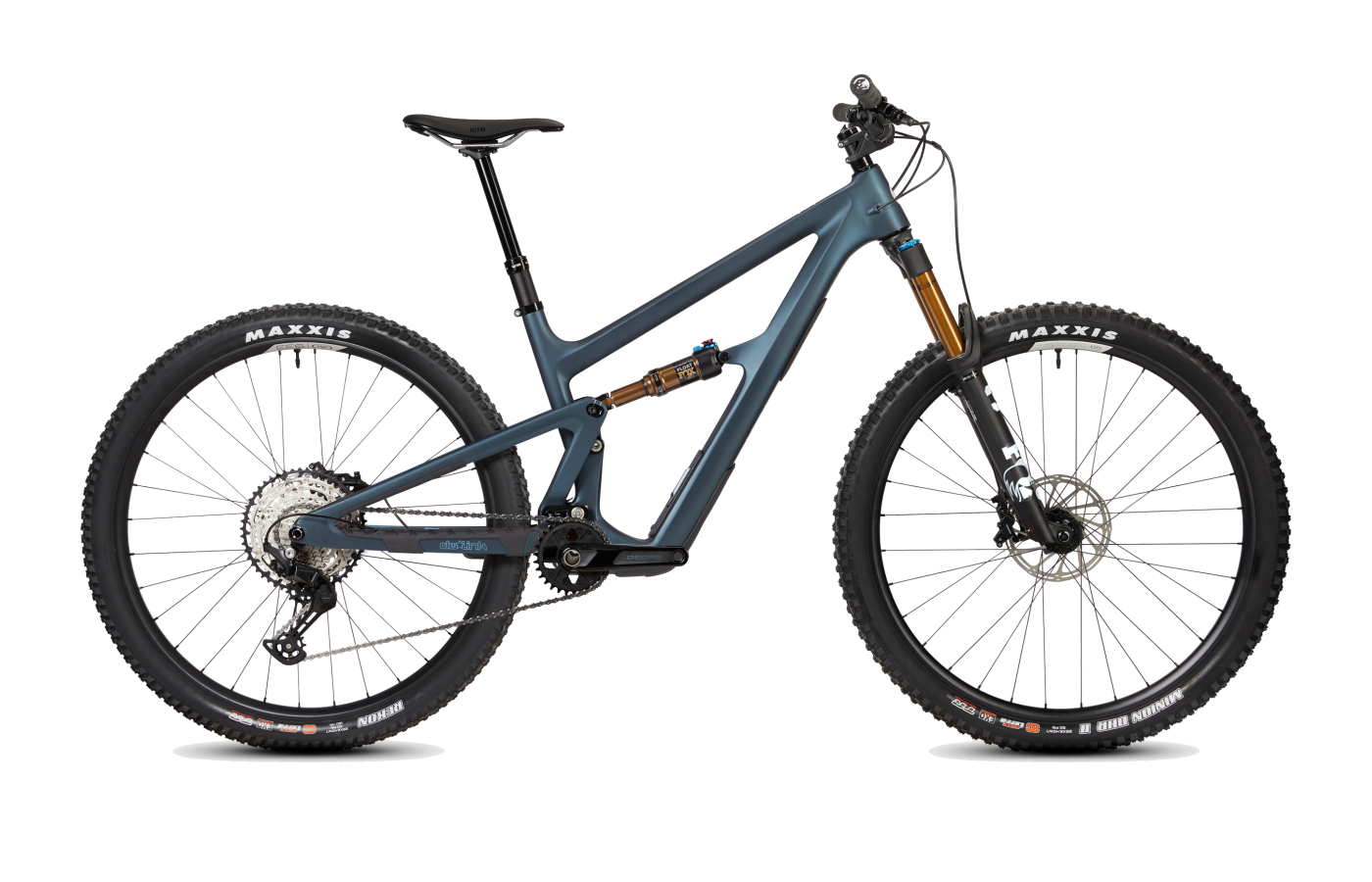
Ripley
If you like the Optic's short-travel idea but want a much lighter, more efficient pedaler without the high-pivot complexity — the Ripley is the class-leading 120 mm trail bike. Less aggressive on the descents, far better on the climbs.
Compare →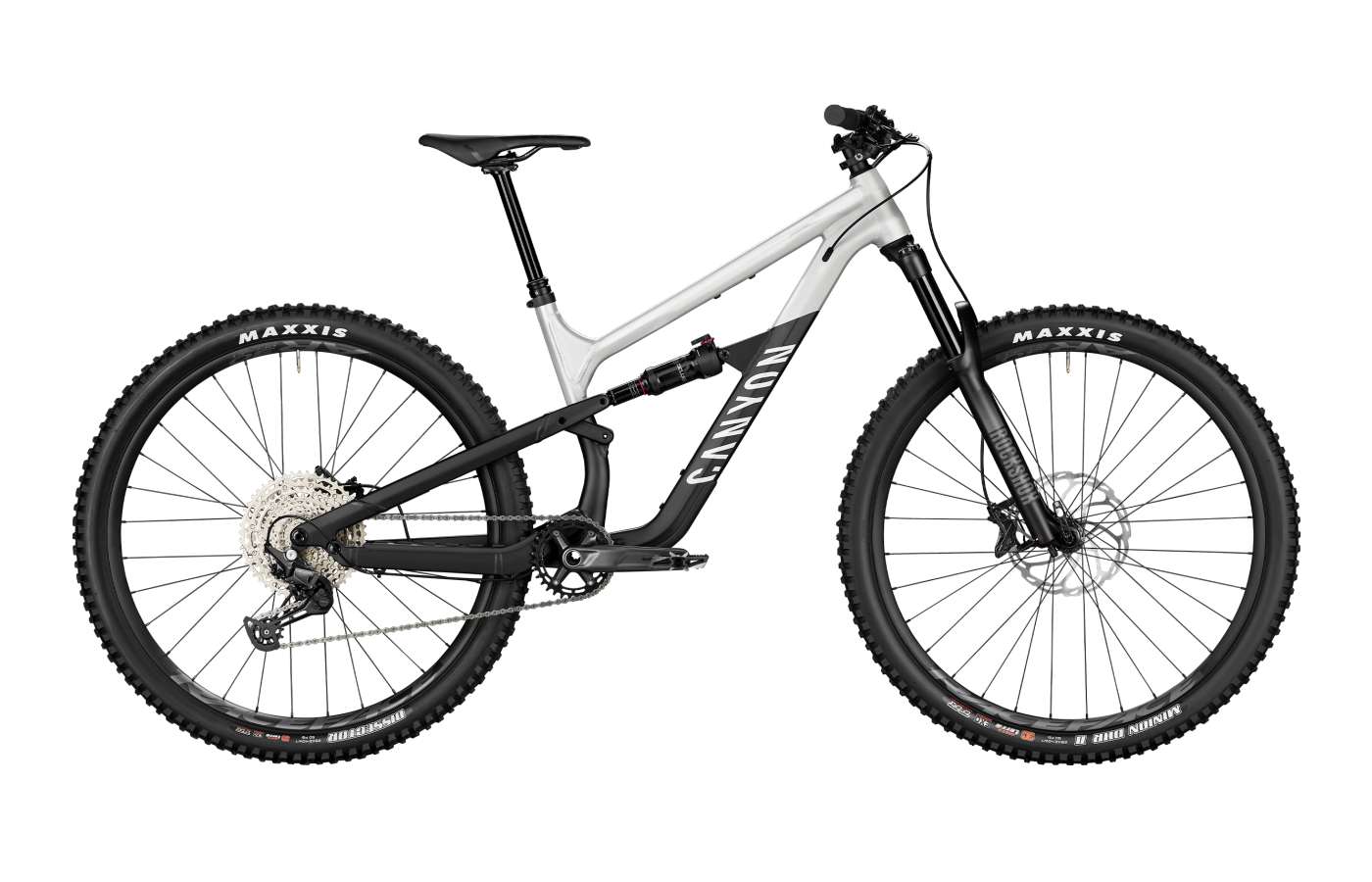
Spectral 125
Direct-to-consumer pricing on a 125 mm trail bike that punches above its travel. No idler, no proprietary shock — just a well-sorted four-bar at 25-30% less than either bike here. Catch is no local dealer.
Compare →