Process 153
vsAltitude
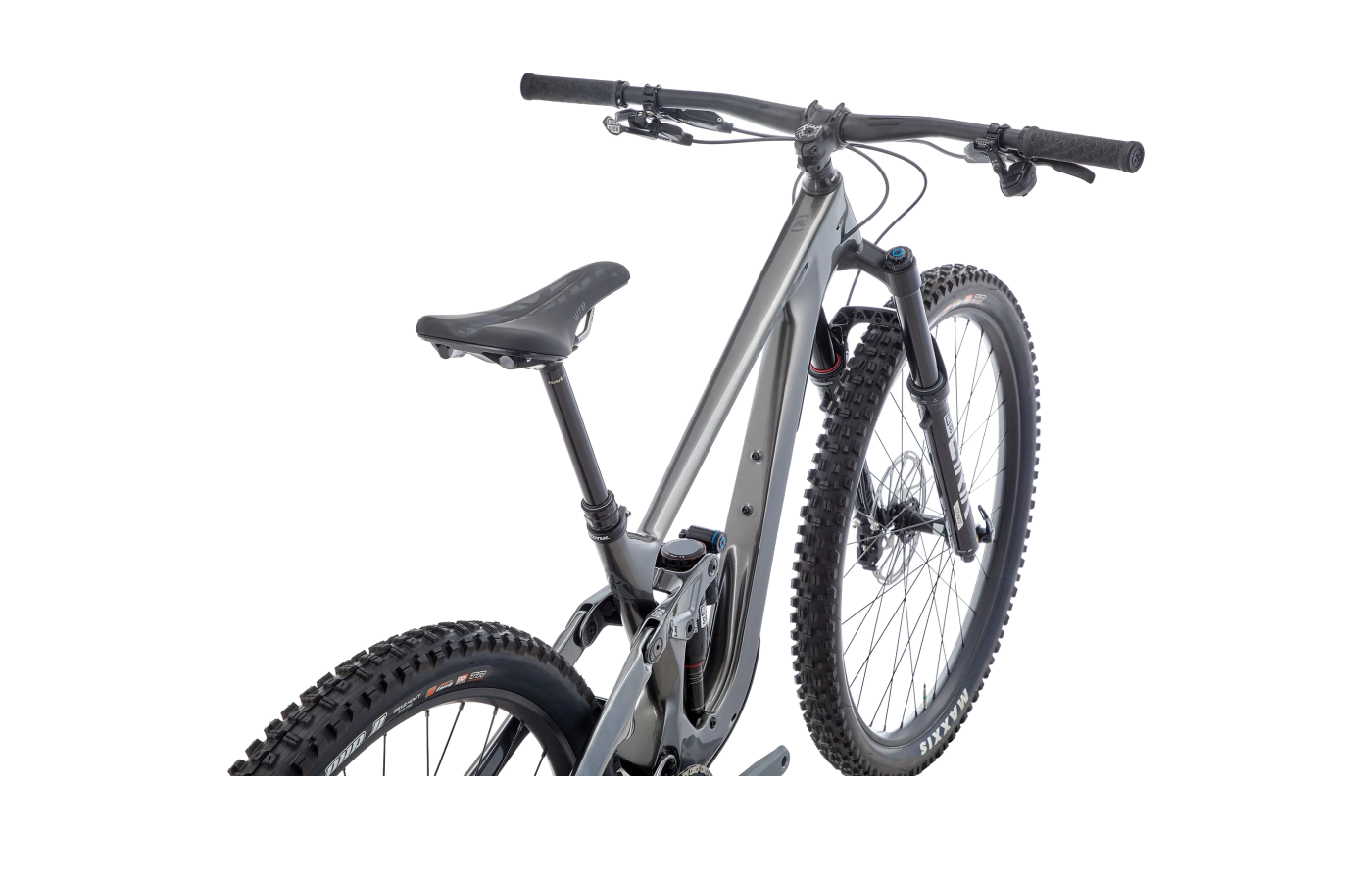
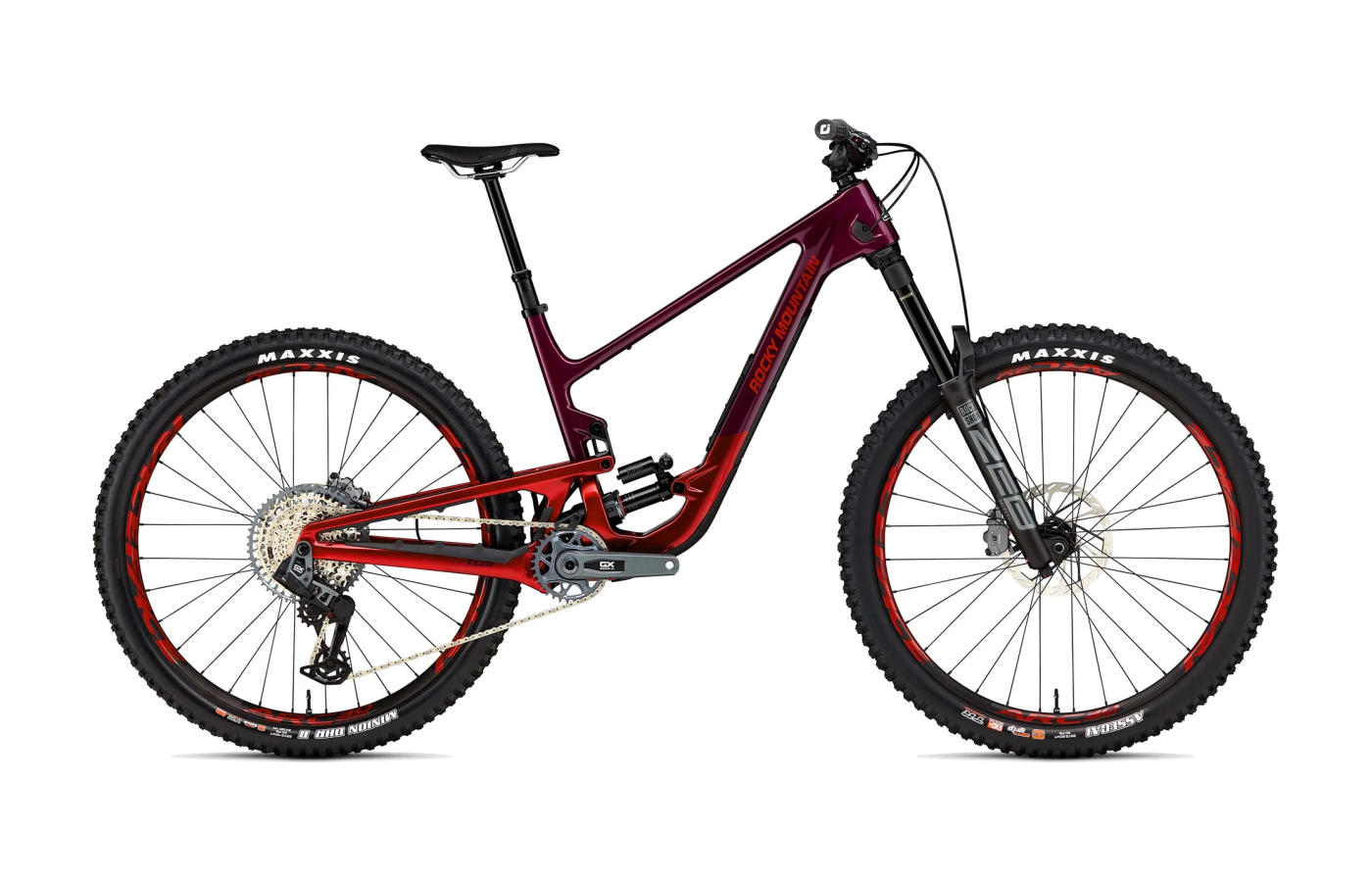
Playful all-mountain, or enduro-race bulldozer.
The Kona Process 153 is a lively 153/160 mm trail bike that rewards active riders. The Rocky Mountain Altitude is a 160/170 mm race-ready plow built to eat terrain.
Process 153
- Playful, engaging handling — 64.5-degree HTA and 435 mm chainstays make it snappy through tight corners and techy trail.
- Cheaper entry into a modern long-travel platform — alloy builds start at $2,599, roughly $1,400 below the cheapest Altitude.
- Premium suspension on the CR/DL — RockShox Lyrik Ultimate (Charger 3) + Super Deluxe Ultimate at a $5,099 price that's hard to match.
- Stock SRAM G2 RSC brakes are widely panned as underpowered — plan to upgrade.
- Gets "jittery" and less composed at very high speed on rough terrain.
Altitude
- Magic-eraser descending — 62.9-degree HTA, long wheelbase, and LC2R suspension stay planted on the roughest, steepest tracks.
- Extensive adjustability — RIDE-4 flip chip changes HTA and BB drop; +/- 5 mm reach-adjust headset; mixed-wheel option on M–XL.
- Race-ready build out of the box — SRAM Maven Bronze brakes and pre-installed CushCore Trail inserts front and rear on the Carbon 70.
- Feels sluggish and less poppy at low speed — demands the descents to justify itself.
- Early production runs had a main pivot bolt that loosens; proprietary tool required to re-torque.
Editor’s analysis
Same travel bracket on paper, two completely different answers to the question what kind of fast?
The Kona Process 153 and the Rocky Mountain Altitude both sit in the 150–160 mm long-travel trail-to-enduro range, but they're not really trying to do the same job. The Kona is a modern take on Kona's long-running playful-trail formula — 153 mm rear, 160 mm fork, 64.5-degree head angle, 435 mm chainstays fixed across every size. The Altitude is a ground-up redesign aimed squarely at enduro racing — 160 mm rear, 170 mm fork, a 62.9-degree head angle, and size-specific 440–450 mm chainstays hung off the brand's new LC2R dual-link platform.
On the trail, that 1.6-degree head-angle gap and the Altitude's longer rear end change everything. Reviewers almost universally describe the Kona Process 153 as "nimble," "snappy," and willing to change direction at low to medium speed — Pinkbike and NSMB both compare it to carving skis or a hot hatchback. The trade-off shows up when things get fast and rough: multiple outlets note the Process feels "jittery" or "overwhelmed" when hits stack up in close succession. It demands a rider who actively works the bike.
The Rocky Mountain Altitude is the opposite kind of tool. Blister, Pinkbike, and NSMB all land on the same phrase — a "magic eraser" that makes rough terrain disappear the faster you go. The low-slung LC2R linkage, long wheelbase (1,243 mm at medium, 1,282 mm at large), and 170 mm Zeb up front are tuned for committing to speed on steep, chundery lines. At slow speed or in tight switchbacks, most reviews describe it as cumbersome and reluctant to change direction — the flipside of that stability.
There's also a build-spec asymmetry worth calling out. At the editor's-pick tier, both bikes run SRAM's GX Eagle Transmission on a carbon frame, but the Kona CR/DL ships with SRAM G2 RSC brakes — consistently called out by every review as underpowered for the bike's capability — while the Altitude Carbon 70 comes with SRAM Maven Bronze 4-piston stoppers and CushCore Trail inserts pre-installed. The Kona is $700 cheaper; factor in a near-mandatory brake upgrade and the gap closes fast.
Where the builds differ.
Comparing our editor's-pick builds side-by-side. Winners highlighted row-by-row — lower price and weight, and the better-spec component, each mark a point.
Build variants & pricing
The Kona's range runs $2,599–$5,099 across three builds; the Altitude spans $3,999–$5,799 across five.
Prices are current US MSRP. The Kona Process 153 only offers one carbon build (CR/DL); its sub-$3,000 trims are alloy. The Altitude has both carbon and alloy in most tiers, but nothing below $3,999 — Kona is the only option if your ceiling is under $4k.
How they fit, how they steer.
Kona size M vs. Altitude size md — the fit-picked size on each bike for a 5'8" rider. The Altitude runs 1.6 degrees slacker at the head tube (62.9° vs 64.5°), 15 mm more stack, and 5 mm longer chainstays. The Kona has 5 mm more reach and a much shorter wheelbase (1,215 vs 1,243 mm).
Which size should I buy?
Size recommendations based on stack, reach, and effective top tube. The Kona's size M and Altitude's md overlap closely on reach but diverge on every other stability-related number.
→These are starting points. Flexibility, riding style, and preferred position all shift the answer — if you’re between sizes, a professional fit beats a chart.
What the magazines said.
Published reviews from trusted cycling outlets. Click through for the full write-up.
Which one should you buy?
If you want a lively trail bike that rewards active riding, get the Process 153. If you live for fast, steep, rowdy descents and occasionally pin a race plate, get the Altitude.
Process 153
If your trails are a mix of technical climbs, tight corners, and flow-plus-tech descents — and you like a bike that responds to input rather than plowing through it — the Process 153 is the right tool. Budget riders get a real way in at $2,599; the $5,099 CR/DL lands premium suspension cheaper than most carbon rivals.
Altitude
If you spend weekends shuttling steep, rough tracks or chasing EDR/EWS times, the Altitude is the sharper tool. The LC2R suspension and slack 62.9° head angle pay off above speeds where the Kona starts to feel busy. Extensive adjustability lets you tune it for specific race courses — just don't expect it to love tight singletrack.
Questions buyers actually ask.
Short answers to the things we get emailed about most often.
01Which bike climbs better?
Both climb better than you'd expect for their travel, but the Kona Process 153 has the edge on efficiency. Multiple reviewers describe it as "surprisingly efficient" thanks to its Rocker-link single-pivot platform, which Blister measures at 110–120% anti-squat at sag — enough to firm up under pedaling without killing traction. The Rocky Mountain Altitude climbs respectably for a race bike but is the heavier, more active platform — reviewers note pedal bob on coil builds and a "wallowy" feel on smoother grades that pushes most riders to use the climb switch.
Where the Altitude claws some of that back is traction: its LC2R platform is widely praised for "endless grip" on rooty, loose, technical climbs. If you're grinding fire roads, the Kona wins. If you're picking your way up janky singletrack, the Altitude's sensitivity pays off.
02What's the geometry difference and why does it matter?
The headline number is the head tube angle: 64.5° on the Kona vs 62.9° on the Altitude (in its neutral RIDE-4 setting). That 1.6-degree gap is large — it's the difference between "modern trail" and "modern enduro race."
Chainstays also diverge. The Process 153 keeps a fixed 435 mm across all four sizes, which is short enough to feel playful but can feel rearward-biased for taller riders. The Altitude uses size-specific stays: 440 mm on md, 450 mm on lg/xl, keeping weight balance more consistent across sizes and adding high-speed composure.
Wheelbase on the fit-picked sizes (Kona M, Altitude md) is 1,215 mm vs 1,243 mm — the Altitude is nearly 3 cm longer at the equivalent size, and that's before you factor in the 170 mm fork pushing the front further out.
03Which is faster on rough, high-speed descents?
The Rocky Mountain Altitude, and it's not close. Multiple outlets — NSMB, Pinkbike, and Blister among them — independently describe its LC2R suspension as making rough terrain "disappear." The slack 62.9° HTA, long wheelbase, and low-slung linkage all contribute.
The Kona Process 153 is capable on descents but most reviewers agree it has a speed ceiling — NSMB specifically describes it feeling "quite jittery" when heavy impacts stack up in close succession, and Pinkbike notes "geometry and suspension begins to feel overwhelmed at higher speeds." It's not that the Kona is slow — it's that the Altitude keeps getting better the harder you push it, and the Kona doesn't.
04How do the editor's-pick builds compare on components?
We picked the Kona Process 153 CR/DL ($5,099) against the Rocky Mountain Altitude Carbon 70 ($5,799) — both carbon frames, both SRAM GX Eagle Transmission.
Brakes are the big divergence. Kona ships SRAM G2 RSC — which every single review flags as underpowered for the bike. Rocky ships SRAM Maven Bronze Stealth 4-piston, one of the most powerful enduro brakes on the market. Figure $400–$500 and a shop visit if you want to bring the Kona up to spec.
Suspension favors the Kona: RockShox Lyrik Ultimate (Charger 3) + Super Deluxe Ultimate vs the Altitude's RockShox ZEB Select+ + Vivid Select+ — the Kona runs a tier higher on damper quality at a lower price. Tires and inserts favor the Rocky: factory-installed CushCore Trail front and rear with MaxxGrip/MaxxTerra rubber, a genuine several-hundred-dollar value add the Kona doesn't match.
05Can I run a mullet (mixed-wheel) setup on either?
Yes on both, though with caveats.
The Kona Process 153 has a flip chip that lets you run a 27.5" rear wheel while preserving the BB height and head angle — FullCycleOttawa measured a small rear-travel increase (to ~158 mm) in mullet mode. NSMB found it "improved agility" on steep, tight trails but also noted the bike became more jittery at high speed in this configuration.
The Rocky Mountain Altitude is mullet-compatible on M, L, and XL frames via the same platform that runs 29" — size S ships with 27.5" rear only. Reviewers describe the mullet Altitude as "snappier and more playful," a useful way to take some of the edge off the long-wheelbase feel at slow speed.
06What's the weakest component on each bike?
On the Kona Process 153 CR/DL, it's a tie between the SRAM G2 RSC brakes (covered above) and the RockShox Reverb dropper post — reviewers describe the hydraulic Reverb as finicky and prone to a small amount of top-of-stroke "squish" over time. NSMB and Blister both recommend swapping it for a cable-actuated post (OneUp or similar).
On the Rocky Mountain Altitude Carbon 70, the recurring complaints are the Race Face ARC 30 rims (some aggressive riders report them being "soft" and prone to flat-spotting, though the CushCore inserts help), and early-run main pivot bolts that can loosen without adequate thread-locker — Rocky Mountain includes the proprietary tool and the fix is a 10-minute job with Loctite torqued to 25 Nm.
07What warranty do they come with?
Kona: lifetime frame warranty to the original owner against manufacturing defects. Crash-replacement pricing is offered but varies by dealer.
Rocky Mountain: 5-year transferable frame warranty — notable because it transfers to subsequent owners, which helps resale value. Rocky Mountain's product manager has been active in review-site comment threads addressing issues, which a few reviewers (Blister, Singletracks) called out as unusually attentive customer support.
08Which is the better value?
Depends where you're shopping.
Under $4,000, it's the Kona — the $2,599 alloy G3 and $2,999 DL G3 give you the Process geometry and a Lyrik Select / Yari fork at prices the Altitude can't match (its cheapest build is $3,999).
Around $5,000–$6,000, it gets interesting. The Altitude Carbon 70 ($5,799) ships race-ready with Maven brakes and CushCore — the Kona CR/DL ($5,099) has better suspension damper spec but needs ~$500 of brake upgrades to match the Altitude's braking power. For a racer, the Altitude is the better out-of-box deal. For a trail rider who doesn't need Maven-level brakes, the Kona undercuts by a real $700.
Similar bikes
If your priorities don’t map cleanly onto either of these, one of these adjacent bikes probably fits better.
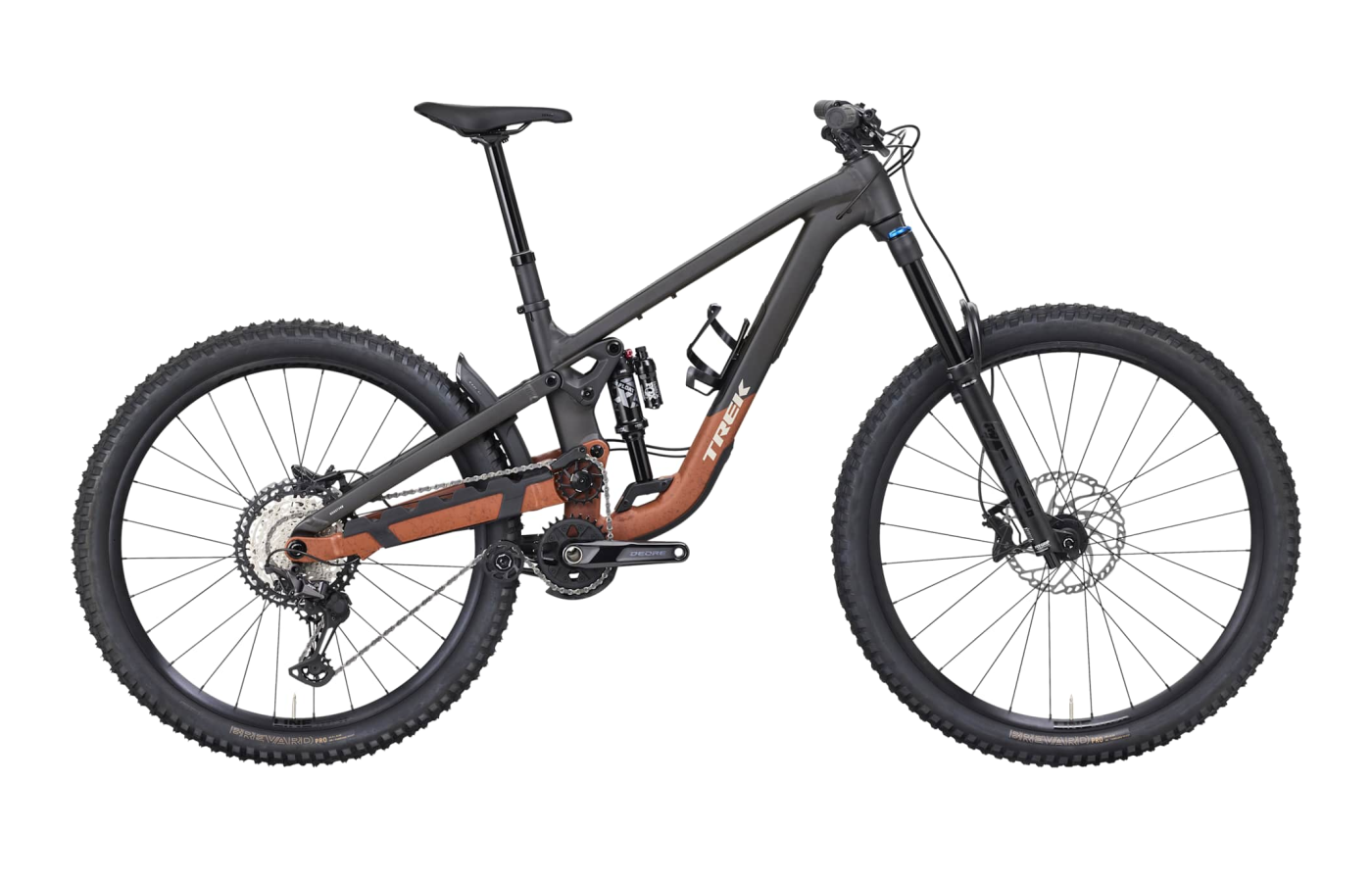
Slash
Trek's full-enduro platform — another 170 mm-travel race tool in the Altitude's lane. Mino Link adjustability and high-pivot layout give it a different flavor of stability, worth a cross-shop if the Altitude's LC2R draws you in.
Compare →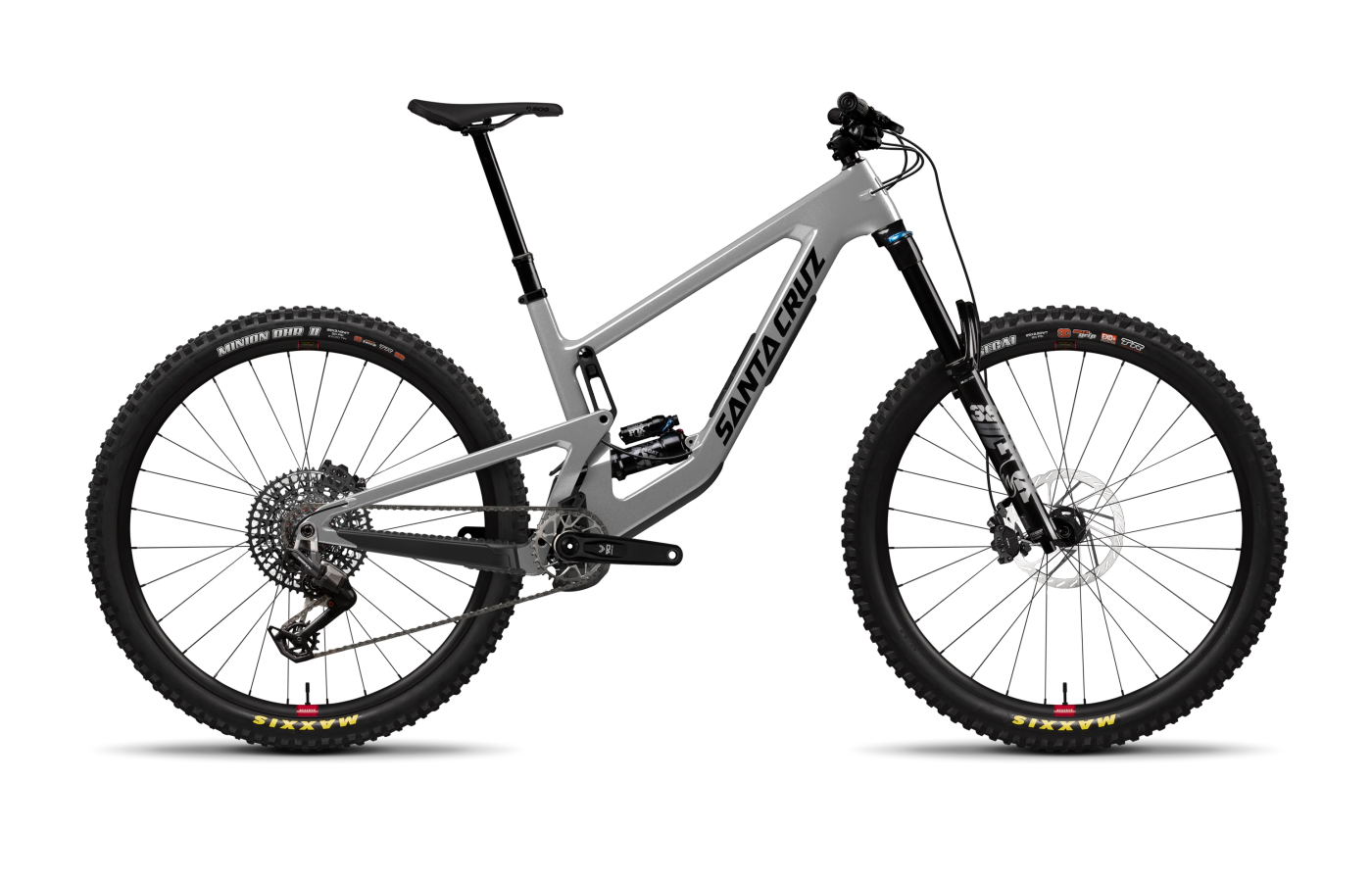
Megatower
Santa Cruz's burly enduro platform with the brand's VPP suspension. A direct alternative to the Altitude for riders who want the planted, big-terrain feel but prefer Santa Cruz's ride character and dealer network.
Compare →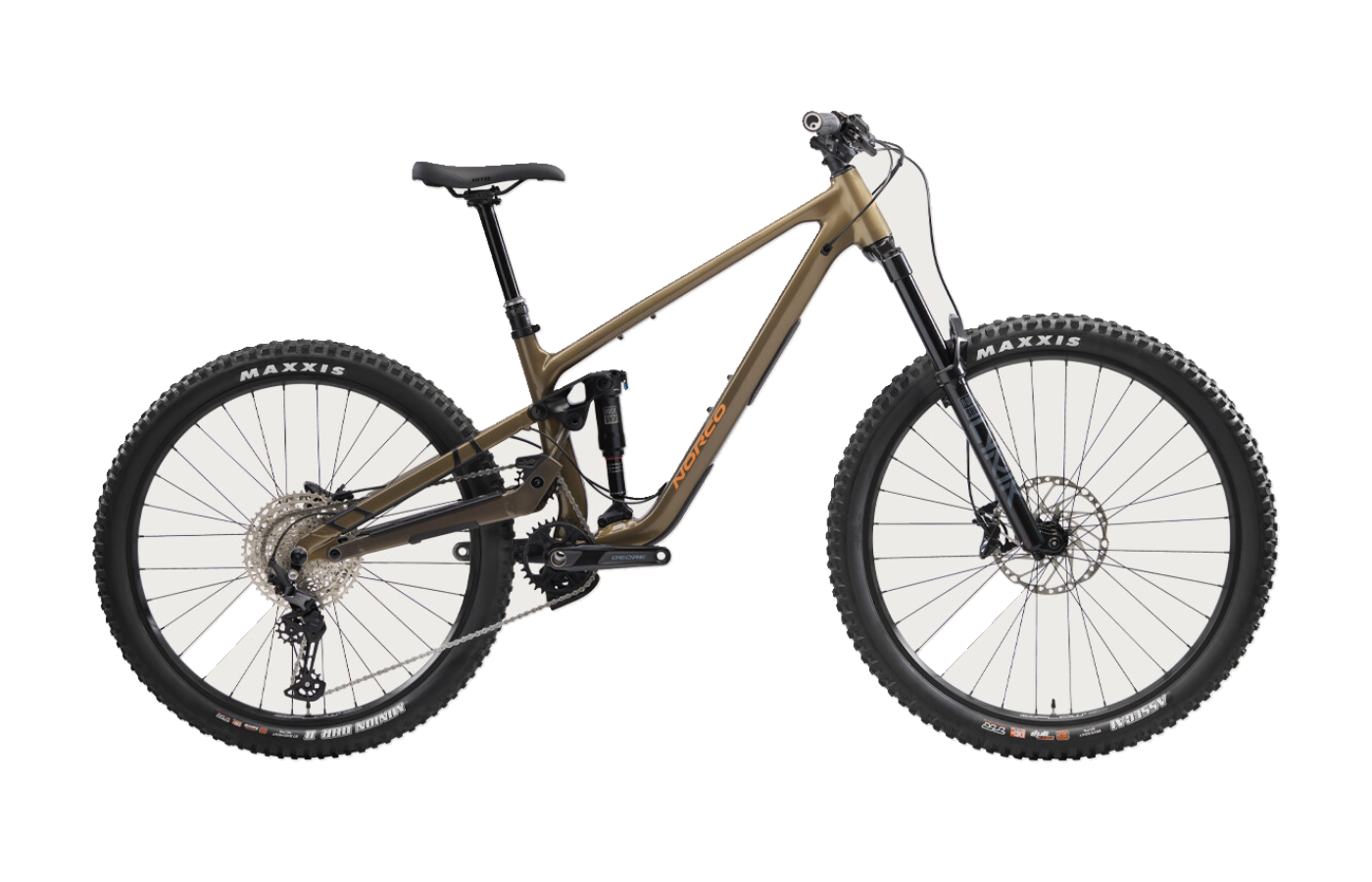
Sight
Norco's 150 mm trail bike — sits closer to the Kona Process 153 in intent. More progressive geometry than previous-gen Sights, still short-chainstay playful. A good alternative if the Kona's G2 brakes are a dealbreaker.
Compare →