Ripley
vsSpur
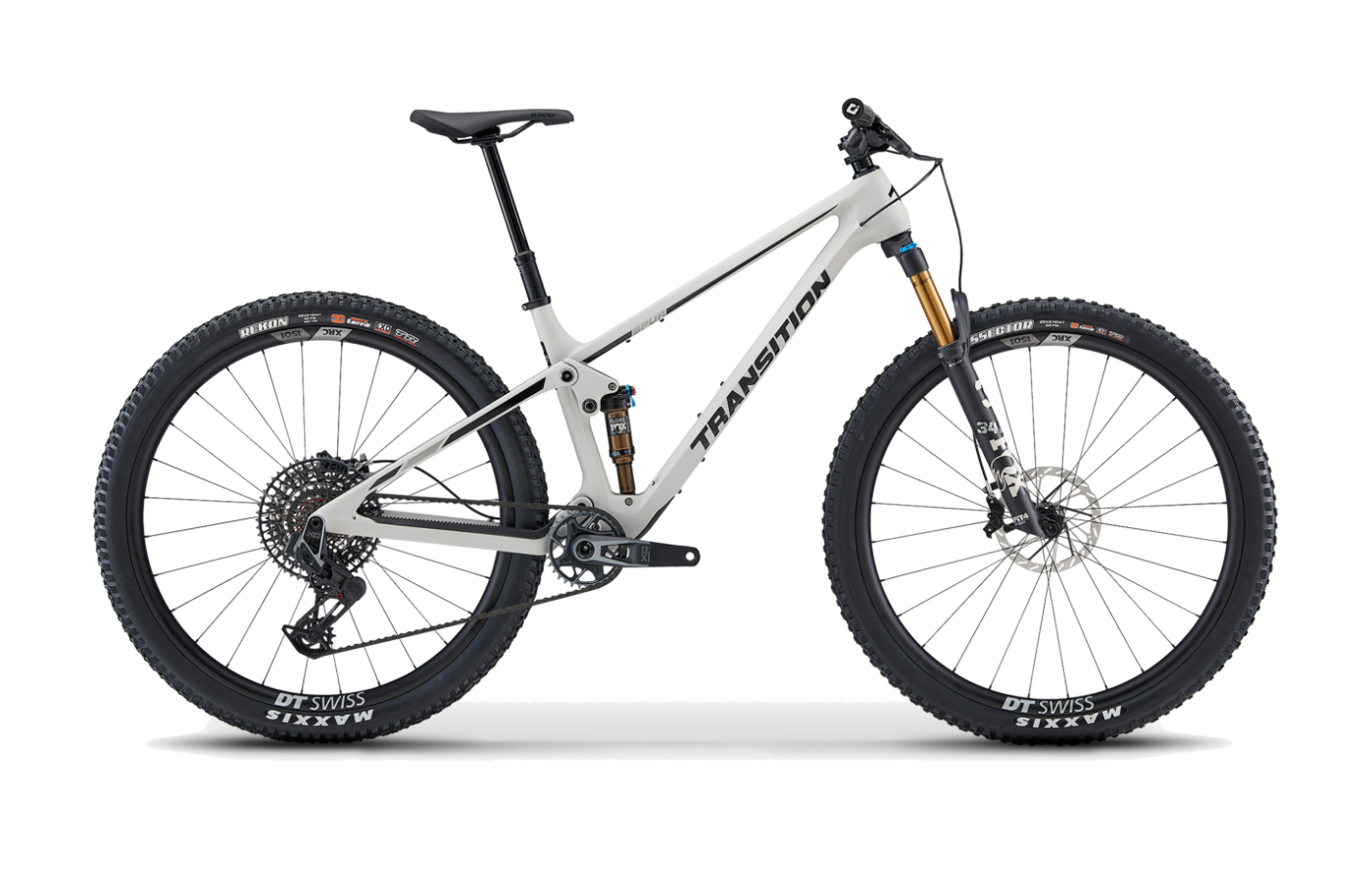
Two short-travel 29ers, two definitions of fun.
The Ibis Ripley V5 trades downcountry sharpness for trail-bike composure. The Transition Spur stays light, snappy, and aggressively geometried — the genre's benchmark.
Ripley
- More descending capability — 140/130 mm travel and a 64.9-degree HTA punch above the short-travel category.
- Internal STOW storage with rattle-free Cotopaxi bags — a genuine ride-quality win the Spur lacks entirely.
- Convertible to the Ripmo by swapping fork, shock, and linkage — same front triangle, two bikes' worth of platform.
- Heavier than the Spur — roughly 29-30 lbs in XT trim vs. ~27 lbs for the Spur Carbon XO AXS.
- Fox 34/36SL stanchions can show flex for bigger riders pushing the bike at higher speeds.
Spur
- Featherweight for the category — Carbon XO AXS at 27.1 lbs (size MD), with a snappy, energetic flex-stay platform.
- Genre-defining geometry — 66-degree HTA and 480 mm reach (LG) make a 120 mm bike descend like a longer-travel one.
- Fewer pivots, less maintenance — the pivot-less rear triangle saves weight and reduces long-term service overhead.
- 120 mm rear travel is a hard ceiling — push past it and the suspension makes itself known.
- No internal frame storage, and earlier builds shipped underpowered brakes (180 mm rotors are now standard).
Editor’s analysis
Same wheel size, similar weights — but one bike has decided to grow up, and the other refuses to.
Both bikes wear the short-travel 29er badge, but they're aimed at different riders. The Ibis Ripley V5 grew 10 mm of travel front and rear (now 140/130 mm), slackened its head tube to 64.9 degrees, and shares its front triangle with the longer-travel Ripmo. It's no longer a downcountry bike — it's a real trail bike that climbs well. The Transition Spur, by contrast, is the genre's textbook entry: 120 mm at both ends, a 66-degree head tube, and a flex-stay rear triangle that drops weight at the cost of a small mechanical pivot.
On the climbs, the Spur is the lighter, livelier tool. Carbon XO AXS builds come in around 27 lbs versus the Ripley's ~29-30 lbs in the XT trim, and the Spur's flex-stay layout adds noticeable pop on rolling terrain. The Ripley counters with its DW-link platform — anti-squat tuned for ruthless seated efficiency rather than poppiness. Reviewers note the Ripley feels firmer and more glued under power on rough technical climbs, while the Spur tends to skip on square-edged ledges.
Pointed downhill, the bikes diverge harder. The Ripley's slacker head angle, longer 460 mm reach (size MD), and 140 mm Fox 36SL fork make it the more capable descender — it can plausibly tackle terrain that would make the Spur audibly bottom out. The Spur stays composed at speed thanks to its long-for-XC reach (455 mm on MD, 480 mm on LG) and Speed Balanced Geometry, but multiple reviewers warn that the 120 mm rear suspension is a hard ceiling. The frame also flexes noticeably for heavier riders pushing hard.
Put another way: the Ibis Ripley is the bike you buy when 'short-travel trail bike' means trail bike first. The Transition Spur is the bike you buy when it means short-travel first.
Where the builds differ.
Comparing our editor's-pick builds side-by-side. Winners highlighted row-by-row — lower price and weight, and the better-spec component, each mark a point.
Build variants & pricing
The Ripley spans $4,999 to $9,999 across five builds; the Spur runs $4,799 to $8,199 across three. Both start at carbon — neither offers an alloy frame at the entry point.
Prices are current US MSRP. The Ripley's range is broader and deeper, with two electronic-shifting builds at $7,249. The Spur skips a mid-tier completely — there's a $1,700 gap between the Eagle 90 and the XO AXS Transmission flagship.
How they fit, how they steer.
Both compared at size MD — the fit-picked frame for a 5'8" rider. The Ripley sits 9 mm taller in stack and 5 mm longer in reach, with a 1.1-degree slacker head angle. The Spur is 21 mm shorter in wheelbase and 1 mm tighter at the chainstays — sharper, more compact.
Which size should I buy?
Size recommendations based on stack, reach, and effective top tube. The Ripley offers an extra XM size between MD and LG; the Spur runs four sizes total.
→These are starting points. Flexibility, riding style, and preferred position all shift the answer — if you’re between sizes, a professional fit beats a chart.
What the magazines said.
Published reviews from trusted cycling outlets. Click through for the full write-up.
Which one should you buy?
If you want one bike for everything from XC days to genuine trail riding, get the Ripley. If you want the lightest, snappiest 120 mm 29er with enduro-grade geometry, get the Spur.
Ripley
If you ride one bike across XC loops, technical climbs, and trails you'd usually want a longer-travel bike for, the Ripley V5 covers more terrain with more confidence. The 140/130 mm travel and slacker geometry stretch the envelope without giving up Ibis's signature pedaling efficiency.
Spur
If you want a featherweight, energetic 29er that climbs like an XC bike but descends like a trail bike, the Spur is the genre's benchmark. It rewards an active riding style — pumping, popping, and generating speed from the trail itself rather than plowing through it.
Questions buyers actually ask.
Short answers to the things we get emailed about most often.
01Which bike climbs better?
Both climb well, but in different ways. The Transition Spur is roughly 2-3 lbs lighter and feels noticeably snappier under acceleration — reviewers describe it as accelerating like "Usain Bolt out of the blocks." Its steep 76.2-degree seat tube angle (size MD) keeps the front planted on steep pitches.
The Ibis Ripley V5's DW-link suspension is more efficient under power, with reviewers noting it "hasn't sacrificed its ability to put down power on the ascents" despite the added travel. On smooth, sustained climbs the Spur's lower weight wins; on rough technical climbs where suspension matters more than mass, the Ripley's DW-link platform is the more glued, traction-rich climber.
02Which is better on descents?
The Ibis Ripley V5, by a clear margin. Its 140 mm fork, 130 mm of rear travel, and 64.9-degree head tube angle let it tackle terrain the Spur simply isn't built for. Reviewers consistently note it descends "above its class" and feels confident on lines normally reserved for longer-travel bikes.
The Spur has surprisingly capable geometry for 120 mm — long reach, slack-for-XC head angle — but multiple reviewers warn that the suspension is the bottleneck. Push it hard on rough terrain and you'll hear "audible screams of pain" as it bottoms out.
03How much travel does each bike have?
Ibis Ripley V5: 140 mm front (Fox 36SL or 34), 130 mm rear (Fox Float). The V5 added 10 mm at both ends versus the V4.
Transition Spur: 120 mm front (Fox 34 or RockShox SID Ultimate), 120 mm rear (Fox Float DPS or RockShox SIDLuxe). The travel numbers haven't changed since launch — Transition's view is that the original got it right.
04What about the Spur's flex-stay design — is it durable?
Mostly yes, with caveats. The pivot-less flex-stay rear triangle saves about 200 grams and removes a wear point. Reviewers report the chassis is "stout and precise" for typical use.
For heavier or more aggressive riders (200 lb+), some reviewers noted noticeable frame flex at high-G compressions — described as "winding up and springing back." It's not a failure mode, but it's a different feel than a stiffer multi-pivot frame. The Ibis Ripley's frame, shared with the longer-travel Ripmo, is described as "surprisingly stiff for a short travel bike."
05Does either bike have internal frame storage?
Ripley V5: Yes. The new STOW system uses a quick-release latch and ships with two custom Cotopaxi storage bags made from fabric remnants. It's praised across reviews for being rattle-free and well-sealed.
Spur: No. Transition kept the frame clean and light at the cost of in-frame storage. There are accessory mounts under the top tube and downtube for strap-on bags or bottle cages.
06Can I run a mixed-wheel (mullet) setup?
Ripley V5: Yes. There's a flip chip on the rocker link that corrects geometry when you swap to a 27.5" rear wheel. Worth knowing: changing it requires removing the shock, so it's not a quick trailside swap.
Spur: No factory mullet provision. The bike is designed around dual 29" wheels, and Transition doesn't publish geometry numbers for an alternate wheel setup.
07How do the editor's-pick builds compare on price and spec?
The Ripley XT Di2 at $7,249 brings electronic Shimano XT shifting, a Fox 36SL Factory 140 mm fork, and Ibis 933 alloy wheels (with an S28 carbon upgrade option).
The Spur Carbon XO AXS at $8,199 ships with SRAM XO Eagle Transmission, a Fox 34 Factory 120 mm fork, and DT Swiss XRC 1501 carbon wheels stock. The Spur is ~$950 more, but you get carbon wheels and SRAM's flagship-tier wireless drivetrain factory-fitted. Both are one tier down from each platform's flagship — comparable spec strategy on both sides.
08Which is more 'one-bike' friendly?
The Ripley V5, for most riders. Its broader build range starts at $4,999, the slacker geometry handles a wider terrain envelope, and the convertibility to a Ripmo (swap fork, shock, and linkage) means the platform can grow with your riding.
The Spur is more specialized — it's a benchmark short-travel bike, but it's still a short-travel bike. If your riding includes anything genuinely rowdy, the Ripley flexes farther. If you live for efficient miles and playful trail features, the Spur's specialization is the point.
Similar bikes
If your priorities don’t map cleanly onto either of these, one of these adjacent bikes probably fits better.
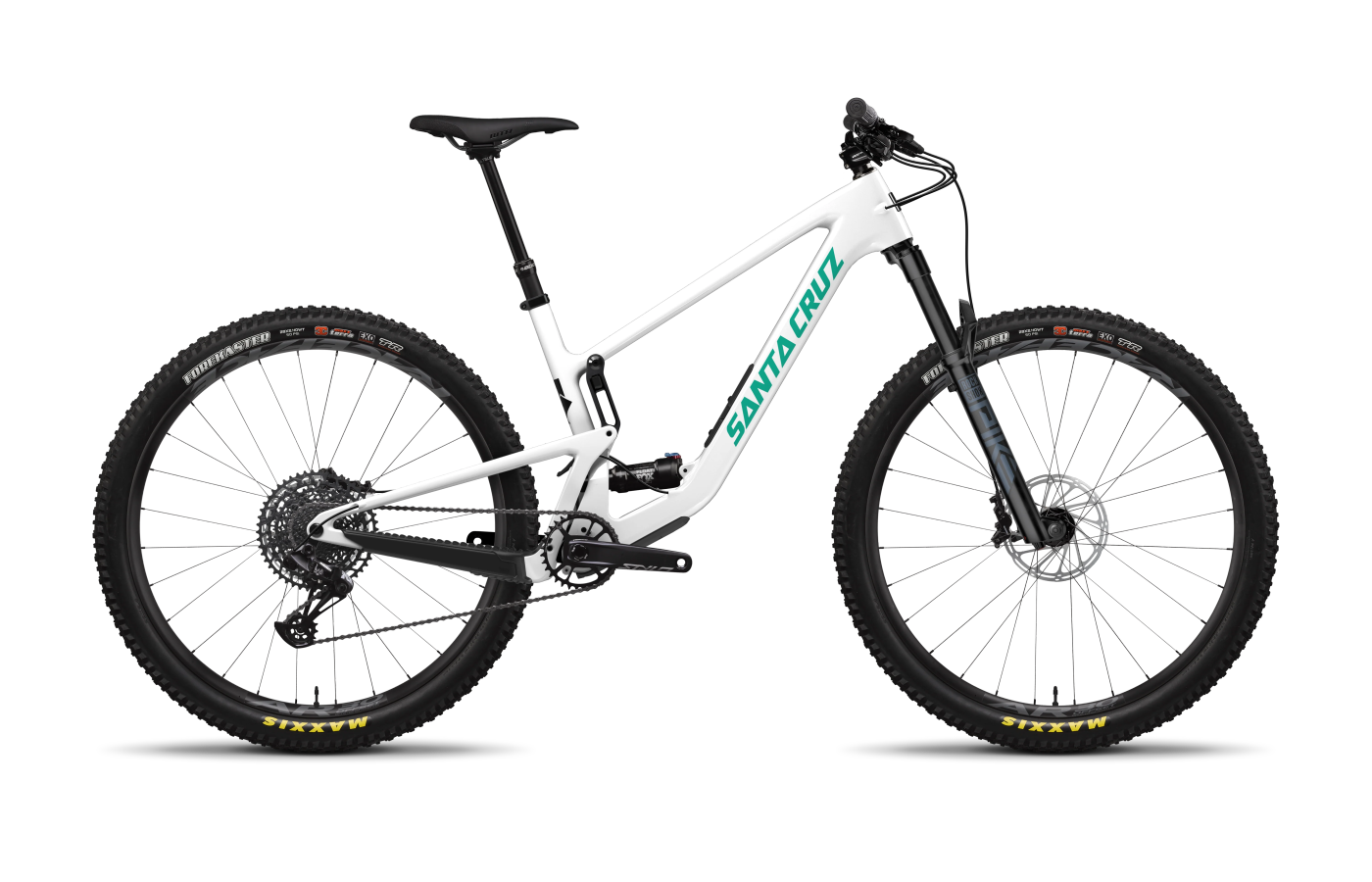
Tallboy
The Tallboy is the Spur's perennial rival — same 120 mm travel, but a burlier VPP platform that feels more glued and less poppy. Pick it if you want short-travel composure rather than short-travel snap.
Compare →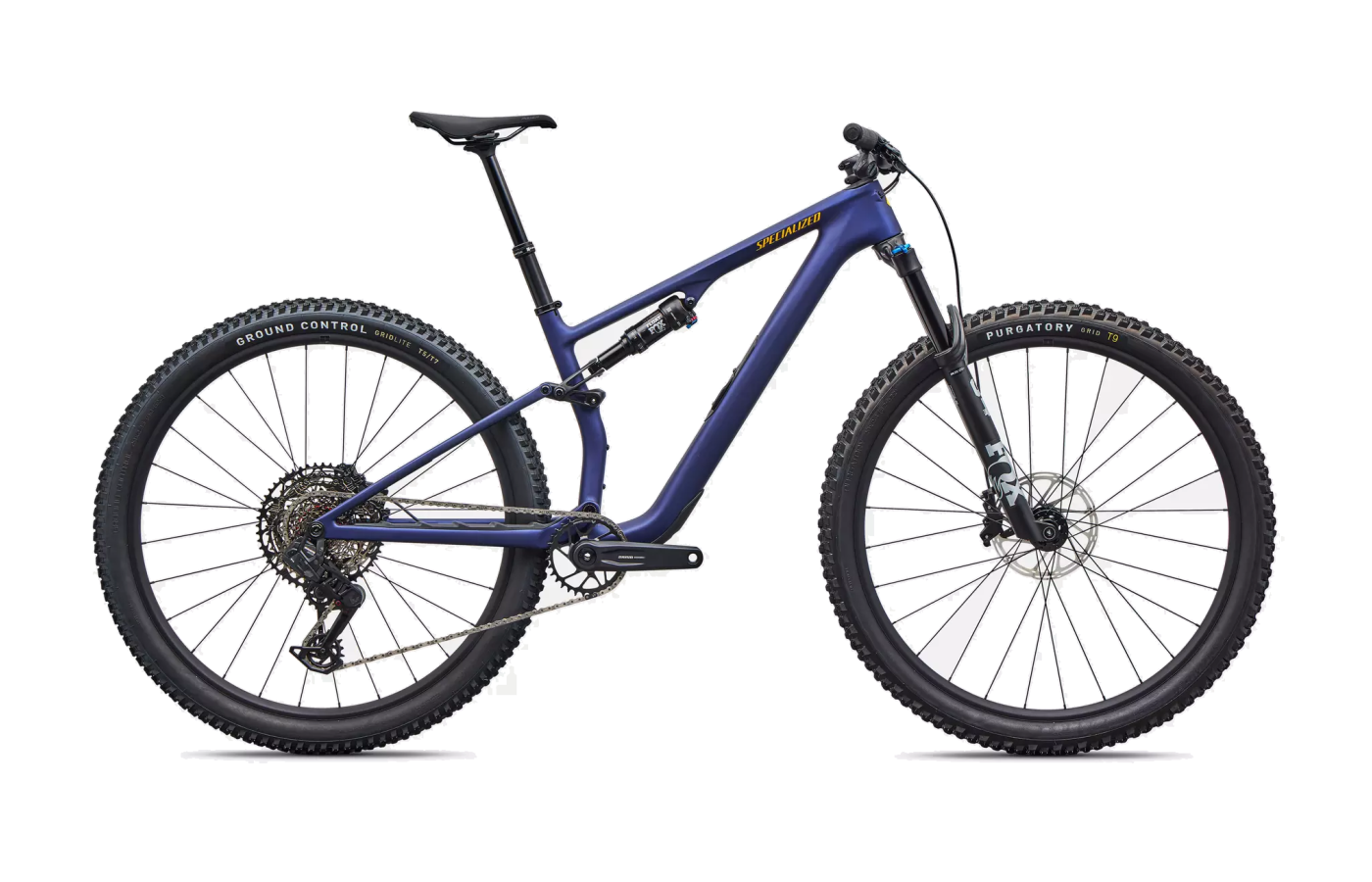
Epic Evo
The Epic Evo leans further into the efficiency side of downcountry — lighter, more XC-race-shaped, and a faster pure climber than the Spur. Trail capability is real but the bias is unmistakably racy.
Compare →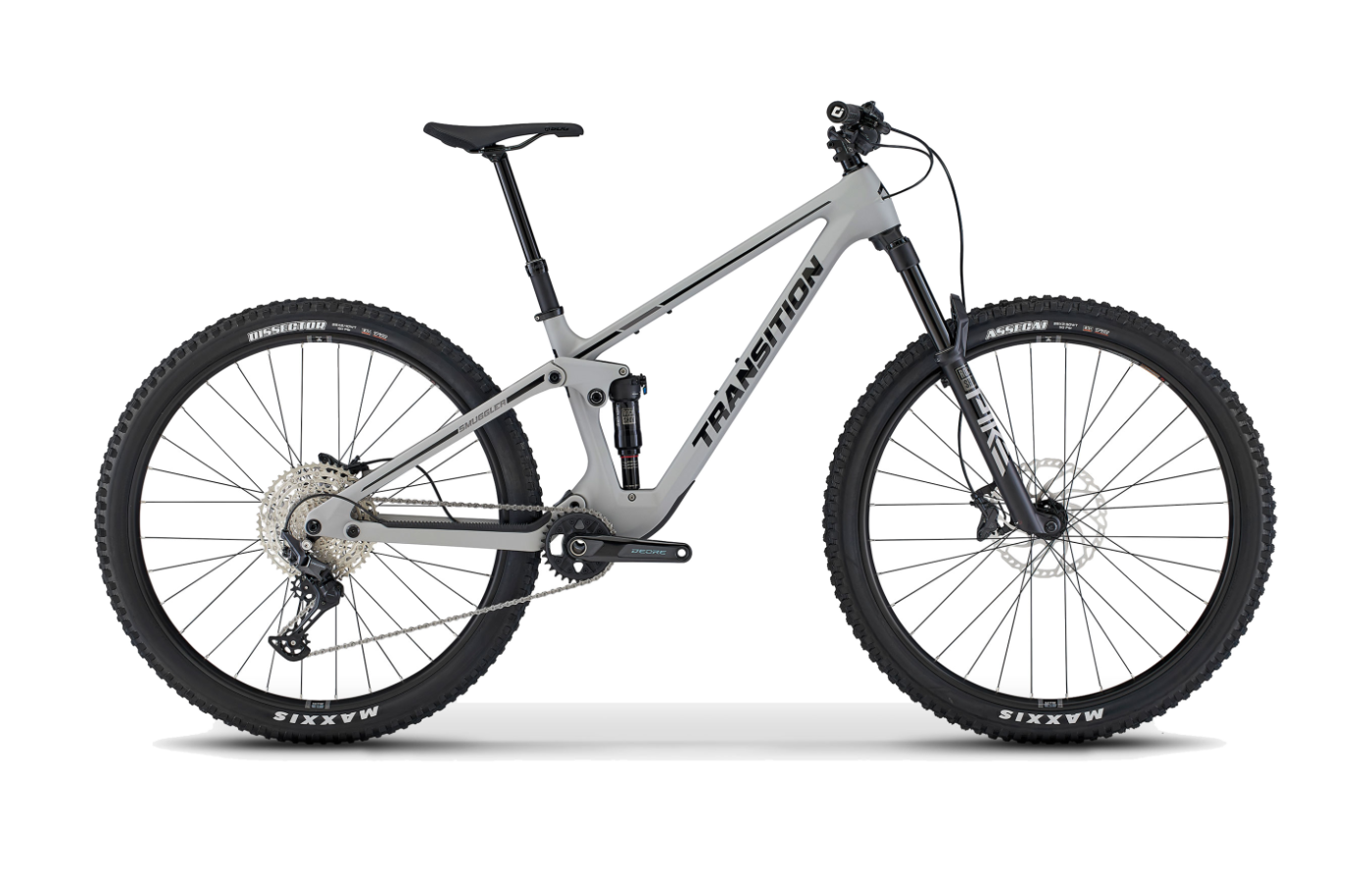
Smuggler
Transition's own answer to the Ripley V5 — 140/130 mm travel and the same Speed Balanced Geometry as the Spur. Reviewers describe it as a 'mini enduro bike' with the Spur's DNA but more travel underneath.
Compare →