Ripley
vsSpearfish
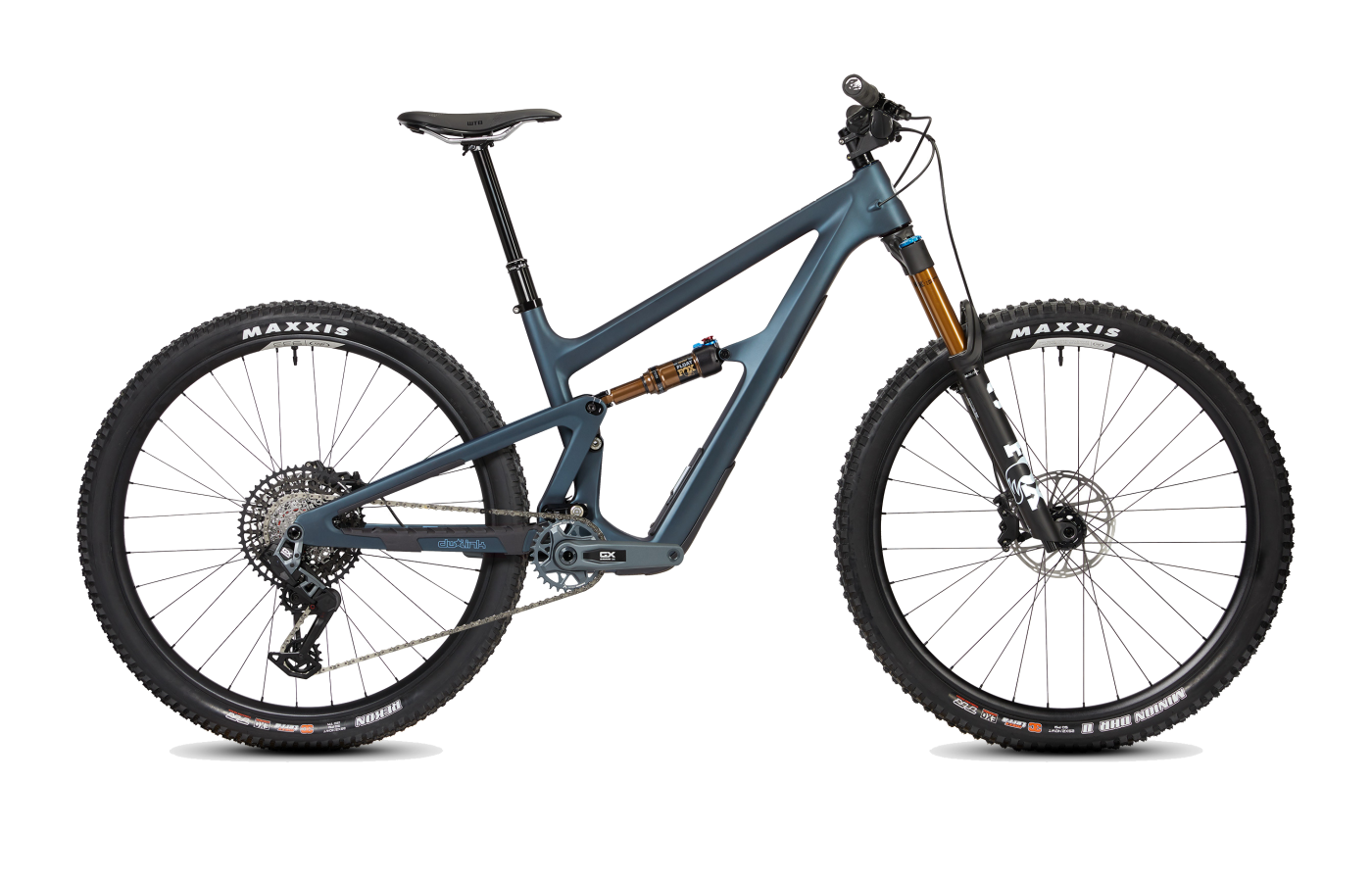
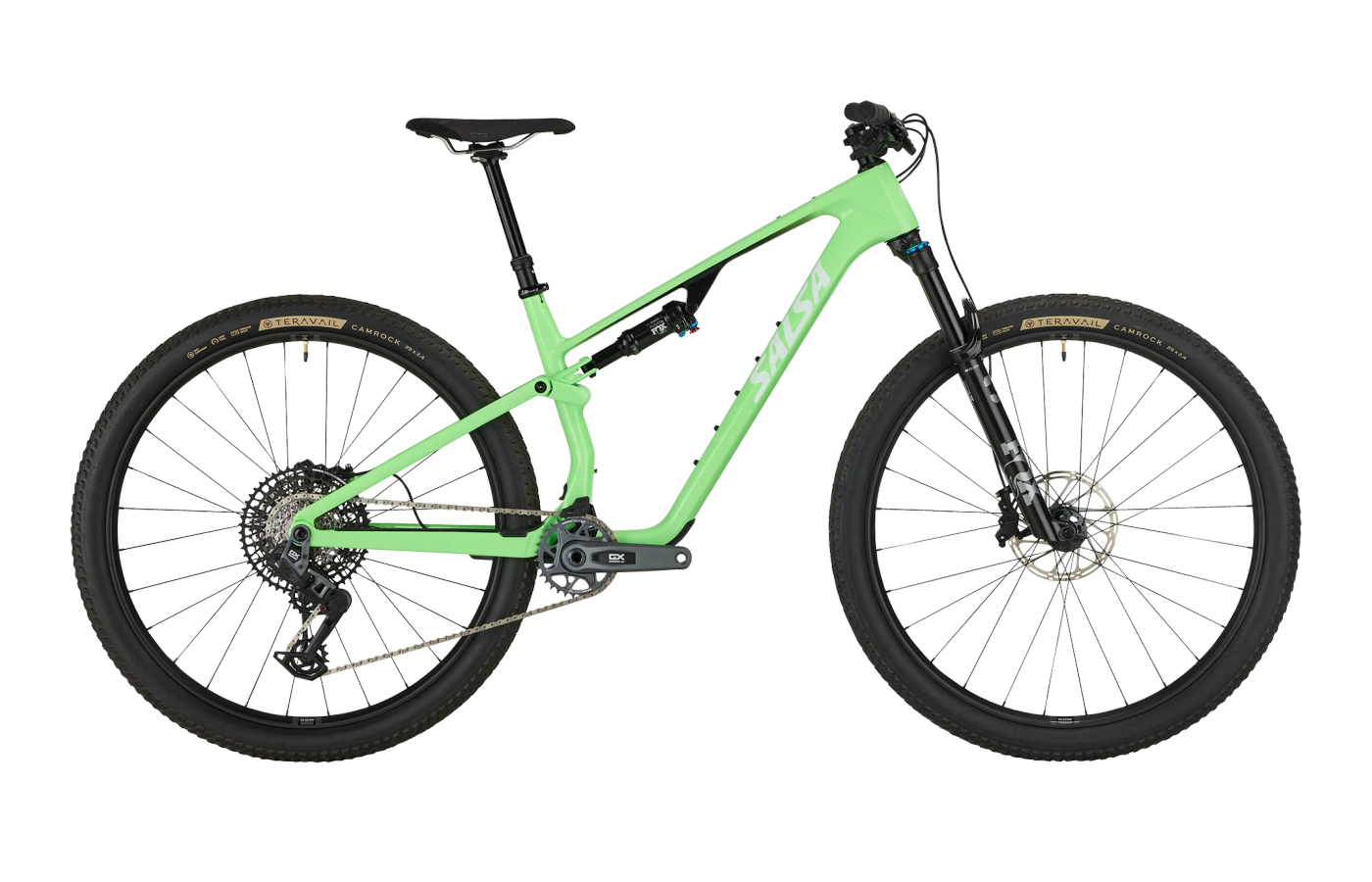
Two short-travel 29ers, two trail philosophies.
The Ripley V5 is a planted, playful trail bike with downcountry roots. The Spearfish is a fast XC platform with surprising descending chops.
Ripley
- More travel, more capability — 140/130 mm with a 64.9° head angle handles terrain a true XC bike won't.
- DW-link suspension — supportive mid-stroke that pedals well and ramps hard enough for drops.
- STOW internal frame storage with rattle-free Cotopaxi bags, plus a frame shared with the Ripmo for future upgrades.
- Carbon-only — no alloy entry point, so the floor is $4,999.
- Heavier than a true XC bike (~29-31 lb depending on build) — pure climbers will notice.
Spearfish
- Genuinely fast on climbs — Split Pivot suspension plus low-profile Camrock tires reward sustained efforts.
- Bikepacking-ready frame with three bottle mounts on larger sizes and threaded tabs across the frame.
- Wider build range starting at $1,649 — alloy through carbon, Deore through XO Transmission Flight Attendant.
- 120 mm fork (RockShox SID or Fox 34 SL) gets flexy in rough terrain; not for true enduro use.
- Steep 77.3° seat tube and minimal-tread tires demand more rider input on technical descents.
Editor’s analysis
Same wheel size, similar suspension travel on paper — but the Ibis Ripley and Salsa Spearfish are aimed at very different riders.
On paper they look adjacent: both are 29ers, both are full-suspension carbon trail-ish bikes, both clear a 61 mm tire. Spend a minute in the geometry table and the gap opens up. The Ibis Ripley runs 140 mm front / 130 mm rear with a 64.9-degree head angle. The Salsa Spearfish runs 120/120 with a head angle 1.4 degrees steeper. That's not a tuning difference — it's a category difference.
The Ibis Ripley is a trail bike that climbs efficiently, not an XC bike that descends bravely. It shares its front triangle and swingarm with the Ripmo, so even at 130 mm of rear travel it feels burlier than its number suggests. Reviewers consistently called the V5 a step away from "downcountry" and toward an honest trail bike — confidence on steep, chunky descents, with the DW-link suspension still pedalling well enough to make it a credible one-bike quiver.
The Salsa Spearfish goes the other direction. It's a modern XC platform with adventure mounts, light Split Pivot suspension, and fast-rolling Teravail Camrock tires that reviewers measured as one of the quickest-climbing bikes they'd thrown a leg over. Bike Rumor's tester knocked three minutes off a personal-best climb. The trade is real: the SID-class fork gets flexy when the trail gets rough, and the steep 77.3-degree seat tube angle puts noticeable weight on the hands over long days.
Put another way: the Ibis Ripley is the bike you buy when your weekend ride drops 2,000 feet of rocky singletrack and you still need to pedal back up. The Salsa Spearfish is the bike you buy when your weekend is a 60-mile bikepacking loop with a few descents that happen to be fun.
Where the builds differ.
Comparing our editor's-pick builds side-by-side. Winners highlighted row-by-row — lower price and weight, and the better-spec component, each mark a point.
Build variants & pricing
The Ripley is carbon-only from $4,999 to $9,999. The Spearfish spans a much wider $1,649 to $10,999 — alloy at the bottom, Flight Attendant at the top.
Prices are current US MSRP. The mid-tier GX Transmission builds picked here ($7,249 vs $6,999) are the cleanest apples-to-apples comparison: same drivetrain, both carbon, similar money. Salsa's Spearfish lineup goes much deeper at the budget end if that matters.
How they fit, how they steer.
Different size labels, same fit-picked rider. The Ripley MD has a 460 mm reach with a 619 mm stack; the Spearfish Small is 450/598 — slightly more compact in both axes. Head-tube angle gap is the headline: 64.9° vs 66.3°.
Which size should I buy?
Sizing differs by convention — Ibis uses SM/MD/XM/LG/XL while Salsa uses X-Small through X-Large. Both lineups cover similar rider heights; cross-check stack/reach numbers, not just labels.
→These are starting points. Flexibility, riding style, and preferred position all shift the answer — if you’re between sizes, a professional fit beats a chart.
What the magazines said.
Published reviews from trusted cycling outlets. Click through for the full write-up.
Which one should you buy?
If your rides drop a lot of vertical and you only own one mountain bike, get the Ripley. If you measure rides in hours and miles instead of feet of descent, get the Spearfish.
Ripley
If you want one mountain bike for technical singletrack, occasional bike park days, and the climbs in between, the Ripley V5 is the safer pick. The DW-link suspension and trail-bike geometry let you push harder on descents without giving up too much on the way up.
Spearfish
If your weekends look like long efforts, multi-day bikepacking, or XC racing — and the descents are fun but not the point — the Spearfish is the sharper tool. It climbs like a rocket, holds speed on rolling terrain, and bolts on enough cargo to disappear for days.
Questions buyers actually ask.
Short answers to the things we get emailed about most often.
01How much travel does each bike have?
Ibis Ripley V5: 140 mm front (Fox 34 or 36 depending on build) / 130 mm rear via DW-link suspension.
Salsa Spearfish: 120 mm front (RockShox SID or Fox 34 SL depending on build) / 120 mm rear via Split Pivot suspension.
That 20 mm front / 10 mm rear gap, combined with the 1.4-degree slacker head angle on the Ripley, is what separates a modern trail bike from a modern XC bike. It's not a small difference on rough terrain.
02Which one climbs faster?
The Spearfish, by a clear margin. Reviewers from Bike Rumor and Bikepacking.com both called it one of the fastest-climbing mountain bikes they'd ridden — a Bike Rumor tester knocked three minutes off a previous PR. The Split Pivot suspension stays high in its travel under power and the stock Teravail Camrock tires roll exceptionally fast.
The Ripley climbs well for a trail bike — its DW-link platform is supportive and the steep 76.9° seat tube angle keeps the front wheel down — but it's hauling more travel, beefier rubber, and a couple extra pounds up the hill.
03Which one descends better?
The Ripley, on anything technical. The 64.9° head angle, 140 mm fork, and frame shared with the Ripmo make it composed on terrain the Spearfish would feel sketchy on. Reviewers consistently flagged the V5 as feeling "planted" on steep, loose, chunky descents.
The Spearfish is genuinely impressive for a 120 mm bike — multiple testers called its descending chops surprising — but the SID-class fork flexes in the rough and the low-tread Camrock tires reward smoothness over chunder. It thrives on rolling, lower-angle descents, not on enduro lines.
04Are they the same wheel size and tire clearance?
Yes — both are 29ers and both clear 61 mm tires. Stock rubber differs: the Ripley ships with a Maxxis Minion DHR II up front and Maxxis Rekon out back (29 x 2.4) — a proper trail combo. The Spearfish ships with Teravail Camrock 29 x 2.4 front and rear, a fast-rolling, low-tread choice tuned for rolling resistance over outright grip.
Neither is hard to retire in either direction — the Spearfish will accept a real DHR II / Aggressor pairing if you want more bite.
05What about frame storage and bikepacking mounts?
Ripley V5 has Ibis's new STOW internal downtube storage system — a clamshell hatch with custom Cotopaxi bags inside, praised universally for being rattle-free. Bottle mounts are standard.
Spearfish skips internal storage but goes the other way: every frame size carries at least two bottles, the Large fits three, and the top tube has additional threaded mounts for a feed pack or computer. If your priority is multi-day adventure carrying, the Spearfish is the more obviously useful frame.
06Is there a budget way into either platform?
Only the Spearfish. It starts at $1,649 in the alloy Deore build, and the carbon line begins at $3,999 (C Deore 12). The Ripley is carbon-only and starts at $4,999 with the Shimano Deore build.
If the budget ceiling is firm at $3,000 or below, the Spearfish is the only choice between these two.
07Can I size between them using the same rider height?
Yes — the size labels just look different. For a 5'8" / 173 cm rider, the fit algorithm picks the Ripley MD (460 mm reach, 619 mm stack) and the Spearfish Small (450 mm reach, 598 mm stack). Different conventions, similar fit.
Note that several Ripley reviewers — including taller riders at 6'1" — reported the V5 "rides larger" than the numbers suggest and recommended sizing down. If you're between sizes on the Ripley, lean small.
08Which holds up better long-term?
Both are well-built carbon platforms with lifetime frame warranties. The Ripley's frame protection (molded swingarm guards, downtube/BB guard, drivetrain padding) is more elaborate, suiting its trail-bike intent.
Watch-outs by platform: the Spearfish uses a press-fit BB92 bottom bracket, which can creak more than threaded over time. The Ripley uses a threaded BB. On the drivetrain side, both ship with SRAM GX Transmission at our editor's-pick tier — reviewers reported some unit-to-unit variance with GX, so spend the money to have a shop dial in the UDH alignment.
Similar bikes
If your priorities don’t map cleanly onto either of these, one of these adjacent bikes probably fits better.
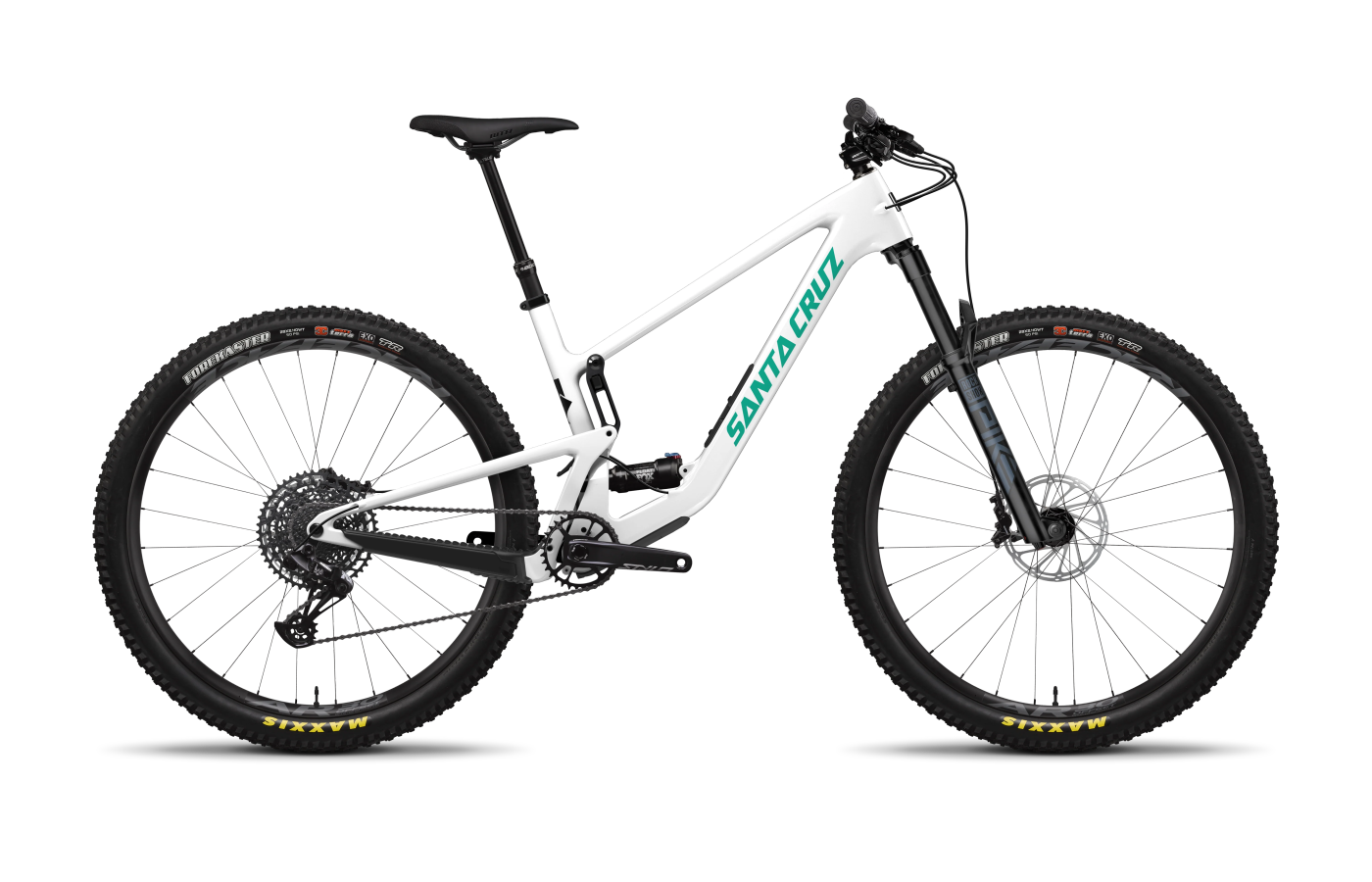
Tallboy
Often the first bike riders cross-shop against the Ripley — same 120-130 mm trail-bike segment, similar climbing-vs-descending balance. The Tallboy is a touch more downcountry-leaning than the V5, but in the same conversation.
Compare →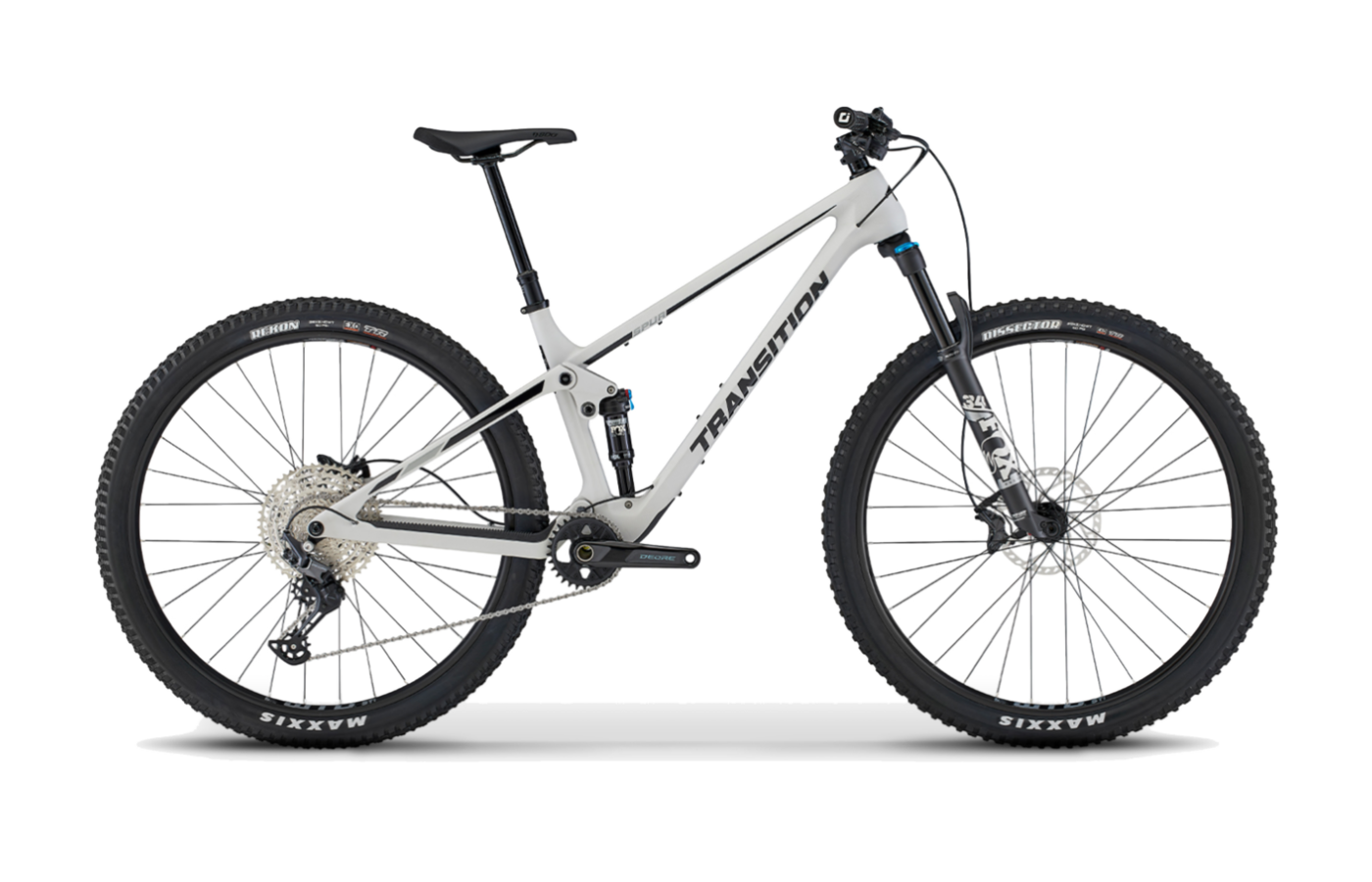
Spur
The classic downcountry benchmark — splits the difference between the Spearfish's XC focus and the Ripley's trail bias. Bikepacking.com directly compared the Spearfish to the Spur for descending confidence with better climbing manners.
Compare →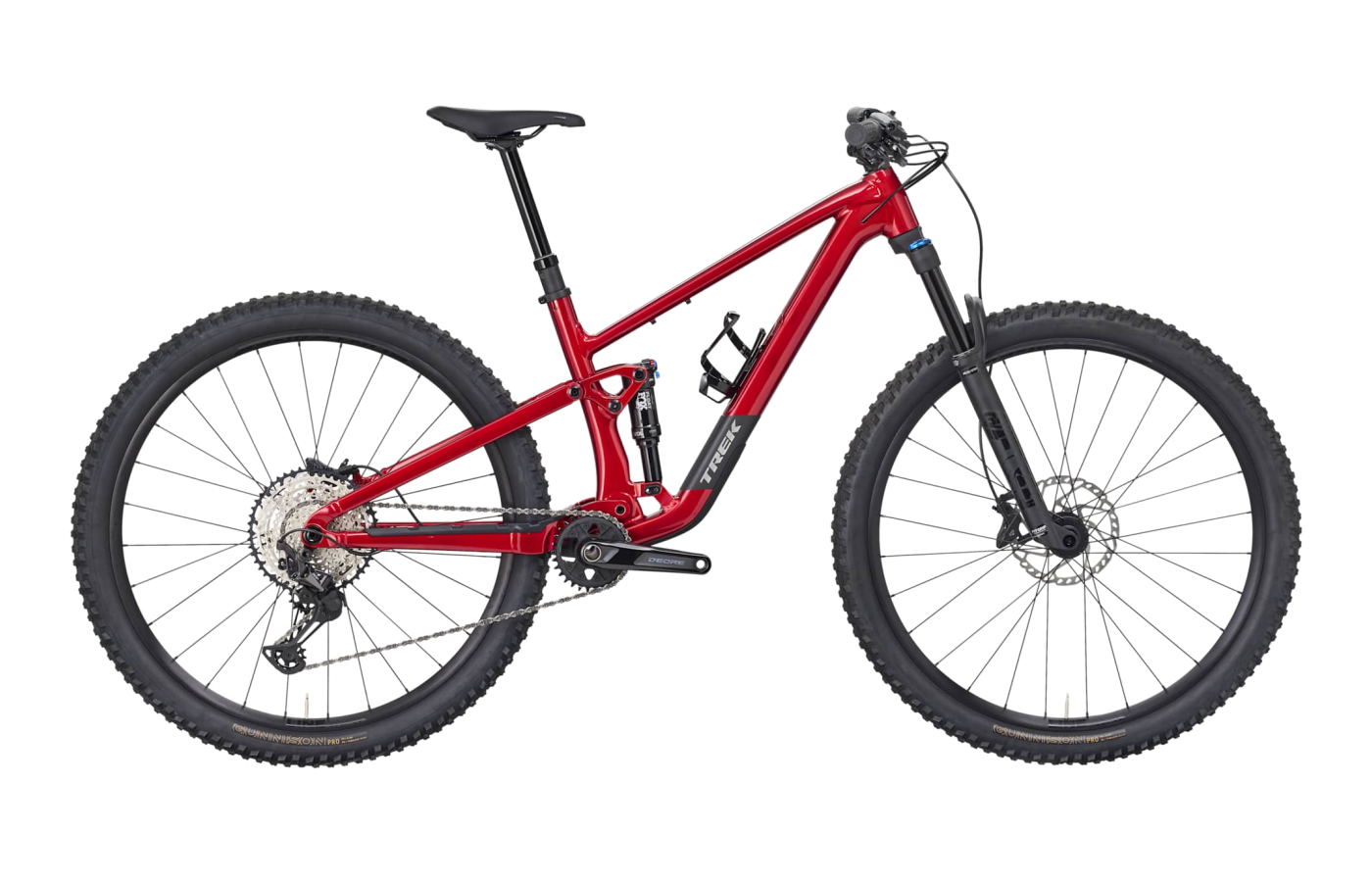
Top Fuel
Trek's evolution from XC race bike to capable short-travel trail bike mirrors the Ripley's trajectory. Worth a look if you want an alt with a dealer network larger than either Ibis or Salsa.
Compare →