Hakka MX
vsStigmata
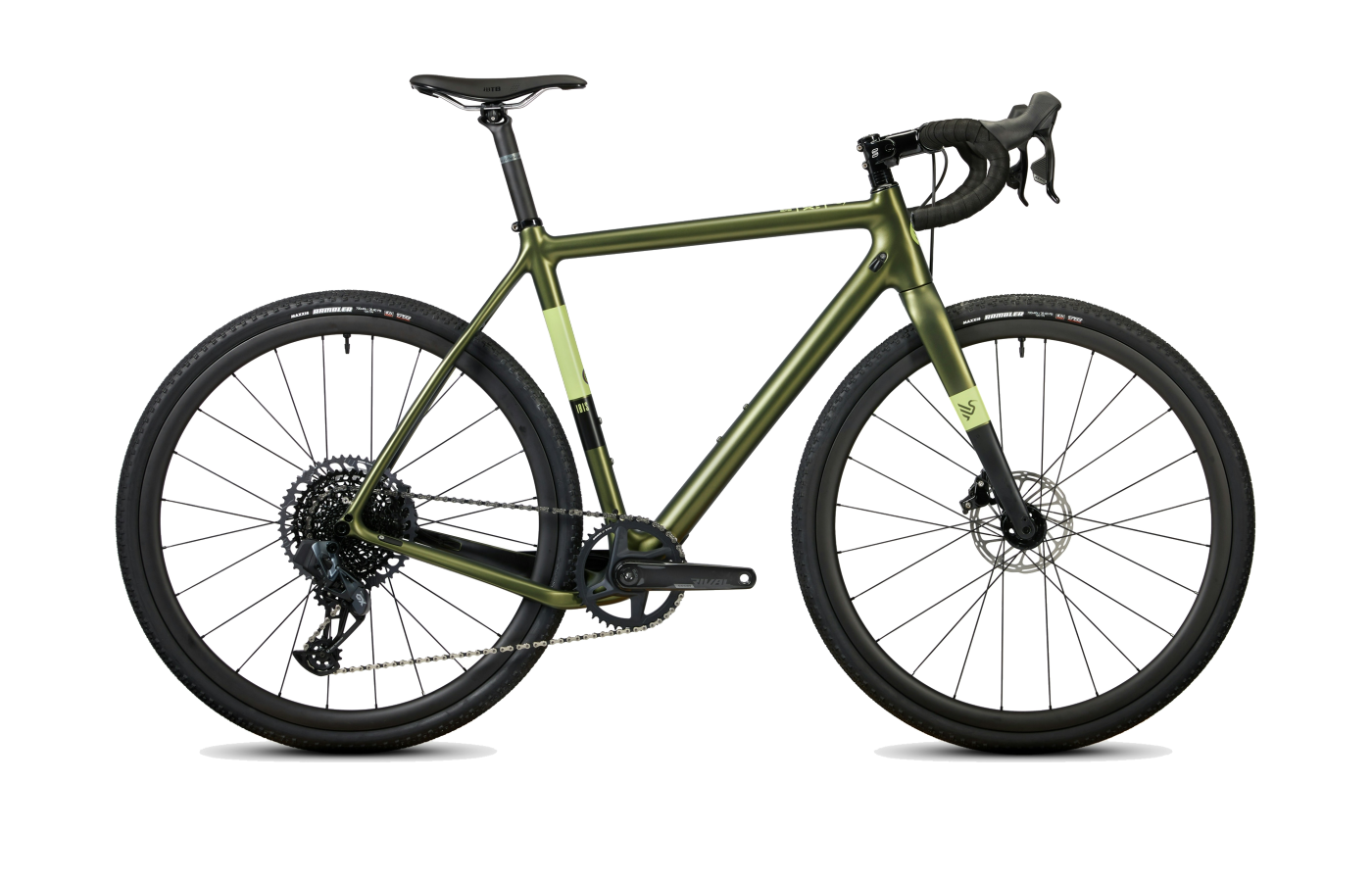
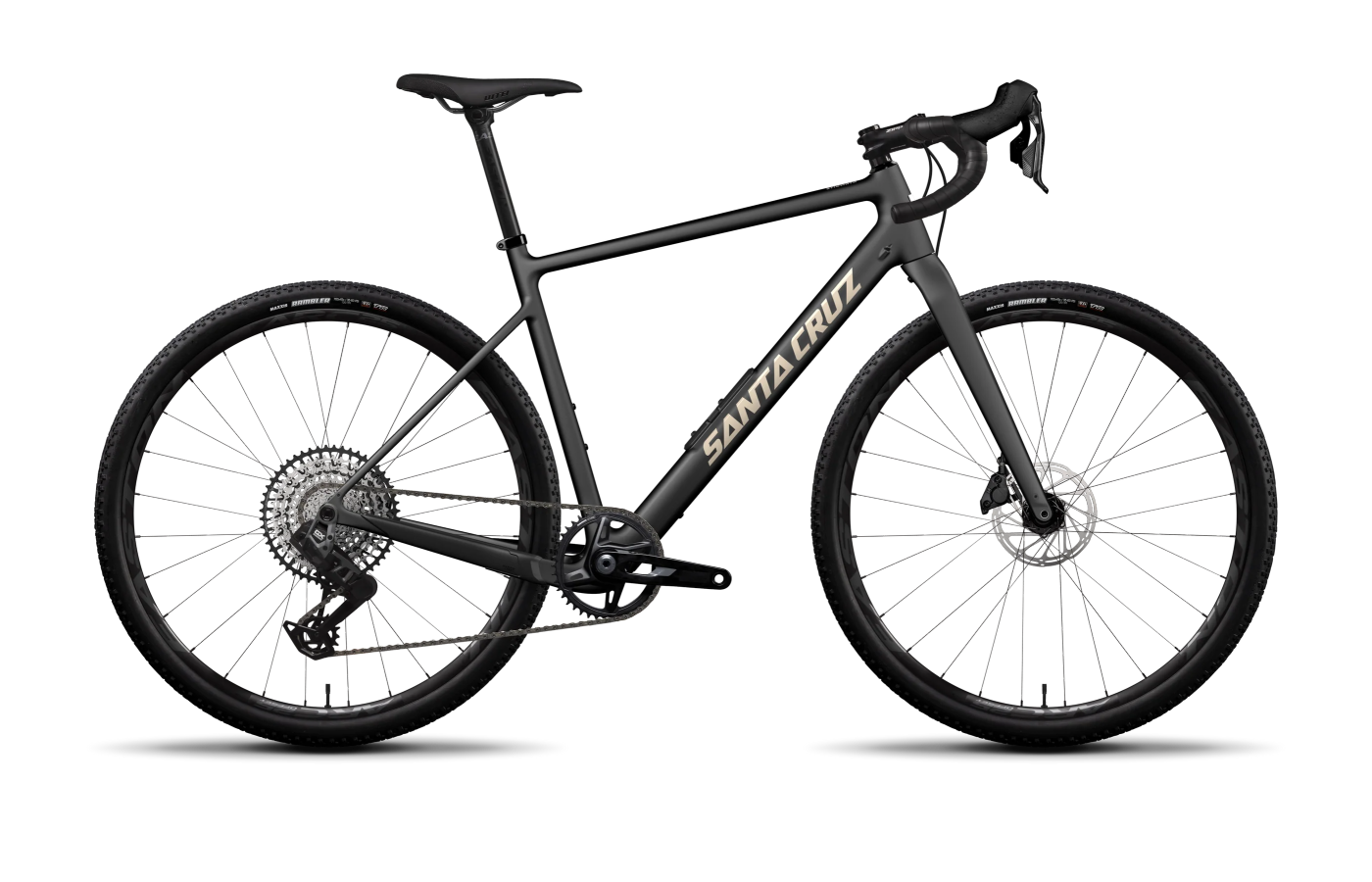
Two gravel philosophies, six years apart.
The Hakka MX is the cyclocross-rooted Swiss Army knife. The Stigmata 4 is the slack, suspension-corrected mountain-biker's gravel rig.
Hakka MX
- Featherweight frame — claimed 1,000 g carbon layup with ENVE rigid fork, a true climb-friendly chassis.
- Two-wheel-size versatility — 700c x 40 mm for racing, 27.5 x 2.1 in for adventure, on the same frame.
- T47 threaded BB — creak-resistant and home-mechanic friendly, with a 7-year frame warranty behind it.
- Only 40 mm tire clearance vs the Stigmata's 50 mm — caps how rowdy it can get without going 650b.
- Stiff frame is divisive on chunky terrain; reviewers consistently call it harsh next to modern compliant gravel bikes.
Stigmata
- 50 mm tire clearance — more rubber than any pure-bred gravel race bike, with a 40 mm fork option to go with it.
- Suspension-corrected geometry — start rigid, bolt on a RockShox Rudy later without ruining the handling.
- Lifetime frame and wheel warranty — Reserve carbon wheels (on RSV builds) and the Carbon CC frame are both covered for life.
- Heaviest builds creep past 10 kg — accelerations and steep climbs feel less urgent than the Hakka.
- Slacker 69.5 degree head tube needs deliberate weighting on tarmac descents and slow, technical climbs.
Editor’s analysis
Same category, opposite design briefs — one bike wants to race, the other wants to descend.
On a spec sheet these read like peers: carbon frames, SRAM 1x drivetrains, ~$4,100 entry, Maxxis Rambler tires. Spend any time with the geometry numbers and the gap opens fast. The Ibis Hakka MX is a 2019-era platform that still wears its cyclocross DNA on its sleeve — 72 degree head tube, 430 mm chainstays, 40 mm tire ceiling. The Santa Cruz Stigmata 4, redesigned in 2023, runs a 69.5 degree head tube, 423 mm chainstays, and clears a 50 mm tire. Six years of gravel evolution between them.
The Hakka MX is built for going fast on stuff that's still mostly a road. Stiff Ibis carbon frame, claimed 1,000 g, T47 threaded BB, ENVE rigid fork. Reviewers consistently call it a 'carbon rocketship' that climbs and accelerates with road-bike urgency — but they also flag the frame as 'a little harsh' on rough terrain. The fix Ibis bakes in is wheel choice: 700c x 40 mm for race pace, or swap to 27.5 x 2.1 in tires (the frame clears them) when you want compliance. It's a versatility lever, but one you have to pull yourself.
The Santa Cruz Stigmata 4 takes the opposite approach: build the compliance into the chassis and offer real suspension. Santa Cruz dropped frame stiffness 10–12% versus the Gen 3, suspension-corrected the front end for a 40 mm fork, and stretched the wheelbase out past 1,043 mm even at size SM. The size MD has 13 mm more reach than the Hakka 53 (405 vs 377 mm) but a 24 mm taller stack on the small frame, plus a much slacker front end. It's heavier — 9.36 kg on the Rival 1x AXS vs ~8.4 kg complete on a comparable Hakka — but it descends and tracks chunky terrain in a way the Hakka simply cannot.
The picking line is sharp: the Ibis Hakka MX is the bike for riders who treat gravel as a faster, dirtier road ride, and want one chassis that can race CX on Sunday. The Santa Cruz Stigmata is the bike for riders who treat gravel as easier, drop-bar mountain biking — and want a frame that's ready for a Rudy fork the day they decide to add one.
Where the builds differ.
Comparing our editor's-pick builds side-by-side. Winners highlighted row-by-row — lower price and weight, and the better-spec component, each mark a point.
Build variants & pricing
The Stigmata range is wider — five builds spanning $4,149 to $7,549, with suspension and dropper-post options. The Hakka MX has just two complete builds, both rigid.
Prices are current US MSRP. The Hakka MX has not seen a major refresh since 2019; build options are limited. The Stigmata 4 launched in 2023 with a deeper lineup including a $4,149 Apex build that price-matches the Hakka's entry point.
How they fit, how they steer.
Hakka MX 53 vs Stigmata SM, the fit-picked size on each. The Stigmata sits 3 mm taller in stack with 13 mm more reach, runs 7 mm shorter chainstays, and slacks the head tube by 2.5 degrees — a longer, lower, MTB-leaning cockpit on a chassis built for a 70 mm stem.
Which size should I buy?
Sizes are picked from stack, reach, and effective top tube against a default 173 cm rider — the labels (numeric vs T-shirt) differ but both refer to the best-fit frame on each side.
→These are starting points. Flexibility, riding style, and preferred position all shift the answer — if you’re between sizes, a professional fit beats a chart.
What the magazines said.
Published reviews from trusted cycling outlets. Click through for the full write-up.
Which one should you buy?
If you race or chase Strava times on smoother gravel, get the Hakka MX. If you ride chunky fire roads and singletrack and want a bike that can run a suspension fork, get the Stigmata.
Hakka MX
If your gravel rides look more like a road bike's day off — pace lines, hardpack, the occasional CX race — the Hakka MX still earns its spot. It's lighter, snappier, and rewards efficient power; the 40 mm tire ceiling is the only hard limit on what it can do.
Stigmata
If your gravel ride drifts into singletrack, you want 45 mm tires standard, and you might add a suspension fork down the road — the Stigmata 4 is the more capable platform. Slacker, longer, more compliant, and built around mechanic-friendly standards (UDH, threaded BB, round 27.2 mm post).
Questions buyers actually ask.
Short answers to the things we get emailed about most often.
01Which is faster on smooth gravel?
The Ibis Hakka MX, on most days. Its claimed 1,000 g frame and stiffer-everywhere layup translate to quicker acceleration and more efficient climbing — Outdoorgearlab scored it 9/10 for climbing and 10/10 for weight in their gravel-bike test.
On loose, chunky surfaces the gap closes and can flip — Velo's six-month review of the Stigmata noted 'fastest descending times ever' on terrain where stiffer race bikes get bounced offline.
02What's the maximum tire clearance?
Hakka MX: 40 mm officially with 700c. Run 27.5 in (650b) wheels and the frame clears 2.1 in tires — Ibis explicitly designed it for both wheel sizes.
Stigmata 4: 50 mm with 700c (1x setups). No 650b option from Santa Cruz, but with 50 mm of clearance and a 40 mm-travel fork on tap, you don't really need it.
03Can I run a suspension fork on either?
Only the Stigmata 4. The frame is suspension-corrected for a 40 mm-travel fork (430 mm axle-to-crown), so a RockShox Rudy or Fox 32 Taper-Cast bolts on without throwing the geometry off.
The Hakka MX is rigid-only — its ENVE fork is the design spec, and there's no suspension-corrected version of the frame.
04How do the editor's-pick builds compare?
The Ibis Hakka MX Rival AXS ($4,999) runs Rival AXS shifters with a GX AXS rear derailleur (a 'mullet' wide-range 1x), Stan's Crest alloy wheels on Ibis hubs, and the Cane Creek eeSilk compliance stem.
The Santa Cruz Stigmata Rival 1x AXS ($5,049) runs Rival AXS shifters with a GX Eagle AXS T-Type derailleur, Easton ARC Offset 25 alloy wheels on DT Swiss 370 hubs, and a Zipp Service Course alloy cockpit.
Drivetrain tier and price are essentially matched — the differences are in the chassis, not the parts.
05How serviceable are these frames?
Both are mechanic-friendly by modern carbon-bike standards. Both use threaded bottom brackets (T47 on the Hakka, BSA 68 mm on the Stigmata) which avoids the creak issues press-fit frames are known for.
The Stigmata adds a Universal Derailleur Hanger (UDH), external cable routing that doesn't go through the headset, and a standard 27.2 mm round seatpost. Reviewers across Velo, Escape Collective, and Bikepacking.com singled this out as one of the friendliest carbon gravel bikes to live with long-term.
06Which one is better for bikepacking?
The Stigmata 4, but neither is a dedicated bikepacking bike. Reviewers (NSMB, Bike Perfect) call the Stigmata 'strong as an ox' for loaded riding, but it lacks dedicated rack mounts, so you're on strap-on bags.
The Hakka MX has been used for bikepacking for years — Bikepacking.com's original review was titled 'Ramble Approved' — but earlier framesets were criticized for missing fork mounts. Ibis updated the ENVE fork later to add mudguard eyelets, addressing some of the gap.
07What warranty do they come with?
Hakka MX: 7-year frame warranty (and rim and handlebar where Ibis-branded), 1-year on paint.
Stigmata 4: lifetime frame warranty to the original owner, plus lifetime warranty on Reserve carbon wheels (on the RSV-spec builds). Santa Cruz's warranty is the more comprehensive of the two.
08Does the Hakka MX still hold up against a 2024 design like the Stigmata?
Depends what you're asking it to do. As a light, stiff, race-leaning gravel bike, the Hakka MX is still very competitive — the frame's 1,000 g claimed weight and direct-drive feel are still benchmarks at this price.
Where it shows its age is in tire clearance (40 mm vs 50 mm), suspension compatibility (none vs 40 mm), and modern long-and-slack geometry. If your riding pulls toward the chunky end of gravel, the Stigmata's six-year-newer design wins on capability.
Similar bikes
If your priorities don’t map cleanly onto either of these, one of these adjacent bikes probably fits better.
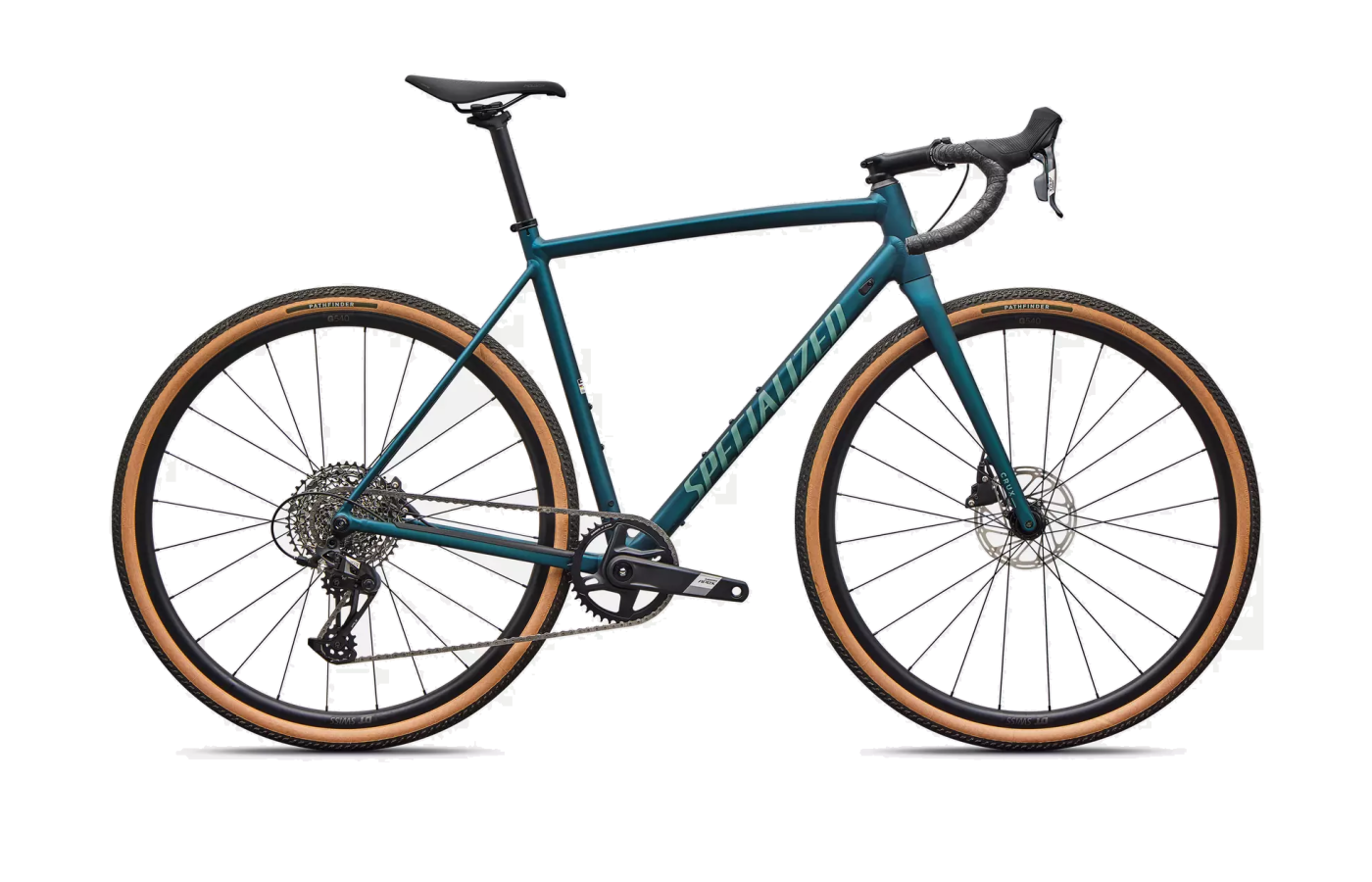
Crux
The pure gravel-race answer — a sub-800 g frame in S-Works trim, no suspension pretensions, designed to climb fast and accelerate harder than either bike here. If the Hakka MX appeals but you want a 2020s frame, look here first.
Compare →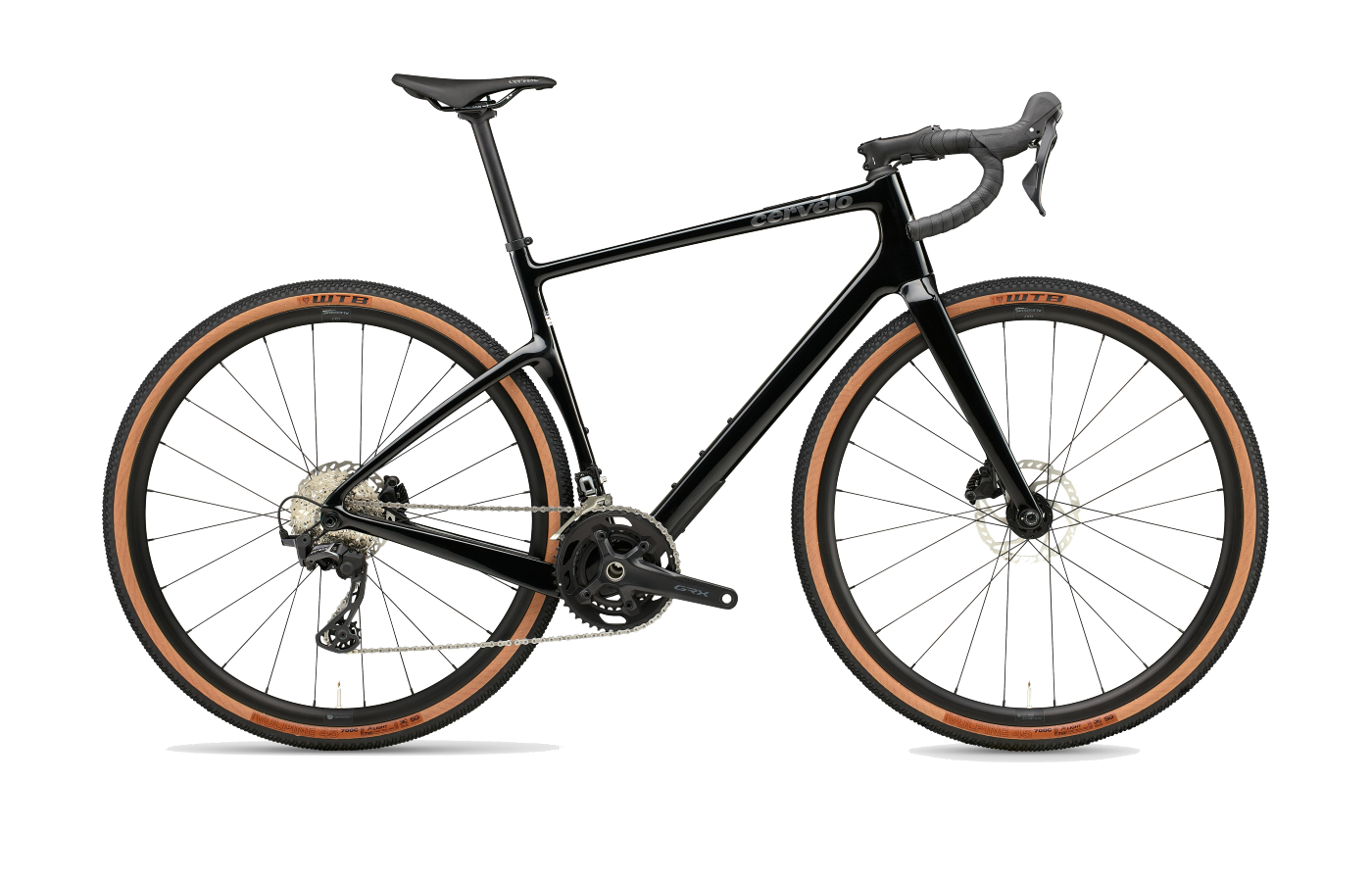
Aspero
Cervelo's aero-leaning gravel race bike. Faster on the smooth stuff than the Hakka thanks to deeper tube shapes and tighter integration — a Cervelo Aspero is the bike if your gravel events are flat and exposed.
Compare →Szepter
The most extreme version of the Stigmata's playbook — direct-to-consumer pricing, MTB-derived geometry, 50+ mm tires, dropper post and suspension fork standard on the top builds. If you're tempted to underbike the Stigmata, the YT Szepter is the more commit-to-the-bit option.
Compare →