DV9
vsHighball
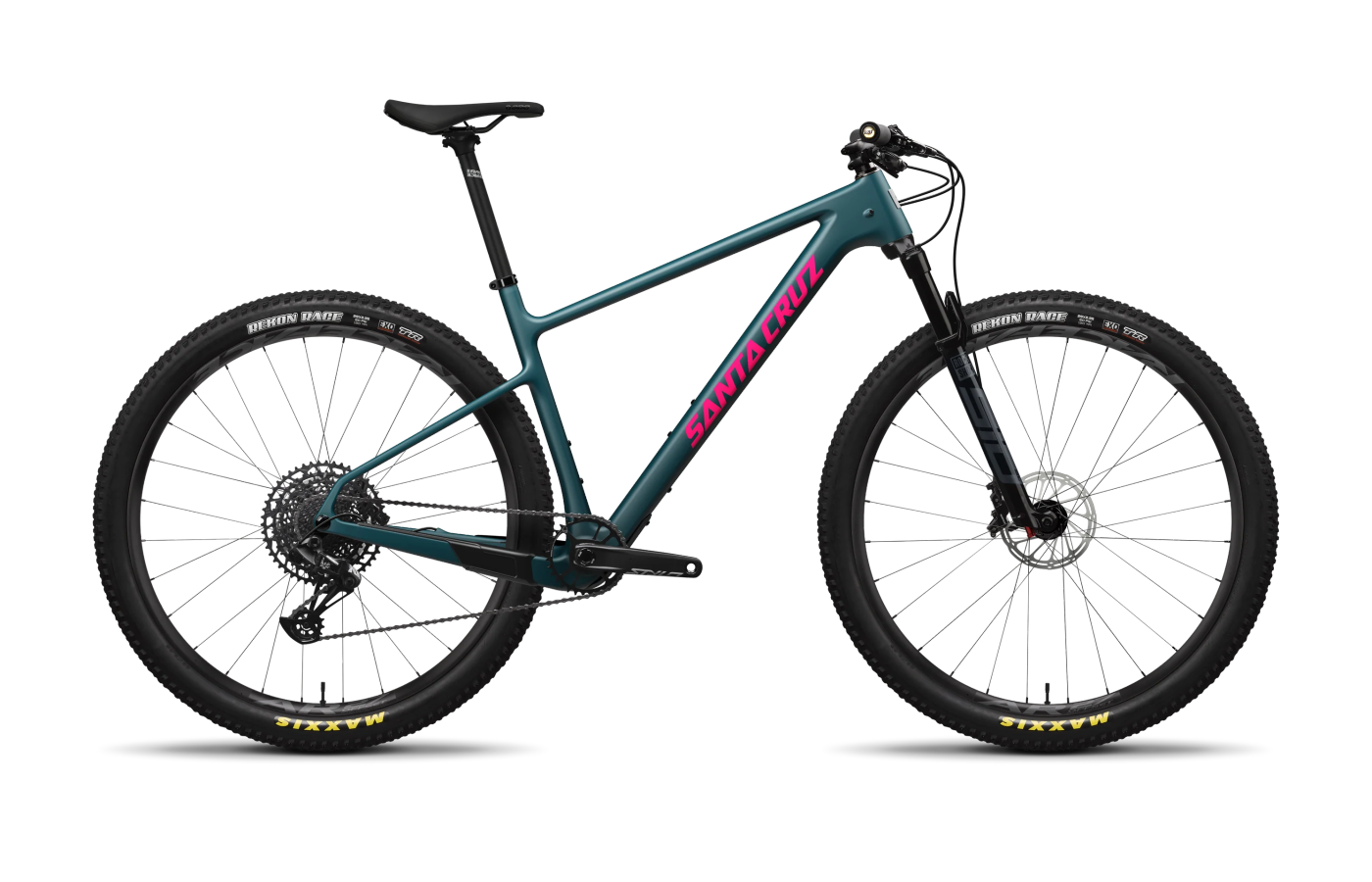
Two carbon hardtails, two different trails.
The DV9 is a 120 mm downcountry hardtail built to descend. The Highball is a 100 mm XC platform built to cover ground.
DV9
- More fork — 120 mm Fox 34 Step-Cast vs 100 mm RockShox SID gives the DV9 real downcountry capability.
- Slacker front end — 66.5° head tube angle invites you to point it at terrain a pure XC bike would reject.
- All-in price — $2,999 for the only build, with a Fox 34 and a lifetime carbon-frame warranty included.
- Single build only — no drivetrain or wheel upgrade path from the factory.
- Reviewers flag the stock Maxxis Recon Race tires as too slick for the kind of terrain the rest of the bike encourages.
Highball
- Wider build range — five builds from $3,299 to $7,899, covering NX mechanical to wireless X0 AXS.
- Compliant rear triangle — dropped seat-stay junction takes the edge off washboard and long dirt-road days.
- XC race geometry — 100 mm SID and steeper 67° head angle reward riders who care about climbing efficiency over descending grit.
- Even the cheapest build is $300 more than the DV9, with a less capable fork.
- 100 mm of front travel runs out of room on the kind of terrain the DV9 handles comfortably.
Editor’s analysis
Same wheel size, same hardtail premise, almost identical chainstays — and fundamentally different jobs once the trail tilts up or down.
The Ibis DV9 and Santa Cruz Highball both run a carbon front triangle, 29-inch wheels, and 425–426 mm chainstays. From there, they walk in opposite directions. The DV9 ships with a 120 mm Fox 34 Step-Cast fork, a 66.5-degree head tube angle, and a 74.5-degree seat tube — Ibis's pitch is a hardtail you can point at black diamonds without flinching. The Highball runs a 100 mm RockShox SID, a 67-degree head angle, and a 73.5-degree seat tube — Santa Cruz's pitch is climb fast, race long, and feel less of the trail through the seatpost.
On the Ibis DV9, the extra 20 mm of fork travel and the steeper effective seat angle change the bike's character. Reviewers consistently call it "snappy and playful" — the short 425 mm stays plus a slacker front end let it pop off rollers and hold a line into a chunky descent. It demands an active rider on rough ground (no rear suspension is doing it for you), but for downcountry blue/black trails where most aggressive XC bikes feel overstuck, it's the more confidence-inspiring of the two.
The Santa Cruz Highball plays a quieter game. Its dropped seat-stay junction — the seat stays meet the seat tube about two inches below the top tube — engineers a small amount of vertical compliance into the rear triangle. Multiple reviewers describe the result as a "soft hardtail" that keeps the rear wheel tracking on washboard, dirt-road chatter, and long fire-road grinds. Pair that with the 100 mm SID and Maxxis Rekon Race tires and the bike rides like a flat-bar gravel rig that happens to climb singletrack. It's designed for people who measure rides in hours, not features cleared.
Price separates them as cleanly as fork travel does. The DV9 is sold as a single Deore build at $2,999 — that's the whole platform. The Highball spans $3,299 (NX-equipped R) up to $7,899 (X0 AXS RSV with Reserve carbon wheels). If you want a wireless drivetrain or a full-Reserve build, the Highball is the only one of the two that offers it. If you want a 120 mm fork without spending more than three grand, the DV9 stands alone.
Where the builds differ.
Comparing our editor's-pick builds side-by-side. Winners highlighted row-by-row — lower price and weight, and the better-spec component, each mark a point.
Build variants & pricing
The DV9 ships in a single Deore build. The Highball spans five tiers from NX mechanical up to wireless X0 AXS with Reserve carbon wheels.
Prices are current US MSRP. The editor's-pick comparison pairs the Highball R against the DV9 Deore — both are entry-tier 1x12 hardtails on alloy wheels and that's the closest apples-to-apples spec. Higher Highball builds (S, 90, GX AXS, X0 AXS RSV) have no DV9 equivalent.
How they fit, how they steer.
DV9 in MD vs Highball in m — the fit-picked sizes for a 5'8" rider on each bike. The DV9 sits 17 mm taller in stack with a 5 mm shorter reach, runs a 0.5° slacker head tube, and a 1° steeper seat tube. Chainstays are within a millimeter (425 vs 426).
Which size should I buy?
Both lineups use four-size grids; the DV9 uses SM/MD/LG/XL labels and the Highball uses s/m/l/xl, but the fit ranges overlap closely.
→These are starting points. Flexibility, riding style, and preferred position all shift the answer — if you’re between sizes, a professional fit beats a chart.
What the magazines said.
Published reviews from trusted cycling outlets. Click through for the full write-up.
Which one should you buy?
If you want a hardtail that can drop into black diamonds, get the DV9. If you want one that disappears under you on long climbs and dirt-road days, get the Highball.
DV9
If your weekend is flowy singletrack with a few committing descents — and you want one bike, no decisions, no upsell — the DV9's 120 mm fork and slacker geometry give you more capability per dollar than any pure-XC hardtail. Plan to swap the Recon Race tires for something with more bite.
Highball
If you race XC, do marathons, or just spend most of your saddle time on climbs and dirt roads, the Highball's lighter SID, steeper head angle, and compliance-tuned rear end are tuned for exactly that work. The five-build ladder also lets you spec it the way you actually want it.
Questions buyers actually ask.
Short answers to the things we get emailed about most often.
01Which bike has more suspension travel?
The Ibis DV9 — 120 mm up front from the Fox Float 34 Step-Cast vs 100 mm on the Highball's RockShox SID. Both are hardtails, so there's no rear travel on either. That extra 20 mm in front is the single biggest reason the DV9 feels more capable on rough descents, and the single biggest reason the Highball feels lighter and more efficient on a long climb.
02Which one climbs better?
The Highball, on paper and on most climbs. It's lighter (the 25-lb-class Carbon C builds vs. roughly 27 lb for the DV9 Deore at this price), runs a shorter, lighter 100 mm fork, and the dropped-seat-stay rear triangle damps the high-frequency chatter that bleeds energy out of a hardtail.
The DV9 is no slouch — reviewers consistently call it a "good technical climber" thanks to its short 425 mm stays and 74.5° seat tube angle, which is actually a degree steeper than the Highball's 73.5°. On steep, technical pitches the DV9 can match it. On long fire-road grinds, the Highball pulls away.
03Which one descends better?
The DV9, clearly. The 66.5° head tube angle (vs 67° on the Highball), the longer 120 mm fork, and the lower bottom bracket all combine to make it the more confident bike when the trail points down. Reviewers describe being able to "bomb into black diamond trails with confidence."
The Highball is stable for an XC bike — its longer wheelbase helps on fast, open descents — but 100 mm of front travel and a steeper head angle put a real ceiling on what it'll absorb.
04How much do they weigh?
DV9 Deore: Ibis doesn't publish a stock weight for this build, but a similarly-specced SLX size large was measured at 24.7 lbs without pedals; the Deore tester is a touch heavier (figure roughly 25–26 lbs).
Highball: weights are model-listed. The flagship X0 AXS RSV is 22.37 lbs (10.15 kg), the GX AXS is 23.19 lbs (10.52 kg), the S is 23.48 lbs (10.65 kg), and the R is 24.82 lbs (11.26 kg).
At the entry tier, the bikes are roughly within a pound of each other. At the top end, the Highball X0 AXS RSV is about three pounds lighter than anything Ibis offers in the DV9 line.
05What's the price range on each?
DV9: $2,999 — full stop. Ibis sells the DV9 in a single Deore-equipped build.
Highball: $3,299 (R, NX Eagle mechanical) up to $7,899 (X0 AXS RSV, wireless drivetrain, Reserve carbon wheels), with three intermediate builds (S, 90, GX AXS) in between.
If budget is fixed at $3k or under, the DV9 is your only option here. If you want a wireless drivetrain or carbon race wheels, the Highball is the only path.
06How wide a tire will each one fit?
DV9: the carbon frame is rated for 2.6" tires in the rear, but the stock Fox 34 Step-Cast fork only clears 2.4" up front — a discrepancy multiple reviewers flag as an unfortunate limit on what the platform can actually run.
Highball: Santa Cruz's published clearance is around 2.4" (61 mm). Both ship with Maxxis Rekon Race or Recon Race rubber in 2.35", which is fine for fast XC and underwhelming for anything actually loose or rocky. Plan on a tire swap on either bike.
07Are these good for bikepacking or gravel-style adventures?
Both are workable; the Highball is the better fit. Reviewers explicitly compare its long-distance feel to a flat-bar gravel bike — efficient on dirt roads, comfortable over hours, easy to spin at a steady cadence.
The DV9 is also a known bikepacking platform (the kinked top tube fits two bottles across all sizes), but its 120 mm fork and trail-leaning geometry are a touch more bike than most gravel-grade routes need. Pick the Highball for long miles on smoother terrain; pick the DV9 if your bikepacking routes include real singletrack.
08What's the warranty situation?
Both brands back the carbon frame with a lifetime warranty to the original owner. Ibis is widely cited at lifetime; Santa Cruz also has a lifetime-frame and lifetime-bearing program. Both include crash-replacement pricing on a damaged frame. For a sub-$3,000 (DV9) or sub-$3,500 (Highball R) carbon hardtail, that's an unusually strong long-term ownership story.
Similar bikes
If your priorities don’t map cleanly onto either of these, one of these adjacent bikes probably fits better.
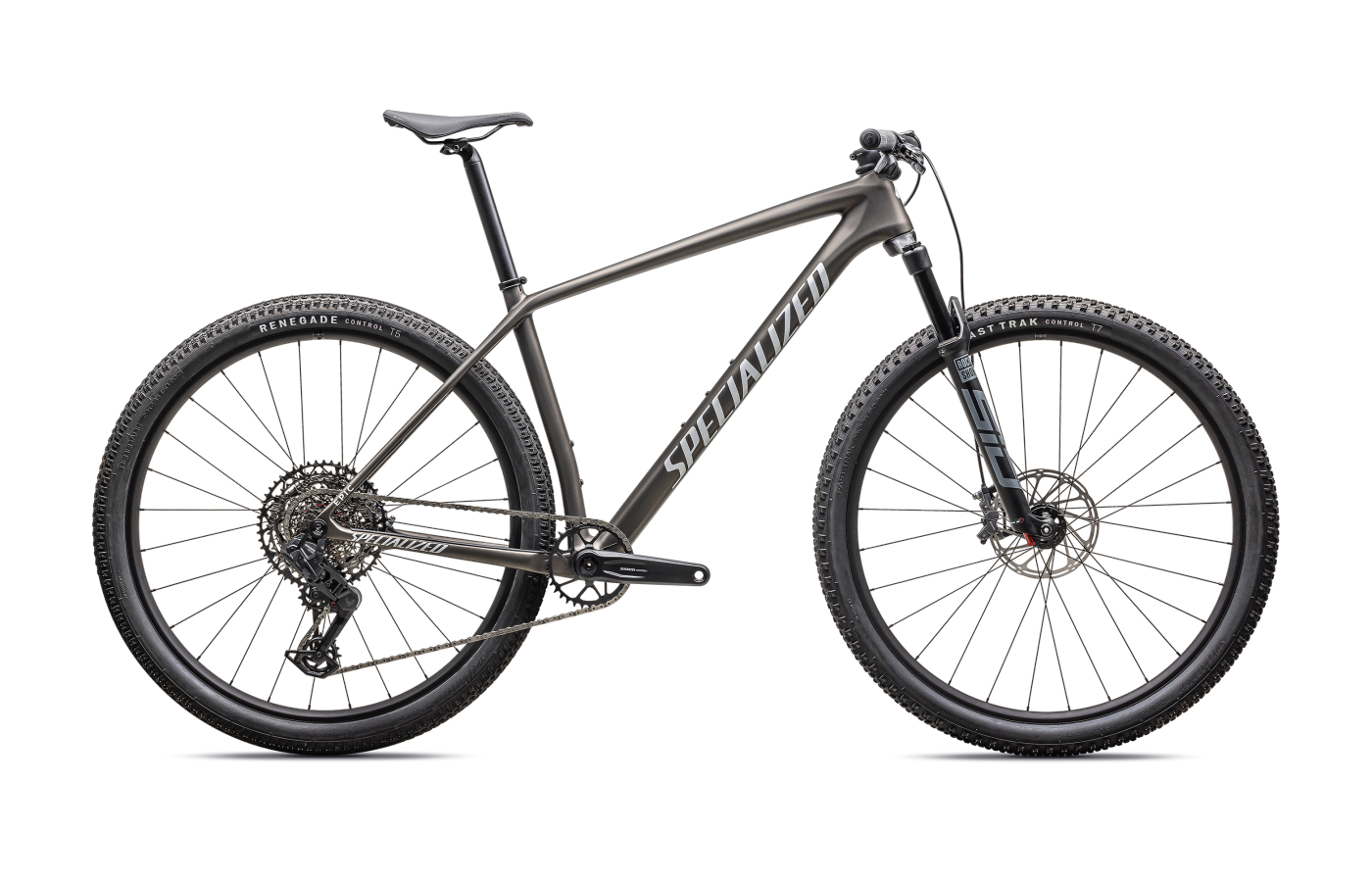
Epic Hardtail
The most direct cross-shop for the Highball — Specialized's purebred XC race hardtail, lighter and stiffer than the DV9 with the same 100 mm front-travel ethos. Pick it if you race XC and want a fully race-tuned platform from a major brand.
Compare →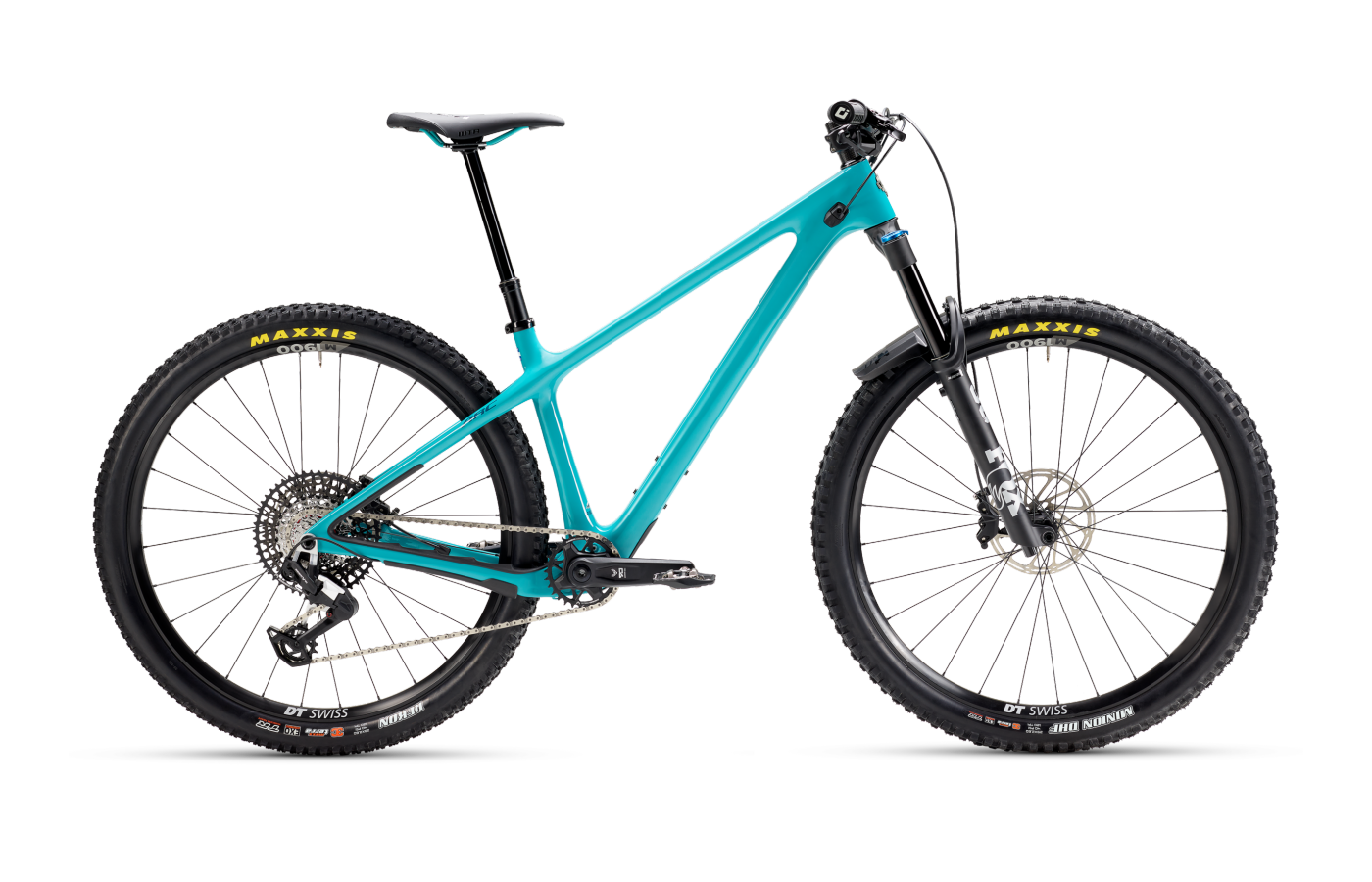
ARC
Yeti's aggressive carbon hardtail with even more downcountry intent than the DV9 — slacker geometry, longer fork option, and a frame designed to push the upper limits of what a hardtail can descend. The pick if the DV9 still feels like not enough bike.
Compare →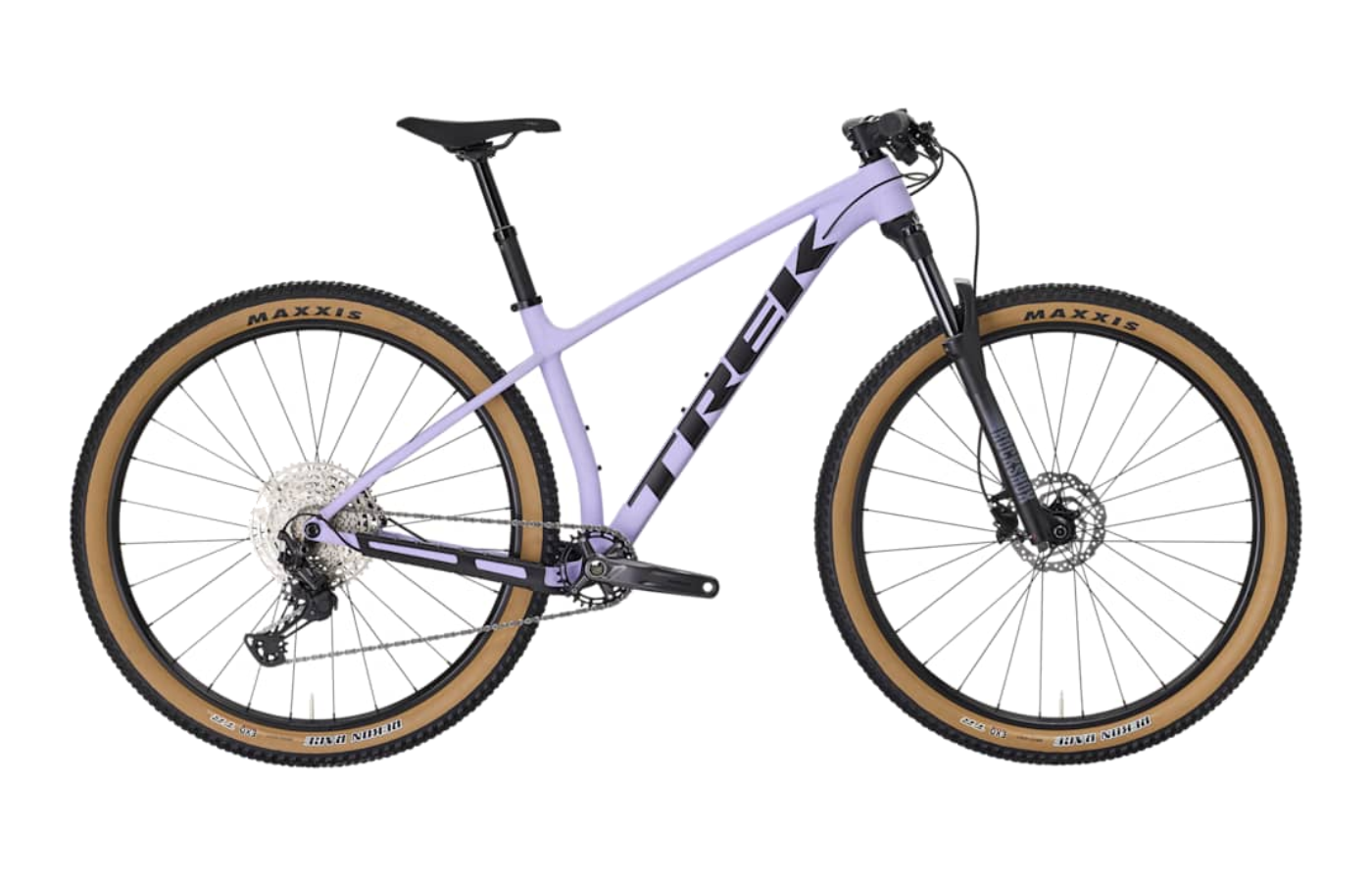
Procaliber
Trek's carbon XC hardtail with the IsoSpeed decoupler — a different engineering answer to the same compliance problem the Highball solves with its dropped seat stay. Worth a look if you like the Highball's idea but want Trek's dealer network.
Compare →