DV9
vsChameleon
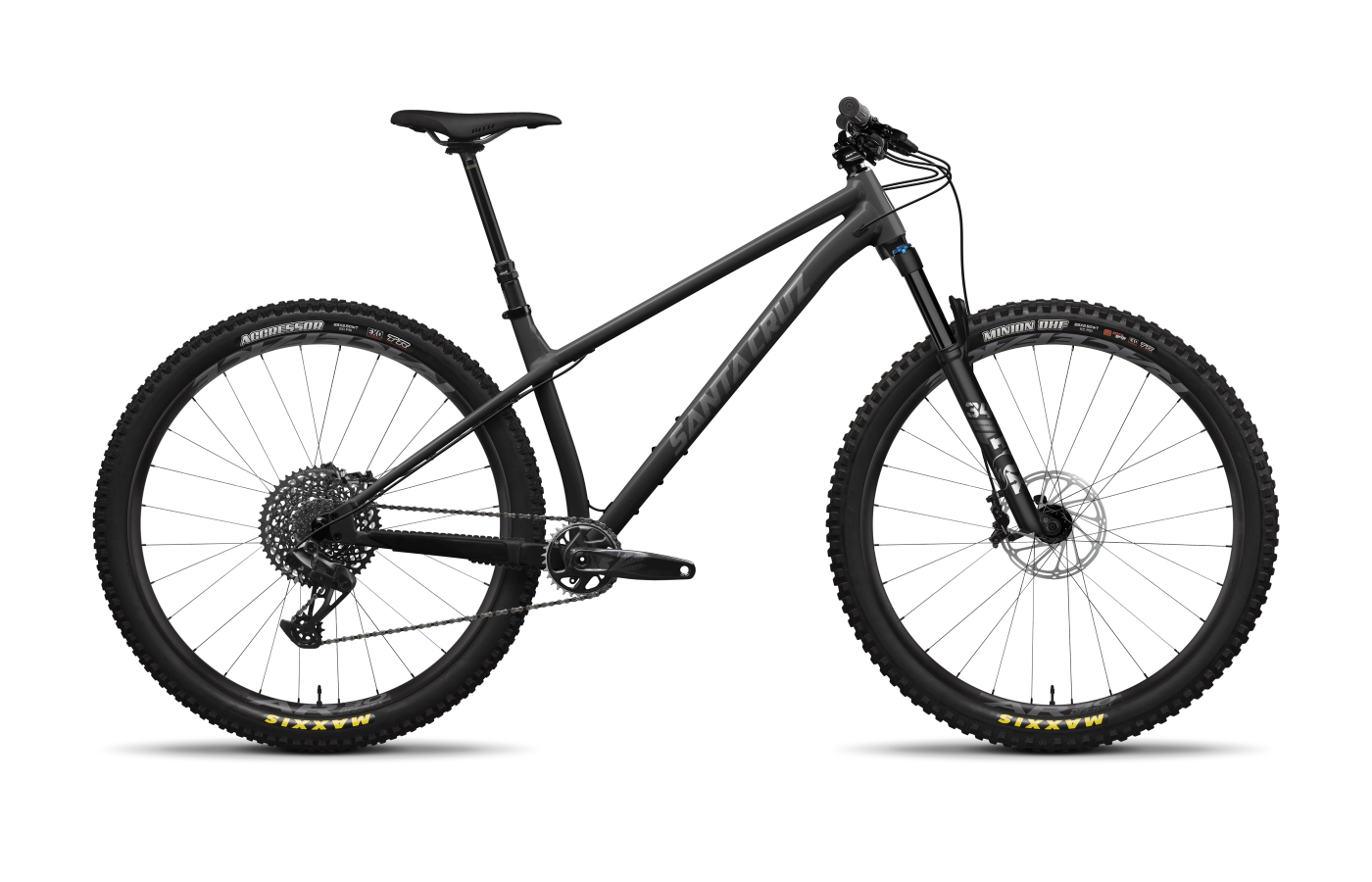
Two $3k hardtails, two opposite jobs.
The Ibis DV9 is a carbon downcountry rocket. The Santa Cruz Chameleon is an aluminum trail bike that wants to do everything else.
DV9
- Carbon frame at $2,999 — rare at this price, and Ibis backs it with a lifetime warranty.
- Genuinely light — a size large SLX build was weighed at 24.7 lb without pedals (Adventure Cyclist).
- Real Fox 34 fork — Step-Cast 120 mm Performance Series, not a budget RockShox stand-in.
- Fork only clears a 2.4" tire even though the rear can take a 2.6".
- Stock Maxxis Recon Race tires get sketchy in anything beyond hero dirt — most reviewers swap them immediately.
Chameleon
- Adjustable rear end — sliding dropouts swap between 425 and 437 mm chainstays, plus mullet, 29er, or singlespeed.
- Slacker, longer-travel front end — 65-degree HTA and 130 mm fork make black-diamond descents far less of a knife-fight.
- Bike-for-life warranty — lifetime frame and lifetime bearing replacement is the strongest support package in the segment.
- Aluminum frame is noticeably stiffer than the DV9's carbon — reviewers flag chatter without 2.6" tires.
- Stock SRAM MTH rear hub has a sluggish 17-degree engagement; multiple reviewers call a high-engagement hub a near-mandatory upgrade.
Editor’s analysis
Same price, same wheels, same fork brand — and almost nothing else in common. This is XC-fast carbon against trail-tough aluminum.
On price they tie at exactly $2,999 — and that's about where the similarities stop. The Ibis DV9 spends its money on a carbon frame and a 120 mm Fox 34 Step-Cast fork; the Santa Cruz Chameleon spends it on aluminum, a 130 mm Fox 34 Performance, and a stronger drivetrain (GX Eagle vs the DV9's Deore). One bike is built around going fast on smooth-to-moderate trails. The other is built around surviving everything else.
The Ibis DV9 leans hard into downcountry. Carbon frame, lifetime warranty, 66.5-degree head angle, 425 mm chainstays, and a fork chosen for weight over plushness — Adventure Cyclist clocked an SLX build at 24.7 lb. Reviewers across Theradavist, MTB Party, and Elevation Every Weekend describe it the same way: snappy, eager, climbs well, demands an active rider on chunk. The trade-off is that the Step-Cast fork only clears a 2.4" tire even though the rear triangle will swallow a 2.6".
The Santa Cruz Chameleon picks a different fight. The 65-degree head tube angle is 1.5 degrees slacker than the DV9. The fork has 10 mm more travel. Sliding dropouts adjust the chainstays from 425 to 437 mm, and the frame is happy running mullet, full 29er, or singlespeed. It's heavier — Bike Perfect's R build came in around 30 lb — and reviewers were unanimous that the entry-level kit is overpriced relative to the parts. But the frame carries Santa Cruz's lifetime warranty and lifetime bearing replacement, and reviewers like NSMB built whole one-bike-quivers around it.
Put another way: the DV9 is what you buy when you want a hardtail to ride fast. The Chameleon is what you buy when you want a hardtail to ride forever — bikepacking trips, jump lines, double-blacks, and a singlespeed conversion four years from now.
Where the builds differ.
Comparing our editor's-pick builds side-by-side. Winners highlighted row-by-row — lower price and weight, and the better-spec component, each mark a point.
Build variants & pricing
The DV9 ships in a single $2,999 Deore build. The Chameleon spans $2,099 to $2,999 across three trims, with the top S build matching the DV9 on price.
Prices are current US MSRP. The DV9's lone build pairs Shimano Deore with a Fox Performance fork; the matching Chameleon S goes SRAM GX Eagle with a Fox Performance 34. Different platforms, identical money.
How they fit, how they steer.
Compared at the fit-picked sizes for an average rider — DV9 size MD, Chameleon size m. Reach is close (435 vs 445 mm), but the Chameleon's 65-degree head angle and 7 mm taller stack pull the front end up and back; the DV9 sits 1.5 degrees steeper for snappier steering.
Which size should I buy?
Ibis uses XS-XL letters; Santa Cruz uses xs-xl letters. Sizing is comparable through the middle — the Chameleon runs a touch longer in reach at every size.
→These are starting points. Flexibility, riding style, and preferred position all shift the answer — if you’re between sizes, a professional fit beats a chart.
What the magazines said.
Published reviews from trusted cycling outlets. Click through for the full write-up.
Which one should you buy?
If you want a fast, light hardtail for long days and XC-leaning trails, get the DV9. If you want one hardtail that does everything from bikepacking to bike park, get the Chameleon.
DV9
If most of your rides involve real climbing and you'd rather feel snappy than plush, the DV9 is the lighter, sharper tool. The carbon frame and lifetime warranty are the cherry on top at this price.
Chameleon
If you want one hardtail that handles bikepacking on Tuesday, jump lines on Saturday, and a singlespeed experiment next spring, the Chameleon is purpose-built for that life. Plan on a tire and hub upgrade to fully unlock it.
Questions buyers actually ask.
Short answers to the things we get emailed about most often.
01Which is faster on climbs?
The Ibis DV9, comfortably. Adventure Cyclist weighed an SLX-build DV9 at 24.7 lb without pedals; Chameleon builds in this price range typically come in around 28–31 lb on retailer scales. The DV9's carbon frame, steeper 74.5-degree seat tube angle (size MD), and faster-rolling Maxxis Recon Race tires all point the same direction — up.
The Chameleon is no slouch on long fire-road climbs, but reviewers consistently called out the stock SRAM MTH hub's 17-degree engagement as a real handicap on technical, ratchet-style climbs.
02Which descends better?
The Santa Cruz Chameleon, by design. It runs a 65-degree head tube angle vs the DV9's 66.5, a 130 mm fork vs 120 mm, and a longer wheelbase at every comparable size. Reviewers across Bike Perfect, MTB Party, and Off.road.cc described it as a "juggernaut descending" relative to its predecessor and confident on double-black terrain.
The DV9 will hold its own on blue and moderate black trails — Troy On Trails called it surprisingly capable — but it asks more of the rider on steep, rough chunk.
03What's the tire clearance on each?
Ibis DV9: the carbon frame officially clears a 2.6" tire, but the stock Fox 34 Step-Cast fork is limited to 2.4". So in practice you're running 2.4" front and (if you want) 2.6" rear — multiple reviewers flagged this as the bike's most awkward spec call.
Santa Cruz Chameleon: the bike ships with 2.5" Maxxis Minion DHF / Aggressor and reviewers commonly run 2.6" rubber for compliance, with the standard 130 mm Fox 34 (non Step-Cast) chassis.
04Can I run a mullet (mixed wheel) setup?
The Chameleon, yes — by design. The sliding dropouts and a flip chip in the frame let you swap between full 29er and 27.5" rear without changing geometry meaningfully. Bike Perfect and MTB Party both ran the bike in MX and 29er trim back-to-back; the MX setup is widely described as more playful in tight corners.
The DV9, no. It's a 29er-only frame with no provision for a 27.5" rear wheel.
05Is the Chameleon's $400 price gap to the DV9 actually real?
No — at the editor's-pick builds, both bikes ring up at exactly $2,999. The Chameleon also has cheaper builds ($2,099 D, $2,599 R) if budget is the priority; the DV9 has no cheaper option in this generation. So if you want under $3k, the Chameleon is the only one with options below the ceiling.
06How serviceable are these long-term?
Both ride on threaded bottom brackets, both use SRAM's Universal Derailleur Hanger, and both come with lifetime frame warranties. Santa Cruz adds lifetime bearing replacement on top, which over five-plus years of ownership is a meaningful difference.
Ibis backs the DV9 frame for life as well — Theradavist confirmed lifetime coverage in their first-look — and Ibis's frame design moved the seat tube forward to improve dropper-post insertion depth, a small but real long-term win.
07Which has better stock components?
The Chameleon S edges it. At the same $2,999, you get SRAM GX Eagle (one tier above the DV9's Deore), 4-piston SRAM brakes, and aggressive Maxxis Minion / Aggressor tires. The DV9 counters with Shimano Deore (reliable but lower spec), 2-piston Deore brakes, and faster but less grippy Maxxis Recon Race tires.
The DV9's argument back is the carbon frame, which is the part of the bike you can't upgrade later.
08Which is better for bikepacking?
The Chameleon, comfortably. Bikepacking.com noted that the alloy frame's rougher unloaded ride actually mellows out under cargo weight, and the bike has a triple-bolt cargo cage mount on the underside of the downtube plus mounts in the front triangle.
The DV9 will bikepack — Theradavist tested it loaded — but it's optimized for unladen speed. The lighter frame doesn't damp loaded-bike vibration the way the Chameleon does, and it's also short on extra mounts.
Similar bikes
If your priorities don’t map cleanly onto either of these, one of these adjacent bikes probably fits better.
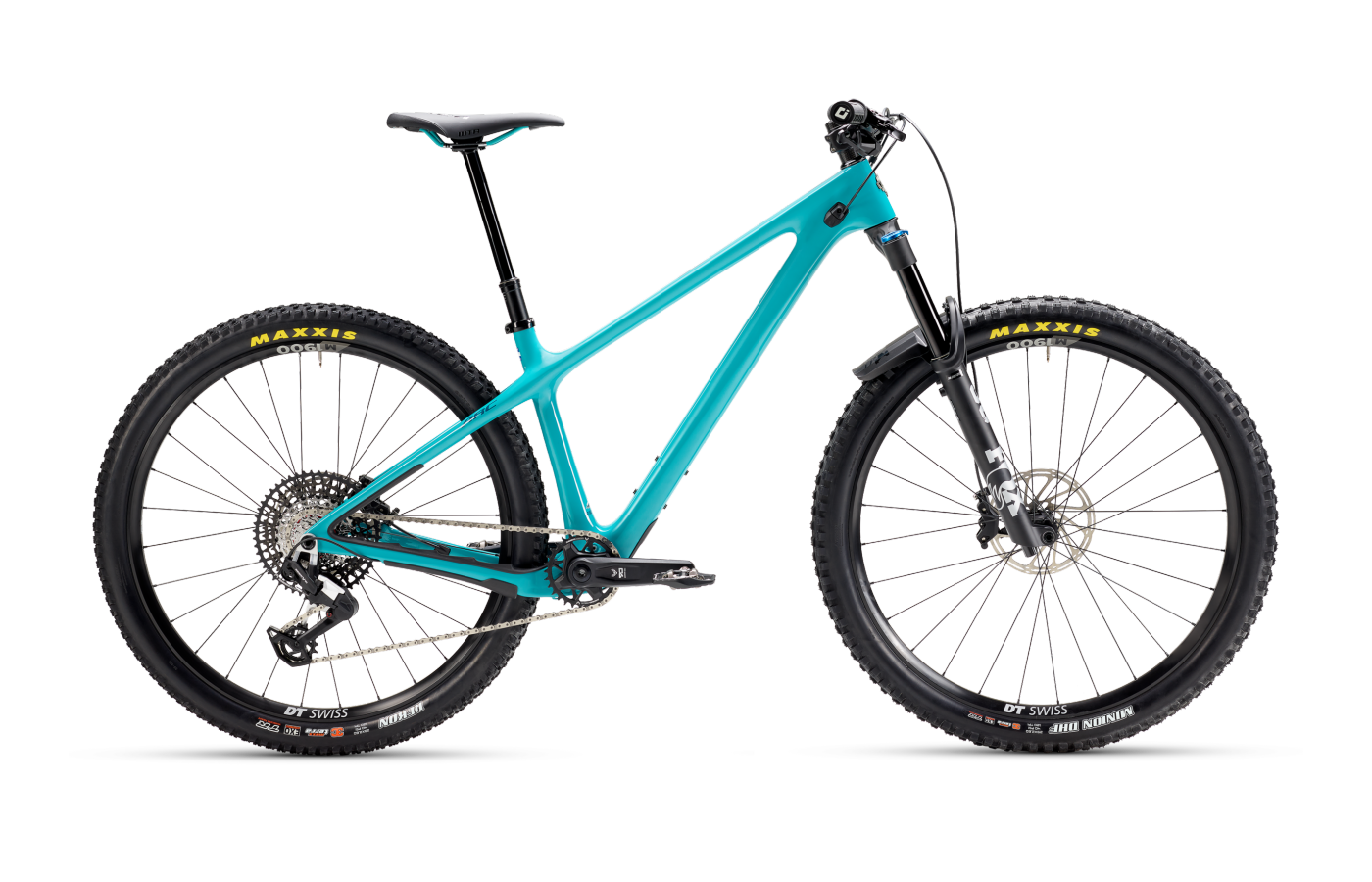
ARC
Yeti's premium carbon trail hardtail — even more downcountry-leaning than the DV9, with Yeti's race pedigree behind it. The closest cross-shop if you've already decided you want carbon.
Compare →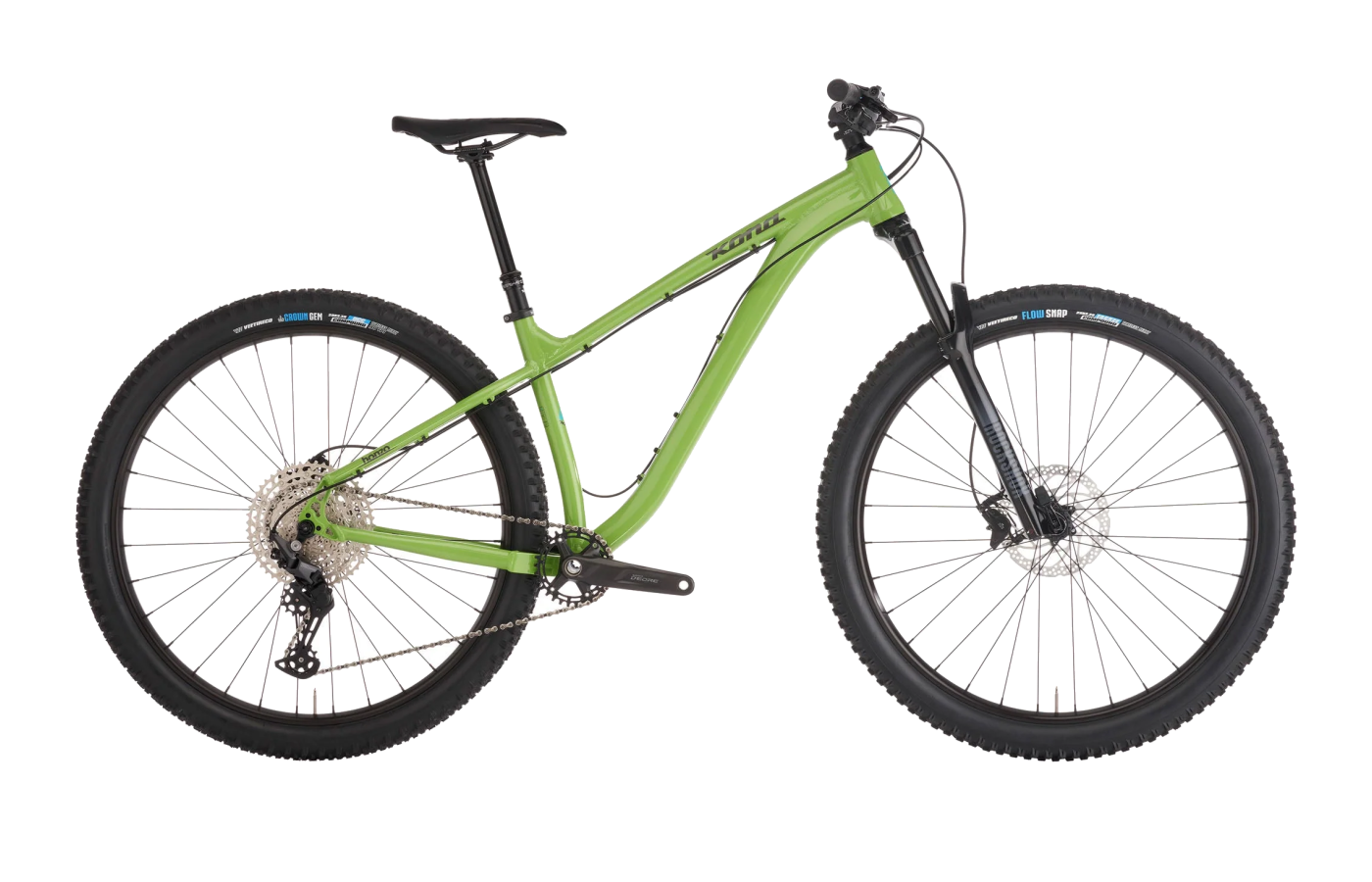
Honzo
Steel-framed alternative to the Chameleon, with the same playful trail-hardtail philosophy but a more compliant ride. Cheaper too — and steel takes a beating without complaint.
Compare →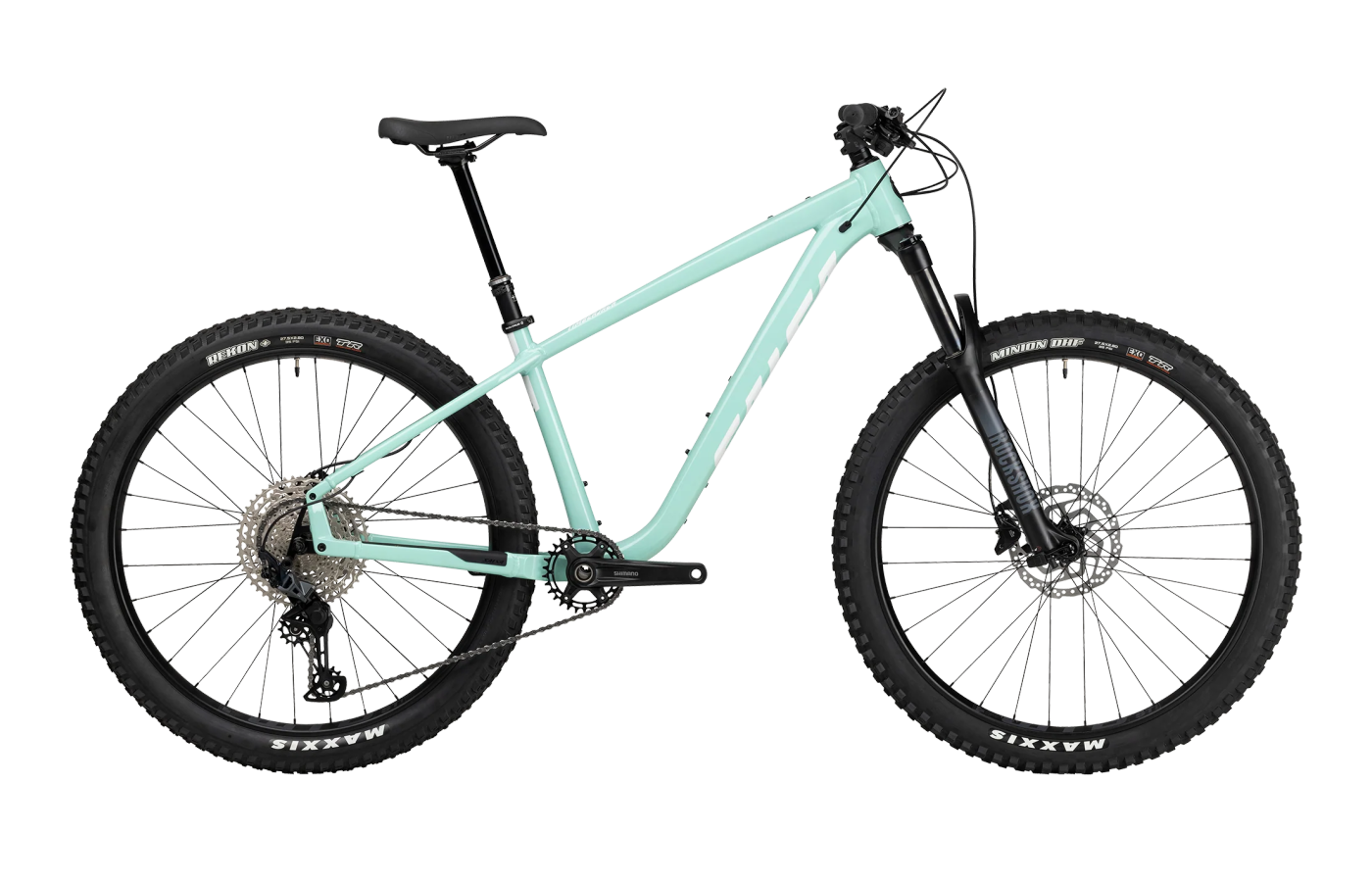
Timberjack
Salsa's value-priced aluminum trail hardtail, frequently named in the same breath as the Chameleon for bikepacking and budget-conscious buyers. Spec-for-spec, it punches above its sticker.
Compare →