VR
vsDomane
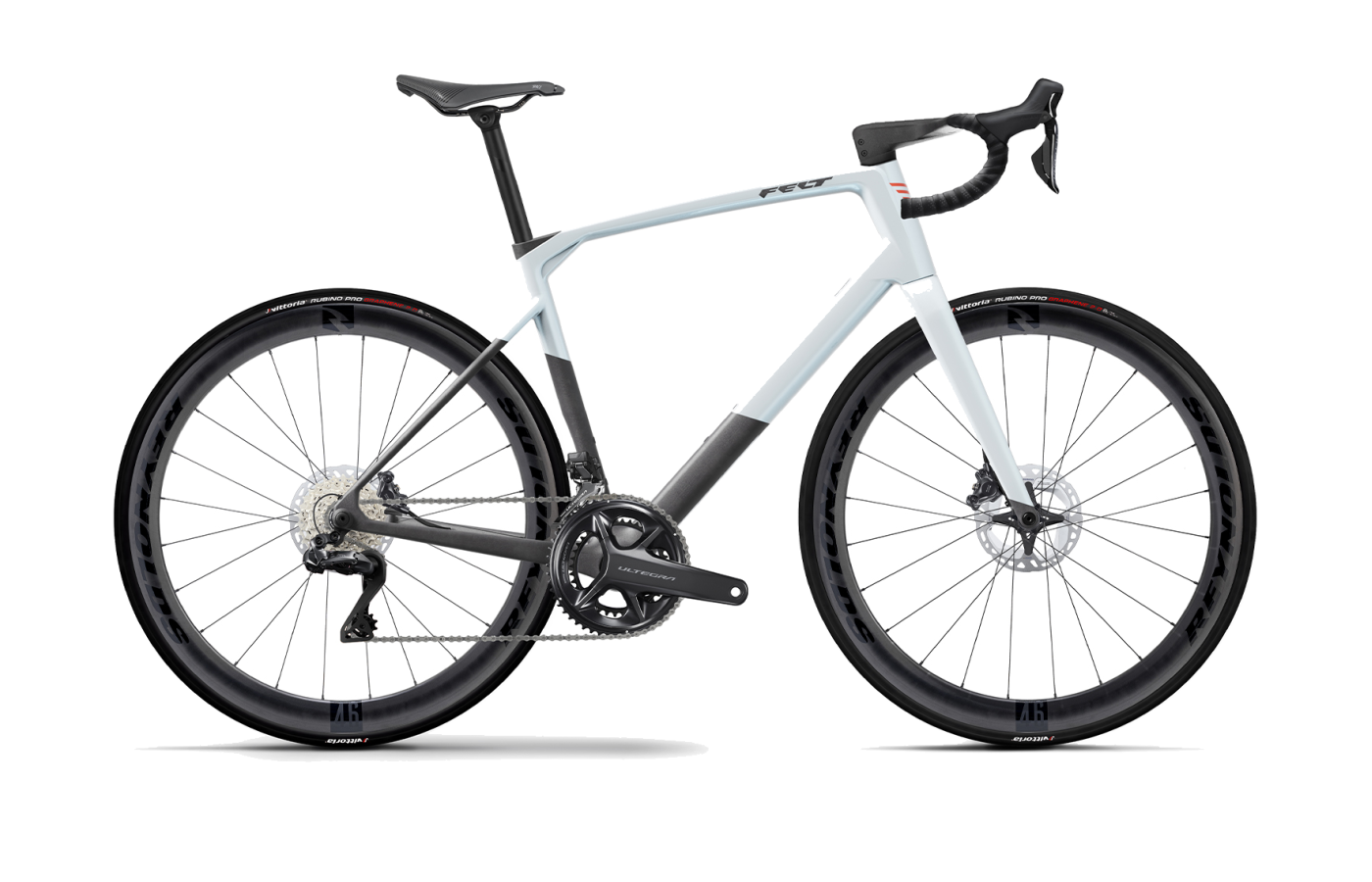
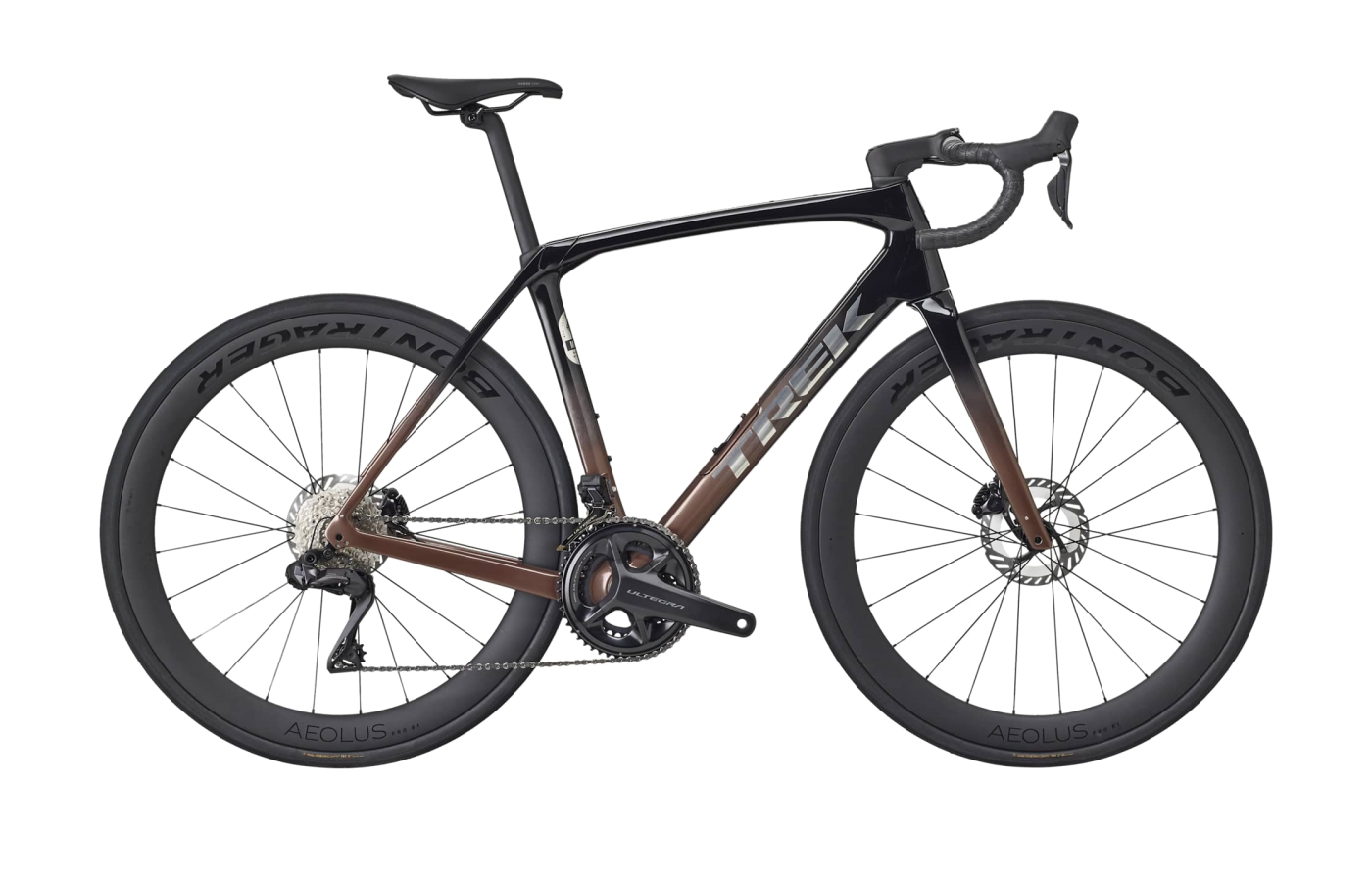
Two endurance bikes, two compliance philosophies.
The Felt VR leans on geometry and tire volume to smooth the road. The Trek Domane uses a mechanical IsoSpeed decoupler — and a lineup that runs from $1,199 alloy to $12,499 carbon.
VR
- Lighter carbon frame — a claimed 900 g frame helps the Pro Ultegra Di2 build come in around 7.2 kg without going to flagship trim.
- Integrated carbon cockpit standard on the Pro and Expert builds — a touch the Domane reserves for its $8k+ SLR tier.
- Dealer-network delivery — bikes ship fully assembled to a local shop; no box build, no fit guesswork.
- Only three builds in the lineup — no alloy entry point, no flagship Dura-Ace option.
- Real-world tire clearance falls short of the marketed 38 mm on smaller frames; 32–35 mm slicks are the safe ceiling.
Domane
- Rear IsoSpeed decoupler — still the segment benchmark for soaking up cobbles and broken tarmac without making the frame flexy under power.
- Internal downtube storage — a tube, levers, and a CO2 stash live inside the frame, no saddlebag needed.
- Lineup spans $1,199 to $12,499 across alloy, 500-series carbon, and 800-series carbon — a real budget on-ramp the Felt doesn't offer.
- Stock Bontrager R3/Paradigm wheel-tire package is widely panned as heavy and slow — most reviewers consider an upgrade mandatory.
- Recurring seatpost-creak/slip issue on early Gen 4 frames; Trek has issued multiple wedge revisions to address it.
Editor’s analysis
Both want to be the one bike that does everything from the Sunday century to the chip-seal back road — they just disagree on how to soften the rough stuff.
The Felt VR and Trek Domane sit at opposite ends of the endurance philosophy spectrum. Both clear 38 mm tires. Both run relaxed, stable geometry built around long wheelbases and tall stacks. Both are pitched at riders who want a fast road bike that won't beat them up on broken pavement. The execution is what diverges.
The Felt VR keeps it simple — three builds, all carbon, all running the same UHC Advanced layup, $2,999 to $6,599. Compliance comes from dropped chainstays, a vibration-dampening sleeve inside the seatpost, and a 900 g frame designed around 32–35 mm tires. There's no mechanical damper, no integrated storage, no front-end suspension trickery. The reviewer who put 3,000 km on a VR 4.0 came away noting it disguises itself as a race bike — same slammed cockpit silhouette, same group-ride pace — but stays comfortable past hour three. The catch is reach: he found a 38 mm knobby tire wouldn't clear the front derailleur on his 51 cm frame, despite Felt's marketing.
The Trek Domane goes the other direction: ten builds, three frame materials, a $1,199 to $12,499 ladder. The headline feature is the rear IsoSpeed decoupler, now non-adjustable and tuned to the previous generation's softest setting. Reviewers call the rear end "astonishingly comfortable" — but the Gen 4 dropped the front IsoSpeed entirely, leaning on tire volume to handle the front. Velo and Escape Collective both flag a slight ride imbalance as a result. The Domane also brings real practical features the Felt skips: internal downtube storage, T47 threaded BB across the lineup, and 38 mm official clearance (40 mm measured by multiple testers).
Put another way: the Felt VR is what you buy when you want one carbon endurance bike, picked from a short menu, with the bike-shop experience baked in. The Domane is what you buy when you want options — alloy commuter, carbon Sunday racer, or full-on $13k flagship — and you're willing to budget for the wheel/tire upgrade nearly every reviewer recommends to wake the stock build up.
Where the builds differ.
Comparing our editor's-pick builds side-by-side. Winners highlighted row-by-row — lower price and weight, and the better-spec component, each mark a point.
Build variants & pricing
The Felt offers three carbon builds in a tight $3,600 spread. The Domane gives you ten options across alloy, mid-carbon, and flagship carbon — at the cost of a much wider price ceiling.
Prices are current US MSRP. The editor's-pick comparison pairs the Felt VR Pro Ultegra Di2 ($6,599) against the Trek Domane SL 7 Gen 4 ($6,799) — same drivetrain tier, same mid-grade carbon, $200 apart. Stepping up to Trek's 800-series OCLV adds another $1,700+.
How they fit, how they steer.
Compared at Felt's 51 and Trek's 50 — the fit-picked sizes for a 5'8" rider. Stack lands within 9 mm (Felt 555, Trek 546) and reach within 2 mm (Felt 370, Trek 368), though the Trek is the slightly more upright fit overall.
Which size should I buy?
Sizes recommended by stack, reach, and effective top tube. Both ranges overlap broadly in the middle, but the Domane extends further at both ends with eight sizes total against the Felt's seven.
→These are starting points. Flexibility, riding style, and preferred position all shift the answer — if you’re between sizes, a professional fit beats a chart.
What the magazines said.
Published reviews from trusted cycling outlets. Click through for the full write-up.
Which one should you buy?
If you want a clean, dealer-supported carbon endurance bike from a focused three-build menu, get the Felt VR. If you want a wider price ladder, IsoSpeed compliance, and onboard storage, get the Domane.
VR
If you've already decided you want carbon, you want it through a local shop, and you don't need a $1,200 entry point or a $13k flagship — the VR's tight three-build lineup makes the choice easy. Same UHC Advanced frame top to bottom; you're really just picking a drivetrain tier.
Domane
If you want one bike that handles broken pavement, light gravel, and a tool stash inside the frame — and you want to choose your price point from $1,199 to $12,499 — the Domane is the more flexible platform. Just budget for a wheel/tire swap on anything below SLR.
Questions buyers actually ask.
Short answers to the things we get emailed about most often.
01Which is more comfortable on broken pavement?
It's close, and the answer depends on which end of the bike you're talking about. The Domane's rear IsoSpeed decoupler is the segment benchmark for soaking up square-edge hits and cobble-grade chatter — multiple reviewers call it "astonishingly comfortable" at the rear. But Trek removed the front IsoSpeed for Gen 4, and Velo flagged a noticeable front-to-rear imbalance: the front can feel "punishing" on bigger hits compared to the plush rear.
The Felt VR has no mechanical damper. It leans on dropped chainstays, a vibration-dampening seatpost sleeve, and 32 mm tires at lower pressure (60–65 psi). The result is a more balanced, if less dramatic, compliance — the long-term reviewer noted he felt "always good later into the ride" even past three hours. If you ride mostly broken tarmac and rough chip-seal, the Domane wins on ultimate plushness; if you ride longer mixed-surface days where balance matters, the Felt holds up well.
02What's the actual tire clearance on each?
Both bikes officially clear 38 mm tires.
In practice, the Domane goes wider — multiple reviewers have fit 40 mm and even 41 mm tires without issue. The Felt VR is more conservative: the long-term reviewer found a 38 mm knobby tire would not clear the front derailleur on his 51 cm frame due to Di2 cable interference. He recommends sticking to 35 mm or smaller for knobbies, or up to 38 mm for slicks on larger frames.
Neither is a true gravel bike, but the Domane is the more credible light-gravel option of the two.
03How wide is the price range on each?
Felt VR: three builds, $2,999 to $6,599. All carbon, all the same UHC Advanced frame.
Trek Domane: ten builds, $1,199 to $12,499. Three frame materials — 100-series Alpha Aluminum on the AL builds, 500-series OCLV on the SL carbon builds, and 800-series OCLV on the SLR flagship builds.
If you're price-shopping below $3,000 or above $7,000, the Domane is effectively the only option of the two. The Felt only competes in the middle of the range.
04Is the IsoSpeed system reliable long-term?
Mostly yes, but with a known caveat. Multiple long-term reviews and owner reports flagged a recurring creaking and slipping seatpost issue traced to the IsoSpeed wedge/tongue interface. Trek has released multiple revised wedge designs (Revision 2 and Revision 4) to address it. The fix usually works — paired with a generous application of carbon paste — but replacement parts have occasionally been out of stock for months.
Riders over 80 kg (176 lbs) are reportedly more likely to encounter the issue. If you're buying a Gen 4 Domane new, confirm with the dealer that the latest wedge revision is installed; if buying used, ask about the seatpost service history.
05Why pick the SL 7 Gen 4 over the SLR 7 for the comparison?
Tier parity. The Felt VR only comes in one carbon grade (UHC Advanced), so pairing it against Trek's mid-grade 500-series OCLV (the SL line) keeps the comparison apples-to-apples on frame layup. Both editor's picks here run Shimano Ultegra Di2 at near-identical prices ($6,599 vs $6,799).
If you want Trek's flagship 800-series OCLV carbon, the SLR 7 jumps to $8,499 and the SLR 9 to $11,899 — both above anything the Felt lineup offers. That's a real platform difference worth noting, but it's not a fair head-to-head spec comparison.
06How upright is each bike compared to a race bike?
Both are firmly endurance-geometry. At the fit-picked sizes (Felt 51, Trek 50), the Felt sits with 555 mm stack / 370 mm reach and the Trek with 546 mm stack / 368 mm reach — roughly identical in reach, with the Felt slightly taller at the front.
For reference, a race bike at this rider size typically runs 10–20 mm less stack and 5–10 mm more reach. Both bikes will feel notably more upright than a Tarmac or Émonda. Neither is so upright that it loses its road-bike character — the Felt review specifically notes you can slam the integrated cockpit and approximate a race-bike position if you want to.
07Does the Domane really need a wheel and tire upgrade?
The reviewer consensus is yes, especially on the SL builds and below. The stock Bontrager Paradigm wheels and R3 Hard-Case Lite tires are repeatedly described as "heavy," "wooden," and "dull" — Escape Collective said the bike feels more like an "urban commuter than a sporty road bike" on the stock rubber. Velo, Cycling News, and Granfondo all reported the Domane "wakes up" dramatically with a swap to lighter carbon wheels and faster tires.
The Felt VR comes out of the box with Reynolds AR46 carbon wheels and Vittoria Rubino Pro IV tires on the Pro Ultegra Di2 build — closer to the upgrade many Domane buyers end up doing themselves. Factor the Domane upgrade cost into any value comparison.
08Which has better long-distance comfort?
Both are designed expressly for it. The Felt VR's long-term reviewer specifically credited the bike with letting him push hard "three, four hours into the ride" without the back fatigue he'd get on a stiffer race bike. The Domane's IsoSpeed system isolates riders from high-frequency road buzz, which testers found particularly valuable on multi-hour fondos where micro-fatigue accumulates.
The Felt's compliance is more passive — geometry, tire volume, and frame design doing the work. The Domane's is more active — a mechanical decoupler removing the worst of the spike loads. Neither is a bad choice for a six-hour day; the Domane just has a slight edge when the road surface is genuinely rough.
Similar bikes
If your priorities don’t map cleanly onto either of these, one of these adjacent bikes probably fits better.
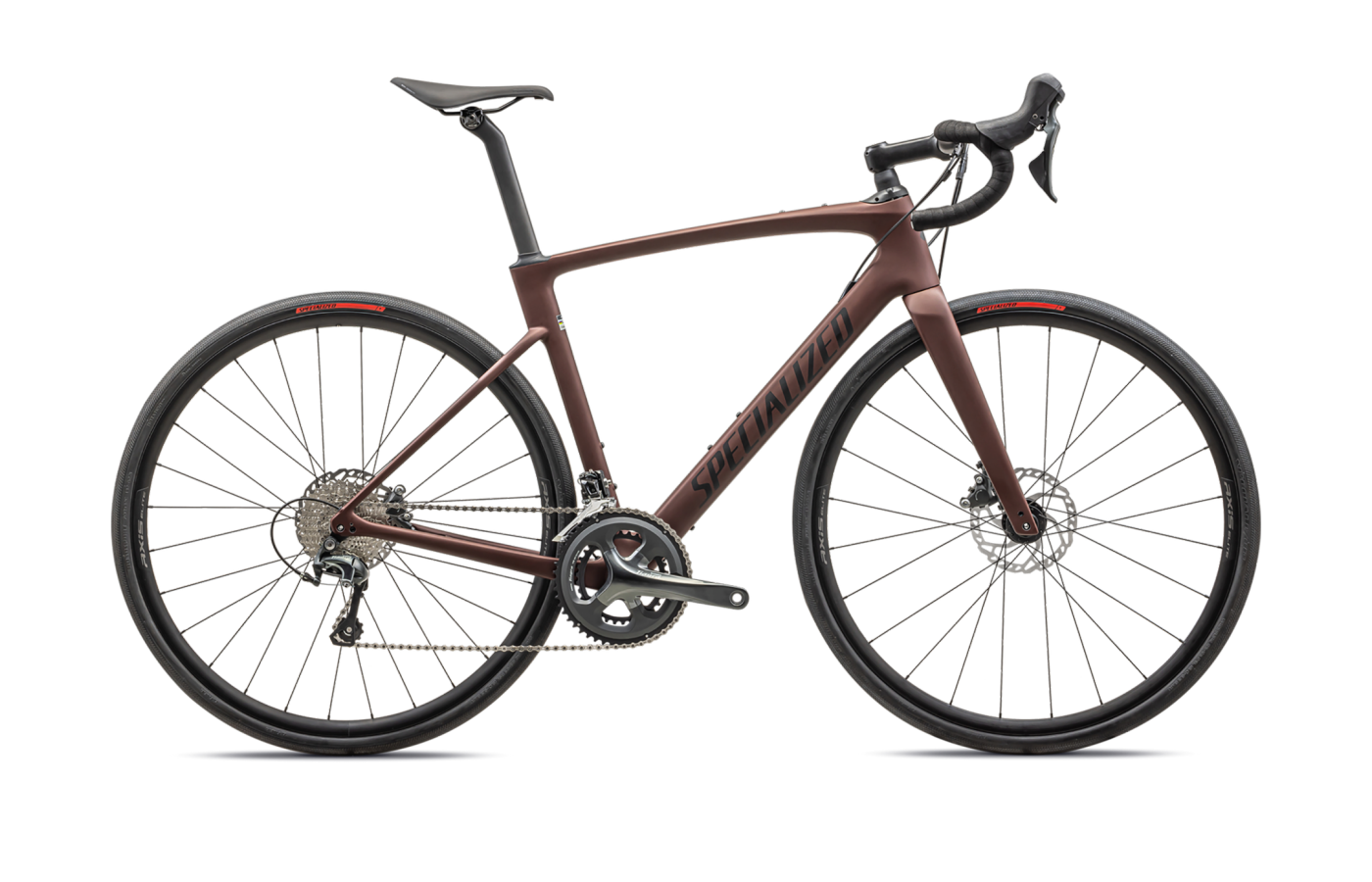
Roubaix
The other endurance benchmark — Specialized's Roubaix uses the Future Shock cartridge in the head tube to deliver front-end compliance the Domane Gen 4 explicitly gave up. If front-wheel plushness matters to you, this is the reference.
Compare →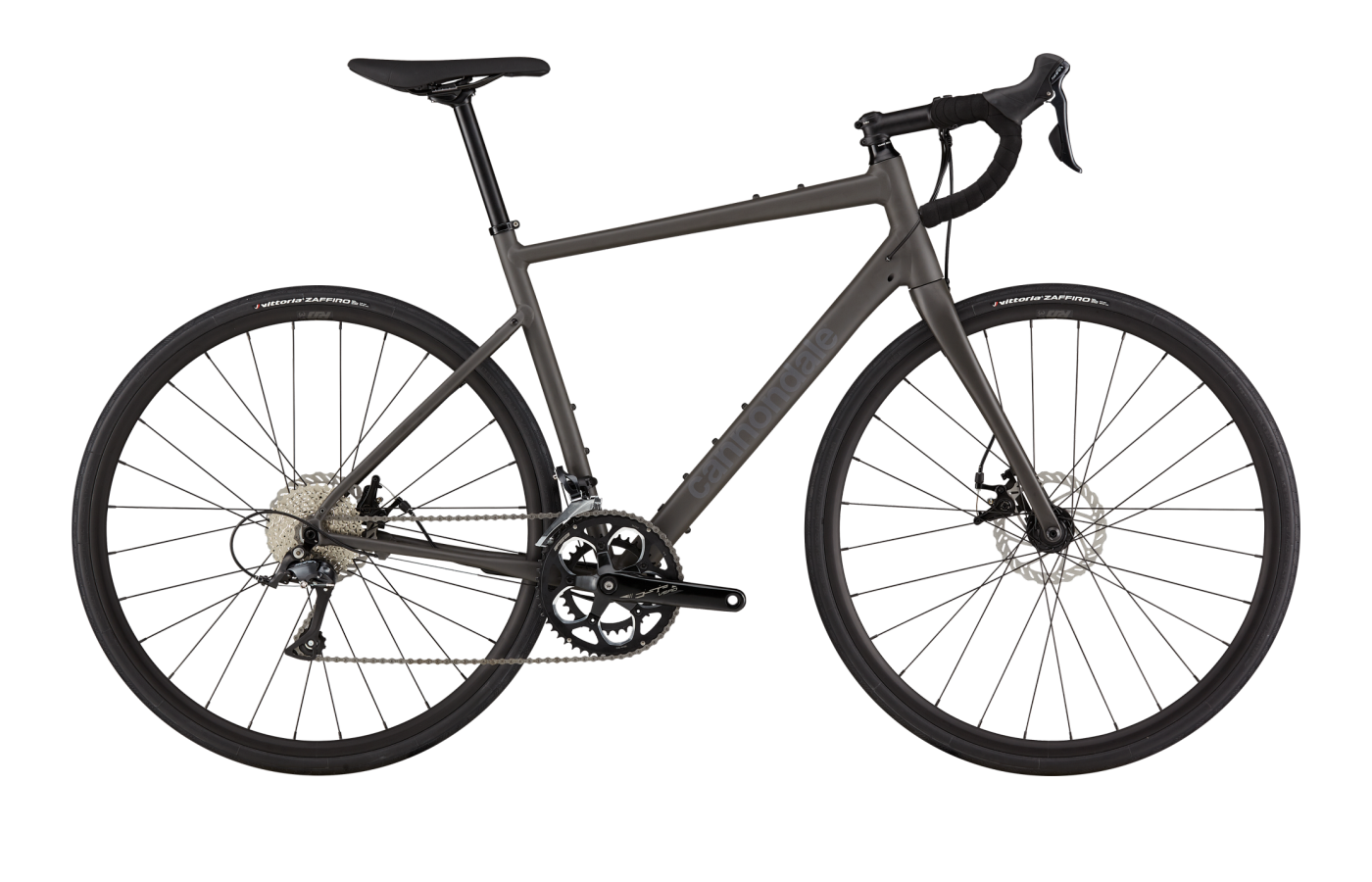
Synapse
Cannondale's Synapse takes the simpler path — comfortable geometry and 35 mm tire clearance, no mechanical dampers, no decouplers. A clean alternative if you find the IsoSpeed seatpost saga off-putting.
Compare →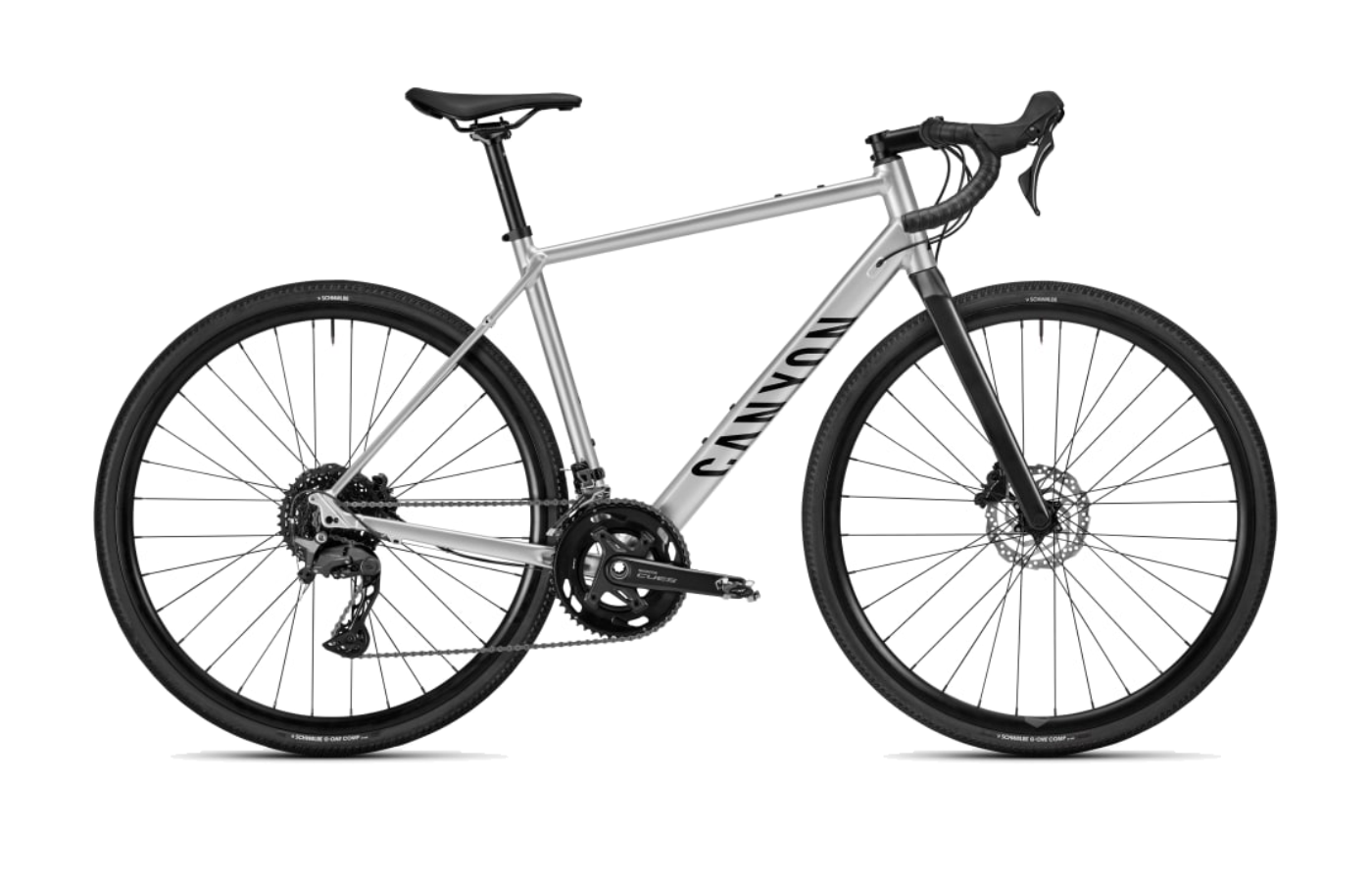
Endurace
Canyon's Endurace delivers the same endurance brief at direct-to-consumer pricing — typically 25–35% less than equivalent-spec Treks. The catch is no local dealer for fit, warranty, or service.
Compare →