VR
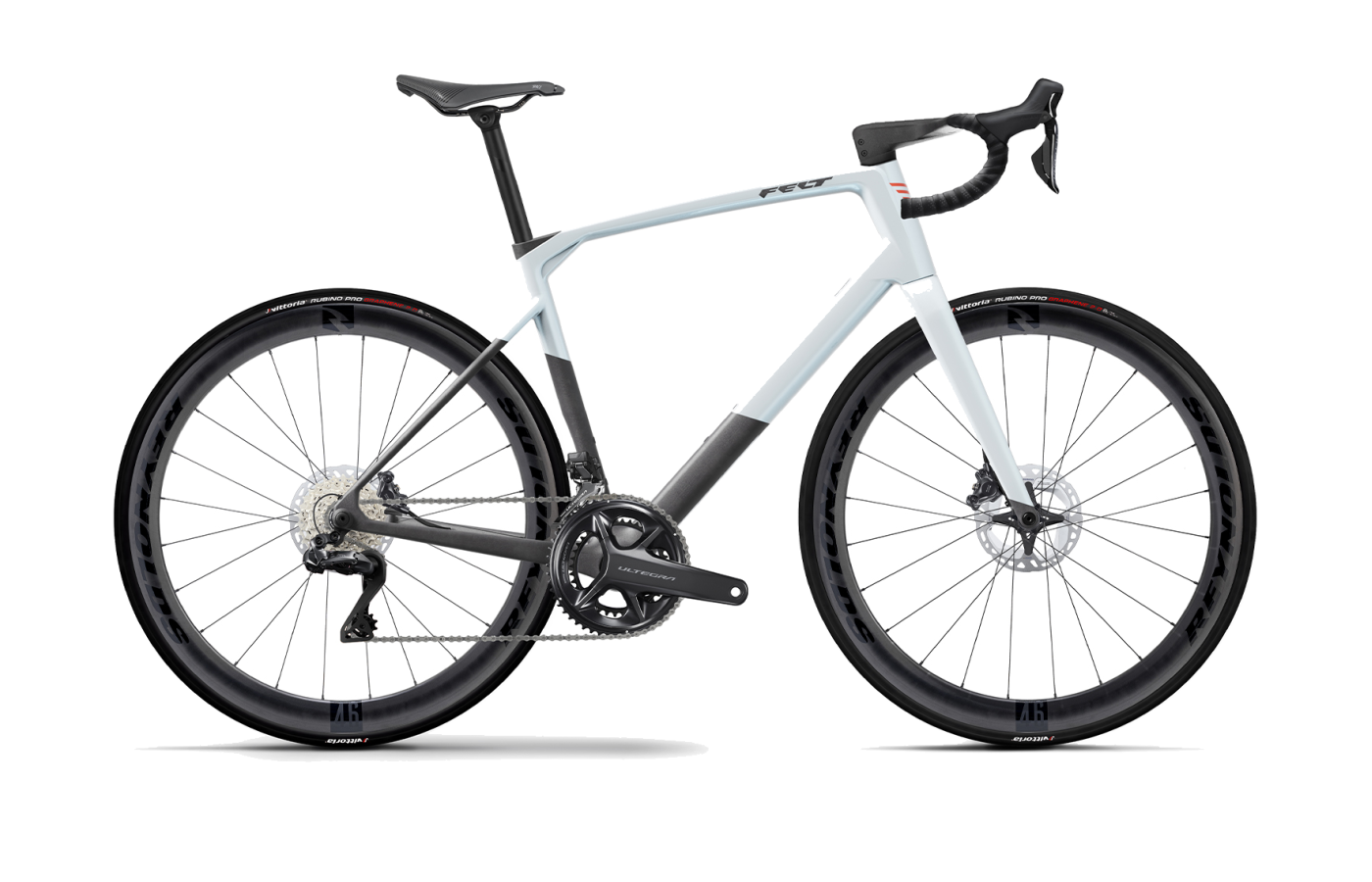
The Felt VR represents a complete redesign of the brand’s endurance platform, shifting the bike further into all-road territory while adopting the integrated aesthetics of a modern race machine. Built around a lightweight carbon frame, this generation introduces aerodynamic tube shaping, fully hidden cable routing, and a refined vibration-damping system at the seatpost collar. Felt also dropped the seatstays lower on the seat tube to actively improve rear-end compliance over rough pavement.
Positioned for riders who want to cover long distances rapidly without the physical toll of a rigid race frame, the VR balances road speed with expanded versatility. The most significant functional update is the widened fork and rear triangle, which Felt claims can accommodate tires up to 38mm. This pushes the VR beyond pristine tarmac, making it a highly capable option for mixed-surface routes and light gravel, provided the terrain does not demand a dedicated off-road geometry.
Geometry & fit.
3 sizes published.
The VR is built around a classic endurance geometry, prioritizing a more upright rider posture to reduce strain on the lower back and neck during long days in the saddle. Compared to Felt’s race-oriented models, the stack is higher and the reach is slightly shorter, creating a relaxed fit straight out of the box.
To enhance stability, Felt extended the fork offset and lengthened the wheelbase. This pushes the front wheel further out, slowing down the steering response just enough to prevent twitchiness on rough descents or loose surfaces. The resulting handling is deliberate and steady rather than hyper-reactive.
Despite the endurance foundation, the fit can be tuned for a more aggressive stance. The top-tier builds feature a one-piece integrated carbon bar and stem that keeps the front end visually clean. Riders who prefer a lower, more aerodynamic profile can remove the headset spacers to drop the cockpit, achieving a position that closely mimics a standard road racing setup while retaining the longer, stable wheelbase.
Where the handlebar sits relative to the bottom bracket — the single most important fit pair.
01Fit geometry6 values
03Handling geometry7 values
Which size should I buy?
Slide your height to see the recommended size. GearWise's fit algorithm works from the published stack, reach, and ETT — the brand's own recommendation may differ.
→Calculated from GearWise's own stack / reach / ETT algorithm — the brand's size chart may recommend a different size, and a proper bike fit beats any calculator.
The lineup.
3 builds, ranging $2,999 – $6,599.
The VR lineup spans three build levels, all utilizing the same advanced carbon frameset and shipping with 32mm Vittoria tires. The primary differences across the range lie in the shifting technology, wheel materials, and cockpit integration.
The entry point is the Race 105, which relies on a mechanical 12-speed Shimano drivetrain, standard alloy wheels, and a traditional two-piece aluminum stem and handlebar. This build offers the core ride quality of the new frame at a highly accessible price, though it forgoes the hidden cable routing found on the upper models.
Moving up the ladder introduces significant component upgrades. The mid-tier and flagship models transition to electronic shifting and feature Reynolds AR46 carbon wheelsets, which drop rotational weight and add an aerodynamic advantage. These premium builds also upgrade to Felt’s integrated carbon bar and stem, fully concealing the brake hoses for a seamless front end. Across all builds, Felt specifies wide-range gearing, pairing compact chainrings with 11-34 tooth cassettes to ensure riders have a one-to-one climbing gear for steep, sustained gradients.


From the press.
1 review from the cycling press.
Reviewers consistently praise the Felt VR for delivering exceptional long-distance comfort without feeling sluggish on fast group rides. By absorbing road chatter that would normally fatigue a rider, the frame allows cyclists to maintain their power output over multi-hour efforts. One tester noted that the compliance allowed him to "be pushing so hard later into the rides" (YouTube), offsetting the minor aerodynamic drag penalty it carries compared to a dedicated aero bike.
Handling is characterized as highly predictable. The geometry adjustments create a ride that is "less nervy" (YouTube) than a traditional race frame, offering steady composure through high-speed corners and over broken pavement. Testers found it easy to hold a line, making the bike a reliable platform for varied conditions.
The primary criticism centers on real-world tire clearance, particularly on smaller frame sizes. While the manufacturer claims room for 38mm rubber, a reviewer testing a size 51 frame found that a "38 knobby a hundred percent does not fit" (YouTube) in the rear due to interference with the front derailleur. Consequently, riders looking to push the VR onto actual gravel trails may need to size down to a 35mm tire, limiting its capability on technical off-road sectors.

Compared to.
Most-viewed comparisons.