Insurgent
vsNomad
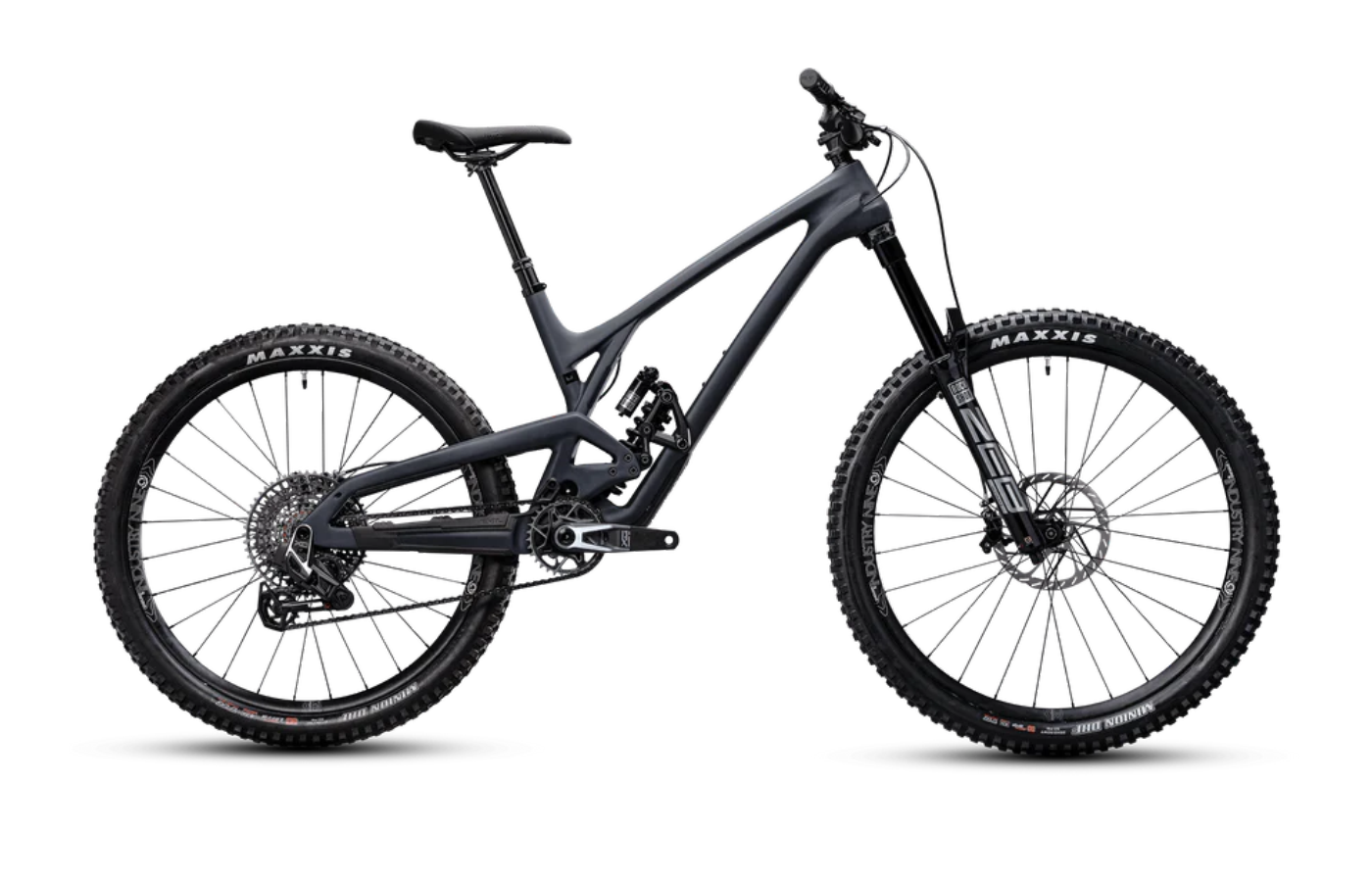
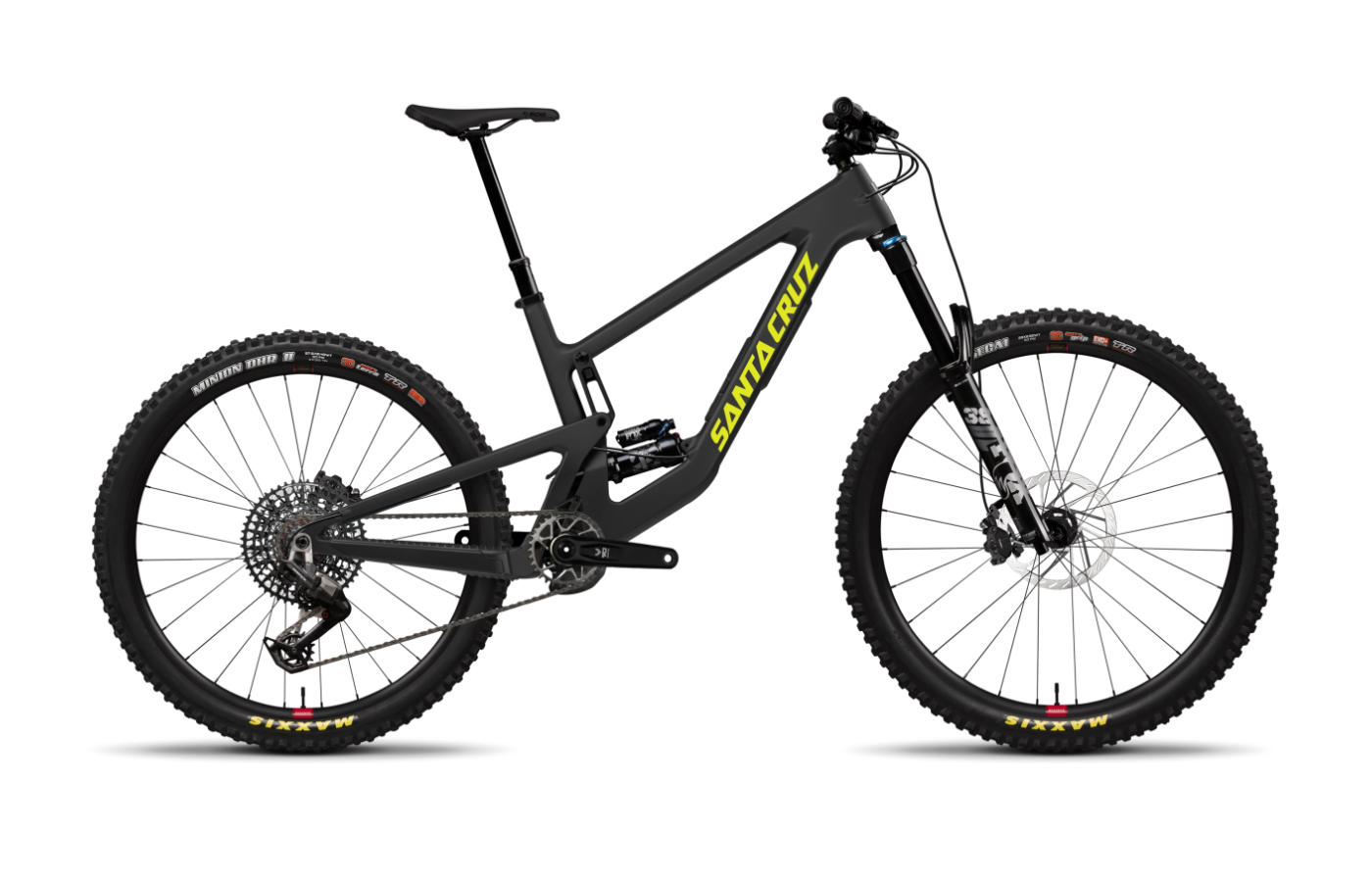
Two long-travel mullets, two different recipes.
The Insurgent is the playful party trick — short stays, plush coil, do anything. The Nomad is the refined bruiser — long stays, race composure, the support network to match.
Insurgent
- Coil shock standard — even the $4,699 GX build ships with the RockShox Super Deluxe Coil Ultimate. Bottomless plush, no upgrade tax.
- Sharper low-speed handling — 430 mm chainstays across all sizes make it 'corner on a dime' (Freehub) and excel at switchbacks.
- Cheaper entry point — $4,699 to get into a coil-equipped UD carbon enduro bike, undercutting the Nomad's floor by $450.
- Super Boost+ 157 mm rear spacing limits replacement-wheel options.
- No in-frame storage — Evil hasn't joined that party yet.
Nomad
- Composed at speed — size-specific 440-451 mm chainstays plus a 63.8° head angle make it 'feel more alive the faster you go' (Pinkbike).
- Glovebox storage + lifetime support — in-frame Glovebox, lifetime frame warranty, free lifetime bearing replacement. The ownership story is hard to beat.
- Sorted spec at the price — even the $6,099 build pairs the burlier Maxxis DoubleDown rear casing with Maven Base 4-pots, both rear-tire and brake complaints solved at the mid-tier.
- Air shock stock at every price — coil swap is a separate purchase if you want it.
- Low 343 mm BB means more pedal strikes than the Insurgent in chunky climbs.
Editor’s analysis
Both run 170 up front and a mullet out back, but one bike asks the rider to play and the other asks the rider to hold on.
On paper the Evil Insurgent and Santa Cruz Nomad look like twins — mixed wheels, ~170 mm rear travel, carbon-only frames, $6k editor's-pick builds with SRAM Eagle 90 T-Type. Spend a minute on the geometry charts and the philosophies pull apart fast.
The Insurgent is the agile one. 430 mm chainstays across every size, a 64.2° head angle in the low position, and an Evil Delta linkage that reviewers consistently call out as the most plush coil-friendly platform in the segment — Freehub's tester called it 'the ultimate smooth-operating hover bike,' NIC ADV gave it an 'A for switchbacks.' Short stays plus a coil-tuned 168 mm of rear travel make it pop out of corners and obey at low speed. It's also the only one of the two that ships with a coil shock standard at this price.
The Nomad is the composed one. Santa Cruz went the opposite direction with size-specific chainstays — 440 mm on the medium and stretching to 451 mm on the XXL — and slackened the head angle to 63.8°. The result, per Blister, is the 'best handling mullet bike' they've tested, with VPP kinematics that Vital MTB called 'shifter-kart-like' through corners but Pinkbike found felt 'more alive the faster you go.' The Glovebox in-frame storage, lifetime frame warranty, and free lifetime bearing replacement are real ownership perks the Insurgent doesn't match.
Put another way: the Insurgent is the bike for the rider who wants to feel the trail squirming under them at any speed. The Nomad is the bike for the rider who wants the trail to disappear once the speedo crosses 35 km/h.
Where the builds differ.
Comparing our editor's-pick builds side-by-side. Winners highlighted row-by-row — lower price and weight, and the better-spec component, each mark a point.
Build variants & pricing
Evil offers four builds from $4,699 to $8,499. Santa Cruz offers five from $5,149 to $9,749. Both top out with X0 AXS Transmission; both have an Eagle 90 mid-tier near $6k.
Prices are current US MSRP. The editor's-pick comparison here is the Insurgent Eagle 90 vs Nomad 90 — same SRAM Eagle 90 T-Type drivetrain, $100 apart, the cleanest apples-to-apples in the lineup. The Insurgent throws in a coil shock at this tier; the Nomad answers with a Glovebox and DoubleDown rear tire.
How they fit, how they steer.
The Nomad's medium runs 12 mm longer in reach (455 vs 443) and 4 mm taller in stack than the Insurgent's small. The Insurgent's chainstays are 10 mm shorter (430 vs 440), the head angle is 0.4° steeper, and the wheelbase is 24 mm shorter — every number says 'more agile, less planted.'
Which size should I buy?
Size labels differ — Evil uses S/M/L/XL, Santa Cruz uses s/m/l/xl/xxl. Both ranges cover similar rider heights; the Nomad extends one size further at the top end.
→These are starting points. Flexibility, riding style, and preferred position all shift the answer — if you’re between sizes, a professional fit beats a chart.
What the magazines said.
Published reviews from trusted cycling outlets. Click through for the full write-up.
Which one should you buy?
If you want the most playful, coil-plush enduro bike at the price, get the Insurgent. If you want composure at speed and the best ownership story in the category, get the Nomad.
Insurgent
If you ride your local enduro trails for the corners and the pop more than the racing, the Insurgent's short stays and standard coil shock will reward you on every lap. It climbs better than 168 mm of travel has any right to, and it's the cheapest way into a properly plush long-travel mullet.
Nomad
If your rides involve bike park laps, alpine descents, or anywhere you spend real time above 35 km/h, the Nomad's longer chainstays and slacker head angle keep it composed where the Insurgent would start asking for input. The Glovebox and lifetime bearing replacement program are the kind of details you stop noticing — until you own a different bike.
Questions buyers actually ask.
Short answers to the things we get emailed about most often.
01Which is more playful?
The Evil Insurgent, clearly. Its 430 mm chainstays are a full 10 mm shorter than the Nomad's medium (440 mm) and 21 mm shorter than the Nomad XXL (451 mm). Combined with a slightly steeper 64.2° head angle and the Delta linkage's coil-friendly tune, the Insurgent is the bike reviewers describe as 'changing direction like a house fly' (Freehub).
The Nomad isn't a slug — Vital MTB still called its handling 'shifter-kart-like' — but Santa Cruz consciously traded some of that low-speed snap for stability at speed.
02Which is faster on chunky, high-speed terrain?
The Santa Cruz Nomad. It runs a slacker 63.8° head angle (vs the Insurgent's 64.2°), longer size-specific chainstays (440-451 mm vs 430 mm flat), and a slightly longer wheelbase. Pinkbike summed it up: the Nomad 'feels more alive the faster you go.' It's the more confidence-inspiring bike on a sustained, rough descent.
The Insurgent absorbs hits brilliantly thanks to the standard coil shock — but at race speeds it asks for more rider input to stay tracking.
03Which climbs better?
Roughly a wash, with a small Insurgent edge for technical climbs. Both run steep seat tube angles (Insurgent 76.9°, Nomad 77.4° on the medium) and both reviewers consistently call them 'surprisingly good' for 168-170 mm enduro bikes.
The Insurgent's anti-squat earned an 'A for switchbacks' (NIC ADV) and the Delta suspension stays 'composed and zippy' on climbs even with a coil (Freehub). The Nomad's lower 343 mm BB does generate more pedal strikes in chunky terrain — multiple reviewers (Vital MTB, Blister) flagged it, and one tester swapped to 160 mm cranks. For long fire-road grinds the Nomad is the more efficient platform; for technical, switchback-heavy ascents the Insurgent is sharper.
04What's the deal with the coil shock vs air shock?
The Insurgent ships with a coil shock at every price — the RockShox Super Deluxe Coil Ultimate is standard from the $4,699 GX build up through the $8,499 XX. That's a deliberate platform choice: the Delta linkage is tuned around a coil's small-bump sensitivity.
The Nomad ships with air at every price — the Fox Float X (Performance, Performance Elite, or Factory depending on trim). Reviewers (Blister, BikeRadar) consistently noted that a coil swap better suits the Nomad's bruiser identity, but it's a separate purchase you'd budget another $400-700 for.
If you know you want coil, the Insurgent saves you a step.
05Which has better long-term ownership perks?
The Nomad, by a clear margin. Santa Cruz includes a lifetime frame warranty AND lifetime free bearing replacement — the latter is a multi-hundred-dollar service every couple of seasons that you simply don't pay. The Glovebox in-frame storage is a daily-use convenience the Insurgent doesn't match.
Evil's frame warranty is solid, but there's no equivalent bearing program, and no in-frame storage. If you're the kind of rider who keeps a bike for 5+ years, the Nomad's ownership math compounds.
06Are both compatible with standard wheelsets?
Mostly the Nomad, more carefully the Insurgent. The Nomad uses standard Boost 148 mm rear spacing — any modern enduro wheelset bolts on.
The Insurgent uses Super Boost+ 157 mm rear spacing. Evil says this lets them widen the main pivot for stiffness, and the durability gain is real — but as NIC ADV put it, it's 'a bit annoying' for finding replacement wheels, and the wheels you buy likely won't transfer to your next bike. Worth knowing if you swap wheels often.
07Which has better stock brakes?
Both editor's-pick builds have come a long way from the SRAM G2/Code RS complaints in older reviews.
The Insurgent Eagle 90 ships with SRAM Code RSC 4-piston brakes — a proven, powerful enduro stopper.
The Nomad 90 ships with SRAM Maven Base — Maven is SRAM's newest, most powerful MTB brake, even at the entry-level Base trim. On paper Maven Base outpowers Code RSC; in practice both are more than enough for the bike. MBR did flag 'cooking' a Code rear brake in Morzine, suggesting heavier riders or alpine use should consider 220 mm rotors regardless of platform.
08Tire clearance — what are we working with?
Insurgent: Evil doesn't publish a max-tire spec, but the build spec ships up to 29x2.5 WT front and 27.5x2.3 rear. Plenty for an enduro tire spec.
Nomad: 61 mm officially in the database; the build runs 29x2.5 (3C MaxxGrip EXO+) front and 27.5x2.4 (3C MaxxTerra DoubleDown) rear. Both have room for full-meat enduro rubber and aren't a constraint at this category.
Similar bikes
If your priorities don’t map cleanly onto either of these, one of these adjacent bikes probably fits better.
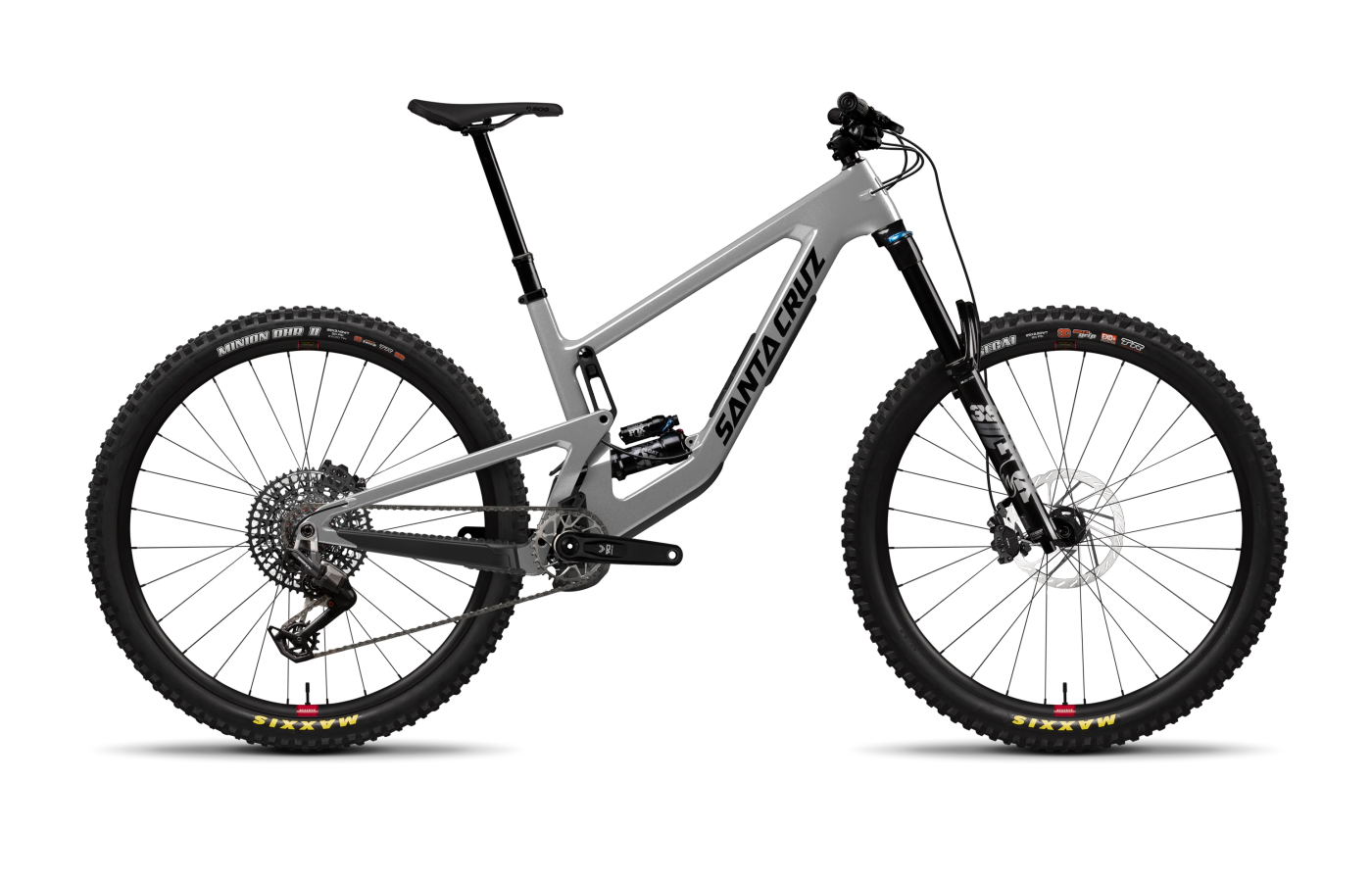
Megatower
The Nomad's full-29er sibling — same front triangle, more rollover, fewer pedal strikes. If you ride open, fast, blown-out trails more than tight, twisty ones, the Megatower is the smarter Santa Cruz pick.
Compare →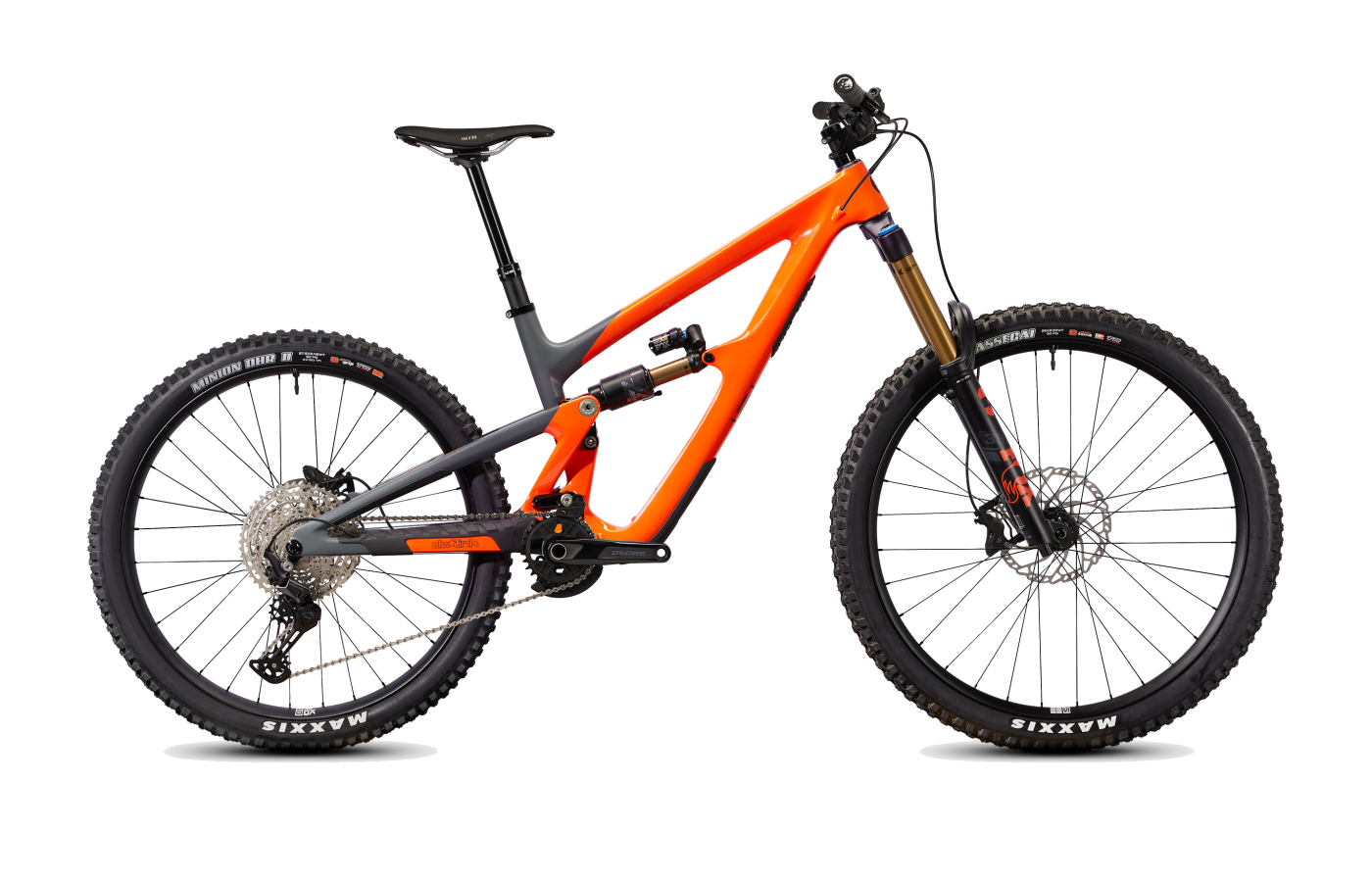
HD6
Ibis HD6 — another mid-six-figure-build mullet, with a similar travel package and the dw-link suspension that Ibis fans swear by. Worth a demo if the Insurgent's playful character speaks to you but Super Boost is a deal-breaker.
Compare →Capra
YT Capra — direct-to-consumer aggression at roughly 30% less than either of these, with mullet builds available. The catch is no local dealer support and a longer wait if you crash a frame.
Compare →