Spartan
vsAltitude
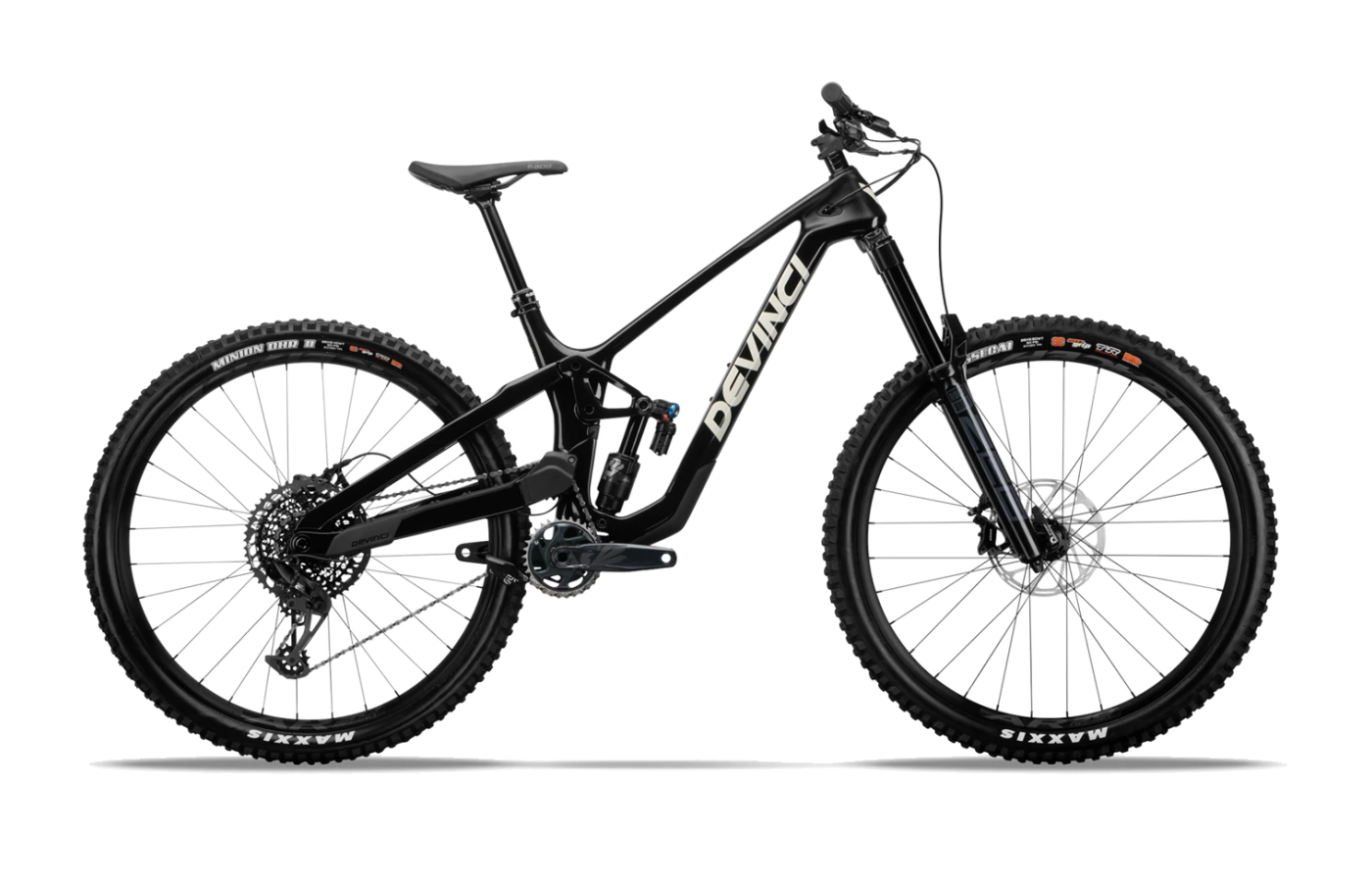
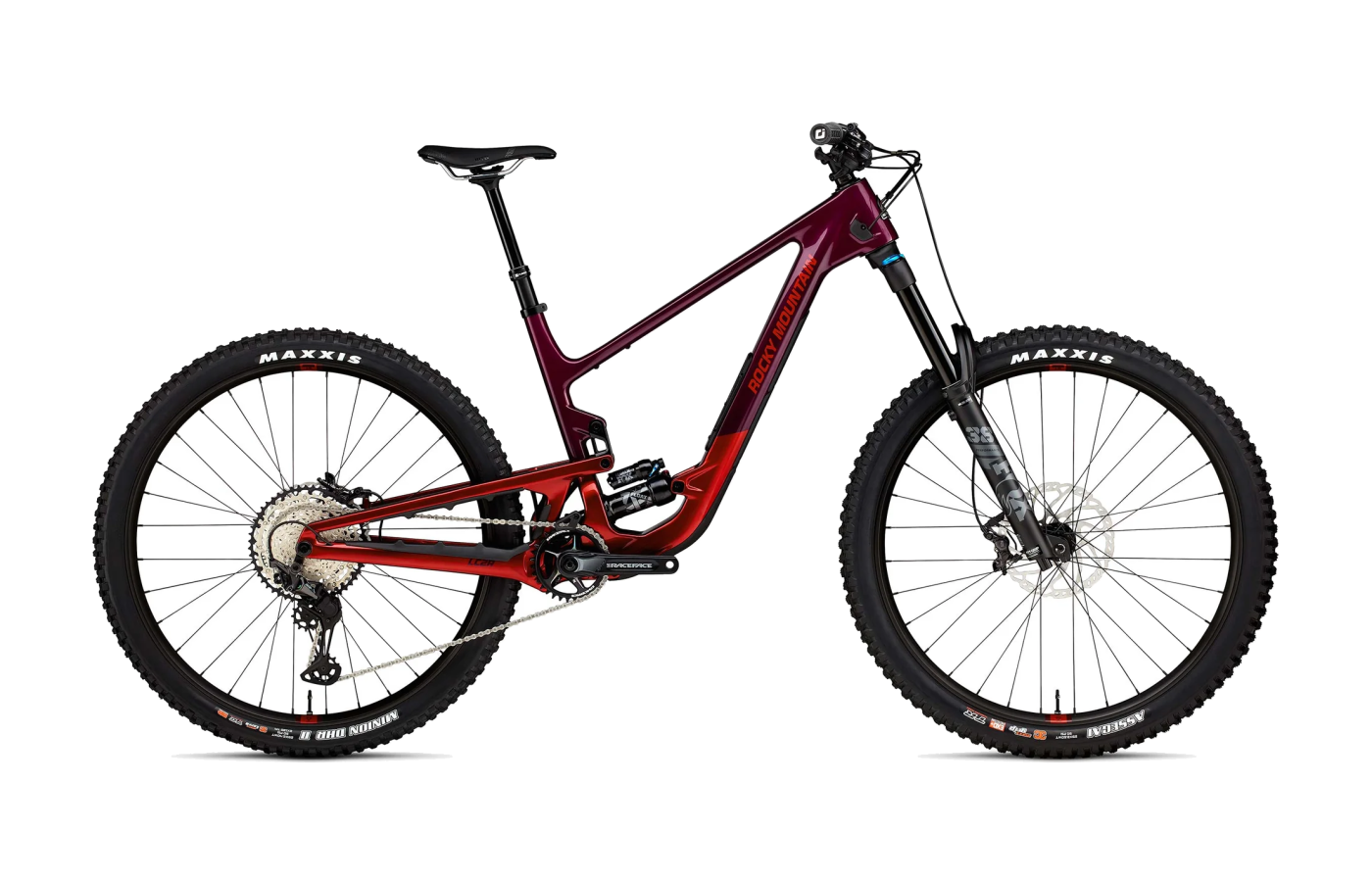
Two enduro plows, two suspension philosophies.
Devinci's Spartan uses a high-pivot idler to bend the rear wheel out of the way. Rocky's new Altitude drops the shock to the bottom bracket and bets on a long, low chassis.
Spartan
- Rearward axle path from the high-pivot idler — Bikeradar called it "glued to the ground" through chunder.
- Surprising agility for a high-pivot, with 425 mm chainstays (size S) that defy the platform's truck reputation.
- Race-ready tire spec — Maxxis Assegai/DHR II in DoubleDown MaxxGrip on every build, no immediate upgrade required.
- Idler drivetrain demands meticulous maintenance and adds perceived (if not measured) drag.
- Effective seat angle slackens noticeably at sag — Bikeradar measured the position as best on fire-road climbs, less ideal on punchy singletrack.
Altitude
- Magic-eraser stability from the LC2R counter-rotating linkage and a low-slung shock — multiple reviewers called the bike "planted" and "unflappable."
- Deep adjustability — Ride-4 flip chip and ±5 mm reach-adjust headset give 24 usable geometry combinations plus a mullet option (size MD and up).
- Race-ready out of the box — Maxxis DD/EXO+ tires with pre-installed CushCore Trail inserts on most builds.
- Long wheelbase and slack head angle make the bike sluggish on tight, low-speed terrain.
- Early production runs had a recurring loose main-pivot bolt — Rocky says Loctite + 25 Nm fixes it, but accessing it requires pulling the drive-side crank.
Editor’s analysis
Both bikes carry 160 mm of rear travel and a 170 mm fork — and almost nothing else about how they get down the hill is the same.
On paper the Devinci Spartan and Rocky Mountain Altitude line up cleanly: 160 mm rear, 170 mm front, full-carbon enduro, $6–8k. In the dirt they read as completely different machines. The Spartan runs a high main pivot with an idler pulley, so the rear axle moves rearward through its travel — the wheel ducks bumps instead of fighting them. The Altitude buries its shock and counter-rotating linkage at the bottom bracket and chases stability through low center of gravity and pure length.
Geometry tells the same story. The Altitude (size MD, low setting) sits at a 62.9-degree head angle on a 1,243 mm wheelbase with 440 mm chainstays. The Spartan (size S) is a full 1.6 degrees steeper at 64.5 degrees, on a much shorter 1,207 mm wheelbase with 425 mm stays. The Altitude is the longer, slacker bike by every measure that matters — and Pinkbike was explicit that it's "too much bike for intermediate blue trails." The Spartan is the more conventional shape with an unconventional suspension idea bolted on.
The reviewers caught both characters. Bikeradar and Freehub described the Spartan as "impressively easy to chop and change direction" once you commit to it — the high-pivot plowing without the cumbersome feel that platform usually brings. The Altitude got called a "magic eraser" and a "full-blast straight-line monster" — a bike that needs speed and big terrain to come alive, and that NSMB and Pinkbike agreed feels less playful than its predecessor on mellower trails.
Practically: the Spartan is the bike for the rider who rates an idler-quiet, plush, point-and-shoot descender and is willing to fuss with a high-pivot drivetrain. The Altitude is for the rider who wants to dial geometry across 24 settings (Ride-4 chip plus reach-adjust headset), accepts the climb tax for a longer, racier chassis, and trusts the LC2R linkage to do the smoothing instead of an idler.
Where the builds differ.
Comparing our editor's-pick builds side-by-side. Winners highlighted row-by-row — lower price and weight, and the better-spec component, each mark a point.
Build variants & pricing
Spartan runs $6.2k–$8.4k across three carbon builds. Altitude spans $4.0k–$5.8k across one alloy and two carbon levels — there is no Devinci alloy option, and no Altitude above $5.8k.
The price floors don't line up: even tier-matched (mechanical mid-tier carbon), the Spartan Carbon GX 12sp at $7,299 sits $1,600 above the Altitude Carbon 50 at $5,699. If you want comparable suspension and frame quality for less, the Altitude is the only path. If you want the high-pivot rearward axle path at any price, the Spartan is the only path.
How they fit, how they steer.
Both at the fit-picked size for a 5'8" rider — S on the Spartan, md on the Altitude. Same 630 mm stack, but the Altitude is 5 mm shorter in reach (450 vs 445) and a full 1.6° slacker at the head tube (62.9° vs 64.5°), with chainstays 15 mm longer and the wheelbase 36 mm longer.
Which size should I buy?
Sizing recommendations based on stack, reach, and effective top tube. The Spartan offers four sizes (S–XL); the Altitude offers three (md–xl) plus a separate small with mixed wheels.
→These are starting points. Flexibility, riding style, and preferred position all shift the answer — if you’re between sizes, a professional fit beats a chart.
What the magazines said.
Published reviews from trusted cycling outlets. Click through for the full write-up.
Which one should you buy?
If you want a quiet plow that ducks bumps and turns sharper than any high-pivot has a right to, get the Spartan. If you want the longest, slackest, most adjustable race chassis of the two, get the Altitude.
Spartan
If your home trails are rooty, rocky, and unrelenting and you'd rather let the rearward axle path eat the chunk than muscle through it, the Spartan is the smoother, more conventional-feeling bike of the two. Just be ready to keep the idler clean and pick a 30T chainring for the steep stuff.
Altitude
If you live to bike-park, race enduro, or shuttle steep double-blacks — and you want a chassis you can dial across 24 settings to find your sweet spot — the Altitude is the more aggressive, more configurable bike. It demands speed to come alive and isn't your best friend on tight blues.
Questions buyers actually ask.
Short answers to the things we get emailed about most often.
01Which is faster on rough, fast descents?
It depends on the trail shape. The Altitude wins on long, open, high-speed terrain — the 1,243 mm wheelbase (size md, low setting) and 62.9-degree head angle let it carry speed in a straight line where the Spartan would feel busier. Reviewers across NSMB, Pinkbike, and Mountain Bike Action describe it as a "magic eraser" that "only seems to grow the faster you go."
The Spartan is the better bike for chunky, technical terrain where the rearward axle path matters — short, square-edge hits where the wheel needs to get out of the way fast. Bikeradar's exact phrase was "held speed in flatter rough sections, requiring much less rider input and finesse."
02Which climbs better?
The Altitude, by a small margin. Both bikes are in the 16+ kg range and both have steep effective seat angles (77° on the Altitude, 76.5–77° on the Spartan), but the Altitude's seated position holds up better on steep singletrack — multiple reviewers noted the Spartan's effective seat angle slackens noticeably at sag, putting taller riders "over the rear axle."
The Spartan's idler pulley adds perceived drag (Bikeradar: "yes, it does feel like it increases drag"), though Devinci's controlled testing claims the actual loss is within margin. Neither is a sprightly climber — both carry the weight of DoubleDown casings and burly suspension.
03How playful are they on mellow trails?
Neither one is your friend on flow. Pinkbike's exact words on the Spartan were that it "can feel sluggish in mellow or rolling terrain" and is "not a super poppy, playful thing." NSMB and Pinkbike both said the Altitude is "less lively when the trail mellows out" than the previous-generation Altitude — Rocky deliberately traded playfulness for stability in this redesign.
If you want playful, look at the alt-bike list — or at shorter-travel bikes outside this comparison entirely.
04How much geometry adjustment do you actually get?
The Altitude has the most adjustable geometry of any bike in the segment: a Ride-4 flip chip with four positions (head angle from 63° to 63.8° in MD-XL frames), a ±5 mm reach-adjust headset, and a mullet wheel option on size md and up. NSMB called the resulting 24 settings "all within the usable range."
The Spartan has a flip chip that toggles head angle between 64.5° and 65° and adjusts chainstay length — useful, but a much narrower window than the Altitude's tuning range.
05What's the wheel/axle situation?
The Spartan is 29" front and rear with a 12 x 157 mm SuperBoost rear axle. SuperBoost is stiffer in theory but limits aftermarket hub choice — fewer options than standard 148 Boost.
The Altitude runs standard 148 Boost in the rear. Sizes md, lg, and xl ship as 29" but can be converted to a mullet (29F/27.5R) using Rocky's mullet link kit. Size S is 27.5" front and rear from the factory.
06How serviceable is the high-pivot idler on the Spartan?
Manageable, but not invisible. The idler runs on a bottom-bracket-style bearing, is steel with a corrosion-resistant coating, and Devinci claims it lasts roughly three times as long as the front chainring. Bikeradar's caveat: "keeping on top of drivetrain maintenance is crucial on any bike, but with an idler wheel system it's even more important" — neglected, it gets noisy and feels draggier.
The Altitude has no idler, so this is genuinely a Spartan-specific consideration.
07Are there known reliability quirks I should know about?
Altitude: early-production main-pivot bolts have loosened on multiple test bikes (Blister, Vital, Singletracks, Pinkbike, Freehub, Cycling Magazine all reported it). Rocky's fix is Loctite + 25 Nm torque, but accessing the bolt requires pulling the drive-side crank and BB cup with a proprietary tool that ships with the bike. Several reviewers also flagged dropper-post rattle as a recurring annoyance.
Spartan: the main quirk is the Fox Float X2 rear shock — due to a design change, you can no longer adjust rebound without removing the shock. Bikeradar also noted the seat stays may rub larger-calf riders due to a frame bulge.
08What about warranty?
Devinci offers a 25-year frame warranty — among the longest in the industry. Rocky Mountain offers a 5-year transferable frame warranty, which Blister called "great to see" because it carries to the second owner. Both cover manufacturing defects against the original purchaser; both brands offer crash-replacement programs at retailer discretion.
Similar bikes
If your priorities don’t map cleanly onto either of these, one of these adjacent bikes probably fits better.
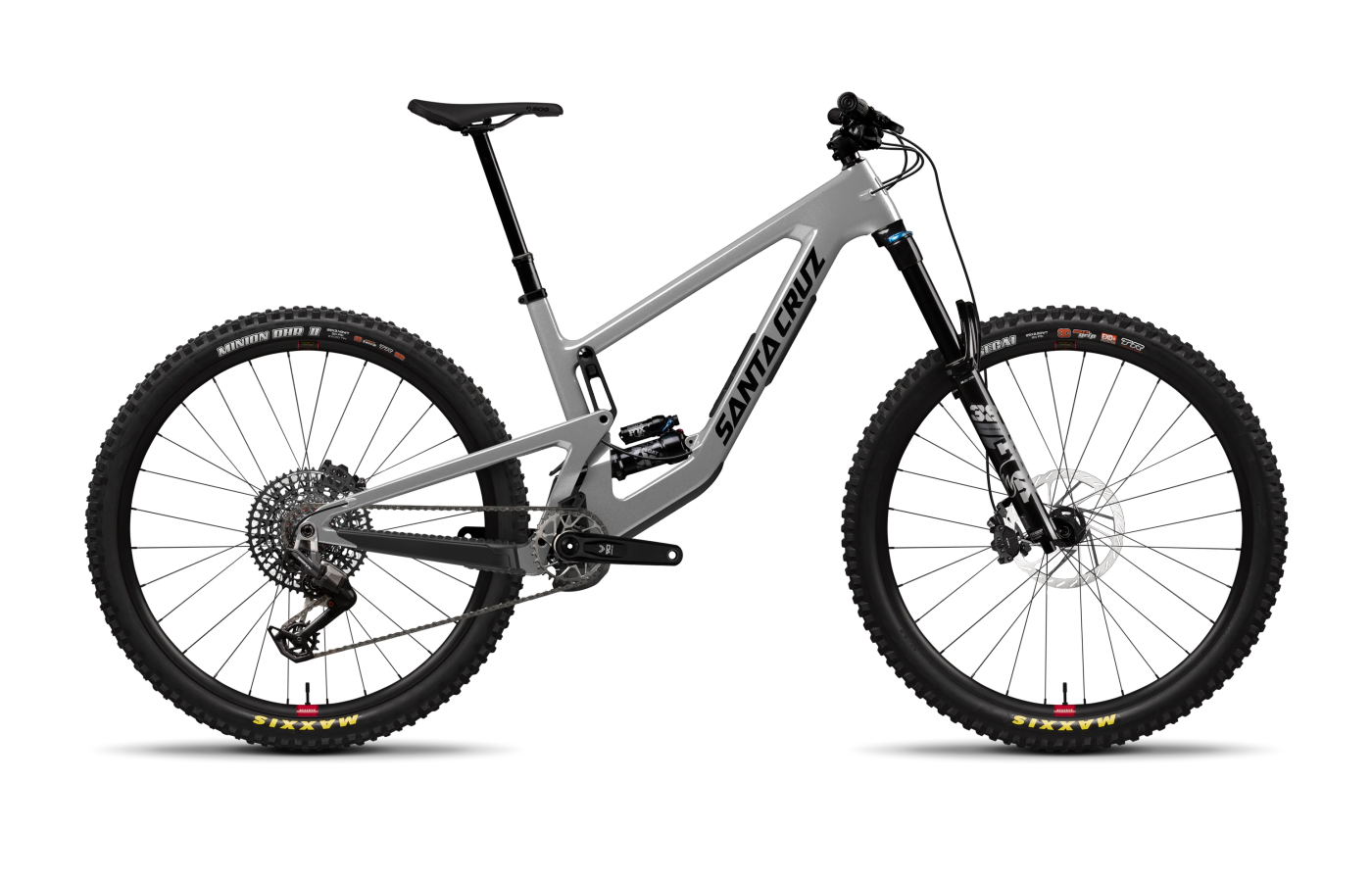
Megatower
Santa Cruz's enduro flagship with VPP suspension — reviewers compare it directly to the Altitude for similar virtual-pivot character, but the Megatower is generally seen as a step less aggressive.
Compare →Spire
Transition's high-pivot enduro alternative to the Spartan — same rearward-axle-path philosophy, same plow-through-anything reputation, with Transition's typically lower price floor.
Compare →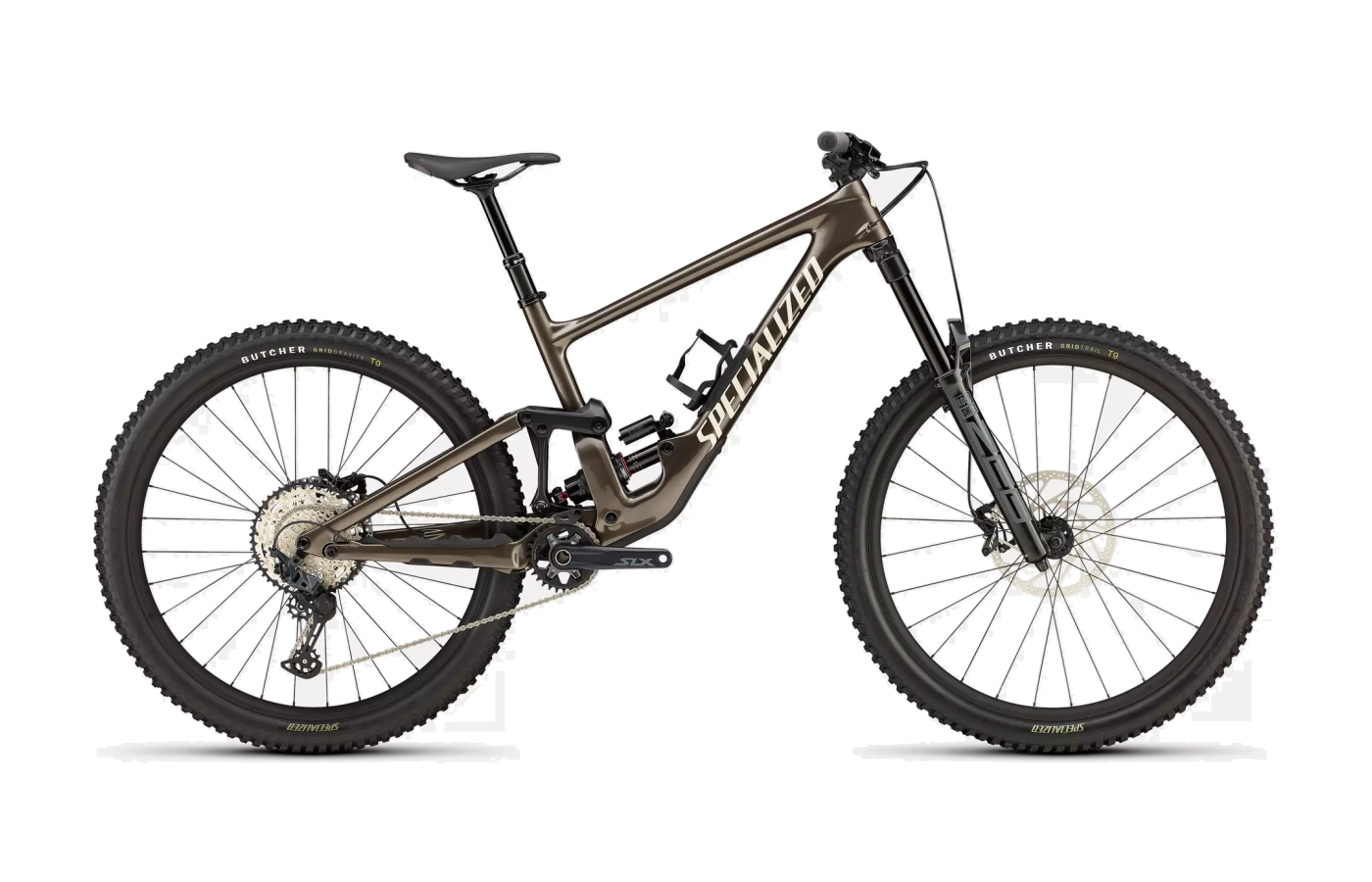
Enduro
The benchmark long-travel enduro bike — proven race pedigree, similar travel numbers, and a more conventional 6-bar suspension layout if neither high-pivot nor LC2R appeals.
Compare →