Kobain
vsGrowler

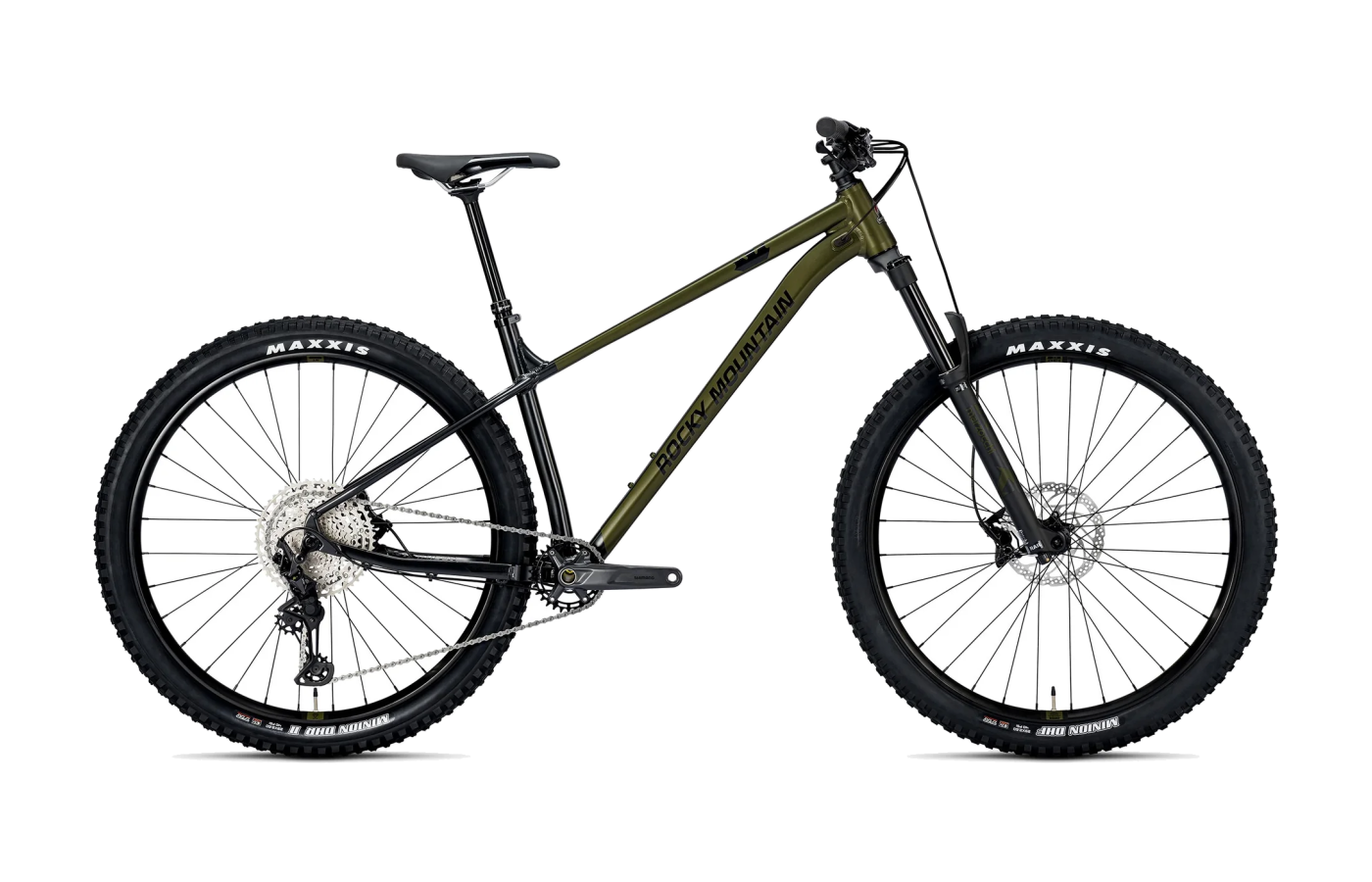
Two budget alloy hardtails, two attitudes.
The Devinci Kobain is the balanced all-rounder for the rider learning the trail. The Rocky Mountain Growler is a cut-down enduro bike that ignores its missing rear shock.
Kobain
- Balanced trail geometry — a 65.5° HTA and 130 mm fork that climbs and descends without committing to either.
- Canadian-made alloy frame with a lifetime warranty — unusual at this price.
- Friendlier on tight trails — shorter wheelbase and quicker steering than the Growler in switchbacks and low-speed corners.
- SX Eagle drivetrain and coil-sprung RockShox 35 Silver R fork are entry-level — both are first-upgrade candidates.
- Less composed than the Growler when the trail gets fast and rough.
Growler
- Slackest hardtail geometry in the segment — a 64° HTA and long wheelbase deliver enduro-bike stability at speed.
- Genuine air-sprung Marzocchi Z2 fork with 150 mm of travel — far above the typical sub-$2k spec.
- Shimano Deore/XT 12-speed — wide-range, crisp shifting that doesn't need a near-term upgrade.
- Heavy, long wheelbase makes it sluggish in tight switchbacks and on mellower trails.
- Two-piston Shimano brakes are the consensus weak link — most reviewers want a 4-piston upgrade.
Editor’s analysis
Both bikes prove you don't need full suspension to have a real trail bike under $2,000 — but they wildly disagree on what that bike should do.
On paper, the Devinci Kobain and Rocky Mountain Growler look like neighbors: Canadian-designed alloy hardtails, 29-inch wheels, 2.6-inch Maxxis Minion rubber, threaded BBs, Boost spacing, single builds in the high-$1,000s. Both lean on modern geometry and the wide tires to do the suspension work the rear triangle can't. That's where the similarities end.
The Kobain plays in the middle. A 65.5-degree head tube, a 130 mm fork, a 1,191 mm wheelbase in size M — those are aggressive trail numbers, but they're nowhere near downhill territory. Reviewers consistently call out a bike that climbs efficiently thanks to its 75-degree seat angle, corners with snap on flowy singletrack, and stays composed on chunky descents as long as you pick a clean line. It's the bike Pinkbike called "hardtail nirvana" — for the majority of riders, on the majority of trails.
The Growler picks the descent and commits. A 64-degree head tube — the slackest in the value-hardtail segment — paired with a 150 mm Marzocchi Z2 fork pushes the front wheel way out front; a 1,210 mm wheelbase in md gives it enduro-bike stability at speed. Multiple reviewers said they rode the Growler "like a full-suspension bike," taking lines they wouldn't dare on a more traditional hardtail. The catch: it's heavier, less nimble in tight switchbacks, and feels lifeless on mellow trails where there's nothing to plow through.
Spec-wise, the gap matches the geometry gap. The Growler's $200 premium buys a real Marzocchi air fork, a Shimano Deore/XT 12-speed mix, and 4-piston-friendly geometry; the Kobain's lone SX 12s build ships with an entry-level RockShox 35 Silver R coil fork and SRAM's bottom-rung SX Eagle 12-speed. Both work, but if you're a rider who upgrades parts later, the Growler hands you a better starting point — at the cost of being a less versatile bike.
Where the builds differ.
Comparing our editor's-pick builds side-by-side. Winners highlighted row-by-row — lower price and weight, and the better-spec component, each mark a point.
Build variants & pricing
Both bikes ship as single-build platforms. There's no flagship trim, no entry tier — what you see is what you get.
Prices are current US MSRP. Drivetrain and fork tiers aren't matched between these two — the Growler ships a Marzocchi Z2 air fork and Shimano Deore/XT, the Kobain ships a coil RockShox 35 Silver R and SRAM SX Eagle. That's a real $200 spec gap, not a curation choice.
How they fit, how they steer.
Compared at the M (Kobain) and md (Growler). The Growler sits 1.5° slacker at the head tube, runs a 19 mm longer wheelbase, and adds 14 mm of stack — it's set up to be calmer at speed and harder to flick around.
Which size should I buy?
Both ranges cover S/M/L/XL with similar reach progression; the Growler runs slightly longer reach numbers at every size.
→These are starting points. Flexibility, riding style, and preferred position all shift the answer — if you’re between sizes, a professional fit beats a chart.
What the magazines said.
Published reviews from trusted cycling outlets. Click through for the full write-up.
Which one should you buy?
If you want a versatile trail hardtail that climbs well and corners with snap, get the Kobain. If you want to take full-suspension lines on a hardtail, get the Growler.
Kobain
If your local trails are a mix of punchy climbs, flowy singletrack, and the occasional rocky descent, the Kobain is the more useful bike. It rewards line choice instead of demanding it, and the lighter, quicker geometry makes it the better gateway hardtail for newer riders or the better lap bike for experienced riders who want one less suspension service to schedule.
Growler
If you spend your time hunting steep, rocky lines and you want a hardtail that doesn't flinch when you point it down, the Growler is the bike. The 64° head angle and Marzocchi Z2 fork add up to genuine enduro-style composure at speed — at the cost of agility on tight, mellow trails. It's the bike for the rider who already knows what kind of fast they like.
Questions buyers actually ask.
Short answers to the things we get emailed about most often.
01Which one is faster on the climbs?
The Kobain, by a noticeable margin. It's roughly two pounds lighter, has a slightly steeper head angle that's quicker to steer through switchbacks, and runs a shorter wheelbase that's easier to maneuver on tight uphills. Both share a 75° seat tube angle, so seated pedaling position is equally efficient — the difference shows up in how the bike handles climbing terrain, not how hard you have to pedal.
The Growler isn't a slow climber, but reviewers across Pinkbike, Bike Magazine, and Bigbluetire consistently note it feels "sluggish" on tight technical ascents, where its long wheelbase and ultra-slack front end work against you.
02Which one is better on rough descents?
The Growler, clearly. The 64° head tube angle, 150 mm Marzocchi Z2 fork, and 1,210 mm wheelbase (md) give it genuine high-speed stability — multiple reviewers, including Mike Levy at Pinkbike, said they rode it "like a full-suspension bike," committing to lines they'd never try on a more traditional hardtail.
The Kobain handles chunky descents, but it asks more of the rider. Its 65.5° HTA and 130 mm fork put you in trail-bike territory, not enduro territory — composed and capable, but you'll need to pick lines, not plow them.
03How big a deal is the fork difference?
Big. The Growler ships with a Marzocchi Bomber Z2 — a genuine air-sprung trail fork that reviewers consistently praise as "without flaw" at this price point. The Kobain SX 12s ships with a RockShox 35 Silver R Coil, which is a much more basic unit; coil springs are heavier and harder to tune to rider weight, and the Silver R sits at the bottom of RockShox's trail-fork lineup.
If you plan to upgrade one component first, on the Growler it's the brakes; on the Kobain it's the fork.
04How much tire can I fit?
Both bikes officially clear 29 x 2.6 Maxxis Minions stock, and Devinci publishes a 66 mm clearance figure for the Kobain — that's enough room to run a true 2.6 with mud clearance to spare.
Neither bike is a candidate for a plus-tire (2.8"+) conversion, and 27.5+ wheels aren't supported on either frame.
05Are these good bikes for a first mountain bike?
The Kobain is the better first mountain bike for almost anyone. Its more moderate geometry rewards developing skills — quicker steering, better climbing manners, and easier handling at low speed all matter when you're learning. Reviewers across Singletracks and Pinkbike specifically call it a "gateway" hardtail.
The Growler can be a first bike, but it's set up for a specific style of riding. If you already know you'll be hitting steep, fast trails or bike park flow lines, it'll grow with you faster — but it won't help you learn to ride tight, technical singletrack.
06What's the deal with the brakes?
Both bikes ship with two-piston brakes, and both have been dinged for it. The Growler 50 uses a Shimano MT4100/MT420 setup that reviewers consistently say "lacks initial bite" and recommend upgrading to metallic pads, larger rotors, or a four-piston caliper — especially for aggressive riders, which the geometry actively encourages.
The Kobain SX 12s ships with SRAM Level T two-piston brakes, which similarly work but feel underpowered on long descents. For either bike, sintered pads and a 200 mm front rotor is the cheap, high-impact first upgrade.
07Can I run a longer-travel fork?
Both frames are designed around their stock fork travel and the geometry gets weird beyond it. Mountain Bike Action specifically warned that bumping the Kobain to 140 mm "will radically change the bike" — the head angle slackens further, the bottom bracket rises, and the climbing manners suffer.
The Growler is already at 150 mm; pushing it to 160 mm makes it even more downhill-biased and degrades the climbing position further. Stay near stock unless you're doing a very specific build.
08Frame warranty and country of origin?
Devinci manufactures the Kobain frame in Quebec, Canada — one of the few mass-market alloy mountain bikes still made in North America — and backs the frame with a lifetime warranty to the original owner.
Rocky Mountain designs the Growler in Vancouver, BC, but production is overseas. Frame warranty is 5 years to the original owner against manufacturing defects.
Similar bikes
If your priorities don’t map cleanly onto either of these, one of these adjacent bikes probably fits better.
Roscoe
A direct contemporary of the Kobain — similarly balanced trail geometry but with massive Trek dealer support, which matters more than spec sheets when you're a new rider needing service.
Compare →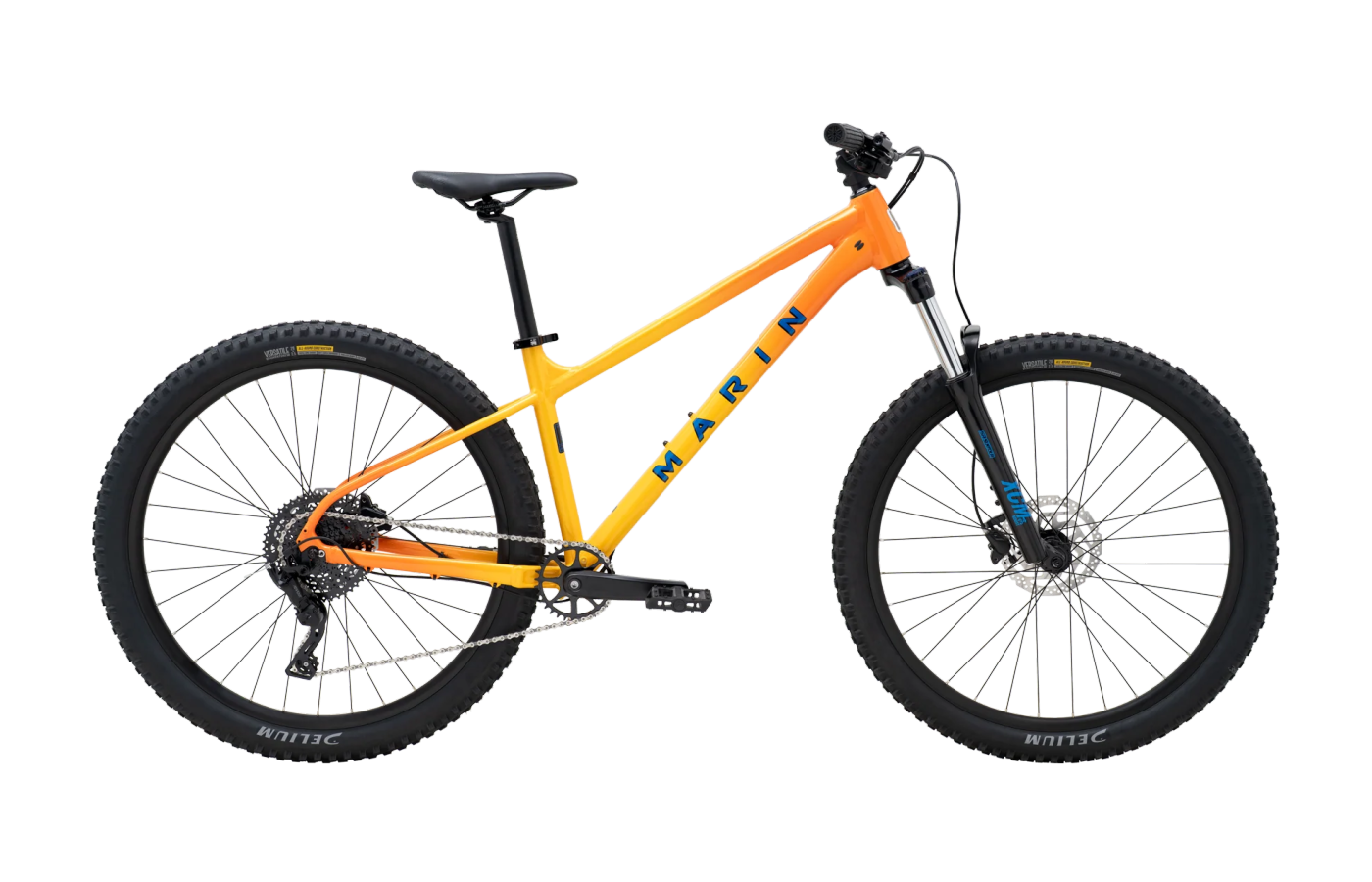
San Quentin
Goes even further into the playful, dirt-jump end of the spectrum than the Kobain — very short chainstays and a poppy character. The bike for the rider who treats every roller as a hip jump.
Compare →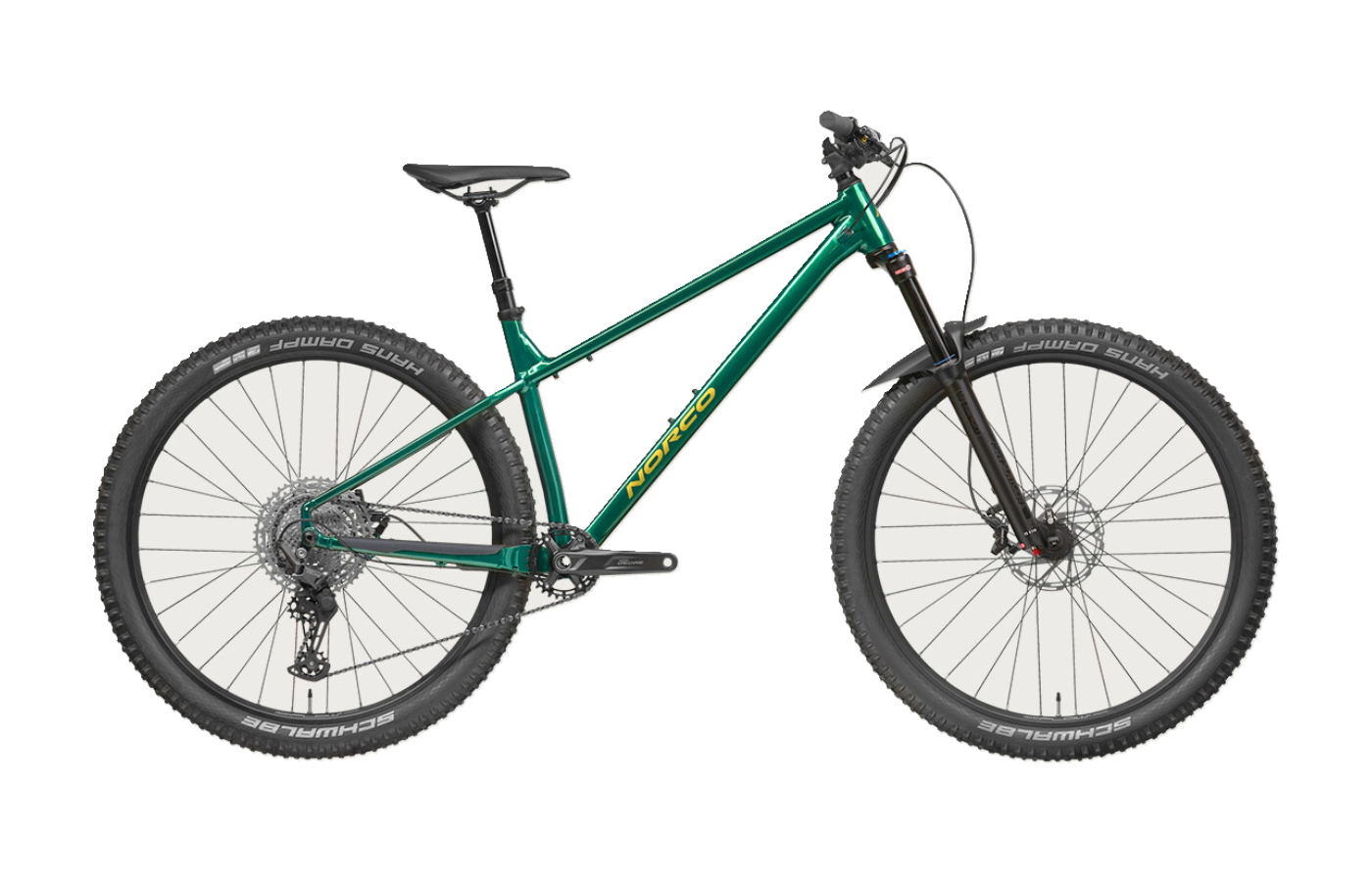
Torrent
Another Canadian bruiser in the Growler vein, but with a steel frame option that smooths out the brutal stiffness most aggressive alloy hardtails carry. Heavier, more compliant, similarly slack.
Compare →