S5
vs795 Blade RS
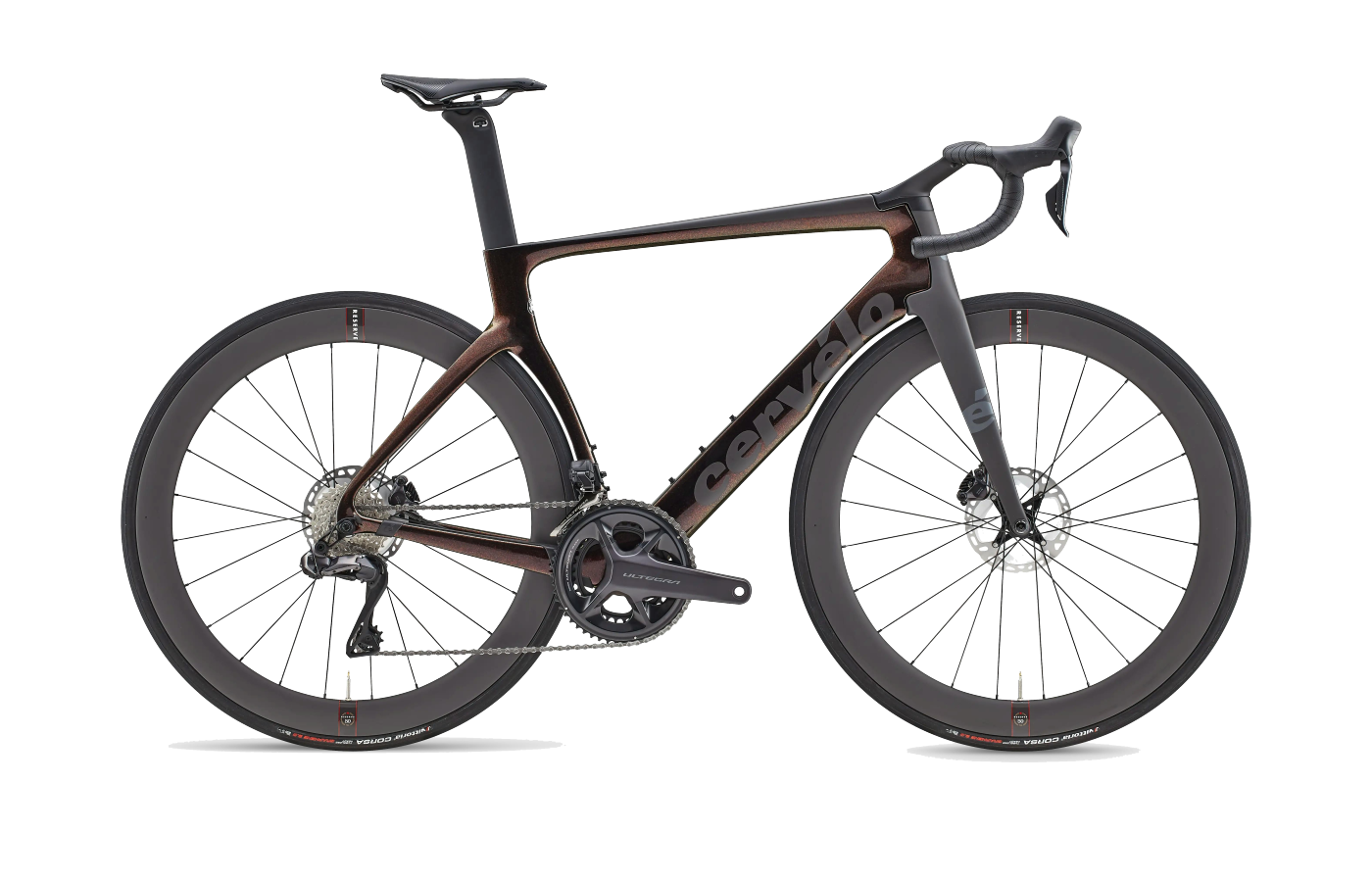
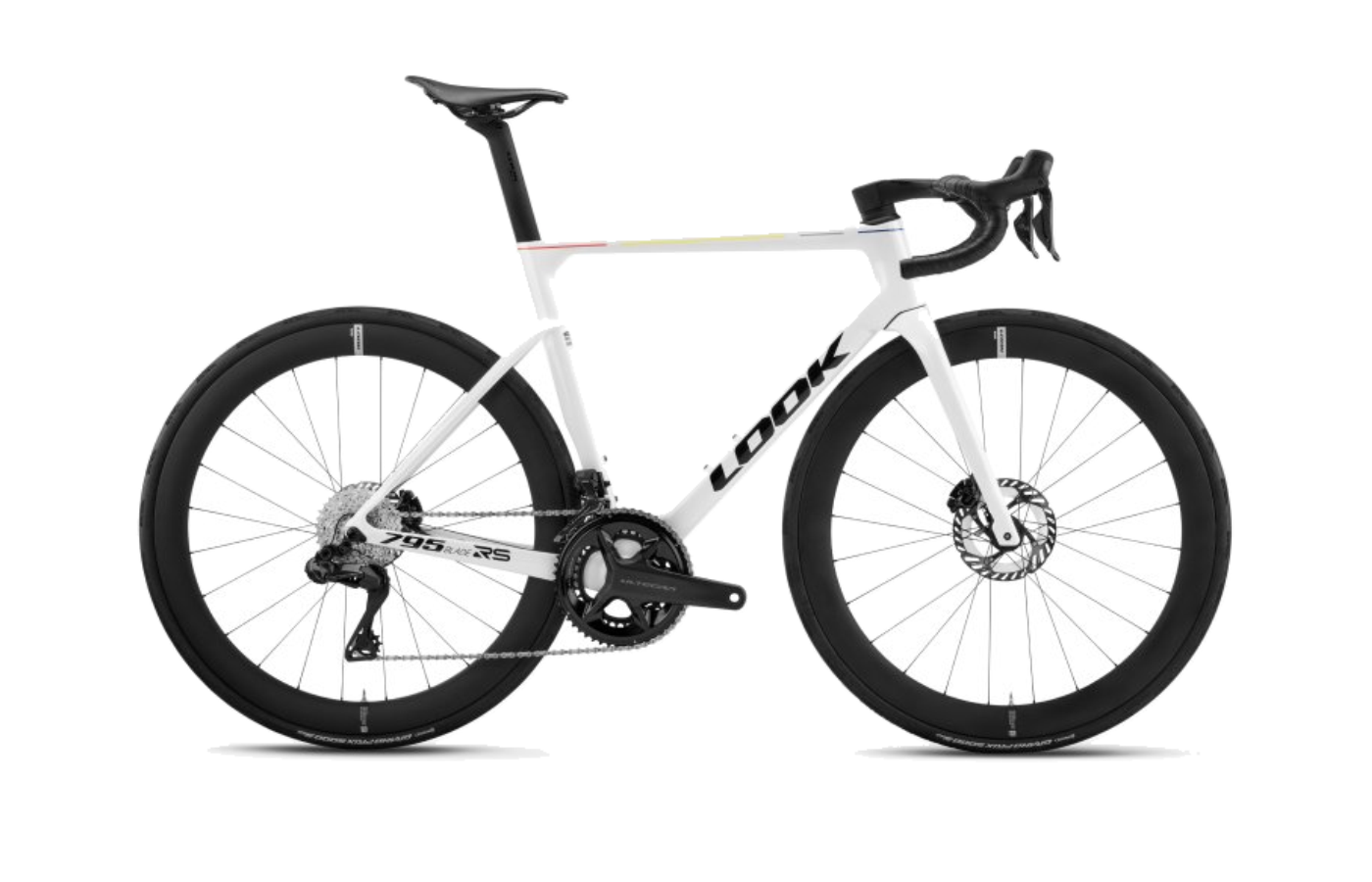
Two aero racers, two attitudes toward the road.
The Cervélo S5 is the integrated, high-speed system. The Look 795 Blade RS is the unfiltered race bike that demands smooth pavement.
S5
- Wider tire clearance at 34 mm, with 29 mm Vittoria Corsa Pro stock — the most modern contact patch in the segment.
- Surprisingly compliant for a pure aero bike — the wide rims plus 29 mm tires soften the ride without dulling the chassis.
- Co-developed wheel system — the Reserve 57|64 wheels are tuned to the frame, with steel spokes chosen for serviceability.
- Proprietary BBright press-fit bottom bracket is a known maintenance hassle (and houses the Di2 battery).
- Builds start at $10,100 — no entry-level Rival or 105 option exists.
795 Blade RS
- Whip-crack BB stiffness — a claimed 7% gain at the bottom bracket from the 25% UHM carbon layup.
- T47 threaded bottom bracket — quieter, easier to service than the S5's press-fit BBright.
- Two-piece Combo Aero cockpit — bar and stem swap independently, a real adjustability win over fully one-piece designs.
- Tire clearance is only 30 mm; stock 28 mm tires on narrower rims feel old-school next to the S5's setup.
- Ride is uncompromisingly stiff — heavier riders or rough roads turn that into fatigue.
Editor’s analysis
Both bikes are WorldTour-proven aero weapons — the question is whether you want the road buffered for you, or transmitted to you.
On paper these two land in the same bracket: deep-section carbon, integrated cockpits, mid-7-kilogram weights, $10k entry tickets, and pro pedigrees — Visma–Lease a Bike on the Cervélo S5, Cofidis on the Look 795 Blade RS. Both are designed to carry speed at 40+ km/h and reward riders who put real wattage through the cranks.
The Cervélo S5 is the more refined system. Wider 34 mm tire clearance, Reserve 57|64 wheels co-developed for the frame, stock Vittoria Corsa Pro 29 mm tires, and a one-piece HB19 cockpit that reviewers from Velo to Cycling Weekly call notably stiffer yet more compliant than the previous generation. The result is an aero bike that's still planted in crosswinds and survivable on a 7-hour day in the saddle.
The Look 795 Blade RS picks a sharper, more uncompromising line. The frame uses 25% Ultra High Modulus carbon for a claimed 7% bottom-bracket stiffness gain over the prior generation, paired with a steep 74.5° seat angle and a two-piece Combo Aero cockpit that's practical to fit but, on rough roads, transmits everything. Reviewers love it on smooth European tarmac — "whip-crack sharp" sprints, "instantaneous" power transfer — and flag it for fatiguing 80kg+ riders on broken pavement.
Put another way: the Cervélo S5 is the aero bike you ride on whatever roads you happen to have. The Look 795 Blade RS is the aero bike you ride when the roads are good and you want to feel everything the carbon is doing.
Where the builds differ.
Comparing our editor's-pick builds side-by-side. Winners highlighted row-by-row — lower price and weight, and the better-spec component, each mark a point.
Build variants & pricing
Both ranges open at the Ultegra Di2 tier and climb to ~$14.5k–$16.6k flagships — the Look starts $600 higher and tops out higher still.
Prices are current US MSRP. Neither platform offers a sub-$10k build — these are pro-tier frames with pro-tier component packages from the floor up.
How they fit, how they steer.
Cervélo S5 size 54 vs Look 795 Blade RS size M. Reach is within 7 mm (384 vs 391.2), stack within 7 mm (542 vs 549.2). Where they diverge: the Look's seat tube is 1.5° steeper (74.5° vs 73°), pushing the rider further forward over the cranks, and its trail is 3.7 mm longer (59.3 vs 55.6) — calmer steering despite the same head angle.
Which size should I buy?
Recommendations span both sizing conventions; the Look offers an XXS that the Cervélo doesn't, while the Cervélo's largest 61 extends one step beyond the Look's XL.
→These are starting points. Flexibility, riding style, and preferred position all shift the answer — if you’re between sizes, a professional fit beats a chart.
What the magazines said.
Published reviews from trusted cycling outlets. Click through for the full write-up.
Which one should you buy?
If you want the modern aero system that works on real-world roads, get the Cervélo S5. If you ride smooth pavement and want maximum stiffness for the watts you put in, get the Look 795 Blade RS.
S5
If you want a wind-tunnel-validated aero bike that won't break you on a 100-mile day or rattle on chip-seal, the S5 is the more livable system. The wider tires, co-developed wheels, and refined cockpit make it the easier aero bike to live with — without giving up the speed Visma–Lease a Bike rides to Tour stage wins.
795 Blade RS
If your training roads are smooth, your goal events are crits or rolling road races, and you value out-of-the-saddle stiffness above all else, the Look rewards hard efforts more directly than almost anything in the segment. It's a racer's tool — sharp, uncompromising, and best in the conditions it was designed for.
Questions buyers actually ask.
Short answers to the things we get emailed about most often.
01Which is faster on flat roads?
Both are firmly in the top tier of aero road bikes, and at recreational speeds the gap will be invisible. Cyclingnews's wind-tunnel test on the new S5 measured it as the fastest bike they'd ever tested with a rider onboard, saving 27.57 watts versus their baseline at 40 km/h. Look claims the 795 Blade RS is 10% more aerodynamic than its predecessor, but hasn't published the same head-to-head wind-tunnel numbers.
If the comparison comes down to a flat 40 km TT, the Cervélo S5 is the safer bet. If it's a hilly road race where the bike has to carry speed and climb, both will be in the same conversation.
02Which one climbs better?
Closer than you'd expect. Cervélo claims a 124-gram weight reduction on the new S5; Granfondo measured a size 56 at 7.44 kg. The Look 795 Blade RS Ultegra Di2 build is listed at 7.5 kg in size M, with the higher SRAM Red and Campagnolo builds dropping to roughly 7.2 kg.
The Look has the steeper seat angle (74.5° vs 73°) and a stiffer feel out of the saddle — Cycling News explicitly calls it "a climbing bike" that "screams for standing climbs." The S5 climbs better than aero bikes have any right to, and Visma–Lease a Bike rides it on mountain stages. If you do most of your climbing seated, the S5 will feel more comfortable; if you stand and attack, the Look's BB stiffness is addictive.
03What's the maximum tire clearance?
Cervélo S5: 34 mm officially, with 29 mm Vittoria Corsa Pro fitted stock on 23 mm internal-width Reserve rims. One reviewer was "sceptical" about the full 34 mm claim and felt 32 mm was already tight, so plan for ~32 mm in practice.
Look 795 Blade RS: 30 mm officially, with 28 mm Continental GP 5000 stock on narrower 21 mm internal Corima or LOOK R50D rims (depending on build).
If wider tires for compliance or rougher roads matter to you, the S5 has a real advantage.
04How serviceable are the integrated cockpits?
The Cervélo S5's HB19 is a one-piece carbon bar/stem unit. Cervélo offers a 60-day swap policy for getting the bar option right, and the new design is reportedly easier to access for headset and bar service than the prior S5. Changing length later means buying a new unit.
The Look 795 Blade RS runs a two-piece Combo Aero cockpit — bar and stem are separate components, so you can change stem length or bar width independently. Cycling Weekly and BikeRadar both call this practicality a clear advantage over fully integrated systems.
The trade-off: Look's must-use proprietary bar limits aftermarket choice.
05What about bottom bracket maintenance?
This is one of the clearest contrasts. The Cervélo S5 uses a proprietary BBright press-fit bottom bracket — multiple reviewers (Velo, Cyclingnews) call it a long-running hassle, and it's complicated by the fact that the Di2 battery lives there.
The Look 795 Blade RS uses a T47 threaded bottom bracket — quieter, easier to service, and praised across reviews as a sensible engineering choice for long-term ownership.
If you do your own wrenching, this favors the Look noticeably.
06Do the editor's-pick builds include a power meter?
On the Cervélo S5, the Ultegra Di2 build at $10,100 ships without a power meter (only the SRAM Force AXS, Red AXS, and Red XPLR builds include one).
On the Look 795 Blade RS, the Ultegra Di2 build at $10,700 also ships without one — and reviewers (BikeRadar, Cycling Weekly, Cycling News) called this a notable omission even on the higher Dura-Ace build.
If having power on day one matters, the SRAM Force AXS S5 ($10,250) is the price-closest pick that includes one.
07Are these bikes available with mechanical shifting?
No. Both frames are designed around wireless or electronic drivetrains. Every cataloged build on each platform uses Shimano Di2, SRAM AXS, or Campagnolo Super Record Wireless. Mechanical 105 or Tiagra builds do not exist on either bike.
08Which one is better for crosswinds?
The Cervélo S5 is consistently praised as exceptionally planted in crosswinds — Nero Cycling describes its crosswind stability as "unparalleled." Cervélo's own design work on the deeper head tube and wider rim/tire combination is credited.
The Look 795 Blade RS is more sensitive: BikeRadar and Mapdec Cycle Works both observed the stock Corima 47 mm wheels "catch the wind more than their depth would suggest," partly attributed to the rim's slightly angular profile.
If you ride exposed coastal or open terrain often, the S5 is the calmer choice.
Similar bikes
If your priorities don’t map cleanly onto either of these, one of these adjacent bikes probably fits better.
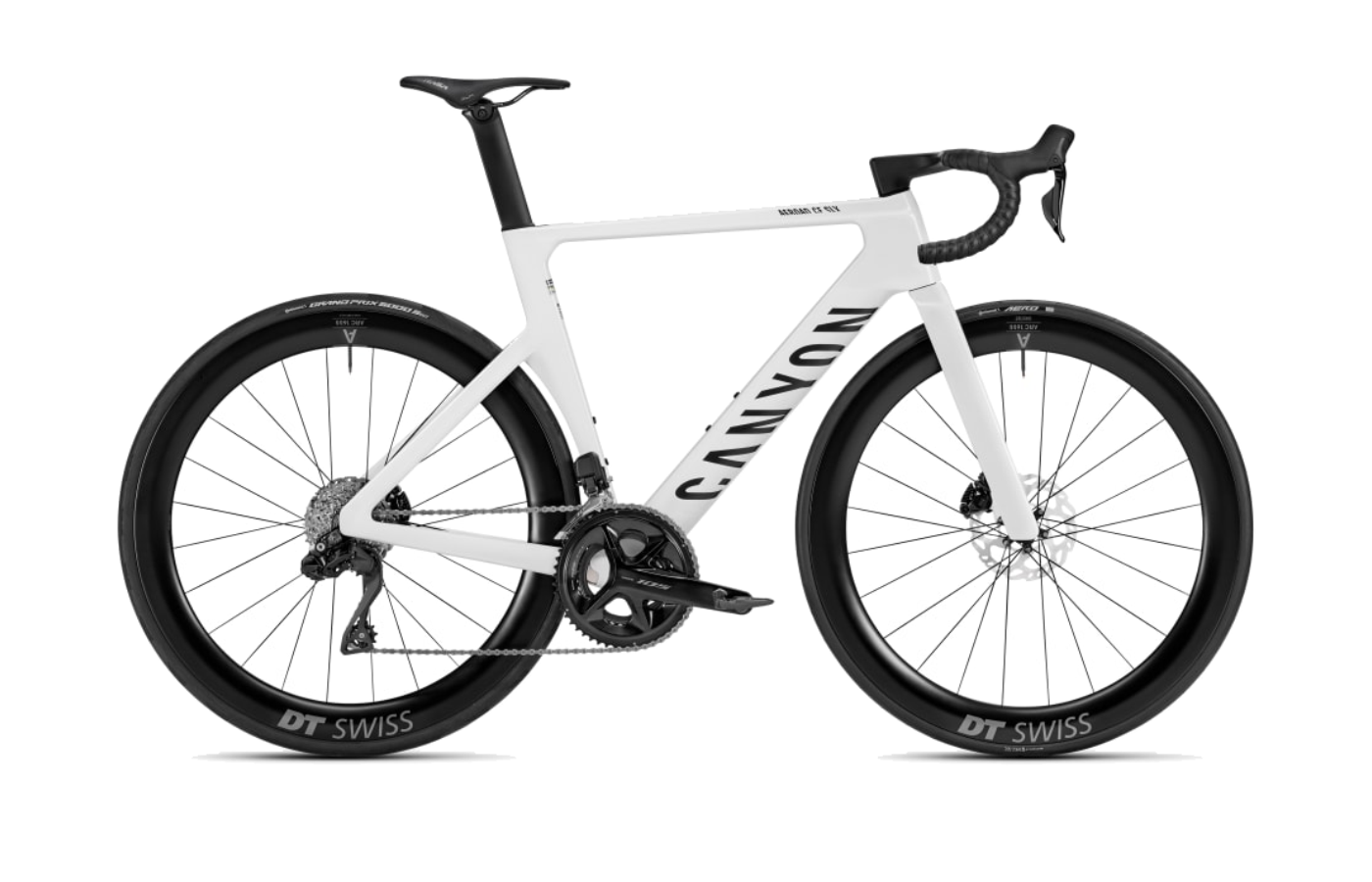
Aeroad
The direct-to-consumer aero alternative — same integrated-system philosophy as the S5 at meaningfully less money. The catch is no local dealer and no demo ride, so you need to know your fit before you click buy.
Compare →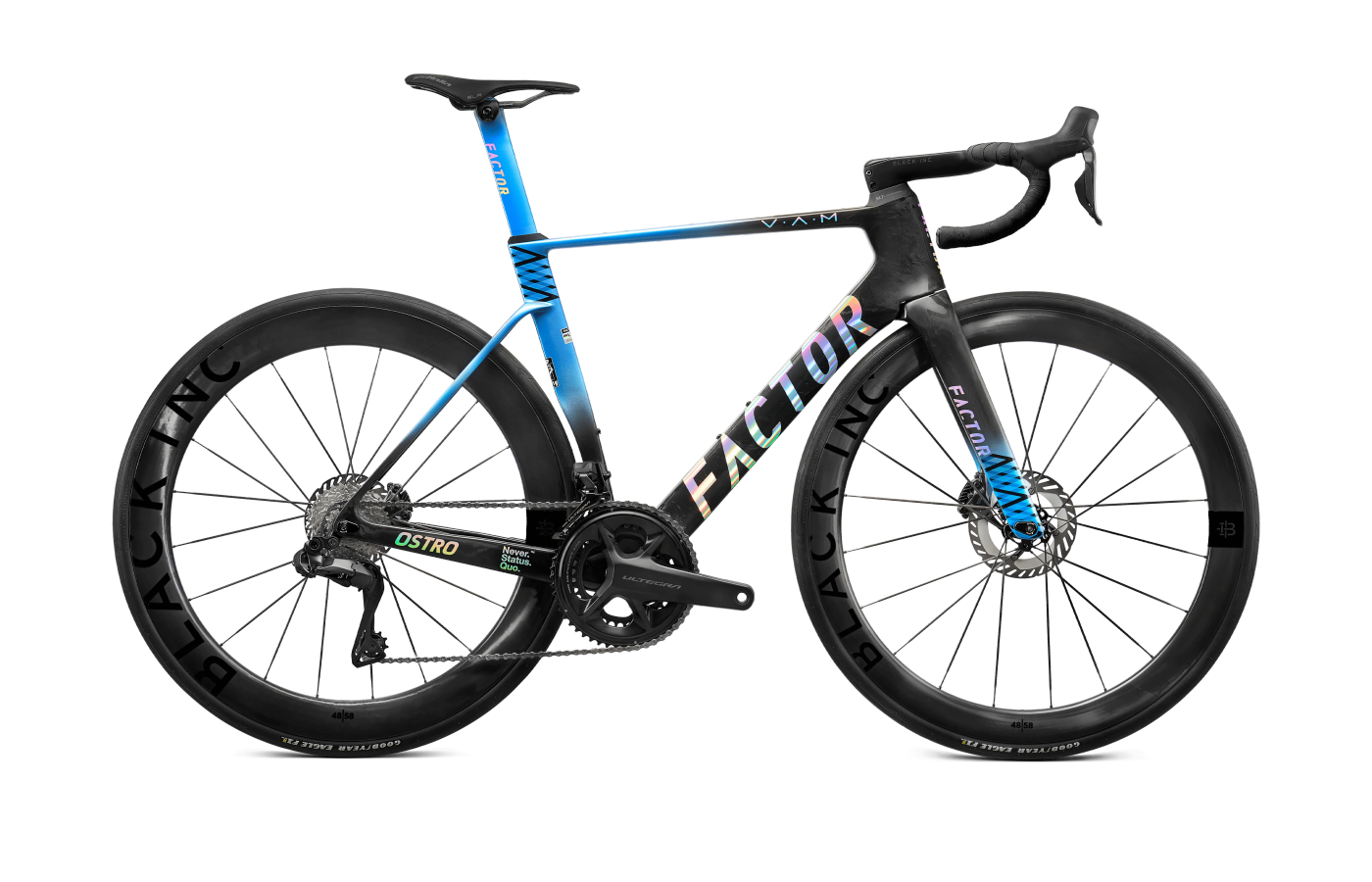
Ostro VAM
Factor's pitch is aero *and* lightweight — a one-bike-for-everything play that targets the climbs as hard as the flats. Worth a look if you'd rather not own two bikes for two terrains.
Compare →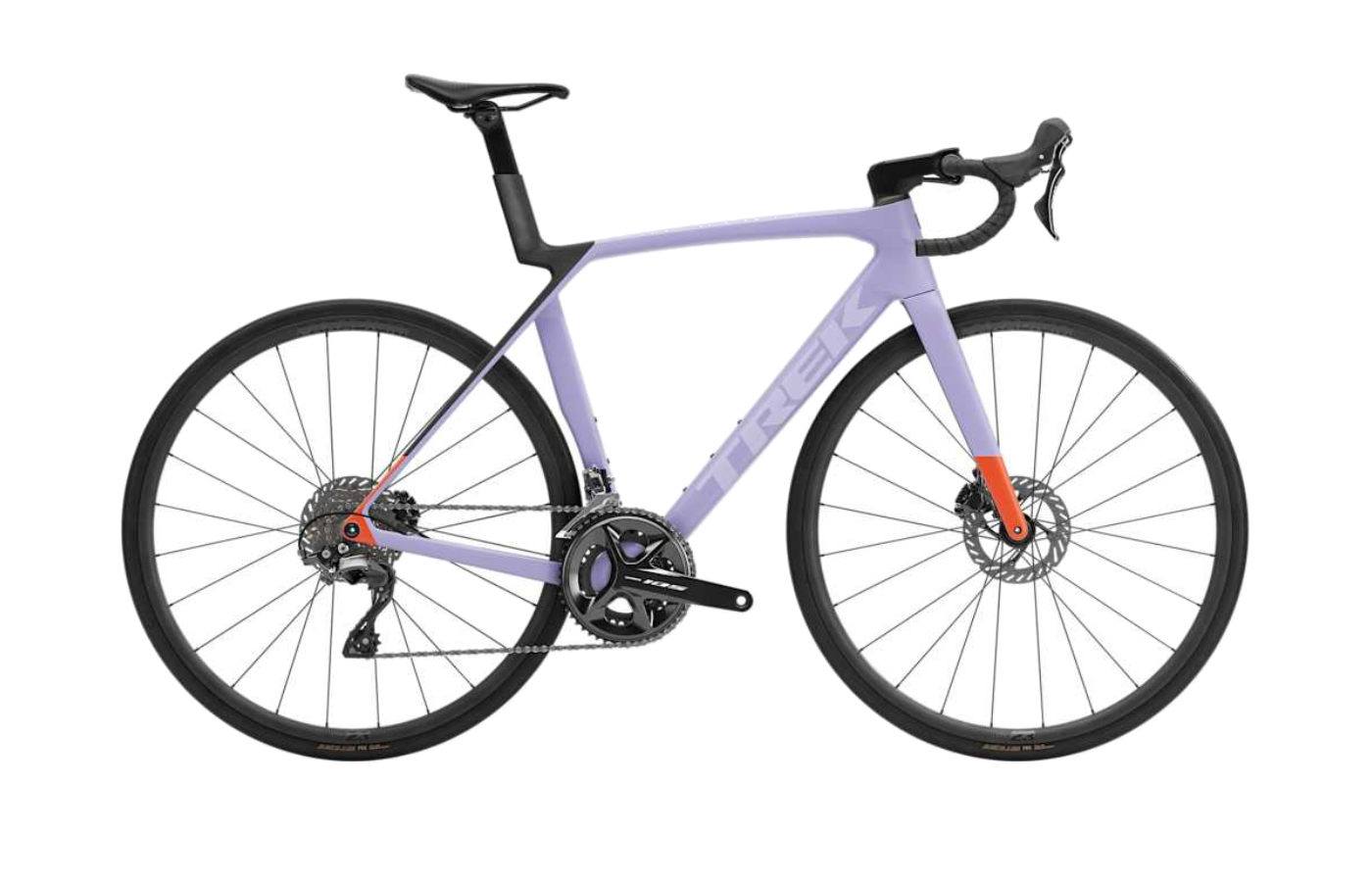
Madone
Trek's aero flagship with the IsoFlow decoupler — chases S5-tier drag numbers but adds a rear-end compliance feature aimed squarely at the long-day-in-the-saddle problem the Look doesn't solve.
Compare →