Caledonia
vsDomane
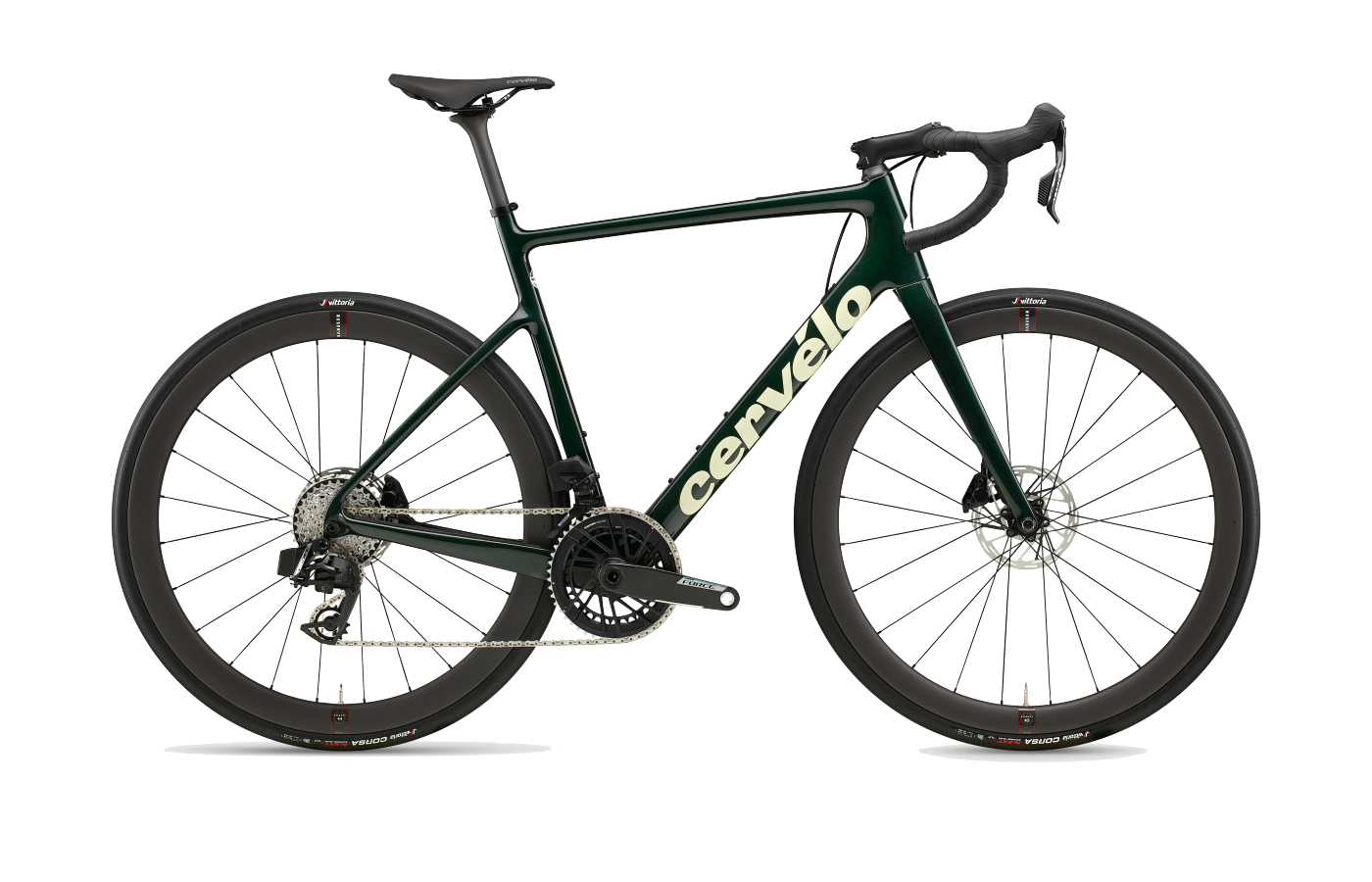
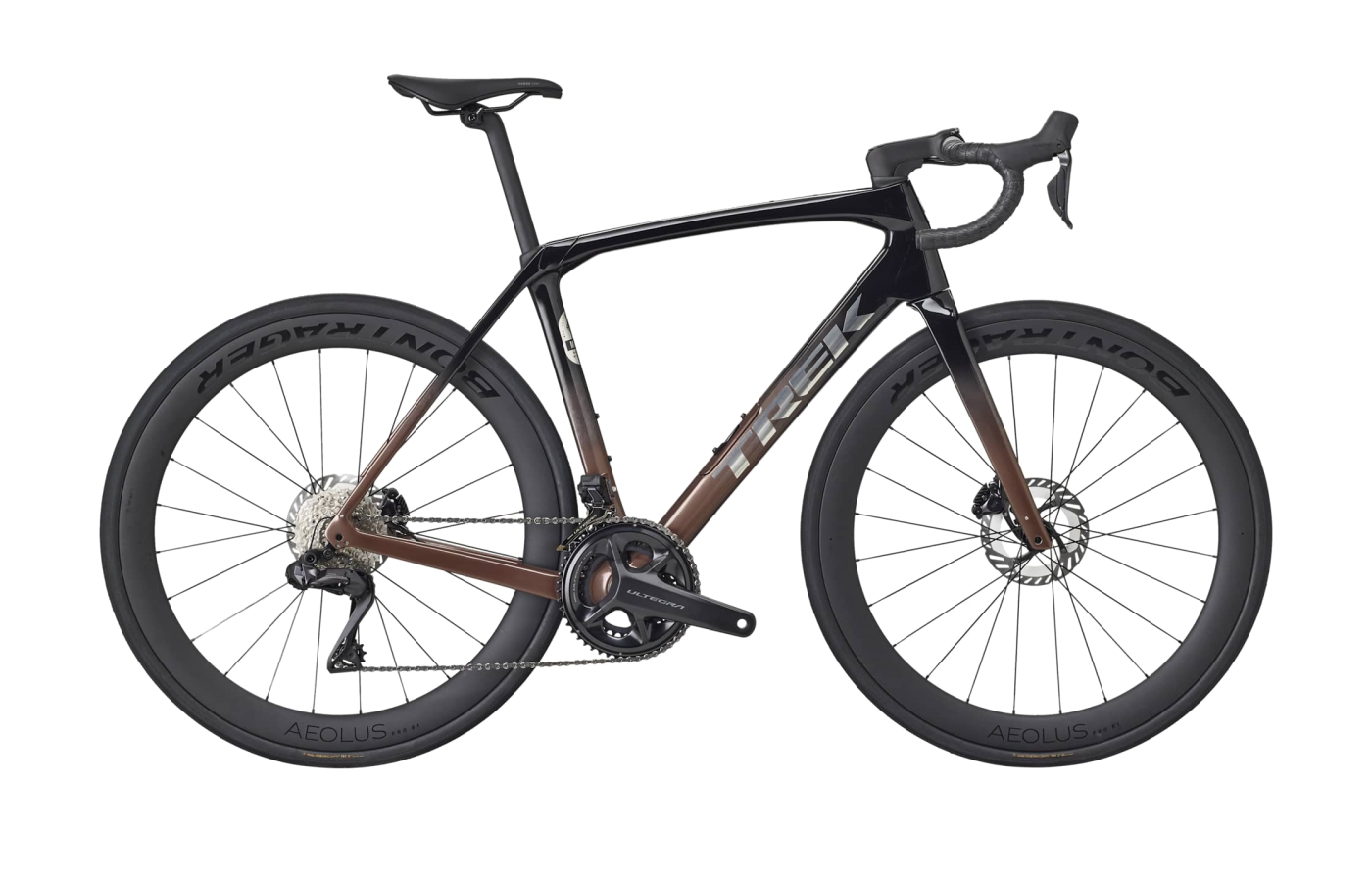
Two endurance bikes, two answers to comfort.
The Caledonia gets out of its own way — wide tires, simple cabling, race-bike DNA. The Domane adds engineering: rear IsoSpeed, internal storage, 38 mm clearance.
Caledonia
- Cheaper entry point — $3,300 for the 105 build vs $3,799 for the cheapest Domane carbon (SL 5).
- Mechanic-friendly — semi-internal cables and a non-proprietary 27.2 mm seatpost make stem swaps and travel painless.
- Reserve carbon wheels stock on the Force AXS build — most peers in this price band still ship alloy hoops.
- Tighter 34 mm tire clearance vs the Domane's 38 mm.
- Stock alloy seatpost and bars get repeatedly flagged as 'a curious choice' for the price.
Domane
- Smoothest rear end in the segment — rear IsoSpeed neutralizes square-edged hits in a way no compliant seatpost can match.
- Internal down-tube storage — Trek's bento-in-the-frame cleanly hides a tube, levers, and a CO2 without strapping anything to the bike.
- 38 mm tire clearance (40+ mm measured) — true all-road capability without buying a separate gravel bike.
- Cables route through the headset bearings — wet-weather riders should budget for early bearing service.
- Documented Gen 4 seatpost-creak issue requiring Trek's Rev 4 wedge to resolve, especially for riders over 80 kg.
Editor’s analysis
Both bikes call themselves fast endurance — but one earns it by stripping things away, and the other by adding them.
On paper, the Cervelo Caledonia and Trek Domane Gen 4 sit in the same fast-endurance bracket. Both run carbon, both clear 32 mm tires comfortably, both target the rider who wants race speed without race-bike pain. Spend any real time with the geometry sheets and the philosophies pull apart.
The Caledonia is the simpler answer. Standard 27.2 mm seatpost, semi-internal cabling that enters at the down tube, a threaded-into-itself BBRight bottom bracket that reviewers report stays creak-free past 2,000 miles. Geometry is 'attainable racing' — a 72-degree head tube and 60 mm trail at size 54, paired with 415 mm chainstays. It's a road-first bike that happens to clear 34 mm tires (31 mm with fenders), and the frame is laterally stiff enough that one Velo tester said it 'lights up with all the verve of a race bike' when pushed.
The Trek Domane adds engineering. Rear IsoSpeed decoupler tuned to match the Gen 3's softest setting, internal down-tube storage, T47 threaded BB, 38 mm tire clearance (40+ mm measured), Kammtail aero tube shaping. Geometry is more upright by a meaningful margin — at size 50, stack-to-reach lands more relaxed than the Caledonia at 54, and the bottom bracket drops to ~80 mm for a low, planted feel on chip-seal and light gravel. The catch: cables route through the headset bearings, the Gen 4 had a recurring seatpost-creak issue (Trek shipped Revision 2 and 4 wedges to fix it), and Trek's prices sit higher than equivalent rivals — a real 'Trek Tax' once you cross into SLR territory.
Put another way: the Caledonia is the bike you buy when you want one fast road bike that's easy to live with. The Domane is the bike you buy when you want one bike for everything — road, rough chip-seal, fire roads, brevets — and you're willing to pay (and maintain) more for it.
Where the builds differ.
Comparing our editor's-pick builds side-by-side. Winners highlighted row-by-row — lower price and weight, and the better-spec component, each mark a point.
Build variants & pricing
The Caledonia tops out around $6,500; the Domane lineup spans $1,200 alloy to $12,500 SRAM Red — a much wider range with a much higher ceiling.
Prices are current US MSRP. Cervelo only sells the Caledonia in four trims, all carbon; Trek offers aluminum AL, mid-grade 500-series OCLV (SL), and top-grade 800-series OCLV (SLR). Match drivetrain tier when comparing — a Caledonia 105 Di2 ($4,300) and a Domane SL 6 ($5,099) are the closer real-world pairing.
How they fit, how they steer.
The Caledonia 54 and Domane 50 are the fit-picked frames for the same rider — Trek's sizes run larger than Cervelo's. At those sizes, both land near a 60 mm trail figure, but the Domane sits 9 mm shorter in stack, 10 mm shorter in reach, and stretches 5 mm longer in the chainstays — a more upright, more planted cockpit.
Which size should I buy?
Size recommendations based on stack, reach, and effective top tube. Don't compare across the same number — Trek's 50 is closest to Cervelo's 54 in actual cockpit dimensions.
→These are starting points. Flexibility, riding style, and preferred position all shift the answer — if you’re between sizes, a professional fit beats a chart.
What the magazines said.
Published reviews from trusted cycling outlets. Click through for the full write-up.
Which one should you buy?
If you want a fast, simple road bike for chip-seal and the occasional dirt connector, get the Caledonia. If you want one bike that erases bad pavement and can swallow real gravel, get the Domane.
Caledonia
If most of your miles are paved, you like working on your own bike, and you'd rather spend the savings on better wheels than a fancier frame system — the Caledonia is the cleaner answer. Race-bike feel, endurance manners, no proprietary parts to chase down.
Domane
If your routes mix tarmac with broken chip-seal, light gravel, and the occasional dirt shortcut — IsoSpeed plus 38 mm clearance is genuinely a different ride. The trade is more complexity to maintain and a higher price for equivalent components.
Questions buyers actually ask.
Short answers to the things we get emailed about most often.
01Which is more comfortable on rough roads?
The Trek Domane, decisively, on the rear end. Trek's IsoSpeed decoupler is the most effective mechanical compliance system on a production road bike — reviewers consistently described it as 'astonishingly comfortable' and capable of neutralizing square-edged hits.
The Caledonia leans on tire volume instead: stock 30–32 mm Vittoria Corsa N.EXT tires up to 34 mm clearance, with reviewers noting the alloy 27.2 mm seatpost provides 'no such isolation' as the Domane's IsoSpeed wedge. On smoother roads the gap closes quickly, but on broken chip-seal or cobbles the Domane is the noticeably calmer bike.
02What's the maximum tire clearance?
Cervelo Caledonia: 34 mm officially (31 mm with fenders).
Trek Domane Gen 4: 38 mm officially, with multiple reviewers measuring real-world clearance to 40 mm or even 41 mm.
For pure-road riding either is plenty. If you want to run the same bike on gravel meaningfully wider than 35 mm, the Domane is the only one of the two that fits.
03Which climbs better?
Closer than you'd guess. Neither is a featherweight — the Caledonia in Ultegra Di2 trim weighs in around 8.55 kg (54 cm, no pedals), and the Domane SLR 7 lands at ~7.99 kg in size 56 (lighter, but at nearly $9,000 vs the Caledonia Force AXS's $6,500).
At matched price points the Caledonia is usually the lighter bike. It also has a stiffer-feeling bottom bracket per reviewer feedback, which translates to a more lively out-of-saddle response. The Domane's longer wheelbase and lower BB make seated tempo climbs more stable but slightly less reactive when you stand up.
04How easy are these to live with at home?
The Caledonia is markedly friendlier. Cables enter the frame at the down tube (not through the headset), the seatpost is a standard 27.2 mm, and the cockpit uses a conventional 31.8 mm clamp — a stem swap doesn't require disconnecting hoses.
The Domane Gen 4 routes cables through the upper headset bearing. That looks clean but, per multiple long-term reviews, the bearing is 'woefully exposed' to sweat and road spray, and replacing it means partial hose disassembly. Budget for more frequent professional service if you ride in the wet.
05Is the Domane Gen 4's seatpost-creak issue still a problem?
It was a real and widely reported problem on early Gen 4 frames. Riders reported the post slipping up to 2 cm and audible creaking on group rides — long-term reviews from Velo and others called it out specifically.
Trek shipped revised IsoSpeed wedges (Revision 2, then Revision 4) to fix it. New bikes ship with the latest hardware, but if you're buying second-hand, confirm the wedge revision and that the dealer used carbon paste at install. Riders over 80 kg appear more affected per a community poll cited in reviews.
06Can either of these handle real gravel?
The Domane, within limits. Reviewers pushed it onto 'pothole carpets,' light gravel, and dirt connectors with no complaint thanks to the 38 mm clearance, low BB, and long wheelbase. It's not a substitute for a dedicated gravel bike on technical singletrack, but as a one-bike answer for road riders who'll occasionally venture off pavement, it works.
The Caledonia can do light gravel — multiple reviewers reported positive experiences on the Erie Canal Trail and similar smooth dirt — but at 34 mm max it runs out of tire well before the Domane does. Cervelo would point you at the Aspero if you want serious gravel.
07How serviceable are the integrated cockpits?
Neither bike uses a one-piece integrated cockpit. The Caledonia ships with a separate Cervélo ST36 alloy stem and AB07 alloy bar at a standard 31.8 mm clamp — straightforward to swap.
The Domane uses a Trek RCS Pro alloy stem with a separate Bontrager Comp/Aero Pro bar (depending on trim). Hoses route into the frame via the headset, so a stem-length change is more involved than on the Caledonia, but you're still not buying a $450 one-piece unit like you would on a Tarmac SL8 or S5.
08Which has the better value at $6,500?
At identical sticker price, the Caledonia Force AXS ($6,500) gets you a full SRAM Force AXS wireless drivetrain and Reserve 40/44 carbon wheels. The closest Domane at that money is the SL 7 ($6,799), which gets you Ultegra Di2 and Bontrager Aeolus Pro 51 carbon wheels — a comparable package, slightly more aero wheelset, slightly heavier complete bike.
The Caledonia wins on weight and component cohesion at this price; the Domane wins on rear comfort and storage. Above $9,000, the Domane lineup keeps climbing into SLR territory while the Caledonia tops out — at that point you're cross-shopping different bikes entirely.
Similar bikes
If your priorities don’t map cleanly onto either of these, one of these adjacent bikes probably fits better.
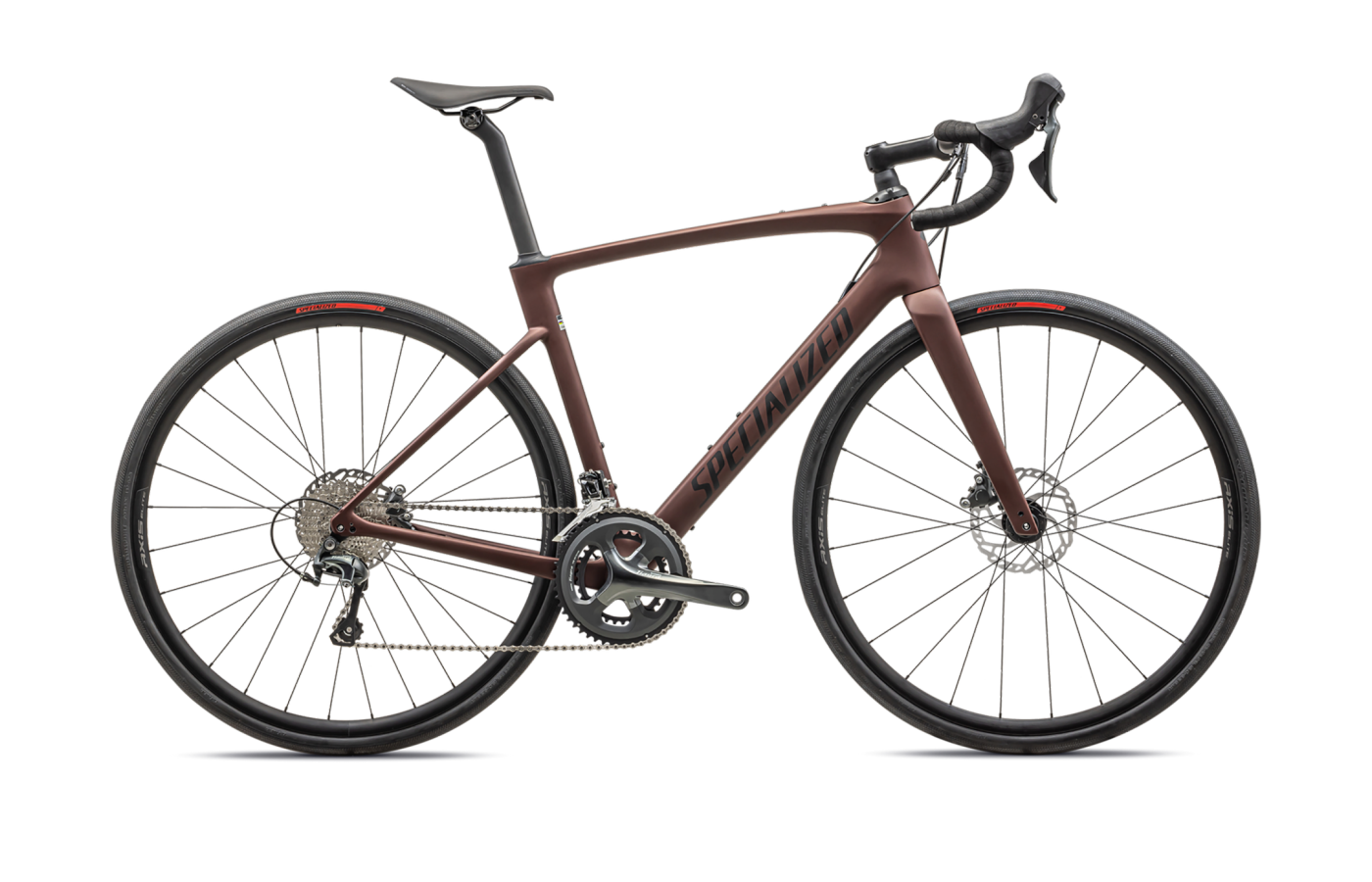
Roubaix
The most direct Domane competitor — Specialized's Future Shock 3.0 puts 20 mm of suspension travel under the stem instead of the saddle, balancing comfort front and rear. The right pick if the Domane's missing front IsoSpeed is what's bothering you.
Compare →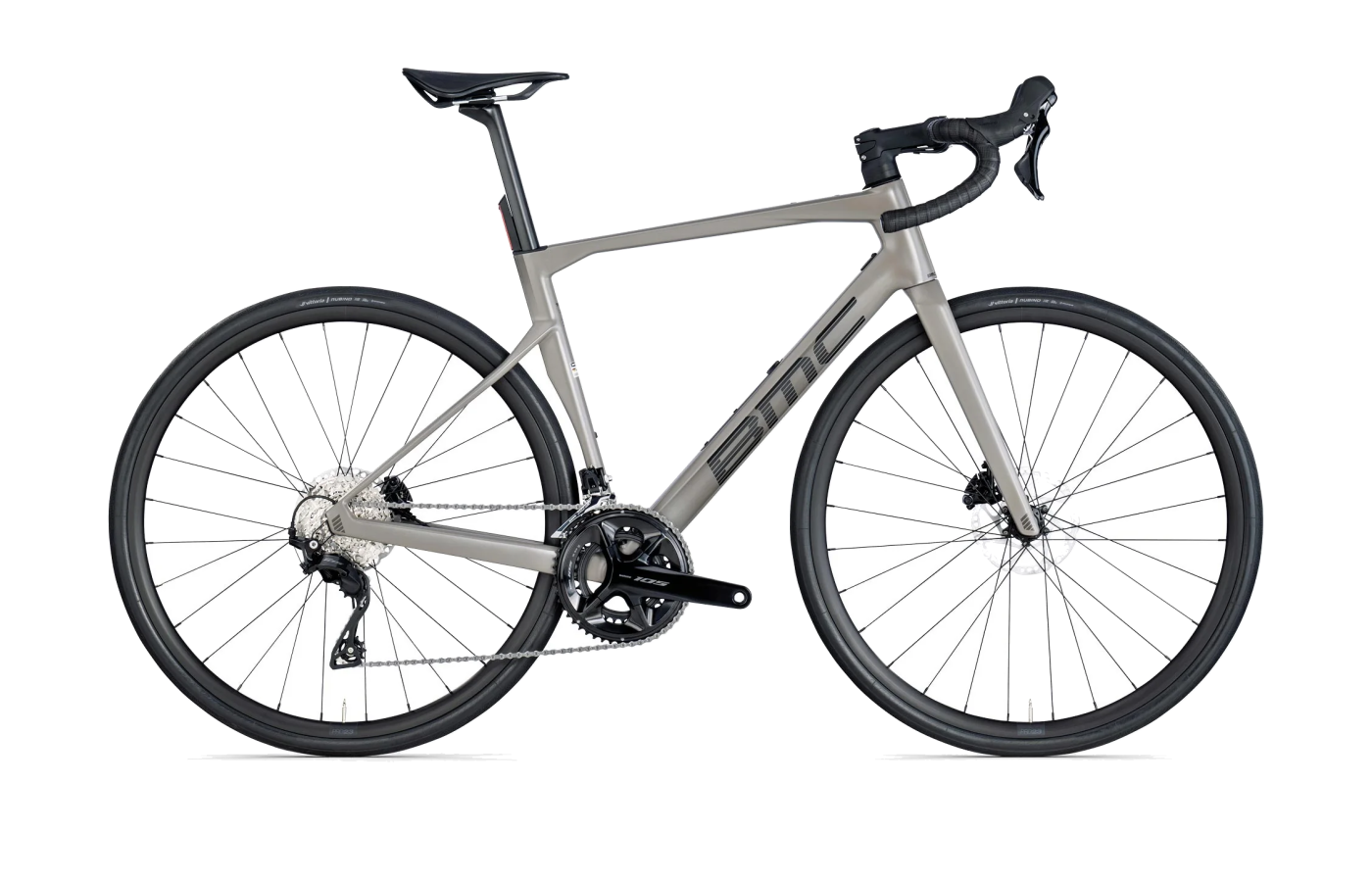
Roadmachine
BMC's take on the Caledonia mission — sporty endurance geometry with a refined carbon layup, no IsoSpeed gimmickry, and a cleaner integrated cockpit than either bike here. Worth a test ride if the Caledonia feels close but you want one tier nicer in finish.
Compare →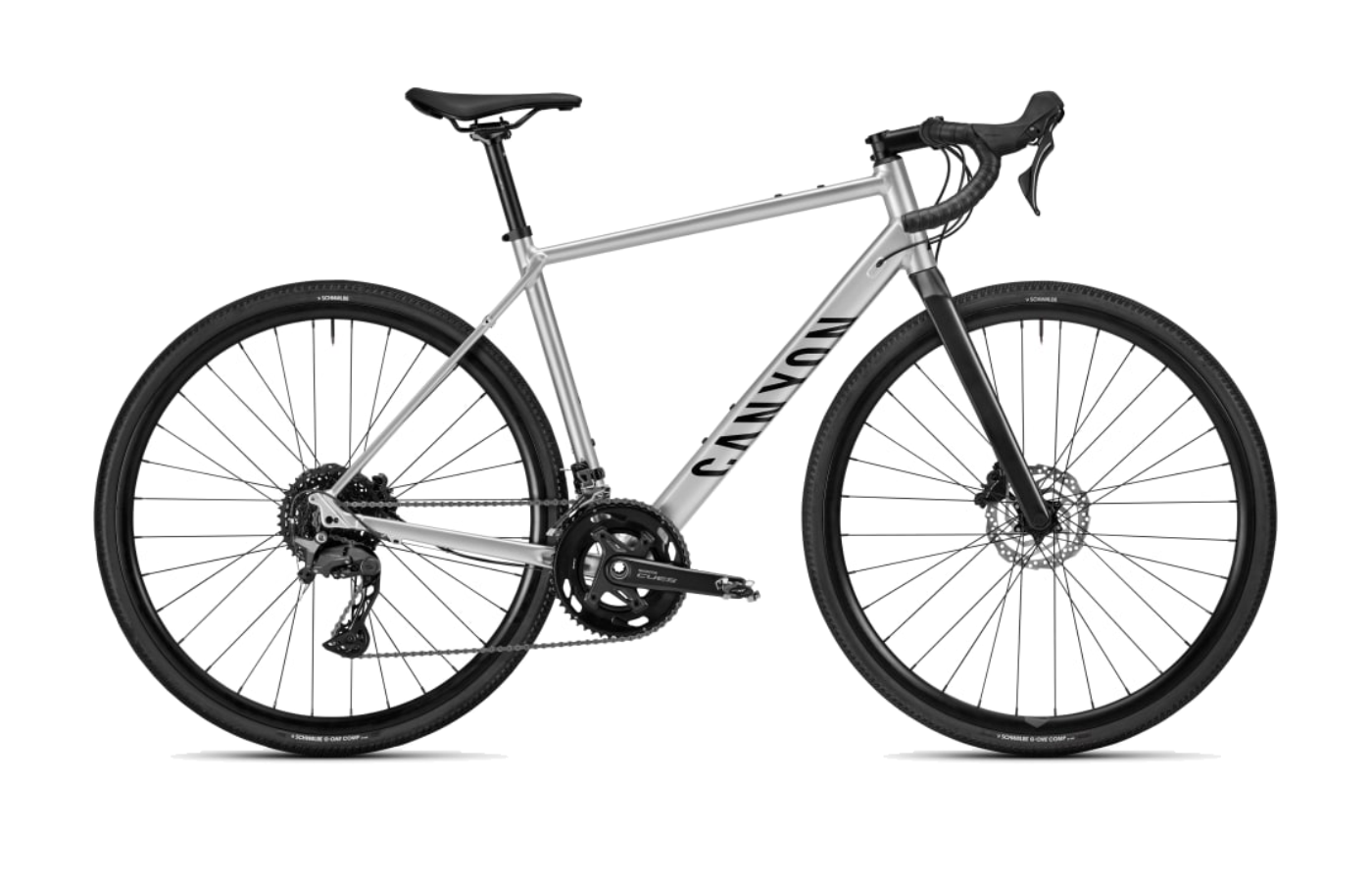
Endurace
Direct-to-consumer endurance value play — Canyon's Endurace gets you carbon wheels and electronic shifting at price points that make the Domane SL 7 look expensive. The trade is no local dealer for fit or warranty — best if you already know your size.
Compare →