Caledonia
vsRoubaix
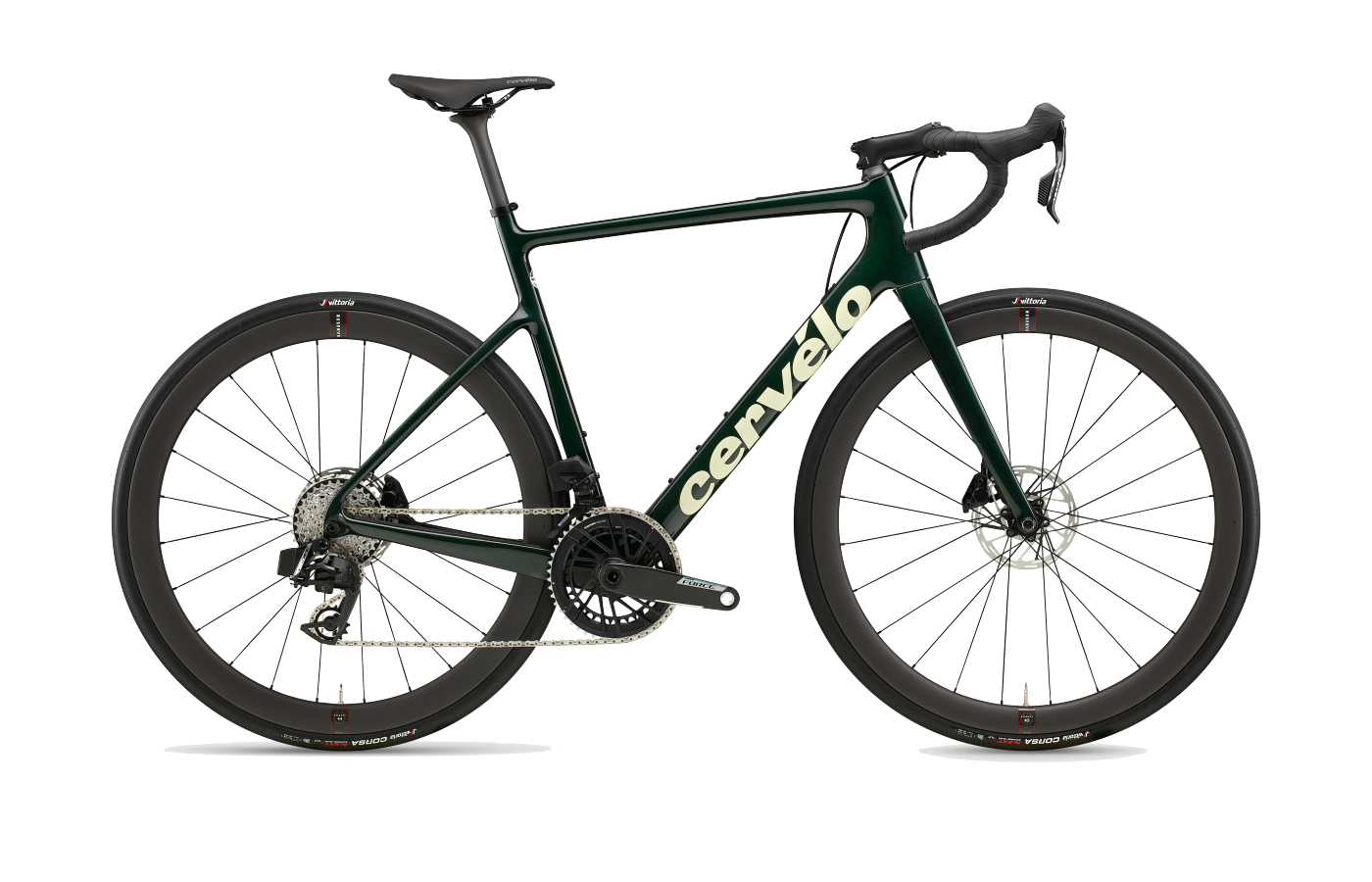
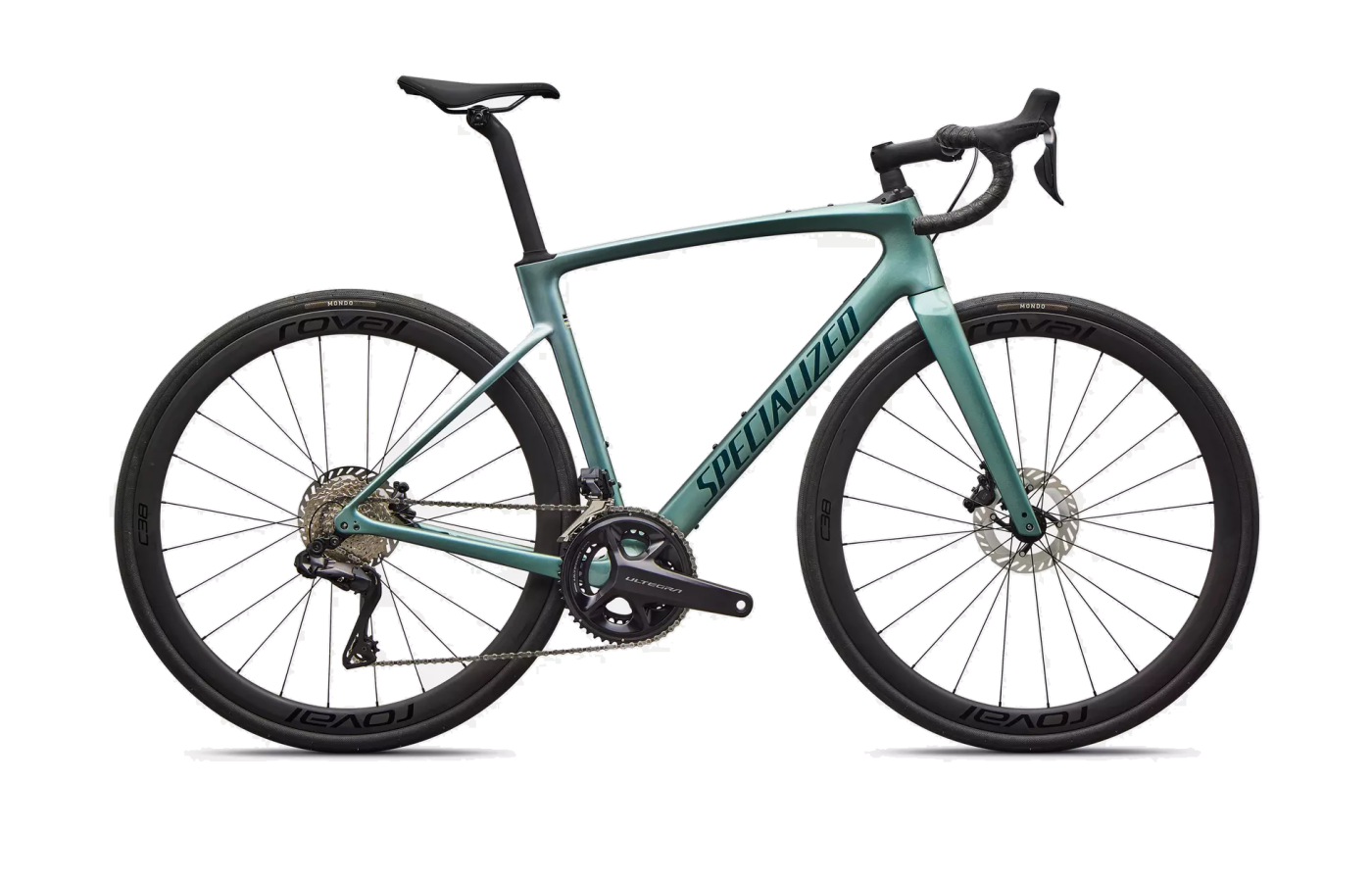
Two endurance bikes, two ways to fight road buzz.
The Caledonia leans on a stiff, traditional frame and fat tires. The Roubaix bolts a 20 mm suspension cartridge under the stem and treats 38 mm rubber as a baseline.
Caledonia
- Easier to live with — external cable routing, standard 27.2 mm seatpost, no proprietary tools needed for headset service.
- Sharper handling — 30 mm lower stack and 17 mm shorter wheelbase at size 54 give it real race-bike feel.
- Frame parity with Caledonia 5 — same geometry, tube shapes, and carbon layup as Cervelo's flagship endurance frame.
- No active suspension — compliance comes from tires and frame, so very rough roads are firmer than a Roubaix.
- Stock alloy cockpit and 27.2 mm aluminum seatpost are flagged by reviewers as begging for upgrade.
Roubaix
- Class-leading bump absorption — 20 mm Future Shock travel up front plus 18 mm Pavé seatpost flex out back; reviewers call it 'game-changing' on broken roads.
- Wider tire clearance (38 mm) — genuine light-gravel capability without swapping bikes.
- Power meter included — even the mid-tier Expert ships with a single-sided Shimano power meter.
- 30 mm taller stack at size 54 — if you came from a race bike, the position will feel upright.
- Proprietary headset and hidden seatpost expander bolt frustrate home mechanics; some reviewers call them 'finicky' and 'goofy.'
Editor’s analysis
This isn't an endurance-vs-endurance fight. It's active suspension against let the tires do it — and the right answer depends on what your local roads actually look like.
On paper, the Cervelo Caledonia and Specialized Roubaix are siblings: both fast endurance bikes, both with race DNA at one parent and Paris-Roubaix at the other. Both are Force AXS / Ultegra Di2 territory in the mid-trim builds we're comparing here. But the design philosophies pull in opposite directions almost immediately.
The Specialized Roubaix is a system. The Future Shock 3.2 puts 20 mm of suspension travel between the rider's hands and the road, the dropped Pavé seatpost clamp lets the rear flex 18 mm, and 38 mm tire clearance turns it into a genuine all-road bike. Reviewers consistently call it 'game-changing' over rough surfaces — Escape Collective described the front wheel as 'vacuumed to the asphalt.' The price of admission is complexity: a proprietary headset, a finicky hidden expander bolt at the seatpost, and a 30 mm taller stack that will feel upright if you came from a race bike.
The Cervelo Caledonia goes the other way. Same Paris-Roubaix inspiration, but the Caledonia's compliance comes from tire volume (up to 34 mm) and geometry — no cartridges, no proprietary headset, no hidden bolts. The frame is laterally stiff at the bottom bracket and the cockpit is fully external — easy to travel with, easy to service. It's 30 mm lower in the stack and the wheelbase is 17 mm shorter at size 54, so it steers more like a race bike. The trade-off is honest: this is a comfortable carbon frame, not a comfort system.
Put another way: the Roubaix is the bike you buy when your local roads are genuinely broken and you want the bike to do the work. The Caledonia is the bike you buy when you want one performance road bike that can also handle chip-seal and the occasional dirt connector — without giving up the racy character that makes a road bike fun.
Where the builds differ.
Comparing our editor's-pick builds side-by-side. Winners highlighted row-by-row — lower price and weight, and the better-spec component, each mark a point.
Build variants & pricing
The Caledonia's range tops out at $6,500 with SRAM Force AXS; the Roubaix climbs to $12,499 for the S-Works.
Prices are current US MSRP. The Caledonia tops out where the Roubaix's mid-tier sits — Cervelo doesn't sell a flagship-tier Caledonia (that's the Caledonia 5, a separate frame). If you want a $10k+ build with this geometry, the Roubaix is the only option.
How they fit, how they steer.
Both at size 54 — the fit-picked size for a 5'8" rider on each bike. The Roubaix sits 30 mm taller in the stack with 3 mm more reach; chainstays are 5 mm longer and the wheelbase 17 mm longer — it's the more upright, more stable platform. The Caledonia is the closer thing to a race bike here.
Which size should I buy?
Size recommendations based on stack, reach, and effective top tube. Caledonia ranges 48–61, Roubaix 44–61; if you're between sizes the Roubaix's taller stack will feel more upright.
→These are starting points. Flexibility, riding style, and preferred position all shift the answer — if you’re between sizes, a professional fit beats a chart.
What the magazines said.
Published reviews from trusted cycling outlets. Click through for the full write-up.
Which one should you buy?
If your roads are genuinely broken or you ride 100+ mile days, get the Roubaix. If you want a sharper-handling endurance bike that's easier to service and travel with, get the Caledonia.
Caledonia
If you want a fast, stiff endurance frame that handles 30 mm tires comfortably and 32 mm if you push it — without proprietary suspension or finicky integration — the Caledonia is the smarter buy. It rewards a sporty position and is the easier of the two to live with day-to-day.
Roubaix
If your typical ride includes potholes, frost-heaved tarmac, or chip-seal — or if you struggle with hand numbness and neck fatigue on long days — the Roubaix's Future Shock plus 38 mm clearance is genuinely a different category of comfort. It's the bike that lets you stop slowing down for rough sections.
Questions buyers actually ask.
Short answers to the things we get emailed about most often.
01Which is more comfortable on rough roads?
The Specialized Roubaix, by a margin most reviewers describe as not close. The Future Shock 3.2 gives you 20 mm of suspension travel right under your hands, and the dropped Pavé seatpost clamp lets the rear flex about 18 mm. Cycling Weekly called the system 'game-changing' on rough roads, and Escape Collective described the front wheel as 'vacuumed to the asphalt.'
The Caledonia is no slouch — generous tire clearance and a balanced frame make it comfortable for long days — but it relies on tire volume and geometry, not active suspension. On chip-seal and broken tarmac, the Roubaix is the smoother bike.
02Which is the sharper-handling bike?
The Cervelo Caledonia. At size 54 it sits 30 mm lower in the stack (555 mm vs 585 mm), has a 17 mm shorter wheelbase (995 mm vs 1012 mm), and 5 mm shorter chainstays (415 mm vs 420 mm). The Roubaix's longer wheelbase and tall stack are deliberately tuned for stability over agility, and reviewers consistently note its slower turn-in.
The Caledonia is described in reviews as 'brilliantly balanced' and willing to be 'dipped and tipped without much effort.' If you ride spirited group rides or like an athletic, racy feel, the Caledonia is the closer match.
03What's the maximum tire clearance?
Cervelo Caledonia: 34 mm officially, or 31 mm with full fenders. Most builds ship with 30–32 mm Vittoria Corsa N.EXT.
Specialized Roubaix: 38 mm officially (and reviewers report up to 40 mm measured on the wide Roval rims). Stock tire is a 32 mm S-Works Mondo, which sits closer to 34 mm on Roval Terra wheels.
If light gravel is in your plans, the Roubaix has a meaningful clearance advantage.
04How serviceable is each bike?
The Caledonia is the friendlier bike for home mechanics and travelers. External cable routing from the bar to the frame, a standard round steerer, and a 27.2 mm seatpost mean no proprietary tools and no surprises during a hose bleed or stem swap.
The Roubaix is more demanding. The Future Shock requires a proprietary preload tool — Escape Collective called the headset adjustment 'goofy' — and the hidden seatpost expander bolt is widely flagged as 'finicky,' with some reviewers reporting the bolt falling down the seat tube. Specialized does spec a threaded BSA bottom bracket, which Cervelo doesn't (BBRight press-fit), but reviewers report Cervelo's BB stays creak-free.
05Does the Future Shock cause pedal bob when climbing?
Sometimes. Cycling Weekly's reviewer (a 90+ kg rider) noted 'suspension bob on hills' that 'felt like it was sapping efficiency' on the default soft spring setup. Lighter riders, including a 52 kg tester at Road.cc, reported negligible bob.
The Future Shock is laterally solid, so most out-of-saddle climbing forces don't activate it much. The Expert build's Future Shock 3.2 is tuned at home with interchangeable coil springs (soft, medium, firm); the S-Works and Pro models get the 3.3 with an on-the-fly damping dial. Heavier riders should plan to swap to the firmer spring.
06Is the Roubaix's $6k Expert worth $1.5k more than a Caledonia Force AXS?
Depends entirely on what you're buying. The Caledonia Force AXS ($6,500) gives you SRAM Force AXS, a Reserve carbon wheelset, and a stiff, traditional endurance frame.
The Roubaix SL8 Expert ($5,999) drops you to Shimano Ultegra Di2 with Roval C38 carbon wheels, but you also get the Future Shock 3.2 suspension cartridge, the Pavé seatpost system, 38 mm tire clearance, and a single-sided Shimano power meter. If your ride quality bottleneck is bumps and vibration, the Roubaix is delivering tangible technology for the money. If your roads are smooth and you'd rather have a sharper-handling bike with no proprietary gadgets, the Caledonia is the better-spec'd buy.
07Are these compatible with mechanical groupsets?
Yes for both, though the trend is toward electronic. The Caledonia is offered down to mechanical 105 at $3,300; the Roubaix is offered down to mechanical Tiagra at $2,799. Both frames accept standard mechanical or electronic shifting on their entry builds — neither is wireless-only at the frame level.
08Which holds up better long-term?
Both have strong long-term reliability records. The Caledonia is praised by long-term reviewers (1,000+ and 2,000+ mile reports) for its quiet press-fit BB and trouble-free drivetrain, and the external routing simplifies every service interval.
The Roubaix SL8 made specific durability improvements over prior generations — Future Shock 3.0 has new boot sealing and improved cartridge seals, and Specialized commits to producing replacement Future Shocks for five years after the last bike with that generation ships. The two recurring service annoyances are the headset preload procedure and the seatpost expander bolt; neither is a reliability problem, just a maintenance friction point.
Similar bikes
If your priorities don’t map cleanly onto either of these, one of these adjacent bikes probably fits better.
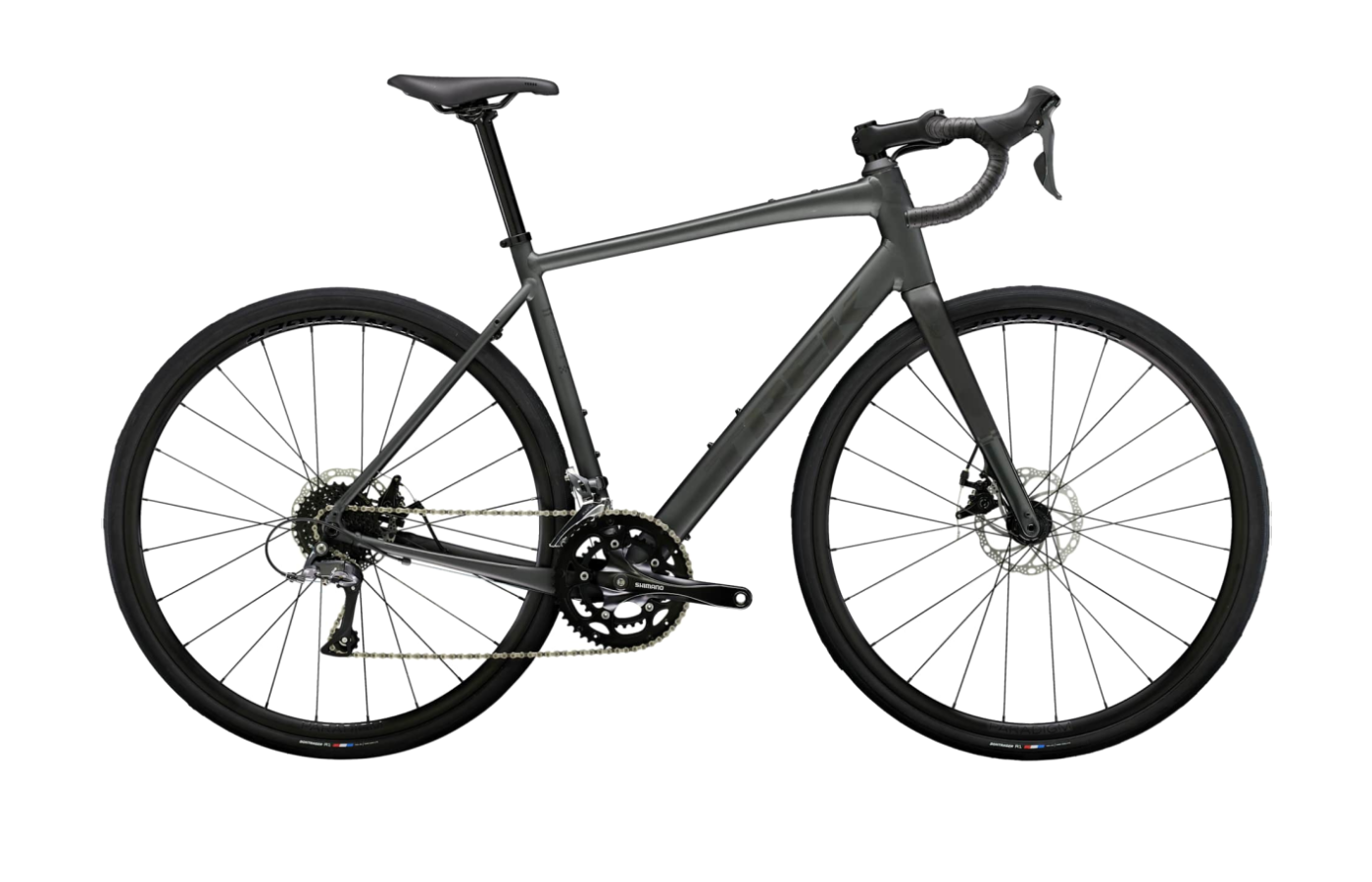
Domane
Trek's most direct shot at the Roubaix — uses rear IsoSpeed damping for compliance without the front-end suspension cartridge. The middle ground between active suspension and a fully rigid frame.
Compare →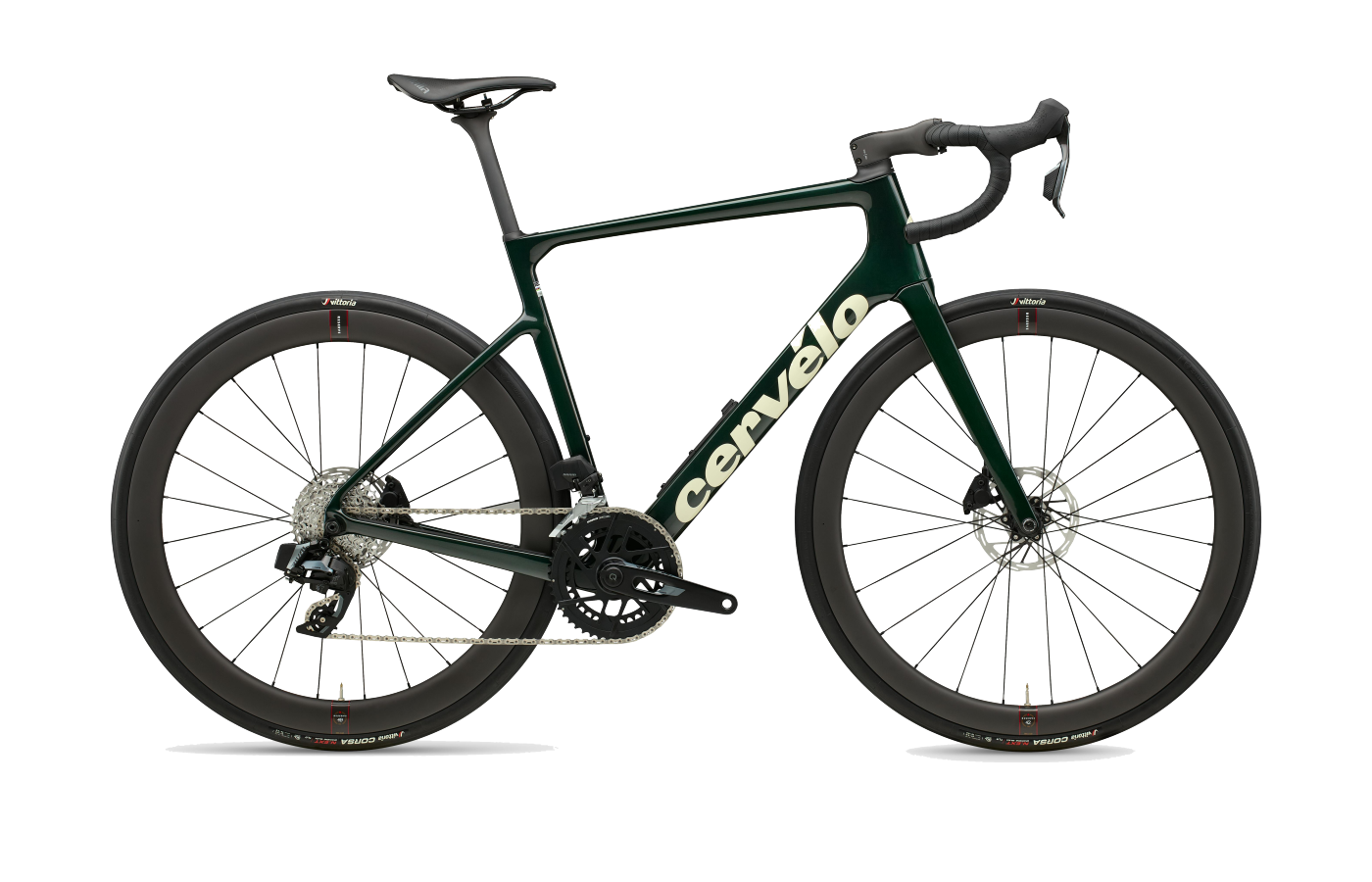
Caledonia-5
Same Caledonia geometry, but with a D-shaped carbon seatpost, internal cable routing, and a more refined frame layup. Worth the upcharge if you like the Caledonia's character but want the rear-end compliance the standard model lacks.
Compare →
Roadmachine
Often called the benchmark for refined endurance — sportier feel than the Roubaix, more compliance than the standard Caledonia. The thinking-rider's pick when you can't decide between sharp and plush.
Compare →