Caledonia
vsR5
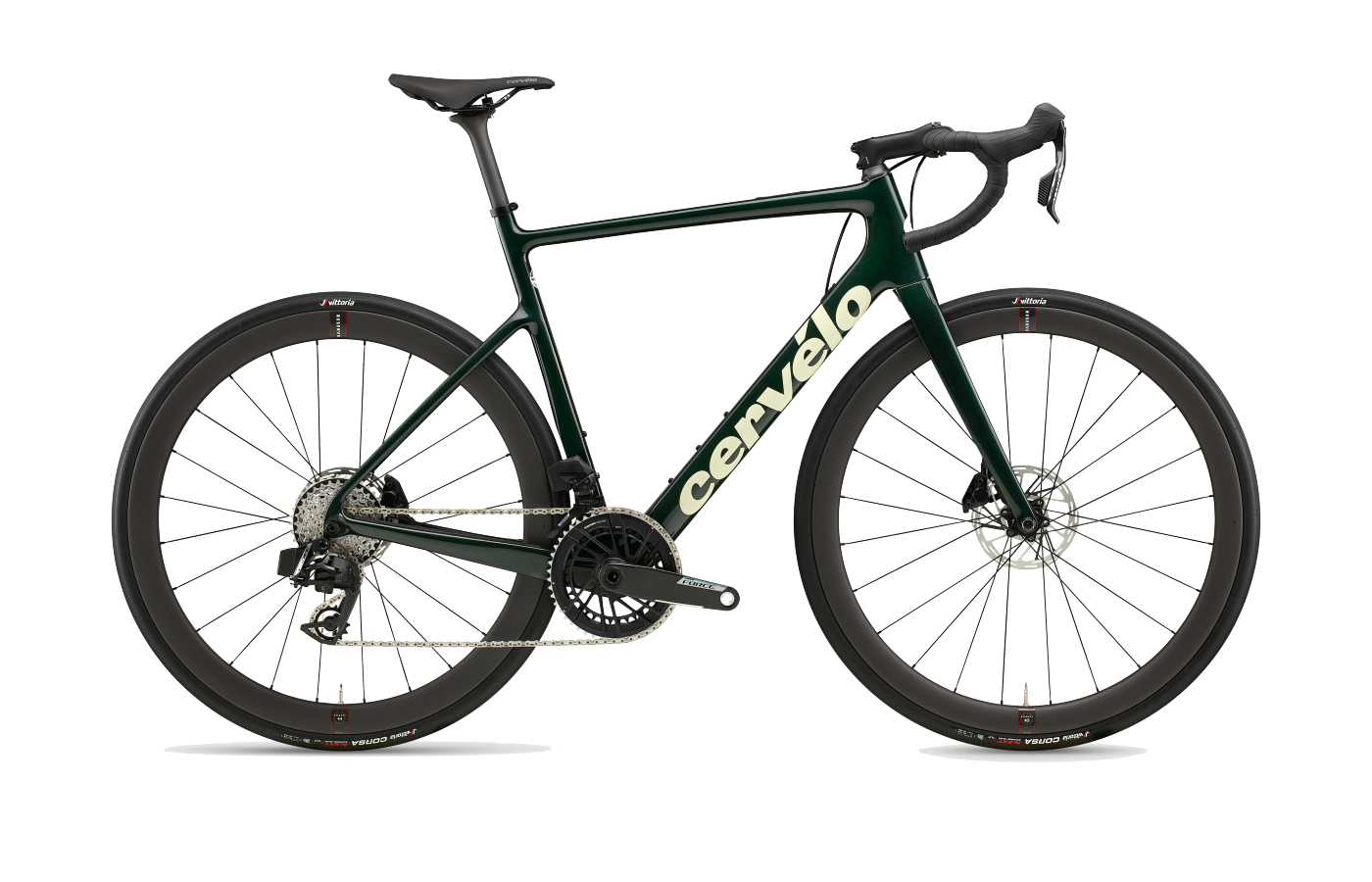
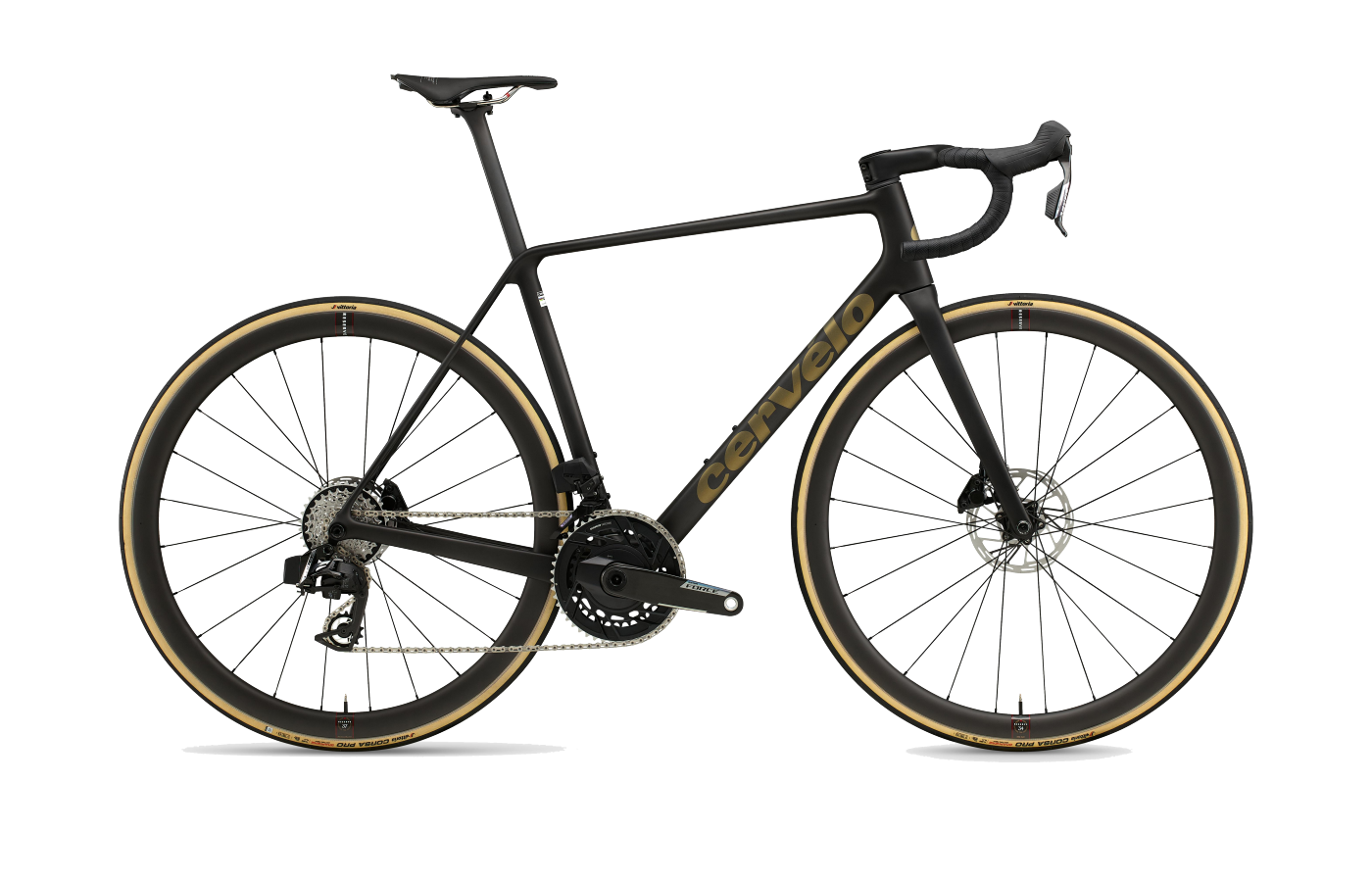
Same brand, opposite missions.
The Caledonia is Cervélo's mile-eating all-rounder. The R5 is a sub-6 kg climbing missile that's technically too light for the WorldTour.
Caledonia
- Real budget entry point at $3,300 — half the cost of the cheapest R5 build.
- Calm, predictable handling — 60 mm trail and longer wheelbase keep it composed at speed and on rough surfaces.
- Travel- and mechanic-friendly — standard 27.2 mm post, non-integrated cockpit, external cable runs to the frame.
- Stock alloy cockpit and seatpost transmit road buzz; many reviewers recommend an immediate carbon-post upgrade.
- Heavier than the R5 by a wide margin — climbing is competent, not exhilarating.
R5
- Sub-6 kg climbing performance — the Red AXS build hits 5.97 kg in size 56, lighter than UCI legal.
- Power meter on every build — 4iiii on Shimano models, Quarq on SRAM, no aftermarket spend needed.
- Sharper, more direct steering — 73-degree head angle and 57.3 mm trail reward aggressive riders.
- $10,100 floor — no entry-level option exists on this platform.
- Stock 26 mm Vittoria tires are widely panned; most reviewers recommend going to 28 or 30 mm immediately.
Editor’s analysis
Both wear the Cervélo badge and clear 34 mm tires — and that's about where the overlap ends.
The Caledonia and R5 sit on opposite ends of Cervélo's road catalog. The Caledonia is the do-it-all endurance frame that quietly replaced the C-Series and the Paris-Roubaix-bred R3 Mud — slightly slacker geometry, generous tire room, easy-to-service external cable runs, and a price floor under $3,500. The R5 is a hyper-focused climbing race bike whose top build dips to 5.97 kg in size 56, well under the UCI's 6.8 kg minimum.
Geometry tells the story before the spec sheets do. At size 54, the Caledonia stacks 555 mm and reaches 378 mm with a 72-degree head angle and 415 mm chainstays — composed, slightly upright, built to keep you fresh after seven hours in the saddle. The R5 at the same size drops the stack to 545 mm, stretches the reach to 383 mm, sharpens the head angle to 73 degrees, and clips 5 mm off the chainstays. Trail tightens from 60 mm to 57.3 mm. One bike is engineered to stay calm; the other is engineered to react.
The build kits diverge just as hard. The Caledonia tops out at Force AXS for $6,500 and runs all the way down to a $3,300 mechanical 105 model — alloy cockpit, alloy seatpost, and a partially external cable routing that's a gift to home mechanics. The R5 starts at $10,100 for Ultegra Di2, ships every build with a HB18 one-piece carbon cockpit, dual-sided power meters across the entire range, and Reserve carbon wheels. There is no entry-level R5.
Put another way: the Caledonia is the bike you buy when you want one road bike for everything from broken backroads to the local A-group. The R5 is the bike you buy when climbing matters more than money, and you already have somewhere to put a winter trainer.
Where the builds differ.
Comparing our editor's-pick builds side-by-side. Winners highlighted row-by-row — lower price and weight, and the better-spec component, each mark a point.
Build variants & pricing
The Caledonia spans $3,300 to $6,500. The R5 starts where the Caledonia stops and climbs to $14,400 — there is no overlap in the range.
Prices are current US MSRP. Cervélo does not offer an entry-level R5 — the cheapest build is the $10,100 Ultegra Di2. If your budget tops out around $7k, the Caledonia is the only choice in this matchup.
How they fit, how they steer.
Both at size 54 — the fit-picked size for a 5'8" rider on each bike. The R5 sits 10 mm lower, reaches 5 mm further, and has a head angle one degree steeper. Trail is 2.7 mm tighter, chainstays 5 mm shorter — a measurably sharper, more aggressive front end.
Which size should I buy?
Size recommendations based on stack, reach, and effective top tube. The Caledonia runs slightly taller in the stack across the board; the R5 stretches you lower and longer.
→These are starting points. Flexibility, riding style, and preferred position all shift the answer — if you’re between sizes, a professional fit beats a chart.
What the magazines said.
Published reviews from trusted cycling outlets. Click through for the full write-up.
Which one should you buy?
If you want one road bike for everything, get the Caledonia. If you want a featherweight climbing race bike and the budget supports it, get the R5.
Caledonia
If your weeks involve mixed-surface backroads, century rides, winter base miles with fenders bolted on, and the occasional fast group ride — the Caledonia handles every one of them without complaint. It's the road bike for people who only want one road bike.
R5
If your idea of a great ride starts with a 1,000-meter ascent and you want a bike that surges forward the moment you stand on the pedals, this is the answer. The R5 is featherweight, race-fitted, and unapologetic — it does one thing better than almost anything in the segment.
Questions buyers actually ask.
Short answers to the things we get emailed about most often.
01Which bike is lighter?
The Cervélo R5, by a wide margin. The top R5 Red AXS build comes in at 5.97 kg in size 56 — light enough that pros need to add ballast to meet the UCI's 6.8 kg minimum. Reviewer-measured Caledonia builds sit around 8.55 kg (Ultegra Di2) to 8.87 kg (Rival AXS) in similar sizes.
That's a roughly 2.5 kg gap — enormous for two bikes from the same brand. Most of it comes from the frame itself: the R5's painted size-56 frame weighs around 657 g, while the standard Caledonia frame is claimed at 1,031 g.
02How does the geometry compare?
At size 54, the Caledonia has a 555 mm stack, 378 mm reach, 72-degree head angle, 415 mm chainstays, and 60 mm of trail. The R5 at the same size sits at 544.6 mm stack, 383.3 mm reach, 73-degree head angle, 410 mm chainstays, and 57.3 mm of trail.
In practice: the R5 puts you in a lower, more stretched-out racing position with quicker steering. The Caledonia is slightly more upright, with a longer wheelbase and more trail for stability on rough roads and long descents.
03What's the maximum tire clearance on each?
Both frames officially clear 34 mm tires. With full-length fenders, the Caledonia drops to 31 mm.
The R5 ships with 26 mm Vittoria Corsa Pro Speed TLR tires — light for marketing weights, but multiple reviewers (Granfondo, Bicycling, Cyclist) recommend going to 28 or 30 mm for everyday riding. The Caledonia ships with 30 or 32 mm Vittoria Corsa N.EXT tires depending on build, which most reviewers consider better-matched to the bike's intent.
04Which one climbs better?
The R5, decisively. Reviewers consistently describe it as a 'mountain goat' (Granfondo) and 'col crusher' (Bicycling) thanks to its sub-6 kg weight and the claimed 13% increase in bottom-bracket stiffness over the previous generation. Cervélo also engineered an 8% comfort increase at the saddle, so the climbing position stays livable on long efforts.
The Caledonia is competent on climbs — its stiff BBRight bottom bracket transfers power well — but at roughly 8.5 kg ready to ride, it doesn't have the same effortless feel on steep gradients.
05Are the cockpits user-serviceable?
The Caledonia uses a standard two-piece alloy stem and bar (Cervélo ST36 / AB07) with brake hoses routing externally from the bar to the frame. Stem swaps and bar-width changes are normal-bike-shop work, and travel cases are a non-event.
The R5 ships with the Cervélo HB18 one-piece carbon cockpit across every build. It saves about 134 g over a two-piece setup but makes adjustments harder — Cervélo does offer a free 30-day cockpit exchange to dial in the right size after delivery, which softens the integration headache.
06Do they ship with power meters?
R5: yes, every build. SRAM models get Quarq power meters; Shimano builds get 4iiii Precision Pro. It's one of the most consistent value-adds in the high-end road segment right now.
Caledonia: no — none of the four builds include a stock power meter. You'll budget separately for one if you want training data.
07Can I run fenders on either bike?
Caledonia: yes, easily. It has stealth removable fender mounts and clearance for full-length fenders with up to 31 mm tires. Reviewers consistently flag it as a strong winter-bike option for that reason.
R5: no dedicated fender mounts. It's a pure race bike — the design brief doesn't include winter commuting, dirt-road touring, or mudguard duty.
08Which holds up better as a long-term, do-it-all bike?
The Caledonia, without much argument. Its external cable routing makes home maintenance and travel painless, the press-fit bottom bracket has a strong real-world creak-free track record (multiple reviewers report 1,000–2,000 miles silent), and the wide tire clearance plus fender mounts let one bike cover road, light gravel, and winter duty.
The R5 is built to do one thing — climb fast — and is happiest on dry tarmac with race tires. It will last, but it will not be the bike you grab for a wet commute or a fire-road shortcut.
Similar bikes
If your priorities don’t map cleanly onto either of these, one of these adjacent bikes probably fits better.
Soloist
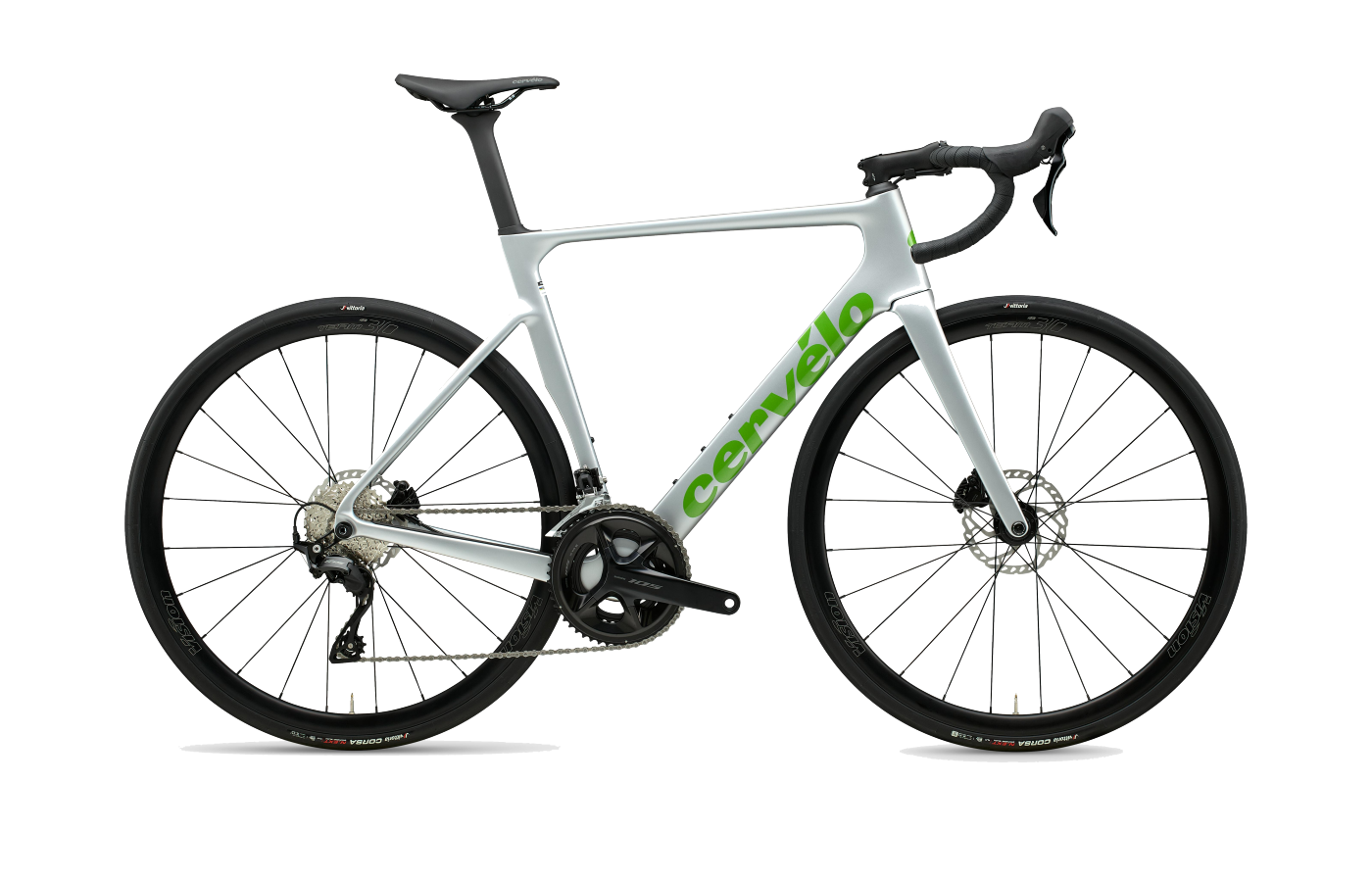
The middle ground in Cervélo's own road lineup — more aerodynamic than the R5, racier than the Caledonia, and built around a friendlier threaded bottom bracket. The pick if you don't want to choose.
Compare →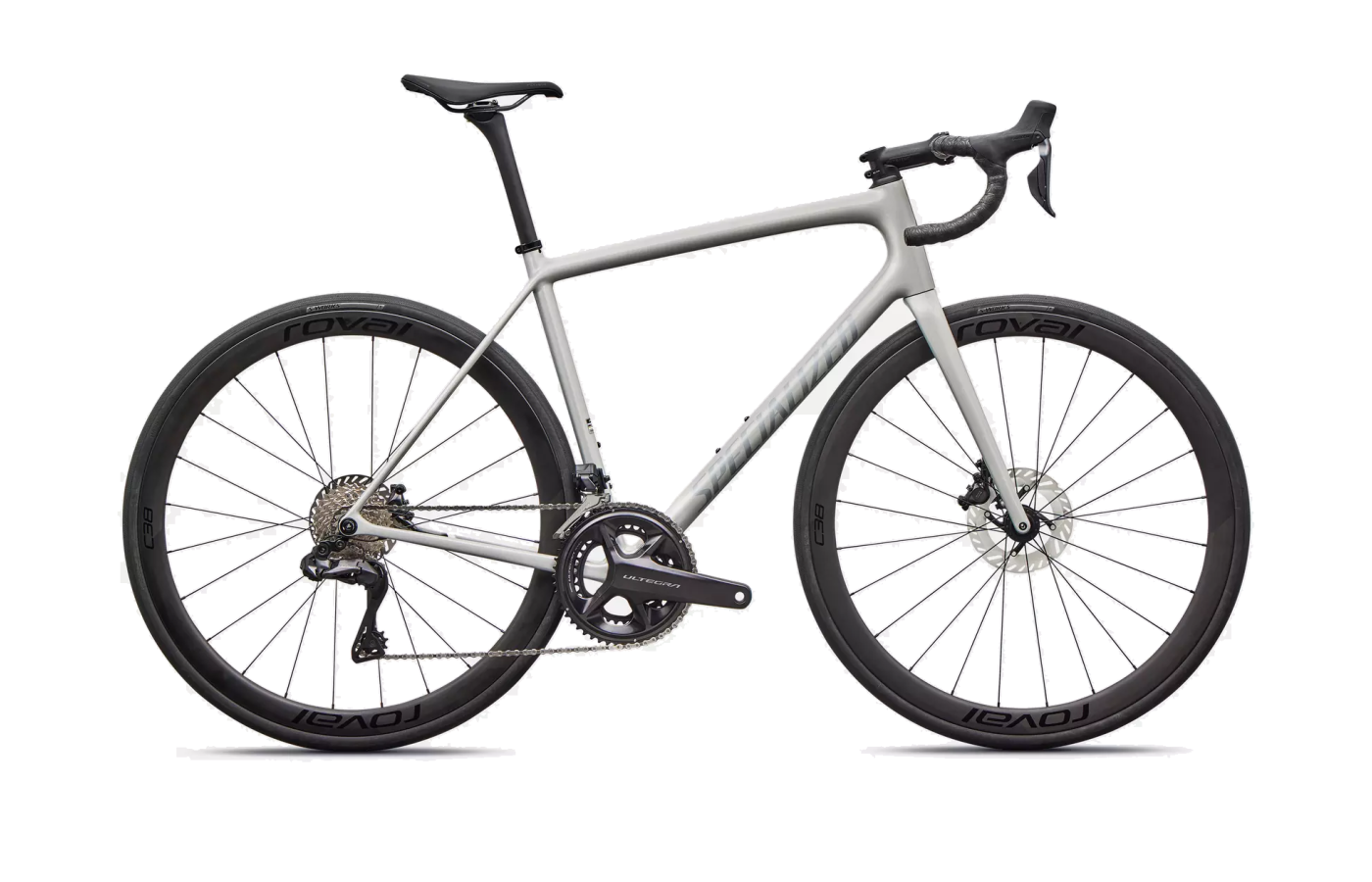
Aethos
Specialized's answer to the R5: an ultra-light climbing frame with classic round tubes and zero integration. If you want sub-6 kg without proprietary cockpits or D-shaped seatposts, this is the rival to shop.
Compare →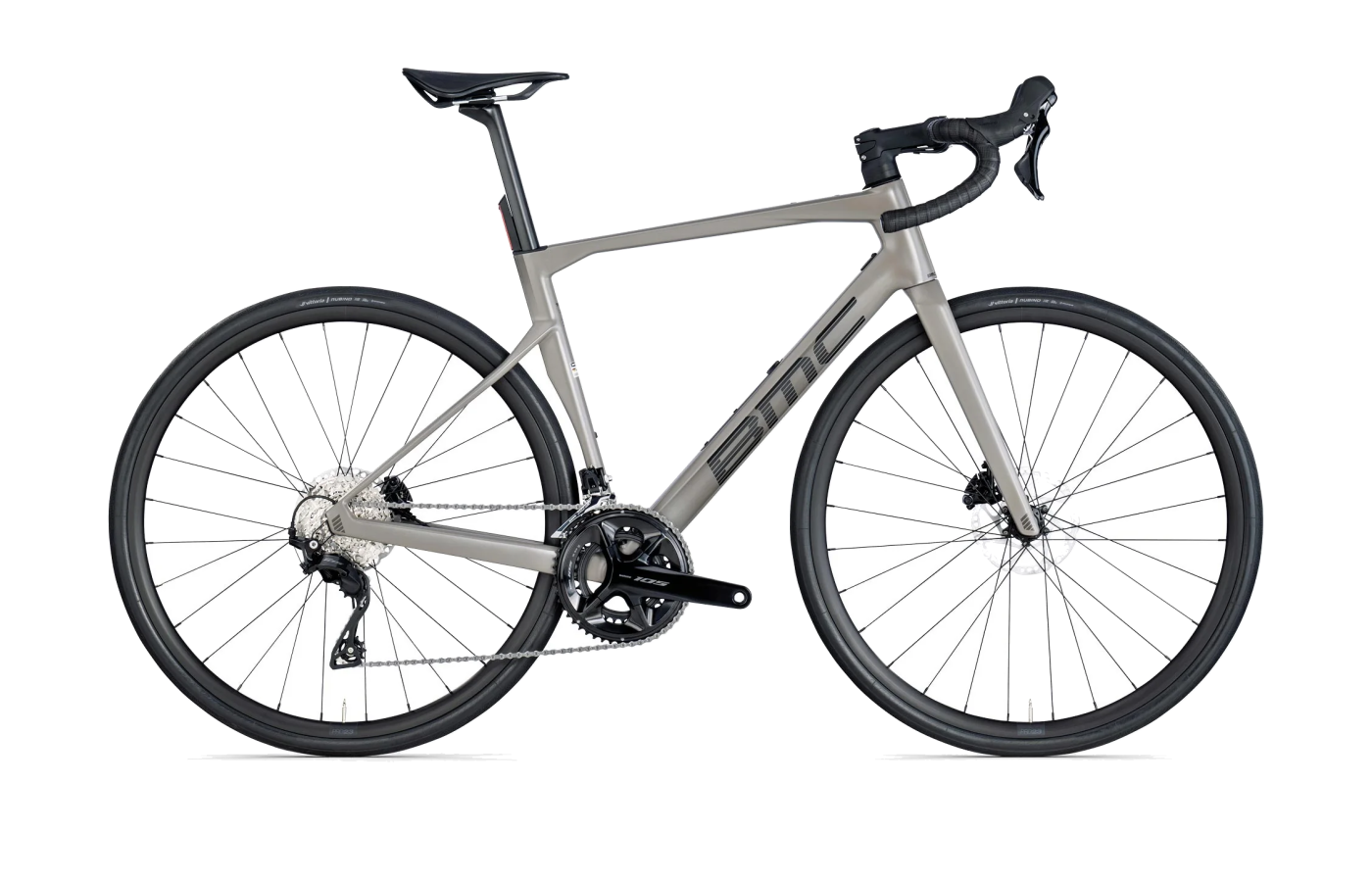
Roadmachine
BMC's endurance-plus-speed take on the Caledonia's brief, often praised for slightly better seated comfort. Worth a test ride if you like the Caledonia's mission but want to feel a different platform's compliance tuning.
Compare →