Aspero
vsDiverge
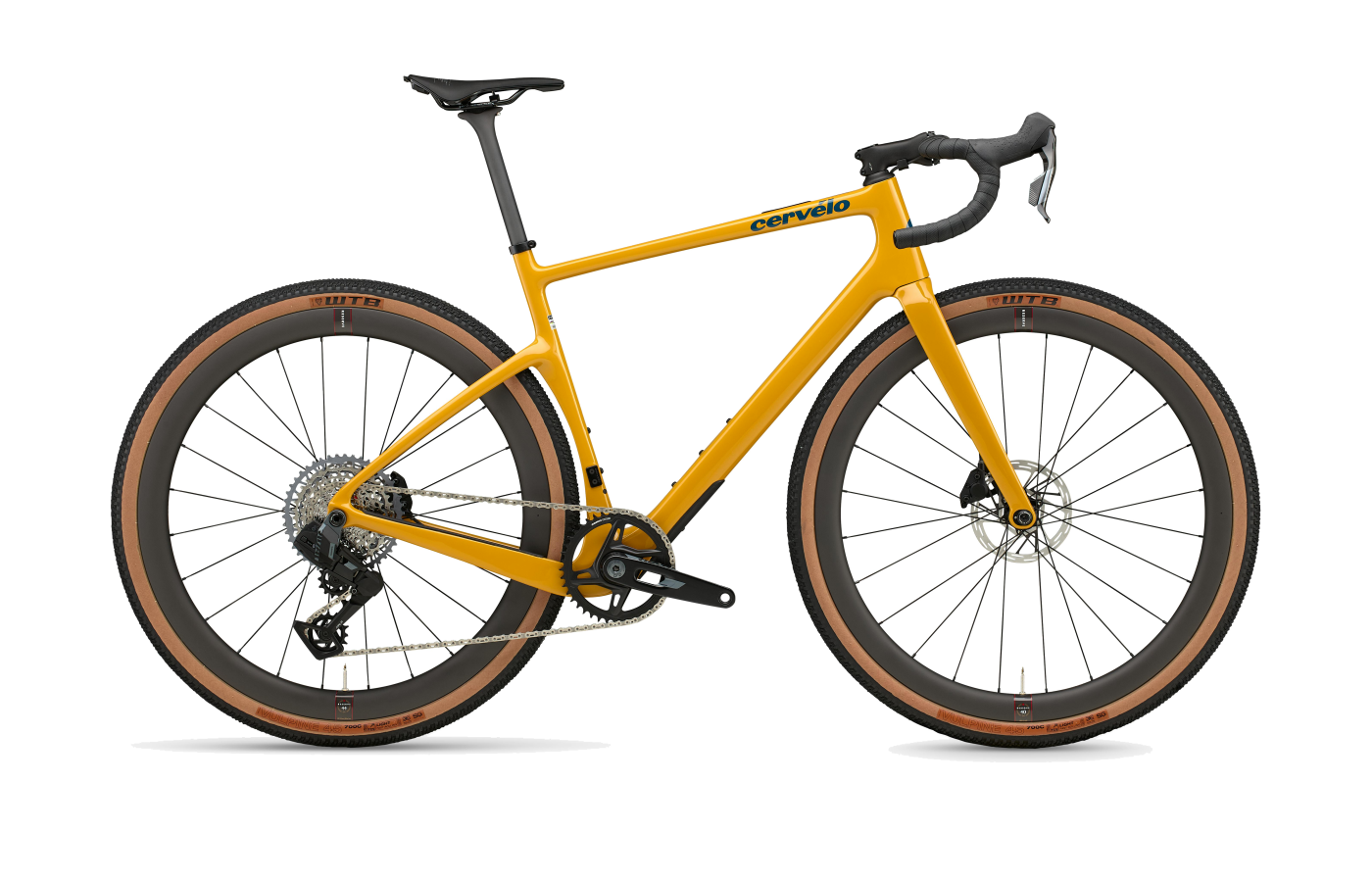
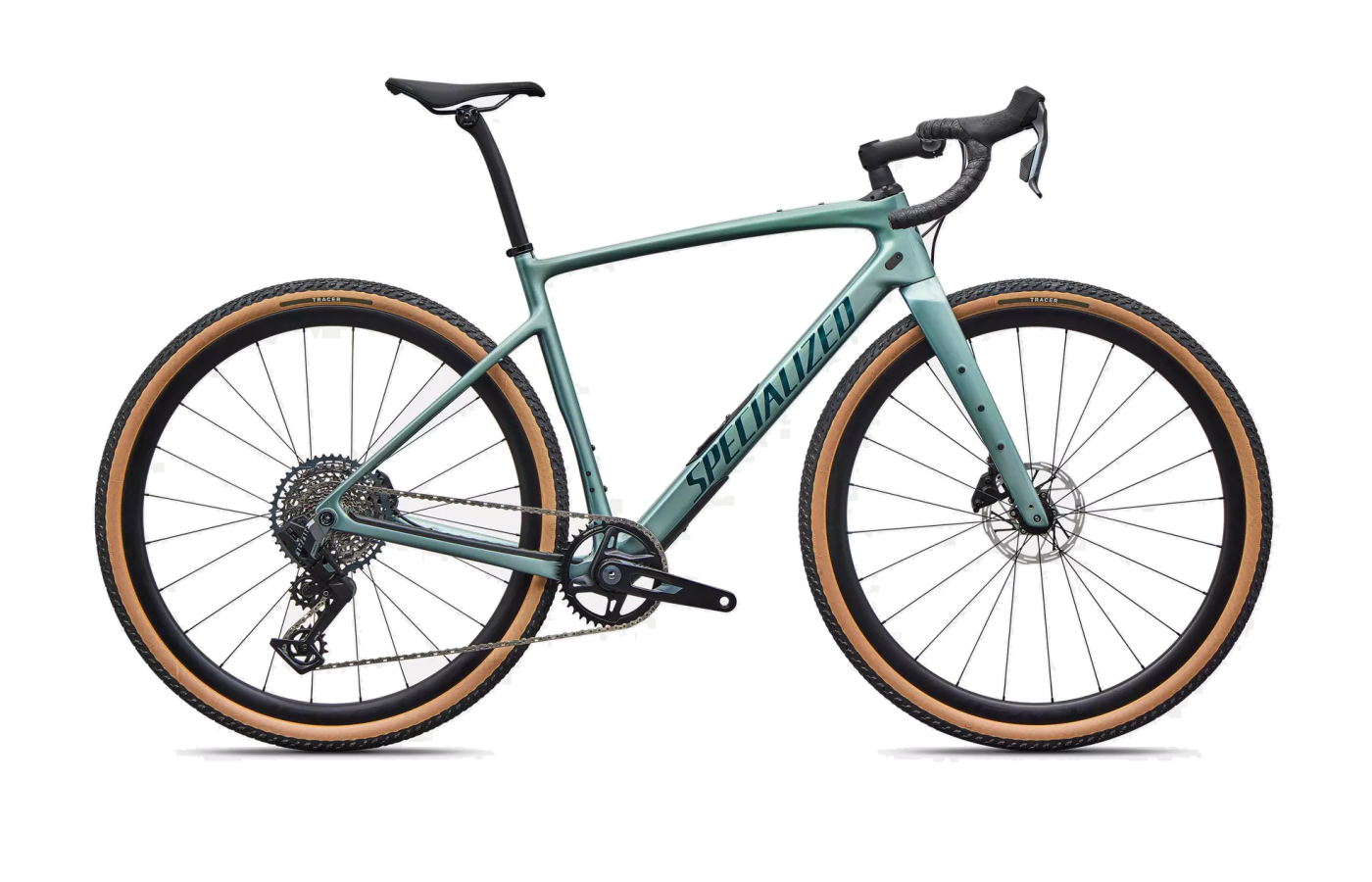
Two gravel bikes, two worldviews.
The Aspero is a road racer with knobbies — stiff, sharp, and unapologetically fast. The Diverge is a purpose-built off-road machine with 20 mm of front travel and room for a 2.2" tire.
Aspero
- Sharper, road-bike handling — steeper 72° HTA and short 425 mm chainstays reward aggressive, high-speed riding on groomed gravel.
- Simpler to live with — threaded T47 BB, UDH, standard 27.2 mm seatpost, and no proprietary suspension to service.
- Carbon cockpit stock across the range — Cervelo's AB09 bar with 16° flare is frequently called out as best-in-class at the price.
- 45 mm tire ceiling limits versatility on chunky terrain — reviewers at Road.cc and Feedthehabit flagged it as a dealbreaker.
- No fender or rack mounts — it's a racer, not a bikepacker.
Diverge
- Future Shock 3.0 at the stem — 20 mm of vertical travel takes the sting out of long rough rides, with a four-year claimed service interval.
- 50 mm tire clearance (or 2.2" MTB) — opens up truly technical terrain the Aspero can't touch.
- SWAT 4.0 downtube storage + full mounts — fender, rack, top-tube, fork-leg bosses across both carbon and alloy frames.
- 85 mm BB drop plus stock 45 mm tires means pedal strikes on anything technical — most reviewers recommend an immediate 50 mm tire swap.
- Heavier and less sharp on pavement; the Future Shock 3.2 can feel bouncy standing on punchy climbs.
Editor’s analysis
One asks you to ride harder to make it smoother. The other takes the edge off so you can keep riding.
The Cervelo Aspero and the Specialized Diverge sit in the same aisle but aim at completely different buyers. Both run 45 mm WTB/Tracer rubber out of the box, both offer modern SRAM AXS and Shimano GRX Di2 builds, and both lean on refined carbon frames to chase a gravel-race aesthetic. That's where the common ground ends — the geometry sheets and feature lists diverge almost immediately.
The Cervelo Aspero is the more conservative, road-adjacent tool. A 72-degree head angle, 425 mm chainstays, and a 555 mm stack at size 54 put the rider low and square over the cranks — reviewers at BikeRadar and Granfondo both describe the position as "R-Series road bike, only slightly tweaked." Cervelo refined the second-gen frame by reducing front-end stiffness by roughly 10% and dropping the seat stays for more rear compliance, but the architecture is still rigid-frame, skinny-ish-tire gravel racing. Tire clearance tops out at 45 mm, and there are no fender or rack mounts. It's fast, it's sharp, and it stays out of your way.
The Specialized Diverge picks the opposite lane and sharpens it. A 71-degree head angle, 430 mm chainstays, and a low 85 mm bottom bracket drop give it a much longer, more planted wheelbase (1,041 mm at size 54 vs Cervelo's tighter footprint). Clearance jumps to 50 mm — or 2.2" MTB tires with 4 mm ISO clearance. Every carbon build runs Specialized's Future Shock 3.0 system at the stem: 20 mm of vertical travel for the hands, with servicing intervals Specialized claims at four years. Cycling Weekly called it "a freight train on gravel," which nails both the upside and the cost.
Put another way: the Aspero is what you buy when you already own a road bike and want to race the gravel version of it. The Diverge is what you buy when the road bike is actually a bikepacking rig, and you want the pedal-strike-forgiving suspension and SWAT storage to prove it.
Where the builds differ.
Comparing our editor's-pick builds side-by-side. Winners highlighted row-by-row — lower price and weight, and the better-spec component, each mark a point.
Build variants & pricing
Aspero spans $3,550 – $7,050 in six builds; Diverge 4 runs $2,099 – $10,499 across eight, including two alloy models.
Prices are current US MSRP. The Diverge lineup goes both cheaper (via the $2,099 4 Sport Alloy) and much pricier (the $10,499 4 Pro LTD with SRAM RED XPLR 13-speed) than anything Cervelo offers on the Aspero. Editor's picks here are drivetrain-matched SRAM Rival AXS builds at near-identical prices.
How they fit, how they steer.
Both at size 54 — the fit-picked size for a 5'8" rider on each bike. The Diverge sits 37 mm taller in stack (592 vs 555) and 1 mm shorter in reach, with a 1° slacker head tube and 5 mm longer chainstays. It's a fundamentally more upright, longer-wheelbase position than the Aspero's road-racer stance.
Which size should I buy?
Size recommendations use stack, reach, and effective top tube. The Aspero runs a more aggressive size 54 (555 mm stack); the Diverge 54 is closer to many brands' size-56 road stack.
→These are starting points. Flexibility, riding style, and preferred position all shift the answer — if you’re between sizes, a professional fit beats a chart.
What the magazines said.
Published reviews from trusted cycling outlets. Click through for the full write-up.
Which one should you buy?
If your gravel is fire roads and race starts, get the Aspero. If it's rocky jeep roads, bikepacking, or anything with 'technical' in the description, get the Diverge.
Aspero
If most of your rides are fast groomed gravel, doubletrack, and the occasional UCI-style event where speed above 25 mph is the point, the Aspero is the tighter, more responsive tool. Roadies making the gravel jump will feel instantly at home on it.
Diverge
If your calendar includes Unbound, multi-day bikepacking, or singletrack that a hardtail would also enjoy, the Diverge's Future Shock, 50 mm tire clearance, and SWAT storage pay back every day. Just budget for bigger rubber out of the gate.
Questions buyers actually ask.
Short answers to the things we get emailed about most often.
01Which one is faster on groomed gravel and pavement?
The Cervelo Aspero, fairly clearly. The steeper 72° head tube, shorter 425 mm chainstays, and stiffer rigid front end put the rider in a more road-race position and convert pedal input to forward motion more directly. Reviewers at BikeRadar and Granfondo describe the geometry as "only slightly tweaked" from the R-Series road bike.
The Diverge is heavier, sits taller (592 mm stack at size 54 vs Aspero's 555 mm), and runs Future Shock at the stem — all of which sacrifice a touch of peak efficiency for comfort and trail capability. On smooth pavement especially, the Aspero feels markedly more road-bike-like.
02Which handles rough, technical terrain better?
The Specialized Diverge, by a wide margin. Future Shock 3.0 delivers 20 mm of front-end travel that BikeRumor described as "nothing short of brilliant" on roots and chunky doubletrack. Combine that with a 1° slacker head tube, 5 mm longer chainstays, a lower 85 mm bottom bracket drop, and clearance for 50 mm tires (or 2.2" MTB rubber at ISO minimum), and the Diverge crosses into terrain the Aspero simply wasn't built for.
Road.cc and Feedthehabit both flagged the Aspero's 45 mm tire ceiling as a limitation on chunky gravel — "42 mm tyre clearance isn't big enough," per Road.cc.
03What's the maximum tire clearance?
Cervelo Aspero: 45 mm with 700c wheels, 47–48 mm with 650b. No fender mounts.
Specialized Diverge 4: 50 mm with 8 mm of mud clearance on 700c, or 2.2" MTB tires at ISO-standard 4 mm clearance. Full fender and rack mounts on every build, carbon or alloy.
If you want headroom to run true 50 mm+ rubber for mixed conditions or singletrack, the Diverge is the only option between the two.
04Do I really need to swap tires on the Diverge immediately?
Most reviewers say yes. The 85 mm bottom bracket drop is tuned for wider tires, but Specialized ships the carbon builds with 45 mm Tracers and 172.5 mm cranks on the 54/56 cm sizes. BikeRadar and Cycling Weekly both experienced frequent pedal strikes on "pretty mellow trails" — one reviewer broke his Garmin Rally power pedals.
Swapping to a 50 mm or 2.2" tire raises the BB, unlocks the geometry as designed, and eliminates the strike problem. Budget an extra ~$100–150 for rubber you'll be installing day one.
05How does Future Shock compare to a compliant frame?
Different tools for different jobs. The Aspero leans on carbon-layup compliance — dropped seat stays, exposed 27.2 mm seatpost, and a 10% reduction in front-end stiffness from gen 1 — to take the edge off high-frequency buzz. It's subtle, always on, and completely invisible.
Future Shock 3.0 is a 20 mm mechanical spring/damper at the stem that physically isolates your hands and arms from the trail. It's more effective on bigger hits and long rough sections (reviewers report reduced shoulder and forearm fatigue), but some riders notice a "bouncy" feel on out-of-saddle efforts with the non-adjustable 3.2 version. The top-tier 3.3 adds on-the-fly lockout.
06Can I bikepack on either of these?
Really only the Diverge. It has rack and fender mounts, top-tube bag bosses, triple bottle bosses, fork-leg cargo mounts, and SWAT 4.0 internal downtube storage on every carbon and alloy build.
The Aspero is intentionally stripped down to "haul ass, not cargo" — three bottle cage mounts and the included top-tube bag are it. No fenders, no racks. Cervelo has no interest in making it a touring bike, and reviewers consistently flag this as the Aspero's only real limitation beyond tire clearance.
07Which is easier to maintain long-term?
The Aspero is slightly friendlier to the home mechanic. Threaded T47a bottom bracket, UDH, standard 27.2 mm round seatpost (so dropper-post compatible), and semi-integrated cable routing that lets you swap stems without re-routing hoses.
The Diverge also has the threaded BB and UDH, which are major wins. But the Future Shock adds complexity — a proprietary top cap, a suspension unit to service (every four years per Specialized, and hydraulic versions are now fully serviceable for the first time). External cable routing under the Future Shock keeps hose swaps simple. It's more moving parts than the Aspero, but engineered for low-fuss ownership.
08Is the Diverge just a heavier, slower Aspero for most riders?
Not really — they're solving different problems. If 80% of your riding is fast, dry, groomed gravel and pavement, yes, the Aspero will feel faster and sharper and you'd probably prefer it.
But if you ride rocky, technical, or long-distance gravel — or want one bike that can do a century, a bikepacking weekend, and a gnarly trail ride — the Diverge's comfort, tire capacity, and storage genuinely unlock rides the Aspero can't. Cycling Weekly put it plainly: the Diverge isn't a "do-it-all" gravel bike anymore; it's a specialist for riders who live in the dirt.
Similar bikes
If your priorities don’t map cleanly onto either of these, one of these adjacent bikes probably fits better.
Crux
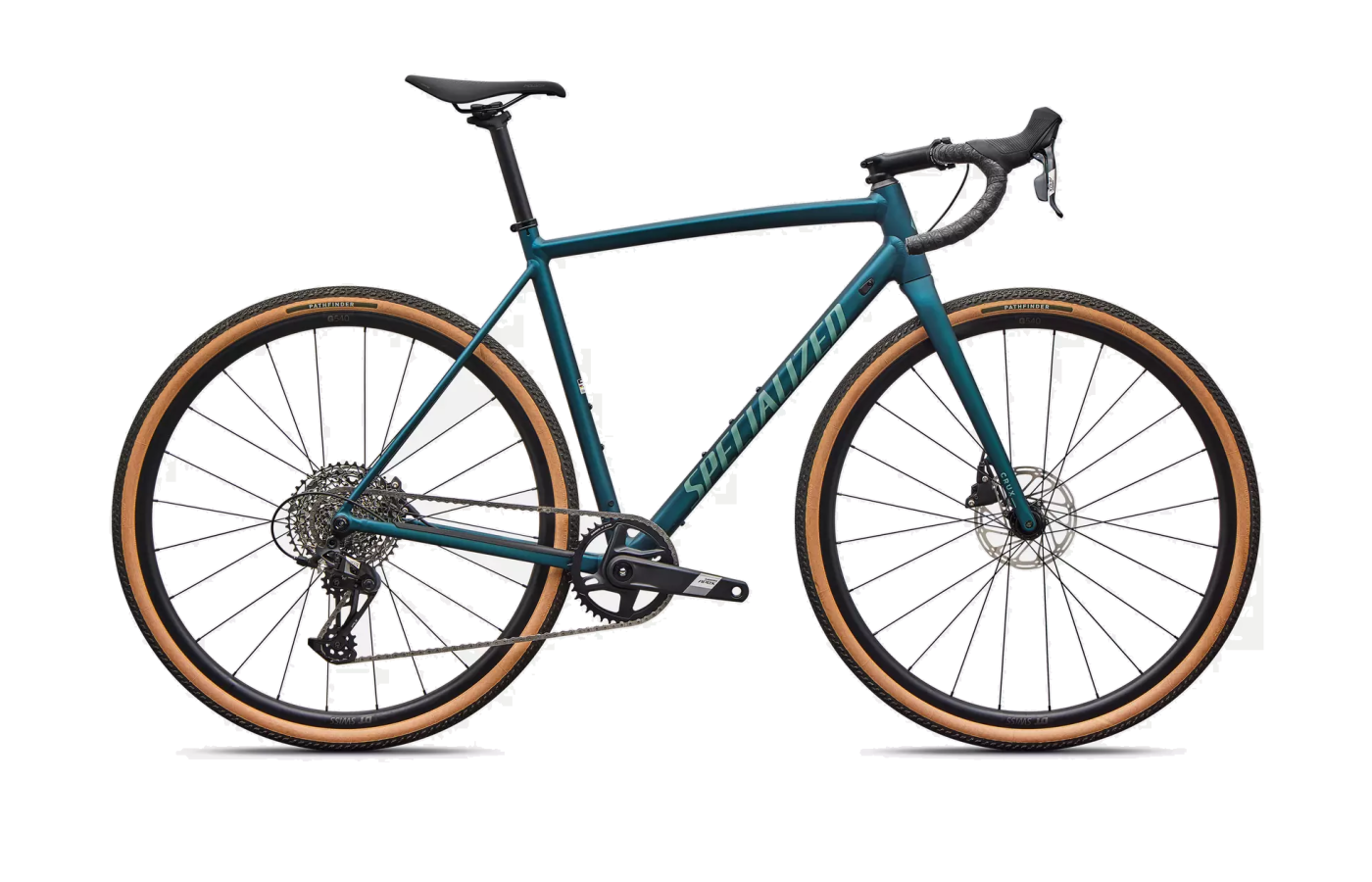
The lightweight race alternative to the Diverge from inside Specialized's own lineup — closer in spirit to the Aspero, with even more tire clearance and no Future Shock complexity. If you liked the Diverge's brand but want the Aspero's character, start here.
Compare →
Grail
Canyon's direct-to-consumer shot at the Aspero — similar race-focused geometry and a frame storage compartment, for meaningfully less money. The catch is the usual DTC tradeoff: no local dealer, no demos.
Compare →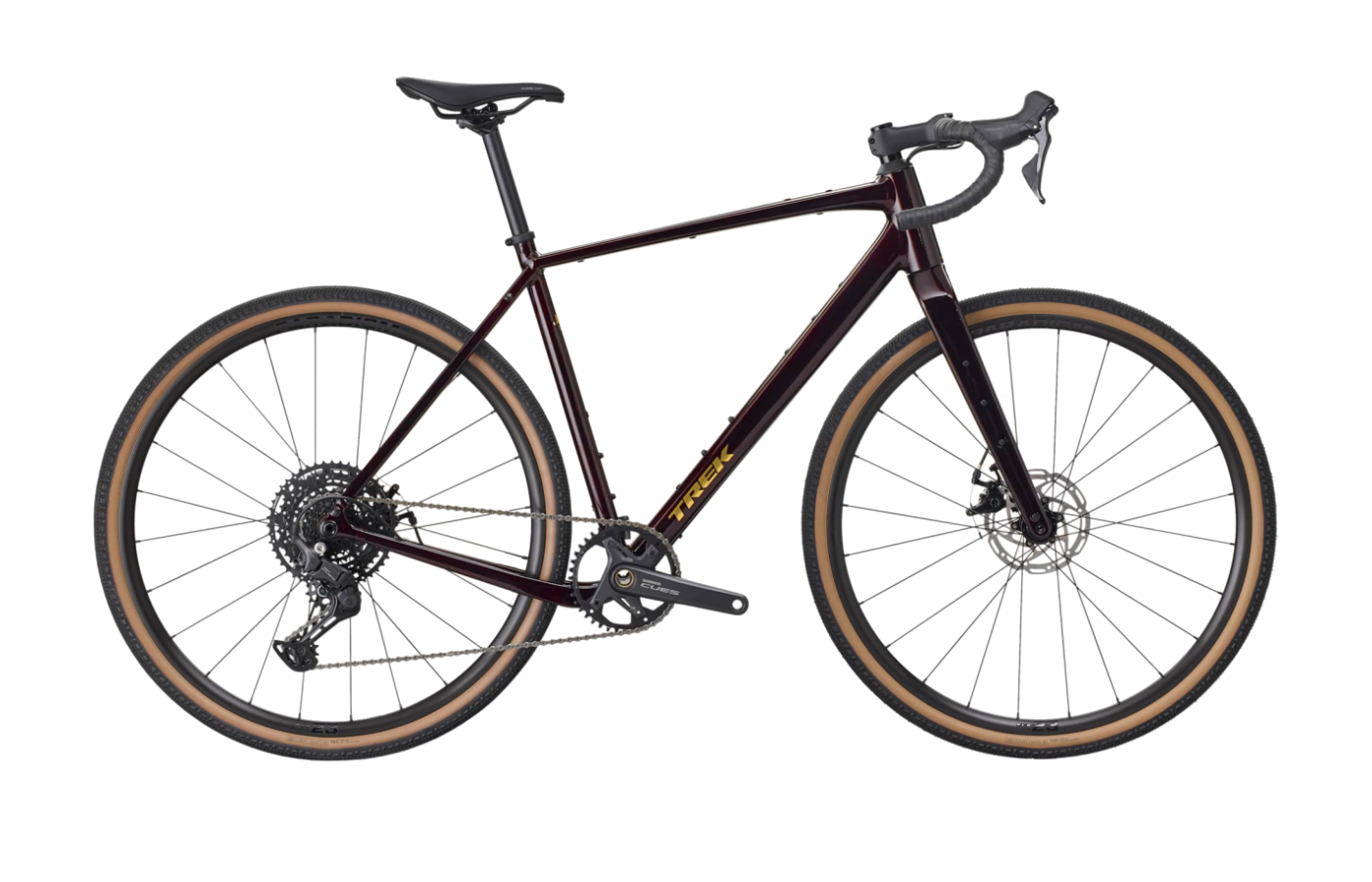
Checkpoint
Trek's gravel platform with rear IsoSpeed compliance — a middle path between the Aspero's rigid frame and the Diverge's front-end Future Shock. More mounts and range than the Aspero, less complexity than the Diverge.
Compare →