Spectral
vsStumpjumper
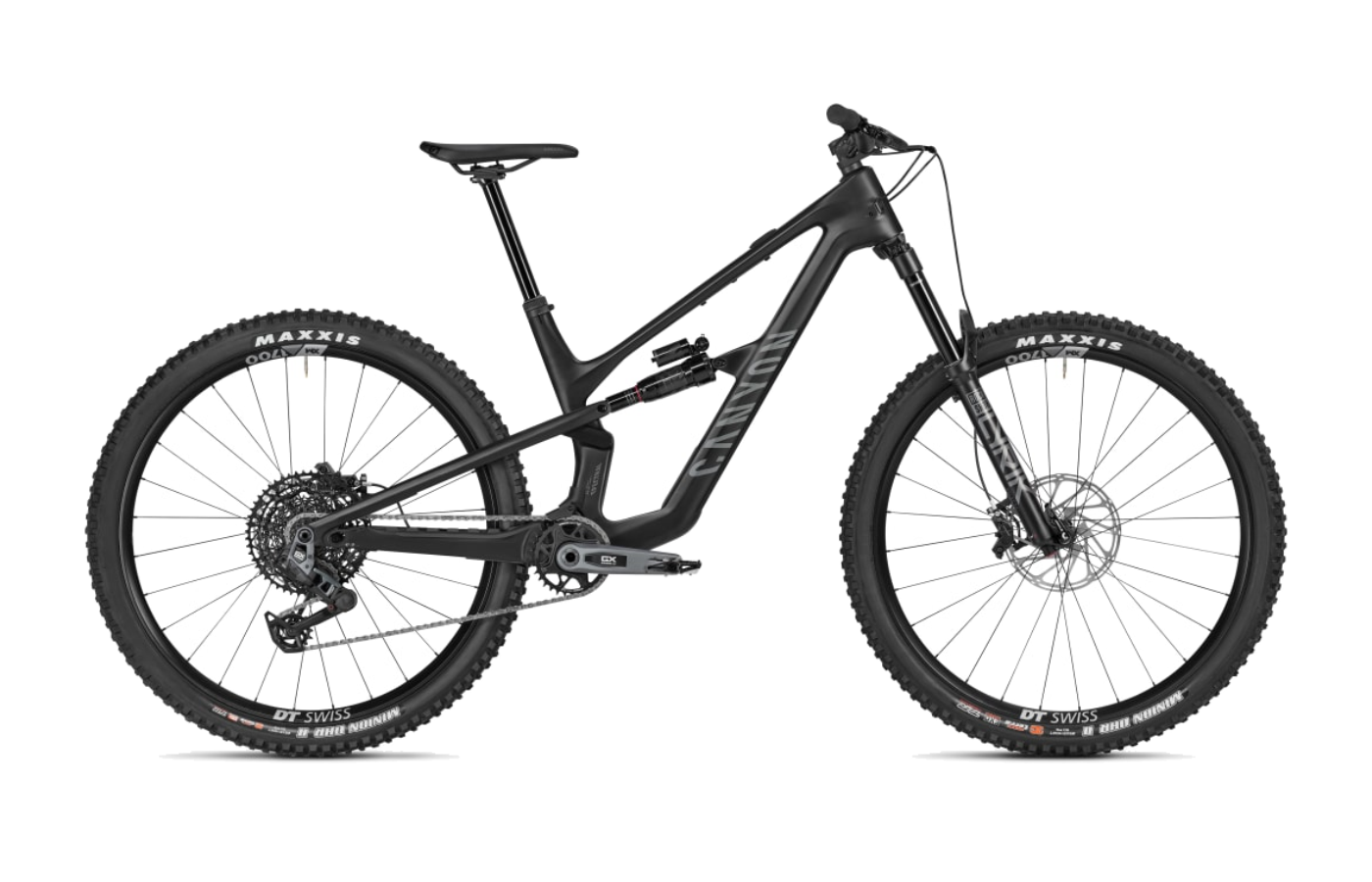
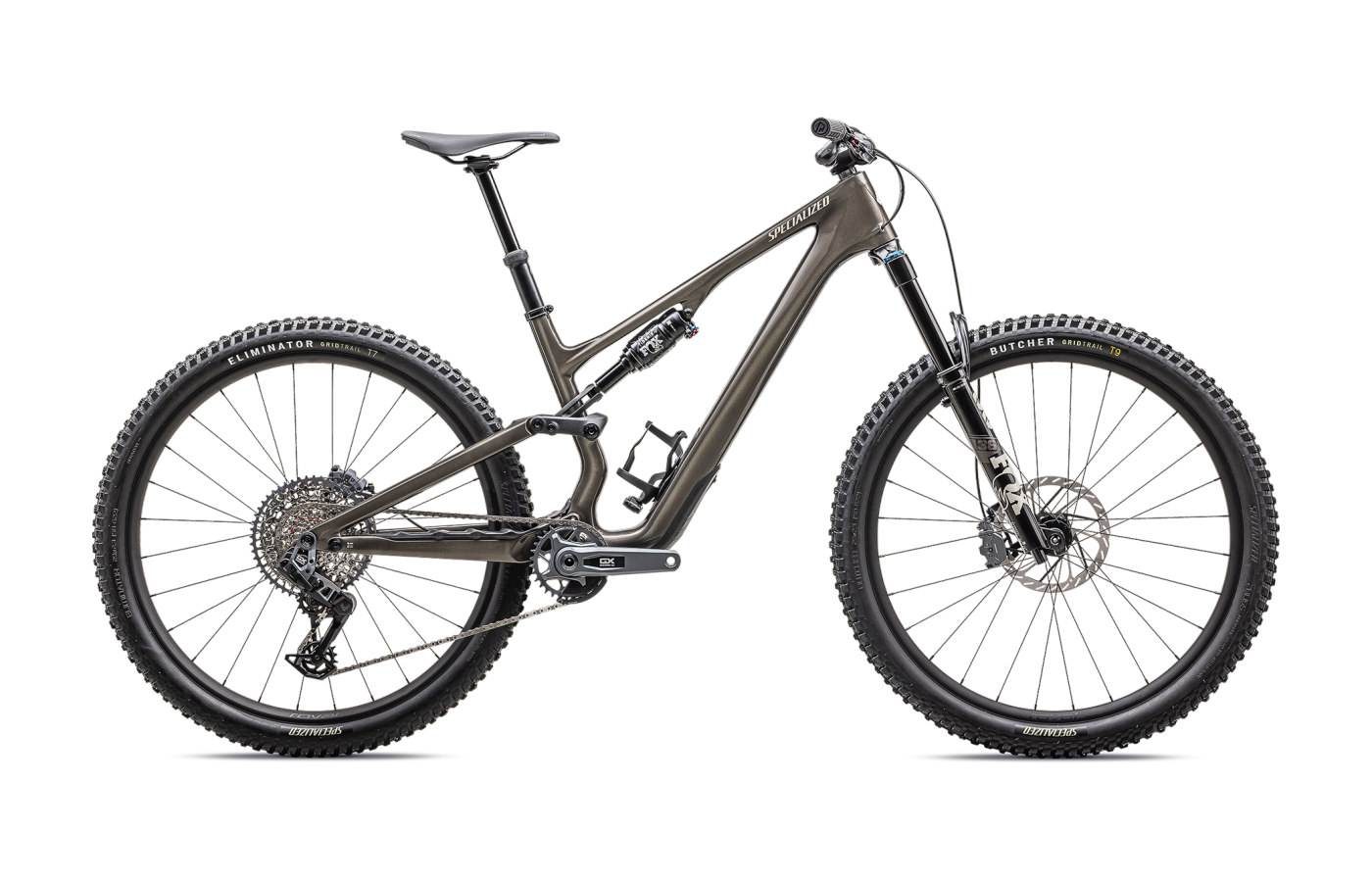
Two 150-mil trail bikes, two stubborn personalities.
The Canyon Spectral is a zesty, direct-to-consumer party machine. The Specialized Stumpjumper is a refined traction monster with a proprietary shock at its core.
Spectral
- Direct-to-consumer pricing — a full-carbon, GX AXS Transmission build for $5,099 undercuts almost everything in this category.
- Playful, lively character — slimmed stays, low BB, and short 437 mm chainstays make it eager to pop, pump, and corner.
- Removable K.I.S. steering damper — useful in steep ruts, optional everywhere else; ships with a blanking plate.
- Long-for-the-size geometry — a Small reaches 450 mm; the 5'8" rider lands on a Small, not a Medium.
- Stock G5 grips are widely panned; expect to swap them on day one.
Stumpjumper
- GENIE shock traction — a genuinely supple first 70% of travel that sticks the rear wheel through chunder others bounce off of.
- Adjustable headset cups — head angle dials from 63° to 65.5° with no aftermarket parts.
- Lifetime frame and pivot bearing warranty — backed by a dealer network that handles service in person.
- Carbon frames are wireless-only — no internal routing for mechanical drivetrains.
- Equivalent build is $900 more than the Canyon, with most of the savings disappearing into the dealer model.
Editor’s analysis
Same travel, same wheel size, same brief — and yet they want completely different riders.
On paper the new Canyon Spectral and Specialized Stumpjumper land in almost the same place: 150 mm fork, 140–145 mm rear, a 64-degree-ish head angle, mixed or full-29 wheel options, and a single-frame replacement for the brand's old short- and long-travel trail bikes. Both are pitched as the only mountain bike most people need. They get there by very different routes.
The Canyon Spectral is the playful one. Reviewers consistently call it 'zesty,' 'lively,' and a 'corner-ripping machine,' with slimmed-down chainstays adding compliance the old carbon Spectral never had. Geometry leans long: a size Small already runs 450 mm of reach, the Large hits 500 mm, and the head angle is a flat 64 degrees across every size. It's a Category 4 enduro-rated frame at trail-bike weight, and Canyon's K.I.S. steering damper is built into the top tube — divisive, but fully removable.
The Specialized Stumpjumper is the engineering one. Its defining feature is the GENIE rear shock, a dual-chamber air spring that runs huge volume for the first 70% of travel and ramps hard at the end. Reviewers describe the rear end as 'glued to the ground,' 'coil-like,' and a genuine 'traction monster' on slick roots and chunky climbs. Specialized's S-Sizing breaks the lineup into six 25 mm reach steps (S1–S6), the head angle is adjustable from 63° to 65.5° via eccentric headset cups, and chainstays grow with frame size to keep the bike balanced.
Put plainly: the Spectral is the bike you pick to throw your weight around, jib lines, and skip the dealer. The Stumpjumper is the bike you pick when you want maximum rear-wheel grip, fine-grained fit and adjustability, and a lifetime frame warranty backed by a real shop. Both are excellent. They're not interchangeable.
Where the builds differ.
Comparing our editor's-pick builds side-by-side. Winners highlighted row-by-row — lower price and weight, and the better-spec component, each mark a point.
Build variants & pricing
The Canyon lineup runs $3,099–$5,799 across four builds. The Stumpjumper spans $2,999–$11,999 across nine — by far the wider range.
Prices are current US MSRP. Canyon is direct-to-consumer; Specialized sells through dealers. Note: in the US, only the Spectral CF 7 and CF 8 are typically stocked — the CF 9 and the alloy 6 are intermittent.
How they fit, how they steer.
Spectral S vs. Stumpjumper S3 — the fit-picked size for a 5'8" rider on each. Reach is identical at 450 mm; the Stumpjumper sits 6 mm taller in stack, runs a half-degree slacker head angle (64.5° vs. 64°), and has a slightly steeper effective seat angle (77° vs. 76.5°). Wheelbases are within 8 mm.
Which size should I buy?
Canyon's geometry runs long for its size labels — a Spectral Small is closer to a typical Medium. Specialized's six S-sizes step in 25 mm reach increments and overlap more cleanly with mainstream sizing.
→These are starting points. Flexibility, riding style, and preferred position all shift the answer — if you’re between sizes, a professional fit beats a chart.
What the magazines said.
Published reviews from trusted cycling outlets. Click through for the full write-up.
Which one should you buy?
If you want maximum bike for your dollar and a playful ride, get the Spectral. If you want the most adjustable, traction-rich trail bike with a real shop behind it, get the Stumpjumper.
Spectral
If you're comfortable buying online, willing to swap a set of grips, and want the most carbon-frame-and-AXS-Transmission you can get for the money, the Spectral is the obvious pick. It rewards an active, jib-everything riding style and shrugs off rougher terrain than its 140 mm rear travel suggests.
Stumpjumper
If your trails are slick roots, loose rocks, and tech climbs where holding the rear wheel matters more than anything else, the GENIE-shocked Stumpjumper is the mechanical advantage. You're paying for the shock, the adjustability, the dealer network, and the lifetime warranty — and most riders who pick this one think it's worth it.
Questions buyers actually ask.
Short answers to the things we get emailed about most often.
01How much travel do these have, and how does that compare to the previous generation?
Both run 150 mm front, 140–145 mm rear. The Spectral is 150/140; the Stumpjumper is 150/145. Both lost travel in their latest redesigns — Canyon collapsed the old 160 mm Spectral and the short-travel Spectral 125 into one bike, and Specialized killed the standard Stumpjumper and the more aggressive EVO to make a single 145 mm-rear platform.
Reviewers consistently note that both bikes punch above their travel numbers thanks to updated kinematics.
02Which one climbs better?
The Spectral feels snappier; the Stumpjumper grips harder.
The Spectral's reduced anti-squat keeps the rear wheel active and traction-rich on technical climbs but produces some pedal bob — most reviewers don't bother with the climb switch except on smooth tarmac. Seat angle is a steep 76.5° effective.
The Stumpjumper's GENIE shock generates exceptional rear-wheel traction (Specialized claims +57% over the old EVO) and stays composed under power thanks to ~105% anti-squat at sag. A few reviewers found it slightly wallowy on smooth fire-road climbs and reached for the two-position climb switch.
03What's the deal with the K.I.S. steering damper?
K.I.S. (Keep It Stable) is a Canyon-specific spring system in the top tube that self-centers the steering. It's standard on every Spectral CF model. Reviews are split — some find it genuinely useful in steep ruts and chunky terrain, others find it adds a hint of lethargy in tight corners and complain of rattling.
Crucially, it's fully removable with a blanking plate Canyon includes. Tension is also adjustable. The Stumpjumper has nothing equivalent.
04Can I run a mullet (mixed-wheel) setup on either?
Spectral: yes, natively. The frame has a flip chip designed for either full 29 or 29/27.5 mullet, with chainstays dropping from 437 mm to 429 mm in mullet mode. No extra parts required.
Stumpjumper: mullet is supported but typically requires Specialized's aftermarket link. The frame is geometry-adjustable via headset cups (63°–65.5°) and a flip chip, but the wheel-size swap isn't as turnkey as Canyon's.
05Is the carbon Stumpjumper really wireless-only?
Yes. The carbon FACT 11m frames have no internal routing for mechanical shifting — you're committed to SRAM's wireless Transmission ecosystem. Most builds ship with GX, X0, or XX Transmission accordingly.
If you want a Shimano mechanical setup, you have two options: the M5 alloy Stumpjumper (which retains cable routing and ships with Shimano SLX or Deore), or the Spectral, which still offers SLX builds in the CF 7 and the alloy 6.
06How do the warranties and service stories compare?
Specialized: lifetime frame warranty plus lifetime pivot-bearing replacement to the original owner, serviced through a global dealer network. Crash replacement is available.
Canyon: 6-year frame warranty (extendable to lifetime via registration in some markets), direct-to-consumer support only — no local dealer to walk into. Canyon ships from regional service centers and has built out US warranty handling, but lead times can be longer than walking into a shop.
If in-person service matters, the Stumpjumper has a real edge.
07Why is the Spectral so much cheaper at the same drivetrain tier?
Almost entirely the direct-to-consumer model. The Spectral CF 8 ($5,099) and the Stumpjumper 15 Expert ($5,999) both run SRAM GX Eagle AXS Transmission, FOX 36-class forks, and full-carbon FACT-equivalent frames. The $900 gap is mostly Canyon skipping the dealer markup.
You give up the in-person fitting, the demo ride, and the local-shop warranty channel. Whether that's a fair trade depends on how comfortable you are buying a bike sight-unseen.
08Which one is better for a 5'8" rider?
Both fit, but the size labels are different. On a 5'8" / 173 cm rider, the fit algorithm picks the Spectral in size Small (450 mm reach) and the Stumpjumper in S3 (450 mm reach). Reach is identical; the Stumpjumper sits 6 mm taller in stack and runs a marginally slacker head angle.
If you're used to Medium frames from other brands, do not buy a Spectral Medium without sitting on it — Canyon's sizing runs notably long, and a Medium reaches 475 mm.
Similar bikes
If your priorities don’t map cleanly onto either of these, one of these adjacent bikes probably fits better.
Jeffsy
The other major direct-to-consumer trail bike. Similar value pitch and component spec to the Spectral, with a more conventional suspension feel and slightly more conservative geometry.
Compare →
Fuel EX
Trek's answer in the premium, highly adjustable trail segment. Firmer mid-stroke than the Stumpjumper for riders who find the GENIE shock too plush on flow trails.
Compare →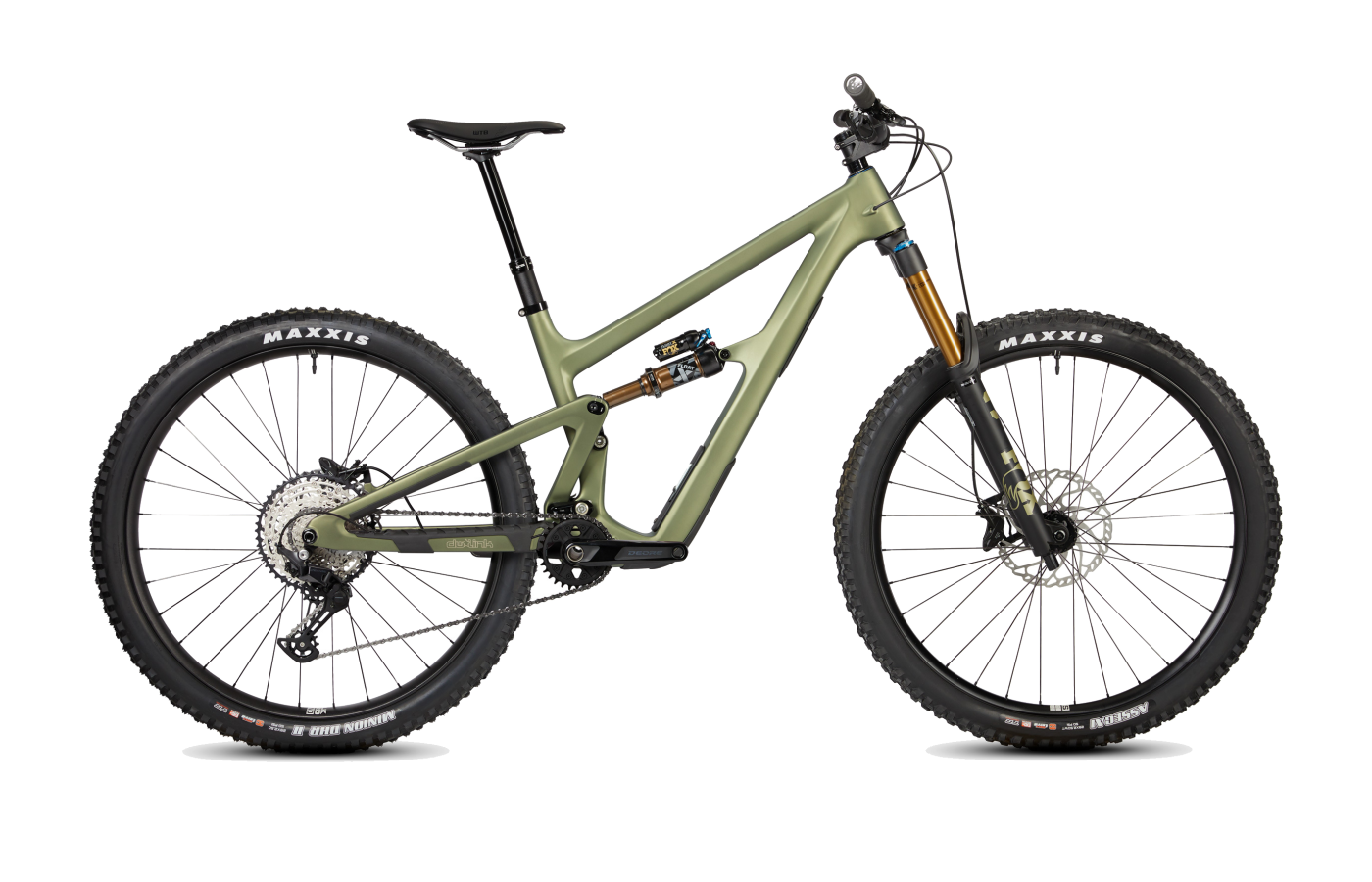
Ripmo
DW-Link efficiency benchmark. Pedals firmer than either of these without giving up much traction — pick this if climbing speed is the priority.
Compare →