Grail
vsTerrel
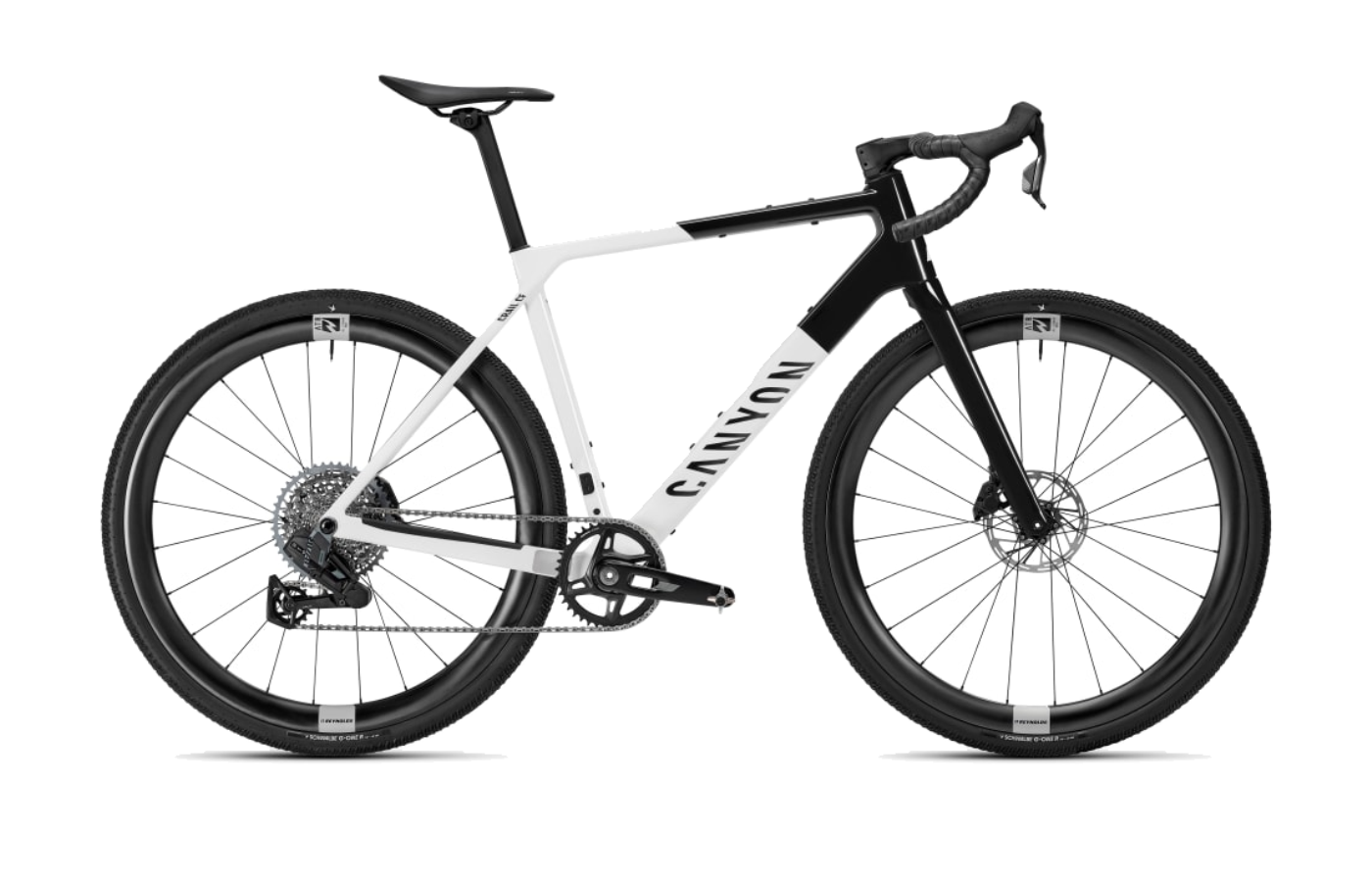
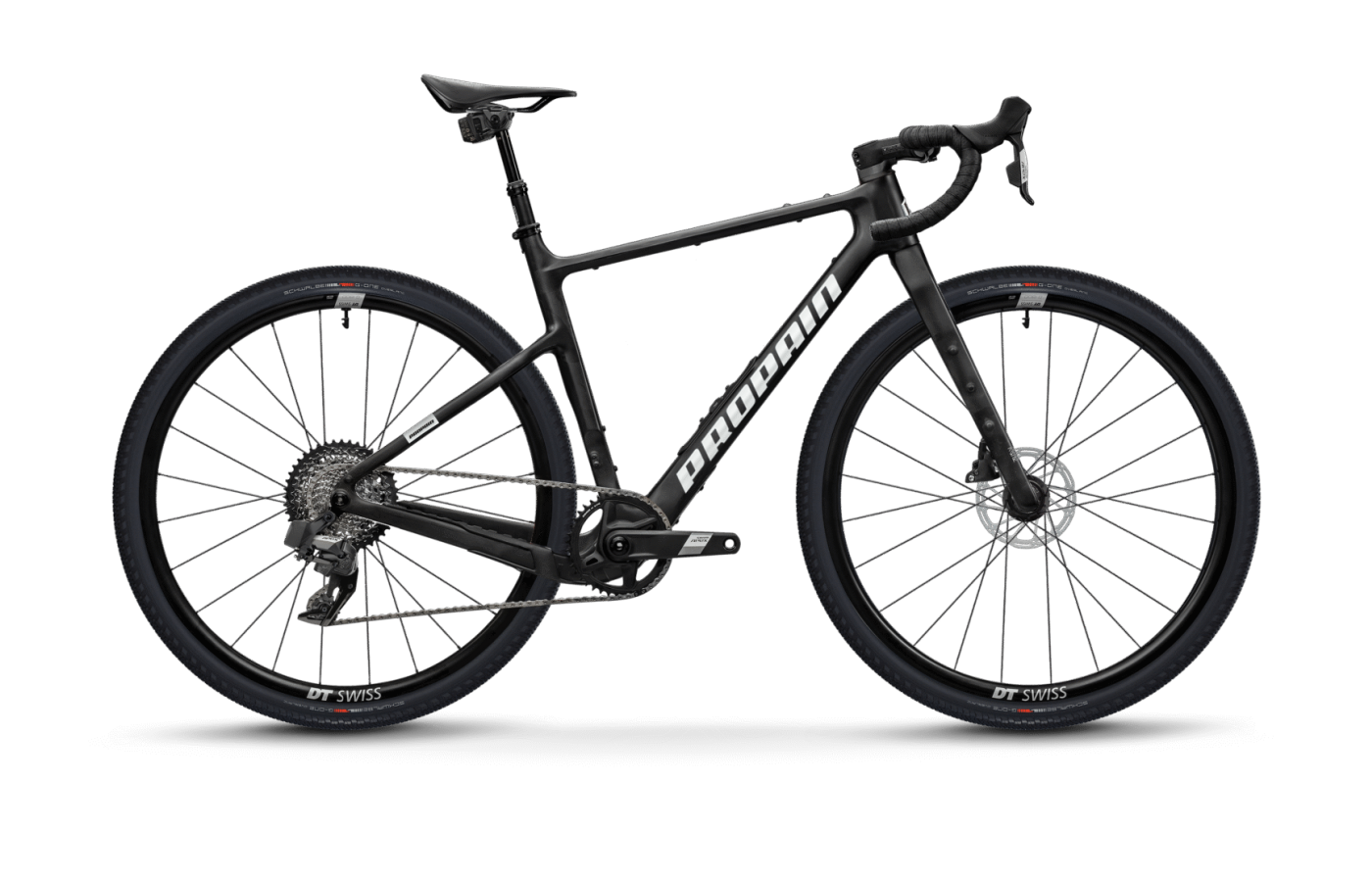
Two carbon gravel bikes, two religions.
The Canyon Grail is a race-tuned aero machine built to win on hardpack. The Propain Terrel is a mountain biker's drop-bar fever dream built to bomb singletrack.
Grail
- Genuinely fast on hardpack — Canyon claims 9.1 W saved at 45 km/h vs the prior gen, and reviewers consistently note 'explosively fast' acceleration.
- Stable at race pace — a 1,057 mm wheelbase (size M) and 71.5° HTA give it 'plough through rattly gravel' composure on fast, open courses.
- Class-leading value at the SLX tier — BikeRadar called the CF SLX 8 Di2 'class-leading value for money' against bikes nearly double the price.
- 42 mm tire ceiling rules out chunky bikepacking rubber.
- Integrated cockpit makes fit changes expensive — and reviewers flagged the stock 420 mm bar as 'curiously wide' on XS/S frames.
Terrel
- 50 mm tire clearance — with suspension-corrected geometry that lets you bolt a suspension fork on later.
- MTB-grade descending confidence — a 70.5° HTA (size M) and 435 mm chainstays make it 'planted' on technical singletrack where the Grail gets feisty.
- Configurator + bombproof basics — T47 BB, UDH dropout, downtube storage, and full bikepacking mount network standard.
- Solid but not explosive acceleration — reviewers blame the heavier DT Swiss G 1800 alloy wheels.
- Only two stock builds, both SRAM Apex; no electronic-shifting build above Apex/GX AXS.
Editor’s analysis
This isn't a faster-vs-slower fight. It's a question of which kind of gravel you actually ride — the championship course, or the back of the map.
On paper, both bikes are direct-to-consumer carbon gravel rigs in the same $2,899-and-up bracket. But spend a minute on the geometry charts and the philosophies fall out fast: the Canyon Grail Gen 2 was redesigned around aero tube shapes and a 9.1-watt claimed savings at 45 km/h, while the Propain Terrel was designed by a downhill-MTB brand and clears a 50 mm tire.
The Grail is the racer. Canyon slackened the head angle to 71.5 degrees and stretched the wheelbase 27 mm over the prior gen, but the focus is unmistakable — integrated Double Drop cockpit, D-shaped Comfortpost, magnetic Fidlock frame bag that adds another 1.3-1.5 watts of aero, and a strict 42 mm tire ceiling so road-style cranksets and chainlines still work. Reviewers on smoother gravel call it 'explosively fast' and 'snappy yet stable.' On rocks and roots, the same reviewers call it 'firm,' 'feisty,' and a bike that 'transmits more shock to a rider's hands than I expected.'
The Propain Terrel takes the opposite bet. Suspension-corrected fork, 50 mm tire clearance, a 70.5-degree head angle (a full degree slacker than the Grail in size M), 435 mm chainstays, T47 threaded BB, UDH dropout, and downtube storage as standard. Propain's 'Make it yours' configurator lets you spec it as a rigid race build or bolt on a suspension fork, dropper, and 2.0-inch MTB rubber. Reviewers describe it as 'the sweet spot between a gravel drop bar bike and a hardtail mountain bike' — solid but not explosive on the flats, in its element on technical descents.
Put another way: the Canyon Grail is the bike you race. The Propain Terrel is the bike you bikepack into terrain a Grail rider would walk.
Where the builds differ.
Comparing our editor's-pick builds side-by-side. Winners highlighted row-by-row — lower price and weight, and the better-spec component, each mark a point.
Build variants & pricing
The Grail spans five tiers from a $2,899 GRX 12s build to a $6,099 Force XPLR flagship. The Terrel keeps it simple — two configurator base builds, both SRAM Apex.
Both editor's picks are SRAM wireless 1x at roughly the same price ($4,099 vs $3,999), but the tiers don't quite line up — the Terrel's top stock build is Apex/GX AXS, two tiers below the Grail's Force XPLR flagship. If you want Force-tier electronic shifting, only the Grail offers it from stock. Prices are current US MSRP.
How they fit, how they steer.
Both at size XS — the fit-picked size for a 5'8" rider on each bike. The Terrel sits 2 mm lower with 3 mm shorter reach, but the bigger story is the head angle: 69.5° on the Terrel vs 71° on the Grail XS. That, plus 10 mm longer chainstays, is what the MTB-DNA marketing actually means in numbers.
Which size should I buy?
Size recommendations based on stack, reach, and effective top tube. The Grail offers the wider range — seven sizes from 2XS to 2XL vs the Terrel's five (XS to XL).
→These are starting points. Flexibility, riding style, and preferred position all shift the answer — if you’re between sizes, a professional fit beats a chart.
What the magazines said.
Published reviews from trusted cycling outlets. Click through for the full write-up.
Which one should you buy?
If you race or train on hardpack and want one bike to chase Strava segments, get the Canyon Grail. If you want a drop-bar bike that handles real singletrack and bikepacking, get the Propain Terrel.
Grail
If your weekends are paceline laps on smooth fire roads and the occasional UCI-style gravel race, the Grail is built for exactly that. The aero shaping and stiff frame pay off above 30 km/h, and the integrated storage means you can go long without a saddlebag flapping in the wind.
Terrel
If you came from mountain biking, ride a lot of singletrack, or want one carbon bike that can be specced from rigid race build to suspension-forked bikepacker, the Terrel is the more honest fit. You'll lose some hardpack speed but gain genuine off-road capability the Grail can't touch.
Questions buyers actually ask.
Short answers to the things we get emailed about most often.
01Which is faster on smooth gravel?
The Canyon Grail, clearly. Canyon claims a 9.1-watt saving at 45 km/h over the prior generation Grail, with another 1.3-1.5 watts coming from the magnetic Fidlock frame bag (which is more aero with the bag attached than without). Reviewers describe the Grail as 'explosively fast' and 'snappy yet stable' on hardpack, while the Propain Terrel is 'solid but not explosive,' partly because the stock DT Swiss G 1800 alloy wheels are heavier rotational mass.
At social-ride speeds on rough surfaces, that gap shrinks fast — and on chunky terrain the Terrel actually feels quicker because you're not picking lines around every rock.
02Which handles technical singletrack better?
The Propain Terrel, by a comfortable margin. The Terrel runs a 70.5° head tube angle in size M (vs 71.5° on the Grail), 435 mm chainstays (vs 425 mm), and clears a 50 mm tire (vs 42 mm). Reviewers describe it as 'the sweet spot between a gravel drop bar bike and a hardtail mountain bike' and confidently chase 'folks riding mountain bikes on the gravel descents.'
The Grail is no slouch on smooth descents, but multiple reviewers (BikeRadar, Rouleur) note it 'can get a little bit feisty' on roots and rocks, and 'lacks any sort of bouncy feel.' If your trails involve real singletrack, the Terrel's geometry is built for it.
03What's the maximum tire clearance on each?
Canyon Grail: 42 mm officially, with stock builds shipping a 40 mm Schwalbe G-One. Some reviewers (Cycling News, Bicycling) called this 'on the low side' for modern gravel racing. The strict cap exists so road-style cranksets and chainlines stay compatible.
Propain Terrel: 50 mm officially — enough to fit some 2.0-inch MTB rubber. The frame is also 'suspension-corrected,' meaning Propain's geometry assumes you might bolt on a 40 mm-travel gravel suspension fork later. The configurator offers exactly that as a build option.
04Do either come with a power meter?
Yes on the upper Grail builds, no on the others. The CF SLX 8 AXS RS ($6,099) ships with a Quarq power meter integrated into the SRAM Force crankset, and the CF SLX 8 Di2 RS ($5,599) ships with a 4iiii Precision 3+ on the GRX crankset. The Rival and GRX 12s builds do not include power meters — a few reviewers (Bicycling) flagged this as 'slightly odd' given Canyon includes them on its road bikes.
The Propain Terrel does not ship with a power meter on either stock build, but the configurator allows component swaps; aftermarket pedal-based or spider-based meters bolt on without issue.
05How does the Propain configurator actually work?
Propain offers two stock 'Signature Spec' builds (the SRAM Apex/GX T-Type AXS at $3,999 and the SRAM Apex Mechanical at $2,899) as starting points, but their online configurator lets you swap nearly every component before checkout — wheels, drivetrain, cockpit, seatpost, dropper, suspension fork. Reviewers describe it as enabling 'a race-ready setup to a trail-focused build, with or without a suspension fork, aero wheels or a dropper post.'
This matters because the stock G 1800 wheels are the bike's biggest weight penalty. Upgrading to lighter carbon wheels at order time is cheaper than swapping them aftermarket.
06How serviceable are the cockpits?
The Canyon Grail uses a one-piece carbon cockpit (CP0045 on lower builds, CP0039 on the SLX/CFR with the 'Gear Groove' interface). Changing bar width or stem length means buying a new unit, and several reviewers (Escape Collective, Rouleur) flagged the stock 420 mm bar on XS/S frames as 'curiously wide' for smaller riders. The standard 1 1/8" steerer at least allows aftermarket cockpit swaps if needed — though that's an 'expensive route.'
The Propain Terrel ships with a conventional two-piece bar and stem, so swapping width or length is a normal shop job. The configurator also lets you spec your preferred bar width before the bike ships.
07What about long-term maintenance and reliability?
The Grail uses a press-fit BB (which one reviewer reported developing creaks) and routes hoses through the upper headset cover — generally serviceable but more involved than a threaded BB. Frame quality is praised; drivetrain and DT Swiss/Zipp wheel reliability scored 9/10 in road.cc's testing.
The Terrel uses a T47 threaded bottom bracket (much friendlier for home maintenance), a UDH dropout for derailleur compatibility, and conventional cable routing. One reviewer reported water ingress into the downtube storage after intense rain; Propain says drainage holes prevent retention. Otherwise, the build choices skew durable rather than light.
08Which one for ultra-distance bikepacking?
The Propain Terrel. It clears 50 mm tires (more comfort over distance), has full bikepacking mount coverage (downtube, top tube, fork bolts, third bottle), threaded BB, and the suspension-corrected geometry means you can spec a fork later without rebuying the bike. The DT Swiss G 1800 wheels are heavier than the Grail's stock options but are widely respected for durability under load.
The Grail can be bikepacked — the Aero Load downtube storage and Fidlock frame bag work well — but the 42 mm tire cap, integrated cockpit, and proprietary mount system make it less flexible for multi-day off-the-grid trips.
Similar bikes
If your priorities don’t map cleanly onto either of these, one of these adjacent bikes probably fits better.
Grizl
Canyon's other gravel bike — less aero, more clearance (50 mm), and a more relaxed ride than the Grail. The logical pick if you want Canyon's DTC pricing without the race-focused integration.
Compare →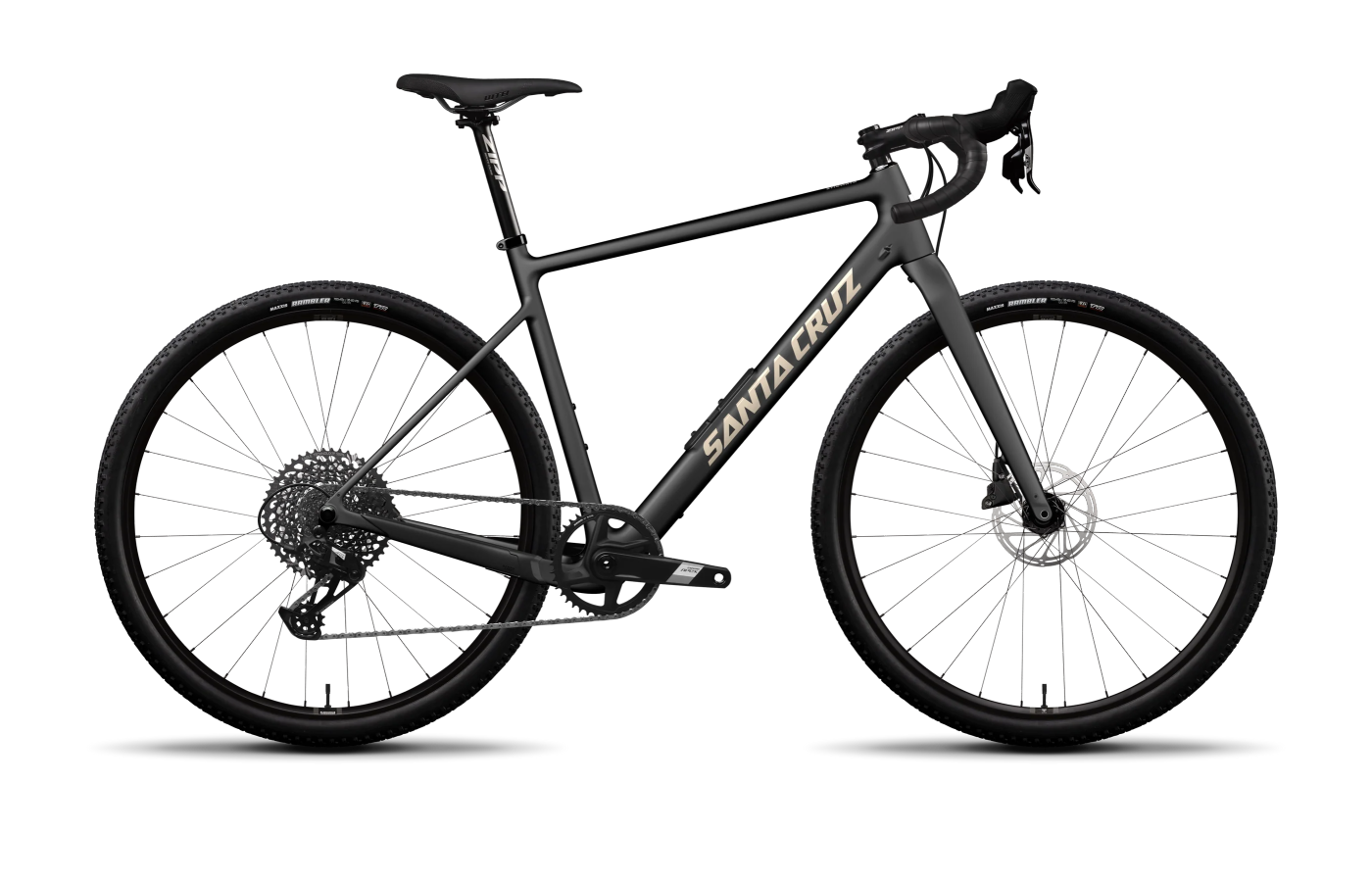
Stigmata
Like the Terrel, Santa Cruz's gravel bike comes from a mountain-bike pedigree — stable, capable, and built to handle trails the Grail would walk. A more refined retail-channel alternative to the Propain.
Compare →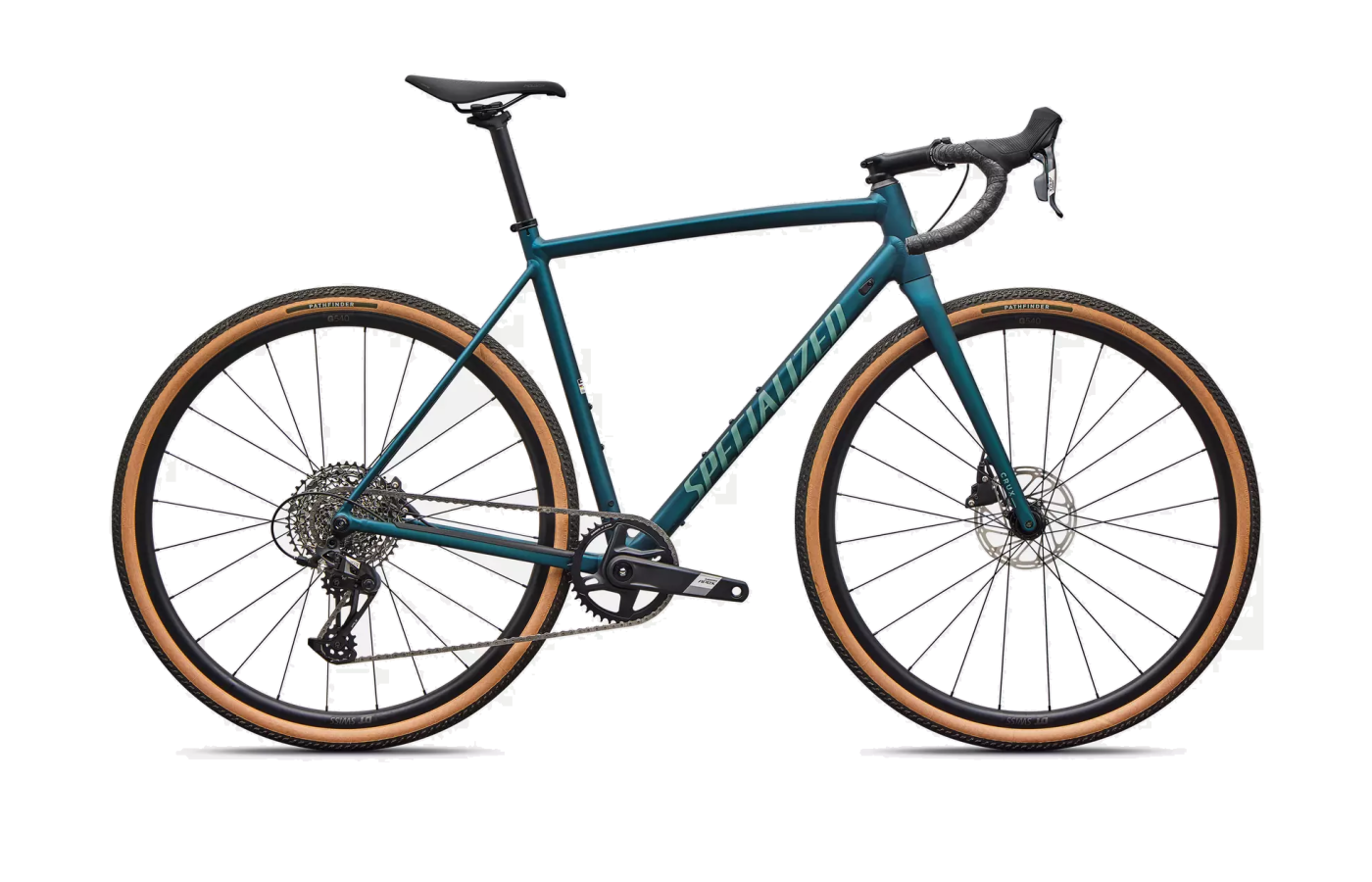
Crux
Specialized's lightweight gravel racer — a more traditional, road-feel alternative to the Grail's heavily integrated aero approach. Picks lines like a road bike and climbs better than either bike here.
Compare →