Endurace
vsUltimate
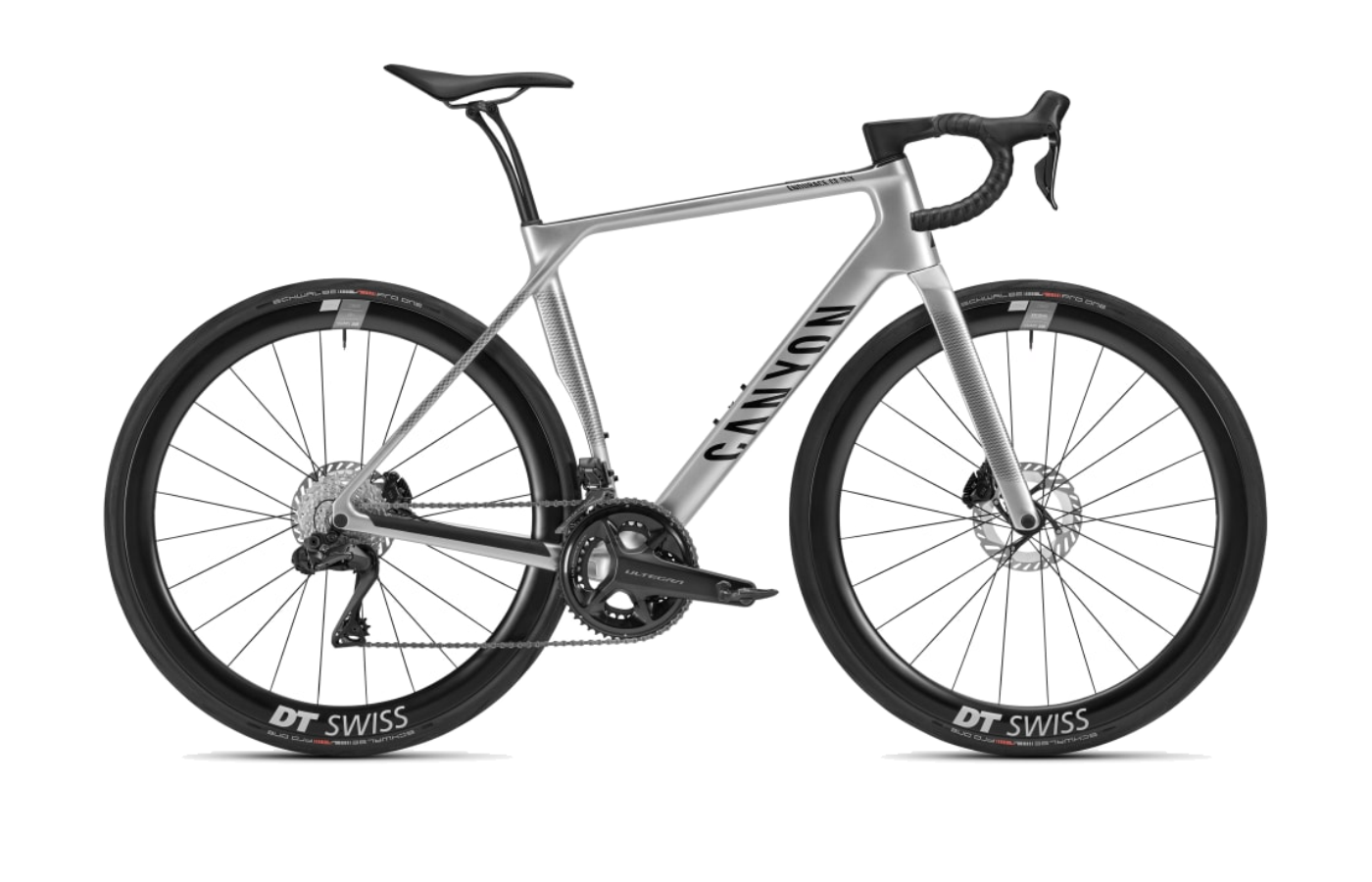
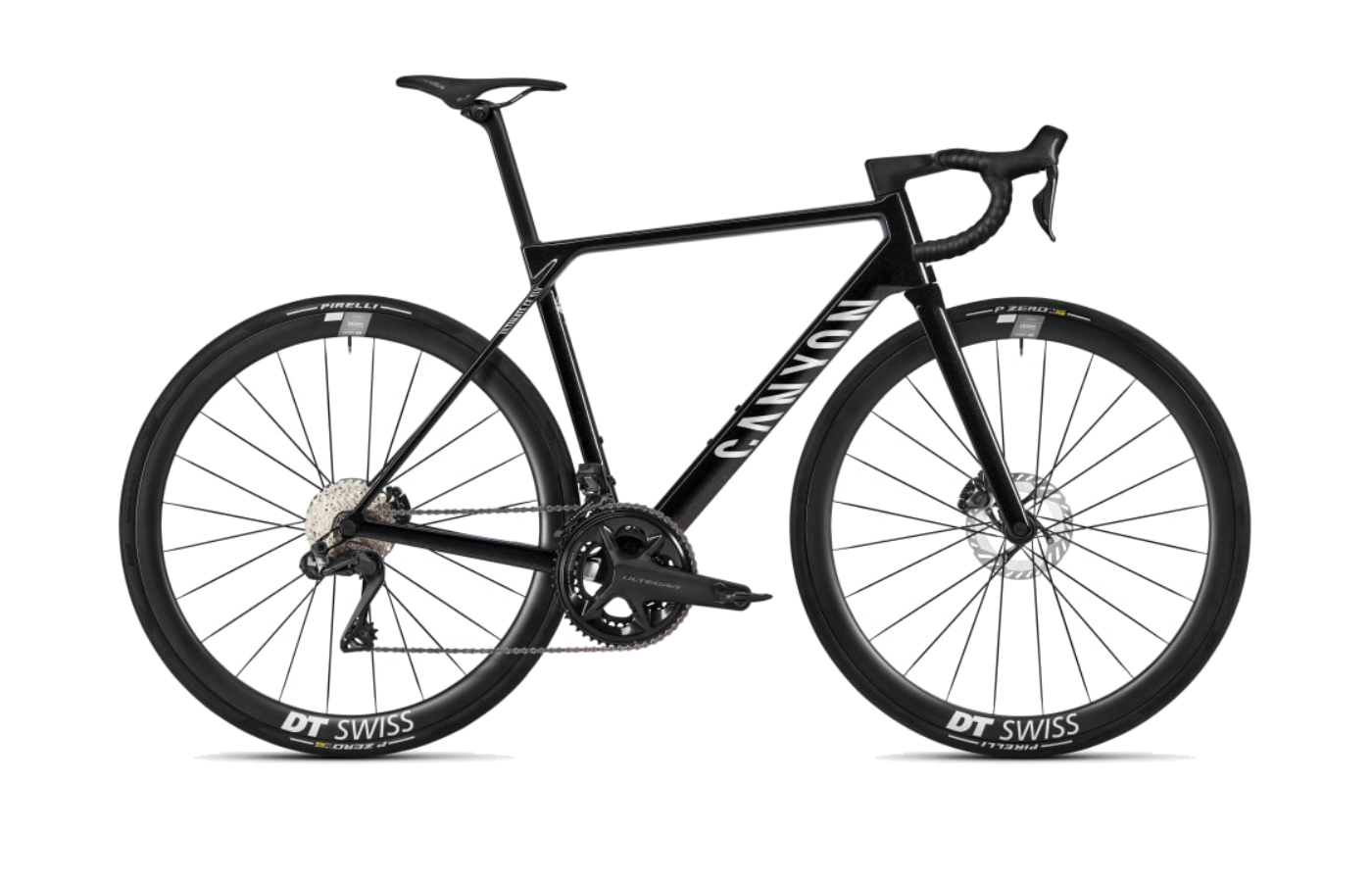
Two Canyons, two road philosophies.
The Endurace is Canyon's all-day comfort weapon with 35 mm tires. The Ultimate is the lightweight race bike Canyon builds when nothing else is allowed to compromise.
Endurace
- 35 mm tire clearance — widest in the modern endurance-road class; opens the door to light gravel without changing bikes.
- VCLS leaf-spring seatpost delivers up to 20 mm of travel, smoothing chip-seal that race bikes transmit straight up.
- Top-tube LOAD storage — integrated tool/CO2 hatch you don't have to bolt onto the bike for long days.
- Heavier than the Ultimate at every shared price tier (CFR is ~7.3 kg vs ~6.3 kg).
- Integrated CP0018/0048 cockpit can feel stiff against the soft rear — a front/rear compliance mismatch some testers flagged.
Ultimate
- Climbs like a scalpel — the CFR hits 6.3 kg and reviewers call it "insatiable" on sustained gradients.
- 15% stiffer head tube vs the prior generation; bottom-bracket area shows "no discernible flex" under sprint loads (Road.cc).
- Race-posture geometry with 1.43 stack-to-reach — the platform Canyon's WorldTour team actually races.
- Only 33 mm tire clearance — narrower than most modern race bikes, and well short of the Endurace.
- Aggressive position rewards flexible riders; the rest of us will feel it on hour five.
Editor’s analysis
Two bikes, one logo, one fork manufacturer — but the geometry chart and the tire clearance tell you everything about which day in the saddle each was drawn for.
On paper, the Canyon Endurace and Canyon Ultimate look like rough siblings: both 5th-generation-era frames, both running the CP0048 integrated cockpit on the upper builds, both anchored by Shimano or SRAM electronic groupsets across their range. Both even ship with power meters as standard down to the $4k tier — a Canyon hallmark few competitors match.
Then you stack the geometry. At a size M, the Endurace runs a 590 mm stack and 378 mm reach against the Ultimate's 560 mm stack and 393 mm reach — that's 30 mm taller and 15 mm shorter on the comfort bike. The Endurace's stack-to-reach ratio works out to 1.56 versus the Ultimate's 1.43; one is a Sunday-century posture, the other is a race posture. Tire clearance pulls in the same direction: 35 mm for the Endurace, 33 mm for the Ultimate, with the Endurace running staggered 30/32 mm rubber stock and the flagship Ultimate shipping on 25/28s.
Ride-quality reviewers consistently call the Endurace the creamier of the two. The S15 VCLS leaf-spring seatpost and high-volume tires absorb chip-seal that the Ultimate transmits straight to your shorts. The trade is weight and front-end attitude — the Ultimate CFR comes in around 6.3 kg and "whips left and right with consummate ease" (BikeRadar) when you stand up; the Endurace CFR sits closer to 7.3 kg and feels stable rather than flickable.
Put another way: the Canyon Endurace is the bike you buy when you want to ride 100 miles on rough roads and still feel human at dinner. The Canyon Ultimate is the bike you buy when you want to win the climb up the cafe stop. Same German factory, same direct-to-consumer price advantage — totally different intent.
Where the builds differ.
Comparing our editor's-pick builds side-by-side. Winners highlighted row-by-row — lower price and weight, and the better-spec component, each mark a point.
Build variants & pricing
Both lineups span ~$8k of range and lean heavily on Shimano/SRAM electronic groupsets, with power meters bundled from the mid tier up.
Prices are current US MSRP. The Endurace dips to $1,499 with the alloy CUES AllRoad build — the Ultimate has no alloy option and starts at $2,899. At the top, the Ultimate CFR Red AXS pushes to $10,499; the Endurace tops out at $9,099.
How they fit, how they steer.
Different size labels, same fit-picked rider. Even after the size shift, the Endurace XS sits 9 mm taller (548 vs 539 mm stack) and 20 mm shorter in reach (370 vs 390 mm) — the comfort-vs-race split survives the apples-to-apples sizing.
Which size should I buy?
Size recommendations based on stack, reach, and effective top tube. The Endurace ranges further down (3XS) than the Ultimate (2XS) and runs a markedly taller stack at every overlapping size.
→These are starting points. Flexibility, riding style, and preferred position all shift the answer — if you’re between sizes, a professional fit beats a chart.
What the magazines said.
Published reviews from trusted cycling outlets. Click through for the full write-up.
Which one should you buy?
If you ride long, ride rough, or value comfort over a podium finish, get the Endurace. If your benchmark is the climb up the local KOM, get the Ultimate.
Endurace
If you spend weekends grinding out gran fondos, hilly centuries, or rough country roads where the pavement runs out, the Endurace's taller stack, 35 mm tires, and leaf-spring seatpost will keep you fresh long after a race-bike rider has cracked. It's also the only one of these two with an alloy entry price.
Ultimate
If you size up rides by their elevation gain and chase Strava segments on group rides, the Ultimate's 6.3 kg CFR weight and stiffer chassis will reward the watts you put in. It demands the flexibility to hold a low position — but the bike's reactivity is its whole pitch.
Questions buyers actually ask.
Short answers to the things we get emailed about most often.
01Which is faster on flat roads?
Honestly, closer than you'd expect. The Ultimate Gen 5 picked up Canyon's claimed ~5 watts of frameset aero savings at 45 km/h with a rider on board, and the deeper-section DT Swiss ARC wheels on the SLX builds keep speed well up to 35–40 km/h. The Endurace runs a similar integrated cockpit and 45 mm DT Swiss ERC wheels on the SLX/CFR tier, so the gap is more about rider position than frame drag.
If you're putting in the same wattage in a similar tuck, the Ultimate will edge it — but neither bike is a dedicated aero machine. For that, look at the Canyon Aeroad.
02Which climbs better?
The Ultimate, decisively. The CFR comes in around 6.3 kg vs the Endurace CFR's ~7.3 kg — roughly a kilogram, or about 1.4% of a 70 kg rider's system weight. Over a 30-minute climb that's something like 25 seconds, and the Ultimate's stiffer chassis and shorter (410 mm vs 415 mm) chainstays make out-of-saddle accelerations feel sharper too.
The Endurace climbs perfectly well — reviewers describe it as "sporty" and "nimble for a non-racer" — but it isn't pretending to be a flyweight.
03What's the maximum tire clearance?
Endurace: 35 mm officially. Stock builds ship with staggered 30 mm front / 32 mm rear, and the alloy AllRoad build runs 35 mm Schwalbe G-Ones from the factory.
Ultimate: 33 mm officially. Most builds ship on 28 mm tires; the flagship CFR Dura-Ace Di2 even goes 25 mm front / 28 mm rear to chase weight.
Neither is a gravel bike, but the Endurace genuinely opens the door to dirt-road detours in a way the Ultimate doesn't.
04How different is the riding position?
Substantially. At a size M, the Endurace runs a 30 mm taller stack and a 15 mm shorter reach than the Ultimate. That works out to a 1.56 stack-to-reach ratio on the Endurace versus 1.43 on the Ultimate — "open fit" endurance vs aggressive race.
For a rider who can't comfortably hold a low aero tuck for hours, the Endurace will feel sustainable where the Ultimate feels punishing.
05Are the integrated cockpits adjustable?
Yes — and this is one area Canyon got genuinely ahead of competitors. The CP0048 cockpit (used on both Endurace SLX/CFR and Ultimate SLX/CFR builds) offers 50 mm of width adjustment and 20 mm of height adjustment at the bar via the clamshell stem cap, without re-routing hoses.
What you can't change post-purchase is stem length. If the stock fit is wrong, swapping the cockpit means buying a new unit — Canyon doesn't currently let you customize length at order time.
06Do both come with power meters?
On most builds, yes — and this is one of Canyon's signature value plays. The Endurace CF SLX 8 Di2, CFR Di2, and CF SLX 8 AXS all ship with crank-based power meters; same story on the Ultimate CF SLX 8 (Ultegra and Force AXS) and CFR builds. Even the $3,399 Endurace CF 7 Di2 and the Ultimate CF 7 105 Di2 builds at $3,699 include them.
For reference, a comparable bike from a US brand at the same tier typically charges $700–$1,000 extra for the meter.
07Which is the better value?
Both are exceptional value because they're direct-to-consumer — there's no shop margin baked into the sticker. Spec for spec, you're paying roughly 25–35% less than an equivalent Specialized, Trek, or Cannondale build.
If budget is the dominant factor, the Endurace wins on entry price: the alloy AllRoad build at $1,499 has no equivalent in the Ultimate range, which starts at $2,899. At the high end, the gap closes — the editor's-pick CF SLX 8 Ultegra Di2 builds are $5,499 (Endurace) and $5,999 (Ultimate).
08What's the catch with buying direct from Canyon?
No local dealer. That means no test rides at the shop (Canyon does run demo events in some markets), no in-person fitting, and warranty work has to go through Canyon's service network rather than a local mechanic.
Canyon ships the bike 90% assembled in a well-designed box; most riders can finish the build with the included tools in under an hour. But if you want hand-holding or you don't know your fit precisely, the savings can become a headache.
Similar bikes
If your priorities don’t map cleanly onto either of these, one of these adjacent bikes probably fits better.
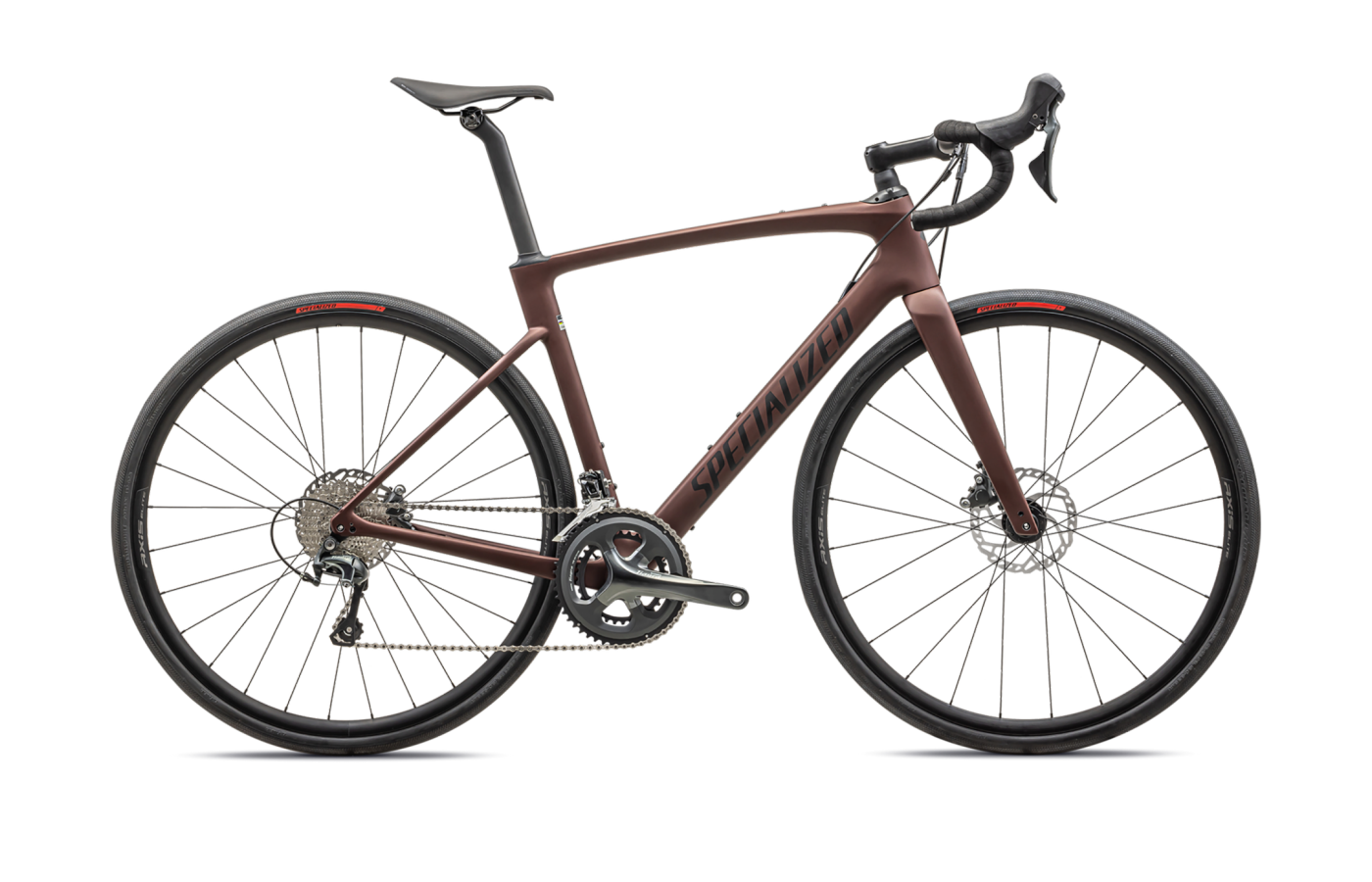
Roubaix
The Endurace's most direct rival — Specialized's endurance flagship adds the Future Shock 3.0 head-tube damper for active front-end compliance the Endurace doesn't try to match. Heavier dollar-for-dollar, but the smoothest front end in the category.
Compare →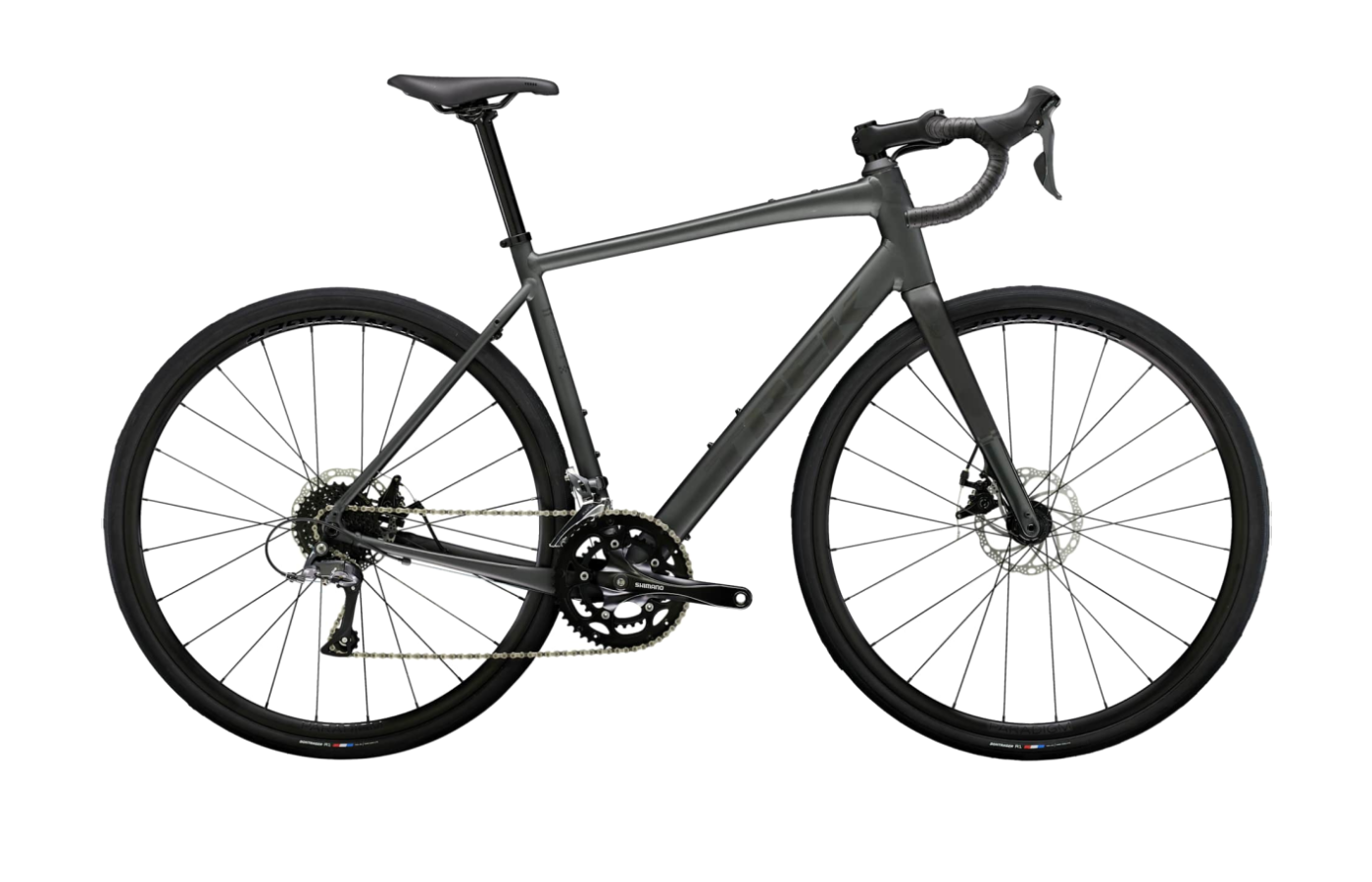
Domane
Trek's endurance benchmark, with internal IsoSpeed compliance at both ends and integrated down-tube storage that out-features the Endurace's top-tube hatch. Bonus: rack and mudguard mounts, which the Endurace lacks.
Compare →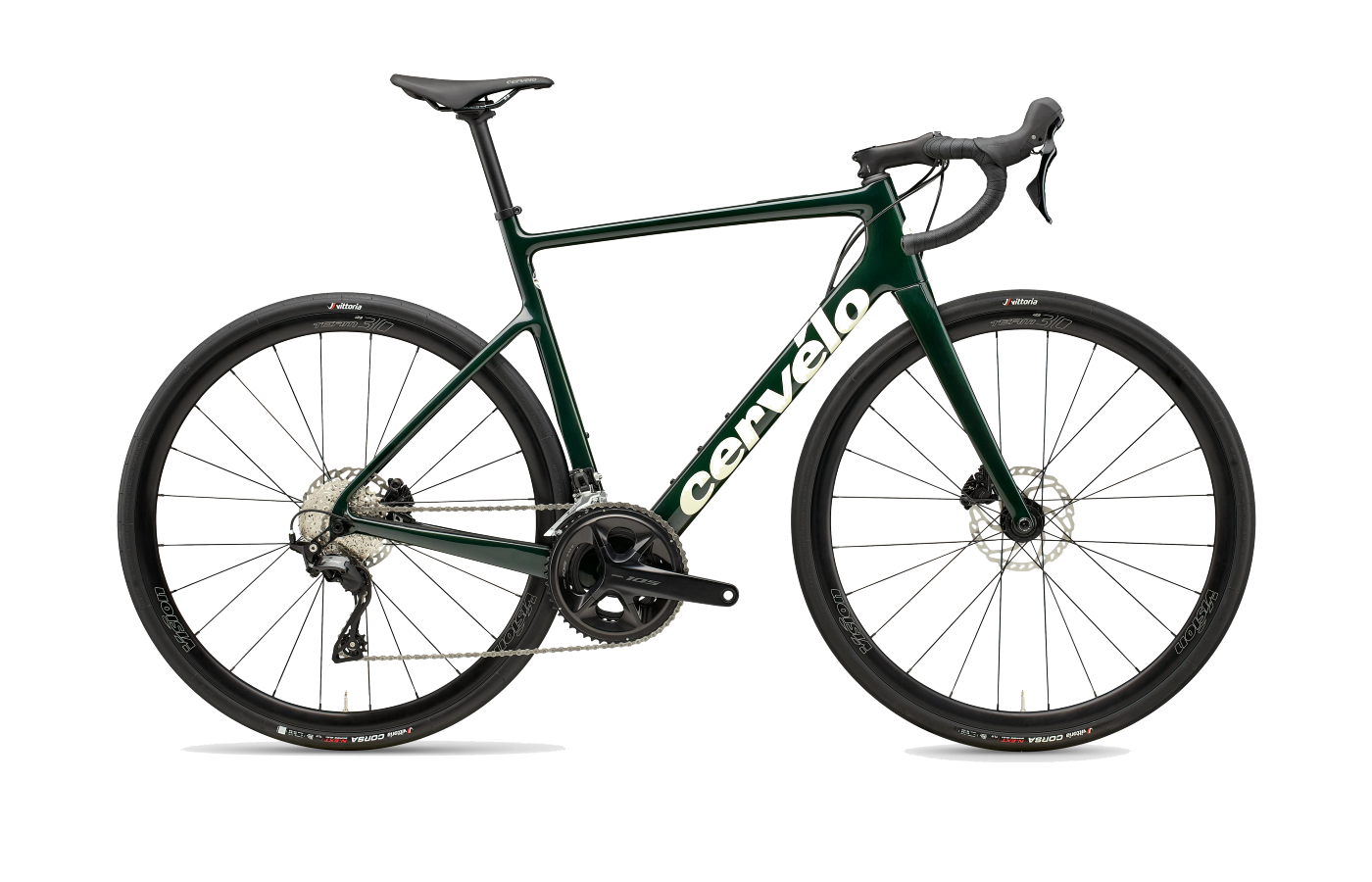
Caledonia
Cervelo's blurred-line bike — race-bike attitude with the tire clearance (up to 34 mm) for the rougher endurance miles. Closer to the Ultimate in posture than the Endurace, but with the all-road versatility.
Compare →