SuperSix EVO
vsUltimate

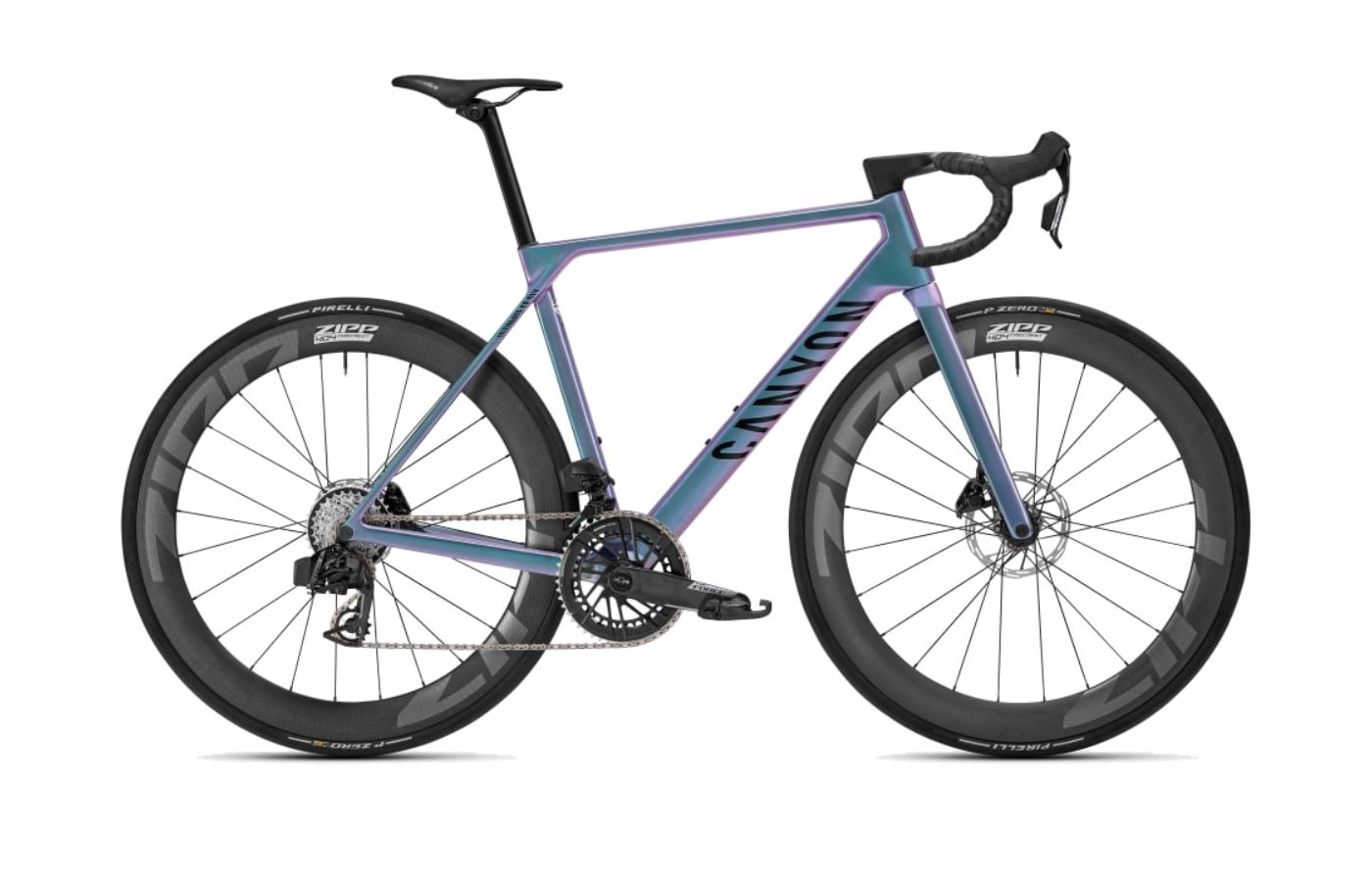
Two race all-rounders, two ownership models.
The SuperSix EVO is the dealer-supported all-rounder built to be lived with. The Ultimate is the direct-to-consumer climber that turns price into spec.
SuperSix EVO
- Dealer network and serviceability — threaded BSA BB, Delta steerer compatible with standard stems, dealer fit and warranty included.
- More upright fit — 555 mm stack at 54 vs 539 mm at the Canyon's S; easier to live with for non-pro flexibility.
- Wider build hierarchy — three carbon grades from $2,999 standard Carbon up to $14,999 LAB71.
- Roughly $3k more for an equivalent drivetrain tier than the Canyon.
- Reviewers note a slightly harsher rear end vs. the previous generation — fix it with wider tires.
Ultimate
- Best-in-class price-to-spec — Force AXS for $6,499, full Red AXS CFR for $10,499; thousands cheaper at every tier.
- Sharper, more aggressive geometry — 72.8-degree head angle, 983 mm wheelbase, 6 mm more reach at the equivalent fit-picked size.
- Width-adjustable cockpit — the CP0048 lets you change bar width 50 mm without buying a new unit, rare in this segment.
- Direct-to-consumer means no demo, no in-person fitting, and no local warranty support.
- Stem length can't be changed at order — what arrives is what you ride.
Editor’s analysis
Same race-bike brief, two very different deals — one is built around the local shop, the other around a Koblenz warehouse and your tape measure.
On paper, the Cannondale SuperSix EVO and Canyon Ultimate land in the same bracket: WorldTour-pedigree race frames, 33-ish mm of tire clearance, fully integrated cockpits, and a frame range that spans roughly $3k to a hair under $15k. Both are explicitly sold as 'do-it-all' race bikes — fast on the flats, willing on climbs, comfortable enough to ride all day on 28s.
The Cannondale SuperSix EVO is the more upright, more forgiving fit. At size 54 it stacks 555 mm versus the Canyon Ultimate's 539 mm at S — 16 mm taller for what the fit algorithm calls the same rider — with a slacker 71.2-degree head angle and a 1,010 mm wheelbase. Reviewers consistently describe it as 'predictable' and 'sure-footed' at speed, with that long wheelbase showing up as planted high-speed descending. It's also the platform that fixed the things people griped about: threaded BSA bottom bracket, Delta steerer that takes standard headset bearings, and Di2 battery moved out of the seatpost.
The Canyon Ultimate goes the other direction — lower, longer, sharper. The S frame runs a 72.8-degree head angle, a 983 mm wheelbase, and 6 mm more reach than the equivalent SuperSix. Reviewers call out 'reassuringly stout' front-end stiffness when sprinting and out-of-saddle climbing, and Canyon claims a 15 percent stiffer head tube versus Gen 4. It's lighter at the top end too — the CFR comes in around 6.3 kg in flagship trim against a Cannondale LAB71 that hits the 6.8 kg UCI limit.
What actually decides this is the ownership model. The Cannondale gets you a local dealer to fit, fix, and warranty the bike. The Canyon is roughly $3,000 cheaper at the same drivetrain tier — the Force AXS builds are $9,499 (Cannondale) vs $6,499 (Canyon) — but you're on your own for fit, you can't change stem length at order, and there's no shop down the road for a warranty bearing swap. If you know your numbers and your wrenches, the Ultimate is the better buy. If you don't, the SuperSix EVO is.
Where the builds differ.
Comparing our editor's-pick builds side-by-side. Winners highlighted row-by-row — lower price and weight, and the better-spec component, each mark a point.
Build variants & pricing
Both span roughly $3k to $10k+ on standard carbon, with Cannondale extending up two more tiers via Hi-MOD and LAB71.
Prices are current US MSRP. The Cannondale runs ~$3,000 more than the Canyon at every matched drivetrain tier — that's the dealer-network premium. Cannondale tops out higher with the Hi-MOD and LAB71 frames; Canyon doesn't sell beyond the CFR.
How they fit, how they steer.
Same fit-picked rider, very different cockpits. The SuperSix at 54 sits 16 mm taller in stack and 6 mm shorter in reach than the Ultimate at S, with a 1.6-degree slacker head angle and a 27 mm longer wheelbase — more stable, more upright, less aggressive.
Which size should I buy?
Size recommendations based on stack, reach, and effective top tube. The Cannondale runs numeric sizes (44–61); the Canyon runs alpha (2XS–2XL); use the picker to translate.
→These are starting points. Flexibility, riding style, and preferred position all shift the answer — if you’re between sizes, a professional fit beats a chart.
What the magazines said.
Published reviews from trusted cycling outlets. Click through for the full write-up.
Which one should you buy?
If you want a local dealer and an upright race fit, get the Cannondale. If you know your fit numbers and want more bike per dollar, get the Canyon.
SuperSix EVO
If you want a serious race bike but you'd rather have a shop handle the fit, the bleed, and the warranty bearings, the SuperSix EVO is the cleaner answer. The threaded BB and standard-stem-compatible Delta steerer make it the easier bike to own for the next decade.
Ultimate
If most of your riding is pointed uphill, you know your stack and reach within a millimeter, and you'd rather spend the savings on wheels or a power meter, the Ultimate gives you genuine WorldTour spec for thousands less. The catch is direct-to-consumer ownership.
Questions buyers actually ask.
Short answers to the things we get emailed about most often.
01Which one is actually faster?
On the flats, neither is a dedicated aero bike — both will lose to a Cervélo S5 or a Canyon Aeroad above 40 km/h. Between the two, the Cannondale SuperSix EVO claims a 12-watt aero gain over its Gen 3 predecessor at 45 km/h, and the Canyon Ultimate claims 10 watts over Gen 4. They're functionally tied at typical group-ride speeds.
Uphill, the Canyon is the lighter platform — flagship CFR builds come in around 6.3 kg vs ~6.8 kg for the Cannondale LAB71, which translates to roughly 5–8 seconds on a 30-minute climb for a 70 kg rider. Real, but small.
02How different are the fits?
Significantly. At the fit-picked size for a 5'8" rider — 54 on the Cannondale, S on the Canyon — the SuperSix sits 16 mm taller in stack (555 vs 539 mm) and 6 mm shorter in reach (384 vs 390 mm). That's a noticeably more upright cockpit on the Cannondale.
The Canyon is also slacker only at the head tube angle for the smaller frames — a 72.8-degree HTA at S vs the SuperSix's 71.2-degree HTA at 54 — meaning the Ultimate's front end snaps into corners faster but feels less planted on long descents. If you ride in the drops a lot and want the front low, the Canyon. If you want the bars closer to your saddle height without slamming the stem, the Cannondale.
03What's the maximum tire clearance?
Cannondale SuperSix EVO: 32 mm officially. Multiple reviewers report squeezing 34 mm in with care, but Cannondale's published clearance is 32.
Canyon Ultimate: 33 mm officially across all CF, CF SLX, and CFR frames.
A 1 mm difference is essentially noise. Both will happily run a true 30 mm tire at low pressure for chip-seal and Sunday gravel detours. Neither is a gravel bike — for actual unpaved riding, look at a Topstone or a Grail.
04Can I get either with a power meter?
Both, easily. The Canyon includes power meters on most builds at no extra cost — Force AXS, Red AXS, Dura-Ace and Ultegra Di2 builds all ship with stock power. The Cannondale charges you for it on lower builds (the entry 105 builds don't include power) but every Hi-MOD, LAB71, and Force AXS build does.
Aftermarket pedal-based meters (Favero Assioma, Garmin Rally) bolt onto either without issue.
05How serviceable are the integrated cockpits?
The Cannondale Delta steerer is the more clever solution. It's a 1-1/8" to 1-1/4" tapered steerer that uses standard headset bearings (not proprietary), and the Cannondale C1 Conceal cockpit on mid-range builds is a traditional two-piece bar/stem with internal routing — meaning you can swap stem length at any shop without re-routing hoses.
The Canyon CP0048 is a one-piece carbon cockpit with a clever twist: the bar width adjusts 50 mm and the height adjusts 20 mm without buying new parts. But you can't change the stem length without buying a whole new cockpit ($400+), and Canyon doesn't let you spec stem length at order. If you're not 100% sure of your fit, this is a real risk.
06Where can I get either of them serviced?
Cannondale has a global dealer network — most cities have at least one Cannondale shop that can handle warranty work, fits, and complex jobs like headset bearing swaps on the Delta steerer.
Canyon sells direct from Germany (and a US warehouse). Warranty claims go through Canyon support; physical service goes to whatever local shop will take a non-dealer-brand bike, which most will, but you're paying retail rates and shipping the frame to Canyon for warranty inspection if anything serious comes up. Plan accordingly.
07Which holds resale value better?
The Cannondale, generally. Direct-to-consumer brands like Canyon take a bigger hit on the used market because the buyer can simply order a new one for not much more. Used SuperSix EVOs typically depreciate 25–35 percent over three years; used Ultimates closer to 35–45 percent over the same window.
The flip side: you paid less up front for the Canyon, so the absolute dollar loss is comparable.
08What warranty do they come with?
Both come with a lifetime frame warranty to the original owner against manufacturing defects, plus crash-replacement programs at discounted pricing. The practical difference is who handles the claim: Cannondale routes it through your local dealer, Canyon routes it through their support team and a freight return.
Similar bikes
If your priorities don’t map cleanly onto either of these, one of these adjacent bikes probably fits better.
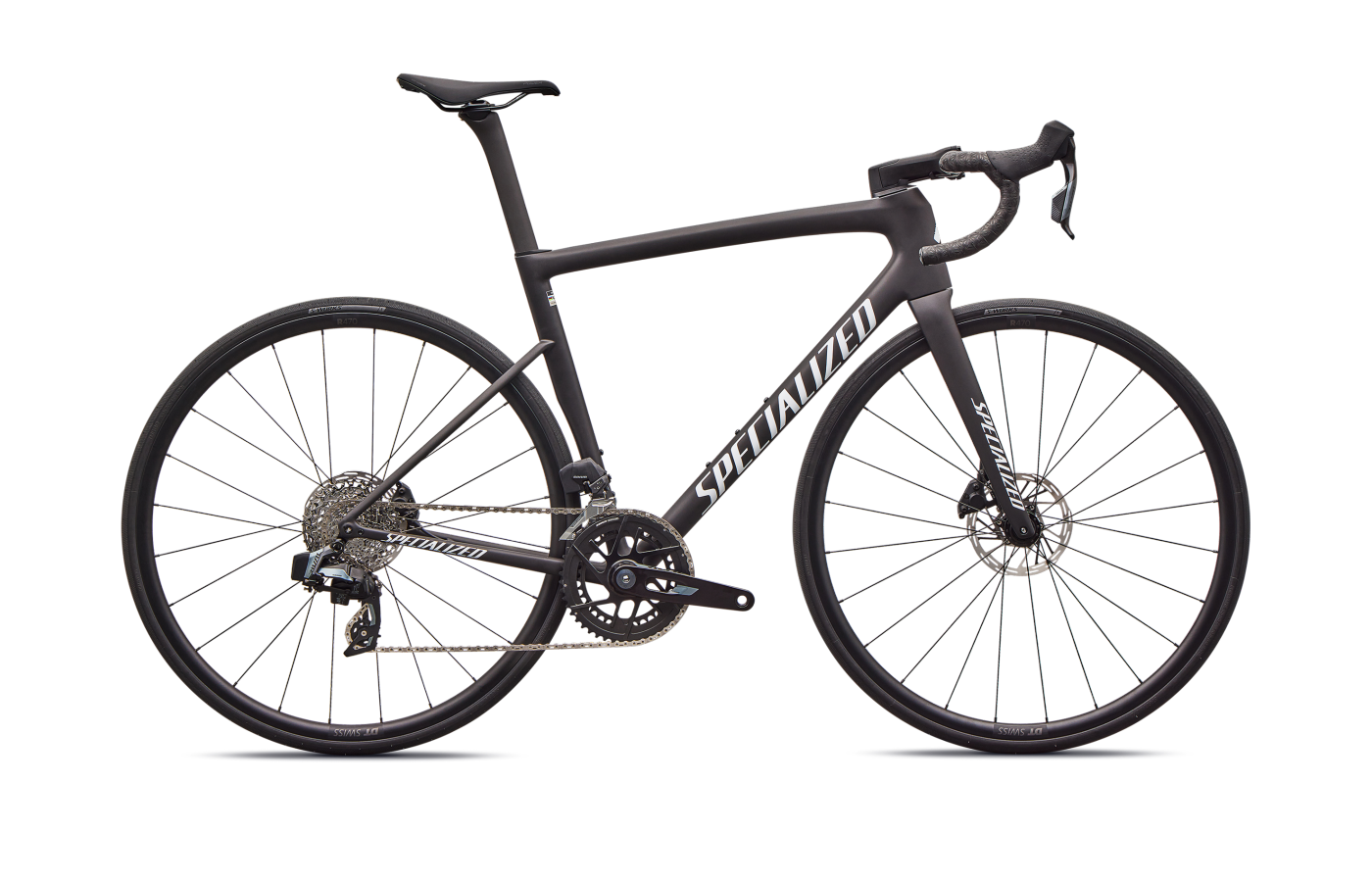
Tarmac
The most direct rival to both — Specialized's Tarmac SL8 hits a lower frame weight than either of these, with a similar all-rounder brief and a comparable dealer network. The benchmark.
Compare →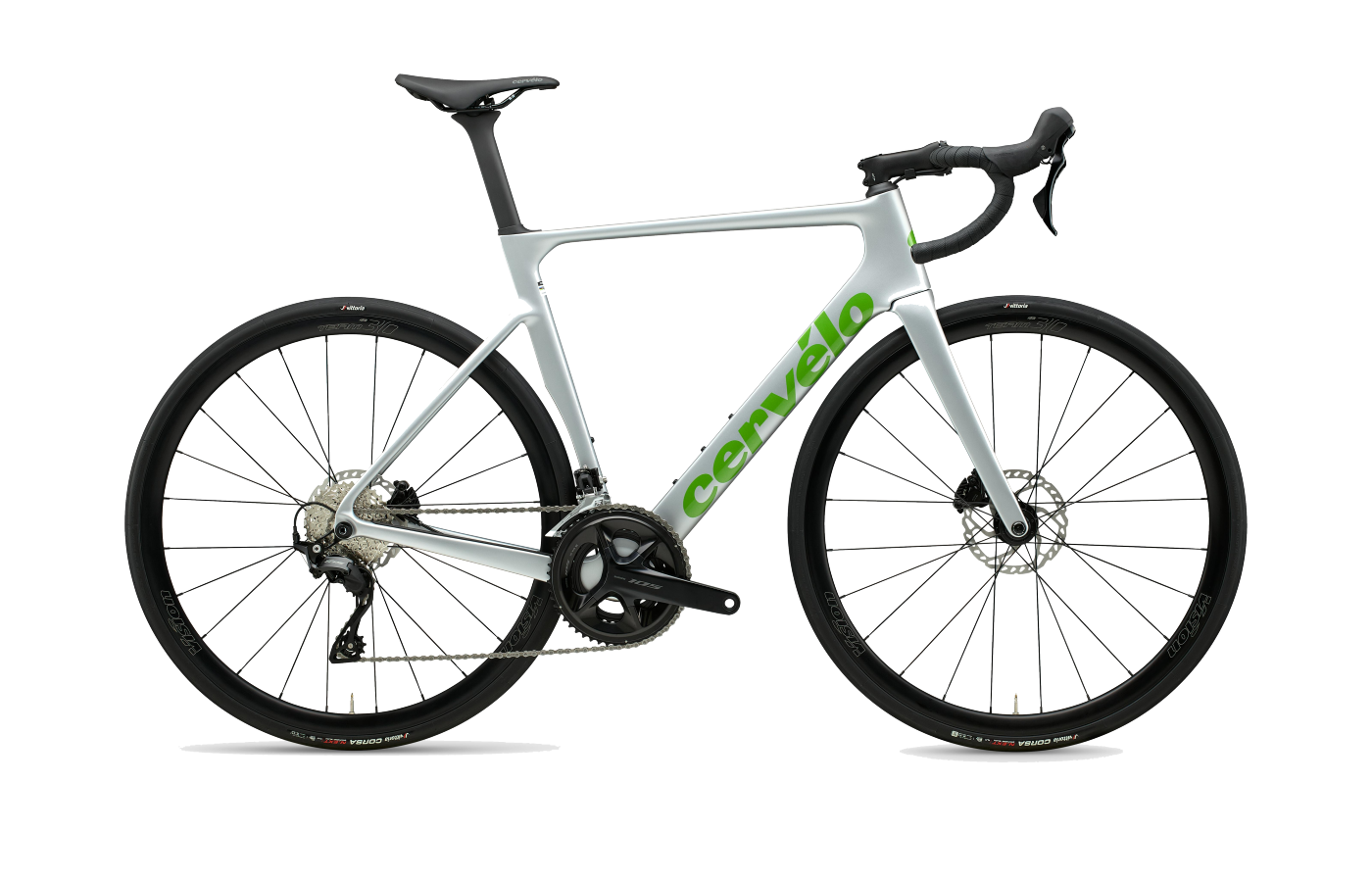
Soloist
Cervélo's everyman race bike. Less aero halo than the S5, more practical day-to-day — threaded BB, conventional cockpit, and a shorter shopping list of proprietary parts.
Compare →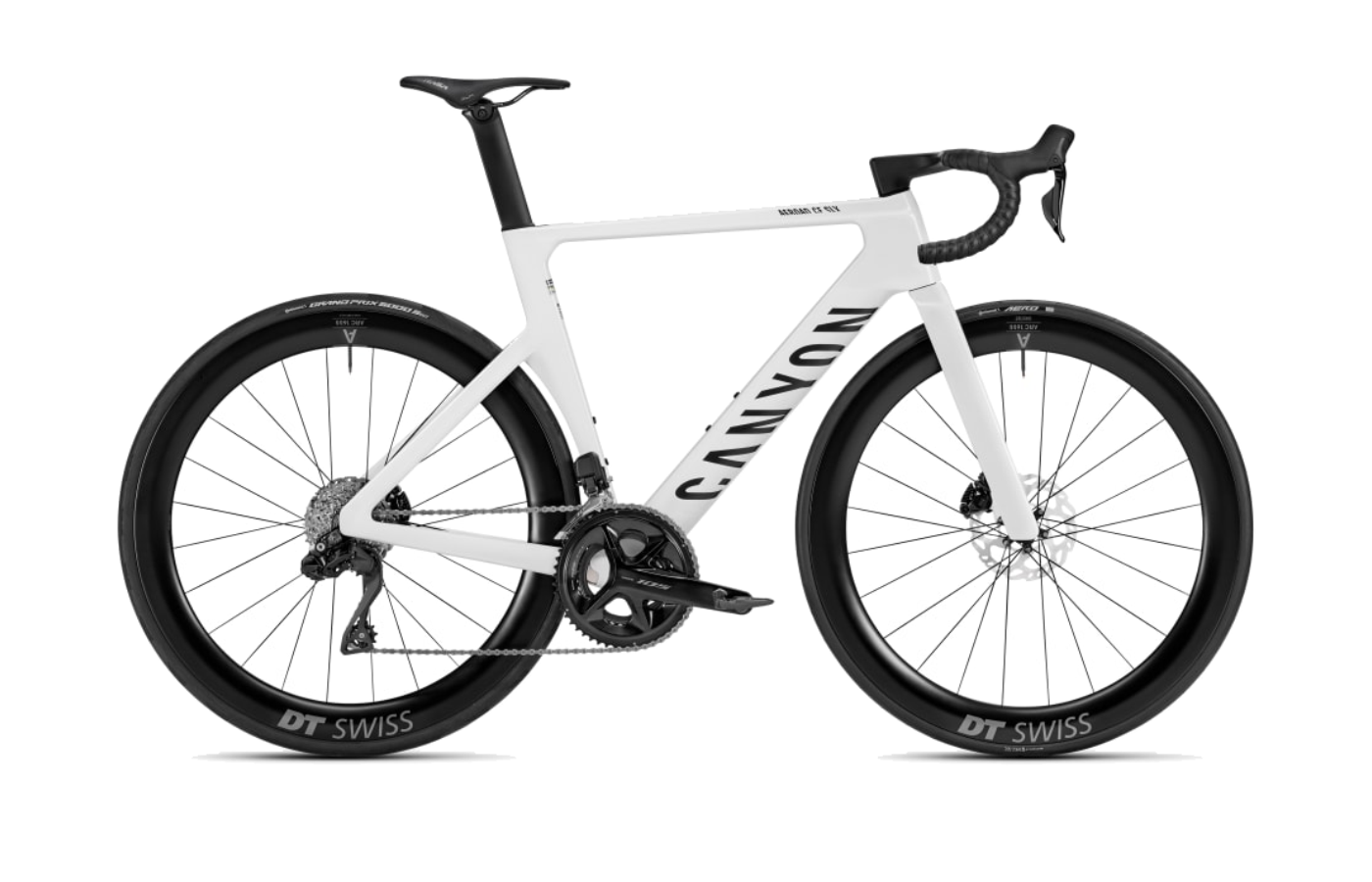
Aeroad
If most of your riding is flat or rolling, Canyon's dedicated aero flagship is the sharper tool — same direct-to-consumer pricing as the Ultimate but with measurable wind-tunnel gains.
Compare →