CAAD13
vsEmonda ALR
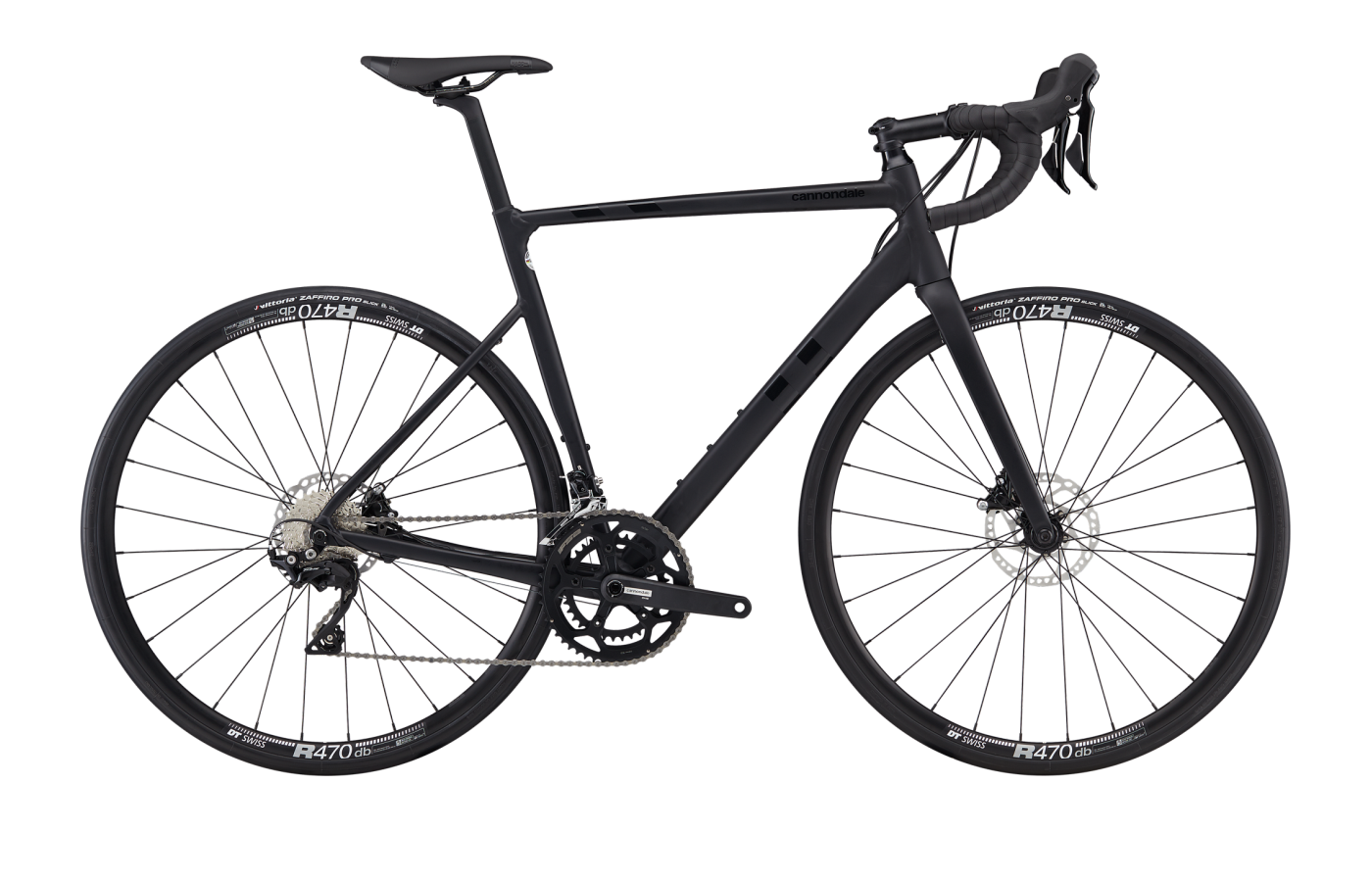
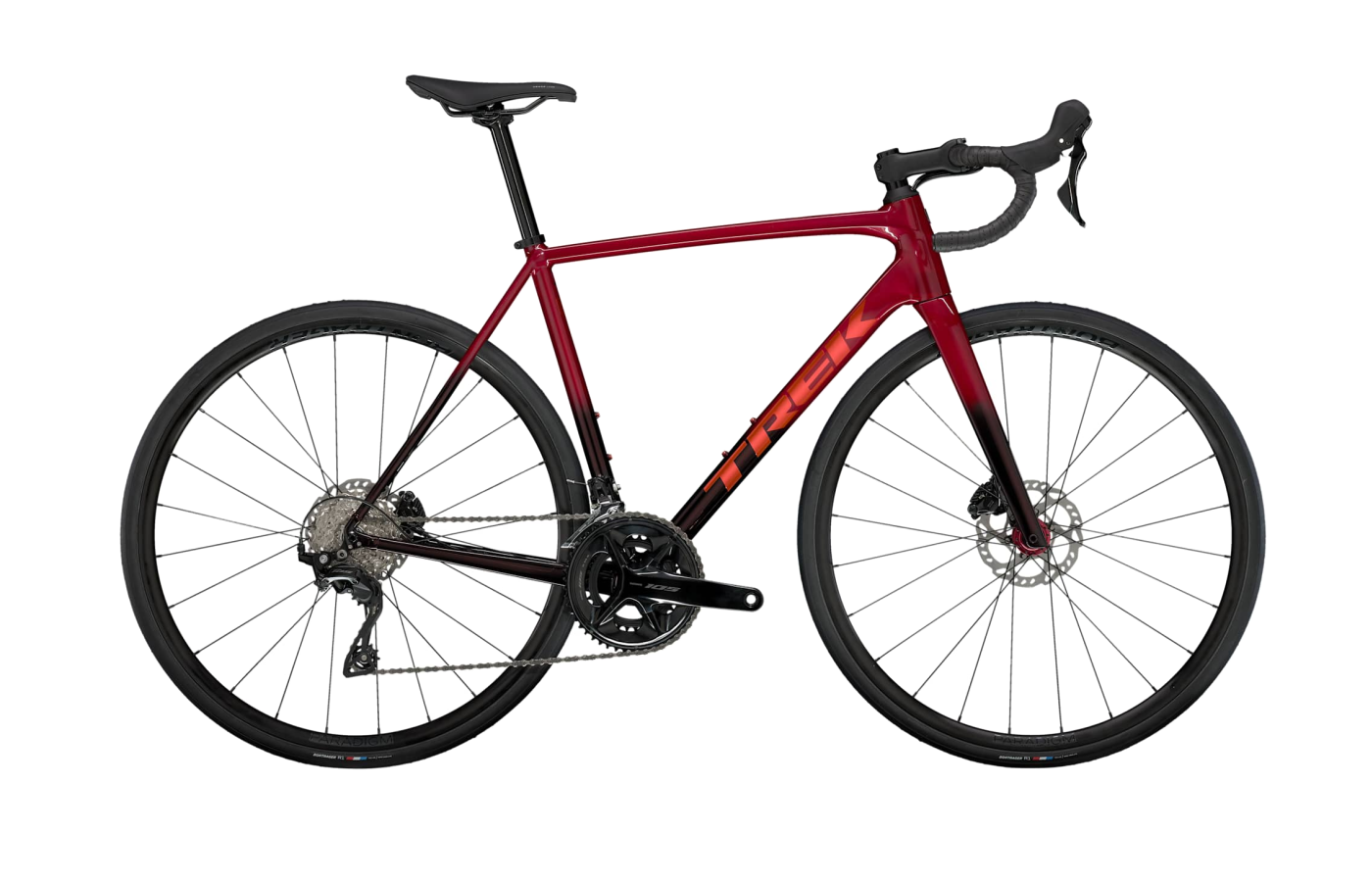
Two alloy superbikes, two design briefs.
The CAAD13 is the all-weather privateer's race bike with mudguard mounts and 30 mm tires. The Emonda ALR is a fair-weather climber with the SLR's geometry.
CAAD13
- All-weather ready with hidden mudguard mounts and 30 mm official tire clearance — a credible winter race bike.
- Smoother long-ride feel from dropped seatstays, the D-shaped HollowGram seatpost, and Cannondale's SAVE micro-suspension.
- Cheaper way in — $2,300 for the Disc 105 build vs. $2,499 for the equivalent Emonda.
- BB30a press-fit bottom bracket — reviewers consistently flag the long-term creak risk.
- Proprietary D-shaped seatpost limits aftermarket upgrades.
Emonda ALR
- SLR geometry, ALR price — same H1.5 fit as Trek's $5k+ carbon Emonda, in alloy.
- Threaded T47 bottom bracket — quiet, serviceable, no press-fit creak.
- Standard finishing kit — 27.2 mm round seatpost, 1-1/8" steerer, 31.8 mm bar clamp; nothing proprietary to upgrade around.
- 28 mm official tire clearance and no mudguard mounts — fair weather only.
- Headset cable routing means a single cable swap can run $200 in shop labor.
Editor’s analysis
Both frames push aluminum to its limit — the question is what kind of alloy bike you want, the all-day workhorse or the carbon-mimic climber.
On paper these are the same fight: a hydroformed alloy frame, a carbon fork, a 105 groupset, $200 between them. Pick one up off the shop floor and the differences register immediately. The Cannondale CAAD13 is the longer, taller, more relaxed bike — built for the privateer who races Saturday and rides four hours through broken pavement on Sunday. The Trek Emonda ALR is the shorter, lower, more aggressive bike — built around the H1.5 geometry that Trek's WorldTour climbers ride.
At size 54, the Cannondale CAAD13 sits 14 mm taller in stack (555 vs 541 mm) with 2 mm less reach — that's a meaningfully more upright fit before any spacers come off. The Trek Emonda ALR runs a steeper 73° head tube against the Cannondale's 71.2°, with a 27 mm shorter wheelbase. Translation: the Trek wants to be flicked into corners; the Cannondale wants to be pointed and held. Reviewers say exactly that — the CAAD13 is a 'master of point-and-shoot dynamics,' the Emonda 'planted but eager.'
Practicality is where the gap widens. The Cannondale CAAD13 clears 30 mm tires officially and includes hidden mudguard mounts — it's a credible winter trainer. The Trek Emonda ALR caps out at 28 mm with no fender mounts at all. If you live somewhere it rains, that's not a small thing. The CAAD13 also gets the SAVE-tuned dropped seatstays and a D-shaped HollowGram seatpost that reviewers credit with the bike's near-carbon comfort. The Emonda answers with a standard 27.2 mm round post — easier to upgrade, less compliant out of the box.
Maintenance is the one area where Trek clearly wins. The Emonda ALR uses a T47 threaded bottom bracket; the CAAD13 still runs Cannondale's BB30a press-fit, with a long-documented history of creak. But Trek hides the cable routing through the upper headset bearing — Bicycling cited a $200 shop bill for a single cable replacement on this kind of setup, vs. roughly $25 on the CAAD13's semi-internal routing. Pick your headache.
Where the builds differ.
Comparing our editor's-pick builds side-by-side. Winners highlighted row-by-row — lower price and weight, and the better-spec component, each mark a point.
Build variants & pricing
The Cannondale CAAD13 spans $2,300 to $3,700 across two builds; the Trek Emonda ALR ships in a single $2,499 spec.
The editor's-pick comparison here is the Cannondale CAAD13 Disc 105 ($2,300, 11-speed mechanical) against the Trek Emonda ALR 5 ($2,499, 12-speed mechanical) — both 105, both mechanical, ~$200 apart. Cannondale's higher 105 Di2 build ($3,700) jumps to electronic shifting and 12-speed; Trek doesn't sell an Emonda ALR at that tier.
How they fit, how they steer.
Both at size 54 — the fit-picked size for a 5'8" rider on each bike. The Trek Emonda ALR sits 14 mm lower in stack with 2 mm more reach, a steeper 73° head tube vs. 71.2°, and a 27 mm shorter wheelbase. The Cannondale CAAD13 is the taller, longer, more stable bike.
Which size should I buy?
Size recommendations based on stack, reach, and effective top tube. The Cannondale extends one size smaller (44) at the small end; otherwise the ranges overlap closely.
→These are starting points. Flexibility, riding style, and preferred position all shift the answer — if you’re between sizes, a professional fit beats a chart.
What the magazines said.
Published reviews from trusted cycling outlets. Click through for the full write-up.
Which one should you buy?
If you ride year-round and want one alloy bike that does everything, get the Cannondale CAAD13. If you want carbon-Emonda fit and feel for a third the price, get the Trek Emonda ALR.
CAAD13
If you race on Saturday, ride four hours through broken pavement on Sunday, and need a fender for the months it rains — this is the only bike in the conversation that actually fits that brief. The taller stack, 30 mm tire clearance, and smoother frame buy you all-day comfort without giving up the racy DNA.
Emonda ALR
If you want the same H1.5 race geometry the WorldTour Emonda riders use, in an alloy frame that's only 34 g heavier than the carbon SL frameset, this is the cheapest door in. Lower, longer, sharper than the Cannondale — and the T47 bottom bracket means it stays quiet for years.
Questions buyers actually ask.
Short answers to the things we get emailed about most often.
01Which is the better all-rounder?
The Cannondale CAAD13, by a clear margin. It clears 30 mm tires officially, has hidden mudguard mounts, and reviewers consistently praise the smoother frame for long rides over rough pavement. The Trek Emonda ALR caps at 28 mm with no fender provisions — it's a fair-weather race bike, not a year-round trainer.
If you only own one road bike and live somewhere with weather, the CAAD13 is the safer pick.
02Which has the more aggressive race fit?
The Trek Emonda ALR, by a meaningful amount. At size 54, the Trek's stack is 541 mm against the Cannondale's 555 mm — the bars sit 14 mm lower before any spacer changes. Trek borrows the H1.5 geometry directly from the carbon Emonda SLR, so you get the same race position the pros ride.
The CAAD13 is no slouch — its geometry is descended from the SuperSix EVO — but Cannondale has tuned it slightly taller to broaden its appeal beyond pure racers.
03What's the maximum tire clearance?
Cannondale CAAD13: 30 mm officially. Some reviewers report fitting 32 mm, but Cannondale doesn't endorse it.
Trek Emonda ALR: 28 mm officially. Bicycling and Cycling Magazine both note that 30 mm tires likely fit, but Trek caps it at 28 — which several reviewers called conservative for a 2023 release.
Neither is a gravel bike, but the CAAD13 is the more credible choice for chip-seal, light dirt, or wider rubber.
04Which is more reliable long term?
Trade-offs on each side. The Emonda ALR's T47 threaded bottom bracket is the cleanest win — it's quiet, serviceable, and effectively eliminates the press-fit creak issue. The CAAD13 still uses Cannondale's BB30a press-fit, which has a long history of developing creaks within months of ownership.
But the Emonda routes its cables through the upper headset bearing — a Bicycling reviewer cited roughly $200 in shop labor to replace a single shift cable on this kind of setup, vs. roughly $25 for the CAAD13's semi-internal routing. Trek wins on the bottom bracket; Cannondale wins on the cockpit.
05Are these really comparable to carbon bikes?
Both come closer than you'd expect. Trek claims the Emonda ALR frameset is only 34 g heavier than its carbon Emonda SL frameset. Cannondale's marketing pitches the CAAD13 as offering '90% of the performance of carbon at a fraction of the cost.'
Real-world reviewers largely agree. Multiple testers reported being asked 'is this carbon?' on first ride. Where they fall short isn't the frame — it's the wheels and tires, which both brands cost-engineer at this price point. Budget for a wheel upgrade and either bike rides like something costing twice as much.
06What's the weight difference?
Both come in around the same weight at the editor's-pick build level. The Trek Emonda ALR 5 has a claimed 9.17 kg (20.22 lb) for a size 56. Reviewers measured the CAAD13 Disc 105 in the 8.6–9.3 kg range across sizes.
Neither will challenge a flagship carbon bike on the scale, but the Emonda ALR's frame-only weight (1,257 g for size 56) is genuinely impressive — most of the build's heft sits in the wheels and tires.
07Can I upgrade the wheels easily?
Yes, on both. Both bikes use standard 12x100 mm front and 12x142 mm rear thru-axles, with center-lock disc brake mounting. Any modern road carbon wheelset will bolt straight on.
Reviewers universally recommend a wheel upgrade as the highest-value modification — the stock alloy wheels (Bontrager Paradigm SL on the Trek, DT Swiss R470 DB on the Cannondale) are described as the main thing holding both bikes back.
08Which has the better resale value?
Both alloy bikes depreciate faster than premium carbon — there's a smaller used market for $2k–$3k metal frames. But the Trek Emonda ALR likely holds slightly better, mostly because Trek's dealer network and brand recognition keep demand higher in North America.
Neither is a vehicle for capital preservation. Buy the one you want to ride; resale is a secondary concern at this tier.
Similar bikes
If your priorities don’t map cleanly onto either of these, one of these adjacent bikes probably fits better.

Allez Sprint
The third option in this fight — Specialized's Allez Sprint is the stiffer, more crit-focused alloy bike. Sharper steering than either, built specifically for elbow-out racing rather than long Sundays in the saddle.
Compare →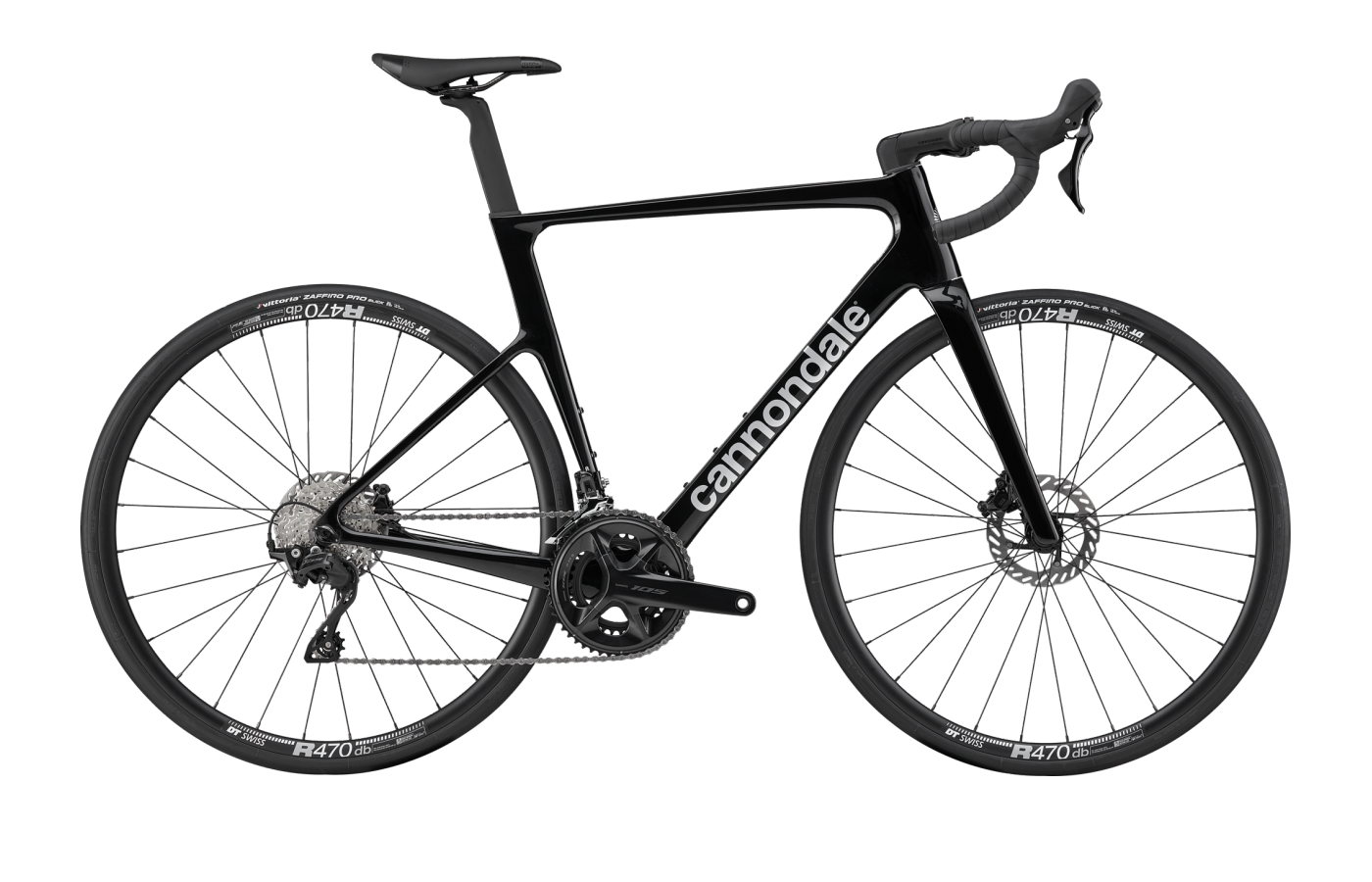
SuperSix EVO
If the CAAD13's geometry and ride feel are what you want but the alloy weight isn't, the SuperSix EVO is the carbon answer — same DNA, roughly a kilogram lighter, twice the price.
Compare →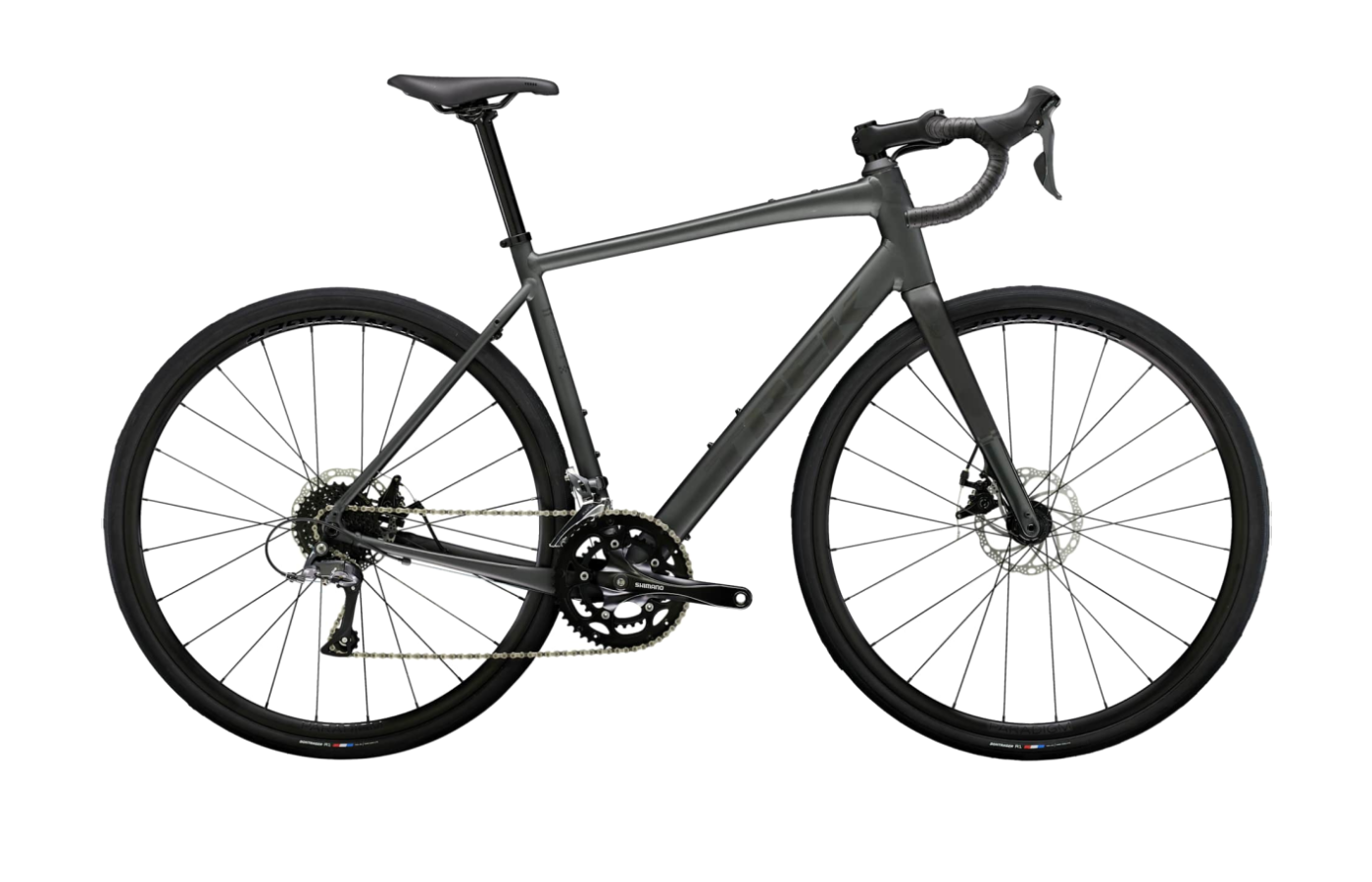
Domane
If the Emonda ALR's 28 mm clearance and aggressive H1.5 fit feel too restrictive, Trek's Domane is the endurance alternative — IsoSpeed compliance, mounting points everywhere, and tire clearance well beyond either bike here.
Compare →