URS
vsDiverge
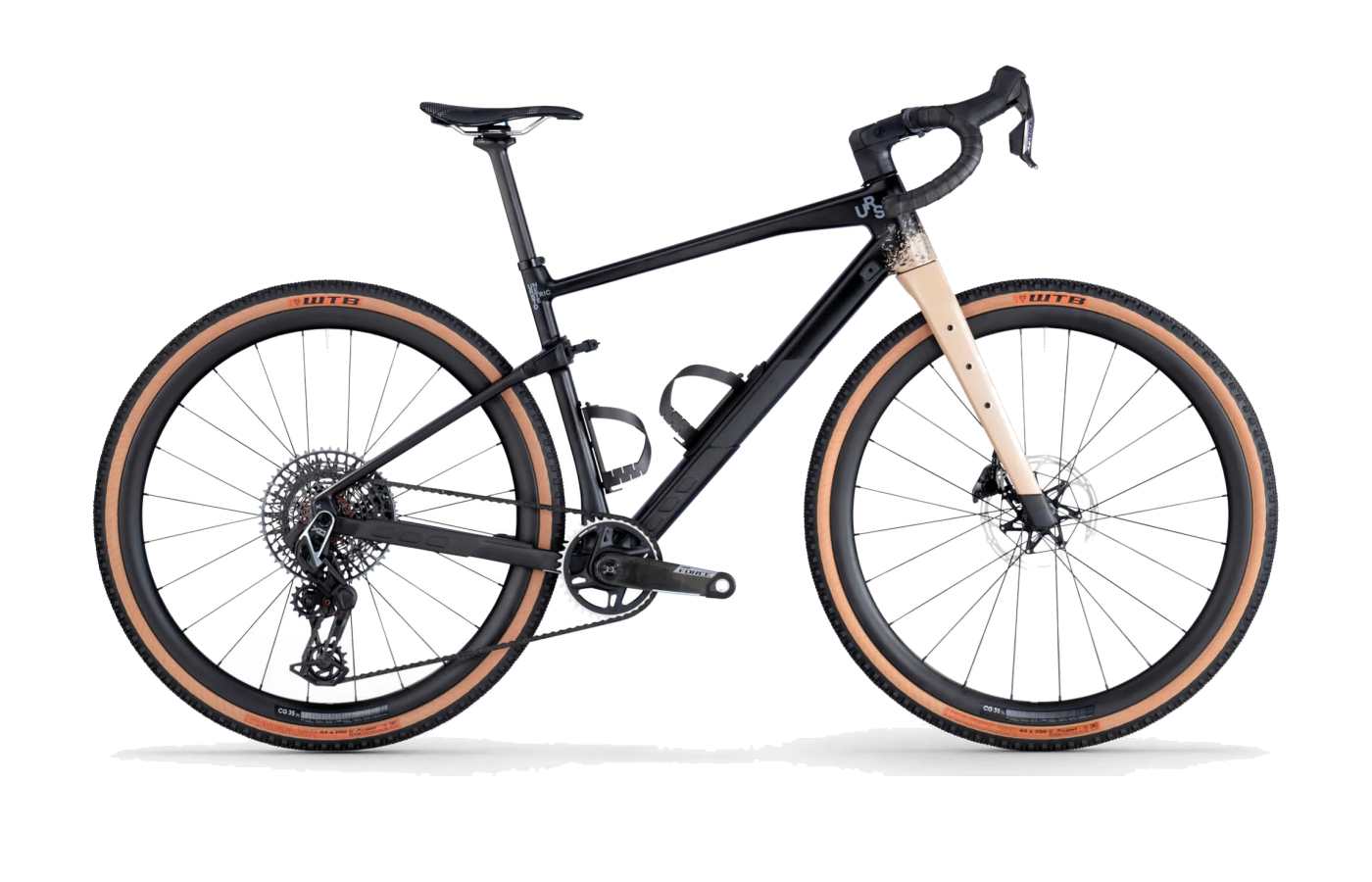
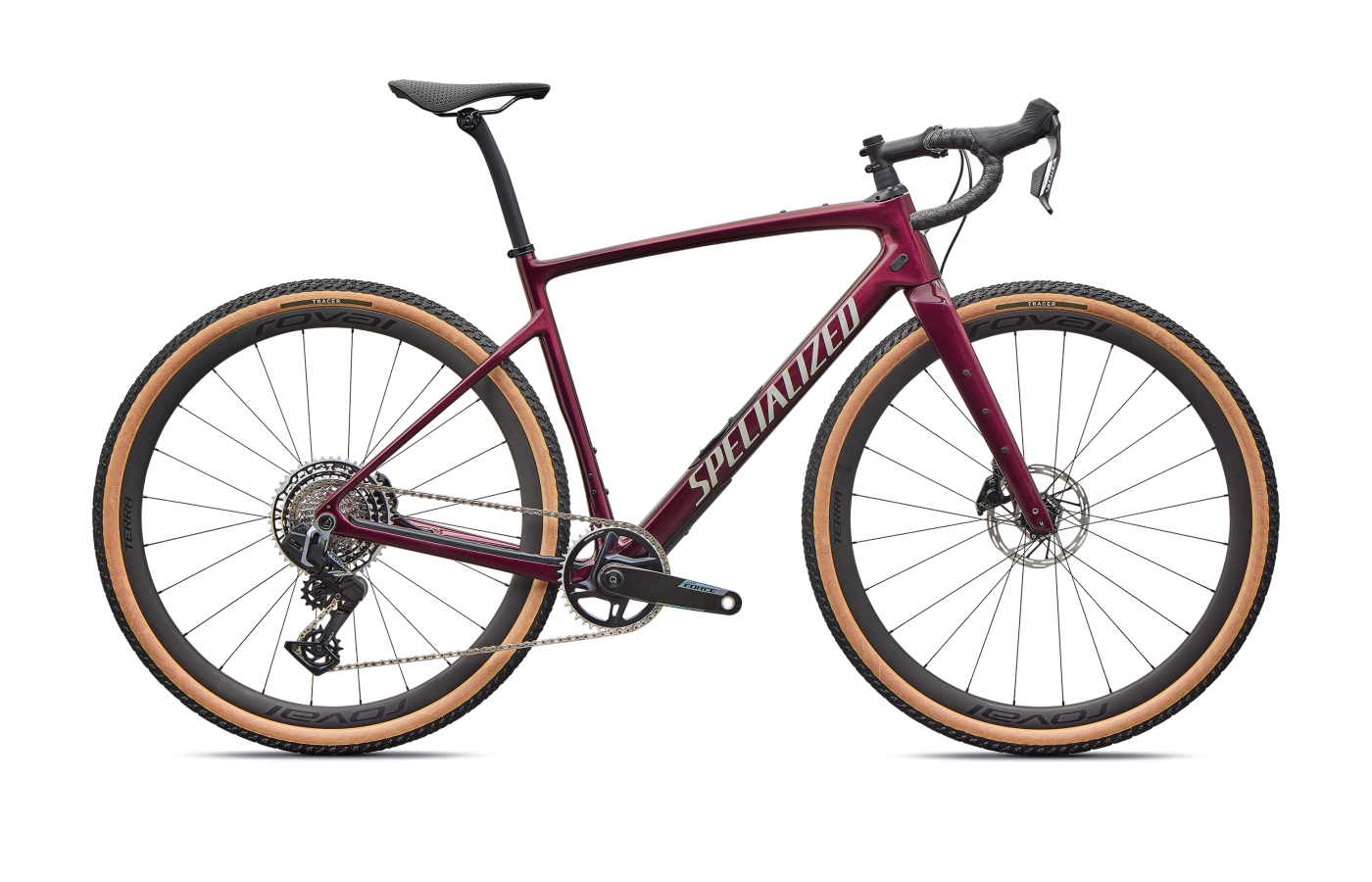
Two takes on the drop-bar XC bike.
The BMC URS is a singletrack specialist that pivots and bobs in service of grip. The Diverge is a freight train built for vast, mixed-surface days.
URS
- Higher BB clearance — 9 mm more than the Diverge at the compared sizes, which the URS spends on actually pedaling through rocks instead of dodging them.
- MTT rear suspension — 10 mm of seatstay elastomer adds traction on loose climbs with near-zero pedaling penalty.
- More aggressive XC geometry — 69-degree head angle and longer trail give it composure on actual singletrack.
- Tire clearance caps at 47 mm — narrower than the Diverge's 50 mm.
- The Redshift MTT suspension stem is divisive; some riders find its pivoting feel disconnected when sprinting or hopping the front wheel.
Diverge
- Bigger tire clearance (50 mm officially, or a 2.2-inch MTB tire) — the highest in the segment.
- Future Shock 3.0 — 20 mm of vertical compliance at the bars that meaningfully cuts upper-body fatigue on long days.
- SWAT 4.0 internal storage — a downtube hatch big enough for a tube, tools, and a snack, even on the alloy frames.
- Low 85 mm BB drop plus the stock 45 mm Tracer tires causes pedal strikes — multiple reviewers broke power pedals.
- Pricey for the spec — the $6,499 Expert ships with the non-adjustable Future Shock 3.2 and no power meter.
Editor’s analysis
Both bikes are aggressively not road bikes. The split is over what they want to do once the pavement ends — thread technical singletrack, or plow rough doubletrack for hours.
On paper, the BMC URS and Specialized Diverge sit in the same modern-gravel bracket — slack head angles, wide tire clearance, integrated suspension, drop-bar XC pretensions. Both have moved sharply away from the road-bike-with-knobbies template that defined gravel a decade ago. But spend any real time with the geometry charts and the spec sheets and the philosophies diverge fast.
The Specialized Diverge is the patient, planted one. Its 71-degree head angle and 85 mm bottom bracket drop sit it deep inside the bike, with the Future Shock 3.0 system soaking up high-frequency chatter at the bars and the Roval Terra seatpost flexing 18 mm at the back. Tire clearance runs to 50 mm officially — or a 2.2-inch MTB tire if you're willing to give up some mud room. Reviewers consistently call it a freight train: stable, composed, hard to upset, and built for long days where comfort compounds.
The BMC URS is the precision tool. The head angle is two degrees slacker at 69, the trail is 19 mm longer (84 vs 65 at the compared sizes), and the bottom bracket sits 9 mm higher — three numbers that together let it carry serious speed through technical singletrack without the pedal-strike penalty the Diverge keeps getting flagged for. Its MicroTravel Technology adds 10 mm of rear elastomer travel and either a 20 mm Redshift suspension stem (URS 01) or a Hi-Ride telescopic fork (URS 01 LT). The stem polarizes — it pivots in an arc, which calms washboard but feels weird when you yank the front wheel. Tire clearance maxes at 47 mm.
Put another way: the Diverge is the bike you buy when your weekends are 80-mile gravel days with the occasional rocky descent. The BMC URS is the bike you buy when your weekends are mountain bike trails you happen to be riding on drop bars. Both are excellent. They're solving different problems.
Where the builds differ.
Comparing our editor's-pick builds side-by-side. Winners highlighted row-by-row — lower price and weight, and the better-spec component, each mark a point.
Build variants & pricing
The Diverge spans more ground — $2,099 alloy up to a $10,499 RED AXS halo. The URS starts at $2,799 and tops out at $5,999.
The Diverge has no direct counterpart to the URS 01 LT's telescopic suspension fork — Specialized handles front-end compliance with the Future Shock under the stem instead. If you want a real telescoping gravel fork, the URS 01 LT is the only build of either platform that offers one.
How they fit, how they steer.
Sizing labels diverge — BMC's XS and Specialized's 54 land closest to the same fit for a 5'8" rider. The URS sits 32 mm lower in stack with 3 mm more reach, runs a 2-degree slacker head angle, and stretches 11 mm more wheelbase — it's the more mountain-bike-shaped front end.
Which size should I buy?
Size pick is based on stack, reach, and effective top tube. Both ranges cover small to XL, but the URS uses S/M/L labels while the Diverge uses numeric sizes.
→These are starting points. Flexibility, riding style, and preferred position all shift the answer — if you’re between sizes, a professional fit beats a chart.
What the magazines said.
Published reviews from trusted cycling outlets. Click through for the full write-up.
Which one should you buy?
If your gravel routes are secret mountain bike trails, get the URS. If they're long, mixed-surface days where comfort compounds, get the Diverge.
URS
If you ride drop-bar trails that other people ride on hardtails, the URS earns its keep. The slacker geometry, higher BB, and integrated MTT suspension turn rocky singletrack from a survival exercise into a deliberate one — and the rear elastomer is the rare suspension feature you can't feel costing you watts.
Diverge
If your routes are 80-mile mixed-surface days with bikepacking ambitions, the Diverge is the more livable platform. SWAT storage, 50 mm tire clearance, the Future Shock cutting fatigue at the bars, and a build range that starts under $2,100 make it the easier bike to live with — and the easier bike to grow into.
Questions buyers actually ask.
Short answers to the things we get emailed about most often.
01Which is better for actual singletrack?
The BMC URS, by a fair margin. Its 69-degree head tube angle is two degrees slacker than the Diverge, its trail is 19 mm longer at the compared sizes, and its bottom bracket sits 9 mm higher off the ground — that last number matters because reviewers consistently flagged the Diverge's 85 mm BB drop as a pedal-strike machine on technical terrain.
The URS 01 LT, with its 20 mm Hi-Ride telescopic fork, is the more capable of the URS variants on singletrack — the standard URS 01's pivoting Redshift suspension stem is great for vibration but several reviewers (BikeRadar, Velo) found it disconnected for aggressive front-wheel input.
02Which has more tire clearance?
The Diverge, by 3 mm — 50 mm officially vs the URS's 47 mm. The Diverge frame also clears a 2.2-inch mountain bike tire with the ISO-standard 4 mm of margin, which is a genuinely unusual claim for a drop-bar bike.
In practice, both bikes ship with 44–45 mm tires. The Diverge's headline 50 mm clearance is the part of the platform Specialized seems most proud of — and pretty much every reviewer recommended swapping the stock 45 mm Tracers for something bigger to take advantage of it.
03How does the Future Shock compare to BMC's MTT system?
They solve the same problem in opposite directions. The Future Shock 3.0 sits between the steerer tube and the stem, giving 20 mm of vertical bar movement — Specialized's "suspend the rider, not the bike" philosophy. Higher trims (3.3) add on-the-fly lockout adjustment.
The BMC MTT system has two pieces: 10 mm of rear elastomer travel via the seatstays (on every URS except the base model), plus either a 20 mm Redshift suspension stem (URS 01) or a 20 mm Hi-Ride telescopic fork (URS 01 LT). The stem pivots in an arc rather than sliding linearly, which divides reviewers — comfortable on washboard, weird when sprinting.
Neither system is strictly better. The Diverge's is more polished and serviceable; the URS's is more configurable.
04Which is a better bikepacking platform?
The Diverge, narrowly. SWAT 4.0 internal downtube storage is on every Diverge build — including the alloy frames, which is unusual in the segment — and the frame has top-tube, downtube, and fork-leg cargo mounts.
The URS counters with downtube storage on the carbon URS and URS 01 (not on the AMP e-bike), molded frame protection, and internal dynamo cable routing on the 01 models. It's a real bikepacking bike — just not as feature-dense as the Diverge for the same money.
05Do I want the suspension stem or the suspension fork on the URS?
Depends on what you ride. The Redshift MTT suspension stem (URS 01, $5,999) is excellent at vibration damping on washboards and rough doubletrack. Its weakness is dynamic input — when you stand to sprint or hop the front wheel, the pivoting motion can feel disconnected.
The Hi-Ride MTT suspension fork (URS 01 LT, $4,699) moves linearly like a conventional MTB fork, can be locked out from the stem for tarmac, and reviewers consistently preferred it for technical singletrack. The tradeoff: it's only on the LT build, which uses the GRX Di2 group instead of Force AXS.
If you ride genuinely technical terrain, the LT is the smarter pick of the two. If most of your riding is rough but not technical, the 01's stem is the more refined cockpit.
06How serious is the Diverge pedal-strike issue?
Serious enough that multiple reviewers broke power pedals on it (Cycling Weekly's Logan Jones-Wilkins specifically). The combination of an 85 mm BB drop, the stock 45 mm Tracer tires, and 172.5 mm cranks on size 54/56 frames means you're clipping pedals on terrain that wouldn't trouble most gravel bikes.
The fix Specialized seems to expect is wider tires — at 50 mm, the bike rolls noticeably taller. Most reviewers recommended an immediate swap. If you mainly ride open gravel and dirt roads, you'll never notice. If you ride rocky singletrack regularly, plan on the tire upgrade.
07Are these mechanical-shifting compatible?
The Diverge: yes — the entry-level GRX and CUES builds run mechanical shifters, and the frame supports cable routing for them.
The URS: the Two ($2,799) is the only mechanical option, running Shimano GRX 1x. Every other URS build is wireless electronic (SRAM Apex AXS, Rival AXS, Force AXS, or Shimano GRX Di2).
08Which has the better warranty and dealer network?
Both come with a lifetime frame warranty to the original owner against manufacturing defects, and both offer crash-replacement pricing.
The practical difference is dealer density: Specialized has one of the densest dealer networks in cycling globally, which makes service, demos, and warranty work easier in most US/EU markets. BMC's network is smaller and more concentrated in Europe — workable, but you'll do more of your shopping online. Both ship through DTC + dealer hybrid models in the US.
Similar bikes
If your priorities don’t map cleanly onto either of these, one of these adjacent bikes probably fits better.
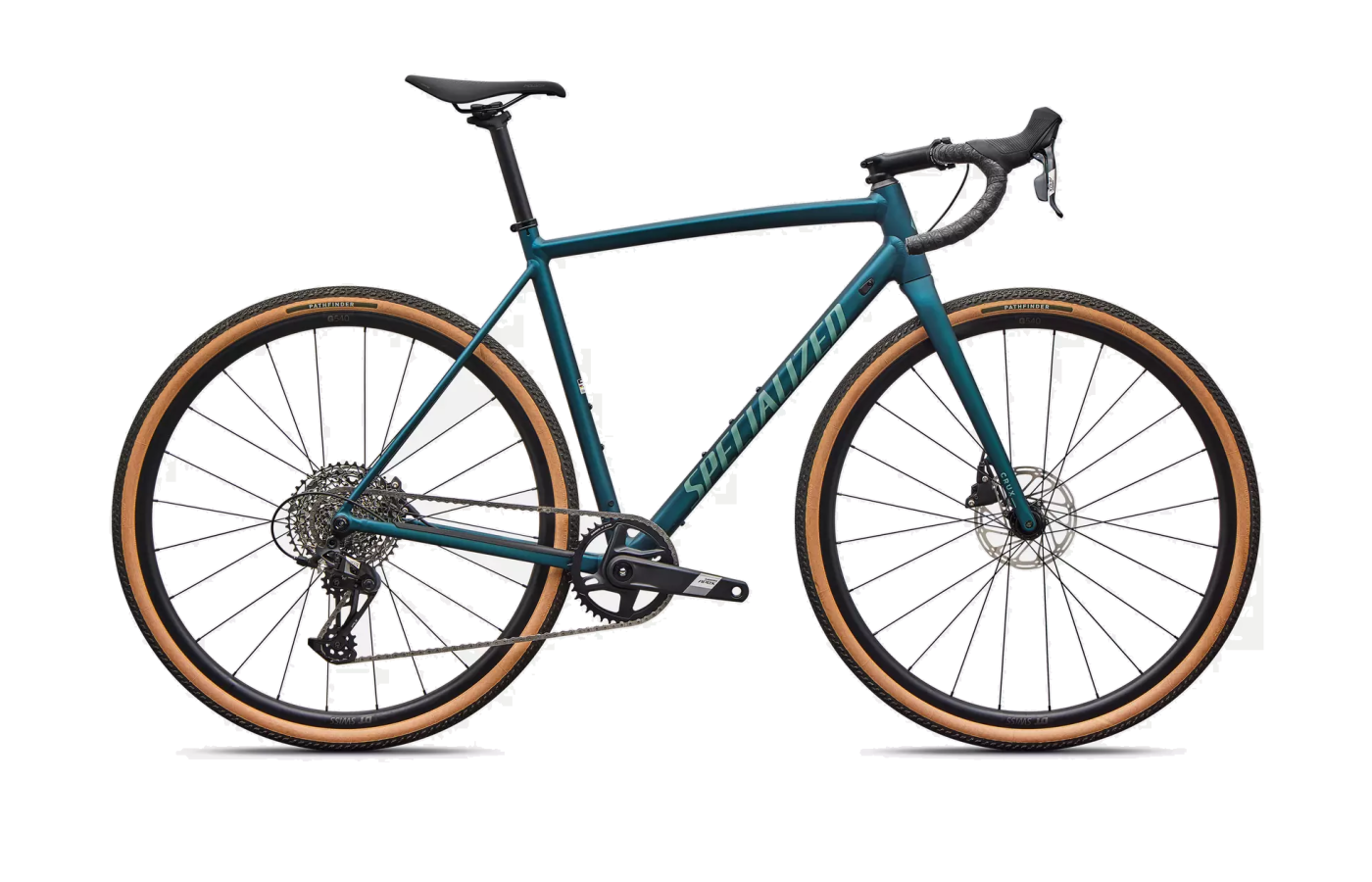
Crux
Specialized's lighter, simpler gravel bike — no Future Shock, no SWAT door, just a sub-8 kg carbon race frame. If you find the Diverge too heavy or too gadgety, the Crux is the Specialized you actually wanted.
Compare →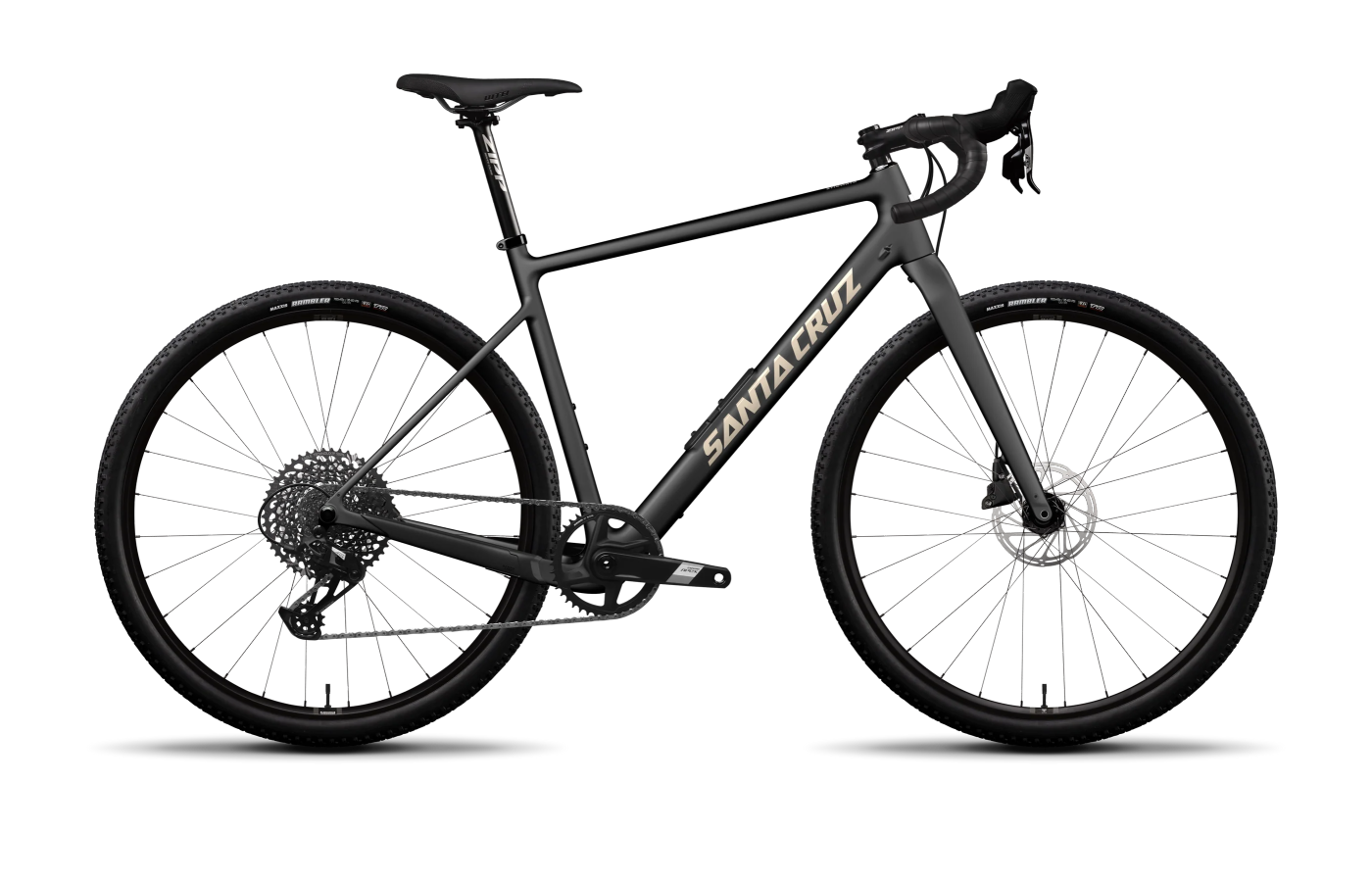
Stigmata
Santa Cruz's progressive-geometry gravel bike — similar slack-and-low philosophy to the URS but without the proprietary elastomer suspension. A cleaner choice if you want MTB-inspired numbers and conventional service.
Compare →Grizl
Canyon's adventure gravel bike at direct-to-consumer pricing — handles rough terrain through tire volume rather than integrated suspension, and undercuts both bikes here by a wide margin. The catch is no local dealer.
Compare →