Fourstroke
vsBlur
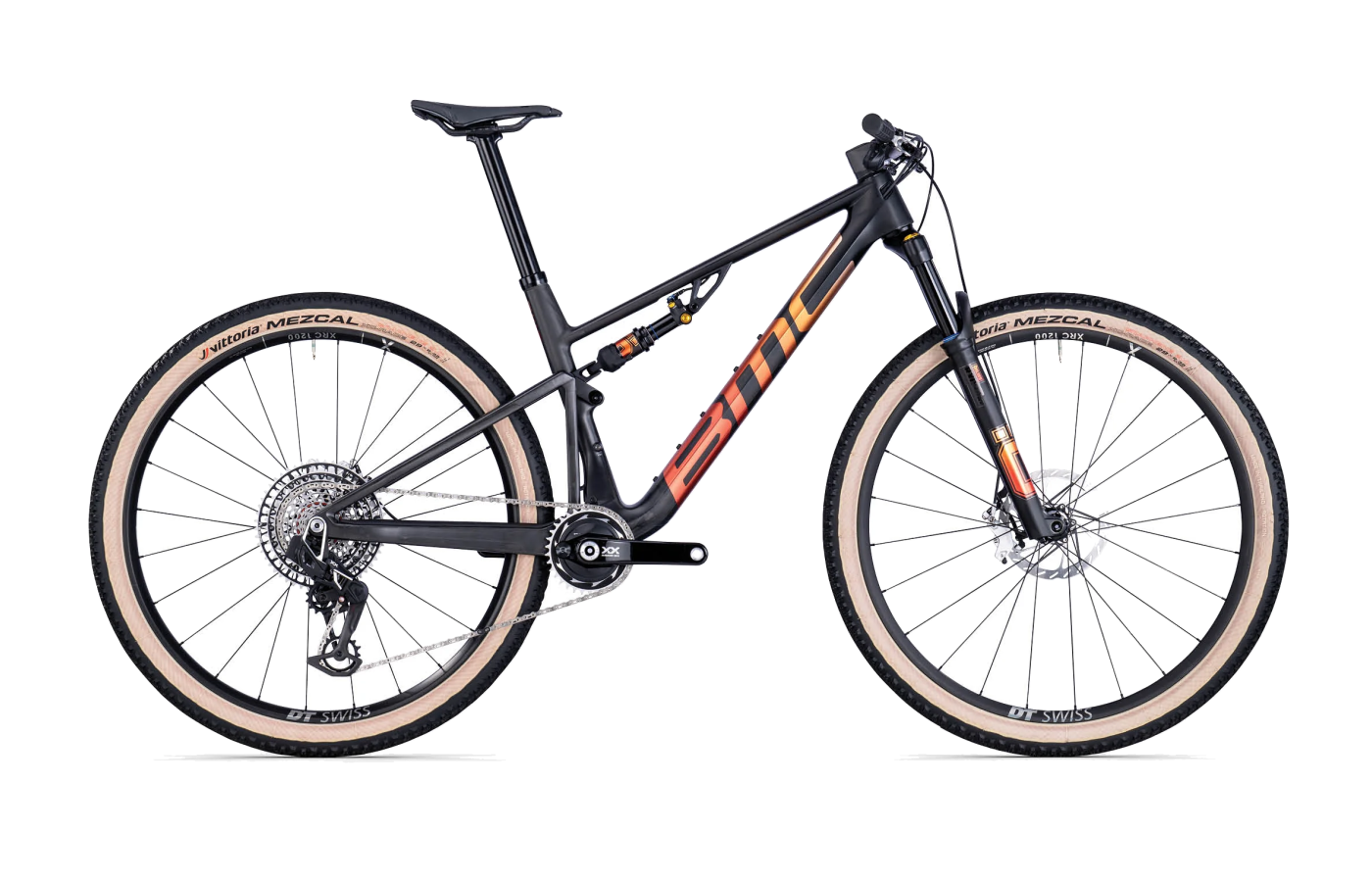
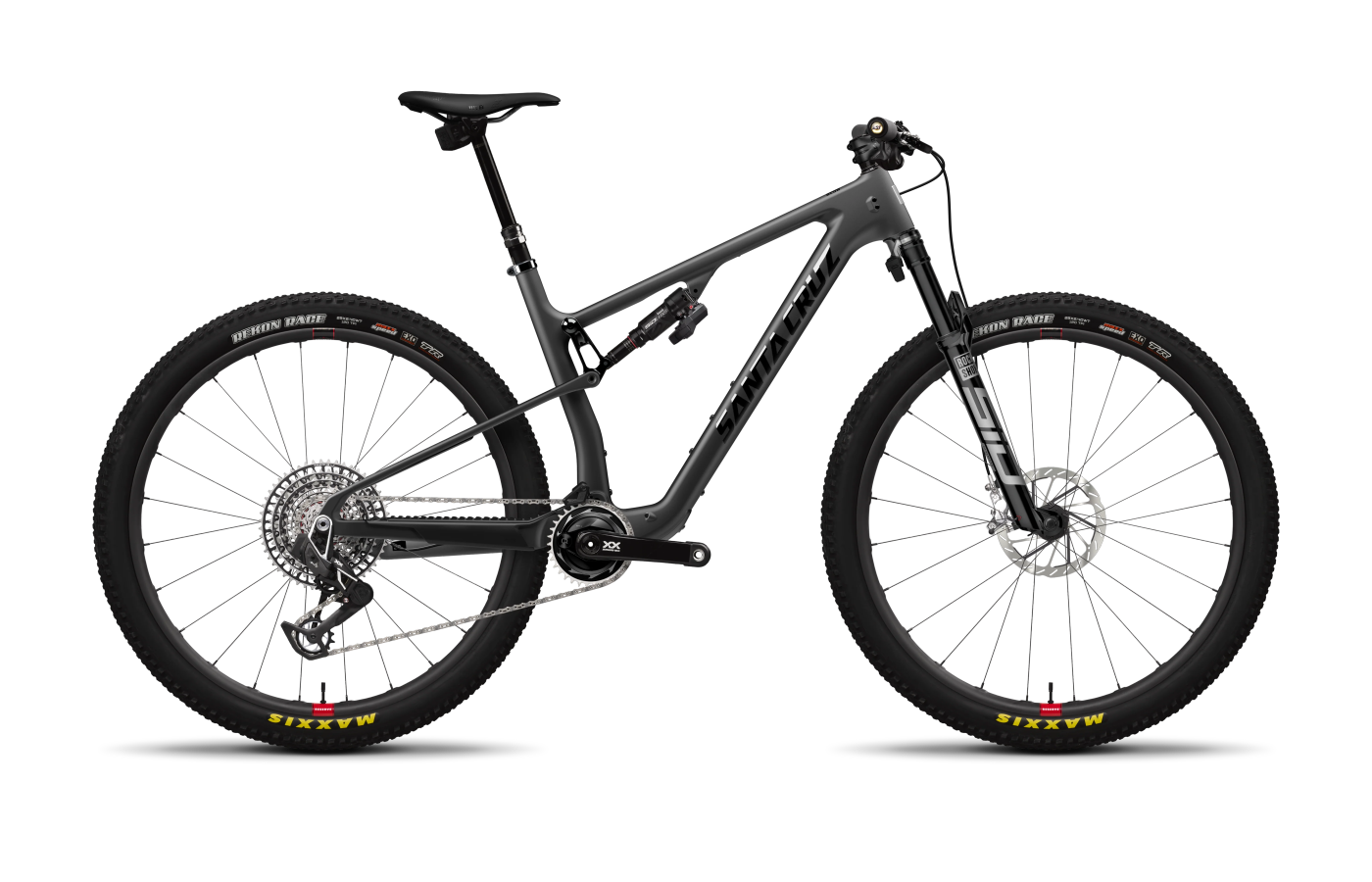
Two XC race bikes, two engineering bets.
The BMC Fourstroke leans into complexity — Autodrop seatpost, dual-link APS, longer travel option. The Santa Cruz Blur strips it back to flex stays and traction.
Fourstroke
- Aggressive geometry — 66.5-degree HTA and a 477 mm L reach put it in trail-bike territory among 100mm XC bikes.
- Autodrop seatpost on the 01 line drops without rider weight, saving energy on race-day transitions.
- 120mm option in the same range — the LT covers downcountry duty without buying a second bike.
- 53 mm BB drop produces frequent pedal strikes on rocky climbs.
- Lineup is bimodal — a $4.7k SLX build or a $13.5k XX SL build, with nothing in between.
Blur
- Class-leading frame weight — 1,933 g for a size L, with reviewers calling it the lightest full-suspension Santa Cruz has ever built.
- Traction-first suspension — low anti-squat lets the rear wheel track loose, rooty, technical climbs others spin out on.
- Eight builds spanning $4.6k to $13.4k — including a C-frame at $4,649 with the same geometry and lifetime warranty.
- Active rear end can bob noticeably on smooth fire roads without the lockout.
- Spec choices on mid-tier builds (GX shifter on X0 builds, polarizing Fox Transfer SL) draw repeated criticism for the price.
Editor’s analysis
Both have World Cup pedigree. The split is how they get fast — Swiss precision and a long, low chassis, or Californian simplicity and a suspension that grabs the dirt.
On paper these sit in the same XC race bracket: 100–120mm of travel, sub-12 kg flagships, full SRAM AXS Transmission, deep carbon wheels, dropper posts. Both have current-cycle World Cup wins behind them — Pidcock and Ferrand-Prevot on the Fourstroke, the Blur under the Santa Cruz XC team. Spend any time on the geometry and the philosophies diverge fast.
The Fourstroke is the longer, slacker, more progressive bike. A 66.5-degree head tube angle (vs 67.1 on the Blur), a 76-degree-plus seat tube angle, and a 477 mm reach in size L against the Blur's 458 mm — almost 20 mm of extra reach. Add the proprietary Autodrop seatpost on the 01 line, which drops without requiring rider weight, plus a dual-link APS suspension that reviewers describe as 'wickedly efficient.' This is BMC's bet that aggressive XCO courses reward a bike with trail-bike geometry numbers under a 100mm chassis.
The Santa Cruz Blur went the other direction. It dropped the iconic VPP linkage for a single-pivot flex-stay design, shaving 289 g off the frame and landing at 1,933 g for a size L. Santa Cruz also lowered anti-squat values intentionally — the suspension stays active under load, which reviewers describe as the bike 'sucking itself to the ground' on technical climbs. The trade-off shows up on smooth fire roads, where the rear end can feel labored without the remote lockout engaged.
Put another way: the BMC Fourstroke is the bike for the racer who treats every XCO course like an enduro stage with intervals — long reach, short stays, low BB, point-and-shoot. The Santa Cruz Blur is for the marathon and stage racer who wants traction over jank, comfort over four hours, and the simplest rear end Santa Cruz has ever built.
Where the builds differ.
Comparing our editor's-pick builds side-by-side. Winners highlighted row-by-row — lower price and weight, and the better-spec component, each mark a point.
Build variants & pricing
Eight Blur builds across $4.6k–$13.4k. The Fourstroke is bimodal — only a $4.7k SLX entry and a $13.5k XX SL flagship.
Editor's-pick parity here is at the flagship tier — BMC doesn't sell a one-down X0 or XT build on the Fourstroke, so the only spec-comparable matchup is XX SL on both sides. If your budget is closer to $7k, the Blur's GX AXS Trail at $6,949 is the natural Santa Cruz pick; on the BMC side you'd be jumping down to the SLX-equipped 01 THREE at $4,699 and accepting a tier mismatch.
How they fit, how they steer.
Both at size M. The Fourstroke runs 19 mm more reach (457 vs 438) on a 0.6-degree slacker head angle, with a slightly lower stack — a longer, lower, more aggressive cockpit. The Blur's chainstays are 2 mm longer at 433 mm.
Which size should I buy?
Size recommendations from stack, reach, and effective top tube. Both run S–XL; the Fourstroke's reach numbers run noticeably longer at every size.
→These are starting points. Flexibility, riding style, and preferred position all shift the answer — if you’re between sizes, a professional fit beats a chart.
What the magazines said.
Published reviews from trusted cycling outlets. Click through for the full write-up.
Which one should you buy?
If your XCO courses look like enduro stages with intervals, get the Fourstroke. If you race marathons and stage events where traction wins, get the Blur.
Fourstroke
If you race aggressive, technical XC courses and want a bike with trail-bike geometry numbers under a 100mm chassis — long reach, slack head angle, low BB, dual-link APS — this is it. The Autodrop is genuine race-day energy savings if you can live with the maintenance.
Blur
If your races are long, your trails are technical, and your priority is keeping traction and comfort over four to eight hours, the Blur's flex-stay rear end and sub-2 kg frame are tuned for exactly that. Just be ready to use the lockout on smooth climbs.
Questions buyers actually ask.
Short answers to the things we get emailed about most often.
01Which is more capable on technical descents?
The BMC Fourstroke, by geometry. Its 66.5-degree head tube angle is 0.6 degrees slacker than the Blur XC's 67.1, and its size M reach of 457 mm is 19 mm longer than the Blur's 438 mm. Reviewers consistently describe the Fourstroke as 'unbelievably fast on rough terrain' with 'brutal confidence' in technical sections, and on the LT version with 120mm of travel it 'feels like a Trail bike' on descents.
The Blur is described as 'alive and twitchy' or 'flighty' at high speeds — capable but more demanding of an active rider, especially in its XC trim with the steeper head angle.
02Which climbs better on technical terrain?
The Santa Cruz Blur, surprisingly. Santa Cruz intentionally lowered anti-squat on the V4, which lets the rear suspension stay active under load. Multiple reviewers — including PinkBike's Henry Quinney in a field test — found the Blur was the fastest singletrack climber because the rear wheel 'sucks itself to the ground' over roots and loose rock.
The Fourstroke's APS suspension is described as 'wickedly efficient' with strong anti-squat, which makes it faster on smooth fire-road climbs and out-of-saddle sprints. On rooty, technical climbs, several reviewers noted it could spin out where the Blur kept driving.
03How do the suspension philosophies actually differ?
BMC Fourstroke: dual-link APS (Advanced Pivot System) tuned with high anti-squat — 160% at sag dropping to 90% deep in the travel. Pedaling platform feels firm without the lockout. The 01 models include a remote TwistLoc-style lockout for both fork and shock.
Santa Cruz Blur: single-pivot with flex stays (no rear pivot bearings — the seatstays themselves flex). Lower anti-squat, so the rear stays active under load. The XC builds include a remote lockout; the Trail (TR) builds typically don't, since the philosophy is to leave it open.
04What about travel — are these actually comparable?
The flagship editor's picks here both run 120mm front travel. The BMC R 01 ONE is 120mm front and rear (Öhlins RXC34 fork, TXC2 Air shock). The Santa Cruz Blur XX AXS FA RSV is 120mm front (RockShox SID Ultimate Flight Attendant) and 115mm rear (RockShox SIDLuxe Ultimate Flight Attendant).
Worth noting: the standard Fourstroke (non-LT) and Blur XC builds are 100mm/100mm. BMC offers the LT at 120mm/120mm; Santa Cruz offers the Trail (TR) builds at 120mm/115mm. Both brands let you choose travel within the same model line.
05What's the deal with the Autodrop seatpost?
The Autodrop is exclusive to the BMC Fourstroke 01 line. It uses an internal air spring to drop the saddle without the rider needing to put weight on it — push the lever, the post sucks itself down. Reviewers consistently describe it as a 'revelation' for race-day energy savings.
Downsides are real: it's binary (all up or all down — no infinite adjustment), the air tank needs regular re-pressurization, it uses a Schrader valve (different pump head from your tires), and the proprietary oval seat tube means you can't swap to an aftermarket dropper. Worth it for racers; potentially annoying for general trail use.
The Blur uses a standard round seatpost — typically a Fox Transfer SL on the higher builds, which reviewers have repeatedly criticized for lateral play.
06Which has a better lineup at mid-tier prices?
The Santa Cruz Blur, by a wide margin. Santa Cruz offers eight builds spanning $4,649 to $13,449 — including a $5,699 90 Trail, a $6,849 GX AXS, and a $9,349 X0 AXS RSV. There's a sensible build at almost every price point.
BMC is bimodal: the 01 THREE at $4,699 (Shimano SLX, 100mm) or the R 01 ONE at $13,499 (XX SL Eagle Transmission, Öhlins suspension, 120mm) — and nothing in between. If your budget is $7k–$10k, the Fourstroke literally doesn't have a build for you.
07What's the warranty situation?
BMC Fourstroke: 5-year frame warranty.
Santa Cruz Blur: lifetime warranty on the frame, the pivot bearings, and (on RSV builds) the Reserve carbon wheels. Reviewers consistently cite this as a primary justification for the Blur's premium pricing — the long-term ownership cost is meaningfully different.
Both brands run crash-replacement programs for frames damaged outside warranty terms.
08Are there any known durability quirks to watch for?
BMC Fourstroke: the Autodrop's regular re-pressurization is the headline maintenance item. The proprietary oval seat tube means you can't swap to a standard dropper if it fails. The low 53 mm BB drop produces frequent pedal strikes on technical climbs, which over time wears chainrings and crank arms faster than a higher-BB bike.
Santa Cruz Blur: long-term reviewers report creaking from the pivot area after high mileage (covered under the lifetime bearing warranty), and the Fox Transfer SL dropper has been a recurring complaint for lateral play. There's also a known vulnerability where rocks can lodge between the rear triangle and seat tube — Santa Cruz sells a 'Dirt Skirt' guard to prevent it.
Similar bikes
If your priorities don’t map cleanly onto either of these, one of these adjacent bikes probably fits better.
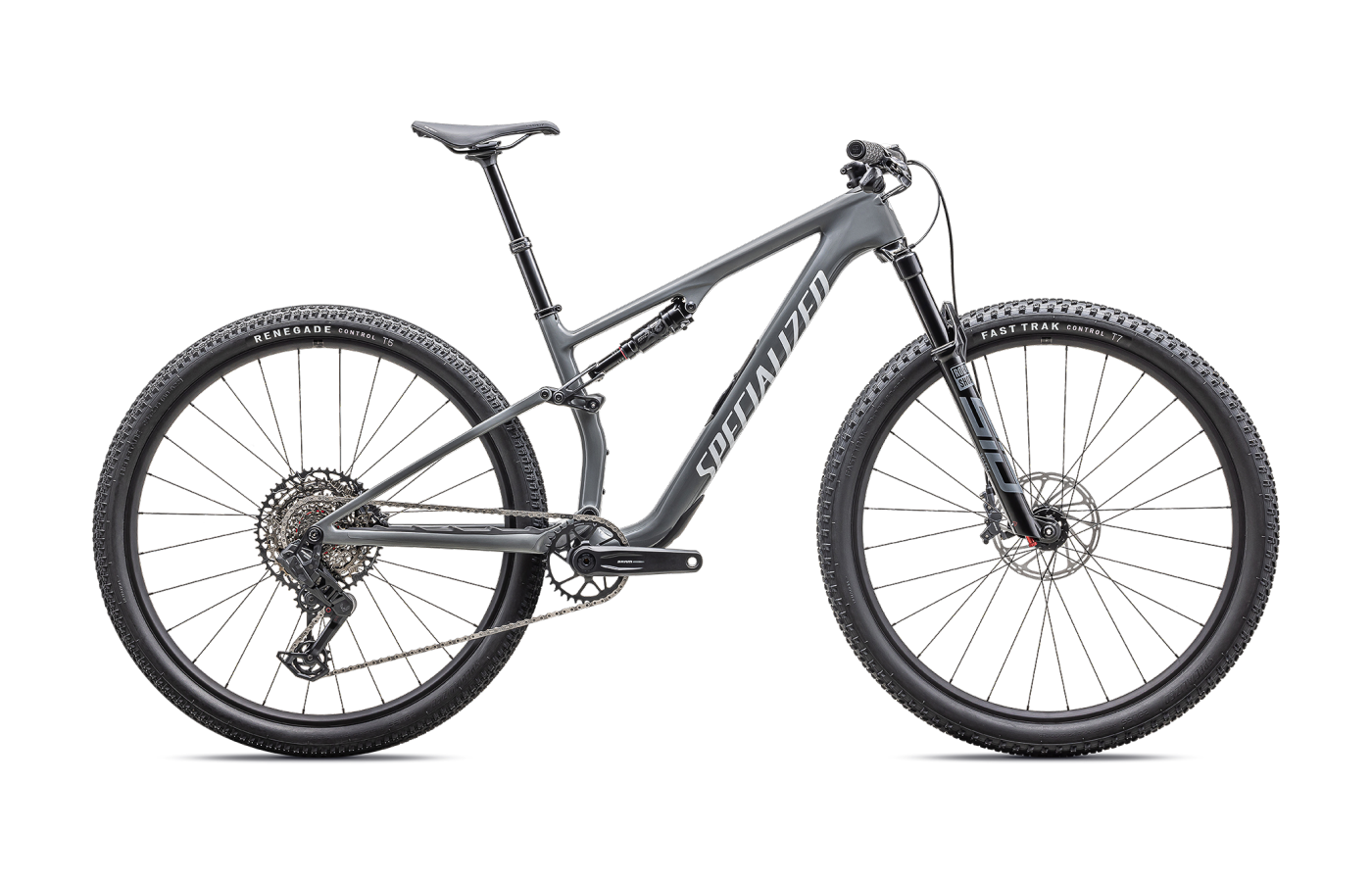
Epic
The Specialized Epic is the direct rival for XC supremacy. Where the Fourstroke uses Autodrop and the Blur uses flex stays, the Epic uses the Brain inertia valve to automate the firm-vs-active decision for you.
Compare →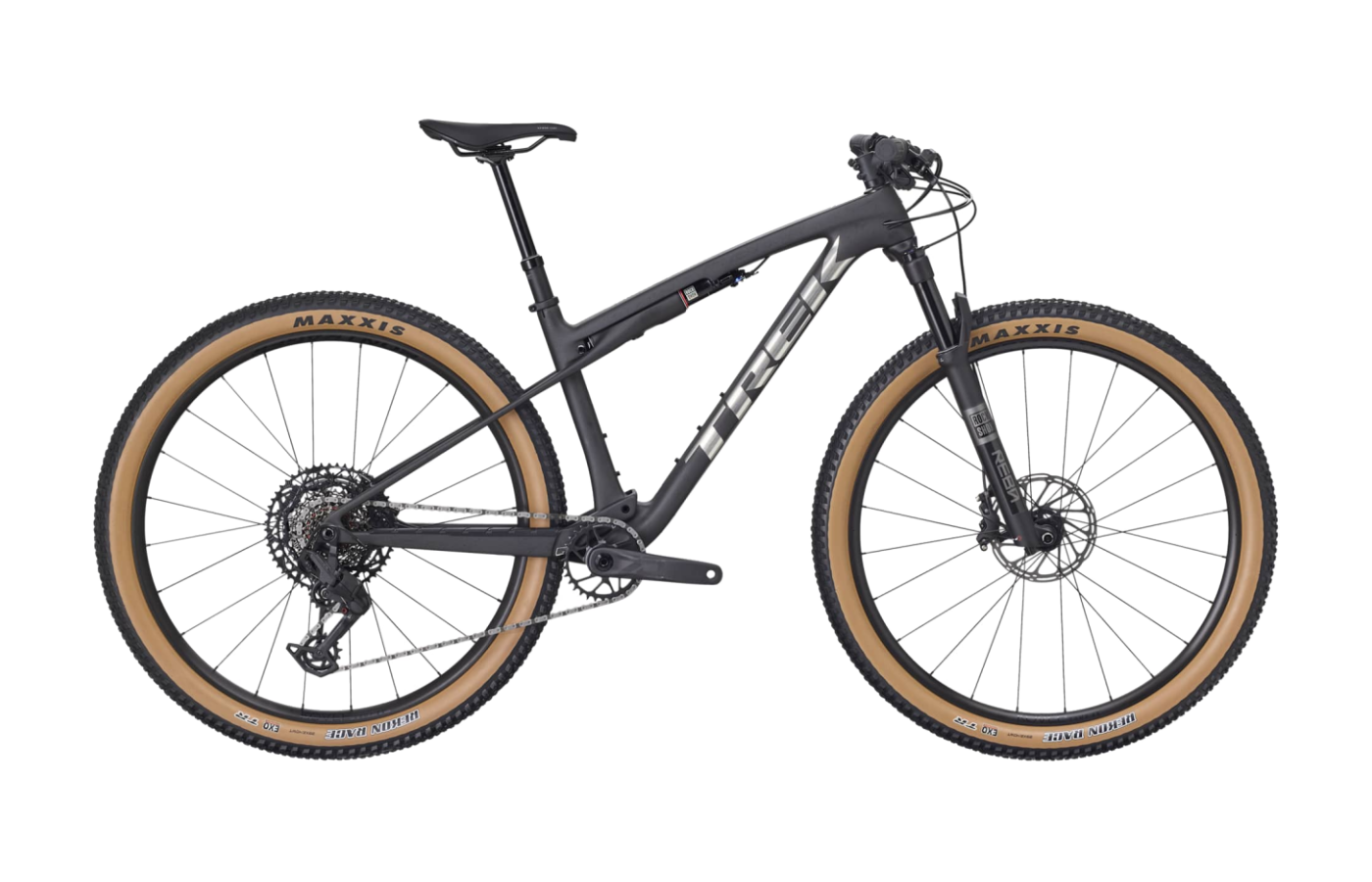
Supercaliber
The Trek Supercaliber sits between hardtail and full-suspension — only ~80mm of effective rear travel via the IsoStrut, which makes it more efficient than either of these but noticeably less forgiving on rough stuff.
Compare →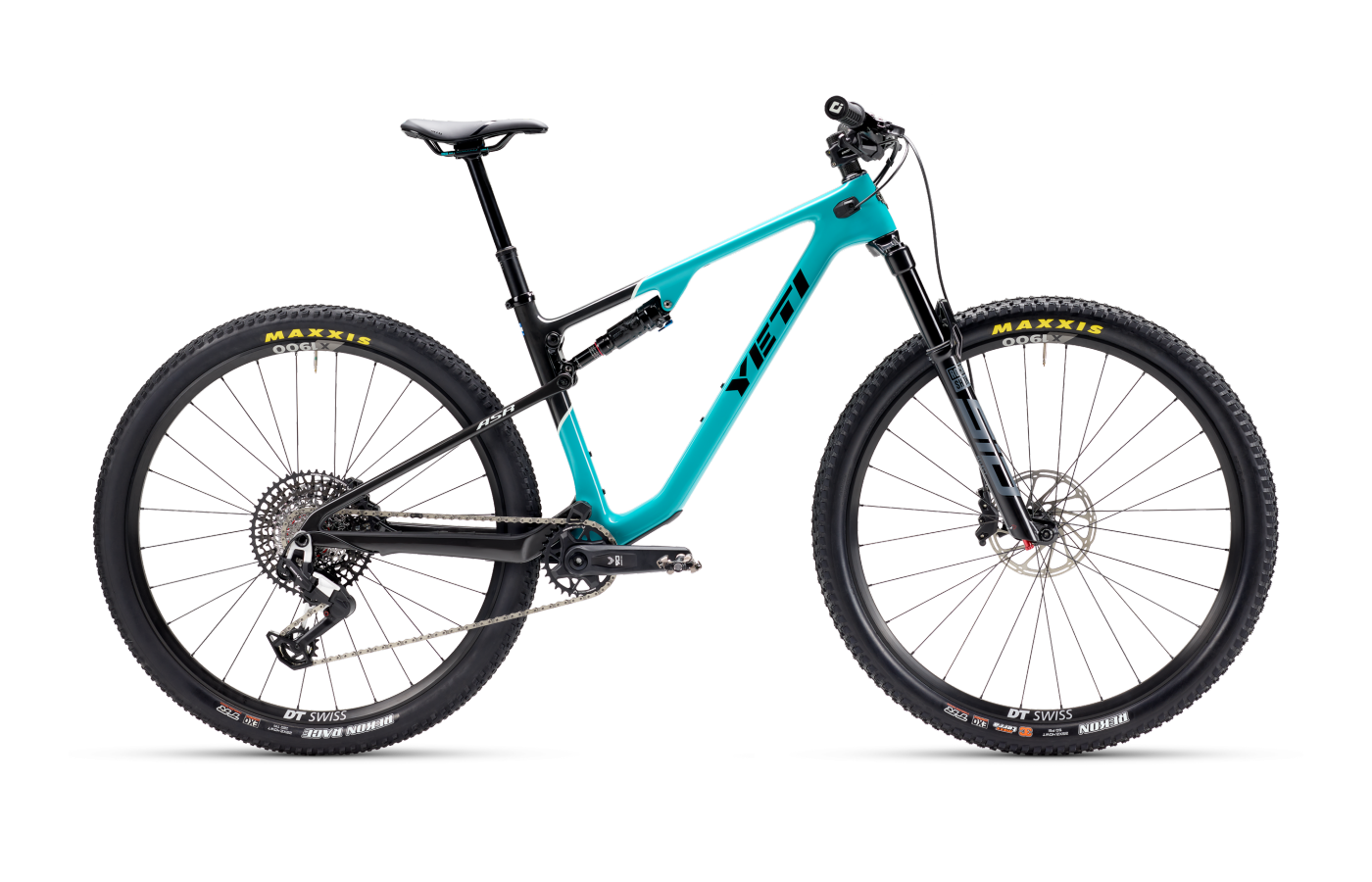
ASR
The Yeti ASR is the closest spiritual sibling to the Blur — another minimalist flex-stay XC platform — but with Yeti's Switch Infinity link and a slightly more aggressive descending feel.
Compare →