Specialissima
vsSuperSix EVO
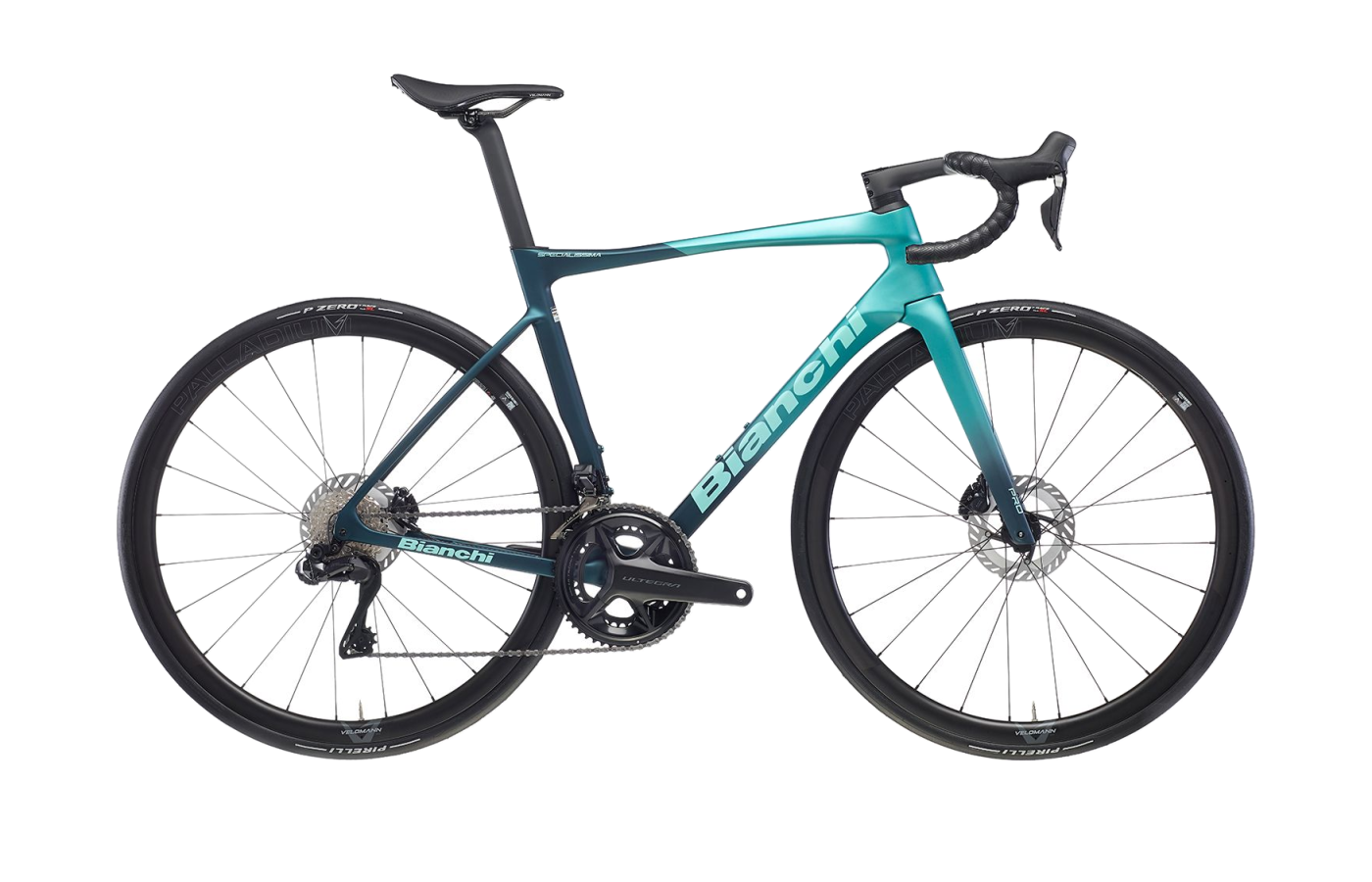
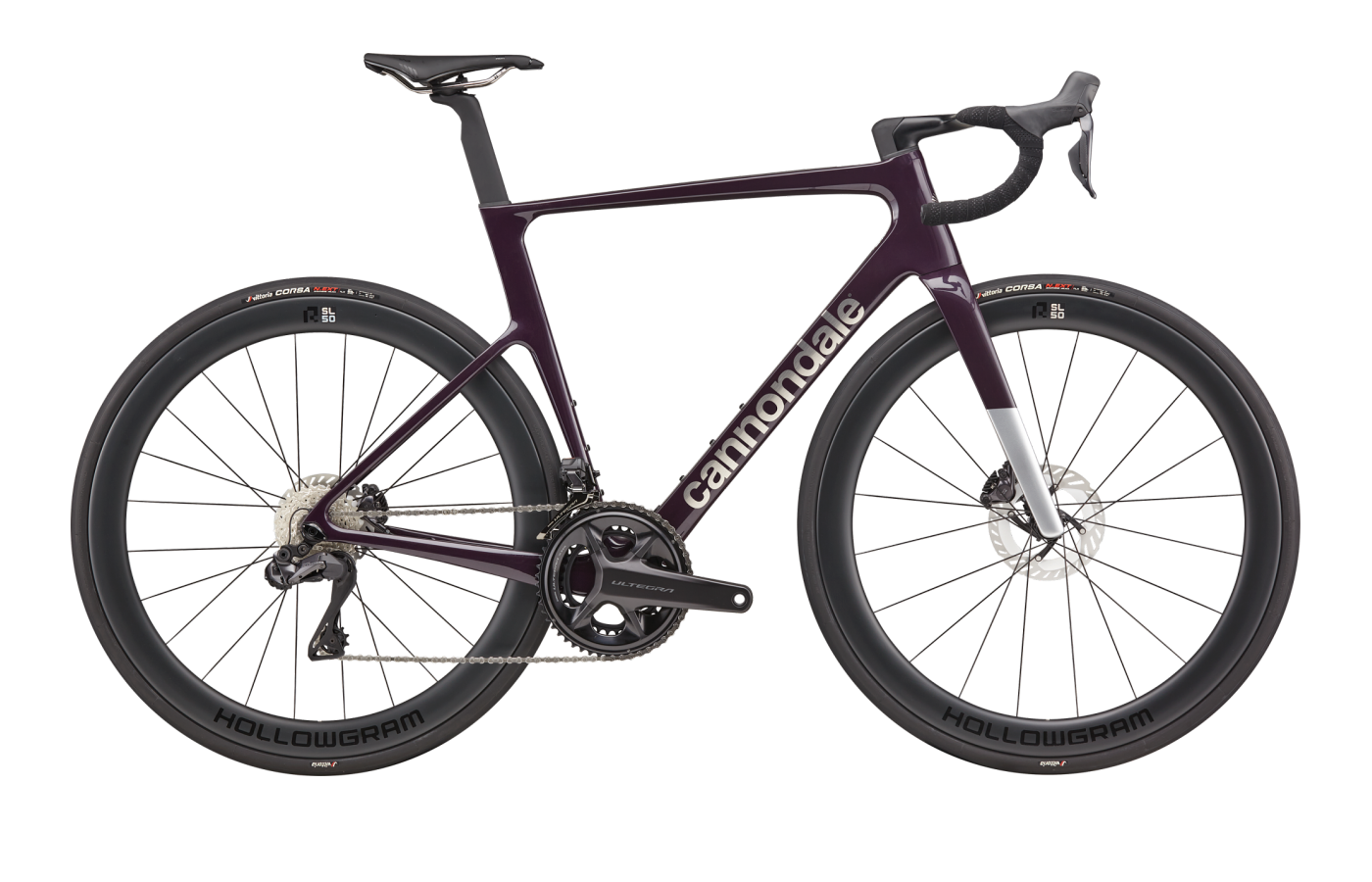
Italian passion project vs American benchmark.
The Specialissima is a low-slung climber that learned to cheat the wind. The SuperSix EVO is the bike that wrote the playbook on intuitive race handling.
Specialissima
- Exceptional climbing weight — RC at 6.56 kg (Cycling News), Pro around 7.27 kg (Velo) with Ultegra Di2. Notably lighter than the SuperSix EVO at comparable tier.
- Countervail vibration damping on Pro and RC frames — Bianchi's real technical case that the Cannondale can't match.
- Aggressive Italian race position — 19 mm lower stack at the fit-picked size; long-and-low by design.
- Press-fit bottom bracket where Cannondale returned to threaded BSA.
- Stock 26 mm Pirelli TT tires on RC are criticized by every major reviewer — plan to swap.
SuperSix EVO
- Home-mechanic friendly — threaded BSA bottom bracket, standard headset bearings via the Delta steerer, Di2 battery in the downtube.
- Wider build range — from $2,999 (105 mechanical) to $14,999 (Lab71 Dura-Ace). Bianchi's entry point is more than twice as high.
- Neutral race handling — 58 mm trail across the range, praised by BikeRadar and Bicycling for confidence at 70 km/h and mid-corner corrections.
- Harsher ride than the Gen 3 per Bicycling and Velo — stiffer seatpost and front end.
- Tight frame interfaces (grommets, plugs for SmartSense/mechanical compatibility) add small points of ingress per Escape Collective.
Editor’s analysis
One bike wants you to have the legs. The other will flatter the ones you've got.
Both sit in the lightweight-aero road bracket, both run Ultegra Di2 at the editor's-pick tier, both clear 32 mm tires. The philosophies behind them pull in different directions. The Bianchi Specialissima is a pure Italian race weapon that borrowed aero cues from its Oltre sibling and kept almost all of its climbing DNA — 6.56 kg as tested at size 55 by Cycling News, UCI-illegal before you add pedals. The Cannondale SuperSix EVO is the result of Cannondale taking an already-celebrated platform and smoothing every remaining pain point: threaded BSA bottom bracket, standard headset bearings, Di2 battery moved off the seatpost.
Geometry tells the story. At the fit-picked sizes — 550 on the Bianchi Specialissima, 54 on the Cannondale SuperSix EVO — the Bianchi sits 19 mm lower in the stack (536 vs 555) with 7 mm more reach (391 vs 384). That's a genuinely aggressive position; reviewers describe being "well and truly over the front." The SuperSix EVO's taller stack is more accessible for riders who don't want to run a negative-rise stem, and its longer wheelbase (1010 vs 988) trades a touch of nimbleness for the planted descending feel Cannondale has been famous for.
Handling quirk worth flagging: the Bianchi Specialissima actually has the longer trail (68 mm vs 58 mm) despite the steeper head tube angle. On paper, the Cannondale SuperSix EVO is the quicker-steering bike — Bianchi's aggressive stance doesn't translate into twitchy front-end response. In practice, BikeRadar called the SuperSix EVO "carving" and "holding a tight line" while Granfondo described the Specialissima as "direct and dynamic" but more demanding above 45 km/h on rough asphalt.
The Pro frame's Countervail (CV) vibration damping is the Bianchi Specialissima's real differentiator at this tier. Velo called it a system that "turns vibrations into thuds" — a stiff bike that refuses to buzz. The Cannondale SuperSix EVO relies on tire volume and seatpost compliance instead. Both approaches work; which one you want depends on whether you care more about the felt character of the frame or about not thinking about your bike between services.
Where the builds differ.
Comparing our editor's-pick builds side-by-side. Winners highlighted row-by-row — lower price and weight, and the better-spec component, each mark a point.
Build variants & pricing
Editor's picks are both Ultegra Di2 — the Bianchi Specialissima Pro ($8,699) against the Cannondale SuperSix EVO Hi-Mod 2 ($9,999). Same drivetrain tier, both on each brand's premium carbon.
Prices are current US MSRP. The Cannondale lineup scales much wider at the bottom — its entry build is under $3,000 where the cheapest Specialissima is $6,500. At the top, Bianchi's RC Founder Edition pushes past $25k, well beyond Cannondale's Lab71 ceiling.
How they fit, how they steer.
Bianchi Specialissima 550 vs Cannondale SuperSix EVO 54 — the fit-picked sizes. Bianchi sits 19 mm lower (536 vs 555 stack), 7 mm longer (391 vs 384 reach), and has 10 mm more trail (68 vs 58) despite the steeper head tube angle. Cannondale's 22 mm longer wheelbase shows up as planted stability at speed.
Which size should I buy?
Size ranges overlap closely in the middle. Bianchi's numbers skew lower in stack at every size; Cannondale's jump in head tube angle between 54 and 56 is unusually large — check fit before assuming sizes 54 and 56 ride alike.
→These are starting points. Flexibility, riding style, and preferred position all shift the answer — if you’re between sizes, a professional fit beats a chart.
What the magazines said.
Published reviews from trusted cycling outlets. Click through for the full write-up.
Which one should you buy?
If you want an Italian climber with aero cues and soul to spare, get the Specialissima. If you want a refined, easy-to-live-with race bike that'll feel right within a block, get the SuperSix EVO.
Specialissima
If your weekends involve 10% gradients and you want a bike that rewards power on punchy efforts — and you're willing to accept a press-fit BB and a tire-swap to-do list in exchange for Countervail and Celeste — the Specialissima earns it. The Pro with Ultegra Di2 is the sweet spot: CV damping, lighter claimed weight, and a far more accessible price than the RC flagship.
SuperSix EVO
If you want a modern superbike without proprietary headaches — one that's as happy in a weeknight crit as a Sunday 100-miler — the Gen 4 SuperSix EVO remains the benchmark. Threaded BB, standard headset, moved Di2 battery: it's the bike you buy when you plan to ride every week, not just race days.
Questions buyers actually ask.
Short answers to the things we get emailed about most often.
01Which is the lighter bike?
The Bianchi Specialissima, clearly. The RC frame hits UCI-illegal weights — Cycling News weighed a size 55 at 6.56 kg with Dura-Ace Di2. Velo measured a Pro with Ultegra Di2 at 7.27 kg. Cannondale doesn't publish a single-figure claimed weight for the SuperSix EVO Hi-Mod 2, but independent reviews of equivalent-spec Gen 4 builds come in 300–500 g heavier than the Specialissima Pro.
If your hit list is sub-7 kg without paying for Lab71 or RC Founder money, the Bianchi is the shorter path there.
02Which handles better at speed?
Both are confident descenders; the character is different. The Cannondale SuperSix EVO has 10 mm less trail (58 vs 68 mm) and a 22 mm longer wheelbase at the fit-picked sizes — neutral, planted, famously forgiving when you need a mid-corner correction. BikeRadar called it "on rails" at 70 km/h.
The Specialissima has a steeper head tube angle (72.5° vs 71.2°) and a shorter wheelbase, so the bike feels more over the front wheel. Reviewers call it "direct and dynamic" but flag that it can feel jittery on rough pavement with the stock narrow tires. Swap to 28–30 mm tubeless and that mostly goes away.
03What's the maximum tire clearance?
Both officially clear 32 mm. In practice, Cannondale reviewers routinely fit 34 mm on the SuperSix EVO Gen 4, and Bianchi reviewers stop at 32 mm on the Specialissima. Neither is a gravel bike — for actual dirt, look at a Cervelo Soloist or an endurance frame.
If you ride rough pavement, the Cannondale's practical clearance plus the 21 mm internal rim widths on HollowGram R-SL 50 wheels make it the more forgiving package out of the box.
04Is the Specialissima really a climbing bike, or has it gone aero?
Both. Bianchi explicitly borrowed tube shapes from the Oltre for the current Specialissima — their wind-tunnel data claims a 31.19 second gain over 10 km at 200 watts on flat roads versus the previous generation. But it's still meaningfully lighter than the SuperSix EVO Hi-Mod at equivalent builds, and Bianchi's own crossover math puts the Specialissima faster than the Oltre once gradients exceed about 4%.
The short answer: yes, it climbs like the old Specialissima; it just no longer bleeds time on the flats getting there.
05Which is easier to live with as a home mechanic?
The Cannondale SuperSix EVO, by a clear margin. Gen 4 brought back the threaded BSA bottom bracket (no more press-fit creak), introduced a Delta steerer that uses standard round headset bearings, and moved the Di2 battery from inside the seatpost to a dedicated port in the downtube. Bar swaps don't require a hose bleed.
The Specialissima is more proprietary: Acros Integrated Cable Routing, press-fit BB86.5x41, and reviewers flag fiddly seatpost-binder and steerer-cover details. Velo also noted limited US parts availability for small Bianchi-specific items. If you service your own bike or travel with it, the Cannondale is the less frustrating option.
06Can I run mechanical shifting on either?
SuperSix EVO: yes. Cannondale explicitly kept mechanical routing compatibility in Gen 4 — several reviewers praised this as a long-term future-proofing win.
Specialissima: no. Bianchi lists the frame (RC, Pro, and Comp) as "only electronic groupsets" — it has no cable stops. If you want Shimano 105 mechanical or Campagnolo cable-shift, the Specialissima is out.
07Which has the better stock wheelset at the editor's-pick tier?
The Cannondale Hi-Mod 2's HollowGram R-SL 50 is the deeper, more aero wheel (50 mm, 21 mm internal) with DT Swiss 240 internals in the rear hub — genuinely high-end.
Bianchi's Pro Ultegra Di2 ships with Velomann Palladium 33 mm carbon — shallower, narrower, and from a less-known brand. BikeRadar specifically flagged that "deeper wheels" would help the Specialissima hold speed on flats. Factor in a wheel upgrade if you're buying the Bianchi for rolling terrain.
08What warranty and service do they come with?
Both come with a lifetime frame warranty to the original owner against manufacturing defects, and both offer crash-replacement pricing at typically 40–60% off a new frame.
One caveat Velo raised: Bianchi US customer service can be slower than Cannondale's — Velo reported a months-long wait for a replacement seatpost gasket. Cannondale's US dealer and service network is substantially larger.
Similar bikes
If your priorities don’t map cleanly onto either of these, one of these adjacent bikes probably fits better.
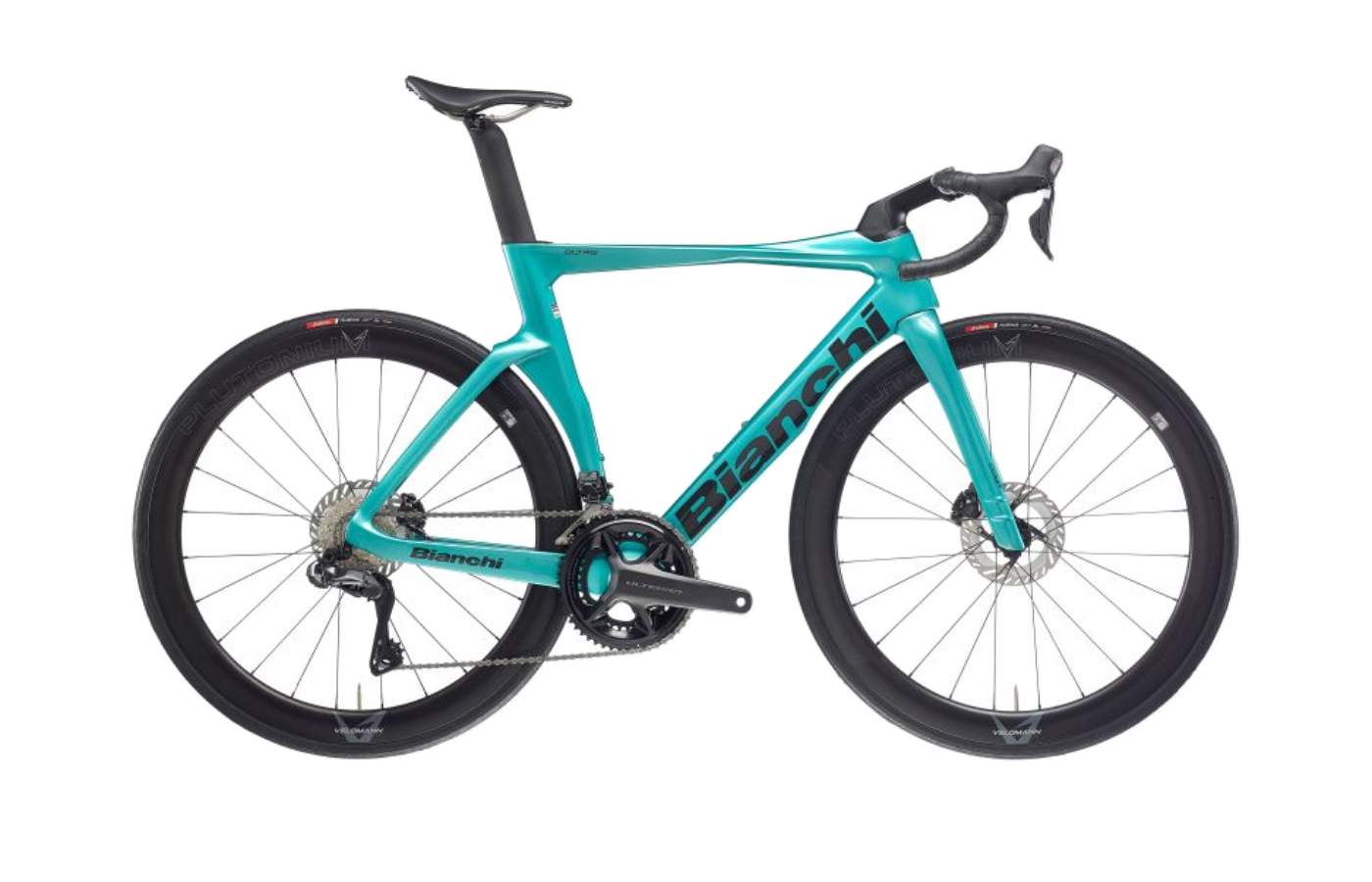
Oltre
Bianchi's dedicated aero sled, with UCI-illegal wind scoops on the head tube. If you want even more of the Specialissima's aggressive flats-speed character and don't care about a weight penalty on the climbs.
Compare →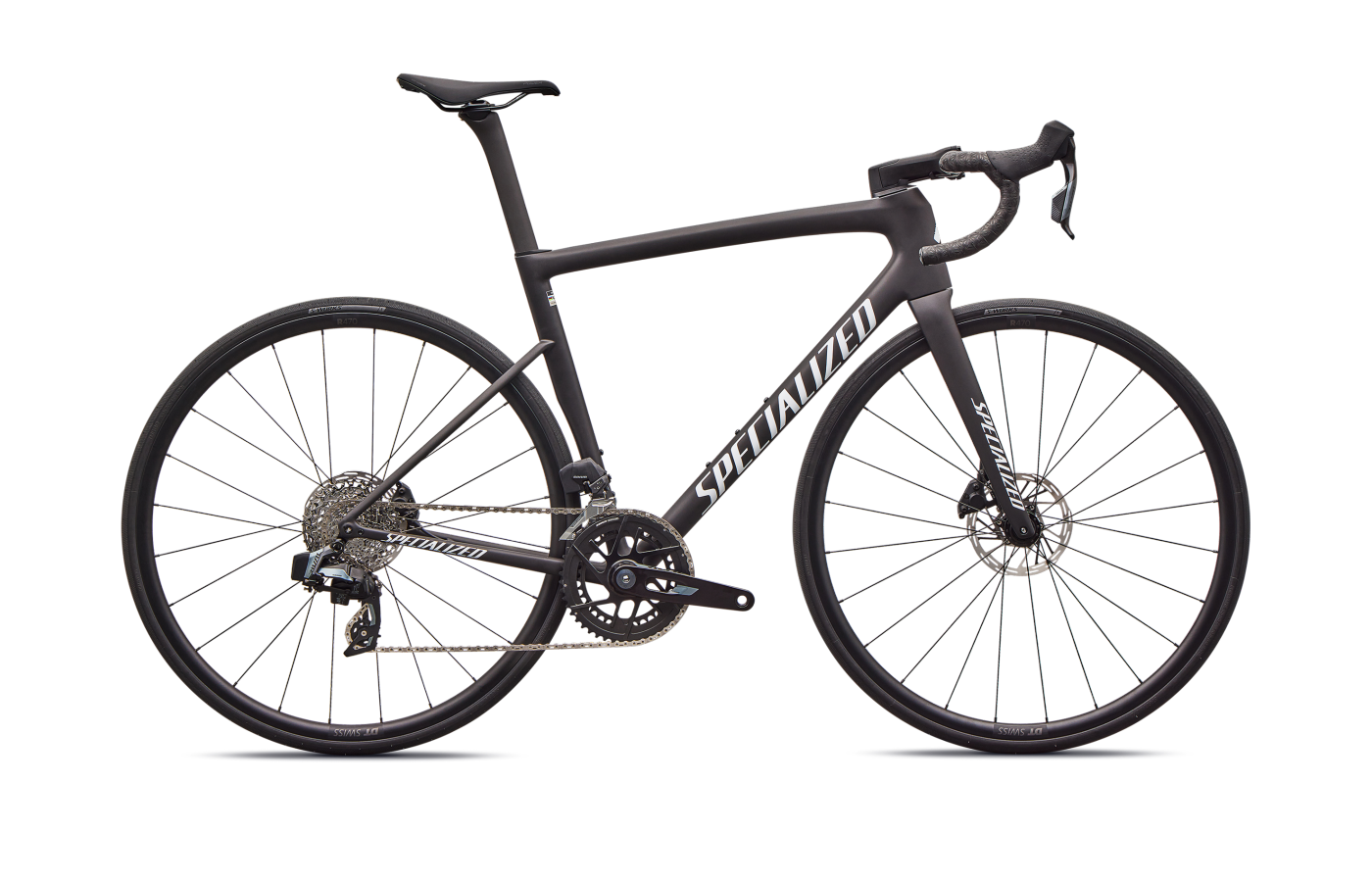
Tarmac
The bike that wrote the aero-meets-lightweight playbook and remains the SuperSix EVO's closest direct rival. Broader build range and more dealer coverage than either of these two.
Compare →
CAAD13
Cannondale's answer to riders who want the legendary SuperSix handling without the carbon price tag. Modern alloy, aero-shaped, and well below the Gen 4 EVO Carbon builds.
Compare →