Dark Matter
vsAspero
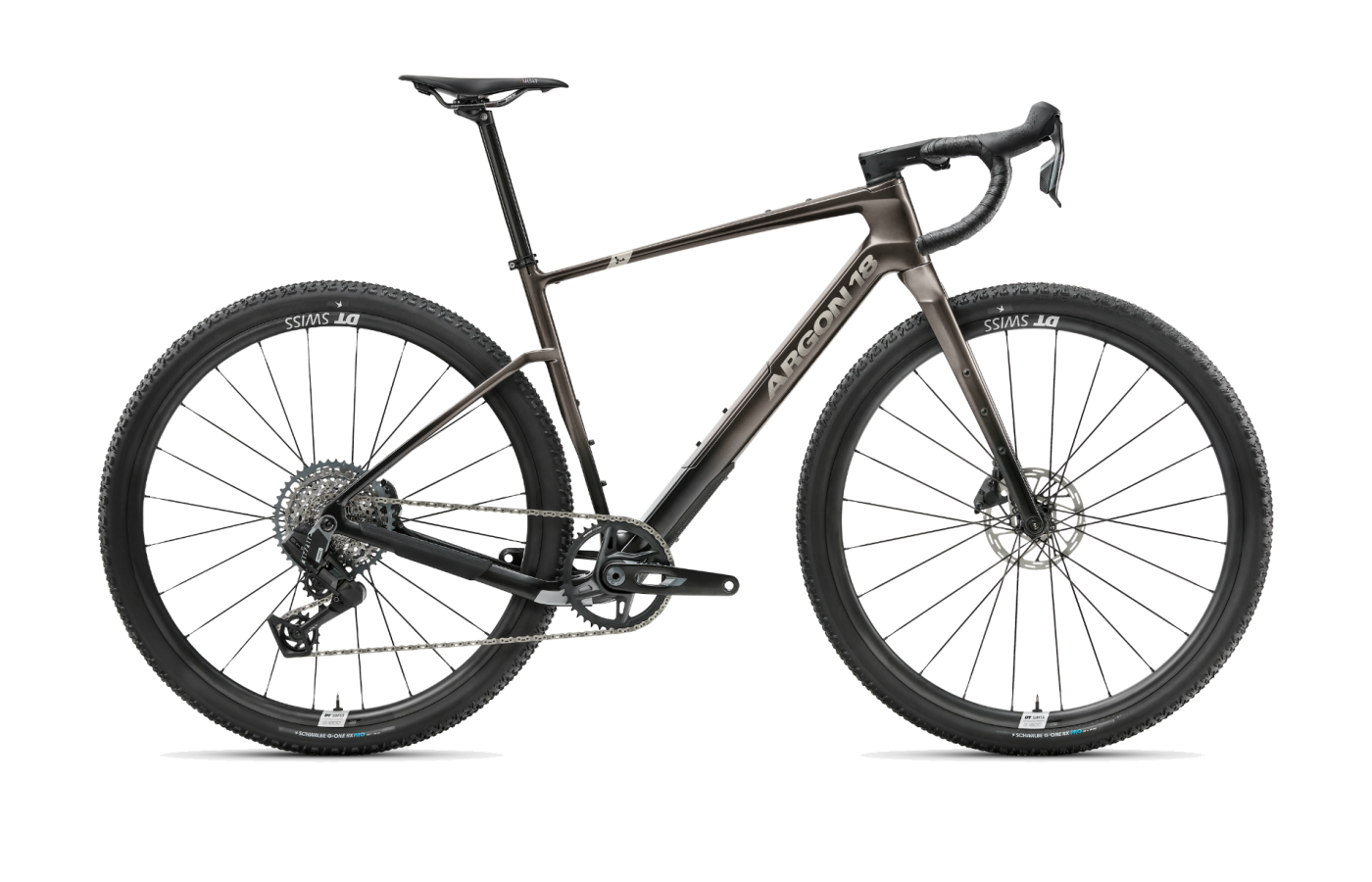
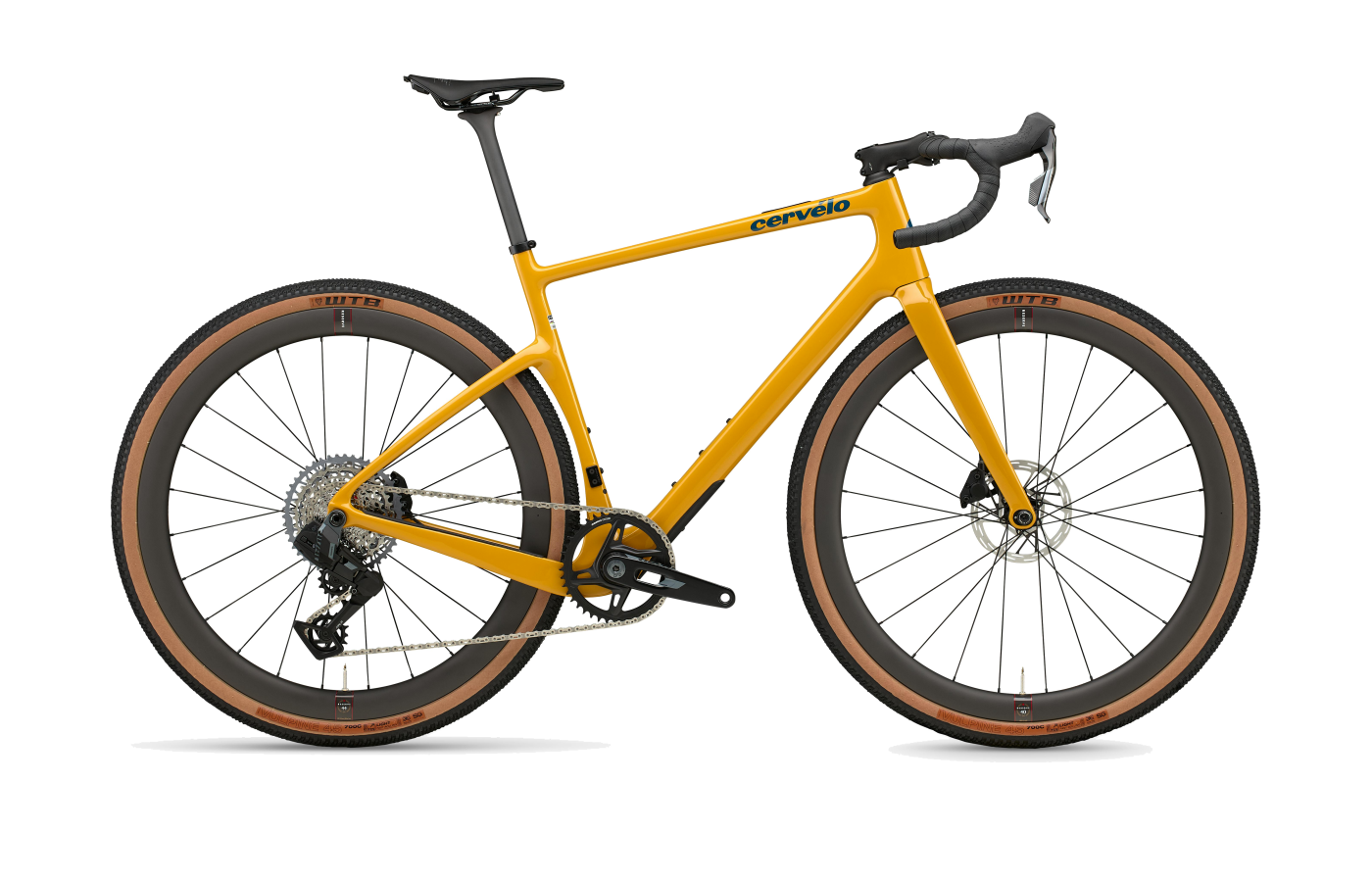
Two gravel bikes, two definitions of fast.
The Argon 18 Dark Matter swallows 57 mm tires and treats singletrack as the destination. The Cervelo Aspero is a road racer that grew knobbies.
Dark Matter
- Class-leading 57 mm tire clearance — enough room for true 2.25-inch MTB rubber, with frame guards that won't void the warranty for running it.
- Suspension-fork corrected geometry — accepts a Fox 32 TC without breaking the handling, opening a real upgrade path for technical terrain.
- Adventure-ready as shipped — internal frame storage, dynamo routing, and full rack/fender mounts all included on every build.
- Long wheelbase and slack front end aren't the snappiest in tight, low-speed corners.
- Front end sits higher than a race-fit gravel bike — riders chasing an aggressive aero posture will look elsewhere.
Aspero
- Race-bike geometry and stiffness — 72-degree HTA, short 425 mm chainstays, and a stiff bottom bracket that 'transfers every watt' (Granfondo).
- Premium spec at this price tier — the Rival AXS build ships with Reserve 40|44 carbon wheels and a Cervelo AB09 carbon bar, which BikeRadar said 'vastly outperform' the Roval Terras on a comparable Specialized Crux.
- Refined ride for a race bike — Cervelo dropped front-end stiffness 10% and added dropped seat stays in the 2024 redesign, taking the sting out of the previous Aspero's chunky-gravel harshness.
- 45 mm tire clearance limits how far off-road it can credibly go — Road.cc called it a 'put me off buying' detail.
- Stripped of mounts: no rack, no fender, no internal storage. It is not a bike for self-supported overnights.
Editor’s analysis
Same drop bars, same SRAM Rival XPLR cassettes — but one bike is plotting a hardtail-style enduro detour while the other is hunting the front group on a fire road.
Both bikes sit in the $3.5k–$7.2k carbon-gravel bracket, both run UDH and threaded T47 bottom brackets, both can be built around SRAM's mid-tier Rival AXS XPLR. That's where the agreement ends. The Argon 18 Dark Matter clears 57 mm tires (2.25 inches of rubber, MTB territory), runs a 70.5-degree head tube angle in size S, and stretches its chainstays to 436 mm — geometry that Just Ride Bikes called 'closer to a hardtail mountain bike than a gravel bike.' The Cervelo Aspero clears 45 mm, sits at a much steeper 72 degrees, and keeps chainstays at a road-bike-tight 425 mm.
The Aspero is the rarer thing on paper, even though the Dark Matter is the more novel idea. Cervelo's pitch — 'haul ass, not luggage' — is unchanged across three generations. The 2024 redesign softened the front end by ~10%, dropped the seat stays for compliance, and bumped tire clearance from 42 to 45 mm, but the bike's purpose is identical: fast events on hard-packed gravel and tarmac transitions. Reviewers describe it as nimble, snappy, and 'torque-sharp.' Bicycling and Velo both note its road-bike posture and 'roadie-centric' steering.
The Dark Matter aims at a different rider entirely. Its long-and-slack geometry is suspension-fork-corrected (compatible with the Fox 32 TC), the frame ships with internal storage, dynamo routing, and rack/fender mounts, and the chainstays are cut to clear true 2.25-inch knobbies. Bicycling found that with MTB tires installed, 'on steep and rough climbs it felt like the Dark Matter stayed composed and was able to deliver similar rear wheel traction to a hardtail mountain bike.' That is not a sentence anyone has ever written about an Aspero.
Put plainly: the Cervelo Aspero is the bike to buy if your gravel calendar reads like a road race calendar with worse pavement. The Argon 18 Dark Matter is the bike to buy if you find your routes on a topo map and your weekends include singletrack shortcuts and overnight bags.
Where the builds differ.
Comparing our editor's-pick builds side-by-side. Winners highlighted row-by-row — lower price and weight, and the better-spec component, each mark a point.
Build variants & pricing
Argon 18 stops at three builds; Cervelo offers six. At the equivalent SRAM Rival XPLR AXS tier, the Aspero costs $800 more — but that buys you carbon Reserve wheels and a carbon bar, where the Dark Matter ships alloy DT Swiss G1800s.
Prices are current US MSRP. The Aspero's lower price floor ($3,550 GRX RX610) gets you into the platform $349 cheaper than the Dark Matter starts; the ceilings sit within $150 of each other.
How they fit, how they steer.
Argon 18 size S vs Cervelo size 54 — the fit-picked sizes for a 5'8" rider on each bike. Reach is nearly identical (394 vs 388 mm), but the Dark Matter sits 6 mm taller in stack, runs a 70.5° head tube vs the Aspero's 72°, and stretches the chainstays 11 mm longer (436 vs 425 mm). Stable vs sharp, full stop.
Which size should I buy?
Both run six sizes; the Aspero scales by numeric (48–61), the Dark Matter by letter (XXS–XL). The Aspero starts smaller (505 mm stack at size 48); the Dark Matter tops out taller (629 mm at XL).
→These are starting points. Flexibility, riding style, and preferred position all shift the answer — if you’re between sizes, a professional fit beats a chart.
What the magazines said.
Published reviews from trusted cycling outlets. Click through for the full write-up.
Which one should you buy?
If your gravel rides include singletrack shortcuts, fork upgrades, or bikepacking nights, get the Dark Matter. If you race fast events on groomed gravel and hard-packed dirt, get the Aspero.
Dark Matter
If you treat 'gravel' as a category that includes light singletrack, multi-day routes, and the occasional Fox 32 TC upgrade, this is the more capable bike. The 57 mm clearance, the storage, and the suspension-corrected geometry mean you can grow into it without buying a second frame.
Aspero
If your weekends look like Unbound, Mid South, or your local crit on dirt — fast pacelines on hard-packed gravel and tarmac transitions — the Aspero's road-bike geometry, 425 mm chainstays, and Reserve carbon wheels will hand you a measurable advantage. The lack of mounts and 45 mm tire ceiling are features, not bugs, for that rider.
Questions buyers actually ask.
Short answers to the things we get emailed about most often.
01Which bike fits a wider tire?
The Argon 18 Dark Matter, by a wide margin. Officially it clears 57 mm (2.25 inches), enough for true mountain bike tires — Bicycling tested it with 2.25" MTB rubber installed and the bike kept its handling. The Cervelo Aspero clears 45 mm in 700c (47–48 mm in 650b), which is fine for fast gravel events but well short of MTB territory.
If you're already eyeing 50 mm+ tires, the Aspero is off the table — Road.cc called the limited clearance 'a put-me-off-buying-one' detail.
02Which is faster on hard-packed gravel and tarmac?
The Cervelo Aspero. Reviewers consistently describe it as 'snappy when sprinting' (Velo), 'quick and nimble' (Granfondo), and Road.cc gave it 8/10 for climbing despite the mid-tier Apex build coming in at 8.77 kg. The Aspero borrows geometry from Cervelo's R-Series road bike — 72-degree HTA, 425 mm chainstays, 580 mm stack at size 56 — putting the rider 'square over the crankset for maximum pedaling efficiency' (BikeRadar).
The Dark Matter is no slouch in a straight line, but its longer wheelbase and slacker front end trade some of that snap for stability.
03Can the Argon 18 Dark Matter take a suspension fork?
Yes. The Dark Matter's geometry is explicitly suspension-fork corrected, designed around the axle-to-crown of forks like the Fox 32 TC. Argon 18 publishes the compatibility, and the bike's published stack/reach numbers assume the rigid fork; switching to a sus fork won't ruin the handling.
The trade is tire clearance — most gravel suspension forks max out around 50 mm, so adding suspension means giving up the top end of the Dark Matter's 57 mm window. The Aspero is a pure rigid frame and doesn't have a comparable upgrade path.
04Are these bikes good for bikepacking?
Dark Matter: yes, by design. It ships with internal frame storage in the downtube (with a tool slug), three-boss mounts on each fork leg, two downtube bottle positions plus underside bosses, top-tube bento mounts, full rear rack and fender mounts, and internal dynamo routing in the fork.
Aspero: not really. It carries the 'haul ass, not luggage' ethos through to its mount package — a top tube bag mount and three bottle cages, period. No fender mounts, no rack mounts, no fork bosses, no internal storage. Velo and BikeRadar both note this is a deliberate omission, not an oversight.
05What's the editor's-pick build on each side?
Argon 18 Dark Matter SRAM Rival XPLR AXS ($4,999): electronic shifting, DT Swiss G1800 alloy wheels, Schwalbe G-One RX PRO 50c tires, FSA cockpit. The mid-build sweet spot — it skips the ZIPP 303 XPLR S carbon wheels of the $7,199 Force build but keeps the wireless drivetrain.
Cervelo Aspero SRAM Rival XPLR AXS ($5,800): same SRAM Rival XPLR AXS drivetrain, but ships with Reserve 40|44 GR carbon wheels (Zipp ZR1 hubs) and a Cervelo AB09 carbon bar. That's where the $800 price gap goes — and BikeRadar called the Reserves a meaningful upgrade over the Roval Terras on a similarly priced Specialized Crux.
06How serviceable are they?
Both are unusually friendly here, and both adopted the same modern standards in their latest redesigns: threaded T47 bottom bracket (no press-fit creak, easy to service anywhere), SRAM Universal Derailleur Hanger (UDH) (replaceable hanger you can find globally), and a standard 27.2 mm round seatpost (dropper-compatible, no proprietary part).
The Aspero uses a semi-integrated cable routing scheme (hoses external under the stem, then into the frame) that Cycling Magazine called 'home mechanic-friendly.' The Dark Matter uses FSA's ACR routing — also widely supported. Neither bike forces you into proprietary cockpit parts at this build tier.
07What's the weight comparison?
Hard to make apples-to-apples since Argon 18 doesn't publish frame weight publicly, but build-level numbers from independent reviews give a rough picture.
The Aspero Apex AXS build came in at 8.77 kg as tested (Road.cc), the Rival AXS build around 8.4 kg (BikeRadar), and the GRX Di2 around 8.6 kg (Cycling Magazine). The Aspero 5 frame is ~200 g lighter than the standard Aspero frame.
The Dark Matter is heavier in like-for-like comparison — partly because of the bigger frame triangle and longer chainstays needed to clear a 57 mm tire. Reviewers didn't publish a clean weight figure, but it sits in the same ballpark when running comparable tires; running the 2.25" MTB tires it's spec'd for adds significant rotating weight on top of that.
08Which one should I demo first?
If you've never ridden a long-and-slack gravel bike before, demo the Argon 18 Dark Matter — its character is the more unfamiliar of the two and you'll know within 20 minutes whether the stable-and-planted feel is what you want. The Aspero rides much closer to a road bike, which most riders intuit from the geometry chart alone.
For either, try to ride the wheel-and-tire combo you'd actually buy. The Dark Matter is a different bike with a 45 mm tire than it is with a 2.25" MTB tire — Bicycling tested it both ways and described two different rides.
Similar bikes
If your priorities don’t map cleanly onto either of these, one of these adjacent bikes probably fits better.
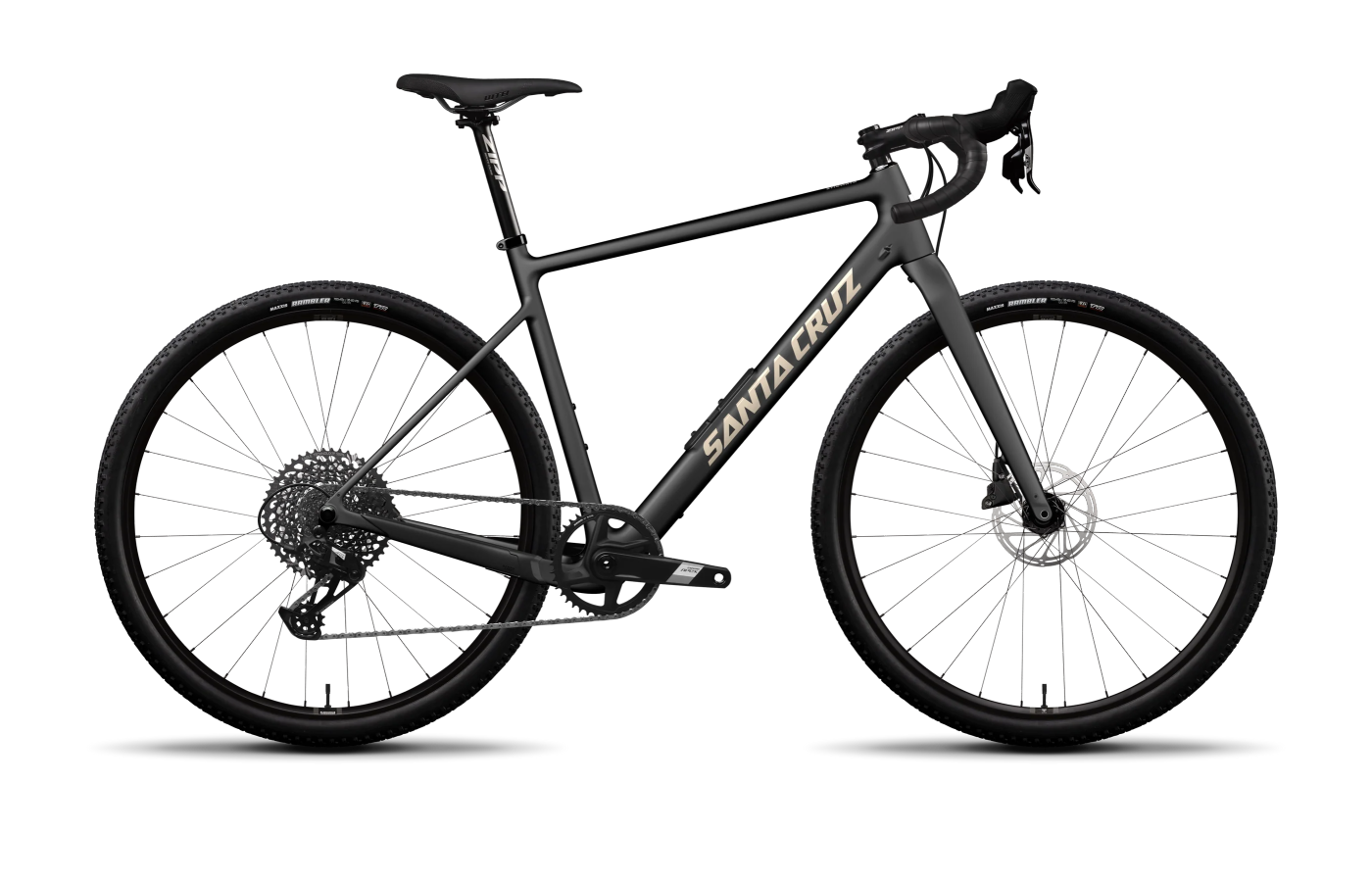
Stigmata
The Pon-group cousin to the Aspero with more progressive geometry and bigger tire clearance — a middle-ground option if the Aspero feels too racy and the Dark Matter feels too long.
Compare →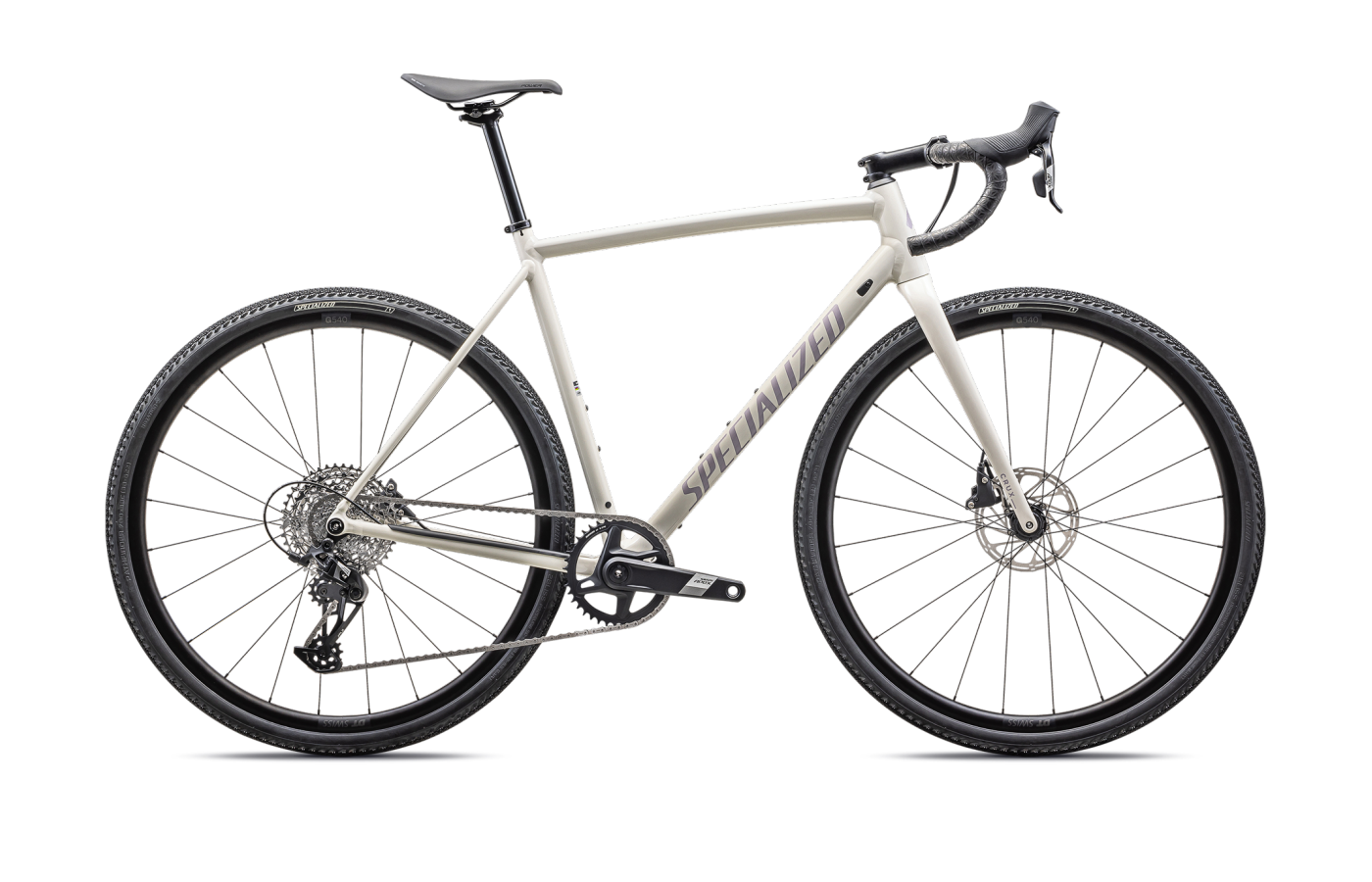
Crux
The weight-weenie play — a minimalist carbon frame that prioritizes low mass and simplicity over the Dark Matter's storage and the Aspero's aero shaping. For riders who want a feathery race bike and nothing else.
Compare →
Grail
Splits the difference: integrated downtube storage like the Dark Matter, but road-leaning handling closer to the Aspero. Direct-to-consumer pricing makes it the value pick if you know your fit.
Compare →