O2 VAM
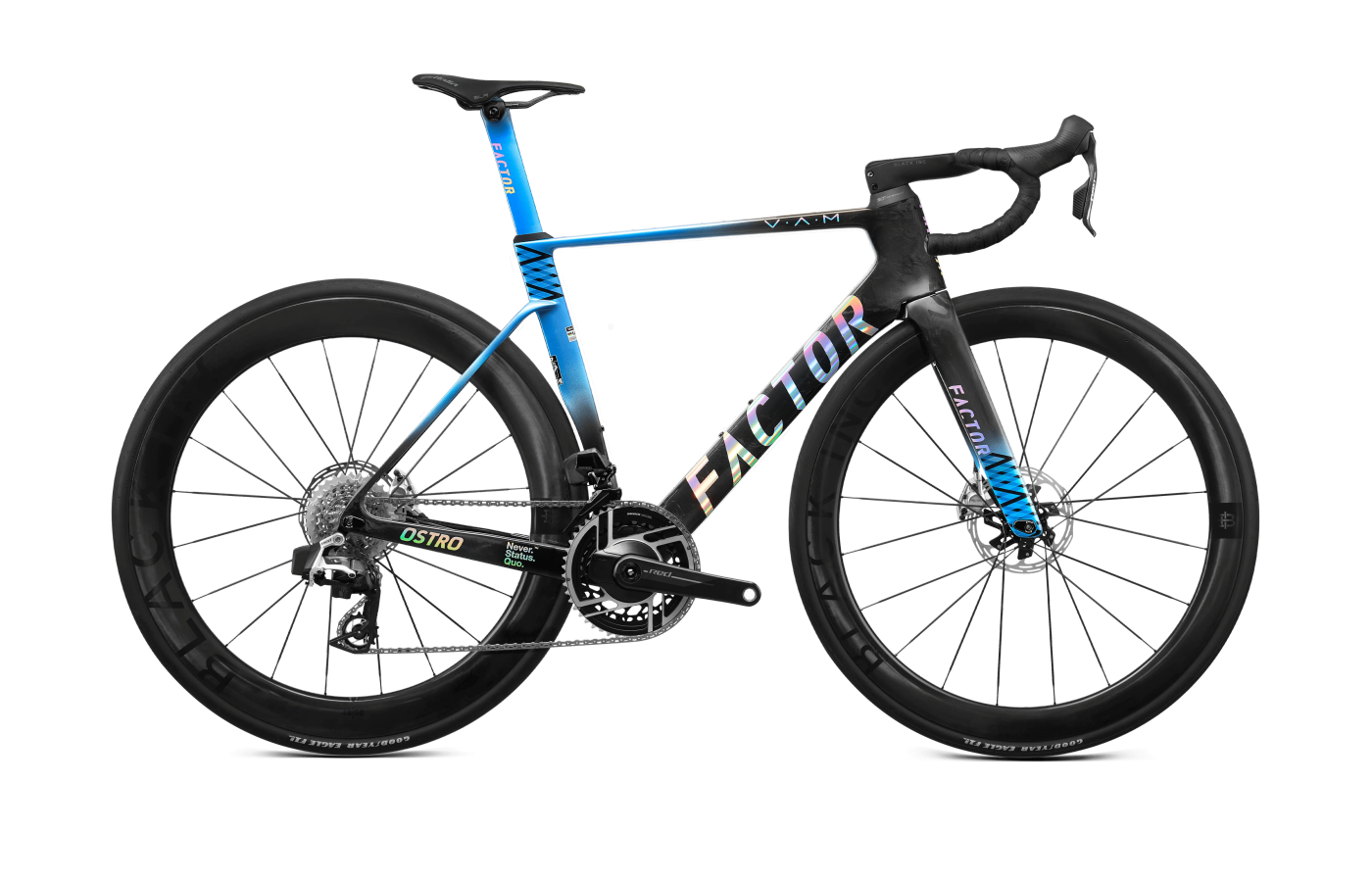
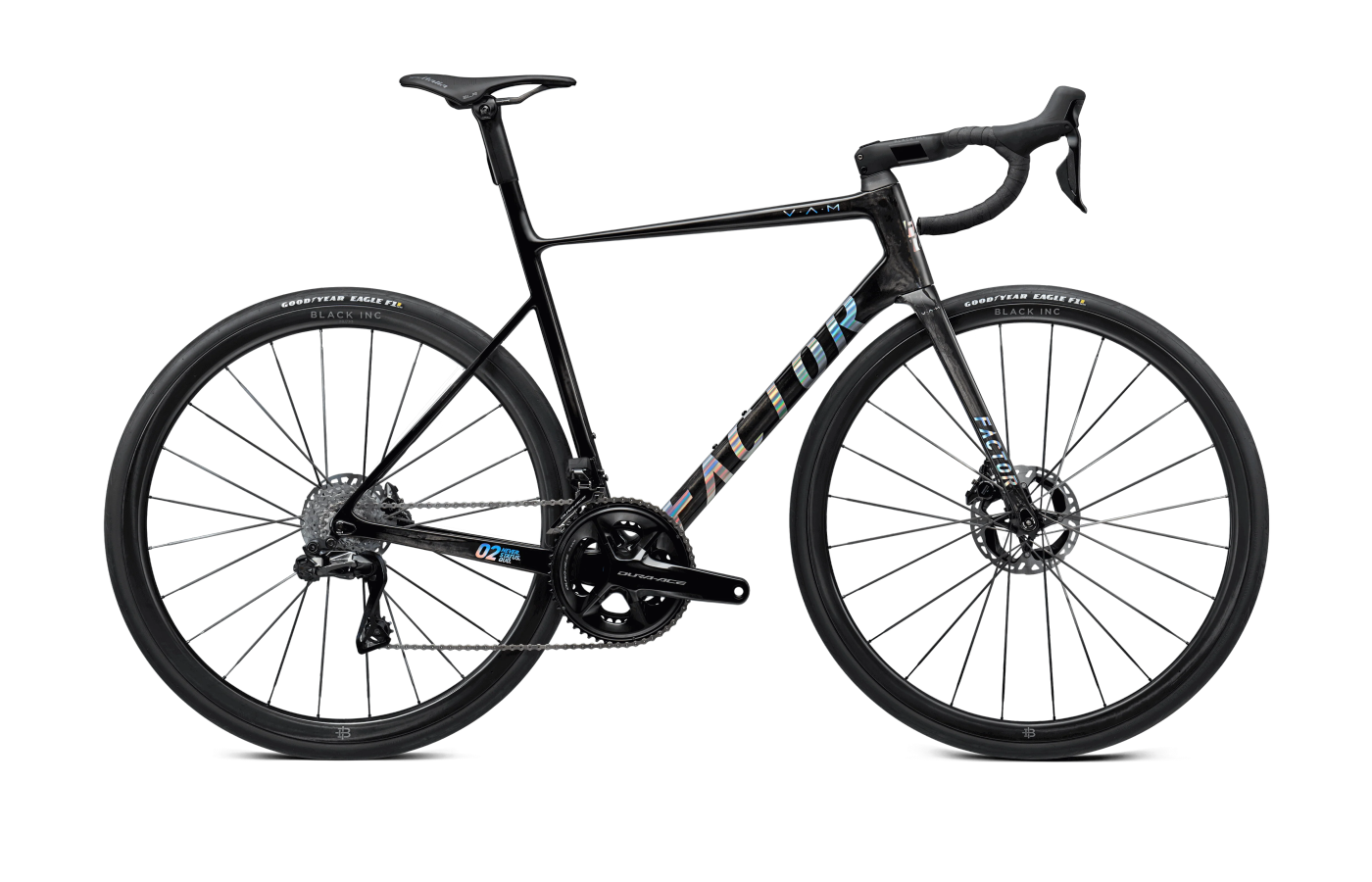
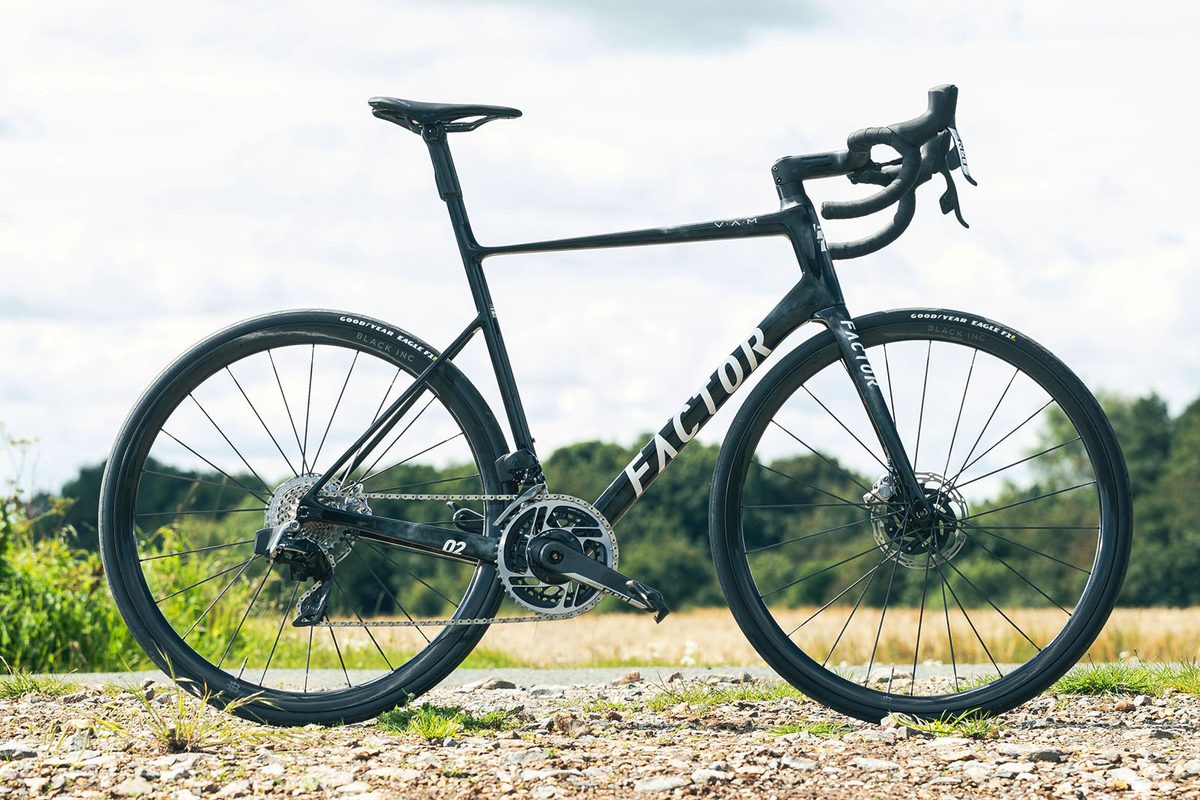
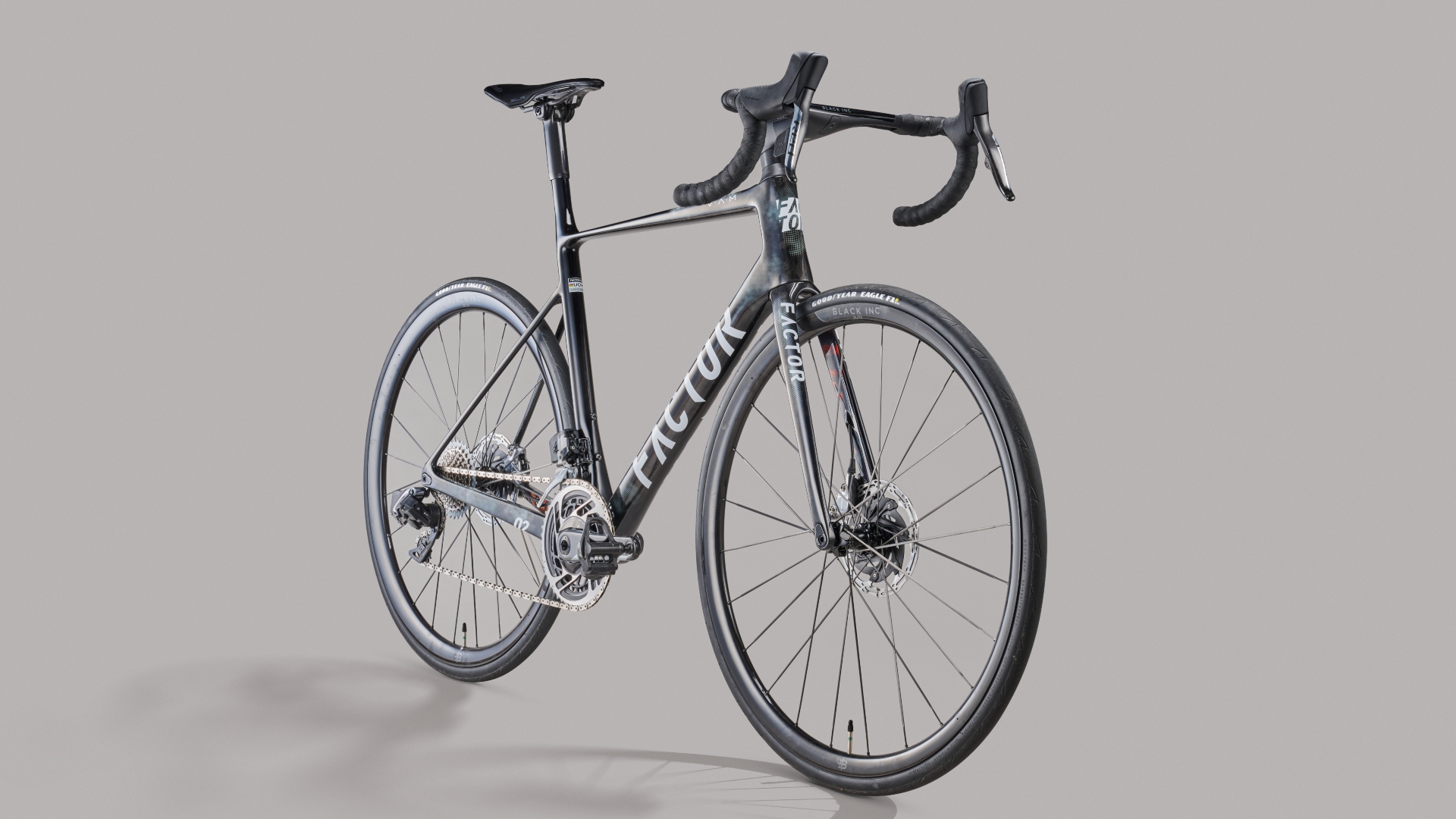
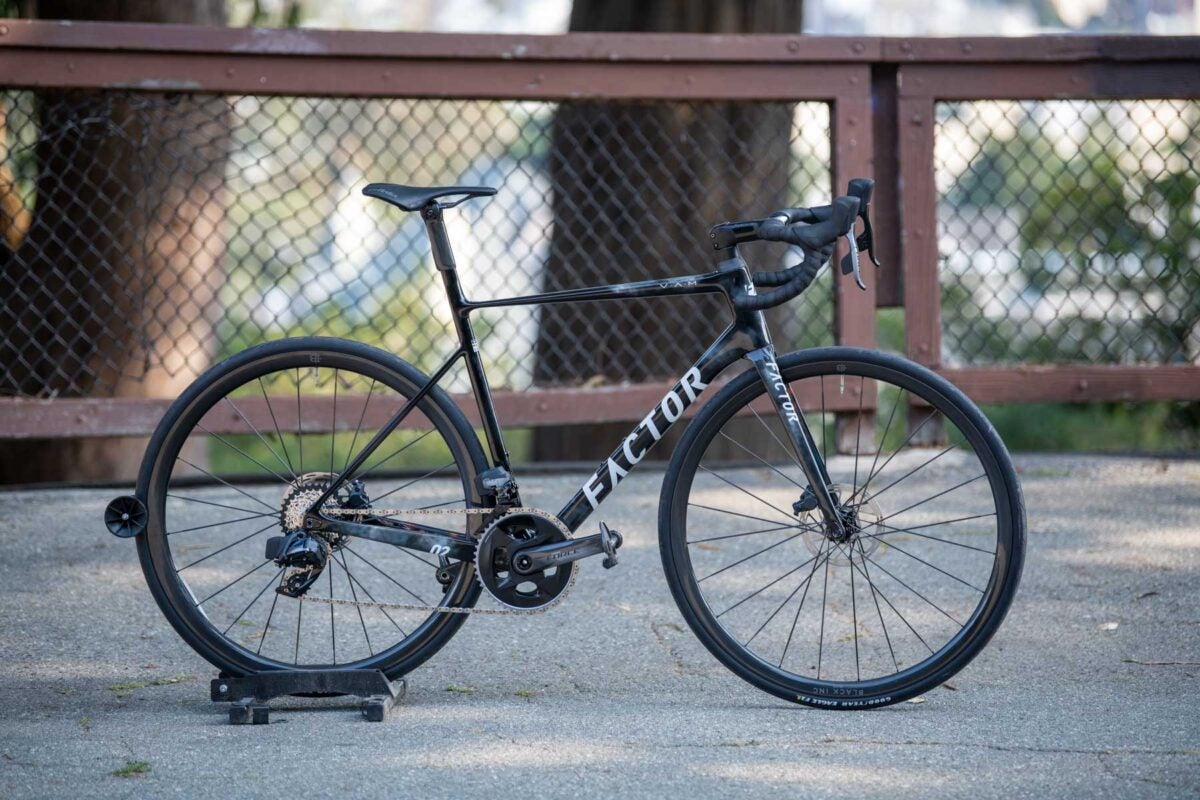
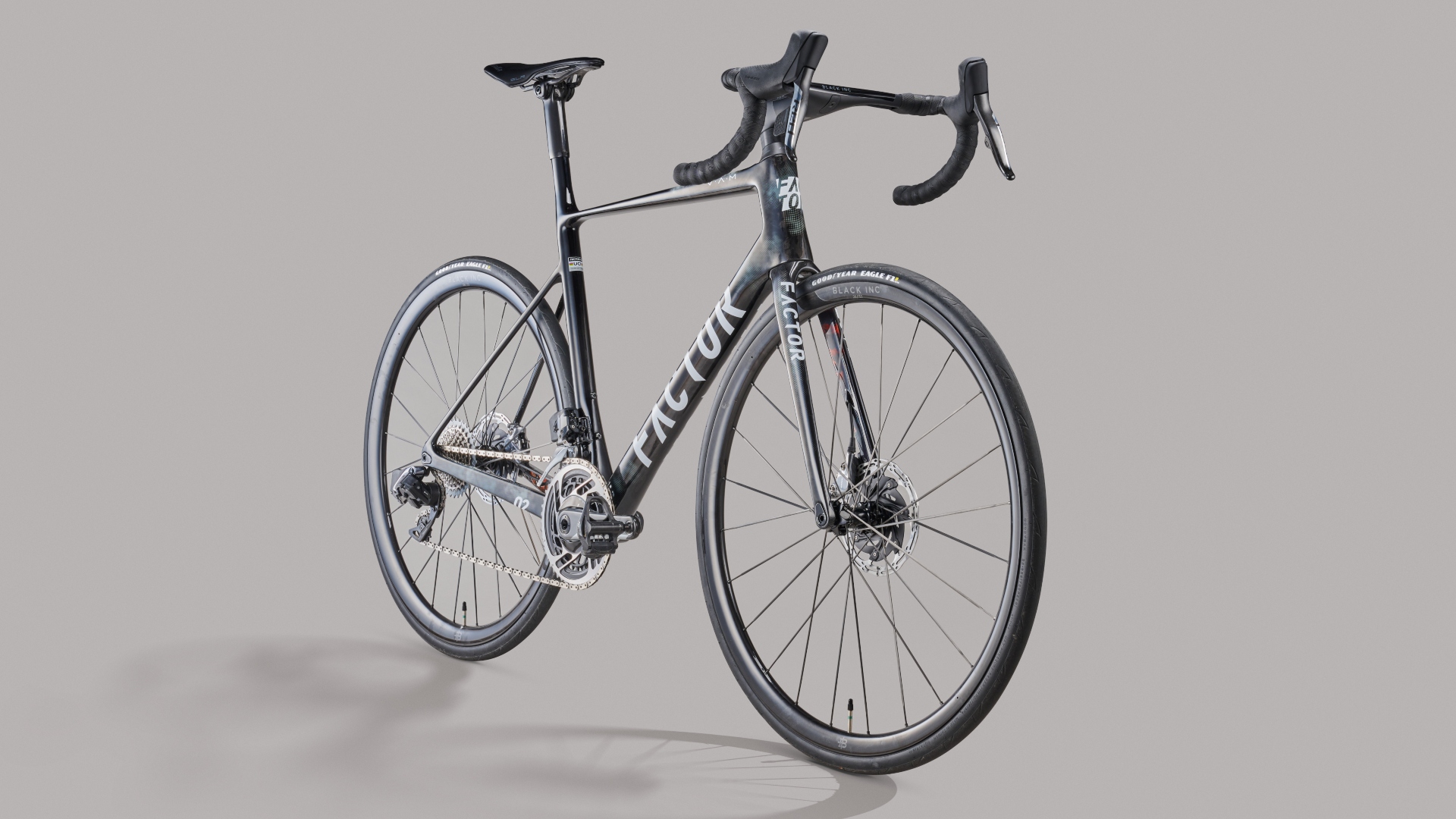
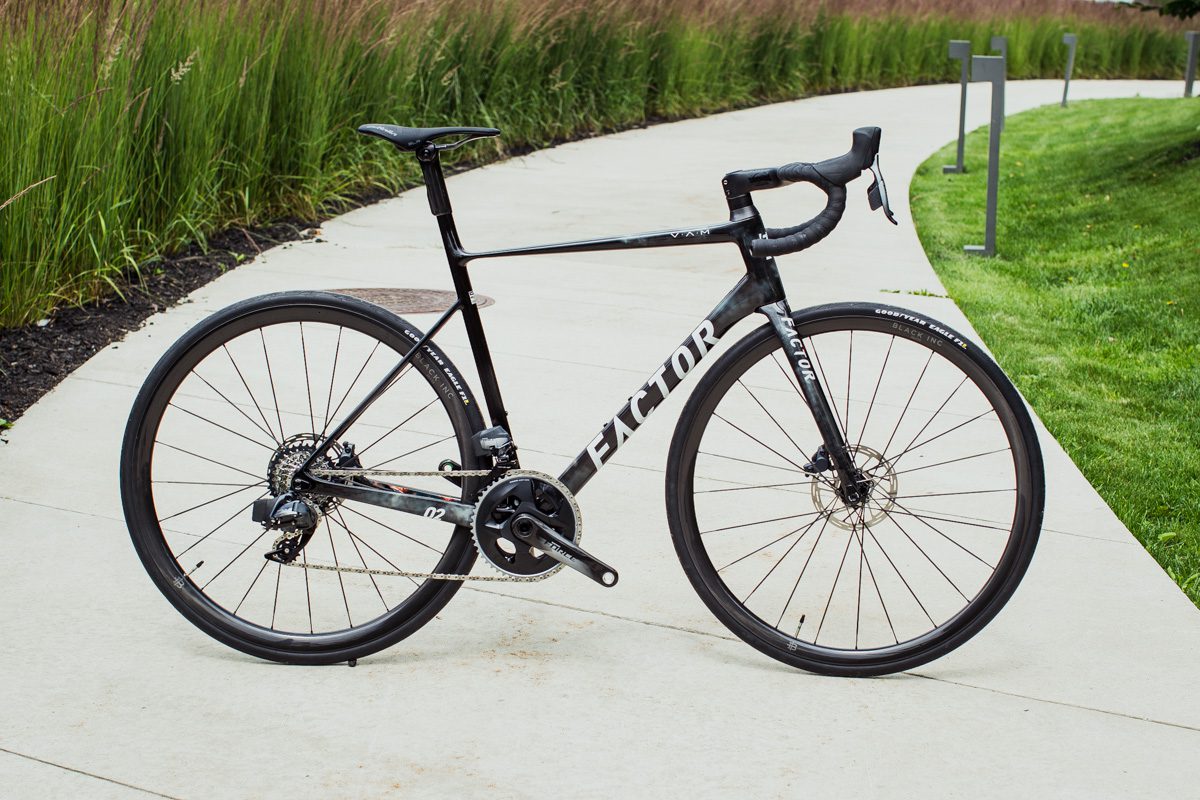
The Factor O2 VAM is a dedicated climbing bike that integrates modern aerodynamic shaping without sacrificing its featherweight intent. Redesigned from the ground up, this generation moves away from traditional round tubes, utilizing aggressively truncated airfoil profiles and an ultra-thin top tube to reduce drag while keeping frame weight near the UCI minimum. Factor targets riders who prioritize uphill efficiency and rapid acceleration but still want a machine capable of holding its own in the valleys.
The defining structural shift is the move to an integrated seatmast paired with an external topper, a design choice aimed at saving weight while introducing controlled deflection at the saddle. Visually striking and unapologetically race-focused, the O2 VAM is built for riders seeking a highly responsive, specialized tool for mountainous terrain and steep gradients rather than a pure all-rounder.
Geometry & fit.
7 sizes published.
The O2 VAM utilizes an aggressive, race-oriented geometry, though Factor has subtly modernized the fit compared to the previous generation. Across the size range, the stack height has increased by approximately 10mm while the reach remains unchanged. This slight elevation at the front end accommodates a marginally more upright posture, which many riders prefer for sustained climbing, without requiring a stack of spacers under the stem.
To ensure consistent handling across all seven frame sizes, Factor employs four different fork offsets. This approach maintains a uniform trail figure—hovering around 58mm—preventing the sluggish wheel flop that can plague larger frames on slow, steep ascents while keeping smaller sizes agile. Paired with steep head tube angles and short chainstays, the resulting wheelbase is tight, contributing to the bike's highly reactive steering.
Fit customization is heavily integrated into the purchasing process. The bike is built around the Black Inc Integrated Barstem, and riders can select from a wide array of bar width and stem length combinations. The seatmast system also offers multiple topper lengths and offsets, providing a generous window of saddle height adjustment.
Where the handlebar sits relative to the bottom bracket — the single most important fit pair.
01Fit geometry4 values
03Handling geometry7 values
Which size should I buy?
Slide your height to see the recommended size. GearWise's fit algorithm works from the published stack, reach, and ETT — the brand's own recommendation may differ.
→Calculated from GearWise's own stack / reach / ETT algorithm — the brand's size chart may recommend a different size, and a proper bike fit beats any calculator.
The lineup.
4 builds, ranging $11,299 – $13,499.
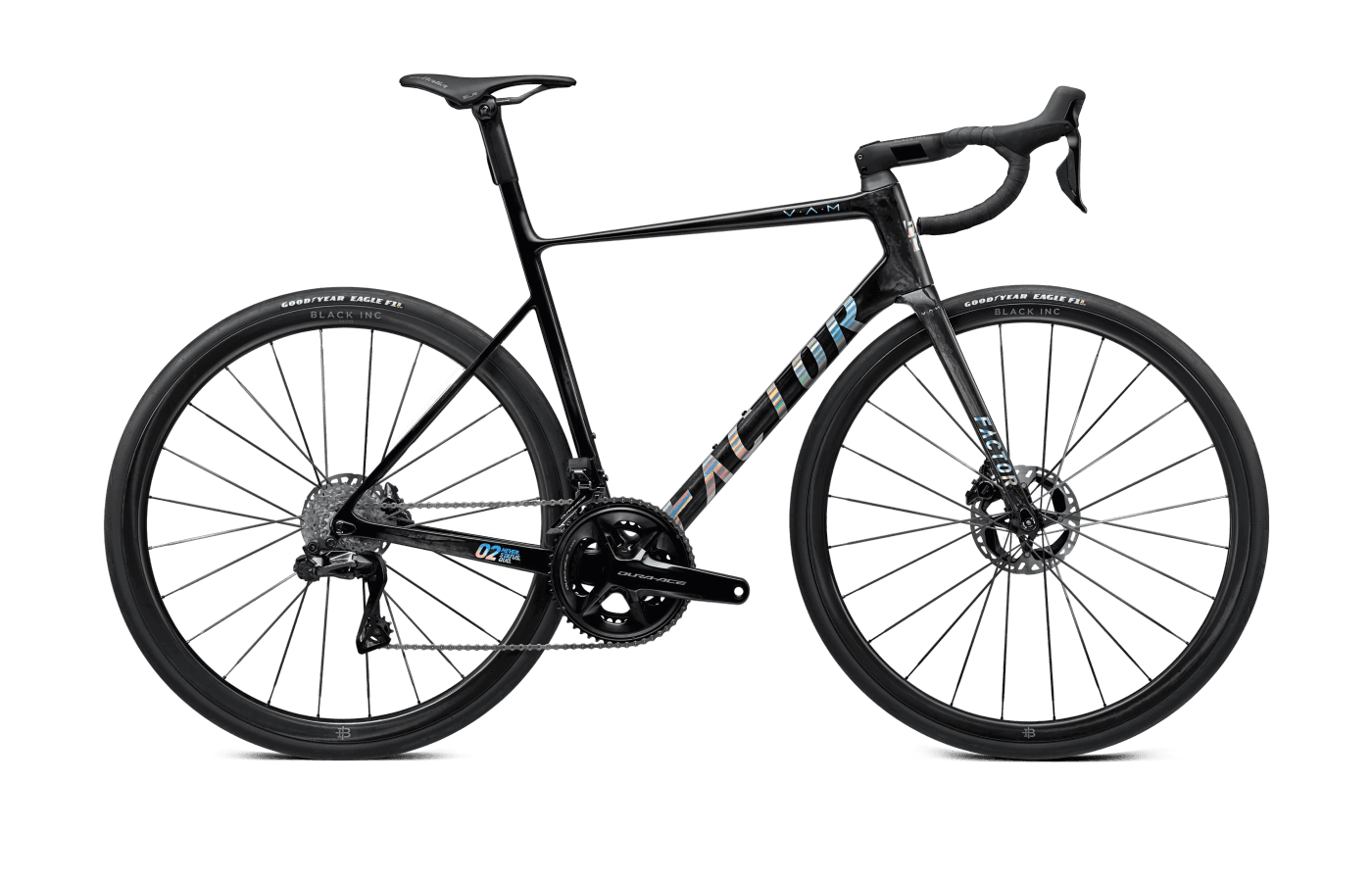
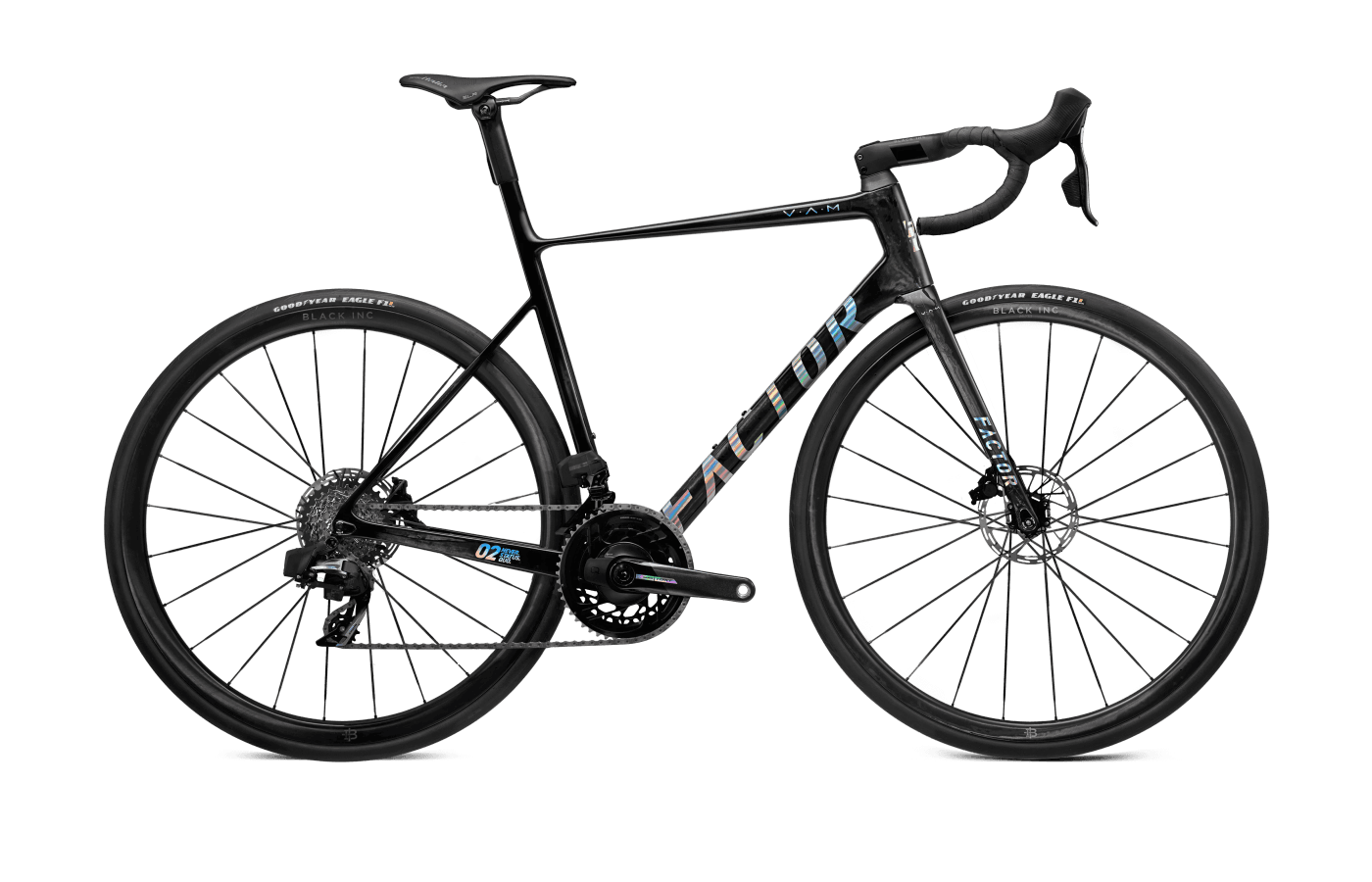
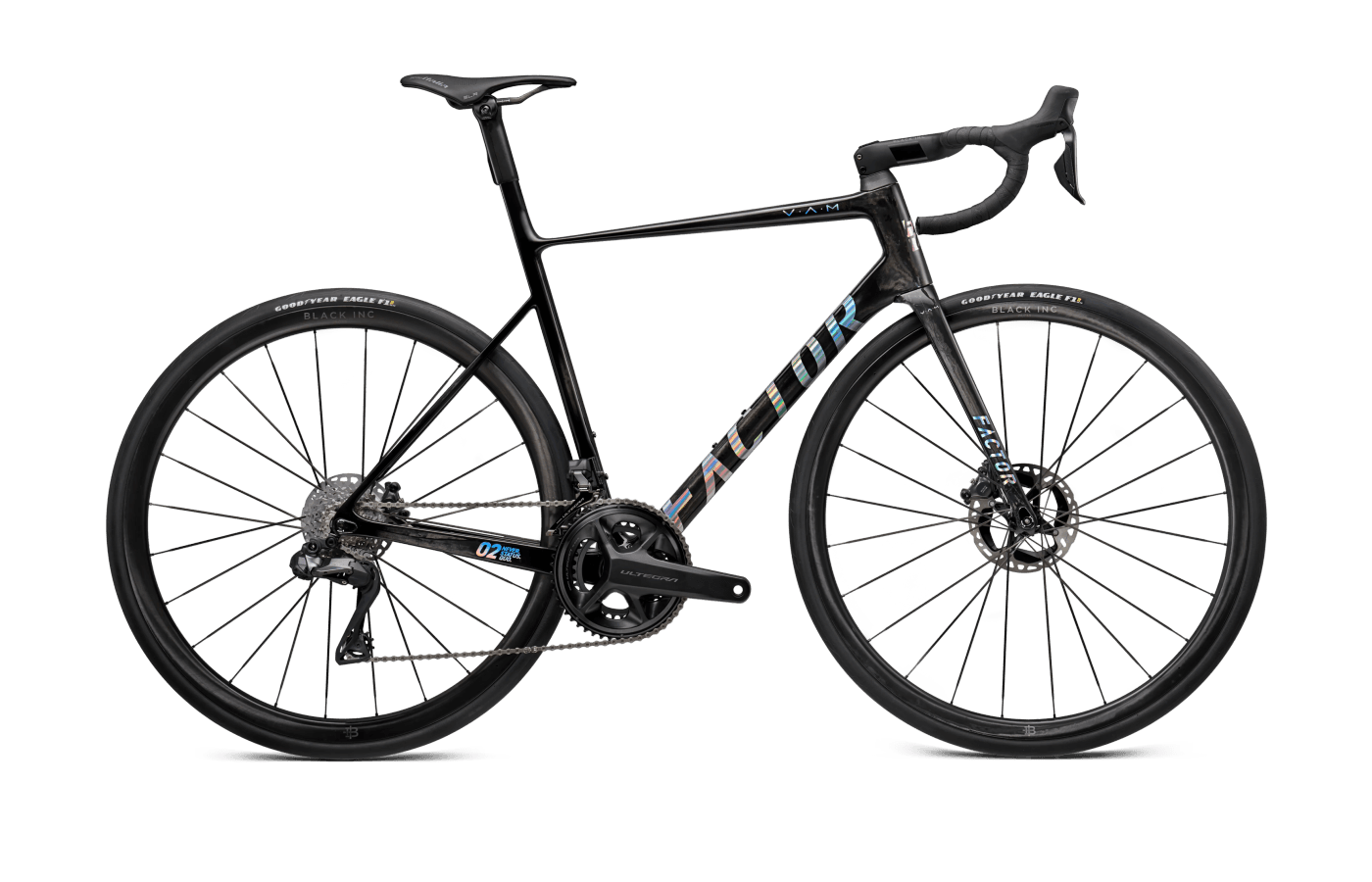
The O2 VAM is positioned as a premium superbike, and its build ladder reflects a high-end approach to component specification. The lineup is split evenly between Shimano and SRAM, offering Ultegra and Dura-Ace Di2 alongside Force and Red AXS. Both SRAM builds include integrated power meters, adding immediate value for training-focused riders.
Regardless of the chosen drivetrain, the foundational components remain identical across the range. Every build rolls on Factor’s in-house Black Inc 28//33 carbon wheelset. These wheels feature a shallow, staggered depth profile designed specifically to minimize weight and maximize lateral stiffness for climbing. The wheels are tubeless-compatible, though the bike typically ships with tube-type clincher tires, meaning riders looking to run a tubeless setup will need to swap the rubber.
Friction reduction is a clear priority across the spec sheet. All models are equipped with CeramicSpeed bearings in both the T47A threaded bottom bracket and the headset. Because the frame, cockpit, wheels, and ceramic upgrades are standard across the board, the material difference between the entry point and the top tier comes down entirely to the weight and shifting ergonomics of the groupsets.
From the press.
12 reviews from the cycling press.
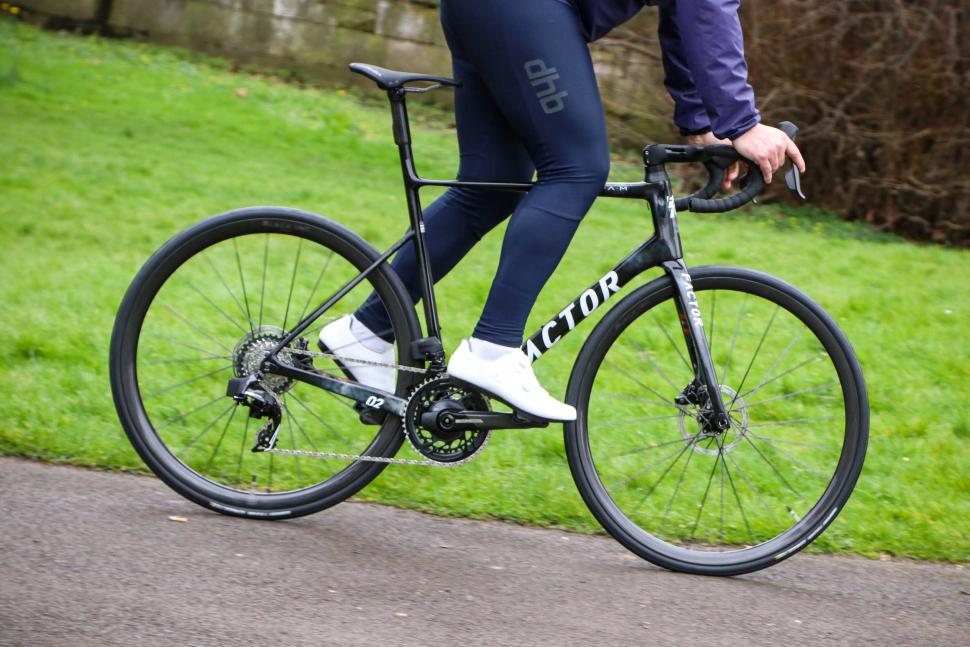
Reviewers consistently highlight the Factor O2 VAM for its climbing performance and immediate power transfer. The combination of a stiff bottom bracket and minimal mass translates to a "blisteringly responsive" (Cycling Weekly) feel on steep gradients. Out of the saddle, the frame reacts eagerly to accelerations, making it highly effective for attacking climbs and punching out of slow corners. Despite the rigid power delivery, testers frequently note that the ultra-thin top tube and seatmast design provide a surprisingly smooth ride over rough pavement.
Handling character draws a slightly more nuanced consensus. The light front end and steep geometry mean steering inputs are immediate. A few riders initially found the bike "flighty and almost a bit delicate" (YouTube), requiring a brief adaptation period. However, once accustomed to the quick steering, most reviewers found it highly capable on descents, noting it possesses the "poise and surefootedness of a weightier bike" (Road.cc) when carving through high-speed corners.
The primary tradeoff lies in flat-land speed. While the aerodynamic tube shapes help the bike maintain momentum better than a traditional round-tubed climber, it "doesn't feel quite as rapid at 40-50kph" (BikeRadar) compared to dedicated aero models. It excels in the mountains, but riders spending most of their time on fast, flat roads may notice the lack of deep-section aerodynamic momentum.
Review: Factor O2 VAM
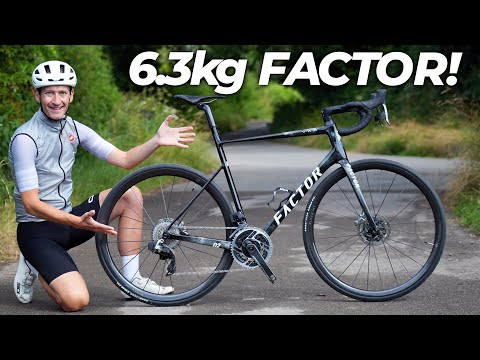
NEW Factor O2 VAM Impressions: 6.3kg aero climbing bike ...
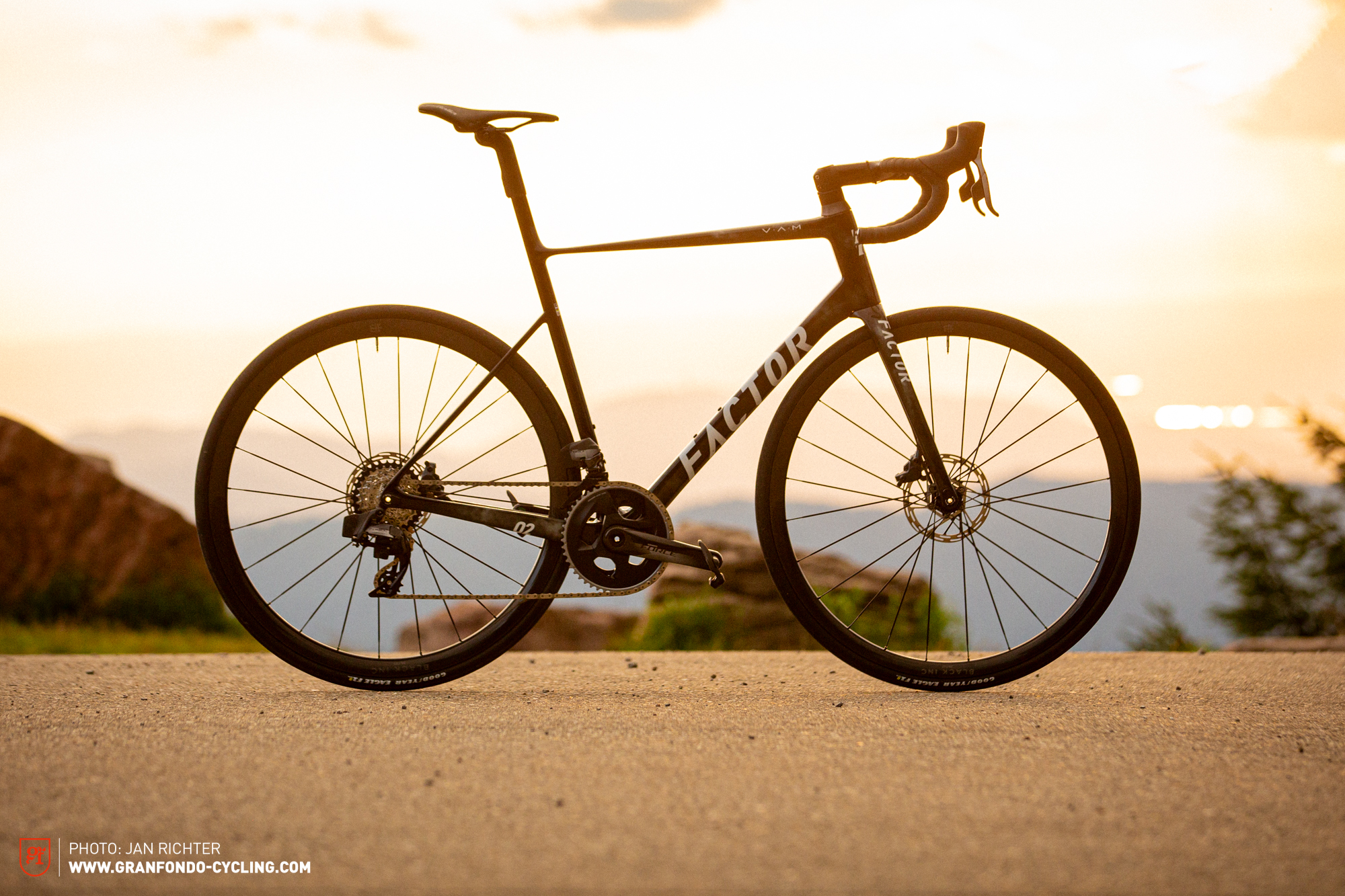
First ride review: Factor O2 VAM – Aiming for the peaks?
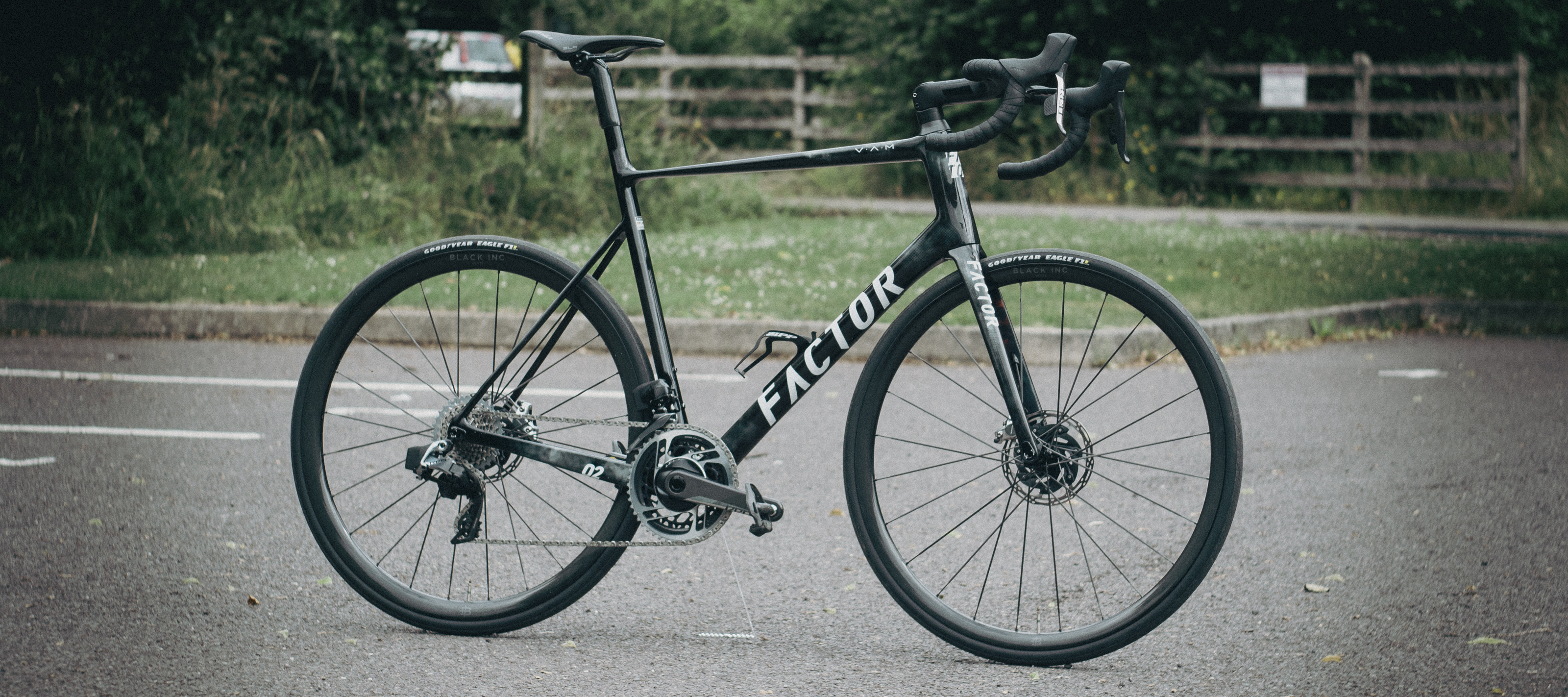
Factor O2 VAM review: A racy featherweight you'll buy with ...
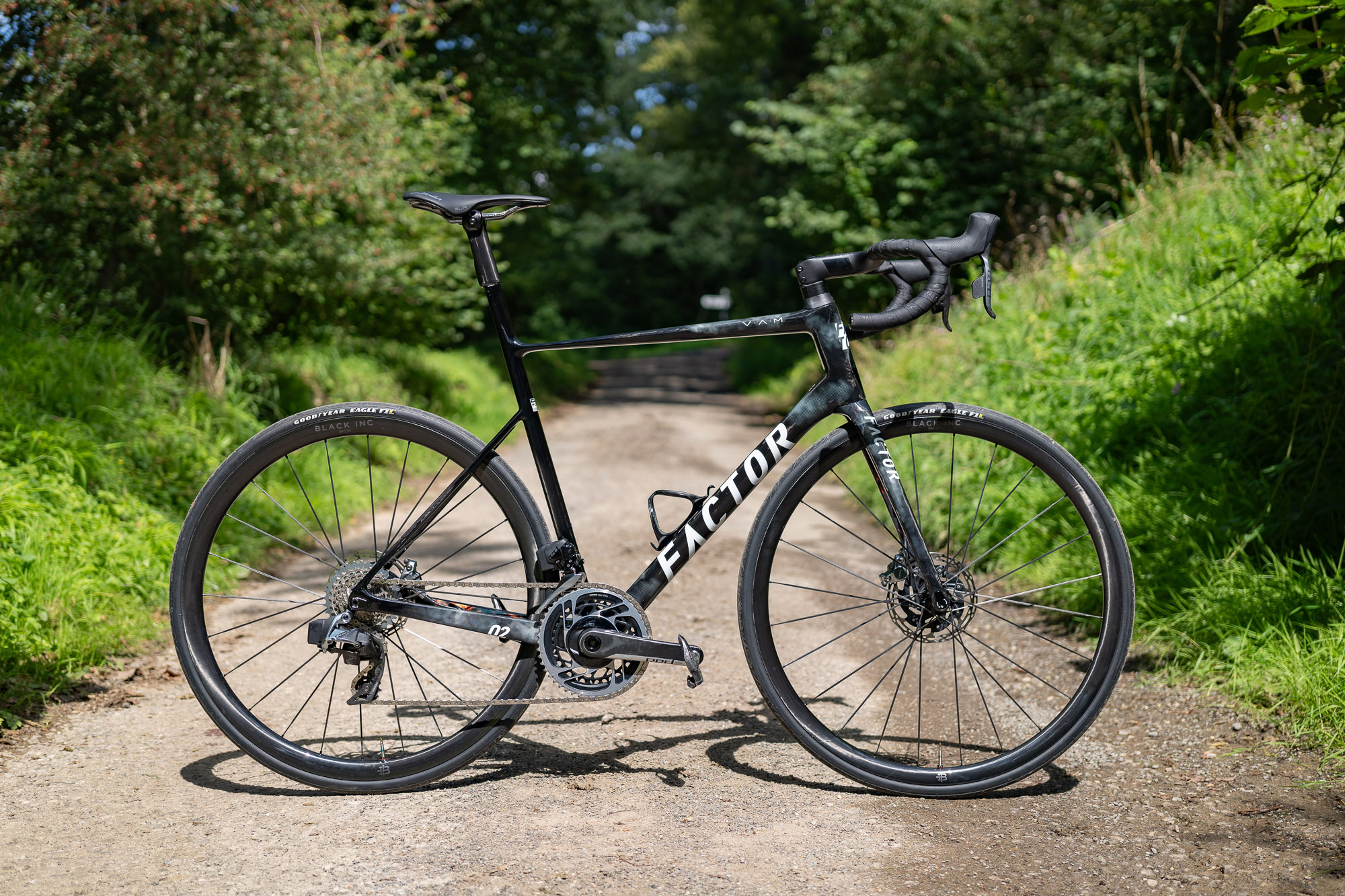
Factor O2 VAM review
Factor O2 VAM SRAM Red eTap AXS review - Road Bikes
The Factor O2 VAM is light and stiff - though we had to ...

Factor O2 VAM review: the lightweight sharpshooter gets an aero boost | Edinburgh Bike Shop
Factor O2 VAM review: the lightweight sharpshooter gets an aero boost
Factor O2 VAM review: the lightweight sharpshooter gets ...
We ride the new Factor O2 VAM - claimed to be the 'world's fastest climbing bike'
The new Factor O2 VAM first look and ride impressions
Compared to.
Most-viewed comparisons.