O2 VAM
vsTarmac
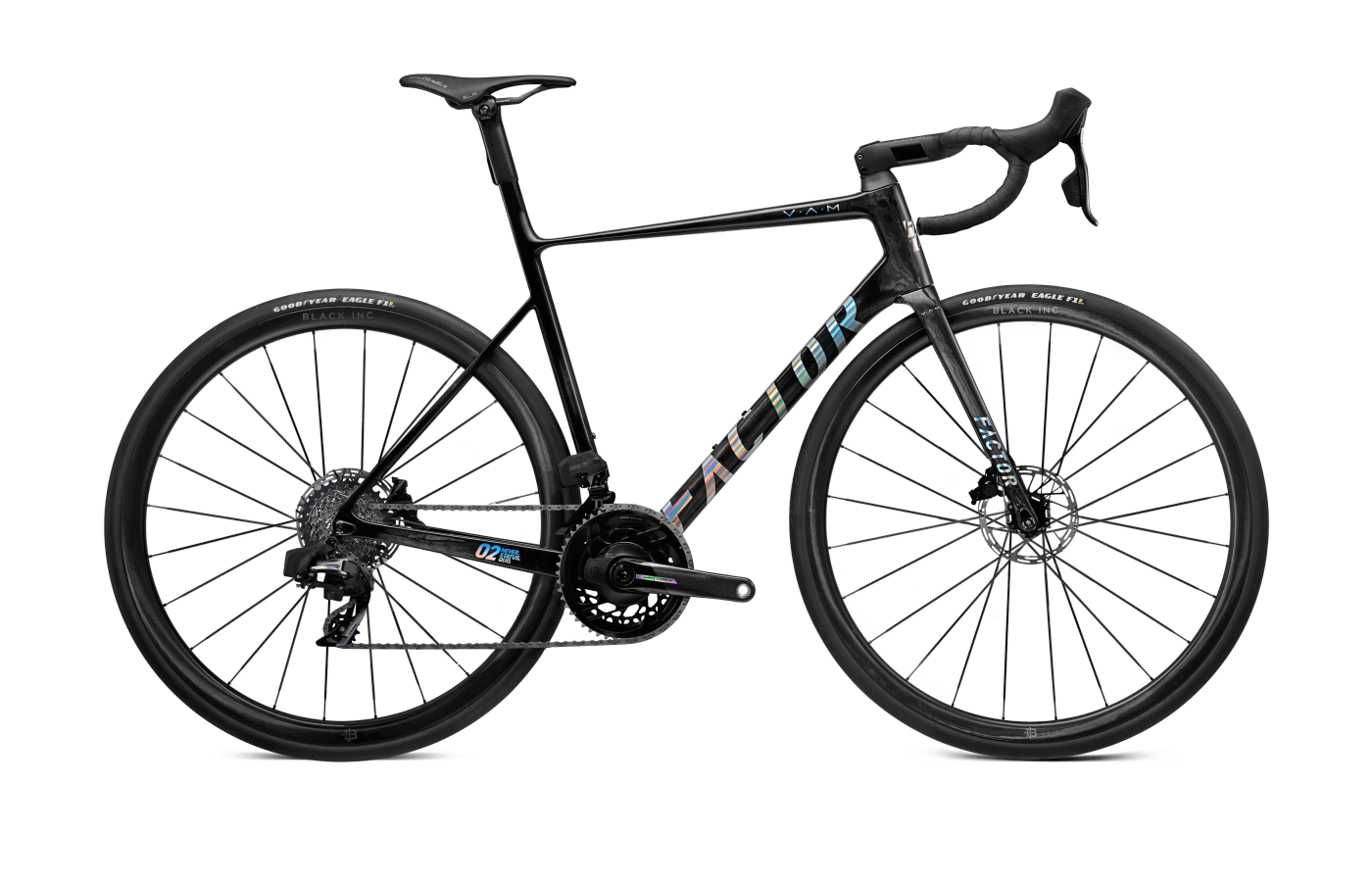
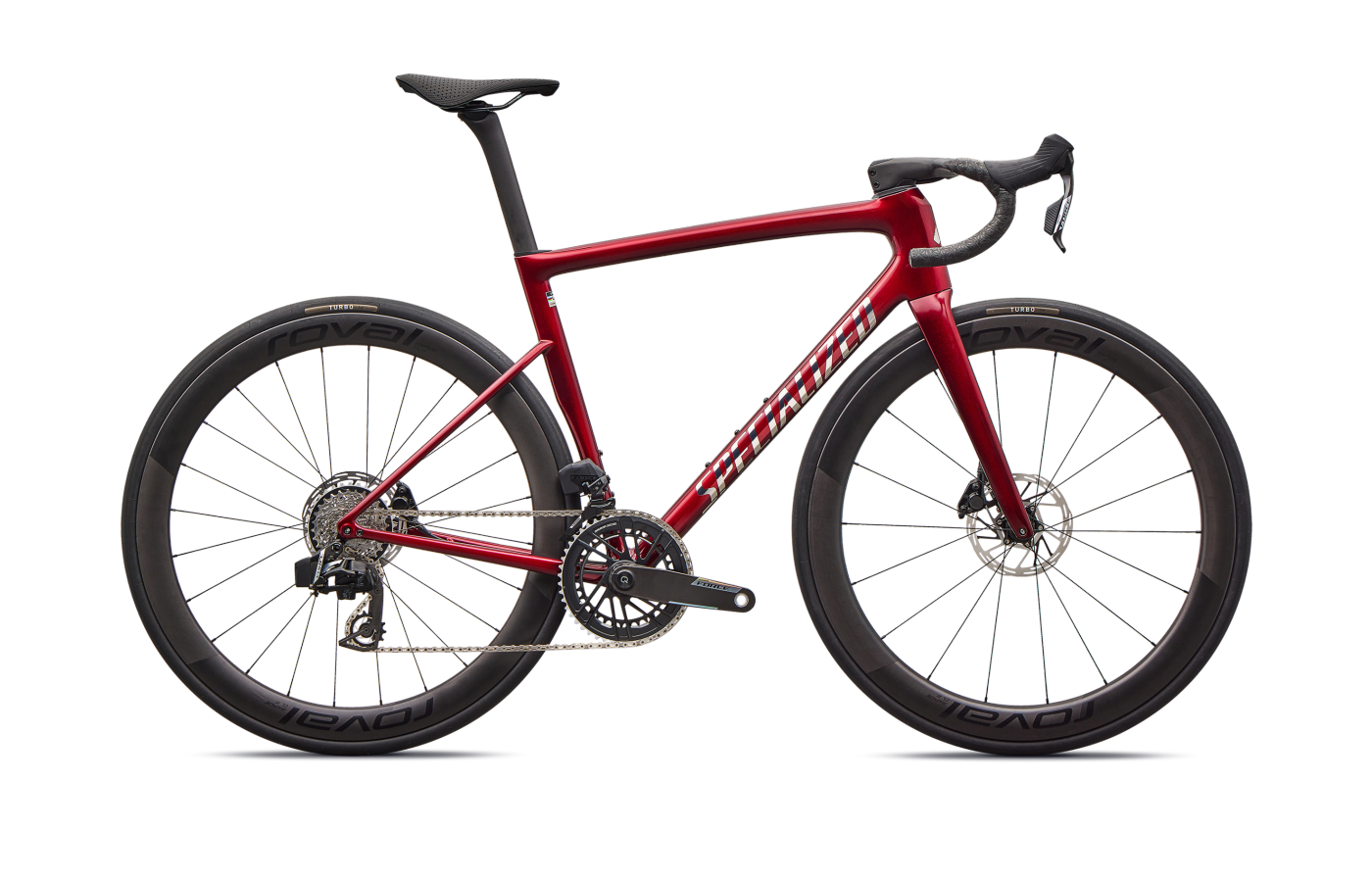
Two race bikes, two missions.
The O2 VAM is a UCI-limit climber that flirts with aero. The Tarmac SL8 is the do-everything benchmark that won't be left in the wind.
O2 VAM
- Climber-spec weight — 700 g claimed frame puts complete builds at 6.3–6.7 kg, right at the UCI 6.8 kg limit.
- Consistent handling across sizes — four fork offsets keep trail at 57–58.6 mm on every frame, so size-54 and size-61 riders feel the same bike.
- Premium spec is standard — Black Inc wheels, CeramicSpeed bearings, integrated cockpit included on every build.
- $11,299 entry price — no Rival, 105, or alloy-cockpit option to soften the cost.
- Shallow 28/33 mm wheels prioritize climbing over flat-out aero gain.
Tarmac
- One bike, every job — claimed within a few watts of dedicated aero bikes while still hitting 6.6 kg at the top tier.
- Full-range pricing — same FACT 10r chassis from $4,699 SL8 Comp to $8,499 SL8 Pro, identical geometry across the line.
- Threaded BSA bottom bracket — easier to live with long-term than the press-fit standards still common in this class.
- Stock 26 mm tires and integrated Roval cockpit on top builds limit immediate fit options.
- Heavier than dedicated climbers like the Aethos when matched gram-for-gram.
Editor’s analysis
Both want to win. One wants to win uphill — the other wants to win whichever way the road points.
The Factor O2 VAM is a specialist. Factor built it to a 700 g frame claim (size 54, integrated seatmast included) using TeXtreme and pitch-based carbon, then handed it off to Israel-Premier Tech for Tour de France climbing stages. Reviewers consistently report complete builds in the 6.3–6.7 kg range — UCI-limit territory. Black Inc cockpit, Black Inc 28/33 wheels, CeramicSpeed bearings throughout: nothing on the bike is there to do anything but accelerate uphill.
The Specialized Tarmac is the opposite story — the same chassis is sold from $4,699 to $13,499, and the WorldTour rides it from spring classics to mountain stages to bunch sprints. Specialized's own claim is that the SL8 is 16.6 seconds faster over 40 km at 45 km/h than the SL7, putting it within a handful of watts of dedicated aero bikes like the Cervélo S5 and Canyon Aeroad — while still landing at 6.6 kg in S-Works trim. It's the modern definition of one-bike-for-everything.
The geometries tell the same story. At a size 54, the Factor sits 8 mm taller in the stack (552 vs 544) with 3 mm less reach (381 vs 384) — a more upright climbing position that Factor explicitly engineered in. Trail is identical at 58 mm. But Factor pulled the chainstays in to 405 mm, 5 mm shorter than the Tarmac's 410 mm, for sharper out-of-saddle climbing response. The Tarmac's slightly slacker 73 degree HTA at this size and longer chainstays read as more all-conditions stability.
Where it really diverges is the lineup. The Factor O2 VAM starts at $11,299 — there is no entry tier. The cheapest way into this platform costs more than the Tarmac SL8 Pro with Ultegra Di2. The Tarmac SL8 Comp at $4,699 puts you on the same FACT 10r frame for less than half the Factor's floor. If pure climbing performance per dollar matters less than getting onto the platform at all, the math is brutal.
Where the builds differ.
Comparing our editor's-pick builds side-by-side. Winners highlighted row-by-row — lower price and weight, and the better-spec component, each mark a point.
Build variants & pricing
Factor sells the O2 VAM in a tight $11.3k–$13.5k band; the Tarmac SL8 spans $4,699 to $13,499 on the same geometry.
Picks are tier-matched on SRAM Force AXS with power meter to make the spec table apples-to-apples. The Factor commands a $3,000 premium at this tier — that's the platform, not the components.
How they fit, how they steer.
Both at size 54. The Factor sits 8 mm taller (552 vs 544 mm stack) with 3 mm less reach — a more upright climbing posture. Trail matches at 58 mm; chainstays are 5 mm shorter on the Factor (405 vs 410 mm), which sharpens out-of-saddle response.
Which size should I buy?
Size recommendations from stack, reach, and effective top tube. Both lineups span seven sizes from a 44/45 to a 61, with similar progression through the middle of the range.
→These are starting points. Flexibility, riding style, and preferred position all shift the answer — if you’re between sizes, a professional fit beats a chart.
What the magazines said.
Published reviews from trusted cycling outlets. Click through for the full write-up.
Which one should you buy?
If the road points up and money is no object, get the O2 VAM. If you want one race bike that works everywhere — and at any budget — get the Tarmac.
O2 VAM
If your weekly rides include real elevation, you chase KOMs on steep gradients, and you've concluded that a 6.4 kg bike will make you faster than a 7.3 kg one — this is the tool. The premium is steep, but every gram and every bearing on the bike is built around that single mission.
Tarmac
If you race crits, sprint up local climbs, sit in the front group on flat 100 km Sundays, and want one bike for all of it — the Tarmac is still the benchmark. The lineup also lets you buy in at $4,699 and upgrade the components over time, which the Factor does not.
Questions buyers actually ask.
Short answers to the things we get emailed about most often.
01Which is the better climber?
The Factor O2 VAM, fairly clearly. Reviewers consistently weigh complete builds at 6.3–6.7 kg, right at the UCI 6.8 kg limit, versus 6.6 kg for an S-Works Tarmac SL8 and 7.25–7.77 kg for the Tarmac Pro and Expert tiers.
For a 70 kg rider, the difference between a 6.4 kg O2 VAM and a 7.25 kg Tarmac Pro is roughly 1.1% of system weight — meaningful on a 30-minute climb, less so on a punchy roller. Factor also paired the lightness with a steeper seat tube angle and shorter 405 mm chainstays for a more direct out-of-saddle feel.
02Which is faster on flat roads?
The Tarmac SL8, by Specialized's own published numbers. External wind-tunnel testing cited in reviews puts the SL8 at roughly 209 W at 45 km/h, only marginally behind the Cervélo S5 (205 W) and Canyon Aeroad (208 W).
Factor positions the O2 VAM as 5 watts slower than its own aero stablemate, the Ostro VAM, at 48 km/h — still respectable, but the shallow Black Inc 28/33 wheels (28 mm front, 33 mm rear) are not built for flat-out time-trial efforts. Several reviewers explicitly note the O2 VAM 'doesn't feel quite as rapid at 40-50 km/h' as dedicated aero bikes.
03How do the geometries compare at size 54?
Stack and reach: the Factor is 552 mm stack / 381 mm reach; the Tarmac is 544 mm stack / 384 mm reach. So the Factor sits 8 mm taller and 3 mm shorter — a more upright, climbing-oriented position.
Handling numbers: trail is identical at 58 mm. Chainstays are 405 mm on the Factor versus 410 mm on the Tarmac — slightly snappier acceleration on the O2 VAM. Wheelbase: 985 mm vs 978 mm. Head tube angle: 72.5° vs 73° — the Tarmac is marginally steeper at this size.
04What's the tire clearance on each?
Both are officially 32 mm. Neither bike is set up for gravel — these are race bikes that benefit from a true 28–30 mm tire on the road. Reviewers of both bikes recommend swapping the stock 26 mm tires (S-Works Turbo on the Tarmac, Goodyear Eagle F1R on the Factor) for wider tubeless rubber to unlock the chassis.
05Is the price gap really that big?
Yes. The Factor O2 VAM starts at $11,299 for the Shimano Ultegra Di2 build. The Tarmac SL8 starts at $4,699 for the SRAM Rival AXS-equipped Comp build, on the same FACT 10r frame the Pro and Expert use.
At the top end the two converge — both reach $13,499 in flagship trim. But there is no entry-level Factor. If you want a cheaper way onto the O2 VAM platform, the only option is to wait for the used market.
06What's the editor's pick on each side and why?
On the Factor side, the SRAM Force AXS with Power Meter at $11,499. On the Tarmac side, the SL8 Pro with SRAM Force AXS E1 + power meter at $8,499.
We pick at matched component tiers so the spec comparison stays apples-to-apples — both wireless SRAM Force, both with built-in power. Picking the S-Works Tarmac against a Force AXS Factor would let one platform's spec advantage masquerade as a frame advantage.
07Are there known reliability concerns to know about?
On the Factor, several early reviewers flagged production-sample issues — a defective rear thru-axle dropout insert, loose bottle-cage rivets, and bottom-bracket creak. Factor's engineering team publicly acknowledged each and stated the fixes were rolled into all bikes shipped to customers. The frame uses a T47 threaded bottom bracket, which is service-friendly.
The Tarmac SL8 uses a BSA threaded bottom bracket, also service-friendly, and reviewers report no significant durability issues over multi-thousand-mile test periods. The most common complaint across both bikes is the same: stock 26 mm tires that are extremely tight on the rims.
08Which has better customization at purchase?
The Factor, distinctly. At purchase, Factor lets you choose bar width, stem length, and saddle setback on the integrated Black Inc cockpit and seatmast — meaningful, because changing an integrated cockpit later is a several-hundred-dollar swap.
Specialized does not offer pre-purchase cockpit sizing on the SL8 S-Works or Pro. If the stock stem length doesn't fit you, swapping the integrated Roval Rapide cockpit aftermarket is reported by reviewers as a $450+ exercise plus shop labor for hose re-routing.
Similar bikes
If your priorities don’t map cleanly onto either of these, one of these adjacent bikes probably fits better.
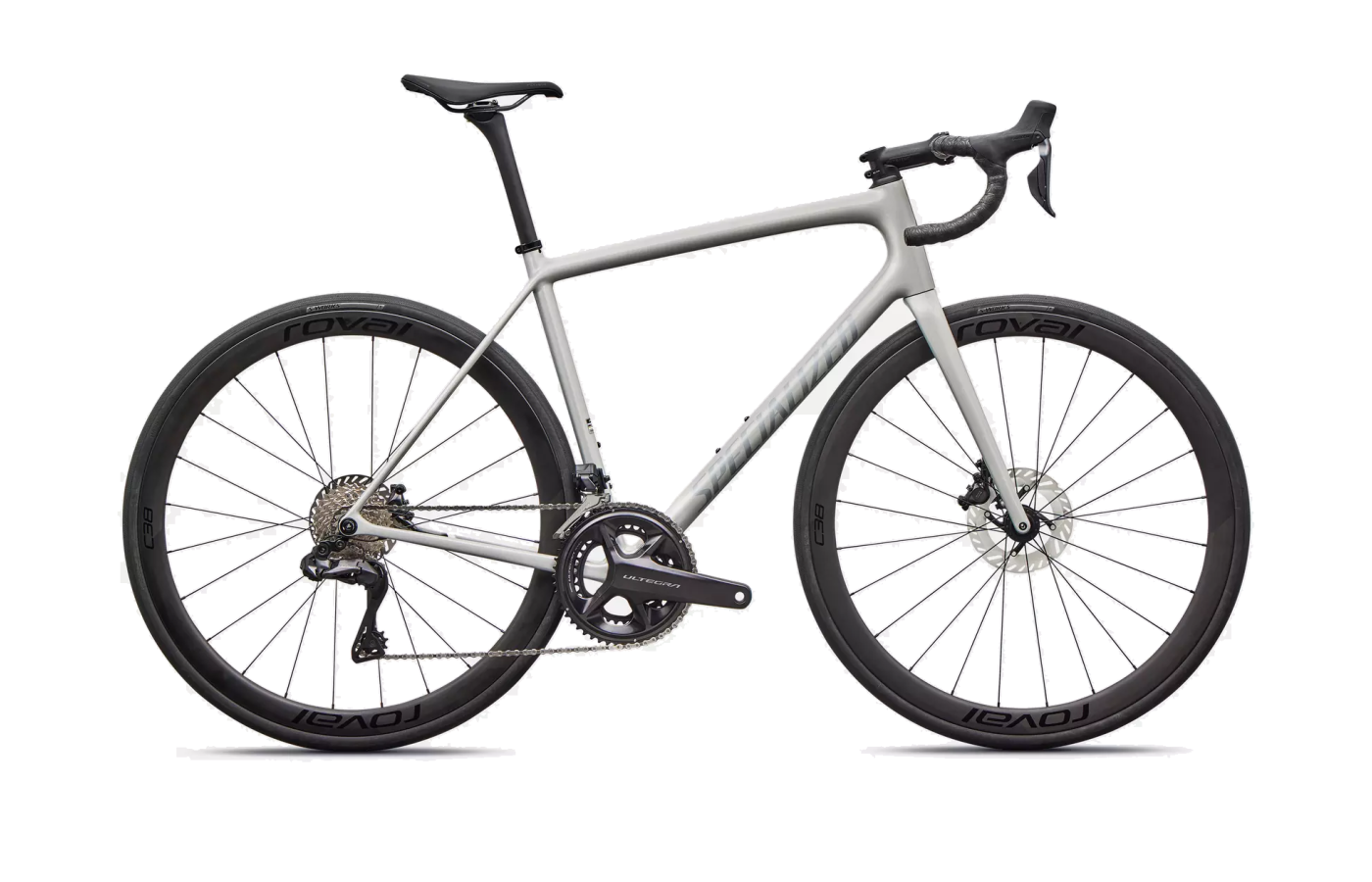
Aethos
If the O2 VAM still isn't light enough, the Specialized Aethos pushes it further — a sub-6 kg classical climber with round tubes, no integration, and zero aero pretense. The bike to buy when grams matter more than watts.
Compare →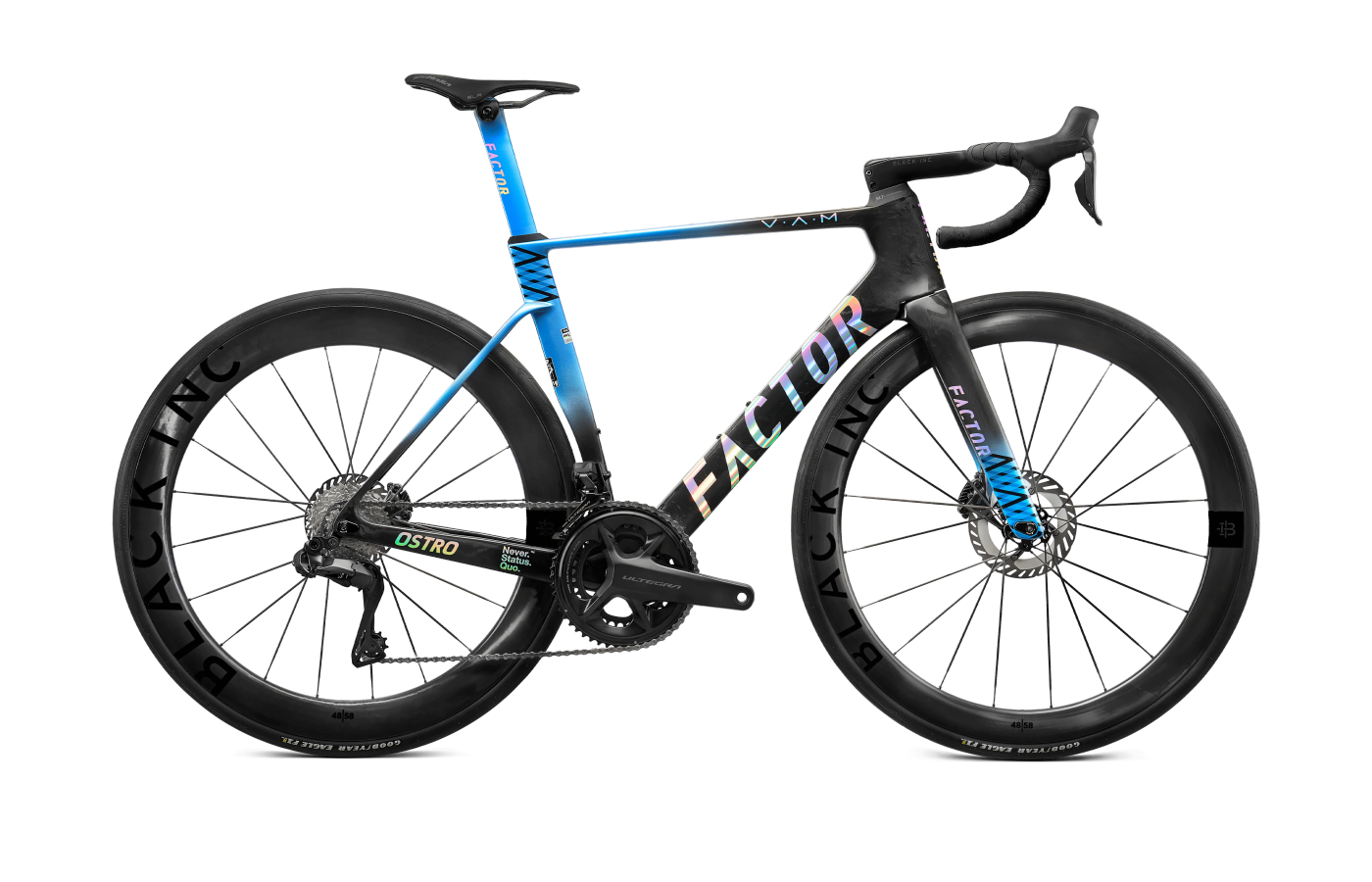
Ostro VAM
Factor's own aero counterpart to the O2 VAM. The Ostro VAM is slightly heavier but faster on flats — Factor's own numbers put it 5 watts ahead at 48 km/h. The pick if you like Factor's engineering but spend more time horizontal than vertical.
Compare →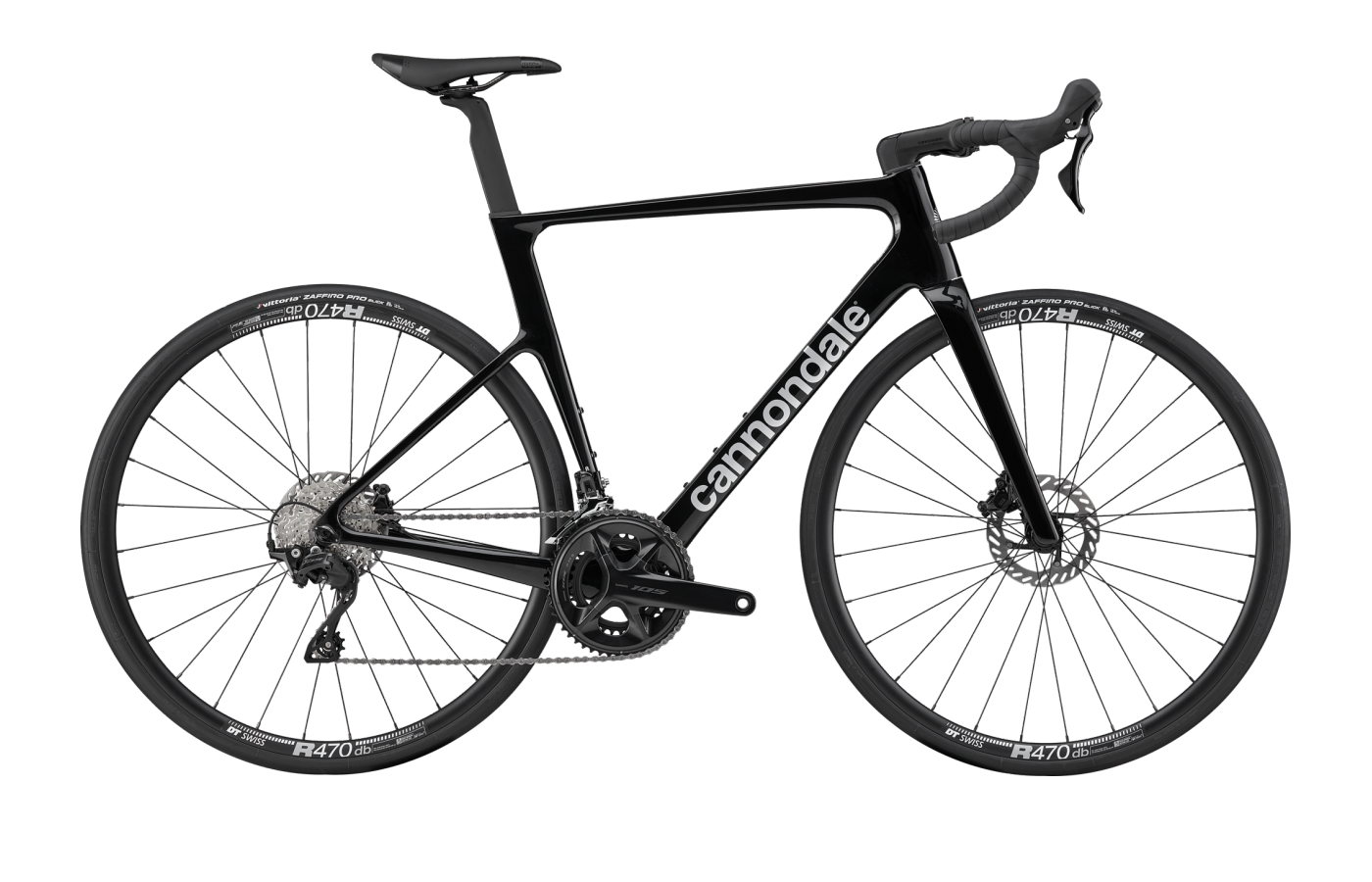
SuperSix EVO
The Cannondale SuperSix EVO plays the same all-rounder game as the Tarmac SL8 — light, aero-shaped, comfortable enough for long days. Often comes in a few hundred dollars cheaper at matched component tiers.
Compare →