O2 VAM
vsAethos
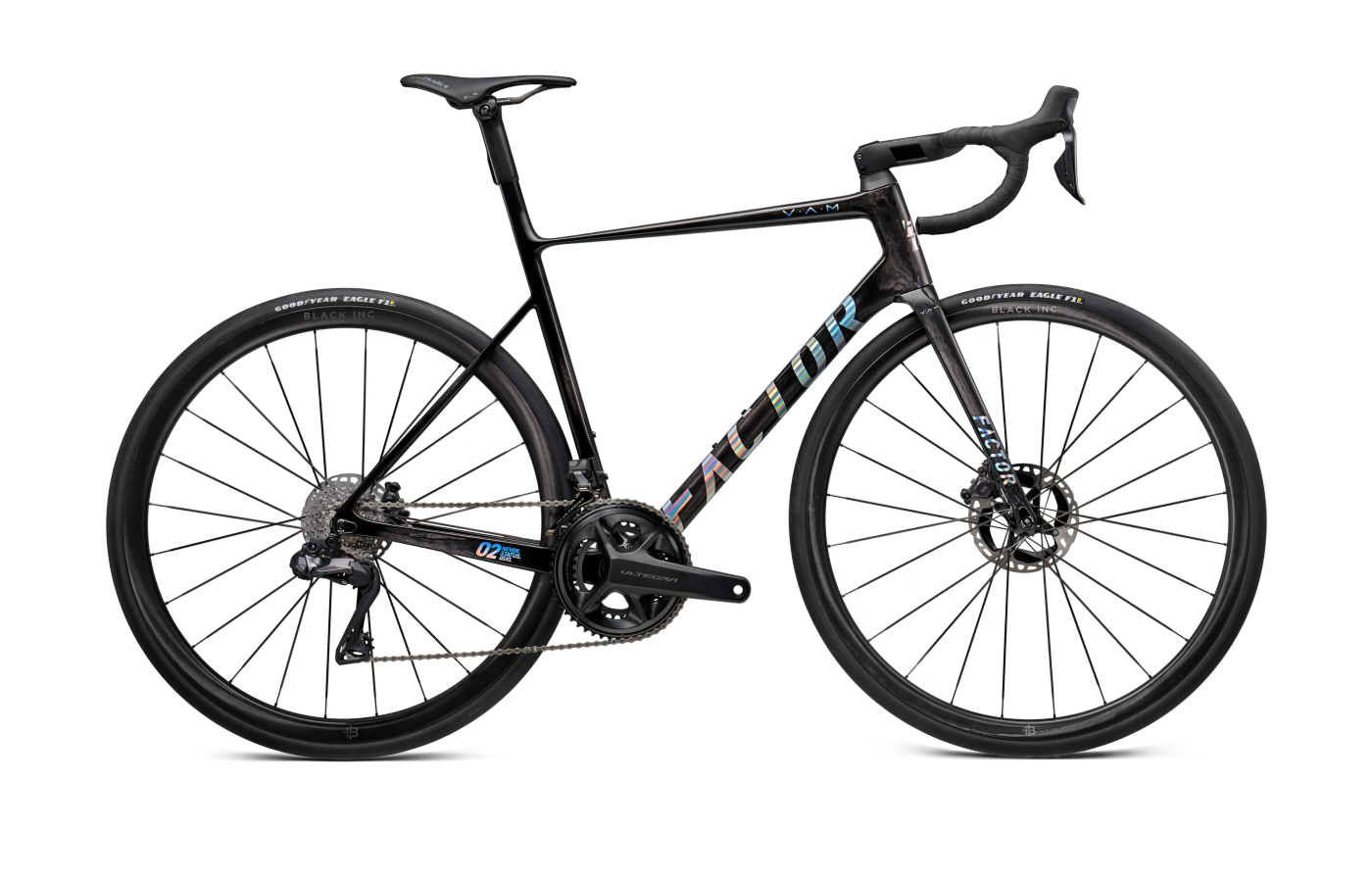
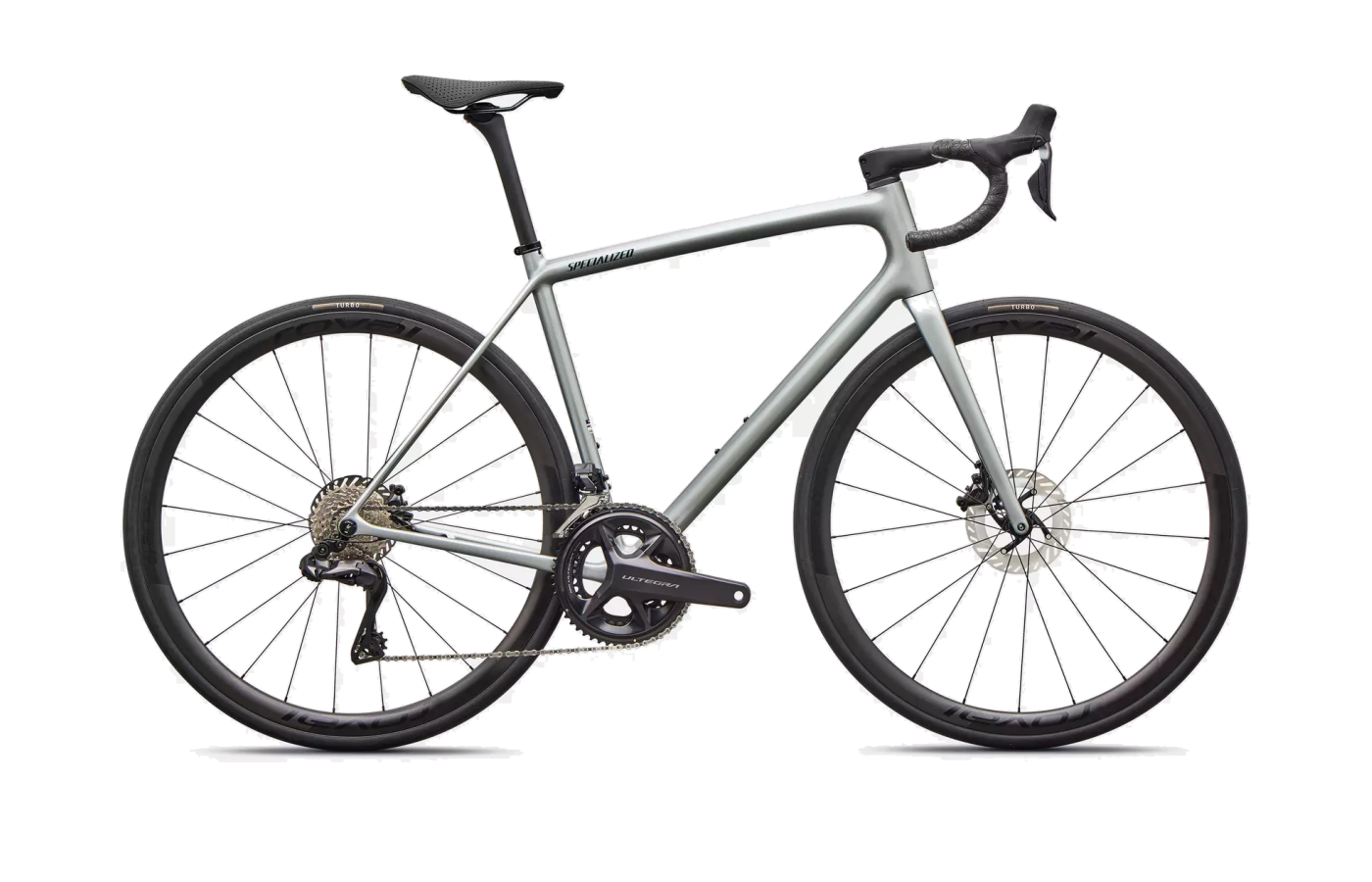
Two ultralights, two reasons to be light.
The O2 VAM is built to win mountain stages. The Aethos is built to make every ride feel like one.
O2 VAM
- Genuine aero-climber duality — truncated airfoils give up only ~5 W to Factor's full-aero Ostro VAM at 48 km/h.
- Race-tuned handling at every size — consistent 57–58 mm trail across all 7 sizes via 4 different fork offsets.
- 35% stiffer than the previous O2 — bottom bracket and head tube both addressed, descending confidence transformed.
- Floor price is $11,299 — there is no budget door into this platform.
- Even the $13,199 Dura-Ace build ships without a power meter, an odd omission at this price.
Aethos
- Lightest disc frame on the market at a claimed 595 g for the S-Works (painted, size 56) — beats the Factor by ~100 g.
- All-road by stealth — 35 mm tire clearance and a longer, lower 2026 geometry make light gravel genuinely viable.
- Real entry point — the Expert build starts at $6,599, half the Factor's floor, with the same frame design language.
- Round tubes and shallow rims cost you watts above 35 km/h — not a flat-day bike.
- Ships with 28 mm tires despite 35 mm clearance — most reviewers swap immediately.
Editor’s analysis
Both weigh nothing. Only one is trying to go somewhere with that weight.
The Factor O2 VAM and the Specialized Aethos sit in the same UCI-bothering bracket — sub-7-kilo complete bikes, integrated cockpits, top-shelf carbon. But the design briefs are almost opposites. Factor wrote 'definitive aero climbing bike' on the whiteboard and chased every gram and watt. Specialized wrote 'a bike you actually want to ride' and threw out the wind tunnel results.
The O2 VAM is the scalpel. A 700 g claimed frame, a Black Inc one-piece cockpit, truncated airfoil tube shapes that Factor says give up only 5 watts to its full-aero Ostro VAM at 48 km/h. Geometry is race-team tight: 405 mm chainstays, a 985 mm wheelbase at size 54, and a deliberately consistent 57–58 mm trail across all seven sizes (achieved with four different fork offsets) so a 5'1" rider gets the same handling character as a 6'2" one. Israel-Premier Tech rides this thing at the Tour. It feels like it.
The Aethos is the velvet glove. The S-Works frame is a claimed 595 g — lighter than the Factor — but Specialized used the savings to make a quieter, more compliant ride rather than a faster one. Round tubes, classic silhouette, no aero pretensions. The 2026 update added 11–15 mm of stack across most sizes, a 3 mm lower BB, a 7 mm longer wheelbase, and 35 mm tire clearance. It's lighter than ever and somehow more comfortable than ever — and slower into a headwind than ever, by design.
Put plainly: pick the Specialized Aethos if your favorite ride is a five-hour loop with three big climbs and a long café stop. Pick the Factor O2 VAM if your favorite ride is the climb itself, and you want to reach the top first.
Where the builds differ.
Comparing our editor's-pick builds side-by-side. Winners highlighted row-by-row — lower price and weight, and the better-spec component, each mark a point.
Build variants & pricing
Factor sells four builds, all $11k+. Specialized sells six, from $6.6k to $14k. The Aethos is the only one of the two with a real entry point.
Prices are current US MSRP. The editor's-pick comparison above is tier-matched at Shimano Ultegra Di2 — the closest apples-to-apples pairing on offer. Note that the Factor at this tier ships without a power meter while the Specialized includes a 4iiii single-sided unit, a real ~$400 spec gap on top of the ~$2.8k price gap.
How they fit, how they steer.
Both at size 54. The Aethos sits 7 mm taller in stack and 3 mm longer in reach — a more upright, less aggressive cockpit. Same 72.5° head tube angle, but the Factor runs 3 mm more trail and 5 mm shorter chainstays — sharper, more eager to change direction.
Which size should I buy?
Size recommendations from stack, reach, and effective top tube. Both ranges are similar in the middle; the Factor extends one size smaller (45) at the bottom.
→These are starting points. Flexibility, riding style, and preferred position all shift the answer — if you’re between sizes, a professional fit beats a chart.
What the magazines said.
Published reviews from trusted cycling outlets. Click through for the full write-up.
Which one should you buy?
If you race up mountains, get the Factor. If you ride for the feeling of riding, get the Aethos.
O2 VAM
If your weekends are KOM hunts and your A-race has 4,000 m of vertical, the O2 VAM is built for you specifically. The aero work means you don't pay a flatland tax for the climbing focus, and the consistent-trail geometry means a small rider gets the same sharpness as a big one. The price of admission is steep — and there's no cheap way in.
Aethos
If you ride for five hours because five hours feels good, and you'd rather feel the road than beat the field, the Aethos is the more honest tool. Lighter frame, taller stack, 35 mm tires, lower price floor. It gives up watts on the flats and doesn't pretend otherwise.
Questions buyers actually ask.
Short answers to the things we get emailed about most often.
01Which one is actually lighter?
The Specialized Aethos wins on paper. The S-Works Aethos 2 frame is a claimed 595 g (painted, size 56), and complete bikes have been weighed as low as 5.98 kg with SRAM Red AXS. The Factor O2 VAM frame is a claimed 700 g, with complete bikes around 6.3–6.7 kg in tested trim.
In practice, both are below the UCI 6.8 kg weight limit in their flagship builds — the difference is meaningful on a stopwatch (roughly 5–10 seconds on a 30-minute climb at 70 kg system weight) but won't be the deciding factor for most riders.
02Which is faster on flat roads?
The Factor O2 VAM, by a margin that depends on what you're comparing to. Factor's published numbers put the O2 VAM only ~5 watts behind the full-aero Ostro VAM at 48 km/h, thanks to truncated airfoil tube shapes and a one-piece integrated cockpit. The Aethos, with round tubes and a shallow 33 mm Alpinist wheelset, has no aero optimization to speak of and loses momentum quickly on flats and into headwinds.
This is the deliberate trade Specialized made. If most of your riding is rolling or flat, the O2 VAM is the more honest choice.
03Which has the better climbing geometry?
Both are excellent. They share an identical 72.5° head tube angle at size 54, but the Factor runs 405 mm chainstays vs the Aethos's 410 mm, and a 985 mm wheelbase vs 992 mm — tighter, more eager out of the saddle.
The Aethos sits 7 mm taller in stack and 3 mm longer in reach, putting the rider in a slightly more upright position better suited to long sustained climbs. The O2 VAM also uses four different fork offsets across its size range to keep trail consistent at 57–58 mm, so handling character doesn't change with frame size — a thoughtful detail for smaller and larger riders.
04What's the maximum tire clearance?
Factor O2 VAM: 32 mm. Enough for chunky road tires and the occasional hardpack detour.
Specialized Aethos 2: 35 mm — a notable jump from the previous generation, and Specialized engineers explicitly say the frame has "no solidity problems" with light all-road use. Reviewers consistently call out that the Aethos ships with 28 mm tires despite the clearance, and unanimously recommend swapping to 30–32 mm for comfort or 35 mm for genuine all-road capability.
Neither is a gravel bike. For real off-road, look at the Specialized Crux or a dedicated gravel platform.
05Why is the Factor so much more expensive?
The Factor O2 VAM has no entry-level builds. The cheapest complete bike is the Shimano Ultegra Di2 at $11,299 — and that's already more than the Aethos's mid-tier 2 Pro at $8,499. Specialized sells the same Aethos frame design (in FACT 10r carbon rather than 12r) all the way down to a $6,599 Expert build.
Factor is a smaller brand with a single carbon grade and limited production volume; the price reflects that. Whether the extra spend is justified depends on whether the climbing-focused geometry and aero touches matter to your riding.
06How serviceable are the integrated cockpits?
Both bikes use a one-piece bar/stem with internal hose routing, so swapping bar width or stem length means buying a new unit on either platform.
The Factor's Black Inc Integrated Barstem has a notable advantage at point of purchase: Factor lets you spec bar width and stem length individually as a no-cost option. Get it right the first time and you may never need to touch it.
The Aethos's Roval Alpinist Cockpit II ships in 13 size combinations, a wide range that should cover most riders, but Specialized doesn't typically allow free spec-time swaps. Some Aethos buyers have had to negotiate cockpit width with their dealer separately — a documented headache in early reviews.
07Do they come with power meters?
Aethos — yes, on most builds. The S-Works Dura-Ace ships with a 4iiii Precision Pro dual-sided meter, the S-Works Red AXS has SRAM's integrated meter, and even the 2 Pro Ultegra Di2 includes a 4iiii Precision 3+ single-sided unit.
Factor O2 VAM — only on the SRAM builds. The SRAM Red and SRAM Force builds include Quarq spider-based meters. Both Shimano builds (Ultegra Di2 at $11,299 and Dura-Ace Di2 at $13,199) ship without one, an odd omission at this price point that adds another $300–$400 to your total if you want it.
08Can I race the Aethos?
Of course you can — and Specialized's Quick-Step pros have done it. But the 2026 Aethos is explicitly designed around "ride feel" rather than race performance. It's measurably slower than the Tarmac SL8 on flats (Specialized's own marketing makes this point) and the new taller geometry sits you slightly less aggressively.
For crits, fast group rides, or rolling road races, the Tarmac SL8 is Specialized's better answer. The Aethos is for the rider who wants the lightest, most compliant bike they can buy and considers race results a bonus.
Similar bikes
If your priorities don’t map cleanly onto either of these, one of these adjacent bikes probably fits better.
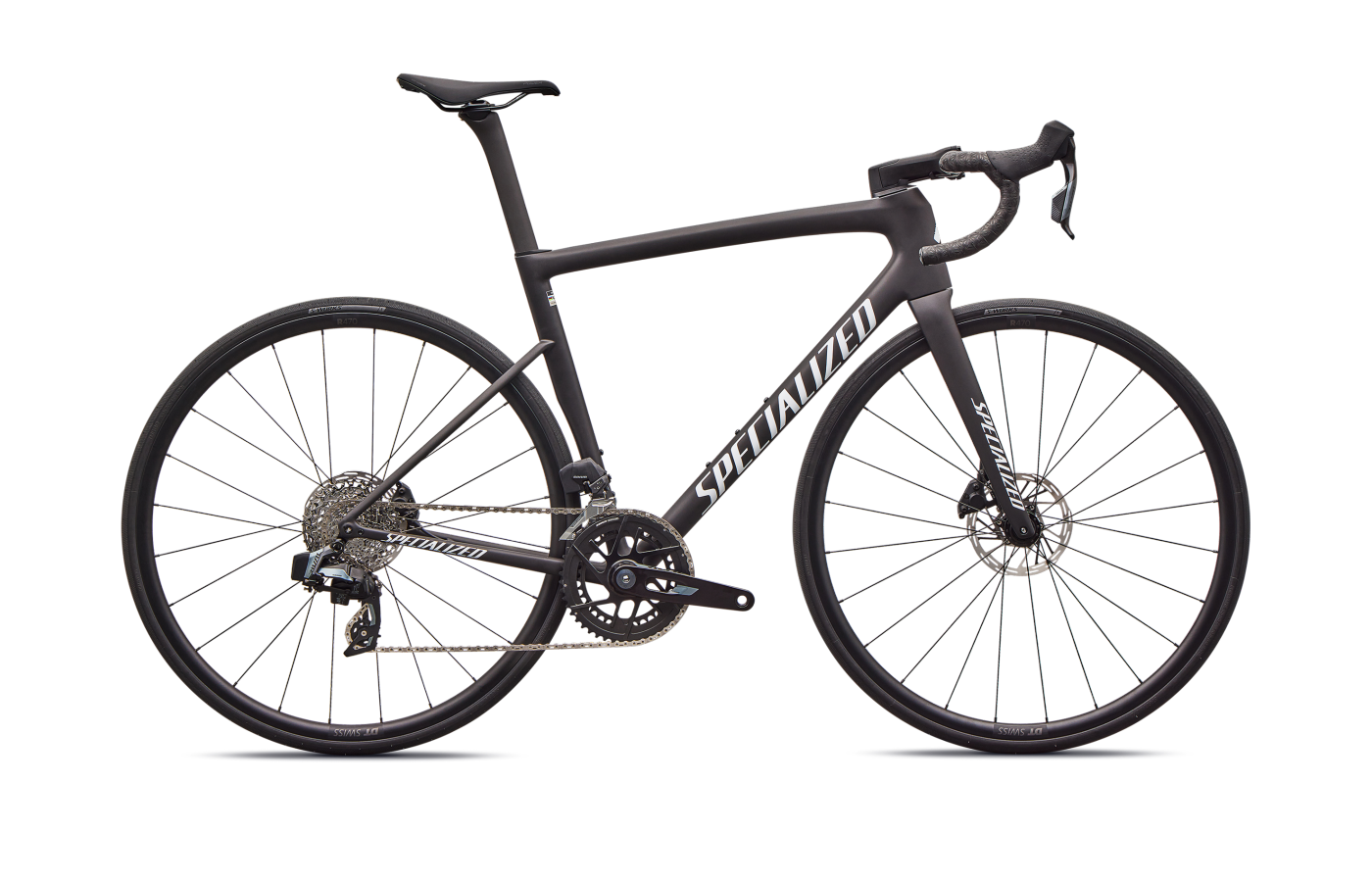
Tarmac
Specialized's all-rounder race bike — the Tarmac SL8 keeps the climbing chops of the Aethos but adds the aero work and aggressive geometry the Aethos deliberately gives up. If you want one Specialized to do everything from KOM hunts to crit races, this is it.
Compare →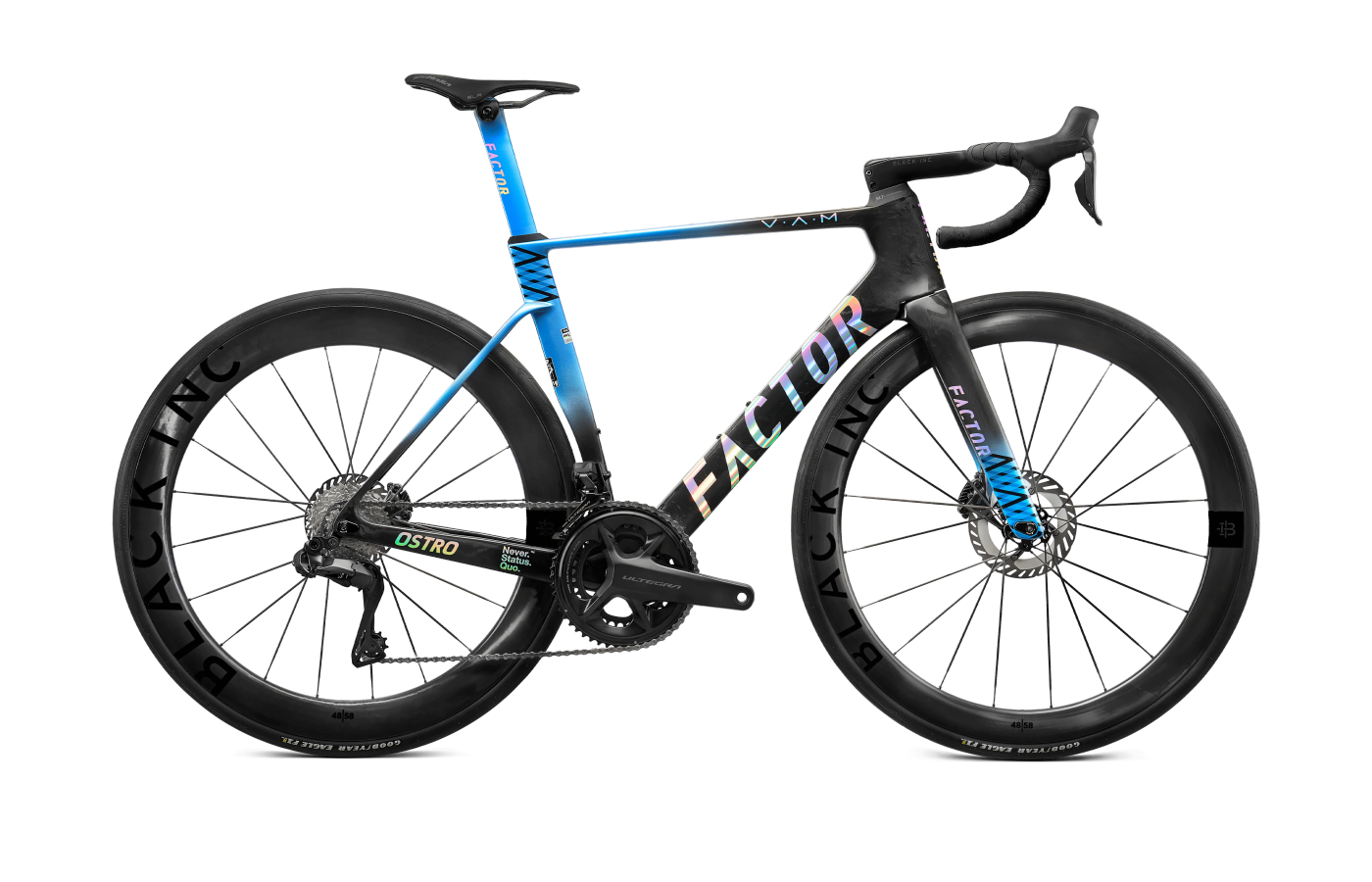
Ostro VAM
Factor's full-aero stablemate to the O2 VAM. Same Black Inc components, same race pedigree, but tube shapes pushed all the way for flat-road speed. Roughly 5 watts faster than the O2 VAM at 48 km/h — at the cost of a few hundred grams on the climbs.
Compare →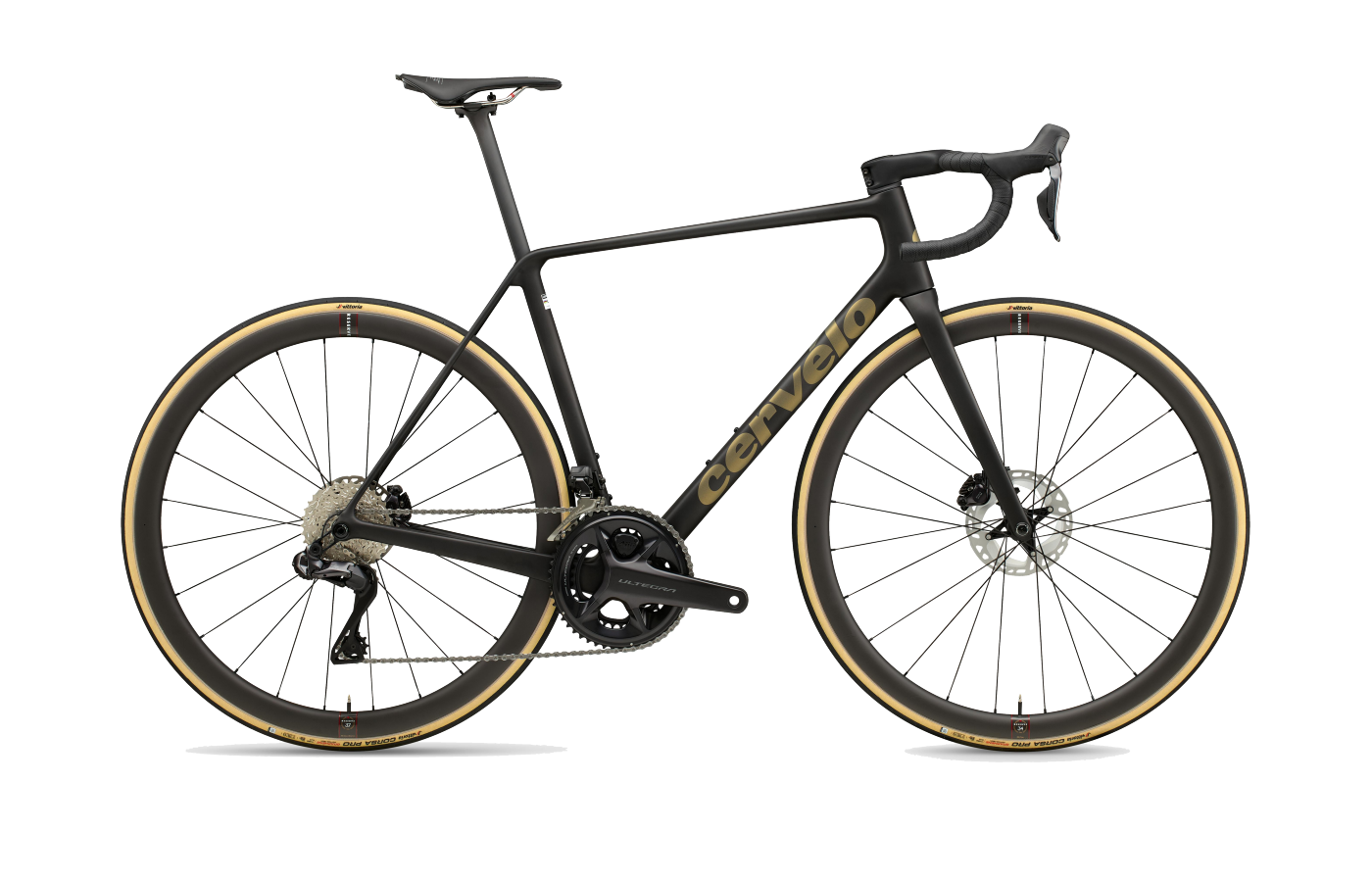
R5
The other current sub-7-kilo no-aero climber — and Factor and Specialized's most direct rival here. Cervélo's R5 sits philosophically between the two, with race-tight geometry like the Factor but the same anti-aero ethos as the Aethos.
Compare →